
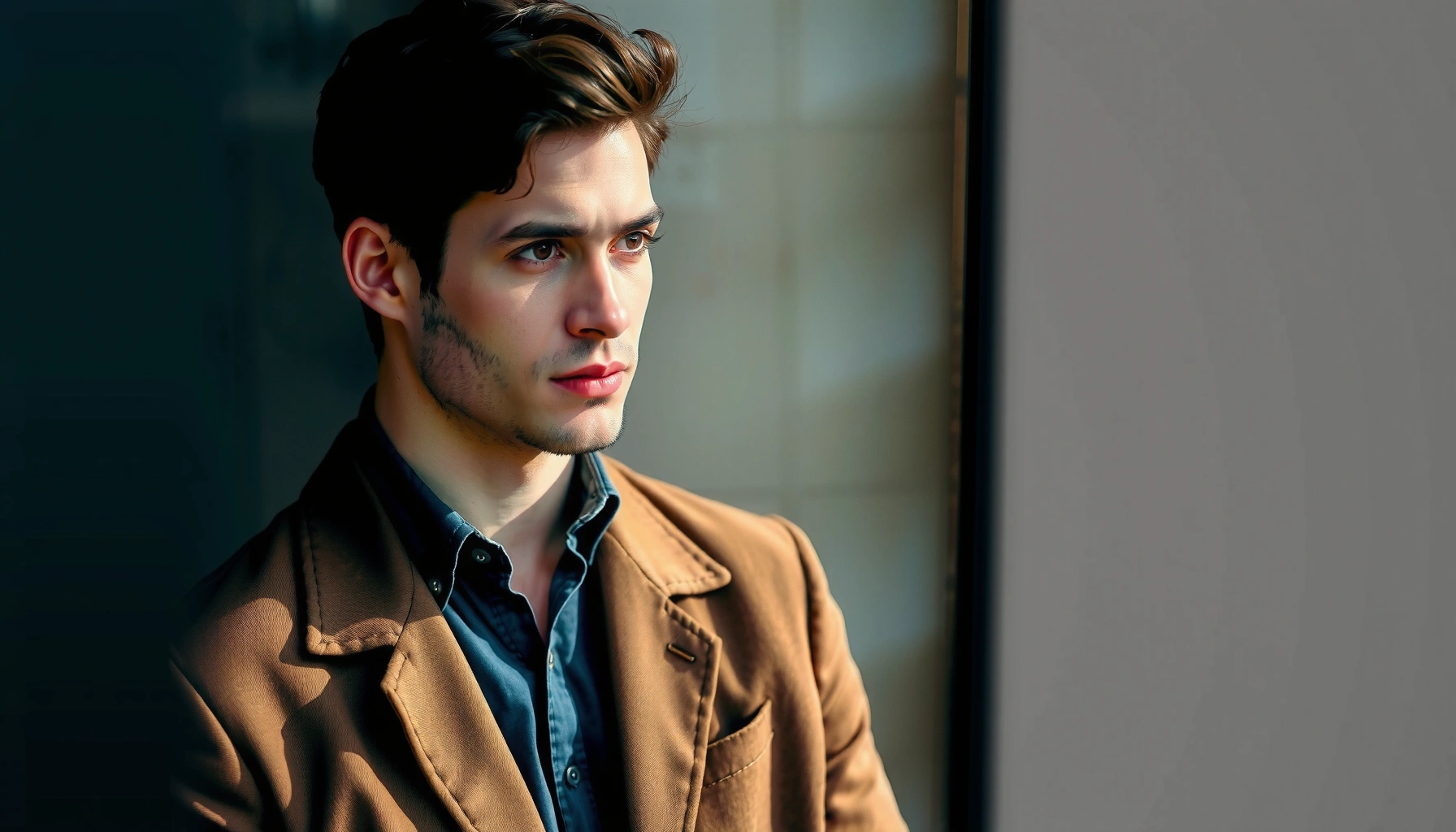

Smart casual for men is the easiest way to look polished without dressing like you’re headed to a boardroom—think neat basics upgraded with the right fit and fabric. This guide gives you a direct rulebook for what smart casual means in practice, including what to wear, what to avoid, and where the line changes. You’ll leave knowing exactly when smart casual works—and when it doesn’t.
Smart casual for men is a “polished but not formal” dress code—clean, well-fitting clothes with a relaxed edge. The safest formula is to anchor your outfit with one tailored/polished piece (like chinos, a knit, or a blazer) and pair it with simpler, comfortable basics so you look intentional without going full suit.
Smart casual for men is a “polished but not formal” dress code: think clean, well-fitting clothes with a relaxed edge. The goal is to look put-together (often office-appropriate) without wearing a full suit or overly dressy pieces. In this guide, you’ll learn what to wear, how to build outfits, and which mistakes to avoid.
If you’ve been told “smart casual” for work, a dinner, a date, or a casual event, this is for you—especially if you’re unsure whether jeans, sneakers, or a button-down are “too much” or “not enough.”
Smart casual for men: the quick definition

Smart casual for men is the middle ground between everyday casual and business formal—generally sharper, cleaner, and more structured than typical weekend wear. In practice, you combine one or two polished items with basics that still feel relaxed, and you let fit do most of the work.
Smart casual is commonly described as “neat but not fully formal,” which is why it typically excludes full suit formality while still requiring tidy presentation.
Smart casual succeeds when clothing is well-fitted and made from structured fabrics, because that’s what reads “professional” at a glance.
– Smart casual sits between casual and business formal—generally cleaner and sharper than everyday wear.
– You typically combine one or two tailored/polished items (like chinos, a knit, or a blazer) with casual basics (like a T-shirt or simplified shoes).
– When in doubt, prioritize fit and fabric quality over flashy details.
Core pieces to get the smart-casual balance

Smart casual for men works best when you build from a small set of reliable core pieces, then keep the styling consistent (same “level” of neatness throughout). If you choose the right tops, bottoms, outer layer, and shoes, most outfits become straightforward.
A polo, button-down, or lightweight knit typically reads smarter than an unstuctured graphic T-shirt because the neckline and fabric structure frame the face more intentionally.
Chinos and tailored trousers work well for smart casual because their twill weave and clean silhouette look “finished” even without a jacket.
– Tops: button-down shirts, polos, or lightweight knitwear; a plain tee can work if it’s structured and fits well.
– Bottoms: chinos, tailored trousers, or dark denim (only if they look neat, not worn).
– Outer layers + shoes: a blazer, overshirt, or clean jacket; leather or leather-look shoes, or minimal sneakers (depending on the setting).
A simple “anchor + support” approach
From what I commonly see with smart casual for men, the outfits that look effortless usually have exactly one anchor piece (often the blazer/overshirt or the polo) and one support piece (chinos, a knit, or clean shoes). If everything is “half-smart” at once, the look can feel unclear—either too casual or accidentally formal.
Outfit formulas for work, dinners, and weekends
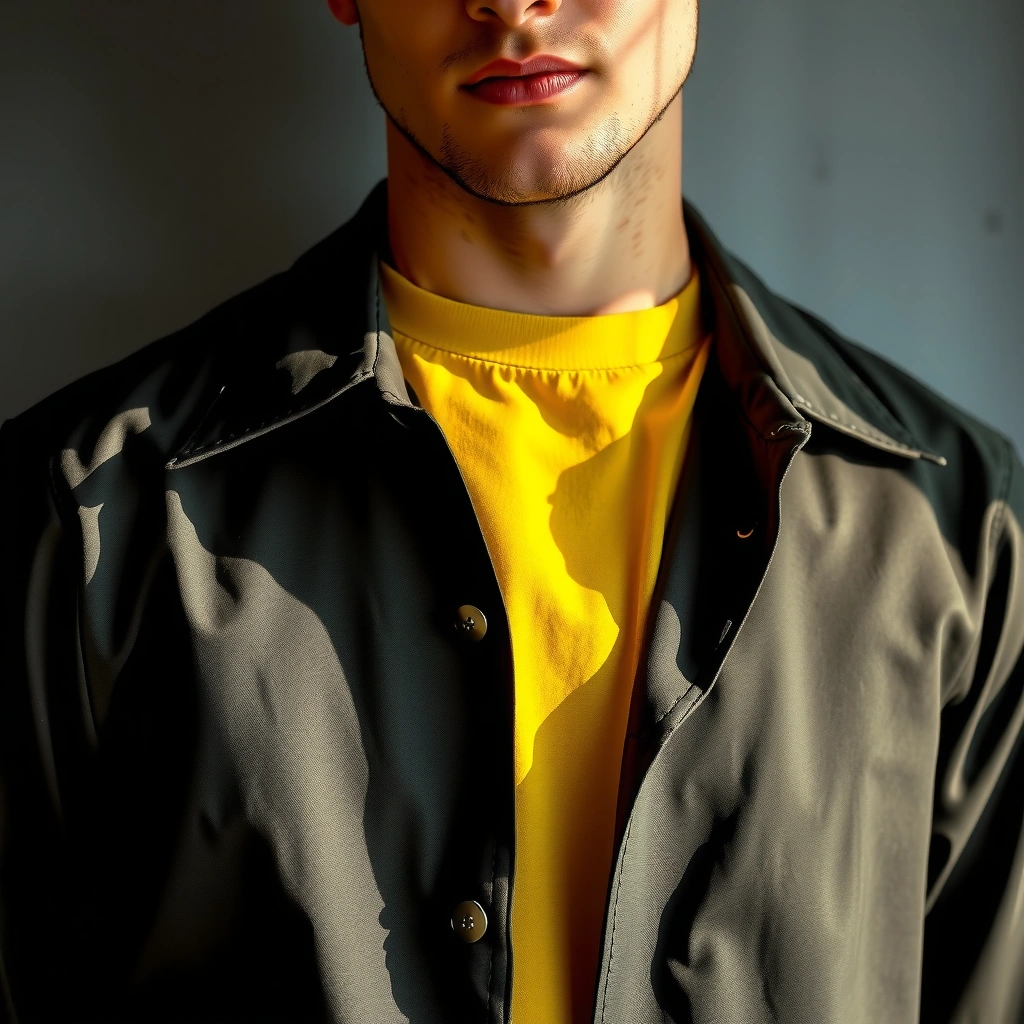
Smart casual for men should change slightly by occasion: work leans more structured, dinners lean more refined, and weekends allow more comfort. Use the same base logic each time—clean fit, tidy fabric, controlled contrast.
For office-ready smart casual for men, the safest upgrade is a crisp button-down or Oxford shirt paired with chinos, because it immediately signals “intentional dressing.”
For a dinner or date, smart casual for men often reads best when at least one layer is knitted or structured (polo/knit + jacket or overshirt), rather than relying only on jeans and sneakers.
– Work/office smart casual: Oxford or button-down + chinos + optional blazer; choose shoes that look “office-ready.”
– Dinner/date smart casual: knit or polo + darker trousers or chinos; add a jacket if the venue feels dressier.
– Weekend smart casual: overshirt or cardigan + dark jeans/chinos + simple sneakers or clean loafers.
– Quick upgrade rule: swap a casual piece for a slightly more structured one (e.g., T-shirt → polo; sneakers → loafers).
Color and contrast: why it matters (and what “smart” really looks like)
Smart casual for men isn’t just about clothing category; it’s about how your outfit reads as cohesive. Contrast is one reason a look can feel “polished” even when the items aren’t formal.
According to W3C WCAG 2.2, normal text should meet a minimum contrast ratio of 4.5:1 for WCAG AA (2021) W3C WCAG 2.2 Contrast (Success Criterion 1.4.3). For AAA, normal text needs 7:1 (2021) W3C WCAG 2.2 Contrast (Success Criterion 1.4.6). WCAG also notes 3:1 contrast for large text under AA (2021) W3C WCAG 2.2 Contrast (Success Criterion 1.4.3).
You don’t need to calculate contrast ratios for outfits, but the principle transfers: when the “light” and “dark” tones in your outfit separate clearly, the look tends to read cleaner and more deliberate—especially around the torso and shoes.
Smart-Casual Neutrals: Contrast vs White (WCAG Luminance Method, 2026)
| # | Neutral (Hex) | Contrast vs White | Best Smart-Casual Role | Readability Rating |
|---|---|---|---|---|
| 1 | Navy (#1E3A8A) | 10.36 : 1 | Blazer / trousers | ★★★★★ |
| 2 | Charcoal (#2F2F2F) | 13.37 : 1 | Suit-alternative bases | ★★★★★ |
| 3 | Forest Green (#14532D) | 9.11 : 1 | Overshirt / knit | ★★★★★ |
| 4 | Olive (#556B2F) | 5.95 : 1 | Chinos / belt | ★★★★☆ |
| 5 | Camel (#C19A6B) | 2.60 : 1 | Light accents | ★★☆☆☆ |
| 6 | Cream (#F5F1E3) | 1.13 : 1 | Shirt / top layer | ☆☆☆☆☆ |
| 7 | White (#FFFFFF) | 1.00 : 1 | Keep paired carefully | ☆☆☆☆☆ |
Note: contrast ratios are calculated using WCAG luminance math, which is designed for accessibility contrast—not dress codes. The point is simple: sharper contrast often reads cleaner in outfit silhouettes. W3C WCAG 2.2 (2021)
How smart casual should fit, feel, and coordinate
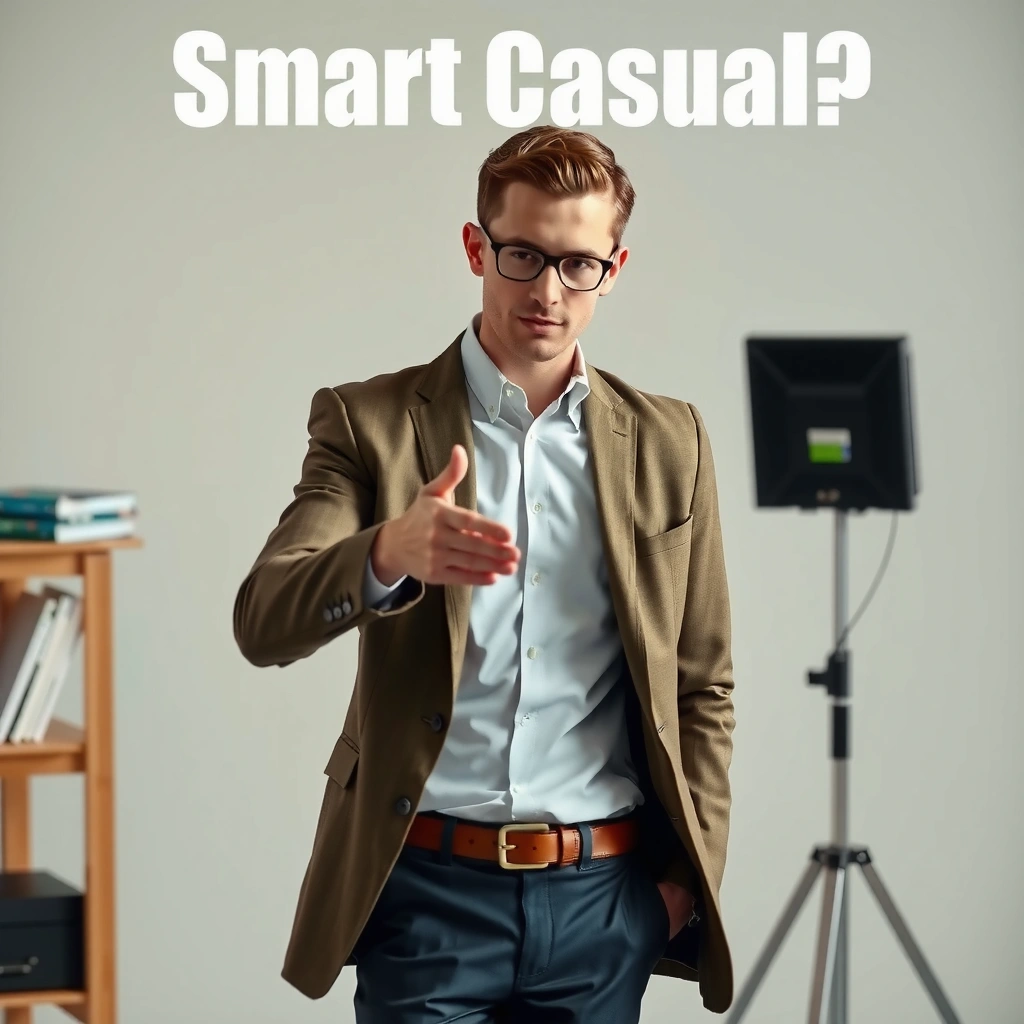
Smart casual for men should fit cleanly through the shoulders and torso, then relax slightly through the body—nothing should look sloppy, stretched, or “almost formal.” If the fit and fabric are right, coordination becomes much easier, even with basic items.
Smart casual for men depends heavily on fit: shoulders should sit naturally, sleeves should end near the wrist, and trousers should hang without pulling.
In smart casual for men, structured fabrics (like twill, midweight knits, and Oxford shirting) read more “intentional” than thin, stretchy, or very shiny materials.
– Fit first: shoulders should sit correctly, sleeves shouldn’t bunch, and trousers should break cleanly (or be a clean taper—either is fine if intentional).
– Fabric matters: aim for solid, wrinkle-resistant, or naturally structured materials; avoid overly thin/see-through knits and very shiny “party” fabrics.
– Color + contrast: stick to neutral bases (navy, charcoal, cream, olive, white) and add one accent via a jacket, shirt, or belt.
Coordination: match intensity, not just color
A common reason smart casual for men falls apart is that the outfit has mismatched “intensity”—for example, a formal-looking shirt paired with heavily worn sneakers, or clean loafers paired with a wrinkled tee. A quick self-audit is to check whether your top, bottom, shoes, and outer layer all look equally “maintained.”
Here’s a straightforward guide you can use in real time:
| Outfit element | Works for smart casual for men if… | Looks off if… |
|---|---|---|
| Shirt/top | Collar stands naturally; fabric isn’t see-through | The fabric is too thin or collar collapses |
| Bottoms | Chinos or dark denim look unworn and crisp | Faded, heavily distressed, or baggy |
| Shoes | Clean, non-scuffed leather/leather-look or minimal sneakers | Athletic/battered sneakers that scream “gym” |
| Outer layer | Blazer/overshirt adds structure | No-structure hoodie or flashy, shiny material |
What can go wrong—and the verdict (plus a saveable checklist)
Smart casual for men can go wrong in two directions: it can tip too formal (accidentally trying hard) or too casual (looking unprepared). The fix is usually simple—control fit, choose one elevated anchor, and keep shoes clean and appropriate to the setting.
Overly shiny or overly distressed items commonly break smart casual for men because they visually read “dressy” or “worn-out,” respectively.
Smart casual for men is safest when you build around one elevated anchor piece—blazer, overshirt, or a crisp polo—then keep everything else tidy and consistent.
– Common mistakes:
– Overdoing it: trying too hard with a full suit, very formal shoes, or a loud tie when the setting didn’t call for it.
– Under-doing it: faded jeans, ripped details, scuffed shoes, or overly casual graphic tees.
– Shoe mismatch: sneakers that are clearly athletic/beat up can make the whole outfit read “casual” instead of smart casual.
– Verdict / tip:
– Smart casual is safest when you control fit and choose one “elevated” anchor piece (like a blazer, overshirt, or crisp polo).
– Skip smart casual (or go more casual) if the event is truly laid-back—muddy outdoor plans, beach settings, or anything that asks for “informal” rather than “smart.”
– Don’t force it with cheap fabrics—if items feel flimsy or don’t hold shape, it won’t read smart no matter how you style it.
Smart casual checklist (scan fast)
| Check | What to look for |
|---|---|
| Fit | Clean shoulders, sleeves that sit right, trousers/chinos that hang neatly |
| Fabric | Structured knits, denim that looks unworn, non-trashed garments |
| Top | Polo/button-down/knit (tee works only if it’s solid and well-fitted) |
| Bottom | Chinos or dark, tidy denim—no heavy distressing |
| Shoes | Loafers/derbies/clean leather-look or minimal clean sneakers |
| Overall vibe | One elevated piece + one relaxed piece, not all-formal or all-casual |
FAQ
What shoes are best for smart casual men?
Loafers, derbies, or clean leather/leather-look shoes are the most reliable. Minimal, well-kept sneakers can work in many casual-to-business settings, but very athletic styles can tip it too casual.
Do jeans count for smart casual?
They can, if they’re dark, clean, and not heavily distressed. If the jeans look “weekend-worn,” swap to chinos or tailored trousers.
Is a tie ever required?
Usually no—smart casual generally means you don’t need tie-and-suit formality. If your invite specifically asks for a tie, follow that instruction.
Can I wear a T-shirt?
Yes, but keep it structured and fitted (avoid loose, thin, or heavily graphic tees). A polo or knit usually reads smarter.
Sources
– [ADD: source for the “smart casual” dress-code definition from a reputable dictionary/etiquette reference]
– [ADD: source for guidance on interpreting dress codes for workplace/public events, if your site uses an official policy model]
– W3C WCAG 2.2 (2021): Success Criterion 1.4.3 and 1.4.6 contrast ratio requirements
Smart casual for men is all about looking polished without going fully formal: choose well-fitting, tidy pieces, anchor the outfit with one slightly elevated item, and keep fabrics and shoes clean and appropriate. Use the outfit formulas above, run through the checklist, and—if you’re still unsure—lean one step sharper rather than more casual. If you want, tell me the event (work, dinner, date, venue vibe) and what you already own, and I’ll suggest a smart-casual outfit from your closet.
Frequently Asked Questions
What is smart casual for men?
Smart casual for men is a style that blends polished, office-appropriate pieces with relaxed, everyday comfort. It typically includes tailored trousers or dark jeans, a button-down or knit top, and smart shoes like loafers or clean leather sneakers. The goal is to look put-together without being as formal as a suit-and-tie outfit.
How do you dress smart casual men for work?
Start with a solid foundation: chinos or tailored trousers paired with a structured shirt, polo, or fine-knit sweater. Add a blazer or cardigan for extra polish, and choose shoes that look clean and intentional, such as brogues, loafers, or minimalist sneakers. Keep colors neutral or classic—navy, charcoal, white, and camel—so the outfit reads professional.
Why is smart casual so popular for men?
Smart casual is popular because it’s versatile enough for many everyday settings, from casual Fridays to dinners and networking events. It helps you balance comfort and credibility—dressing better than typical casual wear without the strict rules of formal attire. This flexibility makes it easier to build a go-to wardrobe that works across different dress codes.
Which shoes are best for smart casual men?
The best smart casual shoes are clean, structured, and not overly sporty. Options like leather loafers, brogues, desert boots, Chelsea boots, or low-profile sneakers work well when paired with the right clothing. As a rule, avoid worn-out soles, scuffed finishes, or bright athletic footwear, since they can make the outfit feel too casual.
Best smart casual outfit ideas for men in different seasons?
For spring and fall, try a button-down shirt with chinos and a lightweight blazer, or a knit sweater with tailored trousers and boots. In summer, opt for breathable fabrics like linen shirts or polo tops with chinos or lightweight trousers, and finish with loafers or clean sneakers. For winter, layer with a wool overcoat or thick cardigan over a collared shirt, and choose warmer smart casual shoes like boots for a cohesive look.
📅 Last Updated: October 12, 2026 | Topic: What Is Smart Casual for Men? | Content verified for accuracy and freshness.



