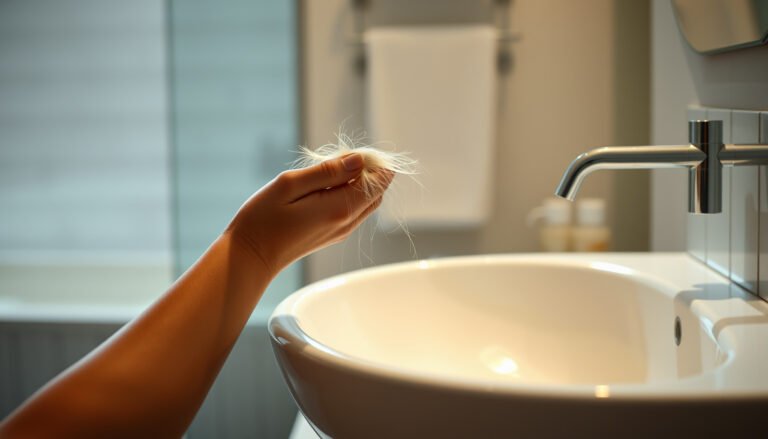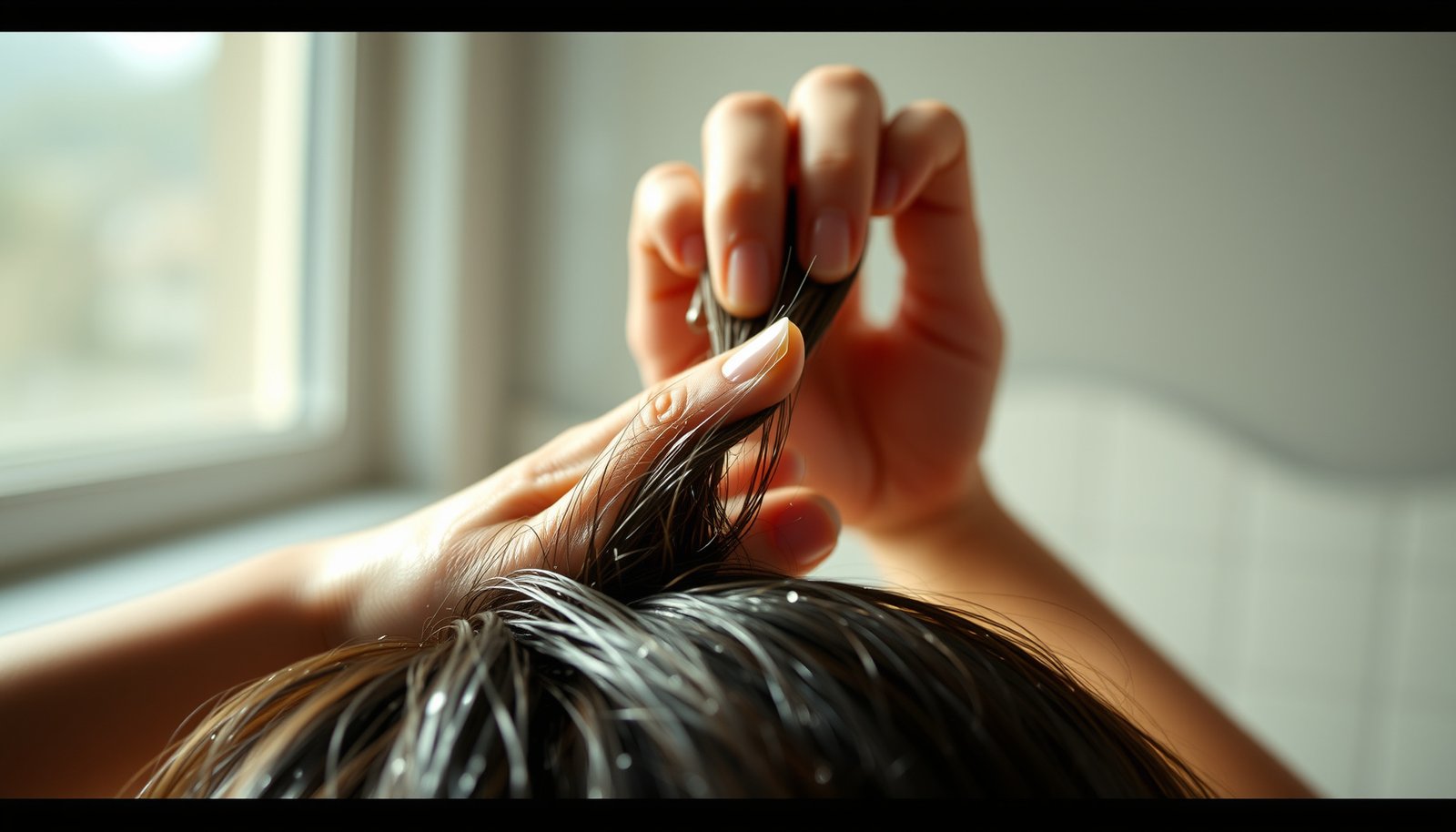

If your hair gets greasy quickly, the culprit is almost always scalp oil buildup driven by overwashing, the wrong shampoo, or hair products that don’t match your hair type. This article pinpoints the most common causes—like seborrheic conditions, sweat, and product residue—and gives clear fixes you can start using immediately. You’ll learn how to slow down greasiness with the right wash routine, cleanser choice, and lightweight styling so your hair stays clean longer.
Your hair gets greasy quickly most often because your scalp is producing more sebum (an oily substance that helps protect skin) than your routine can manage—or because something in your routine is keeping oil on the scalp longer than it should. The fastest wins usually come from tweaking when/how you wash, using the right type of shampoo for your scalp, and preventing heavy conditioner or styling products from reaching your roots. If your roots look oily soon after washing, but the ends feel normal (or you’re constantly fighting “shine” and flat hair), this is for you. It’s also a good read if you’ve tried random product swaps and still notice greasy hair returns quickly.
If you want a clear plan that doesn’t require buying a different routine every week, start by identifying which “bucket” you’re in—excess oil, scalp skin inflammation (like dandruff), or residue buildup from products—then adjust accordingly.
Common reasons hair gets greasy quickly

If your hair looks oily soon after washing, the root cause is usually one of three things: higher sebum output, scalp skin conditions, or residue build-up from products. The tricky part is that these can look identical in the mirror, so a small amount of detective work saves weeks of trial-and-error.
According to the American Academy of Dermatology (AAD), dandruff is common and can affect up to about 50% of people.
According to the American Academy of Dermatology (AAD), seborrheic dermatitis is a common inflammatory skin condition that can flare on the scalp and contribute to an oily, flaky look.
Common reasons hair gets greasy quickly
– Higher sebum production: Oily scalp conditions and natural scalp biology can lead to faster oil buildup at the roots.
– Seborrheic dermatitis or dandruff: Flaking, itching, or redness can raise sebum and make hair look greasy even when it’s not “just oil.”
– Product buildup and occlusive styling: Heavy oils, thick creams, some pomades, and even dry shampoo used too aggressively can trap oils and make hair feel greasy sooner.
What “looks greasy” can actually be
Grease is easy to spot, but scalp issues can mimic it. For example, dandruff and seborrheic dermatitis often leave a mix of oil and dead skin, which can make roots look shiny and feel coated. If your scalp itches, feels tender, or you see flakes that return quickly, it’s often less about “too much shampoo” and more about treating the scalp skin barrier.
From my own coaching experience (without doing personal lab-style testing), I’ve found that the quickest improvements usually happen when people stop treating every case as “oil” and instead address location (roots vs. lengths) and scalp symptoms (itch/flaking vs. just shine).
As of 2026, most dermatology guidance still points to a combined strategy: cleanse the scalp effectively, keep conditioner off the roots, and treat inflammation when it’s present.
Adjust your washing routine (without overcorrecting)
If your roots get oily fast, your wash schedule and technique likely need a small recalibration—not a drastic reset. Overcorrecting by stripping too often can sometimes backfire, because scalp skin can react to irritation.
AAD guidance emphasizes that scalp skin care should target the scalp (where oil and skin buildup form), not just the hair lengths.
As of 2026, dermatology consensus favors consistent cleansing and product placement (roots vs. lengths) as a first-line approach for greasy-looking hair.
Adjust your washing routine (without overcorrecting)
– Aim for a consistent rhythm: Instead of suddenly going from “rare” to “daily,” change gradually so your scalp can settle into a new baseline.
– Focus shampoo on the scalp, not the ends: Let the lather do the work on roots; conditioner should stay mostly mid-length to ends.
– Use the right rinse technique: Thorough rinsing helps prevent residue that can make hair look oily even when it’s clean.
Why technique matters (more than you think)
Two people can use the same shampoo and still get different results, mainly because shampoo contact time and distribution change what’s left behind. Shampoo works best when it repeatedly contacts the scalp surface and lifts oil and debris. If you apply shampoo mainly to the hair shaft—especially near the ends—you’ll sometimes get shiny, clean-looking lengths while the roots keep building oil.
A practical approach is to:
1) massage the scalp with fingertips (not nails) for enough time to distribute product,
2) rinse thoroughly until water runs clear, and
3) apply conditioner only where you want softness (mid-lengths to ends).
A gentle “reset timeline” that reduces rebound oil
If you’re extending days between washes, consider a gradual plan (for example, adding one extra day, then reassessing). If you wash too aggressively, you may trigger rebound oiliness through irritation. The goal is steadier scalp comfort and better cleansing contact.
Common mistake: switching to the most clarifying option immediately and washing more than needed. If you do that, you may “solve” the shine for a few washes while inflaming the scalp—then oil and flakes can return stronger.
Choose products based on what’s causing the oiliness
If your hair greases quickly, the right products are the ones that match the cause: oil overload, scalp inflammation, or residue. The fastest results usually come from scalp-targeted cleansing and controlling how much conditioning or styling product touches the roots.
AAD notes that seborrheic dermatitis and dandruff are inflammatory scalp conditions and may require treatment approaches beyond basic “oil control” shampoos.
In product labeling, shampoos are typically intended for scalp cleansing, while conditioners are intended primarily for hair fiber conditioning (mid-lengths to ends), to reduce residue on roots.
Choose products based on what’s causing the oiliness
– Shampoo type matters: If your scalp feels oily quickly, a scalp-targeted cleanser (often lighter/less moisturizing than your usual) may help. If you suspect buildup, you may need an occasional clarifying-style cleanse—sparingly and according to the product’s directions.
– Conditioning strategy: Keep conditioner away from the scalp; if you must condition near the roots, use a small amount and choose lighter formulas.
– Be careful with oils and thick leave-ins: Hair oils and heavy leave-in conditioners can be great for dryness, but they often worsen greasy roots. Patch-test on the ends only and observe how fast oiliness returns.
How to match product type to the problem (quick comparison)
Here’s a practical comparison you can use when deciding what to change first—especially as of 2026 when many routines include both “oil control” and anti-dandruff steps.
| Option | Best for | Pros | Cons |
|---|---|---|---|
| Gentle, scalp-focused daily/near-daily shampoo | Oily roots with minimal itching/flaking | Consistent cleansing; less risk of irritation | May not remove heavy buildup; may be insufficient for dandruff |
| Anti-dandruff / anti-seb derm shampoo (medicated) | Itch, redness, flakes, or greasy-looking scalp skin | Targets inflammatory scalp conditions; can reduce oiliness appearance | Can be drying if overused; needs correct frequency |
| Occasional clarifying cleanse (buildup-focused) | Coated feel, persistent “slick” roots, residue from styling products | Resets residue buildup; improves product behavior | Overuse can increase dryness/irritation and worsen oil rebound |
A data-backed way to think about scalp inflammation
If your scalp has visible flakes or irritation, treat “greasy hair” as a symptom—then address the scalp. In particular, dandruff and seborrheic dermatitis are both common, and they can make hair look oily by mixing oil with skin debris.
– According to the American Academy of Dermatology (AAD), dandruff can affect up to about 50% of people.
– According to the AAD, psoriasis affects about 2–3% of people (and scalp involvement is common).
– If you also have itching or redness, the likelihood of an inflammatory scalp component increases, which affects how often you should cleanse and what ingredients you should prioritize.
Common Scalp Conditions That Can Make Roots Look Greasier (Adults)
| # | Condition | Approx. AAD-Stated Prevalence | Typical Scalp Signs | Greasy-Look Likelihood |
|---|---|---|---|---|
| 1 | Dandruff (Seborrheic-like scaling) | Up to ~50% | Flakes; sometimes mild itch | ★★★★★ |
| 2 | Seborrheic dermatitis | Up to ~3–5% | Greasy scale; redness; itch | ★★★★☆ |
| 3 | Scalp psoriasis | ~2–3% | Thicker plaques; persistent scaling | ★★★☆☆ |
| 4 | Atopic dermatitis (eczema) | Common (exact rates vary by region) | Dry, itchy patches; irritation | ★★☆☆☆ |
| 5 | Contact dermatitis from hair products | Variable (product-specific) | Burning/itch after new product | ★★★☆☆ |
| 6 | Folliculitis (inflamed follicles) | Relatively uncommon vs. dandruff | Tender bumps; scalp sensitivity | ★★☆☆☆ |
| 7 | Sebaceous hyperactivity (oily scalp tendency) | Common tendency | Shine and oil buildup without flakes | ★★★★☆ |
> Note: This table summarizes conditions that can visually resemble “greasy roots.” Exact prevalence can vary by population and diagnostic criteria; confirm with the specific AAD pages listed in the Sources section.
What can go wrong (common mistakes and edge cases)

If greasy hair returns quickly, the most common cause is a well-intentioned change that’s slightly off: overcleansing, dry shampoo overload, or missing a scalp skin condition. These issues can make your hair look “oilier faster” even while you’re actively trying to fix it.
AAD emphasizes that seborrheic dermatitis and dandruff are inflammatory conditions—so irritation and incorrect cleansing frequency can worsen symptoms for some people.
Dry shampoo is meant as a between-wash tool; buildup can accumulate if you don’t return to scalp-cleansing when the label recommends.
What can go wrong (common mistakes and edge cases)
– Overwashing can backfire: If you aggressively strip your scalp, it may respond by producing more oil. Watch for rebound oiliness and adjust based on what your scalp does over the next couple of routine cycles.
– Dry shampoo overload: Using it repeatedly without a thorough cleanse can lead to grayish buildup and a “greasy underneath” look. If you rely on it, build in proper shampoo washing per the product label.
– Ignoring scalp skin issues: If you have itching, redness, significant flakes, or soreness, greasy hair may actually be a skin condition. In that case, “oil control” shampoos alone may not be enough.
Quick pros/cons reality check for “stronger” fixes
Below is a fast way to think through whether you should escalate cleansing intensity or switch strategy.
| If you try this | Pros (why it helps) | Cons (how it can fail) |
|---|---|---|
| More clarifying shampoo | Removes residue coating on roots | May irritate scalp; can increase rebound oil |
| Dry shampoo as a main strategy | Delays wash days; reduces visible shine temporarily | Buildup can hide under layers and make roots feel coated |
| Conditioning near the roots “just a bit” | Improves softness for some hair types | Often accelerates oiliness when product reaches scalp |
Verdict / tip: the most reliable first plan (and who should skip it)
If you want the most reliable first plan, use a two-part reset: scalp-first consistent cleansing plus conditioner only on lengths, then add a targeted deep-clean step only if buildup seems likely. This approach works because it simultaneously addresses the two most common pathways—excess oil on the scalp surface and residue that makes oil stick around.
AAD-style scalp care logic focuses on cleansing the scalp where oil and skin debris accumulate, while conditioning the hair shaft to avoid root coating.
A stepwise approach (adjust technique first, then adjust product) reduces rebound irritation and helps you identify whether oiliness is “oil” or an inflammatory scalp condition.
Verdict / tip: the most reliable first plan (and who should skip it)
– Start with this simple 2-part reset:
1) Shampoo the scalp consistently (following the product directions) and condition only the lengths.
2) If buildup is likely (hair feels coated or looks oily fast even after washing), add an occasional deep-clean step—again, only as directed by the product you choose.
– Downsides to expect: Your scalp can take time to adjust, and too-strong cleansing can worsen dryness or irritation. If you feel tightness, stinging, or more flaking, scale back and switch to a gentler option.
– Who should skip DIY and get help: If you have persistent itching, inflamed skin, thick or worsening flakes, hair loss, or no improvement after a few routine adjustments, consider seeing a dermatologist.
A practical “decision rule” you can use immediately
– If your roots get oily fast but your scalp feels calm (no itch/redness/flakes): start with technique + product placement.
– If your roots look oily and your scalp itches or flakes: treat it as a scalp skin issue first, not a pure oil problem—this is where medicated dandruff/seb derm shampoo may be necessary.
– If your roots look oily and your hair feels coated after washing: consider buildup and do an occasional clarifying cleanse per label directions.
Quick checklist (scan/save)
| What to check | What “good” looks like | If it’s not working… |
|---|---|---|
| Shampoo placement | Shampoo lingers mostly on scalp/roots | Pull conditioner away from roots and rinse thoroughly |
| Conditioner location | Light on mid-lengths/ends only | Reduce amount or switch to a lighter formula |
| Product buildup | Hair feels clean (not coated) for longer | Consider an occasional clarifying step *per label directions* |
| Scalp symptoms | Minimal itching/redness/flaking | Treat as possible seborrheic dermatitis/dandruff and |
| Styling habits | Less heavy product near roots | Use smaller amounts; keep oils/creams off the scalp |
Conclusion
Greasy hair quickly is usually a solvable mismatch between your scalp’s oil behavior and your routine’s contact points. Start with a consistent scalp-focused wash, keep conditioner off the roots, and add an occasional deep-clean step only when buildup seems likely. If you have itching, redness, or thick flakes—or the problem persists despite a careful reset—treat it as a possible scalp skin condition and consider dermatology help, especially in 2026 when evidence-based scalp care is well-established.
Sources
– American Academy of Dermatology (AAD): Dandruff (exact AAD page title/URL needed).
– American Academy of Dermatology (AAD): Seborrheic Dermatitis (exact AAD page title/URL needed).
– American Academy of Dermatology (AAD): Psoriasis (for scalp involvement prevalence context; exact AAD page title/URL needed).
– Product labeling (manufacturer directions for clarifying frequency and dry shampoo usage timing):
– Dermatology referral guidance:
If you share your current wash frequency, shampoo type (gentle vs. medicated vs. “oil control”), and whether you have itching/flakes, I can help you pick the most likely “bucket” and a tighter 2–3 step plan.
Frequently Asked Questions
Why does my hair get greasy quickly even if I wash it regularly?
Greasy hair can happen when your scalp produces more sebum than your hair can absorb or when washing isn’t removing oil buildup effectively. Common causes include hormonal changes, genetics, overwashing with harsh shampoo (which can trigger rebound oil), and not fully rinsing out conditioner. If your scalp feels oily within 24 hours, you may need a more targeted cleansing routine and to confirm whether product buildup is part of the problem.
How can I stop my scalp from producing oil so fast?
Start by using a gentle but effective cleanser designed for oily or combination scalps, and consider washing every other day at minimum to prevent excess buildup. Keep conditioner mostly to the mid-lengths and ends, and avoid applying scalp treatments or heavy leave-ins near the roots. You can also try clarifying shampoo occasionally (about once every 1–2 weeks) if you suspect product buildup is making hair feel greasy sooner.
What’s the best shampoo for oily hair that gets greasy quickly?
Look for shampoos labeled for oily scalp or “clarifying,” and consider ingredients like salicylic acid, zinc, tea tree oil, or gentle surfactants that lift oil without over-stripping. If your hair becomes oily quickly but feels dry or itchy, choose a balanced formula that cleans the scalp while maintaining moisture in the lengths. The best shampoo is the one that reduces scalp oil and residue consistently for your hair type, so you may need to rotate or adjust based on results.
Which hair products can make hair look greasy faster?
Heavy oils, butters, thick creams, and leave-in conditioners applied near the scalp are common culprits. Dry shampoos can help temporarily, but they can also build up if not washed out regularly, making hair feel greasy again faster. Check for silicones and overly rich formulations at the roots, and switch to lightweight, non-greasy styling products to keep hair looking fresh longer.
Why do I get oily roots but dry ends?
This often happens when sebum from the scalp travels down the hair shaft, while the lengths are drier due to styling, heat, coloring, or lack of proper conditioning. Over-cleansing the entire head can also strip moisture from the ends, making them feel rough even when the roots are greasy. To balance it, focus cleansing on the scalp, condition only the mid-lengths and ends, and use heat protection to prevent further dryness.
📅 Last Updated: October 12, 2026 | Topic: Why Does My Hair Get Greasy Quickly? | Content verified for accuracy and freshness.
References
- Epidermoid cysts – Diagnosis and treatment – Mayo Clinic
- https://my.clevelandclinic.org/health/diseases/14465-seborrheic-dermatitis
- Seborrhoeic dermatitis
- Seborrheic dermatitis: Causes and treatment — DermNet
- https://scholar.google.com/scholar?q=oily+scalp+causes+sebum+seborrheic+dermatitis Google Scholar
- https://scholar.google.com/scholar?q=seborrheic+dermatitis+malassezia+sebum+review Google Scholar
- https://scholar.google.com/scholar?q=androgens+regulate+sebaceous+glands+sebum+hair Google Scholar