
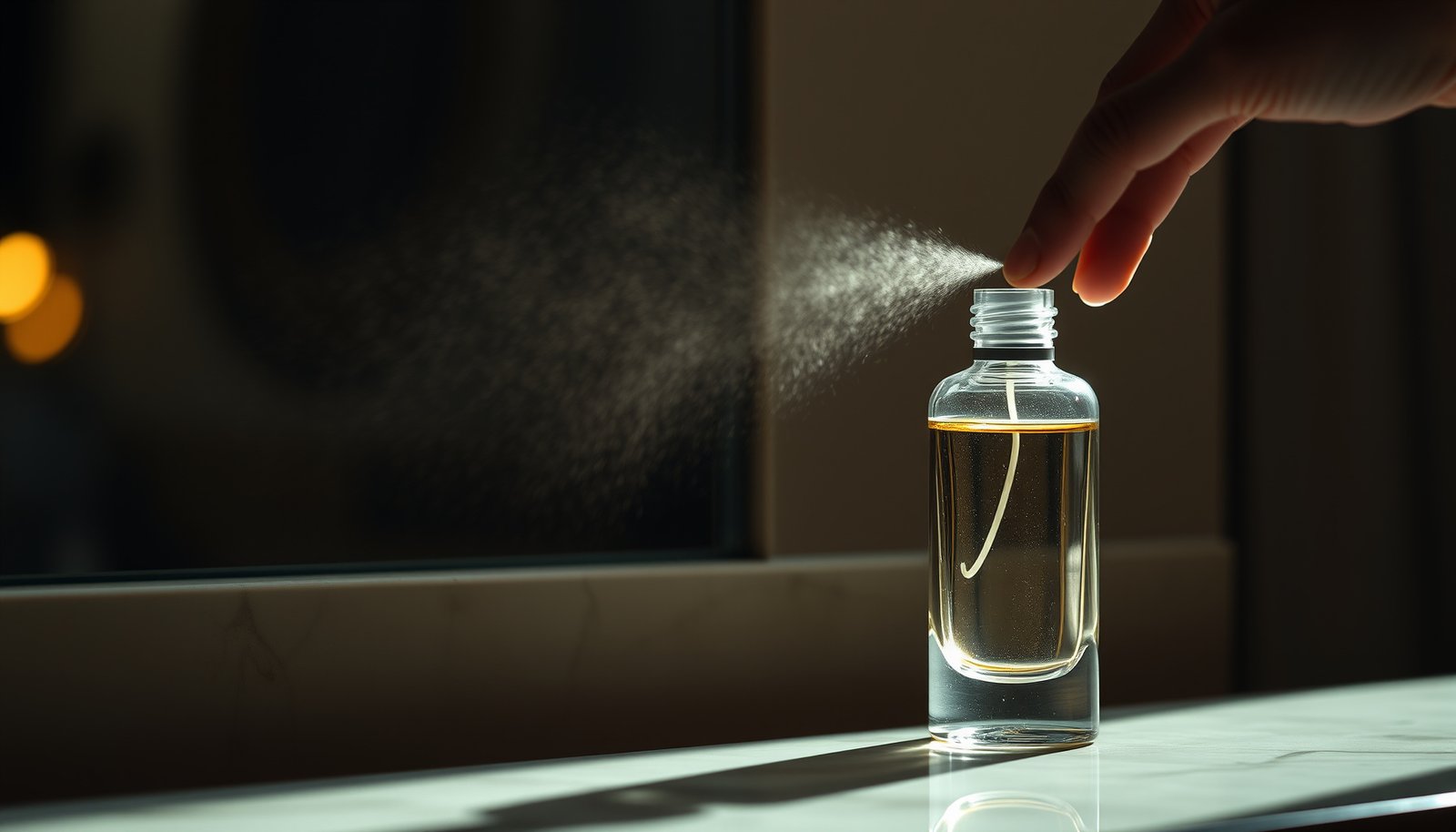

If your perfume fades quickly, the culprit is usually one of a few fixable issues: exposure to heat and light, applying too little or to dry skin, or using the wrong storage and amount. We’ll pinpoint the most common reasons your scent disappears fast and tell you exactly what to change to make it last longer. By the end, you’ll know whether the problem is your perfume itself—or how you’re storing and wearing it.
Your perfume fades quickly mostly because the scent compounds evaporate at different rates on your specific skin—and the way you apply and store it can accelerate that process. Adjusting your spray method, targeting the right skin (and sometimes clothes), and choosing the right fragrance concentration will typically improve longevity dramatically.
Skin Type and Body Chemistry
– Oily, dry, or sensitive skin can change how long notes stay strong.
– Temperature, sweat, and hormones can speed up evaporation.
Skin chemistry is one of the biggest variables in perfume longevity. Perfume is designed to evolve on skin: alcohol carries the fragrance, then different molecules bind to (or evaporate from) your surface oils and moisture. If your skin chemistry is “less receptive” to those molecules, the fragrance can fade fast—especially the early top notes.
How skin type affects fading
– Dry skin: Perfume tends to dry out quickly, which means less fragrance is held close to the skin. You’ll often notice the scent disappears sooner and the dry-down never fully “arrives.”
– Oily skin: Oil can help hold fragrance compounds, sometimes extending longevity. However, if you’re very warm or sweat heavily, the same oils can also push fragrance outward faster through heat and moisture.
– Sensitive or reactive skin: Barrier disruption can change how alcohol-based scents sit on you. It may also lead to micro-irritation that makes you reapply earlier—then the scent can start sounding “flat” or overly alcoholic.
Temperature, sweat, and hormones
– Heat speeds evaporation. When your body temperature is higher (morning workouts, hot weather, fever), volatile notes dissipate faster.
– Sweat changes the chemistry at the surface. Sweat isn’t just water; it can alter pH and affect how fragrance materials behave, often shortening the lifespan of lighter notes.
– Hormonal shifts can subtly change skin oil balance, which changes how perfume “sets” over time. This is one reason the same bottle can perform differently across seasons.
Quick fix: Apply perfume to well-moisturized skin using an unscented lotion (no strong fragrance oils). This reduces “flash-off” and gives the scent something to grip.
How You Apply Your Perfume
– Applying to dry skin or rubbing wrists together can reduce longevity.
– Using the right amount and targeting pulse points helps scents bloom.
Many people try to solve perfume fading by spraying more—but the real issue is often placement and technique.
Avoid common application mistakes
– Spraying on completely dry skin: It can cause the alcohol carrier to evaporate immediately, which makes the top notes vanish quickly and leaves a thinner trail.
– Rubbing wrists together: Rubbing generates friction and warms the skin, which can evaporate the top notes faster and also breaks down how the fragrance lays down.
– Spraying only in one spot: If your perfume is concentrated on a single area, heat and sweat can “spike” the fragrance there and make it fade sooner overall.
Target pulse points—and let them breathe
Pulse points are naturally warmer and often have better airflow:
– Neck
– Inner elbows
– Wrists (lightly, without rubbing)
– Chest
– Behind the ears
Use the right number of sprays
A practical starting point:
– 2–4 sprays for office or everyday wear (neck + chest + one or two pulse points)
– 1–2 sprays if you’re sensitive to scent intensity or the fragrance is strong
– Avoid “spray-and-wait-then-spray-more immediately.” Let the first application settle for 10–15 minutes—then adjust if needed.
Clothing can help—but use smart placement
If your perfume fades quickly on skin, a light spray on clothing can extend wear time. However:
– Some perfumes can stain or leave residue on delicate fabrics.
– Always test on an inconspicuous seam first.
– Consider spraying the inside of a collar or outer seam rather than directly on white shirts.
Fragrance Composition (Top Notes vs. Base Notes)
– Citrus and other top-heavy scents naturally fade faster.
– Heavier base notes (woods, resins, amber) typically last longer.
Even with perfect application, perfume still follows its chemical “story.” The fragrance pyramid explains why some scents fade quickly even when you do everything right.
Top notes: the first impression (and often the first to go)
Top notes are designed to be noticeable quickly. Many common top-heavy profiles—citrus (lemon, bergamot), fresh aromatics, many fruity notes, and light florals—are made of more volatile molecules. That’s why they can feel like they disappear within an hour or two.
Base notes: the longevity engine
Base notes contain heavier materials (often larger molecules) that evaporate more slowly:
– Woods (sandalwood, cedar, vetiver)
– Resins (benzoin, frankincense, labdanum)
– Amber and musks
– Some darker florals (depending on the formula)
These notes typically remain detectable longer, often carrying the scent through most of the wear period.
How to tell what’s happening
If you only smell your perfume strongly at the start and then it becomes faint quickly, your fragrance likely has a dominant top-heavy structure or low “fixation” on your skin. If you still smell the scent later but it’s softer than expected, your base notes may be present but you may need better skin conditions (hydration, less friction, cooler storage).
Targeted fix
– If you love a top-note-forward scent but want it longer, layer it with an unscented moisturizer or a matching lotion (if available).
– If your goal is all-day longevity, prioritize profiles with amber, woods, vanilla, resins, or musks as visible base elements.
Storage and Exposure to Light, Heat, and Air
– Heat and sunlight break down fragrance molecules sooner.
– Leaving the cap off or storing in humid areas increases oxidation.
Storage matters because fragrance molecules degrade over time—especially when exposed to light, heat, and oxygen. When that degradation happens, you may notice fading faster and reduced “depth” compared with how the perfume performed when new.
What accelerates fading
– Sunlight: UV exposure can break down aromatic compounds and alter the balance between top, heart, and base notes.
– Heat: Bathrooms, car interiors, and near radiators are common longevity killers.
– Air exposure (cap off): Oxygen promotes oxidation and can shift the scent profile, sometimes making it smell dull or “thin.”
– Humidity: High humidity can change how the product behaves and can encourage deterioration—particularly if the bottle is frequently exposed during humid showers.
Best storage practices
– Keep your perfume upright and fully capped.
– Store in a cool, dark place (closet or drawer is ideal).
– Avoid frequent temperature cycling (e.g., taking it in and out of a hot car daily).
Typical shelf-life expectation
Many perfumes remain “good” for years when stored properly, but performance can visibly drop over time once opened—so a scent that fades unusually fast could be an early sign of age or poor storage.
Product and Longevity Factors
– Using only Eau de Toilette instead of EDP can shorten wear time.
– Scent layering with matching lotion can improve staying power.
Even among fragrances with the same scent family (e.g., amber vanilla), longevity can vary because of concentration and the formula’s overall fixation. Concentration impacts the ratio of aromatic compounds to alcohol, which directly affects how long molecules persist on skin.
Below is a practical overview of how fragrance concentrations often translate into wear time.
Typical Wear Time by Fragrance Concentration (On Skin)
| # | Concentration / Form | Typical Wear Time | Fade Risk | Longevity Rating |
|---|---|---|---|---|
| 1 | Eau de Cologne (EDC) | 1–3 hours | High | ★☆☆☆☆ |
| 2 | Eau de Toilette (EDT) | 3–5 hours | Medium-High | ★★☆☆☆ |
| 3 | Eau de Parfum (EDP) | 5–8 hours | Medium | ★★★☆☆ |
| 4 | Parfum / Extrait-style (higher oil content) | 7–12 hours | Low-Medium | ★★★★☆ |
| 5 | Perfume Oil (alcohol-free) | 6–10 hours | Low | ★★★★☆ |
| 6 | Body Mist | 1–2 hours | Very High | ★☆☆☆☆ |
| 7 | Roll-on (compact fragrance) | 4–7 hours | Medium | ★★★☆☆ |
Practical buying and usage guidance
– If you repeatedly reach for the same scent but it fades in the same window, switch from EDT to EDP (or a higher concentration).
– For quick performance gains without changing brands, use matching lotion/body cream if the line offers it. The base moisturizer can act like a “scent anchor.”
Environmental and Lifestyle Influences
– Windy, hot, or high-humidity conditions can make perfume dissipate faster.
– Smoking, strong body odors, and certain hair products can mask or alter scent.
Your environment influences not just how your perfume performs, but how it’s perceived.
Weather and airflow
– Wind: Forces scent molecules away from your skin, reducing the time others can smell you clearly—and sometimes your own perception too.
– High humidity: Can make top notes feel fleeting because the scent “spreads” differently across hydrated skin and evaporates unpredictably.
– Heat: Accelerates volatility. If you start the day in cool air and move into warm areas, you may experience faster fade during the transition.
Lifestyle factors
– Smoking/vaping exposure: Even if you don’t smoke directly, lingering smoke molecules can compete with perfume and mask it.
– Strong body odors: Deodorant, sweat, and even diet-driven odor profiles can change how the fragrance reads. A perfume that fades quickly may actually be getting “covered” rather than evaporated.
– Hair products: Many hair gels, sprays, and oils cling to scent. If your hair products are strongly perfumed (or recently washed with scented products), the perfume experience can change—sometimes making the perfume appear short-lived.
Actionable mitigation
– If you’re in hot or windy conditions, apply a slightly stronger base-heavy strategy (e.g., one extra spray at the neck or chest rather than over-spraying wrists).
– Consider reapplication on pulse points after 4–6 hours if the context is high-heat.
– Keep hair and clothing scent profiles in mind—sometimes the easiest “fix” is coordinating what you use on hair.
Your perfume should last longer once you address the biggest fade causes—skin chemistry, application, and storage are usually the culprits. Try adjusting where and how you spray, choose a longer-lasting concentration, and store it away from heat and light. If you want, tell me your perfume type (EDT/EDP/extrait) and where you spray, and I’ll suggest targeted fixes.
Frequently Asked Questions
Why does my perfume fade quickly on my skin?
Perfume can fade faster if your skin is dry, because moisture helps hold fragrance molecules longer. Body chemistry also matters—oils, pH, and even sweat can change how quickly top notes evaporate. If you’re applying too little perfume or spraying only once, the scent may not last through the day.
How can I make perfume last longer throughout the day?
Start by applying fragrance to well-moisturized skin, such as after a shower or with an unscented lotion to create a better “base.” Spray on pulse points (wrists, neck, inner elbows) and consider lightly spraying clothing from a distance to extend longevity. You can also try layering by using matching or complementary scented body products to help the fragrance linger.
What causes perfume to disappear faster in hot or humid weather?
Heat and humidity increase evaporation, so top notes and lighter aromatics fade sooner. Sweat can also break down and spread fragrance, making it smell weaker or different over time. For warm climates, consider using stronger concentration options (like parfum) or reapplying after a few hours.
Which perfume notes tend to fade the fastest, and what lasts longer?
Light, citrus, and fresh top notes (like bergamot, lemon, and many watery florals) usually fade quickly because they evaporate faster. Middle notes may last longer, while base notes such as woods, amber, musk, and vanilla tend to provide better staying power. Choosing a fragrance with a richer base—or one marketed as “long-lasting”—can help reduce the “perfume fades quickly” problem.
What’s the best way to apply perfume so it doesn’t fade quickly?
Apply perfume to clean, hydrated skin and avoid rubbing your wrists together, since this can break down fragrance molecules. Use a light-to-moderate amount, typically 2–4 sprays total for everyday wear, focusing on pulse points. For longer wear, spray once on skin and once on clothing (check fabric for sensitivity), and store your bottle away from heat and sunlight to protect the fragrance formula.



