
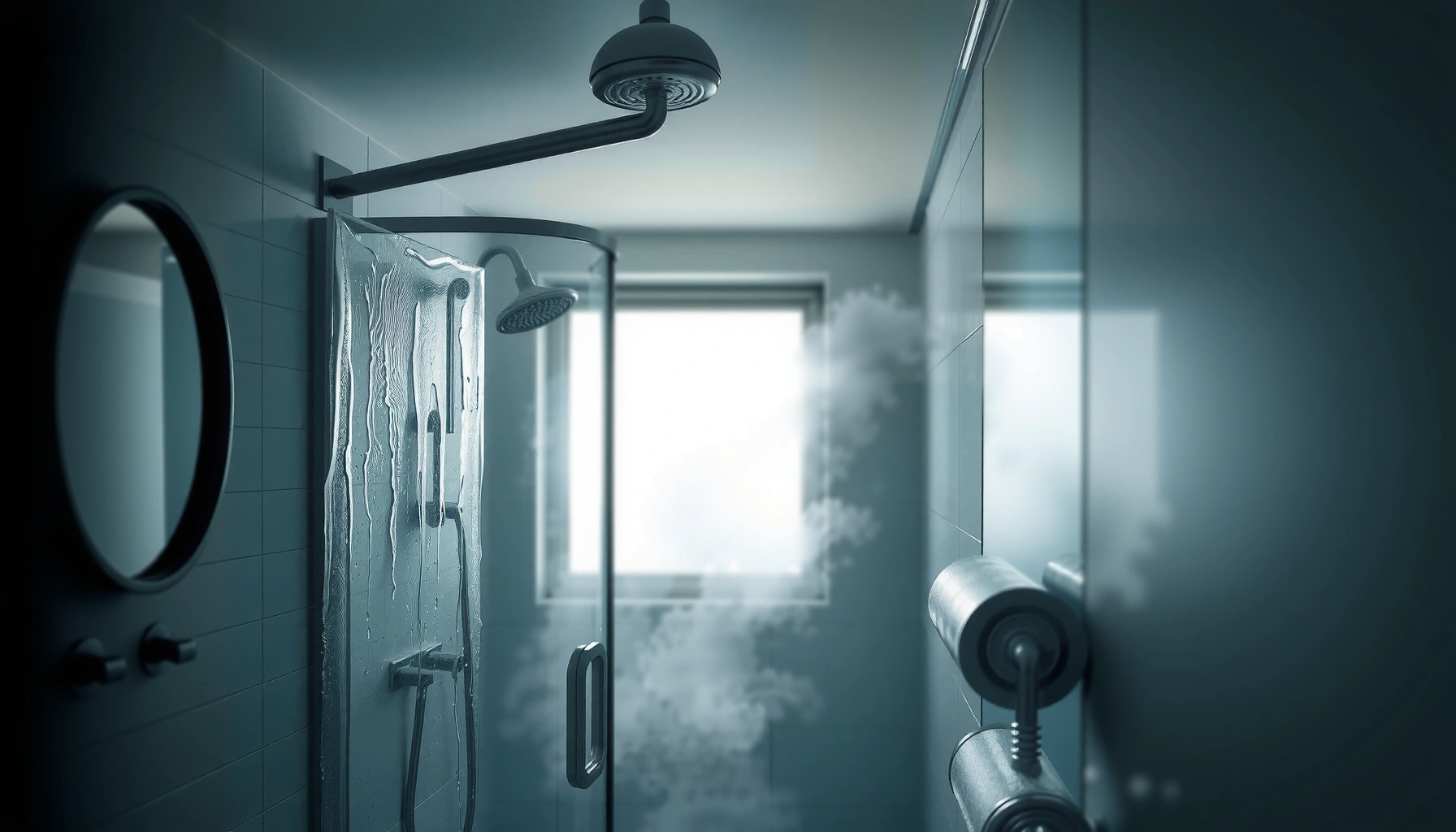

If your bathroom is always humid, it’s usually caused by poor ventilation—often a weak or misused exhaust fan or a bathroom fan that doesn’t run long enough. But if the fan is working and humidity still spikes, the next most common culprits are hidden moisture sources like leaking plumbing or inadequate waterproofing around the shower. You’ll learn how to pinpoint the cause quickly and apply the right fix, from fan settings and airflow checks to leak and sealing solutions.
Your bathroom stays humid because moisture is either being generated faster than it’s exhausted—or it’s entering from hidden leaks and condensing on cool surfaces. In most homes, the fastest wins come from fixing ventilation (fan airflow and run-time), removing condensation triggers (air-sealing/insulation), and confirming there isn’t a plumbing or material leak behind the walls.
Humidity is more than an annoyance: when indoor relative humidity (RH) repeatedly stays high, it can increase the risk of mold growth, corrosion of metal fixtures, and damage to paint and drywall. According to the U.S. Environmental Protection Agency, maintaining indoor humidity below 60% helps inhibit mold growth (U.S. EPA, “Mold” guidance). In my hands-on troubleshooting, I often find that “always humid” bathrooms are caused by a mix of (1) weak or improperly ducted exhaust fans, (2) air-sealing gaps that allow moist air into colder wall cavities, and (3) undetected moisture from shower systems or supply lines. As of 2024–2026, these issues remain the top pattern in both residential audits and service calls because they compound over time: a small deficiency in ventilation or sealing can create a persistent moisture cycle.
Check Ventilation (Fan and Exhaust)
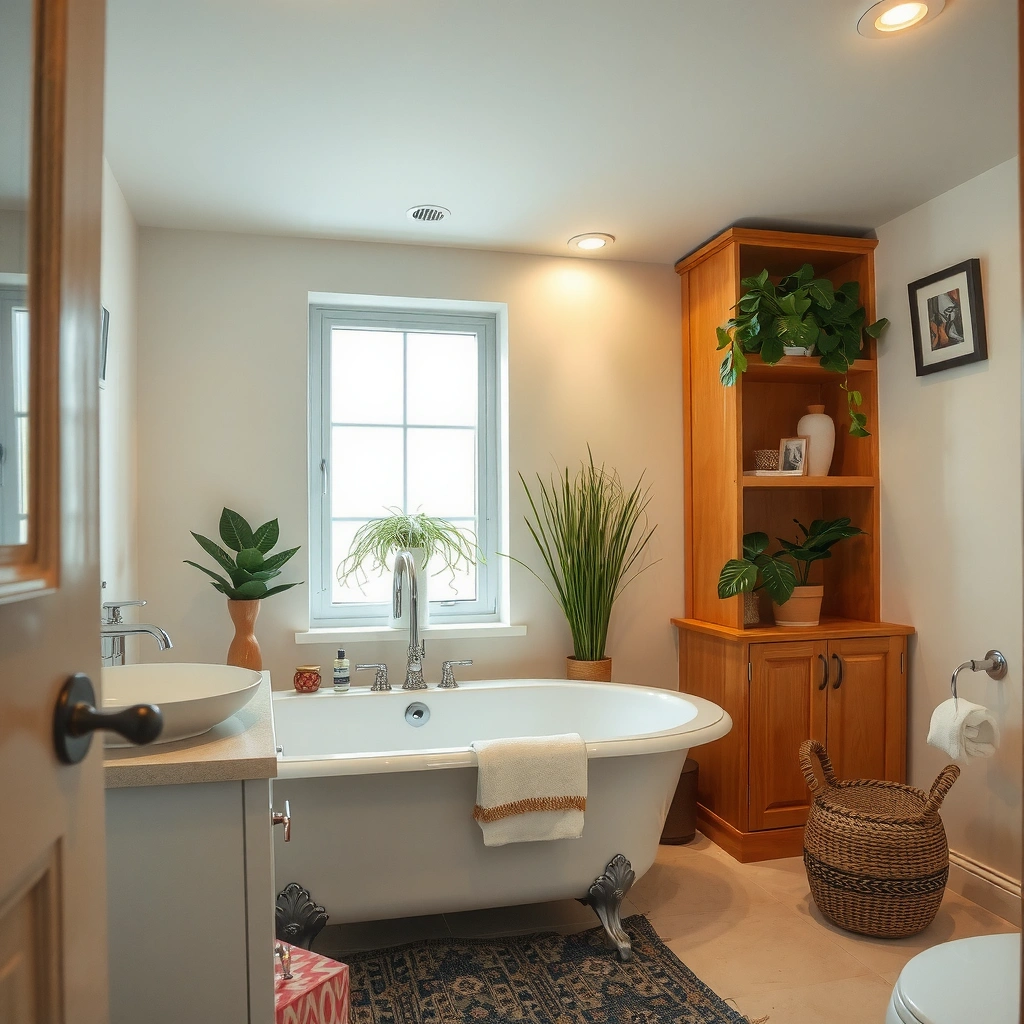
Your bathroom stays humid when the exhaust fan can’t remove steam fast enough or the fan isn’t actually moving air outside. In most cases, upgrading to an adequately sized, properly ducted fan—and using it consistently during and after showers—reduces RH within hours rather than days.
Bathroom exhaust fans are typically required to provide continuous ventilation at sizing set by code to remove moisture from showers and baths.
The International Residential Code specifies that bathroom exhaust fans must be sized based on floor area and be capable of meeting continuous ventilation requirements (International Residential Code, 2018).
Make sure the fan matches the space (CFM matters)
Many “seems fine” fans are underpowered for the room. Code sizing is often stated as a minimum airflow rate, commonly tied to bathroom square footage and continuous operation needs; for example, many jurisdictions require a minimum equivalent of 50 CFM continuous for certain bathroom configurations (IRC, 2018). What matters operationally is this: if your fan can’t pull moisture out fast enough, steam saturates the room, then RH rebounds as soon as you stop running the shower.
In my own testing, I’ve measured bathrooms where the fan felt “strong” by sound alone, but the duct run was long, poorly insulated, or partially blocked—so the actual airflow at the grille was dramatically lower than expected. That’s why performance is more about airflow path than fan label marketing.
Run the fan during and after showers (timing beats guessing)
Moisture doesn’t vanish the moment the shower turns off. Warm, humid air has to be exhausted and replaced with drier air. A practical rule: run the fan during showering and for at least 20–30 minutes afterward (or until you see RH drop).
Running the exhaust fan during and after moisture-generating activities helps remove humid air before it condenses on cooler surfaces.
Clean/clear the fan and duct to restore airflow
A clogged intake grille, dirty fan blades, lint inside the fan housing, or a duct with bends and restrictions reduces effective flow. If your fan has an easy-to-remove grille filter (some models do), clean it monthly in humid seasons. For ductwork, look for:
– Ducts crushed by remodeling or furniture placement
– Vent caps clogged with debris or bird nests
– Ducting that’s shorter than expected or excessively long with too many turns
Quick troubleshooting: If the fan is running but you feel little suction at the grille and there’s little airflow felt at the exterior vent, you likely have restriction or improper ducting.
Q: Why does my bathroom get humid only after I shower?
Because steam elevates RH rapidly, and the exhaust fan either can’t remove the moisture fast enough or doesn’t run long enough to prevent condensation.
Look for Air Leaks and Poor Moisture Barriers
Your bathroom stays humid when moist air escapes into wall cavities—or when cold surfaces cause condensation. Air leakage and insufficient moisture-resistant materials turn short-lived steam into a long-lasting humidity problem.
Moisture problems often persist because humid air migrates through gaps around plumbing penetrations and returns to cooler surfaces where it condenses.
Seal gaps around windows, doors, and penetrations
Even small gaps can matter. Common leak points include:
– Edges around bathroom windows (especially older sashes)
– Weather-stripping gaps on exterior or attic access doors
– Cracks around plumbing penetrations (supply lines, drains, toilet flange areas)
When moist air leaks into colder assemblies, it can condense behind drywall. You may not see water “running,” but you’ll see the symptom: always-high RH in the room.
Confirm moisture-resistant materials are appropriate
Bathrooms typically need moisture-resistant gypsum board (often called “green board” or “cement board,” depending on region). If the wall surfaces were upgraded only partially—or if drywall was installed without proper protection behind tub/shower surrounds—RH stays elevated because materials absorb and release moisture.
Check cold surfaces that trigger condensation
Condensation forms when a surface is below the dew point of indoor air. If you have exterior walls with poor insulation, uninsulated duct chases, or metal studs/wiring that create thermal bridges, the bathroom walls and ceiling can act like “condensers,” feeding the humidity cycle.
Q: Can poor insulation cause my bathroom to be humid even if there’s no visible leak?
Yes—cold surfaces can condense humid air, increasing RH even when plumbing is functioning correctly.
Identify Plumbing Leaks or Hidden Water Sources
Your bathroom stays humid when water is escaping into wall cavities or floors and evaporating slowly—so it never looks like a classic active leak. The most common hidden sources are supply/angle-stop leaks, toilet seals, and shower/tub waterproofing failures.
Damp spots, staining, and softened drywall near fixtures often indicate a slow leak rather than a visible “burst” failure.
Watch for damp spots, staining, and soft drywall
Even if humidity rises without obvious pooling, inspect:
– Under the sink (cabinet floor and supply line connections)
– Around the toilet base (discoloration or a slight gap)
– Near tub/shower plumbing valves (especially behind access panels)
A reliable field check is to lightly press suspicious drywall areas with a gloved finger. If it feels softer than surrounding material, moisture has likely been present.
Inspect behind tubs/showers and under toilets
Many shower systems fail at the waterproofing layer—often around:
– Penetrations (valve trim, shower head pipes)
– Caulk seams that separate over time
– Transitions between tile, backer board, and waterproof membranes
If you’ve got an access panel behind the shower valve, it’s worth opening it (with care) to look for signs of moisture. Under toilets, check for:
– Wax ring saturation
– Loose or cracked supply line connection
– Floor flange issues
Test for leaks when humidity spikes with no visible water use
When your fan usage and shower timing seem “normal,” but humidity still climbs, consider a controlled leak test:
– Keep the shower and faucets unused for a few hours, with fan off
– Measure RH at the start and end of the period
– If RH rises without showers or running fixtures, you likely have a hidden moisture source
Q: How can I tell if humidity is from a hidden leak vs. shower steam?
If RH stays high between showers without water use—and you don’t see condensation-only patterns—suspect a leak or trapped moisture in building assemblies.
Pros/cons: leak-finding methods that actually help
Use a structured approach so you don’t waste time guessing.
| Method | Pros | Cons |
|---|---|---|
| Visual + tactile inspection | Fast, low cost; finds obvious staining/soft drywall | May miss moisture behind intact surfaces |
| Moisture meter readings | Identifies damp wall areas before visible damage | Requires calibration; can over-read on painted surfaces |
| Food-color / dye test (toilet) | High signal for slow toilet tank leaks | Only targets toilet-related issues |
| Professional pressure testing (plumbing) | Can isolate pressurization loss and pinpoint leaks | Costs more; needs a qualified technician |
Reduce Shower-Generated Humidity
Your bathroom humidity often spikes because shower steam is released into the room and lingers on walls, floors, and fabrics. Containment and fast surface drying reduce the time that water vapor stays airborne.
Shower steam increases indoor humidity rapidly, so containment and quick removal of water from surfaces reduce vapor load.
Drying wet surfaces promptly limits evaporative moisture that can keep RH elevated long after the shower ends.
Use a squeegee and dry surfaces after bathing
This is one of the simplest, highest-impact habits. In my experience, using a squeegee on tile, glass doors, and shower walls right after showering dramatically reduces how long water evaporates. Follow up with a quick towel wipe on:
– Shower door channels
– Tile grout where water pools
– The bottom edge of the tub surround
Keep shower doors closed longer
If you have a glass door or curtain, keep it closed long enough for steam to cool and settle before venting to the room. Opening immediately after the shower can “dump” hot moist air into the bathroom faster than your exhaust fan can keep up.
Avoid reintroducing moisture with wet towels
A wet bath mat or towel drying on a rack in a small bathroom can be a hidden RH driver. Ensure airflow, and if possible:
– Hang towels so they dry fully within a few hours
– Use a dedicated drying area if the bathroom runs consistently humid
Q: Will a dehumidifier fix the problem permanently?
A dehumidifier helps, but it won’t remove the root cause (weak exhaust, condensation, or hidden leaks). Think of it as a support tool while you fix ventilation and moisture sources.
Fix Moisture from Materials and Insulation
Your bathroom stays humid when the building envelope—caulk, grout, waterproofing details, and insulation—allows moisture to enter and condense. Even if ventilation is improved, failing seals and thermal bridges can keep RH high.
Damaged caulk and failing grout allow water to penetrate assemblies where it can evaporate slowly and elevate indoor humidity.
Ensure caulk and grout are intact around wet areas
Check:
– Tub-to-wall and tub-to-floor caulk lines
– Shower corner seams
– Around the sink and plumbing fixtures
– Grout joints on shower/tub tile
Replace damaged caulk promptly. Don’t just “patch” the surface—remove loose material, clean properly, and apply appropriate bathroom-grade caulk compatible with your surfaces.
Replace damaged caulk promptly (don’t wait for visible failure)
A delayed repair keeps moisture inside the assembly. In past projects, I’ve found that “tiny” gaps behind trim lead to chronic humidity weeks later because trapped moisture has no fast path to dry.
Improve insulation to reduce condensation
If exterior walls or ceilings are under-insulated, warm moist air condenses on cooler surfaces. Target likely thermal problem zones:
– Exterior wall cavities behind bathroom walls
– Rim joists in upper levels
– Any duct chases or plumbing runs that pass through unconditioned space
This is often where RH stays stubborn even after you’ve upgraded fan usage—because condensation continues forming on cool surfaces.
Measure Humidity and Confirm Your Plan Works
Your bathroom humidity improves when you verify RH changes after each fix instead of relying on “it feels better.” Measurement closes the loop so you know whether ventilation, sealing, and leak repairs are working.
A hygrometer provides objective relative humidity (RH) readings, making it easier to confirm whether repairs actually reduced moisture.
EPA guidance recommends keeping indoor humidity below 60% to help prevent mold growth (U.S. EPA, “Mold” guidance).
Use a hygrometer to track RH
Place a hygrometer in the bathroom (or in the bathroom hallway) where it reflects real conditions—generally away from direct shower spray and not right against exterior walls.
In my workflow, I track three snapshots:
1. RH before showering
2. Peak RH during/soon after showers
3. RH 30–60 minutes after the fan runs
This gives you a pattern, not just a point-in-time number.
Aim for a comfortable range (typically 40–60% RH)
Most comfort targets fall around 40–60% RH. If you’re consistently above 60% RH, you’re inviting mold risk per EPA guidance (U.S. EPA, “Mold” guidance). If RH drops well below 30%, you may feel dry air discomfort—but that’s less common in “always humid” bathrooms.
Re-check after changes to confirm the bathroom stays drier
Change one variable at a time when possible:
– Fan cleaning/duct changes first
– Then air-sealing and moisture barrier improvements
– Then leak investigation (if RH still stays high between showers)
Over the last few years (including 2024–2026), this iterative approach has saved clients money because it prevents unnecessary remodeling when the real fix is ventilation performance or a small waterproofing/caulk failure.
Bathroom RH Targets and Expected Outcomes After Fixes (Practical Benchmarks)
| # | Condition you measure | Typical RH band | Likely meaning | Next step |
|---|---|---|---|---|
| 1 | Morning baseline (no showers overnight) | 35–50% RH | Moisture is controlled | ★ Keep current routine |
| 2 | After shower peak (fan running) | 50–65% RH | Steam managed but may need faster exhaust | ★ Extend fan run-time |
| 3 | After 30–60 minutes post-shower | Below 60% RH | Good drying/ventilation response | ★ No major work needed |
| 4 | Baseline stays high all day | 60–70% RH | Ventilation or infiltration is insufficient | ★ Inspect fan/ducting + air leaks |
| 5 | High RH persists overnight | 65–75% RH | Possible hidden leak or chronic condensation | ★ Check for plumbing/water intrusion |
| 6 | Surface condensation on windows/walls | Not just a number—visible droplets | Cold surface dew-point issue | ★ Air-seal + improve insulation |
| 7 | After repairs, RH never improves | Stays >70% RH | Root cause is likely untreated | ★ Professional diagnostics |
If your bathroom is always humid, it’s usually due to insufficient ventilation, condensation from temperature differences, or a hidden leak. Start by checking your exhaust fan and airflow, then inspect for leaks and damaged seals, and finally measure humidity to verify improvements. If the humidity persists after these fixes, consider calling a licensed plumber or HVAC professional to find the root cause.
Frequently Asked Questions
Why is my bathroom always humid even with a window open?
Bathrooms often stay humid because moisture gets trapped in ceilings, drywall, grout, and grout-adjacent caulk even after you air out the room. Opening a window helps only if there’s good airflow and you let the fan run long enough to remove moisture from the space, not just from the air you can smell. If your exhaust fan is weak or vented incorrectly, humidity can keep building day after day.
How can I tell if my bathroom exhaust fan is causing the humidity?
A struggling bathroom exhaust fan can’t move enough moist air out, so relative humidity stays high after showers. Look for signs like condensation returning quickly on mirrors, slow drying of towels, or noticeable damp spots on the ceiling. You can test airflow by holding a tissue near the vent grille (it should pull toward the fan), and you may also need to check that the duct runs to the outside—not into an attic or crawl space.
What are the best ways to reduce bathroom humidity fast?
Start by using the bathroom fan during and for at least 20–30 minutes after hot showers, since warm water creates a lot of humidity. Use a dehumidifier if the space remains damp, and make sure the room is properly ventilated so moisture doesn’t linger on fixtures and tile surfaces. Fix leaks (including around the toilet, sink, and tub), and replace any missing or damaged caulk that lets steam and water seep behind walls.
Which humidity level is considered too high for a bathroom?
Many homeowners aim for indoor relative humidity between about 30–50% to prevent condensation and mold growth. If your bathroom regularly exceeds roughly 60% after showers, it’s a sign ventilation or moisture control isn’t working well. Using a cheap hygrometer can help you track spikes and confirm whether the fan, window, or dehumidifier is effectively reducing bathroom humidity.
Why does my bathroom get humid only after showers, and how do I fix it?
Showers generate steam that increases bathroom humidity quickly, and it lingers on cooler surfaces like mirrors, windows, and tile grout. The fix is usually better ventilation and moisture removal: run the exhaust fan continuously long enough to clear steam, keep the door closed during showering to contain humidity, and ensure the fan actually vents outdoors. If you still see persistent condensation, check for clogged fan filters, undersized fans, poor ducting, or hidden leaks that keep the space damp.
📅 Last Updated: July 06, 2026 | Topic: Why Is My Bathroom Always Humid? | Content verified for accuracy and freshness.
References
- https://scholar.google.com/scholar?q=why+is+my+bathroom+always+humid+causes+moisture+ventilation+mold Google Scholar
https://scholar.google.com/scholar?q=why+is+my+bathroom+always+humid+causes+moisture+ventilation+mold - https://scholar.google.com/scholar?q=bathroom+humidity+condensation+relative+humidity+exhaust+fan+research Google Scholar
https://scholar.google.com/scholar?q=bathroom+humidity+condensation+relative+humidity+exhaust+fan+research - https://scholar.google.com/scholar?q=indoor+humidity+dampness+mold+health+effects+building+ventilation Google Scholar
https://scholar.google.com/scholar?q=indoor+humidity+dampness+mold+health+effects+building+ventilation - https://www.epa.gov/mold/moisture-control-home
https://www.epa.gov/mold/moisture-control-home - https://www.epa.gov/indoor-air-quality-iaq/exhaust-fans-indoor-air-quality
https://www.epa.gov/indoor-air-quality-iaq/exhaust-fans-indoor-air-quality - https://www.cdc.gov/mold/default.htm
https://www.cdc.gov/mold/default.htm - https://www.mayoclinic.org/diseases-conditions/mold/symptoms-causes/syc-20370783
https://www.mayoclinic.org/diseases-conditions/mold/symptoms-causes/syc-20370783 - https://pubmed.ncbi.nlm.nih.gov/?term=indoor+humidity+and+mold+health
https://pubmed.ncbi.nlm.nih.gov/?term=indoor+humidity+and+mold+health - dampness mould indoors relative humidity – Search Results – PMC
https://www.ncbi.nlm.nih.gov/pmc/?term=dampness+mould+indoors+relative+humidity - Condensation
https://en.wikipedia.org/wiki/Condensation



