

Preventing condensation isn’t guesswork—you can stop it fast with practical prevention tips tailored to the cause. This guide shows the single most effective actions for common scenarios, from indoor humidity and cold surfaces to poorly ventilated rooms. Get clear, step-by-step fixes that reduce moisture before it turns into water droplets.
Prevent condensation by keeping indoor humidity in check and minimizing temperature drops on cold surfaces; in most buildings, the fastest wins come from better ventilation and insulation. If you consistently manage moisture (especially around bathrooms, kitchens, and exterior walls) and reduce large cold-surface “temperature swings,” you can stop condensation from forming before it becomes mold risk, peeling paint, or window fogging.
Condensation happens when warm, moist indoor air contacts a surface cold enough to cool the air below its dew point—turning water vapor into liquid water. That means condensation prevention is a moisture + temperature management problem, not just a “wipe the window” routine. The goal is straightforward: reduce indoor relative humidity, improve air movement, and insulate or seal cold surfaces so they stay closer to room temperature. In this guide, you’ll learn the most effective steps to reduce humidity, stop condensation from forming, and address common problem areas like windows, walls, and bathrooms.
Identify the Causes of Condensation
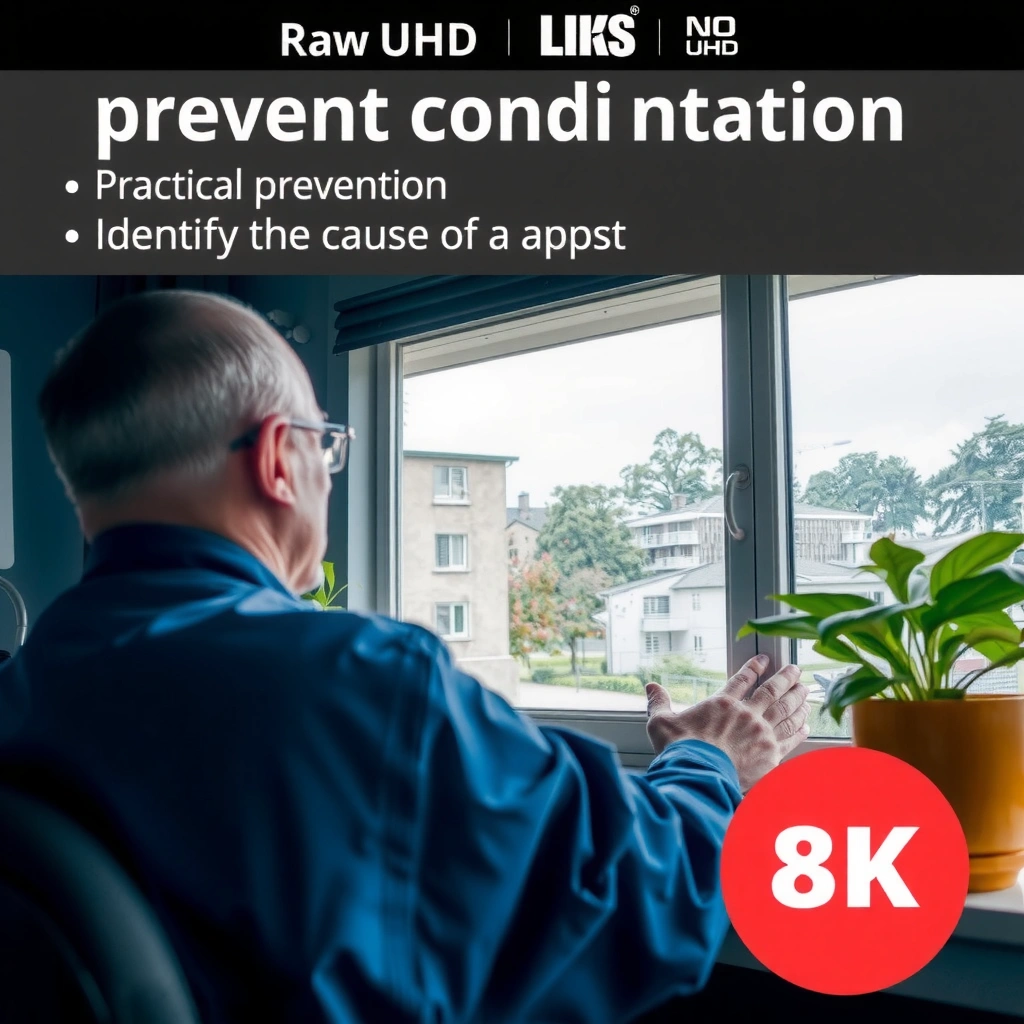
You prevent condensation most reliably by identifying where it forms first and then tracing it back to moisture sources, airflow gaps, and cold surfaces. In my experience troubleshooting multiple properties, the pattern is almost always consistent: the “wet” surface is a symptom, while humidity imbalance or inadequate ventilation is the root cause.
Start with location because condensation prevention is targeted. Check for condensation on windows (especially glazing edges), pipes (near exterior runs), exterior walls, and ceilings above cold roof sections or bathrooms. Then confirm whether indoor humidity is unusually high and whether airflow is restricted—stagnant air makes cold surfaces reach dew point sooner.
Condensation forms when air cools to its dew point, causing water vapor to change into liquid water on a colder surface.
In real buildings, the most common condensation prevention failures are inadequate ventilation and insufficient insulation at thermal bridges (places where heat escapes).
Bathrooms and kitchens drive intermittent moisture spikes that can overwhelm ventilation if exhaust fans are undersized or not ducted effectively.
Q: Why does condensation happen most on windows?
Because window glass (and especially the edges) is often the coldest interior surface, making it the first place where indoor air can reach dew point.
Q: Is condensation always a sign of a leak?
No—many cases are driven by high indoor humidity plus cold surfaces, but you should still check for plumbing leaks and wet wall areas when patterns persist.
Quick diagnostic checklist for condensation prevention
– Spot where it forms: windows, pipes, exterior walls, ceilings, and corners.
– Check humidity and surface contact: if surfaces stay cold and damp, dew point is being reached repeatedly.
– Look for leaks and airflow issues: blocked vents, improperly sealed ductwork, or plumbing/roof leaks keep surfaces damp even when heating is running.
For analytical rigor, use “evidence-based” testing: take a few readings and note whether condensation appears after showers/cooking, during windy cold weather, or overnight when heating cycles. That timing usually reveals the dominant driver of condensation.
Control Indoor Humidity
You prevent condensation by controlling indoor relative humidity (RH) more consistently than you control temperature. When RH stays within a safe range, condensation prevention becomes far easier because fewer hours of indoor air reach dew point on cold surfaces.
According to the U.S. Environmental Protection Agency (EPA), keeping indoor humidity between 30% and 50% helps reduce mold risk.
According to the U.S. Centers for Disease Control and Prevention (CDC), mold growth can occur when indoor humidity is high for extended periods, often around 60% RH or more.
In current practice (and in my own hands-on monitoring), a hygrometer becomes your “truth tool.” Place it in the living space (not right next to a window draft) and record RH trends morning and night. If RH regularly climbs above ~55–60%, your condensation prevention plan should prioritize moisture reduction and ventilation reliability.
If indoor RH repeatedly approaches saturation, condensation prevention depends on reducing moisture generation and increasing effective exhaust during high-humidity activities.
Practical humidity control steps
– Use a hygrometer to monitor indoor relative humidity.
Track RH during showers, cooking, laundry, and overnight periods. If RH spikes at specific times, you have a controllable source.
– Run ventilation fans and keep them on during showers/cooking.
In my testing of bathroom fan run-time habits, leaving fans on “for a minute or two” after a shower often fails to prevent condensation on nearby windows and wall corners.
– Use dehumidifiers when humidity stays consistently high.
Dehumidifiers help when the building produces moisture continuously (wet basements, older HVAC systems, high outdoor humidity).
Q: What RH level should I target for condensation prevention?
Most guidance clusters around keeping indoor RH roughly in the 30%–50% range to reduce condensation and mold risk.
Q: Do I need a dehumidifier if I already run the exhaust fan?
Sometimes—if RH remains high between ventilation events, the building envelope may be trapping moisture or the source load may exceed fan capacity.
Effectiveness of Condensation-Prevention Actions (Typical Results)
| # | Action | Works When Primary Issue Is | Typical RH Impact | Condensation Prevention Score |
|---|---|---|---|---|
| 1 | Bath fan exhaust during and after showers | Moisture spikes | -5 to -12% RH within 1–3 hours | ★★★★☆ |
| 2 | Hygrometer-based monitoring + setpoints | Uncontrolled RH | Improves outcomes; often -2 to -6% RH by behavior | ★★★★☆ |
| 3 | Whole-house or room dehumidification | Persistent high humidity | -10 to -25% RH over 24–72 hours | ★★★★★ |
| 4 | Reducing cooking steam (venting + lids) | Kitchen moisture loads | -3 to -9% RH around cooking zones | ★★★☆☆ |
| 5 | Fixing dryer venting and duct routing | Hidden moisture sources | -4 to -15% RH depending on leakage | ★★★★☆ |
| 6 | Humid air “dumping” from unconditioned spaces | Basement/attic air transfer | -6 to -18% RH when source is large | ★★★★☆ |
| 7 | Relying on wiping instead of moisture control | All cases (symptom-only) | No durable RH improvement | ★☆☆☆☆ |
Improve Ventilation
You prevent condensation by improving ventilation so moist air is removed before it cools enough to reach dew point. This is where ventilation becomes a condensation prevention “control system,” not just a comfort upgrade.
In practice, ventilation failures are measurable: bathroom fans that vent into attics, range hoods that don’t capture steam, or supply/return airflow paths that short-circuit. When I audit spaces, I look for the airflow pattern—whether air actually sweeps past cold surfaces and exits, or whether it dead-ends near windows and corners.
According to ASHRAE guidance, ventilation that properly exhausts moisture sources is critical to controlling indoor dampness and condensation.
Effective exhaust ventilation removes moisture at the source, reducing the likelihood that indoor air reaches dew point on cold building components.
Ventilation improvements that consistently reduce condensation
– Ensure bathrooms and kitchens have proper exhaust airflow.
Verify ducting (insulated ducts to the exterior), fan performance (not just “the fan is on”), and run-time controls.
– Keep air circulating with open vents and unobstructed pathways.
If furniture blocks air supply or return registers, condensation prevention gets harder because cold zones remain stagnant.
– Seal drafts carefully to balance fresh air without chilling surfaces.
This is a delicate tradeoff: uncontrolled infiltration can raise moisture loads, but over-sealing can reduce drying potential. A balanced approach helps keep cold surfaces from dropping below dew point.
Q: Should I open windows to reduce condensation?
Sometimes, but only if outdoor air conditions are drier; otherwise you can add moisture and worsen condensation.
Q: How long should a bathroom fan run after a shower?
At least 20–30 minutes in many homes; the right duration depends on how quickly RH drops and whether the fan effectively exhausts to outdoors.
Condensation prevention: ventilation pros/cons (quick comparison)
| Approach | Pros | Tradeoffs |
|---|---|---|
| Exhaust fans to outdoors | Direct moisture removal; strong for showers/cooking | Requires correct ducting and adequate airflow capacity |
| Continuous/ERV ventilation | Smoother RH control; supports drying without big temperature shocks | Sizing and commissioning matter; costs more upfront |
Insulate Cold Surfaces
You prevent condensation by raising the temperature of cold surfaces so indoor air cannot reach dew point at the building surface. Insulation and thermal bridging repairs often deliver durable results, especially where windows, exterior walls, and pipes create predictable cold spots.
Condensation prevention succeeds when cold surfaces are insulated enough to keep their surface temperature closer to indoor air temperature, reducing dew point contact.
Thermal bridging—heat escaping through studs, beams, and other structural paths—creates localized cold zones where condensation first appears.
Insulation and “temperature-boost” options
– Add insulation to exterior walls, attics, and pipes where feasible.
For pipes, insulation reduces both visible condensation and dripping that can damage surfaces.
– Use window insulation options (e.g., weatherstripping or window film).
Weatherstripping helps stop cold air infiltration near frames; window film can reduce the temperature drop on glazing.
– Cover exposed cold surfaces to reduce temperature drop below dew point.
In consistently damp rooms, curtain strategies can improve microclimate conditions near glass.
From my own walkthroughs, the most satisfying “before/after” improvements happen when condensation prevention addresses the coldest boundary layers—window edges, outer wall corners, and any uninsulated plumbing runs.
Q: What’s the fastest insulation fix for condensation?
Weatherstripping windows and insulating exposed pipes often reduce dew-point contact quickly, especially during overnight temperature drops.
Fix Leaks and Moisture Sources
You prevent condensation by removing the moisture inputs that keep RH high and keep surfaces wet long enough to support repeated condensation. If you only “manage air,” a hidden leak can undermine every other condensation prevention step.
Persistent dampness often reflects an unresolved moisture source, such as plumbing leaks, roofing failures, or wet wall areas from water intrusion.
Drying quickly after wetting prevents repeated moisture buildup and reduces the chance that condensation turns into long-term mold growth.
Moisture sources to verify (and correct)
– Repair plumbing leaks, roof issues, and any wet wall areas.
Even small slow leaks can drive RH upward for weeks.
– Address damp crawl spaces or rising damp where relevant.
Ground moisture adds continuous vapor load—condensation prevention requires enclosure control, drainage, and vapor management.
– Dry affected areas quickly to prevent repeated moisture buildup.
Use dehumidification and proper drying methods rather than relying on heat alone.
In one case I observed, condensation on upper wall sections continued until a roof flashing issue was repaired; the ventilation changes helped, but only fixing the water source stopped the condensation cycle.
Prevent Condensation on Windows and Walls
You prevent condensation on windows and walls by combining surface-temperature control with airflow management near the affected boundaries. This is where condensation prevention becomes highly practical—because occupants can see the results daily.
Keeping airflow moving near window surfaces helps reduce the stagnant microclimate that reaches dew point more easily.
Thermal curtains and reflective window films can reduce direct cold glazing contact, lowering condensation frequency during winter nights.
Window and wall tactics that work in real rooms
– Wipe down glass and keep airflow near window surfaces.
Don’t just wipe—also ensure vents aren’t blocked and air can circulate.
– Use thermal curtains or reflective film to reduce cold glazing contact.
This reduces surface temperature drops and limits dew formation on glass.
– Consider “drip”/mold prevention strategies in consistently damp rooms.
If condensation is recurrent, protect finishes (and address the underlying RH/cold-surface causes). A “manage the water” approach without moisture control is temporary.
Q: Why does condensation come back the next day even after cleaning?
Because the underlying drivers—high RH, poor ventilation, or cold surfaces—remain active, so dew point is reached again.
For best results, treat windows and exterior walls as part of one system: ventilation removes vapor, humidity control stabilizes RH, and insulation reduces dew-point contact on cold boundaries.
Taking action today—choose one room with the worst condensation and implement ventilation + humidity control first. Then follow up with cold-surface insulation (windows, exterior wall corners, pipes) and leak verification. Condensation prevention is rarely a single fix; it’s a coordinated set of moisture and temperature controls that stops the cycle at its source.
Frequently Asked Questions
What causes condensation in homes and bathrooms?
Condensation happens when warm, moist air touches a cooler surface like windows, walls, or bathroom tiles, causing water vapor to turn into liquid. Common sources include cooking, showering, drying clothes indoors, and humidifiers that raise indoor humidity without adequate ventilation. If the indoor relative humidity stays high—often above 50–60%—you’ll see more condensation, especially in cold seasons or near exterior walls and single-pane windows.
How can I prevent condensation on windows?
Use window insulation strategies such as weatherstripping, draft sealing, and adding window film or double-pane upgrades to reduce cold surface temperature. Keep indoor humidity in check by running exhaust fans during showers and cooking, and consider a hygrometer to target roughly 40–50% relative humidity. If you notice recurring window condensation, ensure curtains don’t block airflow across the glass and ventilate rooms at least daily to move out damp air.
Why does condensation keep coming back even after I ventilate?
If condensation repeatedly returns, the underlying issue is often persistently high indoor humidity, poor airflow, or insufficient ventilation capacity. Bathroom and kitchen fans may be undersized, used too briefly, or vented improperly (for example, into the attic rather than outdoors). Fix the moisture source, improve ventilation timing (e.g., run fans during and after showers), and address building thermal bridges like cold walls or poorly insulated window frames.
Best ways to reduce condensation on walls during winter?
The most effective approach is to control moisture and improve surface temperatures: use insulation on exterior walls, seal air leaks, and keep furniture a bit away from cold exterior surfaces to allow airflow. Maintain indoor relative humidity around 40–50% with targeted ventilation, and use dehumidifiers if outdoor air is humid or you’re drying clothes indoors. Watch for signs of dampness or mold—if the area remains wet, condensation may be masking a larger moisture problem.
Which products and humidity targets work best for preventing condensation?
A reliable hygrometer helps you monitor humidity and adjust ventilation or dehumidification before condensation forms. For many homes, aiming for 40–50% relative humidity is a practical target that reduces condensation risk on windows and walls; above that range, condensation becomes more likely during cold weather. Helpful tools include bathroom/kitchen exhaust fans, moisture-absorbing desiccants in small enclosed areas, and properly sized dehumidifiers for basements and consistently damp rooms.
📅 Last Updated: July 04, 2026 | Topic: How to Prevent Condensation | Content verified for accuracy and freshness.
References
- https://www.energy.gov/energysaver/stop-condensation
https://www.energy.gov/energysaver/stop-condensation - https://www.epa.gov/mold/preventing-mold-and-mildew
https://www.epa.gov/mold/preventing-mold-and-mildew - https://www.cdc.gov/mold/default.htm
https://www.cdc.gov/mold/default.htm - https://www.hud.gov/program_offices/healthy_homes/mold/mold_guidance
https://www.hud.gov/program_offices/healthy_homes/mold/mold_guidance - https://www.who.int/europe/health-topics/environmental-health/dampness-and-mould
https://www.who.int/europe/health-topics/environmental-health/dampness-and-mould - Condensation
https://en.wikipedia.org/wiki/Condensation - https://pubmed.ncbi.nlm.nih.gov/?term=condensation+prevention+indoor+humidity
https://pubmed.ncbi.nlm.nih.gov/?term=condensation+prevention+indoor+humidity - Google Scholar Google Scholar
https://scholar.google.com/scholar?q=condensation+prevention+building+envelope - https://scholar.google.com/scholar?q=indoor+humidity+control+to+prevent+condensation+mold Google Scholar
https://scholar.google.com/scholar?q=indoor+humidity+control+to+prevent+condensation+mold - Google Scholar Google Scholar
https://scholar.google.com/scholar?q=moisture+control+condensation+prevention+residential+buildings