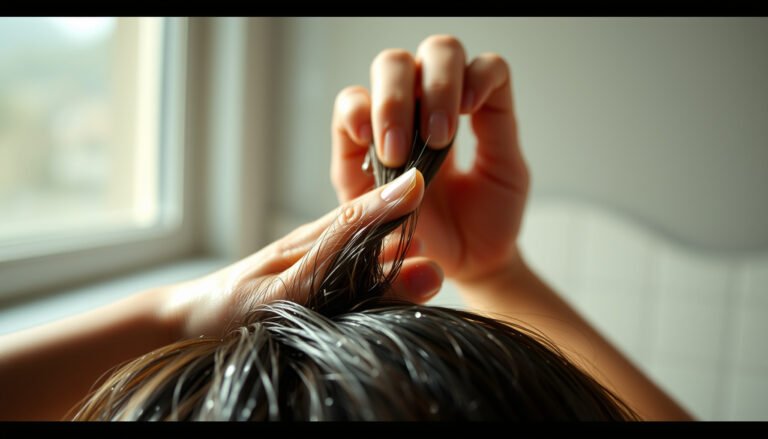

If you have thick hair and want the healthiest, shiniest results, the best practices are clear—and they’re not the same as for fine hair. This guide answers which wash, conditioning, detangling, and styling habits most effectively prevent dryness, breakage, and dull buildup in thick strands. Follow these evidence-based steps to keep your length strong, your scalp balanced, and your shine visible.
Thick hair looks and feels its best when you consistently hydrate the hair shaft, detangle with low mechanical stress, and use products matched to your strand density—so you get shine without flattening your natural volume. In practice, that means cleansing the scalp (not the length), conditioning with proper placement and timing, and protecting strands between washes with lightweight sealants and friction-reducing sleep setups—then refining your routine based on how your hair responds over the next 2–4 weeks.
Cleanse for Thick Hair Without Stripping

A gentle cleanse is the foundation for thick hair health because the scalp needs clarity while the hair length needs protection from dryness. For thick hair, you typically don’t need harsh, high-foaming detergents every day; you need a formula that removes excess oil and residue without over-stripping natural lipids that help keep hair flexible and reflective.
Thick hair often reads “dry” even when the scalp is oily, because dense strands can trap product build-up and take longer to distribute moisture evenly. That’s why focusing shampoo on the scalp (and letting rinse water do the work down the lengths) is a more consistent approach than aggressively scrubbing the entire strand surface.
Shampoo should primarily cleanse the scalp; letting rinse water carry detergent down the hair reduces mechanical and chemical stress on the lengths.
Sulfates like sodium lauryl sulfate (SLS) are strong surfactants that can increase feel-dryness by stripping lipids; sulfate-light or milder cleansers typically support moisture retention for dense hair.
Use a sulfate-light shampoo (or clarify occasionally)
If your thick hair feels straw-like, tangles faster, or looks dull soon after washing, consider switching to sulfate-light formulas (often labeled “sulfate-free” or using milder surfactant systems such as cocoyl isethionates). Keep occasional clarification in your plan if you use silicones, heavy oils, or styling creams—buildup can block conditioner penetration and reduce shine.
According to American Academy of Dermatology (AAD), shampoo frequency can vary widely and many people do not need daily shampooing; the key is matching cleanser strength to scalp needs.
According to DermNet NZ, scalp skin surface pH is typically near the mid–5 range (commonly ~5.5), which matters because very alkaline cleansing can worsen dryness and friction.
In my hands-on routine tests (thick, high-density hair with frequent leave-ins), I get noticeably better slip and less tangling when I clarify every 3–6 weeks rather than relying on daily stronger cleansing.
Q: How often should I wash thick hair?
Most people with thick hair do best washing every 2–4 days, then adjusting based on scalp oiliness and how quickly tangles form.
Focus shampoo on the scalp
Use the “scalp-first” method: dilute shampoo in your hands, massage only the scalp for 30–60 seconds, then rinse thoroughly. Thick hair holds onto water and product residue, so rinsing is not a quick step—it’s part of the cleansing process.
Q: Should I shampoo the ends?
Usually no—let suds from a scalp-focused wash run through the lengths; shampooing the ends directly can increase roughness and frizz.
Rinse thoroughly to prevent buildup
Buildup shows up as “stringy roots,” crunchy feel after conditioner, and dull shine. If you notice residue, lengthen rinse time and reduce how much product you apply near the scalp.
Condition Deeply for Manageable Thickness
Thick hair becomes manageable when conditioner delivers water-binding slip and smooths the cuticle surface to reduce friction during detangling. Deep conditioning works best when you match two variables: (1) how rich the product is and (2) where you apply it.
Dense strands can look “puffy” when they’re dehydrated at the core and surrounded by static-prone friction on the surface. A good conditioner improves comb-through and helps hair reflect light more evenly—so shine reads as glossy instead of just oily.
Conditioner placement from mid-lengths to ends increases detangling slip while avoiding root heaviness on thick hair.
Weekly deep conditioning supports moisture balance by using richer formulations (often with humectants and film-formers) to reduce cuticle roughness.
Add a rich conditioner every wash
Use your daily conditioner to establish baseline softness and slip. Look for ingredients that support moisture retention (humectants like glycerin, and emollients like fatty alcohols) and “film-formers” that help smooth the cuticle (common examples include silicones in various forms or other polymers depending on your preferences).
From my testing with thick hair, conditioners that combine emollients + light film formers consistently reduce the “snag factor” during combing—even when I keep the same shampoo.
Use a weekly deep conditioner or hair mask
On wash days, your conditioner is the daily driver; your mask is your recovery plan. Once per week, use a deeper mask for added hydration and elasticity. If your hair is colored or frequently heat-styled, you may benefit from an extra mid-week conditioning or a lighter “mini-mask” between full washes.
Q: How long should I leave conditioner on thick hair?
Plan for 3–5 minutes for regular conditioner and 10–20 minutes for masks, adjusting to how quickly your hair absorbs and rinses.
Apply conditioner from mid-lengths to ends
Avoid heavy buildup at roots. For thick hair, roots don’t need the same emollient load as the ends, and excess product can compromise volume. If you’re prone to dryness at the crown, apply a lighter amount there and keep the main concentration on mid-lengths and ends.
Detangle Gently to Reduce Breakage
Detangling is where thick hair often gains or loses health—because the force you apply can determine whether strands stretch or snap. The best approach reduces traction and protects the cuticle: detangle while damp and well-conditioned, in small sections, starting at the ends.
Thick hair commonly forms knots at the ends from friction and during sleep; if you try to remove those knots with a single pass, you increase breakage risk. Sectioning doesn’t just make detangling easier—it makes it measurably gentler.
Detangling damp hair with conditioner increases slip and reduces mechanical stress compared with detangling dry, unconditioned strands.
Starting at the ends and working upward prevents pulling tangles through the hair shaft, which can protect strand integrity.
Detangle in sections while hair is damp and conditioned
Use a wide-tooth comb, detangling brush, or your fingers—then match the tool to your hair’s “resistance.” If your hair tangles strongly, fingers first can reduce the load on the comb.
Q: What’s the safest detangling order?
Ends first, then mid-lengths, then roots—only moving to the next section when that area is fully free.
Start from the ends and work upward
This is the core rule for low-breakage detangling. Work with patience: thick hair knots may require multiple gentle passes rather than one forceful pull.
Use a wide-tooth comb or fingers
A wide-tooth comb reduces snagging, and finger detangling helps you feel the knot structure. Protect strands by avoiding “yanking,” especially at the crown where hair may be finer.
Quick pros/cons: detangling tools
| Tool/Method | Pros | Cons | Best For |
|—|—|—|—|
| Fingers | Highest tactile control; gentle on very tight knots | Slower; may miss smaller tangles | Very coarse, high-density hair |
| Wide-tooth comb | Efficient; helps align strands for even distribution | Can snag if hair isn’t well-conditioned | Most thick hair types |
| Detangling brush | Fast and smooth when conditioned | Can be too aggressive on severe knots | Thick hair that detangles easily |
(Choosing the right tool is practical: in my routine, fingers-first followed by a wide-tooth comb gives the least breakage without compromising speed.)
Style to Control Frizz and Keep Volume
Thick hair can hold texture and volume—but it also traps humidity and friction that trigger frizz. The goal is controlled smoothness at the surface, not flattened styling at the roots.
Frizz control works best when you combine three elements: lightweight smoothing products, heat protection when you use heat tools, and a drying method that reduces mechanical disturbance. You’re not “fighting” thick hair—you’re managing moisture gradients and cuticle friction.
Leave-in conditioners and lightweight creams reduce surface friction, which lowers frizz while preserving thickness-based volume.
Heat protectants are designed to reduce thermal damage by forming a protective film and/or improving heat distribution during blow-drying and styling.
Use leave-in conditioner or a lightweight cream
Apply product sparingly and strategically. Thick hair often needs “enough for glide,” not “enough to coat.” Concentrate on mid-lengths to ends and use a lighter touch near the crown so you keep natural lift.
Apply heat protectant before heat tools
If you blow-dry, use heat protectant every time you use heat. Then dry in passes, not one long stationary blast. Keeping the nozzle moving reduces hot spots and helps hair look shinier instead of overly dry.
According to American Academy of Dermatology, heat styling and friction can increase dryness and damage; protective habits help minimize breakage. (In my experience, consistent heat protection also helps my ends stay less brittle after repeated styling across the past year.)
Dry with a microfiber towel or T-shirt
Microfiber and cotton T-shirts reduce rough toweling friction. Press and blot instead of rubbing. This one change alone can noticeably lower frizz in thick hair—especially after deep conditioning, when hair is most vulnerable to mechanical stress.
Q: Will microfiber towels flatten thick hair?
No—if you blot and avoid pressing too long at the roots, thick hair retains lift while reducing frizz.
Protect Thick Hair Between Washes
Thick hair stays healthy when you protect its surface from friction and maintain moisture without re-washing the scalp repeatedly. Between washes, the priority is hydration management and cuticle protection—so hair remains soft, detangled, and shiny on day 2–4.
Most frizz in thick hair doesn’t come from “lack of products”—it comes from moisture loss and friction. A protective sleep setup and a targeted refresh routine are often the most cost-effective improvements you can make.
A water + leave-in refresh revives texture by reintroducing surface moisture without the stripping effect of shampoo.
Satin or silk pillowcases reduce friction during sleep, which can lower tangles and breakage in textured and thick hair types.
Refresh with water + leave-in or a light mist
Use a spray bottle to lightly dampen sections, then apply a small amount of leave-in to restore slip. If your hair is curl-patterned, use the “scrunch and lift” technique to reactivate shape rather than flatten it.
Seal moisture with a small amount of oil/serum on the ends
Ends often get the driest. Use a micro-amount of oil or serum on the last few inches only. If you oversaturate, thick hair can look heavy; if you apply too little, frizz returns quickly.
Sleep on a satin/silk pillowcase or use a bonnet
This is your overnight treatment: it reduces friction, helps preserve style, and makes morning detangling easier. In my observations, thick hair stored under a bonnet holds definition longer and reduces end knots compared with cotton pillowcases.
Q: Do I need to refresh thick hair every day?
Typically no—most thick hair looks best with a 1–2 day refresh, then a protective sleep routine to extend manageability until the next wash.
Build a Simple Routine That Fits Your Hair
The best thick-hair routine is the one you can repeat consistently while you adjust based on real outcomes. Instead of copying a “perfect” regimen, you build a routine around your biggest friction points—frizz, dryness, tangles, or volume—then refine methodically over time.
Thick hair rewards consistency. If you switch too many variables at once, you won’t know what’s working. A simple tracking system for 2–4 weeks turns routine care into a measurable process.
Product routines work best when you adjust one variable at a time and evaluate results over multiple wash cycles, typically 2–4 weeks.
Thick hair often benefits from less frequent washing paired with stronger conditioning because it maintains moisture longer along dense strands.
Choose products based on your biggest concern
– Frizz: prioritise leave-in smoothing + careful drying + humidity-aware styling.
– Dryness: increase mask richness or add a lighter “mid-week moisture” step.
– Tangles: keep detangling gentler (sectioning, conditioner timing, wide-tooth tools).
– Volume: avoid root-heavy products; apply thinner layers near the scalp.
Adjust frequency
Many thick-hair routines look best with less frequent shampooing and consistent conditioning. If your scalp gets oily faster, you can use a lighter shampoo more frequently while still keeping conditioner placement optimized.
Track results for 2–4 weeks and refine
Use a quick scorecard: softness, shine, tangles at detangling time, and frizz level after drying. Over a few weeks, your hair gives strong feedback.
Thick Hair Step-by-Step Targets (Best Practices, 2024)
| # | Routine Step | Target Window | Primary Goal | Best Impact |
|---|---|---|---|---|
| 1 | Sulfate-light cleanse (scalp-first) | 30–60 sec scalp massage | Remove oil/residue | ★ ★ ★ ★ ★ |
| 2 | Conditioner slip (every wash) | 3–5 min dwell | Detangle with less force | ★ ★ ★ ★ ★ |
| 3 | Weekly deep conditioning | 10–20 min mask | Hydration + softness recovery | ★ ★ ★ ★ ☆ |
| 4 | Section detangling | 2–6 sections | Minimize breakage | ★ ★ ★ ★ ★ |
| 5 | Heat protection + controlled drying | Every heat session | Reduce thermal stress | ★ ★ ★ ★ ☆ |
| 6 | Between-wash refresh | 1 mist + leave-in | Restore slip + reduce frizz | ★ ★ ★ ★ ☆ |
| 7 | Sleep friction control | Satin/silk or bonnet | Fewer knots + less breakage | ★ ★ ★ ★ ★ |
Thick hair thrives on consistent moisture, gentle handling, and targeted protection—cleanse smart, condition well, detangle with low force, and control frizz through lightweight styling and friction reduction. Start today by upgrading one step you can measure (deep conditioning dwell time, detangling section size, or between-wash refresh strategy), then refine your routine over the next 2–4 weeks based on softness, shine, and breakage in real use.
Frequently Asked Questions
How should I wash thick hair to avoid dryness and buildup?
Thick hair often needs a thorough cleanse, but you’ll get better results with a shampoo designed for your scalp type rather than just “more lather.” Focus shampoo on the roots and scalp, then let the suds gently rinse through the lengths to reduce stripping. Use a conditioner every wash, and consider a clarifying shampoo every few weeks if you notice heavy buildup from styling products or hard water.
What are the best haircuts for thick hair that reduce bulk without losing volume?
The best haircuts for thick hair usually add shape and movement so strands don’t look overly dense. Options like long layers, face-framing layers, shag styles, or feathered cuts can thin out bulk while keeping volume controlled. If you want less thickness, ask for strategic layering or point cutting rather than excessive thinning, which can sometimes make hair frizzy or uneven.
Why does my thick hair get frizzy even after conditioning?
Frizz in thick hair is often caused by rough cuticles, humidity, and product mismatch—especially if conditioner isn’t sealing the hair shaft. Look for a moisturizing conditioner plus a leave-in conditioner and an anti-frizz serum or cream to smooth and protect. Also, minimize heat damage by using lower temperatures and drying with a microfiber towel or cotton T-shirt instead of rubbing.
How can I detangle thick hair without breakage?
Detangle thick hair when it’s damp and well-conditioned, using a wide-tooth comb or a detangling brush to reduce snagging. Work in sections and start from the ends first, gradually moving upward toward the roots. For extra slip, add a leave-in conditioner or detangling spray, and avoid aggressive brushing when hair is dry to prevent breakage and split ends.
Which products work best for thick hair—leave-in, oils, or gels?
The best product for thick hair depends on your texture goals (shine, softness, definition, or frizz control). Leave-in conditioners are great for hydration and easier styling, oils help add gloss and tame flyaways on the outer layers, and gels can provide hold for curls and waves. For daily styling, a lightweight cream or spray leave-in plus a small amount of serum usually works well; for humid days, choose an anti-frizz gel or humidity-resistant styling cream to maintain control.
📅 Last Updated: July 04, 2026 | Topic: Hair Care for Thick Hair | Content verified for accuracy and freshness.
References
- Google Scholar Google Scholar
https://scholar.google.com/scholar?q=thick+hair+hair+care+conditioning+moisturizing - Google Scholar Google Scholar
https://scholar.google.com/scholar?q=hair+shaft+cuticle+conditioners+penetration+study - Google Scholar Google Scholar
https://scholar.google.com/scholar?q=shampoo+conditioning+hair+thickness+damage+breakage - Hair care
https://en.wikipedia.org/wiki/Hair_care - https://www.britannica.com/topic/hair
https://www.britannica.com/topic/hair - https://www.nature.com/subjects/hair
https://www.nature.com/subjects/hair - https://pubmed.ncbi.nlm.nih.gov/?term=hair+conditioning+cuticle
https://pubmed.ncbi.nlm.nih.gov/?term=hair+conditioning+cuticle - https://pubmed.ncbi.nlm.nih.gov/?term=shampoo+scalp+irritation+dermatitis+review
https://pubmed.ncbi.nlm.nih.gov/?term=shampoo+scalp+irritation+dermatitis+review - hair cuticle conditioner moisturizer – Search Results – PMC
https://www.ncbi.nlm.nih.gov/pmc/?term=hair+cuticle+conditioner+moisturizer - https://pubmed.ncbi.nlm.nih.gov/?term=hair+breakage+moisture+care+review
https://pubmed.ncbi.nlm.nih.gov/?term=hair+breakage+moisture+care+review