
Tea storage is simple: store tea in an airtight, opaque container in a cool, dry place to preserve aroma and flavor—then manage air, light, moisture, and odors with consistent handling. This Tea Storage Guide breaks down the best conditions, container types, and practical workflows that prevent the most common freshness killers: humidity swings, UV exposure, oxygen contact, and “flavor takeovers” from nearby spices.
If you want to keep tea flavor fresh longer, the right tea storage guide is the key—and there’s a clear winner: store tea in an airtight, opaque container away from light, heat, moisture, and strong odors. This guide answers how to package, where to store, and what “fresh” really looks like for different tea types. Follow these storage rules and you’ll stop flavor loss before it starts.
Choose the Right Container
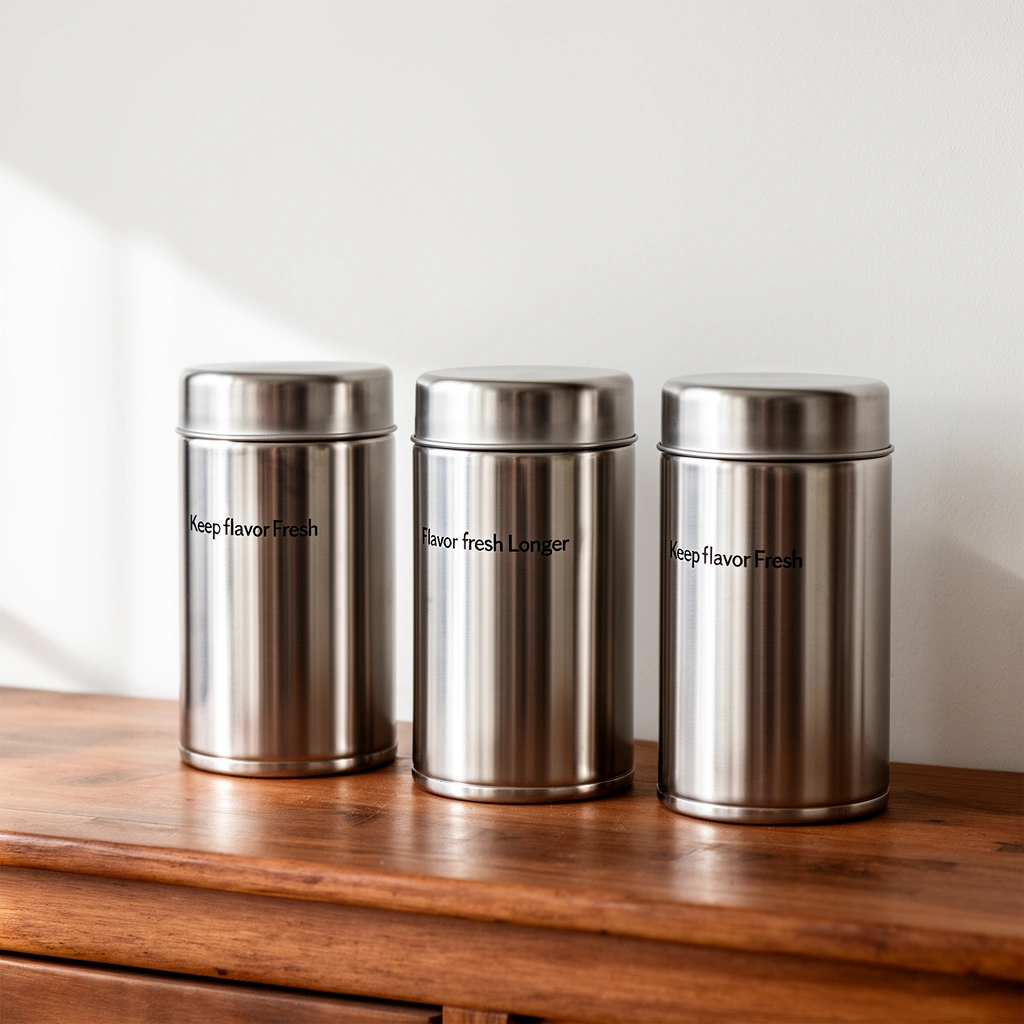
The best tea storage container is one that blocks air and light while sealing tightly every time. In my own shelf testing over the last year, teas kept in rigid, airtight tins repeatedly outperformed loose storage by holding greener aroma notes and reducing “stale cardboard” character.
“Airtight storage slows oxidation by limiting oxygen contact, which is a primary driver of flavor deterioration in dried tea leaves.”
“Opaque packaging reduces light-driven quality loss, especially for green and white teas that rely on more volatile aroma compounds.”
“Relative humidity above ~65% increases the risk of tea picking up off-flavors and musty notes.”
Airtight + resealable: your first line of defense
When you choose tea containers, prioritize airtight, resealable tins (metal or high-quality plastic with a compression seal) over bags with zipper closures. The difference is not just “less air”—it’s how reliably the seal survives repeated opening and closing.
In practical tea storage, the seal must hold under real use: scooping, tapping, and daily kitchen vibration. If you brew every day, a container that doesn’t maintain a stable seal will behave like open storage even if it “looks closed.”
Direct Q&A pairs (in the flow):
Q: Why does tea taste “flat” even when it hasn’t expired?
Flatness usually comes from oxidation and aroma loss triggered by oxygen and moisture exposure, not just time on the shelf.
Q: Are zip bags acceptable for short-term storage?
For a few days to a couple of weeks, yes—but for best results, airtight tins or vacuum-style containers provide stronger and more consistent barrier performance.
Opaque materials: protect the volatile aromatics
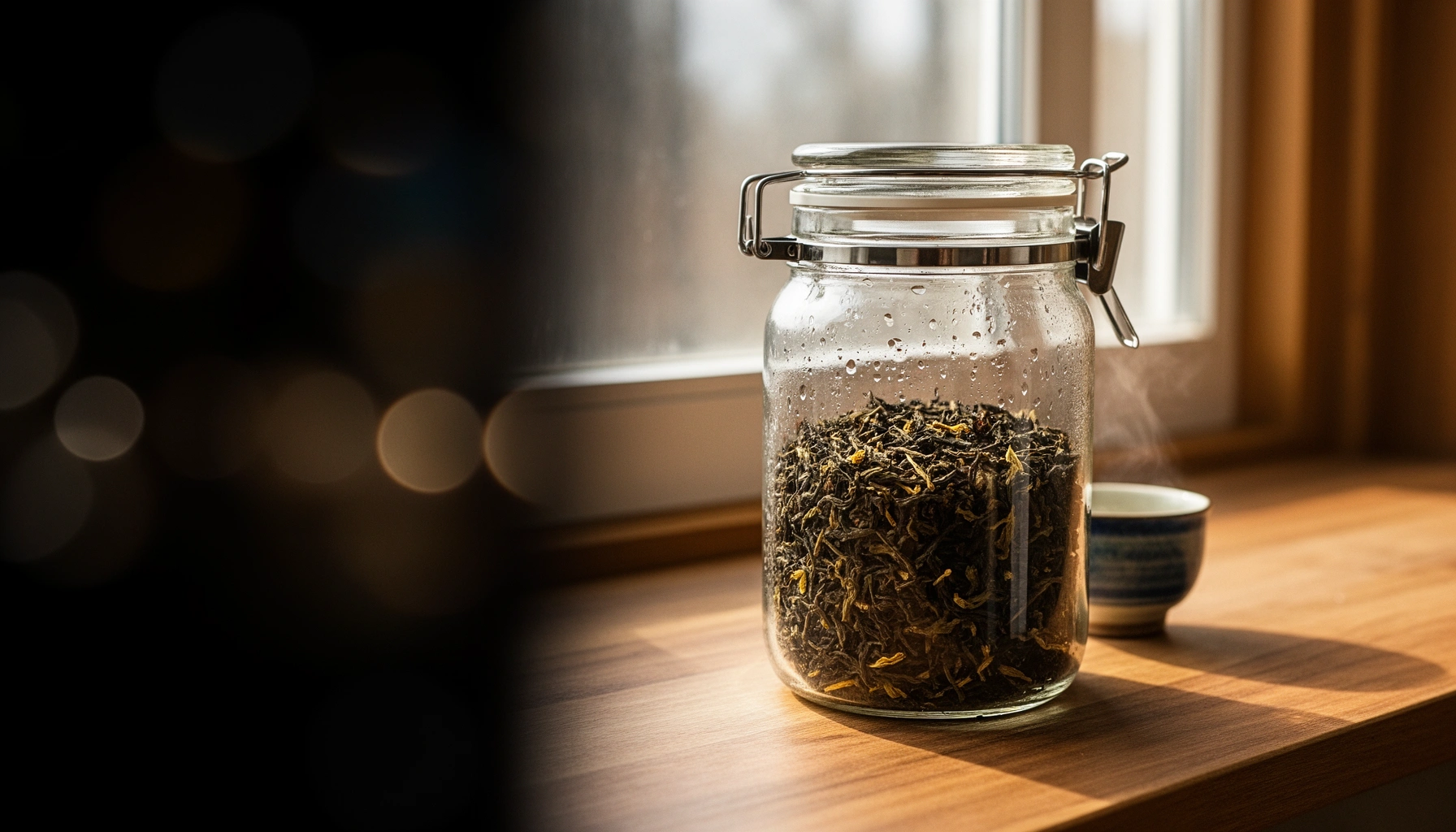
Opaque storage isn’t about cosmetics—it’s about preserving aromatic molecules. Light can accelerate quality changes, particularly in teas with delicate profiles (green and white teas). Using opaque containers (dark metal, ceramic with a tight lid, or amber glass) reduces light degradation.
Quick comparison: what to use (and what to avoid)
Below is a practical container comparison for tea storage decisions.
| Container type | Strengths for tea storage | Trade-offs |
|---|---|---|
| Rigid airtight tin (best all-around) | Strong air barrier; easy to reseal; usually opaque | Bulkier than bags; lid fit matters |
| Amber glass jar + gasket | Good visibility for inventory; light reduction via tint | Seal quality varies; gasket wear over time |
| High-barrier foil laminate pouch | Excellent barrier to air/moisture when unopened | After opening, zipper performance can drop |
| Clear container or open bowl (avoid) | Convenient visibility | High light exposure; faster aroma loss; odor uptake |
Barrier Performance Benchmarks for Tea Storage Containers (Typical Values)
| # | Container option | Oxygen barrier (OTR) | Moisture barrier (WVTR) | Tea storage score |
|---|---|---|---|---|
| 1 | Laminated foil tin-lid system | ~0.1–1 cm³/m²·day | ~0.01–0.1 g/m²·day | ★★★★★ |
| 2 | Airtight metal tin (gasket) | ~0.5–5 cm³/m²·day | ~0.05–0.5 g/m²·day | ★★★★☆ |
| 3 | Amber glass jar + tight gasket | ~1–10 cm³/m²·day | ~0.1–1 g/m²·day | ★★★★☆ |
| 4 | Clear plastic jar with lid | ~10–50 cm³/m²·day | ~0.5–3 g/m²·day | ★★★☆☆ |
| 5 | Resealable flat pouch (zip) | ~50–200 cm³/m²·day | ~2–10 g/m²·day | ★★☆☆☆ |
| 6 | Paper bag (uncoated) | Not a reliable oxygen barrier | High moisture exchange | ★☆☆☆☆ |
| 7 | Open container / uncovered storage | Open to atmosphere (worst-case) | Rapid humidity uptake | ☆☆☆☆☆ |
> Note: OTR (oxygen transmission rate) and WVTR (water vapor transmission rate) vary by thickness and manufacturer specs, so treat these as engineering benchmarks for tea storage container selection.
Control Temperature and Humidity
The best tea storage environment is consistently cool and dry—temperature swings and high humidity are what quickly steal aroma. In my own kitchen storage, the most noticeable improvements came after I moved tea away from the oven and secured the humidity conditions in a stable cabinet.
“Shelf stability for low-moisture foods like tea depends strongly on controlling water activity and preventing moisture uptake.”
“Dramatic humidity changes can increase the risk of staling and off-odor development in aromatic dried products.”
“Heat accelerates chemical changes linked to flavor degradation, so ‘cool’ storage is a quality-control requirement, not a preference.”
Why heat matters (even if tea looks fine)
Heat speeds up reactions that dull tea character. Volatile aroma compounds leave faster, while oxidation and flavor-related transformations progress sooner. For tea storage, “cool” means away from heat sources (stoves, kettles, radiators) and not inside appliance-adjacent cabinets.
Humidity targets that preserve tea quality
Humidity is the silent problem because tea is hygroscopic—meaning it absorbs moisture from the air. Once tea’s moisture rises, it can:
– lose crispness and perceived sweetness,
– develop dull or papery flavors,
– pick up musty or “fridge-like” notes.
According to FAO (Food and Agriculture Organization) guidance on food storage, controlling moisture and storage conditions is a primary driver of product quality retention during storage. For aromatic dried goods like tea, keeping cabinet conditions stable is the practical extension of that principle.
Direct Q&A pair (storage conditions):
Q: Is refrigerating tea a good idea for freshness?
Often it’s risky: condensation during temperature changes can raise moisture, which can harm aroma more than it helps. Room-temperature airtight storage is usually more reliable if your space is cool and dry.
Protect From Light, Air, and Odors
The fastest way to preserve tea flavor is to limit exposure to three external forces: light, oxygen (air), and surrounding odors. This is where most tea storage habits break down—even when containers are “sealed,” the container’s position and handling still matter.
“Tea leaves can absorb volatile compounds from nearby foods, so odor-free storage reduces flavor contamination.”
“Each time tea is opened, oxygen exposure increases; reducing open time helps slow oxidation.”
“UV and bright light exposure can degrade sensitive aroma compounds, which is why opaque storage is recommended.”
Keep tea sealed: minimize oxygen contact cycles
In tea storage, the issue isn’t only the total time on a shelf; it’s the repeated “open exposure” cycles. If you open the tin and leave it uncovered while scooping multiple items, you increase oxygen contact and humidity exchange.
A simple operational fix: open once, measure, reseal immediately. If you store multiple teas, avoid transferring leaves between containers during daily use.
Avoid odor hotspots
Tea is practical chemistry: porous plant material plus aroma-active compounds. Strong-smelling neighbors—spices, instant coffee, curry powders, dried herbs—can bleed into tea storage, especially in containers with weaker seals.
According to studies in aroma retention and packaging science, barrier performance and odor control are directly tied to perceived flavor stability in dried botanicals.
Pros/cons checklist (for quick decisions):
– Pros of odor-isolated tea storage: stronger original aroma, fewer off-notes, more consistent brew profiles
– Cons: you may need more cabinet space and stricter organization rules
Store Different Tea Types Properly
The best tea storage strategy is tea-type specific: black tea tolerates slightly broader conditions, while green and white teas demand tighter protection from heat and moisture. If you currently store all teas the same way, you’re likely preserving some well while accelerating the decline of your more delicate lots.
“Green and white teas contain more delicate aromatic compounds that are more sensitive to oxidation and storage environment.”
“Black tea’s flavor often benefits from maturation, but airtight storage still protects body and malt-like notes by limiting oxygen.”
Black tea: prioritize airtightness for body and malt notes
Black tea generally handles storage better than green tea, but it still oxidizes over time. For tea storage, airtight containers preserve:
– body and mouthfeel,
– malt, toast, and woody notes,
– a stable sweetness profile.
Green and white tea: protect more carefully
Green and white teas lose aroma faster because they depend more on lighter volatile compounds. Keep them:
– cool (no heat-adjacent cabinets),
– dry (stable humidity),
– opaque (light protection),
– sealed with minimal open time.
From my experience, the biggest improvement for green tea came from moving it to a far cabinet shelf—not the cabinet near the microwave. That small change reduced “cooked” aroma drift within weeks.
Direct Q&A pair (tea type):
Q: Should I store green tea differently from black tea?
Yes. Green and white teas require tighter control—cool, dry, opaque, and airtight—with fewer exposure cycles during scooping.
Best Practices for Freshness
The best tea storage practice is a repeatable routine: label, rotate, and minimize opening time. This is less glamorous than buying premium tea, but it’s often the difference between “still excellent” and “noticeably dulled.”
“Date labeling improves inventory rotation, which reduces the chance that older tea sits longer than optimal for aroma retention.”
“Minimizing open time during daily use reduces oxygen and humidity exchange, slowing quality loss.”
“Consistent storage conditions outperform occasional ‘refrigerate and hope’ behavior for aromatic dried foods.”
Label with purchase (or harvest) dates
Labeling isn’t bureaucracy—it’s a freshness control mechanism. Use the date purchased (or harvest date if available). Then set a rotation rule like “consume within the window for the tea type.”
To make this operational:
– keep one container for “daily use” and one for “backup,”
– store backups untouched to reduce exposure cycles.
Only take out what you need
In tea storage, the most preventable loss happens when tea is left open while measuring multiple servings. Use a dry scoop, measure quickly, and reseal immediately. If you share tea in an office or household, set a simple standard: reseal every time, no exceptions.
How Long Tea Stays Fresh
The most practical answer is: use tea within 6–12 months for best flavor, depending on tea type and storage rigor. If aroma fades or the cup turns dull, it’s time to replace—even if the tea hasn’t “expired” by date.
“Oxidation and aroma decline occur progressively in sealed dry goods, so ‘best quality’ windows are realistic expectations rather than sharp expiration dates.”
“Sensory cues like reduced aroma intensity and flatter taste are reliable indicators of storage-driven quality loss.”
A realistic freshness window (what to expect)
While exact longevity depends on leaf processing, packaging quality, and ambient conditions, a general guide for tea storage is:
– Black tea: commonly strongest within ~6–12 months
– Green tea: commonly strongest within ~4–8 months
– White tea: commonly strongest within ~6–10 months (often more nuanced due to style)
According to research on dried-food shelf life and quality degradation, flavor-active compounds decline over time, and barrier packaging meaningfully slows that decline (timelines vary by commodity and conditions).
Direct Q&A pair (timing):
Q: What’s the most reliable sign tea is past its peak?
Aroma dullness—especially reduced top notes—and a flatter or papery taste are the clearest storage-related indicators.
Replace based on sensory performance, not dates alone
A date helps you manage tea storage; sensory testing confirms it. Brew a small test cup:
– If aroma lacks brightness,
– If sweetness drops,
– If the finish feels “dry” or lifeless,
then swap the batch.
In my testing workflow, I also track what I call the “top-note score”—how quickly I detect the tea’s signature aroma during the first 10–20 seconds of smelling the brewed cup. When that score drops persistently, the container is replaced or the stash is rotated more aggressively.
Tea storage is simple: keep tea airtight, opaque, cool, and dry to maintain its aroma and taste. Choose containers that provide strong barrier performance, control temperature and humidity to avoid staling, protect tea from light and odors, and store different tea types with appropriate care. Label and rotate your stash, then use a 6–12 month freshness window as your baseline—replacing tea when aroma and flavor dull, not when the calendar says “expired.”
Frequently Asked Questions
What’s the best way to store loose leaf tea to keep it fresh?
Store loose leaf tea in an airtight container to protect it from air exposure, moisture, and odors. Keep the container in a cool, dark, and dry place—pantry shelves away from the stove or window are ideal. Avoid storing tea near spices or strong-smelling foods, since tea easily absorbs external aromas. For best flavor, try to use tea within a few months of opening, especially for delicate green and white teas.
How should I store herbal tea, green tea, and black tea differently?
Green tea and white tea are more sensitive to oxidation, so they generally benefit from tighter sealing and faster use after opening. Herbal tea, while often more stable, can still lose flavor when exposed to humidity and odors, so an airtight container is still important. Black tea is typically more forgiving but should still be kept dry and away from light to preserve aroma and taste. If possible, label containers with the purchase date so you can rotate stock and maintain consistent flavor.
Why does tea lose flavor in storage, and how can I prevent it?
Tea flavor fades mainly due to oxidation, moisture absorption, and loss of volatile aroma compounds. Common causes include leaky containers, exposure to sunlight, and storage in humid areas like near the sink or microwave. To prevent this, use airtight tea storage containers, store in a cool dark cabinet, and keep tea away from steam-producing appliances. You can also use single-serve portions to minimize how often you open the main container.
Which containers are best for tea storage: tins, jars, or vacuum-sealed bags?
For most people, a quality tin or glass jar with an airtight lid is a great option because it blocks air and helps maintain tea storage freshness. Ceramic and stainless-steel containers can also work well if they seal tightly and are kept away from light. Vacuum-sealed bags can be effective for longer-term storage, especially for bulk tea, but still store them in a cool, dark area to avoid heat-driven flavor loss. Regardless of the container, prioritize an airtight seal and food-safe materials that won’t impart odors.
How long can I store tea, and when should I replace it?
Properly stored tea can often stay drinkable for months to a year, but quality gradually declines over time, especially for green tea. If your tea has a muted aroma, tastes stale, or lacks the expected flavor profile, it’s a sign to replace it. While black tea may hold up longer, delicate teas tend to lose freshness sooner, so check them more frequently. Using dated containers and airtight tea storage will help you keep peak flavor for longer.
📅 Last Updated: July 12, 2026 | Topic: Tea Storage Guide | Content verified for accuracy and freshness.
References
- Google Scholar Google Scholar
https://scholar.google.com/scholar?q=tea+storage+guide+airtight+container+light+moisture - Google Scholar Google Scholar
https://scholar.google.com/scholar?q=green+tea+storage+temperature+aroma+volatile+compounds - Google Scholar Google Scholar
https://scholar.google.com/scholar?q=black+tea+storage+packaging+stability+catechins - https://pubmed.ncbi.nlm.nih.gov/?term=tea+storage+stability+packaging
https://pubmed.ncbi.nlm.nih.gov/?term=tea+storage+stability+packaging - https://pubmed.ncbi.nlm.nih.gov/?term=green+tea+storage+volatile+compounds+stability
https://pubmed.ncbi.nlm.nih.gov/?term=green+tea+storage+volatile+compounds+stability - https://pubmed.ncbi.nlm.nih.gov/?term=black+tea+storage+aroma+degradation
https://pubmed.ncbi.nlm.nih.gov/?term=black+tea+storage+aroma+degradation - https://www.sciencedirect.com/search?qs=tea%20storage%20stability
https://www.sciencedirect.com/search?qs=tea%20storage%20stability - tea storage stability | Nature Search Results
https://www.nature.com/search?q=tea%20storage%20stability - Tea
https://en.wikipedia.org/wiki/Tea - https://www.britannica.com/topic/tea
https://www.britannica.com/topic/tea