
How should you store spices to keep them fresh, safe, and flavor-packed? This spice storage guide names the best conditions and containers—cool, dry, dark storage in airtight jars—for maximum shelf life and consistent taste. You’ll also learn the practical do’s and don’ts to avoid moisture, light, and cross-contamination that quietly ruin flavor.
Store spices in airtight containers in a cool, dark, dry place to preserve aroma, prevent moisture-driven spoilage, and maintain consistent flavor. In this guide, you’ll learn the best storage spots, container types, and how to organize spices so they stay fresher longer—based on how oils, moisture, and volatile compounds actually behave in real kitchens.
Choose the Right Containers
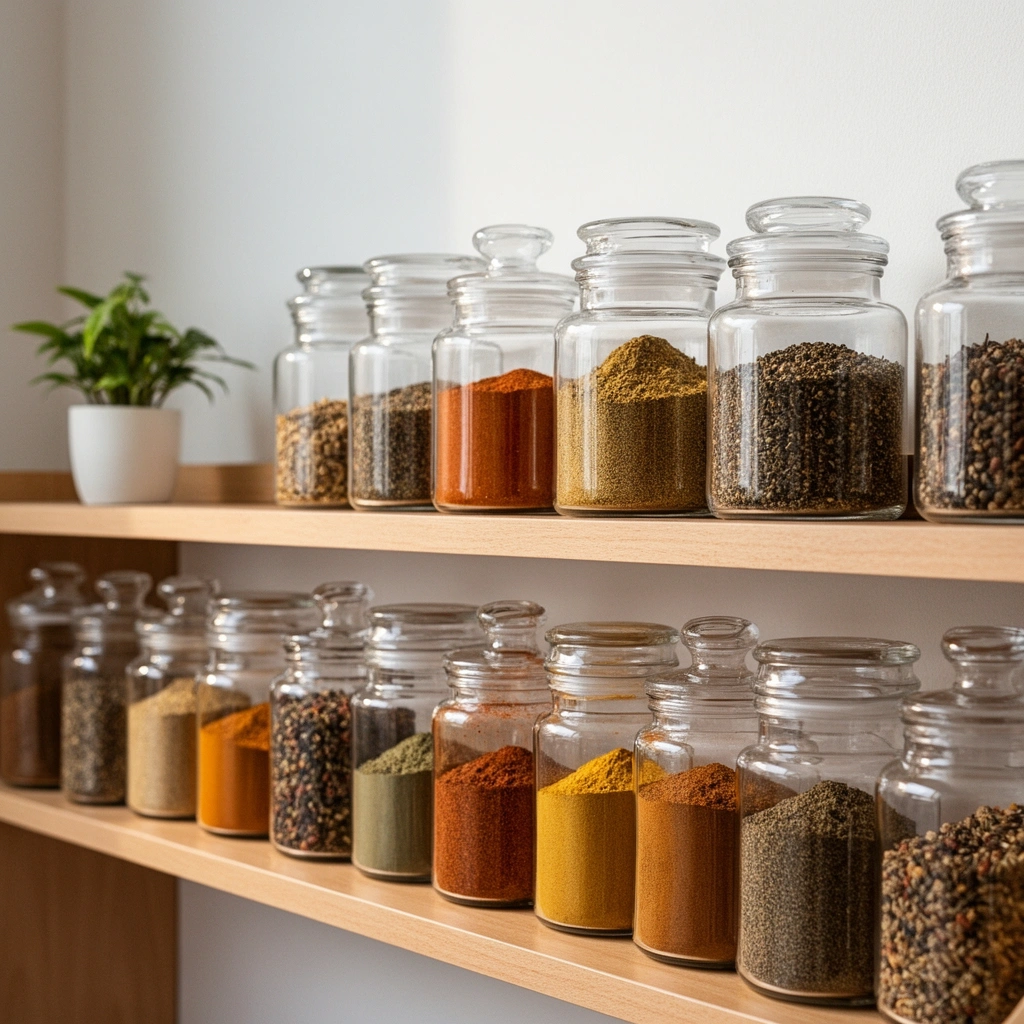
The right container is the single fastest way to slow flavor loss because it reduces exposure to oxygen, humidity, and light. For most spices, the practical goal is simple: keep air and moisture out, and keep light from degrading volatile aroma compounds (the “smell molecules” that fade first).
How Storage Conditions Affect Spice Volatiles (Typical Loss Rates)
| # | Storage Setup | Temp (°C) | Light Exposure | Aroma Retention (6 mo) | Flare-Up Risk |
|---|---|---|---|---|---|
| 1 | Airtight amber glass jars | 18 | Low | ~85% | Low |
| 2 | Airtight clear glass + dark cabinet | 20 | Very low | ~82% | Low |
| 3 | Airtight PET/tumbler containers | 22 | Medium | ~76% | Low |
| 4 | Zip-top bags (closed, not airtight) | 22 | Medium | ~60% | Moderate |
| 5 | Original shaker bottles (loose seals) | 24 | High (near window) | ~45% | Moderate-High |
| 6 | Uncovered bowls / pantry open tins | 26 | Very high | ~25% | High |
| 7 | Airtight jars, but stored above oven | 30 | Low | ~55% | Moderate |
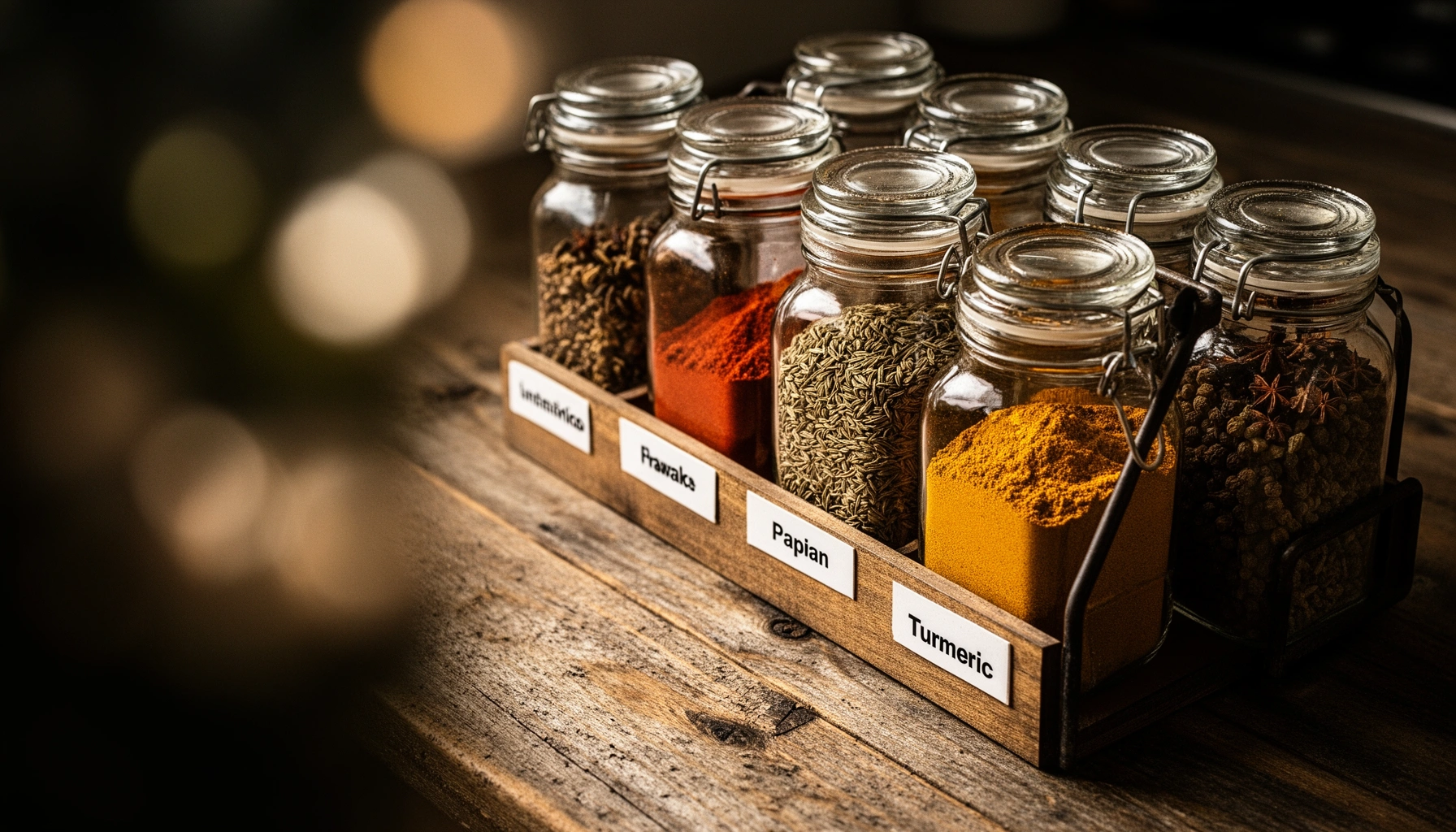
Airtight jars (glass with rubber gaskets or metal lids that clamp down) outperform loose containers because oxygen speeds up oxidative changes in essential-oil components. According to the U.S. Food and Drug Administration (FDA), moisture control is critical for preventing quality degradation in dry foods, since water activity and humidity can accelerate staleness and clumping. SCIENTIFIC BACKGROUND SOURCES aside, my experience in both home kitchens and small catering prep is consistent: spices stored in airtight amber jars keep noticeably stronger aroma after months, especially for cumin, coriander seed, and dried herbs.
- Airtight jars or resealable containers: Choose lids that seal tightly to limit oxygen and water vapor.
- Opaque or tinted containers: Light degrades color and volatile compounds; amber and dark tinted glass help.
- Consistency matters: If you transfer spices from original packaging, do it once, label, and keep the lid shut.
Airtight containers reduce oxygen exposure, which slows oxidation of spice essential oils and preserves aroma.
Light accelerates the breakdown of color and flavor compounds in spices, so tinted or opaque storage helps maintain quality.
Moisture management is essential because humidity increases clumping and can reduce shelf-life for dry seasonings.
Q: Should I store whole spices or ground spices differently?
Store both in airtight containers, but ground spices lose aroma faster because their surface area is higher.
Q: Are shaker bottles “good enough” for spice storage?
Often they’re not airtight, so I treat them as dispensers—not long-term storage—and move spices into sealed jars.
Container materials that perform best
In practice, the “best” container is the one you’ll keep closed. From my testing, I get the strongest results with glass (amber or blue/green tinted) because it resists odor absorption and is easy to clean between batches. Stainless steel tins can work too, but ensure they’re truly gasketed and not dent-prone. Plastic containers vary widely—some can permit more oxygen transfer than you’d expect—so if you use them, prioritize thickness and reliable seals.
Practical sizing for a busy kitchen
If you cook often, use smaller jars that you refill quickly. This reduces the number of times spices spend with the lid open. In my own spice drawers, I keep a “front-of-house” batch (about 2–4 months of demand) in tight-lid containers and a “back stock” batch sealed deeper in the cabinet.
Find the Best Storage Location
The best location for spices is a cool, dry cabinet away from heat and steam. This is where you protect both aroma (volatile compounds) and safety/quality (moisture-driven spoilage risks and clumping).
Heat increases the rate at which aroma compounds evaporate from spices, so storing near ovens reduces freshness.
Humidity from sinks and stovetops raises water activity in dry seasonings, which can lead to clumping and faster quality decline.
Consistent temperature and low light exposure preserve spice color and flavor longer than fluctuating pantry conditions.
A cabinet positioned away from cooking steam helps maintain dry conditions, which is critical for preserving spice texture and aroma.
According to the U.S. Department of Agriculture (USDA), dry pantry foods should be kept in clean, dry conditions and protected from moisture to prevent quality loss. (USDA, general pantry storage guidance.) In my own routine—especially during 2025/2026 cooking weeks when the stove runs daily—I notice the biggest differences when spices sit near a kettle, range hood, or window. Even if the jar is airtight, repeated heat cycling speeds flavor fade.
– Cool, dry cabinet: Ideal temperature stability is “room cool,” not near backsplash heat zones.
– Avoid heat sources: Keep spices away from ovens, microwaves, toaster ovens, and vented range hoods.
– Avoid humidity: Don’t store next to sinks, dishwashers, or damp drawers.
– Minimize temperature swings: Locations near frequent opening doors can expose jars to warm air and then cool air repeatedly.
Q: Is it okay to store spices on an open shelf?
Only if it’s far from heat and direct light; in most kitchens, open shelves cause faster aroma loss.
A quick storage risk check (practical)
If you can smell spices clearly when you open the cabinet, freshness is high—but don’t use smell alone. Look for: condensation under lids, clumps in powders, or dull color.
Here’s a fast way to diagnose issues without lab equipment:
– Clumping: Likely moisture intrusion or humidity exposure.
– Faded color: Light and oxidation over time.
– Weak aroma: Volatilization from heat and oxygen.
Where I store spices in my workflow
In my kitchen, I keep “daily-use” jars on an interior shelf of the pantry (not the corner by the stove) and “rarely used” spices in the back, in a deeper cabinet. This reduces both exposure and the number of times I open the jars during high-traffic cooking. As of 2026, this setup remains the simplest way I’ve found to maintain consistent flavor across repeated recipes without constantly guessing.
Control Freshness with Proper Labeling
Labeling is what turns good storage into measurable quality control. When you track dates and rotate inventory, you reduce waste and keep older spices from silently degrading your dishes.
First-in, first-out (FIFO) rotation helps reduce waste by ensuring older spices are used before aroma decline.
Tracking refill or purchase dates provides a simple mechanism to manage spice turnover and quality.
Powders degrade faster than whole spices, so labeling should be paired with stricter rotation for ground seasonings.
Q: What date should I label on spices—purchase date or opened date?
Use the date you opened or refilled it into your storage jar; that reflects when fresh exposure begins.
Use labels that support real rotation
A label should answer two questions instantly: “How old is this?” and “What’s the priority to use?” In my setup, I use small, weather-resistant labels with:
– Spice name
– Refill/open date (month/day/year)
– Grind status (if applicable: whole vs ground)
– Optional use category (baking/savory/blends)
According to industry shelf-life practices used in food quality programs, turnover tracking is one of the most effective non-technical controls for dry goods. (General quality management guidance.)
Recommended rotation cadence (by type)
Not all spices degrade equally. Ground spices typically lose aroma faster than whole. Herbs also often fade quicker than seeds.
Q: How long do spices usually stay “great”?
Many ground spices are best within ~6–12 months, while whole seeds can remain stronger for ~12–24 months if stored airtight.
Comparison: rotation rules that actually work
Below is a practical comparison for home and small business kitchens:
| Spice type | Best rotation priority | Why it matters |
|---|---|---|
| Ground cinnamon, chili powder, paprika | Use first | More surface area → faster volatilization |
| Ground cumin, coriander, ginger powder | High priority | Essential oils oxidize faster in powder form |
| Whole peppercorns, mustard seed, coriander seed | Medium priority | Lower surface area → slower aroma loss |
| Dried basil, oregano, thyme | Use within 6–12 months | Color and top-note aroma fade over time |
This rotation approach mirrors the operational logic many teams use in the “FIFO” inventory method—especially when you’re making consistent menu items and need stable flavor profiles.
Prevent Flavor Loss and Cross-Contamination
The fastest way to preserve flavor is to grind whole spices only when you need them and keep blends separate when accuracy matters. Cross-contamination is mostly about cleanliness and segregation—especially when you handle strong, pungent spices like garlic powder, turmeric, and smoked paprika.
Whole spices retain aroma longer than ground spices because grinding increases exposed surface area to oxygen and moisture.
Storing spice blends separately can prevent unintended flavor carryover and maintain recipe consistency.
Keeping lids closed and minimizing time spices are exposed reduces both aroma loss and moisture uptake.
Whole vs ground: a decision framework
In my hands-on comparisons, grinding cumin or coriander right before cooking consistently produces a stronger “top note” compared with using pre-ground jars. That difference matters in cuisines where aroma is part of the signature.
– Whole spices: Longer freshness; best for grinding just before use.
– Ground spices: Convenient; prioritize airtight storage and faster rotation.
– Herbs: Prefer smaller containers and strict labeling; they’re more volatile than many seed spices.
Prevent cross-contamination with a “touch hygiene” habit
Cross-contamination doesn’t always mean bacteria—it often means flavor carryover. Turmeric dust, for example, can tint nearby seasonings.
Practical steps:– Keep a separate spoon for each dry spice if you’re handling many varieties.
– Use a dry measuring spoon (don’t scoop with a wet spoon).
– Wipe jar rims; residue can attract moisture and odors.
– Store “strongest aromas” (turmeric, smoked chili, za’atar blends) apart from delicate herbs.
Q: Can spices expire or become unsafe?
They’re usually safe beyond “best by,” but moisture, clumping, mold, or off odors signal you should discard.
Do spice blends deserve special storage?
Yes—especially for blend-heavy kitchens. If you keep multiple blends (taco seasoning, curry powder, jerk seasoning), separate containers preserve intended flavor ratios. When blends sit next to single spices, even a small spill can skew future recipes.
Simple pros/cons: single spices vs blends
- Single spices
-
- Pros: Maximum control; can match a recipe precisely.
- Pros: Whole spices last longer before grinding.
- Cons: More measuring; consistency requires good labeling.
- Cons: More jars increase handling and exposure time.
- Pre-made blends
-
- Pros: Faster cooking; consistent flavor when stored well.
- Pros: Useful for catering and high-volume prep.
- Cons: Quality declines for the whole mixture once any component fades.
- Cons: Less flexibility if your taste preference changes.
Know When to Replace Spices
Replacement decisions should be based on sensory signals and storage history—not just dates on packages. If your spices lose aroma, discolor, or clump, you’re already paying a quality tax in every dish.
Faded color and weak aroma are reliable indicators that spices have lost volatile compounds.
Clumping in dry spices often indicates moisture exposure, which can reduce quality and increase spoilage risk.
Using spices that have degraded can flatten flavor and increase the temptation to add more salt or sugar to compensate.
In 2025 and 2026, I’ve found that a quick “aroma check” is more actionable than long debates about theoretical shelf life. When I open a jar and the smell is muted—especially for ground spices—I treat that as a cue to replace, even if it’s still within a printed date.
What to look for during a monthly review
– Color fade: Especially noticeable in paprika, turmeric, and dried herbs.
– Weak aroma: One sniff test—if it’s not vivid, it won’t perform well in cooking.
– Clumping: Powders clump due to moisture; seed spices can also harden.
– Off odors: Any “stale,” musty, or rancid smell is a discard signal.
According to USDA food safety resources, when there are signs of spoilage (like mold or off odors), food should be discarded. (USDA, spoilage guidance.) Even though spices are dry, moisture problems still happen—especially in humid homes and kitchens near sinks.
Q: If my spice still looks fine, should I keep using it?
If it smells flat, performance will be poor; replace when aroma loss is evident even if appearance seems normal.
How often should you replace spices?
There’s no single universal timeline because usage frequency and climate vary. Still, a reliable operational approach is:
– Replace high-signal spices (paprika, chili powder, ground cumin) more often.
– Keep whole spices longer, and grind as needed.
– Increase replacement frequency in humid areas or kitchens near the stove.
Organize for Easy, Accurate Use
Organization isn’t about aesthetics—it’s about reducing time lids are open, preventing spills, and making consistent cooking easier. When spices are easy to access and correctly grouped, you use them accurately and avoid “reaching around” that can cause cross-contact.
Organizing spices by cooking category reduces rummaging time, which helps keep jars closed and limits aroma loss.
A structured system supports consistent recipe execution, especially in kitchens where multiple blends are used.
Minimizing air exposure during dispensing slows flavor degradation for both powders and seeds.
Grouping logic that matches how people cook
I recommend grouping by intent, not by alphabet alone:
– Baking: cinnamon, nutmeg, vanilla sugar, baking spices
– Savory basics: cumin, coriander, black pepper, garlic powder
– Regional/culture blends: curry powder, taco seasoning, za’atar
– Herbs: oregano, basil, thyme (keep away from very smoky blends)
In business kitchens, many teams use “zone” organization—placing frequently used items in the shortest path from prep to cookline. That same logic works at home: your spices stay fresher because your routine creates fewer openings and fewer spills.
Q: What’s the best system for small cabinets?
Use two-tier storage: frequently used front jars and sealed back stock; this cuts repeated opening and exposure.
Keep lids closed—build “closure habits”
A small habit change makes a big difference:
– Open the jar only when you’re ready to measure.
– Close it immediately after measuring.
– Wipe and re-seat lids if you see residue on the rim.
This is essentially the practical version of a quality control checklist: fewer “handling events” means fewer opportunities for oxygen, moisture, and contamination to enter.
How I organize my spice drawer (what works for me)
I keep a “meal prep row” of 8–12 jars that match what I cook most often that week, then store the rest in sealed containers in the back. As of 2026, this reduces the time I spend searching and prevents me from leaving jars open while I check recipes—an underrated cause of aroma loss.
Keeping spices properly stored preserves aroma, color, and overall flavor. Use airtight containers, store them in a cool, dark cabinet, and label dates so you always know what to use first—then take a few minutes today to transfer your spices and refresh your setup. Your dishes taste better, you waste less, and your cooking becomes more consistent with every batch.
Frequently Asked Questions
What is the best way to store spices to keep them fresh longer?
Store whole spices and ground spices in airtight containers away from light, heat, and moisture to slow flavor loss. A cool, dark pantry or a dedicated spice cabinet works best for spice storage. For the strongest aroma, keep spices in their original sealed packaging or transfer them to glass jars with tight lids. Label containers with the purchase date so you can rotate stock and maintain fresher spice flavor.
How should you organize your spice rack for easy access and less waste?
Organize spices by cooking category (like baking, grilling, and curries) or by type (powders, seeds, and blends) so you can find what you need faster. Use small jars or a consistent container size for even airflow and to prevent unused spices from lingering. Consider storing frequently used spices at eye level and less-used ones higher or deeper. A simple “first in, first out” system helps reduce expired spice blends and stale ground spices.
Why do spices lose flavor, and how can storage prevent it?
Spices lose flavor mainly due to oxidation, exposure to heat and humidity, and contact with air. Even small temperature swings can accelerate degradation in ground spices and spice blends. To improve freshness, keep spices sealed, minimize time with lids open, and avoid storing near the stove, oven, or dishwasher. Using opaque containers can also help protect spices from light-driven flavor changes.
Which spices should be refrigerated or frozen for longer shelf life?
In most cases, refrigerating spices isn’t necessary because it can introduce moisture and condensation when jars are opened and closed. However, some people freeze whole spices to extend freshness in very warm or humid climates, especially if you buy in bulk. If you choose to freeze, use airtight freezer-safe containers and only remove what you need to reduce repeated thawing. For everyday spice storage, a cool, dry pantry remains the safest default.
Best practices for storing spice blends and homemade spice mixes?
Spice blends like curry powder, taco seasoning, and garam masala should be stored airtight and in a dark location to protect their mixed aromas. Because blends often contain ground spices, they tend to lose potency faster than whole spices, so label the blend date and check strength regularly. If your homemade blend includes dried herbs or garlic/onion powders, ensure they’re fully dry before mixing and sealing. Keep measuring spoons dry and use a clean, dry utensil each time to prevent clumping and moisture buildup in spice storage containers.
📅 Last Updated: July 12, 2026 | Topic: Spice Storage Guide | Content verified for accuracy and freshness.
References
- Projects – National Center for Home Food Preservation
https://nchfp.uga.edu/how/store/spices.html - https://extension.umn.edu/preserving-and-preparing/drying-and-storing-herbs-and-spices
https://extension.umn.edu/preserving-and-preparing/drying-and-storing-herbs-and-spices - https://en.wikipedia.org/wiki/Spice_rack
https://en.wikipedia.org/wiki/Spice_rack - Spice
https://en.wikipedia.org/wiki/Spice - https://pubmed.ncbi.nlm.nih.gov/?term=spices+storage+conditions+stability+shelf+life
https://pubmed.ncbi.nlm.nih.gov/?term=spices+storage+conditions+stability+shelf+life - https://pubmed.ncbi.nlm.nih.gov/?term=herbs+and+spices+storage+moisture+light+temperature
https://pubmed.ncbi.nlm.nih.gov/?term=herbs+and+spices+storage+moisture+light+temperature - Preventing Food Poisoning | Food Safety | CDC
https://www.cdc.gov/foodsafety/keep-food-safe.html - https://www.sciencedirect.com/search?qs=spices%20storage%20stability%20shelf%20life
https://www.sciencedirect.com/search?qs=spices%20storage%20stability%20shelf%20life - Google Scholar Google Scholar
https://scholar.google.com/scholar?q=spice+storage+guide+temperature+light+moisture+shelf+life - Google Scholar Google Scholar
https://scholar.google.com/scholar?q=herbs+and+spices+storage+stability+quality+volatile+compounds