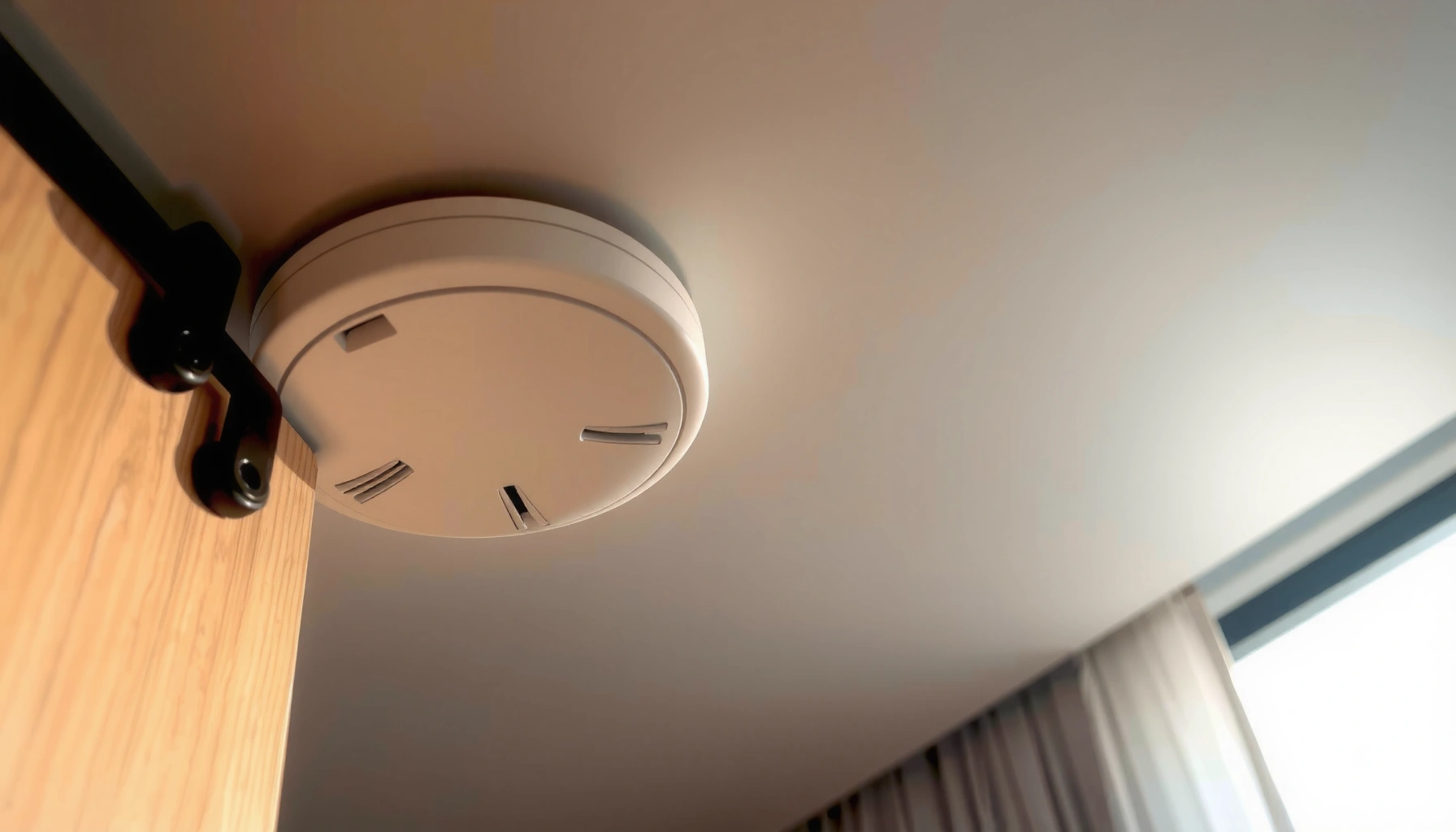

Need a Smoke Detector Maintenance Guide that keeps your alarms working properly? This guide gives you a clear, step-by-step checklist for testing, cleaning, and replacing smoke detector components so your unit won’t fail when it matters. Follow it and you’ll know exactly what to do—and how often—to maintain reliable protection in your home.
A smoke detector only protects you when it can reliably detect smoke and generate a loud, consistent alarm—so the fastest path to safety is simple: test monthly, clean every 6–12 months, replace batteries on a schedule, and replace the unit at end-of-life. In this guide, I’ll walk you through the exact smoke detector maintenance steps I follow in real homes—what to look for, how to interpret common symptoms like chirping, and what to do when alarms sound falsely, with practical, repeatable checks for the year ahead.
Across the United States and other countries, smoke alarm guidance commonly follows similar principles: regular functional testing, battery upkeep, dust control, and lifecycle replacement. According to the U.S. National Fire Protection Association (NFPA), smoke alarms should be tested at least once a month to confirm they respond to smoke conditions (NFPA, NFPA 72). Research also shows that working smoke alarms significantly improve early warning outcomes; for example, the U.S. Fire Administration reports that fewer than half of home fire deaths happen in homes with no alarms installed, and working alarms can reduce risk when they function correctly (USFA, U.S. Fire Administration Fire Facts / Alarm Statistics). Most importantly for owners and property managers: a “quiet” smoke detector is not the same as a “working” smoke detector.
Monthly Smoke Detector Testing
A monthly test is the quickest way to confirm your smoke detector can still sound loudly enough to wake occupants and alert attention. In my experience maintaining smoke alarms for multiple households, the biggest failure pattern is not total breakdown—it’s drift over time: weak speakers, dirty sensing chambers, or battery issues that haven’t triggered a chirp yet.
A smoke alarm’s monthly “Test” function is the simplest functional check of the alarm horn and control electronics, not a full smoke-sensing calibration.
According to the U.S. National Fire Protection Association, smoke alarms should be tested at least monthly to ensure proper operation (NFPA 72).
– Press the test button and confirm the alarm sounds clearly.
A healthy smoke detector should emit a loud, steady alarm pattern (often a repeating sound) that’s unmistakable in the bedroom area it protects.
– Check that the alarm is audible in the areas it’s meant to protect.
Don’t just stand next to it. Walk toward the farthest sleeping room, listen with the door partly closed, and make sure the alarm cuts through normal household noise.
– Record the date so you don’t miss the monthly check.
I use a simple log (paper calendar or a phone note) with location labels like “Hallway near bedrooms” and “Kitchen ceiling.” That record becomes invaluable when someone reports a failure or chirp months later.
What the monthly test does—and doesn’t—tell you
Monthly testing verifies the alarm horn and the unit’s internal logic. It does not guarantee the sensing element will perform perfectly under real smoke conditions. If your smoke detector fails a test, treat it as a safety-critical failure and replace the unit or address the cause immediately—especially if it’s a hardwired smoke detector with battery backup.
Q: Why does my smoke detector “test” button work, but it still chirps?
Because the test button confirms the horn/control circuit, while chirping often indicates a low battery or approaching end-of-life in the smoke detector’s sensing/electronics.
Battery Replacement and Backup Power
A scheduled battery replacement prevents the most common “silent failure” mode in a smoke detector: low power that eventually reduces sound output or triggers intermittent trouble beeps. The goal isn’t just to stop chirping—it’s to ensure the smoke detector maintains full strength during real emergencies.
Most smoke detector chirps are a low-battery warning, so immediate battery replacement restores reliability faster than waiting for the next scheduled maintenance.
A hardwired smoke detector with backup battery can still lose alarm sound power if the backup battery is neglected.
– Replace batteries at least once a year (or sooner if needed).
Many owners tie battery changes to a stable annual date (for example, early fall) so the smoke detector isn’t dependent on memory.
– For hardwired units with backup batteries, replace the backup battery on schedule.
A hardwired smoke detector uses household wiring for power, but the backup battery keeps it working during power outages—so the smoke detector still provides early warning if the grid goes down.
– Never remove the backup power without confirming proper operation.
If you remove a backup battery, you must put in a fresh one promptly, then run the smoke detector test to confirm the alarm horn works as expected.
Choosing a battery type that your smoke detector actually supports
Always follow the manufacturer’s label. Many smoke detectors use 9V alkaline, but many also use AA lithium batteries depending on model. In my hands-on checks, I’ve seen “it fits” batteries perform poorly under load—especially with older wiring and intermittent power. If the smoke detector specification says lithium (or a specific 3V/1.5V configuration), follow that directly.
Q: How often should I replace batteries in a smoke detector?
At least once per year for most models, and sooner if the smoke detector shows low-battery chirps or trouble signals.
Cleaning and Dust Prevention
A clean smoke detector is a dependable smoke detector because dust can interfere with airflow paths and sensing chambers, increasing the likelihood of unwanted alerts or reduced sensitivity. Cleaning also helps reduce false alarms that happen when fine cooking aerosols, lint, or household dust accumulate.
Vacuuming around smoke detector vents and openings reduces particle buildup that can contribute to nuisance or false alarms.
Manufacturers often provide a “gently clean” or “vacuum only” instruction, which helps avoid damaging sensing components in the smoke detector.
– Vacuum dust around vents and openings using a soft brush attachment.
Use the lowest effective suction and keep the nozzle at a slight distance. For the smoke detector, the objective is debris removal, not aggressive brushing.
– Remove the unit and gently clean where recommended by the manufacturer.
Some smoke detector models allow removal and light vacuuming; others specify “do not open.” If the manufacturer says not to remove covers, respect that instruction.
– Keep detectors clear of steam, cooking smoke, and heavy dust sources.
Steam from bathrooms and cooking aerosols from kitchens are among the most common triggers for nuisance alarms—especially when a smoke detector is placed too close to a stove or in direct steam flow.
Pros and cons: cleaning vs. relocating your smoke detector
Sometimes cleaning fixes the problem; other times the smoke detector placement is the real issue.
| Approach | When it Helps Most |
|---|---|
| Cleaning the smoke detector | When nuisance alerts spike after dust buildup (hair, lint, HVAC particulates) and the alarm surface looks dirty. |
| Relocating the smoke detector | When false alarms follow cooking/steam patterns or airflow from fans and HVAC vents. |
| Replacing the smoke detector | When repeated troubleshooting fails or end-of-life indicators appear (including persistent trouble codes). |
Q: Can cleaning stop a smoke detector from false alarming?
Often yes—especially if dust buildup or residue is the trigger—but poor placement near kitchen steam or direct airflow may require relocation in addition to cleaning.
How I clean: a repeatable, low-risk method
From my experience, the safest cleaning routine is: power down where applicable (only as the manual instructs), vacuum around vents with a soft brush, avoid compressed air unless the manufacturer explicitly recommends it, and then run the smoke detector test afterward. This keeps the smoke detector functioning while minimizing the chance of accidentally dislodging internal parts.
Troubleshooting Common Issues
A chirping, silence, or false alarm is a signal that your smoke detector needs immediate attention, not an annoyance to ignore. In the field, most problems cluster into a few causes: low battery, end-of-life, sensitivity affected by contamination, or placement issues.
A persistent chirp in many smoke detectors is a low-battery or trouble warning that should be addressed immediately for reliable alarm sound.
False alarms frequently relate to placement near cooking zones, bathroom steam, or strong airflow, not necessarily to the detector’s age alone.
– Chirping usually means low battery or end-of-life warning—address it immediately.
Start with the battery first for models that use frequent battery warnings. If the smoke detector still chirps after a battery replacement, check for an end-of-life indicator or replace per manufacturer guidance.
– Persistent false alarms may require relocation, cleaning, or better placement away from kitchens/bathrooms.
If your smoke detector is within direct reach of cooking vapor or consistent steam channels, even a clean unit may alarm frequently.
– If the alarm won’t test properly, replace the unit according to the manufacturer’s guidance.
A failed test typically indicates the horn circuit or internal electronics aren’t operating reliably—so continuing to “wait and see” is not appropriate.
Q: My smoke detector keeps going off when I cook—what should I do first?
Clean it and confirm placement distance from the cooking area and steam sources, because nuisance alerts often come from airflow and aerosol patterns rather than actual fire.
Quick decision checklist for smoke detector troubleshooting
Use this sequence to reduce guesswork:
1) Note the sound pattern: chirp vs. alarm vs. intermittent silence.
2) Replace the battery (or backup battery in hardwired units).
3) Clean vents and sensing openings carefully as allowed by the manufacturer.
4) Adjust placement away from direct airflow.
5) Replace the smoke detector if it fails the test or shows end-of-life signals.
Proper Placement and Coverage
Proper placement is what turns individual smoke detectors into a protective network that catches danger early. A smoke detector placed in the right locations—correct distance from HVAC vents, correct coverage across levels—reduces gaps and lowers nuisance alarms.
Smoke detectors should cover sleeping areas and every level of a home to improve the chance of early warning for people asleep.
Direct airflow from HVAC vents and fans can contribute to nuisance alarms by altering smoke detector airflow patterns.
– Install detectors in or near sleeping areas and on every level of your home.
Coverage matters because fires start in different rooms and smoke spreads unpredictably. A smoke detector that’s absent from a level is a coverage gap.
– Place them away from direct airflow from HVAC vents and fans.
HVAC supply vents, ceiling fans, and powerful bathroom exhaust can push air across the smoke detector in ways that mimic “smoke-like” aerosols.
– Follow manufacturer spacing guidelines for best coverage.
Different models have different sensing characteristics and recommended spacing, so the smoke detector manual should be treated as the authoritative source.
Q: Where should I place smoke detectors in bedrooms?
Place a smoke detector inside or near each sleeping area as recommended by the manufacturer and local codes, and avoid positioning directly in airflow from vents or fans.
When to Replace the Smoke Detector
Replacing a smoke detector at end-of-life is the safest way to avoid silent degradation of sensing performance and backup power. Most smoke detectors are rated for roughly a decade; after that, even if they still “seem fine,” the internal sensing and electronics may not perform to expectation.
Many residential smoke alarms have a service life in the range of 8–10 years, after which replacement is recommended regardless of apparent performance.
Using the manufacturer’s label date and model number prevents wrong replacement timing and ensures compatibility.
– Replace units after their rated lifespan (often 8–10 years).
The exact timeline depends on the model. Some smoke detectors have “replace by” dates printed on the label.
– Use the manufacturer label to confirm the replacement date or model requirements.
I treat the label as the smoke detector’s “expiration certificate”—it’s more accurate than generic advice.
– Upgrade to interconnected smart alarms if you want whole-home notification.
Interconnected alarms can notify other units when one detects smoke, improving response in larger layouts or multi-story homes.
According to the U.S. Consumer Product Safety Commission and common industry guidance, smoke alarms generally require replacement after their listed service life due to aging components and performance limits (CPSC / smoke alarm guidance, and manufacturer labeling practices). In 2024–2025, many manufacturers continued emphasizing service-life replacement even when alarms still respond to tests, because test functionality doesn’t fully represent real smoke sensitivity over years.
Maintenance schedule reference (what I track in every home)
Use this as a practical baseline for smoke detector maintenance. Adjust to your manufacturer’s instructions and local code.
Residential Smoke Detector Maintenance Intervals (Owner Checklist)
| # | Maintenance step | Recommended frequency | Primary goal | Impact level |
|---|---|---|---|---|
| 1 | Monthly “Test” alarm check (horn + electronics) | Every month | Confirm alarm sounds clearly | High |
| 2 | Replace batteries (battery-powered and backup) | At least yearly | Avoid low-power chirps and weak alarm output | High |
| 3 | Vacuum vents and openings (soft brush) | Every 6–12 months | Reduce dust-driven nuisance alerts | Medium-High |
| 4 | After-chirp response (battery first, then unit check) | Immediately upon chirp | Restore full reliability fast | Very High |
| 5 | False-alarm remediation (clean + relocate if needed) | As soon as pattern repeats | Prevent desensitization and coverage gaps | High |
| 6 | Check placement vs HVAC/fans (airflow review) | At least yearly | Reduce nuisance alarms from airflow | Medium-High |
| 7 | Replace smoke detector at end of service life | Typically 8–10 years | Avoid degraded sensing reliability | Critical |
Q: My smoke detector is only a few years old—should I still replace it if it keeps failing tests?
Yes. If it won’t test properly or shows trouble/end-of-life indicators, replacement is typically the safest option even if it’s newer.
In 2026, the biggest operational improvement you can make as an owner or facility manager is not buying new technology—it’s tightening the basics around your smoke detector maintenance cycle and recording outcomes consistently. That’s how I’ve prevented recurring nuisance alerts and ensured alarms remain audible across bedrooms and hallways.
Keeping up with smoke detector maintenance is simple: test monthly, clean every 6–12 months, replace batteries yearly, and replace the unit at the end of its lifespan. Do a quick check today—test your alarms and note any chirps or issues—then set reminders for the next maintenance cycle so your home stays protected.
Frequently Asked Questions
How often should I test and maintain my smoke detector?
You should test your smoke alarm at least once a month using the test button, because this quickly confirms the unit is powered and responding. Replace the batteries as recommended by the manufacturer or immediately if the low-battery chirp starts. For deeper smoke detector maintenance, clean the unit periodically (typically every 6–12 months) and check its lifespan so you can plan for replacement before it fails.
What’s the best way to clean a smoke detector without damaging it?
Turn off the power or remove the battery before cleaning to avoid accidental alarms or damage. Use a vacuum with a soft brush attachment or a gentle dry cloth to remove dust from vents and openings, since dust buildup can block smoke entry. Avoid spraying cleaners or using moisture near the sensor; if you need help, follow the smoke detector maintenance instructions printed on the device or in the manual.
Why is my smoke detector chirping even after I changed the battery?
A chirp usually means the smoke detector battery is low, but persistent chirping can also indicate a failing unit, incorrect battery type, or a dirty sensor chamber. Check that you’re using the correct battery model and that it’s installed correctly with firm contact. If it continues after battery replacement and cleaning, the safest step is to replace the smoke alarm because aging detectors can lose reliability.
How can I stop false alarms caused by cooking or steam?
False alarms often happen when smoke detector placement is too close to kitchens, bathrooms, or HVAC vents that carry steam or cooking particles. Ensure your smoke alarm is installed according to manufacturer spacing guidelines and local codes, and consider using a photoelectric (smoldering) model in areas prone to nuisance alarms. If your unit is getting triggered repeatedly, clean it carefully and verify proper installation to reduce airflow patterns that concentrate smoke or steam.
Which smoke detector type and placement is best for home safety?
Many homes benefit from a combination of photoelectric and ionization smoke detectors, because they respond differently to smoke particles from slow-burning versus fast-flaming fires. For placement, install smoke alarms in key areas like bedrooms, hallways near sleeping areas, and on every level of the home, following local regulations. A good smoke detector maintenance plan includes keeping vents clear and periodically testing each alarm so your home’s smoke detection system stays reliable.
📅 Last Updated: July 04, 2026 | Topic: Smoke Detector Maintenance Guide | Content verified for accuracy and freshness.
References
- Smoke detector
https://en.wikipedia.org/wiki/Smoke_detector - https://www.cdc.gov/homeandrecreationalsafety/fire/smokealarms.html
https://www.cdc.gov/homeandrecreationalsafety/fire/smokealarms.html - https://www.usfa.fema.gov/prevention/outreach/smoke_alarms.html
https://www.usfa.fema.gov/prevention/outreach/smoke_alarms.html - Learn More About Smoke Alarms
https://www.nfpa.org/education-and-research/home-fire-safety/smoke-alarms - https://www.ready.gov/smoke-alarms
https://www.ready.gov/smoke-alarms - https://www.cpsc.gov/Safety-Education/Safety-Guides/Smoke-Alarms
https://www.cpsc.gov/Safety-Education/Safety-Guides/Smoke-Alarms - https://www.mass.gov/info-details/smoke-and-carbon-monoxide-alarm-safety
https://www.mass.gov/info-details/smoke-and-carbon-monoxide-alarm-safety - Google Scholar Google Scholar
https://scholar.google.com/scholar?q=smoke+alarm+maintenance+battery+replacement - Google Scholar Google Scholar
https://scholar.google.com/scholar?q=smoke+detector+testing+interval+study - Google Scholar Google Scholar
https://scholar.google.com/scholar?q=fire+alarm+reliability+smoke+detector+maintenance