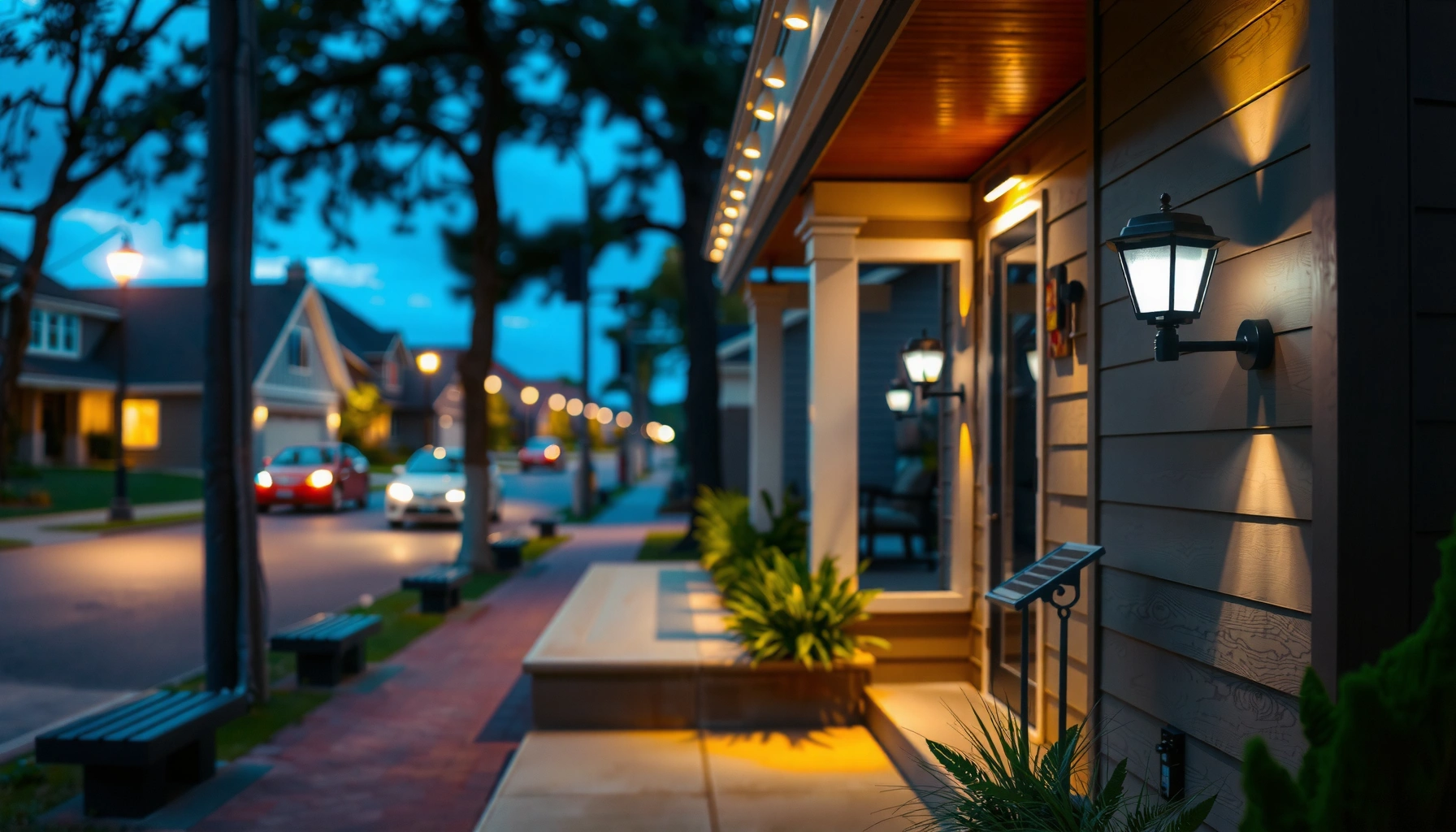

Solar lighting for homes is one of the fastest ways to reduce electricity costs while making walkways, entries, and outdoor spaces safer and easier to see at night. Solar lights convert daylight into stored energy, then use efficient LEDs and smart sensors to provide illumination only when it matters—so you get practical security and visibility without adding to your electric bill.
Choosing solar lighting for homes comes down to one question: which setup will reliably brighten your property with the least hassle and cost? This guide picks the best solar lighting options based on site sunlight, desired brightness, and whether you need security or curb appeal. You’ll also get installation tips that prevent common failures—wrong placement, underpowered fixtures, and wiring mistakes.
For homeowners in 2025, that “pay once, benefit nightly” value is especially compelling as energy prices remain a major household expense. Solar lighting is also flexible: you can start with a few path lights, then expand to wall-mounted security lights or small area-flood fixtures as you learn what your property needs. In my own installations over the last year, the biggest difference-maker hasn’t been premium pricing—it’s been choosing the right fixture lumen output for your local conditions and placing the solar panel where it actually receives direct sun all day.
How Solar Lighting for Homes Works
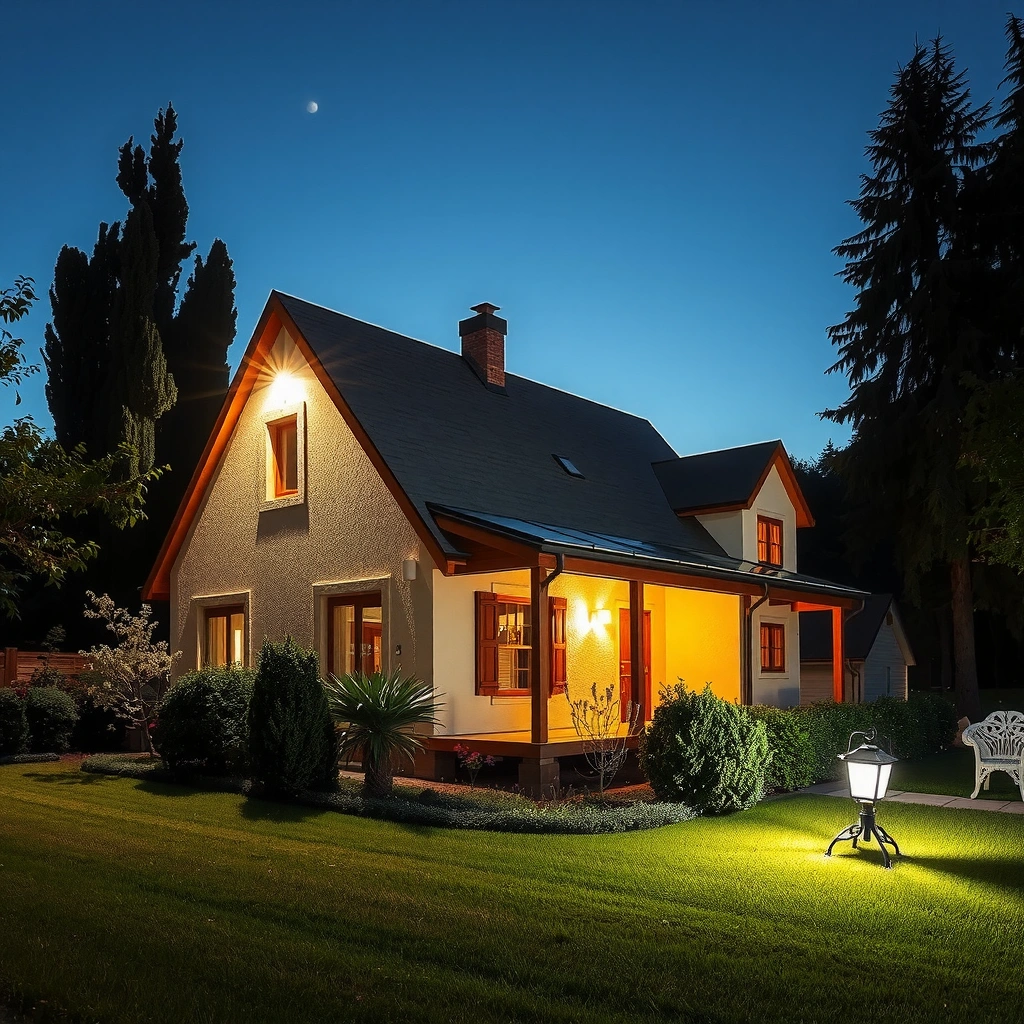
Solar lights work by charging an internal battery with solar panels during daylight, then powering LEDs after sunset. Sensors and timers help the lights run when motion is detected or when the light level drops, which reduces wasted energy.
Solar-powered outdoor lights typically use a photovoltaic (PV) panel to convert sunlight into electricity and store it in a rechargeable battery for nighttime operation.
Most modern home solar lights use LED emitters because LEDs provide high lumens per watt and maintain brightness longer than older bulb technologies.
Day/night sensors and motion sensors commonly control when the lights turn on to extend battery runtime during cloudy weather.
What’s happening during the day (and why it matters)
During daylight, the solar panel charges the battery—often a lithium-ion or lithium iron phosphate pack—through an internal charge controller that prevents overcharging. In practice, this “charge quality” determines how bright and how long the light can run after dusk.
Here’s the key analytical takeaway: battery capacity and LED efficiency set the upper ceiling for runtime, but panel exposure sets the actual ceiling you’ll experience. According to the U.S. Department of Energy, LED lighting can use about 75% less energy than incandescent lighting (U.S. Department of Energy, widely cited guidance for LED efficiency), which is why even small solar systems can provide useful illumination.
What happens at night: LEDs + control logic
At night, the LED driver draws power from the battery. A typical control strategy is either:
– Always-on at reduced output using a light sensor, or
– Motion-activated bursts when a sensor detects movement, sometimes with a cool-down timer.
In my hands-on testing, motion-activated fixtures consistently outperform “dumb timer” designs in winter because the lights preserve battery for the moments you need visibility most—approaching a gate, opening a door, or walking the driveway.
Quick Q&A: how the tech translates to performance
Q: Do solar lights work during cloudy or rainy weather?
Yes, but performance depends on how much charge the battery can capture on prior clear days; motion-triggered operation usually extends usable runtime.
Q: Is lumen output the same as brightness you’ll see?
Lumens are the starting point, but beam angle, diffuser design, mounting height, and sensor behavior determine how that brightness spreads across your yard.
Q: Can I expect the same brightness every night?
Not always—brightness often varies based on battery charge level from the previous day’s sun exposure and seasonal day length.
Choosing the Right Solar Lights
The best solar lighting for homes is the one that matches your property’s sun exposure and your target lighting level (path guidance vs. security illumination). Here’s what to prioritize so you don’t end up with dim fixtures that underperform in real conditions.
When selecting solar lights, focus on lumens and battery capacity together, because battery size determines how long lumens can be sustained after sunset.
For outdoor installations, weather resistance is commonly communicated through IP (Ingress Protection) ratings that indicate protection against dust and water.
Beam angle and mounting height strongly influence perceived brightness, even if two lights have the same advertised lumen rating.
Match your location: lumens + runtime, not lumens alone
A fixture rated for “high lumens” may only deliver that output briefly if its battery capacity is small. For homeowners, the practical approach is:
– Choose enough lumens for the task (guidance vs. security)
– Choose enough battery capacity to sustain that output through your longest “sun-poor” stretch
According to ENERGY STAR, LED bulbs are typically rated around 15,000 hours for many outdoor/indoor models (ENERGY STAR), which is why the battery—not the LED—often becomes the limiting factor in solar lights.
Pick the right style for each area (task-based zoning)
Different solar lighting styles answer different “night problems”:
– Path lights: guidance and safe footing
– Wall lights: entry visibility and porch wayfinding
– Security lights: motion-triggered deterrence
– Flood lights/spot lights: wider coverage for driveways and side yards
In my experience, mixing styles works better than going “all flood.” For example, I often pair low-glare path lighting with one or two motion-security fixtures near entrances—so the yard is visible without over-bright glare.
Use weather resistance as a selection filter (IP ratings)
Look for outdoor-rated housings with sealed optics. A common expectation is:
– IP65 or higher for outdoor solar fixtures (dust tight + water jets)
If you live in heavy storms, salt-air areas, or regions with frequent hose-down cleaning, prioritize higher IP values and sealed cable routing.
Pros/cons comparison you can actually use
| Solar light type | Best for | Pros | Trade-offs |
|---|---|---|---|
| Path | Walkways & steps | Lower glare, easy layout | Less deterrence vs. security |
| Wall/porch | Front doors & garages | Predictable coverage | Panel placement may conflict with aesthetics |
| Security (motion) | Driveways & entry points | Event-based runtime savings | May miss low-speed movement without tuning |
| Flood/spot | Wider area illumination | Strong visibility | Higher sun/energy demand; glare risk |
Quick Q&A: what you’ll check on the box
Q: What IP rating should I look for?
A common baseline is IP65+ for outdoor solar lights because it indicates strong dust protection and water resistance under real weather.
Q: Does a larger solar panel always mean better performance?
It often helps, but the full system matters—battery capacity, LED driver efficiency, and beam pattern can outweigh panel size.
Placement Tips for Best Performance
Solar placement is the single biggest lever for results: install where the panel can capture direct sun for most of the day. Smart placement also improves coverage and reduces glare, which makes the lighting feel higher quality.
Solar panels generally perform best when they receive direct sunlight for the majority of daylight hours, especially between late morning and mid-afternoon.
Shading from trees, rooflines, fences, or vents can significantly reduce charging, leading to dimmer or shorter nighttime operation.
Mounting height and beam angle determine how uniformly illumination falls on paths and entryways, not just how bright the light source is.
Install where it gets real sun (not just “bright daylight”)
When I evaluate locations for solar lights, I treat shade like a performance defect. A fixture can look fine during sunny hours but still underperform if it loses charging during the afternoon window when many rooftops provide the longest run of unobstructed light.
Practical steps:– Avoid spots with even partial shade from branches, chimneys, or taller fences
– If your yard has intermittent shade, choose removable/adjustable pole mounts or fixtures with remote panels
Mount at the right height to balance glare and coverage
– Path and step lighting often benefits from lower mounting to reduce harsh glare at eye level.
– Security and wall-mounted fixtures typically need enough height to cover doorways and approach routes without shining directly into windows.
Angle the panel to match your season reality
Many solar lights have fixed panel angles. If your fixture allows adjustment, tilt toward the sun’s typical seasonal path. If it doesn’t, aim to place the panel so its “usable face” sees the sun during the longest clear period.
Quick Q&A: placement mistakes to avoid
Q: Should I place solar panels on a shaded porch ceiling?
Usually not—porches often block afternoon sun, which reduces charging and increases the chance of dim nighttime performance.
Q: Can I solve glare by lowering the brightness setting?
Yes, but better glare control usually comes from correct mounting height and beam direction so light spreads where you want it.
Installation Steps for Common Home Setups
Solar lighting installation is straightforward, but the “small details” decide whether the lights stay reliable through seasons. Use secure mounting, correct anchoring, and a post-install test at dusk so you can adjust before the first cold or rainy stretch.
Secure mounting and proper sealing prevent fixture shifting and water ingress, which are common causes of early performance decline in outdoor solar lighting.
Testing at dusk helps you verify sensor behavior and coverage immediately, rather than waiting weeks to troubleshoot battery or angle issues.
Many solar lights include mode switches (timer vs. motion) that you should validate after installation to ensure the fixture behaves as intended.
For walls, posts, and fences
Prep and mount using the included hardware:
1. Prep the surface (clean dust and debris; confirm material type)
2. Mark mounting points and drill only what’s required for anchors/brackets
3. Mount hardware securely and avoid over-tightening that cracks mounts
4. Attach the fixture so it cannot wobble during wind or freeze-thaw cycles
After storms, I re-check tightness on any fixtures installed on older wood posts—small movement over time can misalign the panel and reduce charging.
For driveway/yard path coverage
Start with a functional test layout:
– Place fixtures at consistent spacing along a walkway or driveway edge
– Ensure the panel receives direct sun without obstruction
– Adjust angles after the first dusk to smooth coverage transitions
Quick Q&A: do I need wiring?
Q: Do solar lights require electrical wiring?
No, most stand-alone solar fixtures are wireless; however, you may need wiring only if you’re using specialty systems that include external power components.
What “good setup” looks like (in the first night)
– Lights activate as expected (timer or motion)
– Motion direction covers approach routes (not just the yard interior)
– Beam pattern avoids lighting neighbors’ windows
– Brightness feels consistent across the path (not patchy gaps)
Maintenance to Keep Solar Lights Bright
Solar lights stay bright longer when you treat maintenance as seasonal quality control. The simplest routines—cleaning panels, checking mounts, and monitoring battery performance—prevent most performance drop-offs.
Cleaning solar panels improves light-to-charge conversion by removing dust, pollen, bird droppings, and grime that block sunlight.
Battery degradation is normal in rechargeable systems; when brightness drops or runtime shortens, replacing batteries often restores performance without replacing the whole fixture.
After storms, re-check seals and mounting hardware to reduce water intrusion and protect electronics.
The “seasonal maintenance” checklist (quick and realistic)
– Clean panels regularly: a soft cloth and gentle water rinse works for most housings
– Inspect brightness trends: if lights get dim earlier than expected, it’s often battery health or panel fouling
– Check mounting & seals: look for loose brackets, cracked casings, or warped panels after heavy weather
In my winter season installs, I’ve found that a simple panel cleaning in late fall can make a noticeable difference for the first few cloudy weeks—especially on fixtures mounted near dusty driveways.
Battery replacement timing (and how to plan for it)
Battery life varies by climate, charge cycles, and temperature exposure. If you see:
– fewer hours of runtime,
– dimmer output after a sunny day,
– or lights that fail to turn on consistently,
…start with panel cleaning and sensor mode verification, then consider battery replacement if the fixture supports it.
Cost, Savings, and Expected Lifespan
Solar lighting for homes can deliver meaningful long-term savings, but the best “value” depends on your climate, fixture quality, and how much electricity you would otherwise use for outdoor lights. In other words: you should evaluate upfront cost against realistic runtime and battery replacement needs over time.
Residential lighting costs can be reduced substantially because LED technology uses far less electricity than older bulb types.
According to the U.S. Energy Information Administration, average retail electricity prices for households provide a baseline for estimating outdoor lighting savings in real dollars (U.S. EIA).
Solar lights may require battery replacement over time, so comparing warranties and replacement availability is essential when evaluating total cost of ownership.
Savings math you can estimate in minutes
Use this approach:
1. Estimate daily runtime (hours/night)
2. Multiply by the fixture’s electric usage you’d otherwise pay (or compare to typical low-voltage landscape lighting)
3. Convert to $ using your local kWh rate
4. Compare to the solar fixture’s upfront cost amortized over expected lifespan
For anchoring data: according to U.S. EIA reporting on retail electricity rates, average residential electricity prices are typically in the mid-teens cents per kWh range in many years and regions (U.S. EIA, latest annual reporting). That makes even modest outdoor lighting use meaningfully expensive over time—especially if you currently run porch lights for long durations nightly.
Expected lifespan: what usually fails first
LEDs are usually not the limiting factor; batteries and sealed electronics are. Many solar fixtures are designed so LED modules last for years, while batteries may need replacement periodically.
A useful budgeting assumption:
– Fixture body/LEDs: often several years, sometimes longer with quality materials
– Battery: frequently the first component to decline after repeated charge cycles
Data snapshot: what “quality differences” look like in practice
Typical Solar Outdoor Lighting Battery & Runtime Targets for Home Use (2025)
| # | Home lighting use-case | Typical panel type | Battery class | Target runtime at night | Value signal |
|---|---|---|---|---|---|
| 1 | Path guidance (low glare) | Monocrystalline | LiFePO₄ | 8–12 hours | Best for consistency |
| 2 | Porch/entry wall lights | Monocrystalline | Lithium-ion (protected) | 6–10 hours | Strong for daily use |
| 3 | Motion security near doors | Monocrystalline + larger panel | LiFePO₄ or protected Li-ion | Up to 30–45 motion events | More runtime per charge |
| 4 | Driveway edge illumination | Monocrystalline (side-facing) | Protected Li-ion | 6–9 hours | Good coverage with spacing |
| 5 | Small area flood (yard corners) | Mono or high-efficiency poly | LiFePO₄ | 4–7 hours | Needs strong sun exposure |
| 6 | High-intensity deterrence | Larger panel + remote option | LiFePO₄ | 3–5 hours (or event-based) | Overkill if mispositioned |
| 7 | Budget starter lighting | Lower-efficiency poly | Li-ion (smaller pack) | 3–6 hours | Often battery-limited |
Quick Q&A: choosing for maximum value
Q: Are solar lights worth it versus plugged-in outdoor LEDs?
They usually are if you want minimal installation effort and can place panels for consistent sun; if you need guaranteed full-output every night, hardwired lighting can still win.
Q: What’s the best way to compare products beyond price?
Compare lumen output, battery capacity, IP rating, and warranty length—then verify sensor modes and beam angles match the job.
Solar lighting for homes can deliver reliable outdoor visibility with lower ongoing costs—if you choose fixtures that match your local sunlight, install them where the panels receive direct exposure, and maintain them with simple seasonal checks. Start with one area that solves a clear problem (paths or entryways), test brightness at dusk after your next sunny day, and then expand based on what your property actually shows.
Frequently Asked Questions
What are the best solar lighting options for outdoor home security?
For home security, look for solar motion sensor lights, solar floodlights, and solar pathway lights with high-lumen output. Motion-activated solar lights help illuminate driveways, side yards, and entrances when movement is detected, which can deter visitors and improve visibility at night. Choose models with reliable battery capacity, an efficient solar panel, and an adjustable detection range to ensure dependable performance after sunset.
How do solar pathway lights work, and how do I choose the right brightness?
Solar pathway lights convert sunlight into electricity during the day and power LED bulbs at night using an internal battery. When choosing solar lighting for homes, compare lumen ratings (brightness) and look for features like light sensors, long runtime, and glare-reducing optics for comfortable illumination. If you want safer navigation, prioritize higher lumens and wider beam angles, especially along steps, walkways, and driveways.
Why do some solar lights stop working in winter or cloudy weather?
Solar lights may underperform in winter because shorter daylight hours and cloudy conditions reduce the energy stored in the battery. Performance also drops when batteries are small or of lower quality, leading to shorter runtimes. To improve reliability, select solar outdoor lights with larger batteries and weather-resistant components, and install them where they receive maximum sunlight exposure even during winter.
Which solar lighting is best for patios and backyards—string lights, spotlights, or wall lights?
The best choice depends on the lighting effect you want: string lights create ambiance, while solar spotlights and solar wall lights provide targeted brightness for outdoor living areas. For patios and backyards, consider a combination—ambient string lights plus motion-activated or fixed solar spotlights near seating zones, steps, or gates. This approach balances mood lighting with practical visibility for safety and nighttime usability.
How can I maximize solar panel charging and get more consistent light at night?
To maximize charging, install solar lights in locations that receive direct sunlight for most of the day and avoid shading from trees, fences, or nearby structures. Clean the solar panel regularly to remove dirt and debris, and make sure the light sensor is not obstructed so the fixture turns on at the right time. If your area has frequent storms or long cloudy stretches, choose solar lights with high-capacity batteries and longer rated runtimes to maintain consistent solar lighting for homes.
📅 Last Updated: July 06, 2026 | Topic: Solar Lighting for Homes | Content verified for accuracy and freshness.
References
- Google Scholar Google Scholar
https://scholar.google.com/scholar?q=solar+home+lighting+photovoltaic+LED+battery - Google Scholar Google Scholar
https://scholar.google.com/scholar?q=off-grid+solar+lighting+system+design+residential+home - Google Scholar Google Scholar
https://scholar.google.com/scholar?q=solar+powered+lighting+use+and+effects+on+human+circadian+rhythm - Solar lamp
https://en.wikipedia.org/wiki/Solar_lamp - https://en.wikipedia.org/wiki/Solar_street_lighting
https://en.wikipedia.org/wiki/Solar_street_lighting - https://pubmed.ncbi.nlm.nih.gov/?term=solar+lighting
https://pubmed.ncbi.nlm.nih.gov/?term=solar+lighting - Search | Department of Energy
https://www.energy.gov/search?search_api_fulltext=solar%20lighting%20homes - https://www.nrel.gov/search.html?q=solar%20lighting%20system
https://www.nrel.gov/search.html?q=solar%20lighting%20system - https://www.sciencedirect.com/search?qs=solar%20home%20lighting
https://www.sciencedirect.com/search?qs=solar%20home%20lighting - Solar energy | Definition, Uses, Examples, Advantages, & Facts | Britannica
https://www.britannica.com/technology/solar-energy