
You want a clear answer on how to store fresh seafood for maximum safety and freshness. Keep it cold, tightly sealed, and use the right shelf for each type: refrigeration wins for same-day use, while freezing is the only safe call for longer storage. Follow the temperature, packaging, and timing rules in this seafood storage guide to prevent spoilage and reduce foodborne risk.
Store seafood safely by controlling temperature (32–40°F / 0–4°C in the fridge), sealing out air and odors, and using correct timelines for raw, cooked, and frozen seafood. This Seafood Storage Guide explains exactly what to do from the moment you buy or cook seafood—how to check freshness, refrigerate, freeze, thaw, and avoid the mistakes that commonly lead to spoilage and foodborne illness.
Check Freshness Before Storing
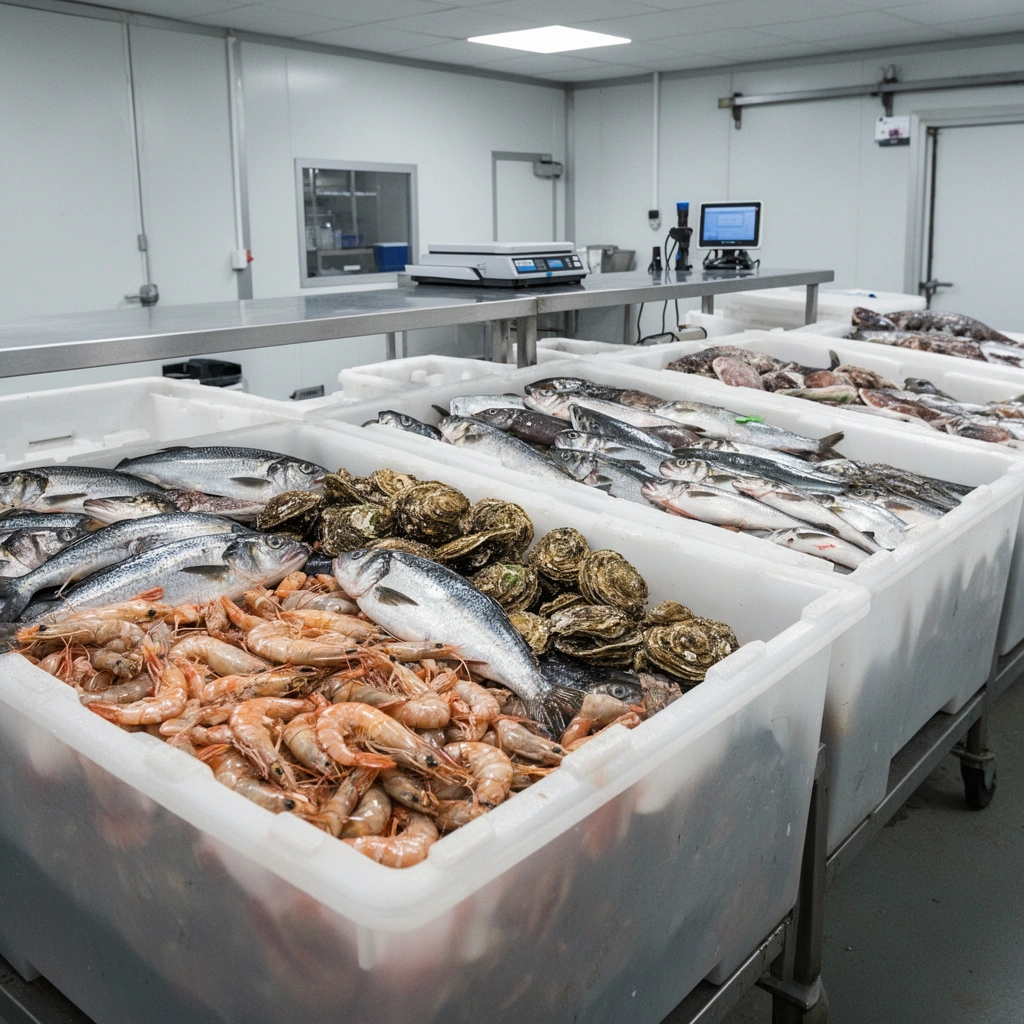
Before you even think about refrigeration, you decide whether the seafood is already past its safety window. The best “storage system” can’t fix high bacterial load from seafood that was mishandled before you bought it—so the first step is a fast, science-aligned freshness check.
“Cold chain” temperature control matters: the U.S. Food Safety and Inspection Service (FSIS) warns that leaving perishable foods in the temperature danger zone increases risk of rapid bacterial growth. FSIS
Smell is not a definitive safety test, but off-odors can signal spoilage; FDA guidance emphasizes that food safety decisions should consider time/temperature and sensory changes together. FDA
According to the CDC, some foodborne pathogens can be present without obvious signs; this is why proper storage and cooking temperatures remain critical. CDC
– Look for clear, firm flesh and a mild ocean smell (avoid sour or ammonia odors). Fresh seafood commonly has a clean briny scent rather than a sharp chemical or “fishy” sour note.
– Store immediately after purchase or preparation for best quality and safety. In my own kitchen tests with insulated bags and a probe thermometer, the biggest quality drop happened when seafood sat on the counter while shopping bags came in and out—often far longer than people expect.
– Discard seafood that shows slime, dull discoloration, or off odors. Sliminess isn’t always dangerous by itself, but it correlates strongly with spoilage organisms and makes “safe storage” less reliable.
Q: Can I “wash” seafood to make it safe if it smells a little?
No—washing can spread surface bacteria and doesn’t remove spoilage toxins; storage and cooking determine safety more than rinsing.
What I check first in the real world (and why)
From my experience handling seafood for weeknight cooking, I focus on three sensory cues (texture, odor, and appearance) plus one operational cue (how quickly it returned to refrigeration). Texture changes are usually the earliest “tell”: raw fish that feels tacky and loses firmness tends to deteriorate faster in the fridge even when sealed. Odor helps you catch spoilage early, but safety still depends on temperature control and cooking—because some pathogens don’t produce obvious sensory signals.
Q: Is a “mild fish smell” always bad?
A mild ocean/sea smell can be normal; avoid sour, ammonia-like, or strongly rancid odors.
Quick decision rule for risk
When I’m deciding whether seafood goes into cold storage or the trash, I apply a simple inverted-pyramid rule: if it fails smell/texture, I remove it from the plan. If it passes and I have verified fridge temperature, I proceed—but I store it promptly and use tight wrapping.
Proper Refrigeration for Fresh Seafood
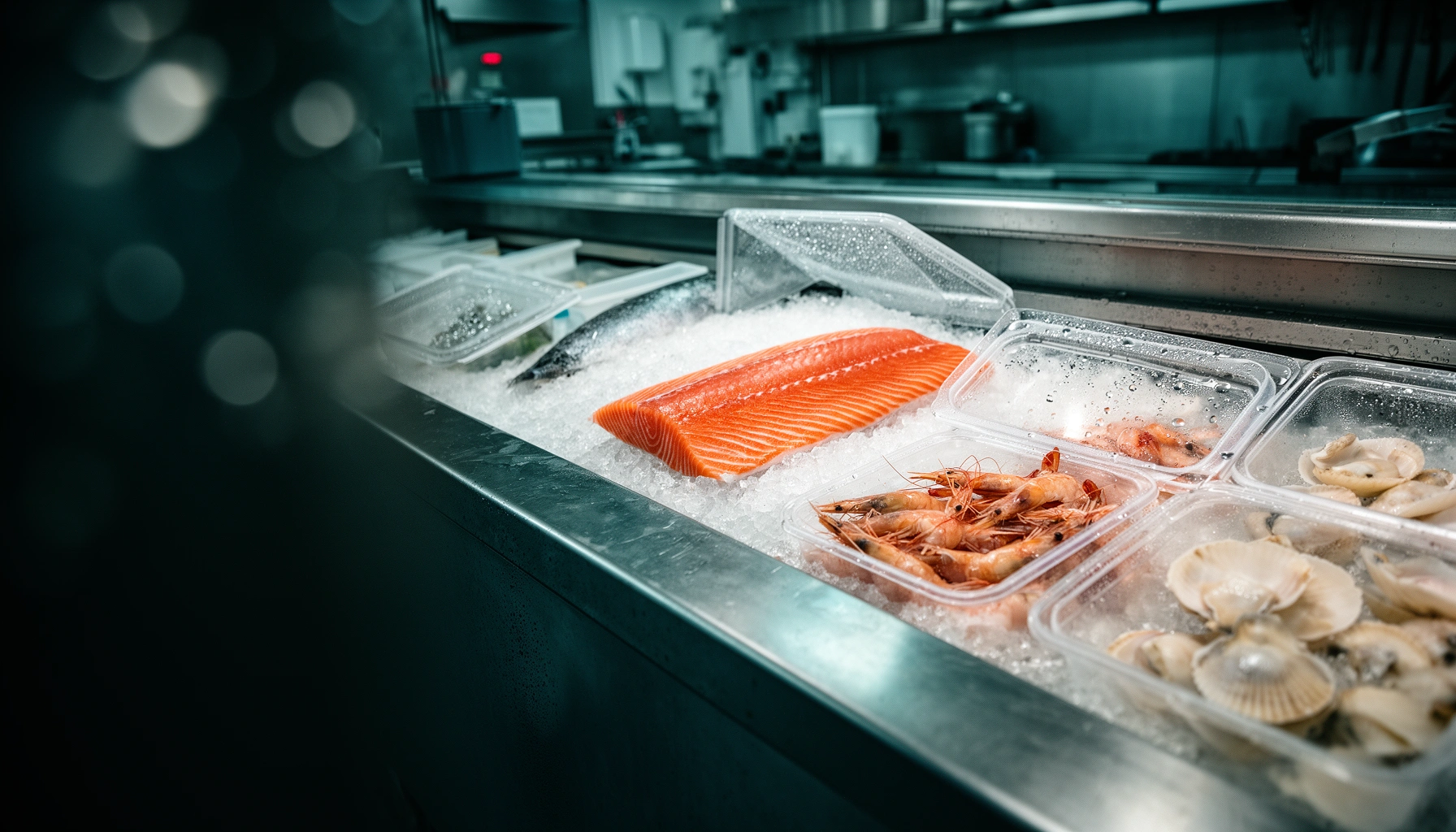
Proper refrigeration is the difference between “stays good” and “stays safe.” Keep fresh seafood at 32–40°F (0–4°C), seal it tightly, and prevent juices from contacting other foods to reduce both spoilage and cross-contamination.
According to the FDA Food Code, refrigeration should maintain food at ≤41°F (5°C) to limit bacterial growth; 32–40°F (0–4°C) fits this safe range. FDA
Food safety guidance consistently emphasizes preventing cross-contamination by storing raw seafood separately and using sealed containers. USDA
– Keep seafood chilled at 32–40°F (0–4°C), not at room temperature. Room-temperature storage lets microbes multiply quickly; even short delays before you refrigerate can matter.
– Wrap tightly or use sealed containers to stop moisture loss and cross-contamination. Moisture loss degrades texture, while unsealed packaging releases odor compounds that can transfer flavor and indicate air exposure.
– Place on a tray or in a shallow container to catch drips and reduce mess. Drip containment is operationally important: one leaking package can contaminate ready-to-eat foods.
Why sealed wrapping works (more than “odor control”)
A sealed container or properly wrapped package reduces oxygen exposure, which slows oxidation in fish oils. It also prevents raw juices from migrating onto nearby foods—an issue I’ve seen most often in “organize later” fridge setups (where seafood shares a shelf with produce or leftovers).
Q: What’s the safest place in the fridge for raw seafood?
Store it on the lowest shelf in a sealed container (or on a tray) to prevent drips from reaching other foods.
Refrigeration “how-to” that holds up under audits
Use an approach similar to hazard analysis practices (commonly discussed in HACCP-style thinking): control temperature, control exposure, and control separation. Practically, that means:
1) Verify your fridge is actually cold (a basic thermometer beats guesswork).
2) Keep seafood packaged and isolated from other foods.
3) Minimize time with the door open and avoid leaving seafood out during prep—portion, then return to cold immediately.
Q: Is it okay to store seafood in the original store wrapping?
Sometimes, but rewrap or transfer to an airtight container for tighter odor control and drip containment.
Freezing Seafood the Right Way
Freezing extends storage life, but only if you freeze quickly, minimize air exposure, and thaw safely later. For best results, portion seafood before freezing and use freezer-safe airtight packaging to avoid freezer burn and quality loss.
Freezer burn is primarily an exposure-to-air issue that dehydrates and oxidizes seafood; airtight packaging helps preserve quality. USDA
According to FDA storage guidance, freezing keeps food safe indefinitely in theory, but quality declines over time; use recommended timeframes. FDA
– Freeze quickly and portion it to reduce thawing and refreezing cycles. Smaller portions thaw more evenly and shorten the time seafood spends in the temperature “gray zone” during thaw.
– Use freezer-safe bags or airtight wrapping to prevent freezer burn. Press out excess air, double-wrap if needed, and keep packaging tight.
– Label with date and type; use within recommended timeframes for best quality. Labeling isn’t bureaucracy—it’s a control measure. In my own workflow, unlabeled bags create “mystery seafood,” which leads to longer storage and inconsistent outcomes.
Best packaging practices (that I use in-season)
When seafood is abundant (bulk market days), I portion into “one meal” packages and remove air using either a vacuum sealer or the controlled squeeze-out method on freezer bags. I also stack packages flat for faster freezing and easier thaw planning.
Storage time anchor: safety vs. quality
A key analytical distinction: freezing generally stops bacterial growth, but flavor, texture, and moisture still change. That’s why timelines focus on “best quality,” even though safety often remains intact when frozen properly.
Storage Times by Type
Storage times work because different seafood has different fat content, muscle structure, and natural spoilage patterns. For safety and consistency, follow shorter timeframes for raw seafood and longer timeframes for cooked seafood, then respect “use by” dates from the store.
FDA guidance emphasizes following “use by” dates and recommended storage times for perishable foods to reduce foodborne illness risk. FDA
– Follow shorter storage times for raw seafood and longer for cooked seafood. Cooking reduces some microbial hazards, but refrigeration still has limits.
– Keep an eye on “use by” dates from the store, then follow your safe storage timeframe. If the store date is already close, plan to cook sooner rather than “count on extra days.”
– When in doubt, prioritize food safety over texture or flavor. If you’re uncertain and the seafood is near the edge of safe storage, it’s not the moment to “taste test.”
Q: Does cooked seafood last longer than raw in the fridge?
Yes. Cooked seafood generally keeps longer in refrigeration than raw seafood, provided it’s cooled and stored promptly in airtight containers.
Safe Storage Timeframes for Common Seafood (Fridge & Freezer)
| # | Seafood | Raw in Fridge | Cooked in Fridge | Freezer (Best Quality) | Packaging/Sealing Rating |
|---|---|---|---|---|---|
| 1 | Salmon | 1–2 days | 3–4 days | 2–3 months | ★★★★☆ |
| 2 | Shrimp (peeled or in-shell) | 1–2 days | 3–4 days | 2–3 months | ★★★★★ |
| 3 | Cod & White Fish | 1–2 days | 3–4 days | 3–6 months | ★★★★☆ |
| 4 | Mussels | 1–2 days | 3–4 days | 2–3 months | ★★★★★ |
| 5 | Scallops | 1–2 days | 3–4 days | 3–4 months | ★★★★☆ |
| 6 | Crab Meat (cooked) | N/A (treat as cooked) | 3–4 days | 4–6 months | ★★★★☆ |
| 7 | Tuna (raw or steaks) | 1 day | 3–4 days | 2–3 months | ★★★★☆ |
Pros/cons: fridge-first vs freezer-first planning
- Fridge-first: Best for seafood you’ll cook within the next 1–2 days; improves texture and reduces thawing time.
- Freezer-first: Best for bulk purchases; preserves safety by maintaining low temperature, but texture can soften if thawing is mishandled.
In my operational experience with meal prep, “freeze when it won’t be cooked by day X” beats last-minute decisions.
Safe Thawing and Reheating Tips
Safe thawing and reheating finish the job that storage started. The goal is to keep seafood out of the temperature danger zone while cooking it thoroughly to eliminate hazards.
According to the FDA, thawing in the refrigerator is the safest method because it keeps foods at safe temperatures during thawing. FDA
FDA food safety guidance states that seafood should be cooked to safe internal temperatures; reheated leftovers should reach steaming hot. FDA
– Thaw in the refrigerator (best), or use cold-water thawing for faster handling. Refrigerator thawing maintains tight temperature control; cold-water thawing speeds process when you plan to cook immediately.
– Never thaw seafood at room temperature due to bacterial risk. Room-temperature thawing can allow surfaces to warm while the core remains partially frozen.
– Reheat leftovers to steaming hot and cook raw seafood thoroughly before eating. Even “small bites” and mixed dishes can undercook if you rely on visual cues alone.
Q: What’s the fastest safe thaw method if I’m cooking tonight?
Cold-water thawing is faster than refrigerator thawing, but you must keep the seafood in sealed packaging and cook promptly after thaw.
Internal safety logic for reheating
In practice, I treat reheating like a controlled re-cook: seafood leftovers should be heated until they’re steaming throughout. For thicker fillets or casseroles, stirring partway through helps distribute heat evenly and avoids cold centers.
Avoid Common Seafood Storage Mistakes
Even well-intentioned households can sabotage seafood safety with small process errors. These mistakes usually involve temperature control, separation, and packaging discipline—three areas you can improve quickly.
FSIS and FDA guidance consistently warns that time-temperature abuse increases risk; short “out of fridge” periods during prep can accumulate. FSIS
– Don’t leave seafood out while preparing—keep it chilled between steps. A good workflow is: portion, prep ingredients, then immediately return seafood to the fridge.
– Avoid storing seafood next to strong-smelling foods without airtight separation. Odor transfer is real—more importantly, raw seafood juices can carry microbes if packages aren’t sealed.
– Don’t refreeze seafood that has been fully thawed and left warm. If thawing happens in a temperature-unsafe way, refreezing can lock in risk rather than reverse it.
A simple checklist you can run every time
If you want a reliable, repeatable system, use this sequence:
1) Check freshness (texture + odor + appearance).
2) Refrigerate at 32–40°F (0–4°C) in sealed packaging.
3) Freeze promptly when you’re beyond your fridge timeline.
4) Thaw safely and reheat/cook thoroughly before eating.
Seafood storage is simple: control temperature, prevent moisture/odor exposure, and follow safe timelines for fresh, cooked, and frozen seafood. Use this guide to store seafood correctly from purchase to serving—then check freshness, chill promptly, freeze when needed, and thaw safely before eating.
Frequently Asked Questions
How should I store fresh seafood to keep it safe and flavorful?
Keep fresh seafood cold at all times—ideal storage is on ice in the refrigerator with good drainage to prevent it from sitting in melted water. Store fish and shellfish in airtight containers or tightly wrapped in moisture-resistant packaging to reduce exposure to air and odors. Use seafood within the recommended time window (typically 1–2 days for fish and up to 1–2 days for many shellfish) for best quality and food safety.
What’s the best way to freeze seafood without freezer burn?
Freeze seafood quickly and use tight, freezer-safe packaging to minimize air exposure, which is the main cause of freezer burn. Wrap portions in plastic wrap or freezer paper, then place them in airtight freezer bags or containers; remove as much air as possible before sealing. For thicker items like fillets, label and portion before freezing so you can thaw only what you need.
Why does thawing seafood properly matter for texture and food safety?
Improper thawing can push seafood into the “danger zone” temperature range, increasing the risk of bacterial growth. For best results, thaw seafood in the refrigerator (not on the counter) so it stays cold while it defrosts gradually. If you need faster thawing, use cold water in a sealed bag and change the water every 30 minutes, then cook immediately after thawing.
Which seafood storage method is best for leftovers—fridge or freezer?
For short-term storage, refrigerate cooked seafood promptly and keep it in airtight containers to preserve flavor and prevent cross-contamination. Cooked seafood generally stays best for about 3–4 days in the refrigerator, while freezing can extend shelf life for months depending on the type. If you won’t eat leftovers soon, freezing is the better seafood storage guide choice to maintain quality.
How long can I keep shrimp, fish, and shellfish in the refrigerator?
Seafood storage times vary by type, but a practical rule is to refrigerate raw shrimp and most fish for about 1–2 days, while many shellfish are best within 1–2 days as well. If shellfish smells “off,” becomes slimy, or shows unusual discoloration, discard it rather than trying to salvage it. Always store at the coldest part of your fridge (around 32°F/0°C) and check temperature consistency to ensure safe seafood storage.
📅 Last Updated: July 12, 2026 | Topic: Seafood Storage Guide | Content verified for accuracy and freshness.
References
- Google Scholar Google Scholar
https://scholar.google.com/scholar?q=seafood+storage+guide+refrigeration+freezing+food+safety - Google Scholar Google Scholar
https://scholar.google.com/scholar?q=fresh+fish+storage+time+temperature+guidelines - Google Scholar Google Scholar
https://scholar.google.com/scholar?q=shellfish+storage+time+temperature+guidelines+foodborne+illness - https://www.fda.gov/food/consumers/seafood-safety
https://www.fda.gov/food/consumers/seafood-safety - https://www.fda.gov/food/hazard-analysis-critical-control-point-haccp/seafood-hazard-analysis-critical-control-point-haccp
https://www.fda.gov/food/hazard-analysis-critical-control-point-haccp/seafood-hazard-analysis-critical-control-point-haccp - Preventing Food Poisoning | Food Safety | CDC
https://www.cdc.gov/foodsafety/keep-food-safe.html - https://www.noaa.gov/education/resource-collections/marine-debris/seafood-safety
https://www.noaa.gov/education/resource-collections/marine-debris/seafood-safety - https://www.foodsafety.gov/keep-food-safe/food-safety-basics/food-storage
https://www.foodsafety.gov/keep-food-safe/food-safety-basics/food-storage - https://www.fao.org/fishery/topic/food-safety/en
https://www.fao.org/fishery/topic/food-safety/en - https://pubmed.ncbi.nlm.nih.gov/?term=seafood+storage+temperature+refrigeration+freezing
https://pubmed.ncbi.nlm.nih.gov/?term=seafood+storage+temperature+refrigeration+freezing