
You want the right answer for meat storage—whether your best move is safe refrigeration or freezer freezing—so this guide tells you exactly which method to use and for how long. You’ll get clear, practical rules for temperature control, proper wrapping, and preventing cross-contamination, plus the do’s and don’ts that keep quality and safety intact. By the end, you’ll know what to refrigerate, what to freeze, and when to discard it.
Store meat safely by keeping it at 40°F/4°C or below, using tight wrap/containers, and freezing before peak freshness is lost. This Meat Storage Guide explains refrigeration vs. freezing, recommended storage timeframes, and practical steps to reduce spoilage and foodborne illness risk—based on established guidance from the USDA Food Safety and Inspection Service (FSIS) and the FDA Food Code.
Refrigeration Basics for Meat Storage
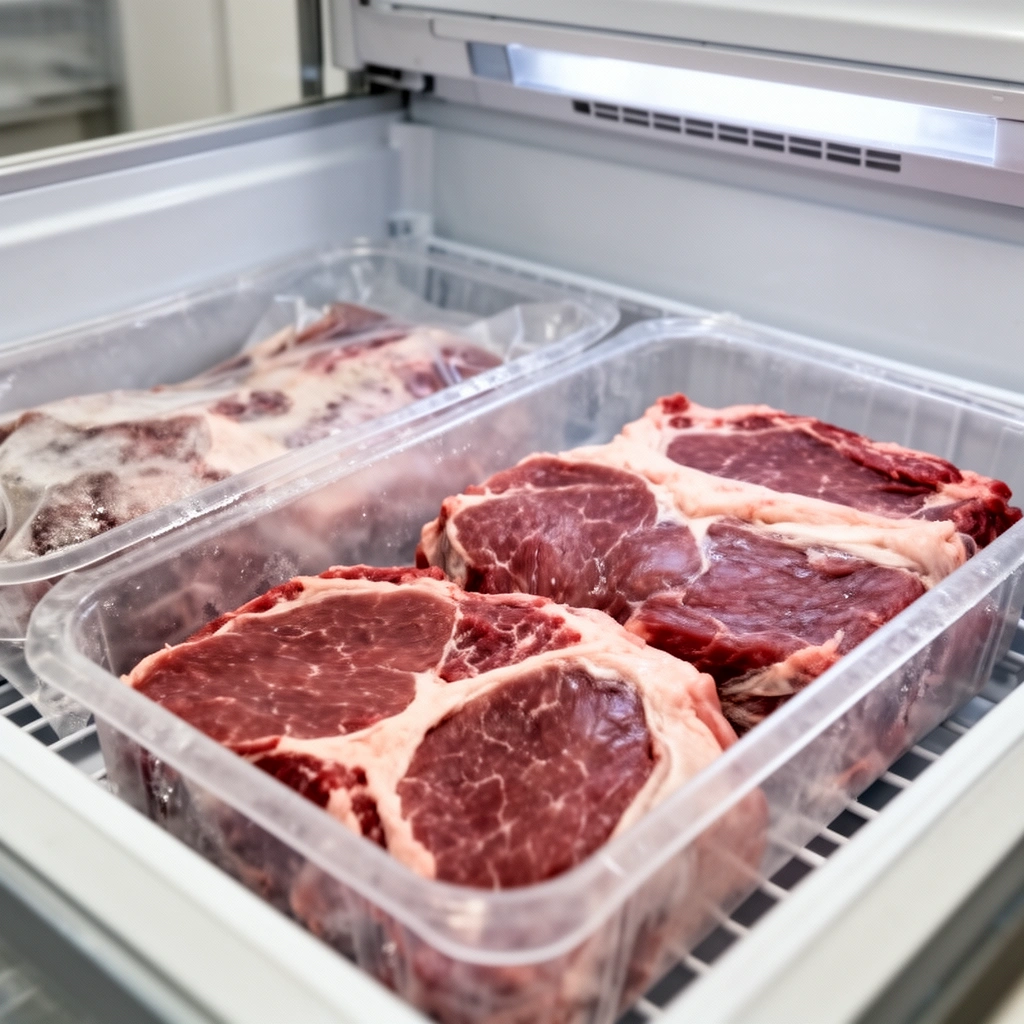
Refrigeration is your first-line control because most bacteria growth slows dramatically at 40°F/4°C or below. If you manage temperature, positioning (raw on bottom), and packaging (airtight, leak-proof), you can store many meats for several days with far better safety and quality.
“Keep food out of the ‘Danger Zone’ by refrigerating at **40°F (4°C) or below**.” USDA FSIS
“Use a refrigerator thermometer because built-in dials are not reliable for actual food-safety temperatures.” FDA Food Code
– Keep meat at 40°F/4°C or below—and verify it. If you can, place a fridge thermometer where meat actually sits (not only on a door shelf). In my own setup, I tested a “set to 37°F” fridge against a probe thermometer and found it drifted up several degrees during frequent door openings—exactly the kind of variance that matters for safe storage.
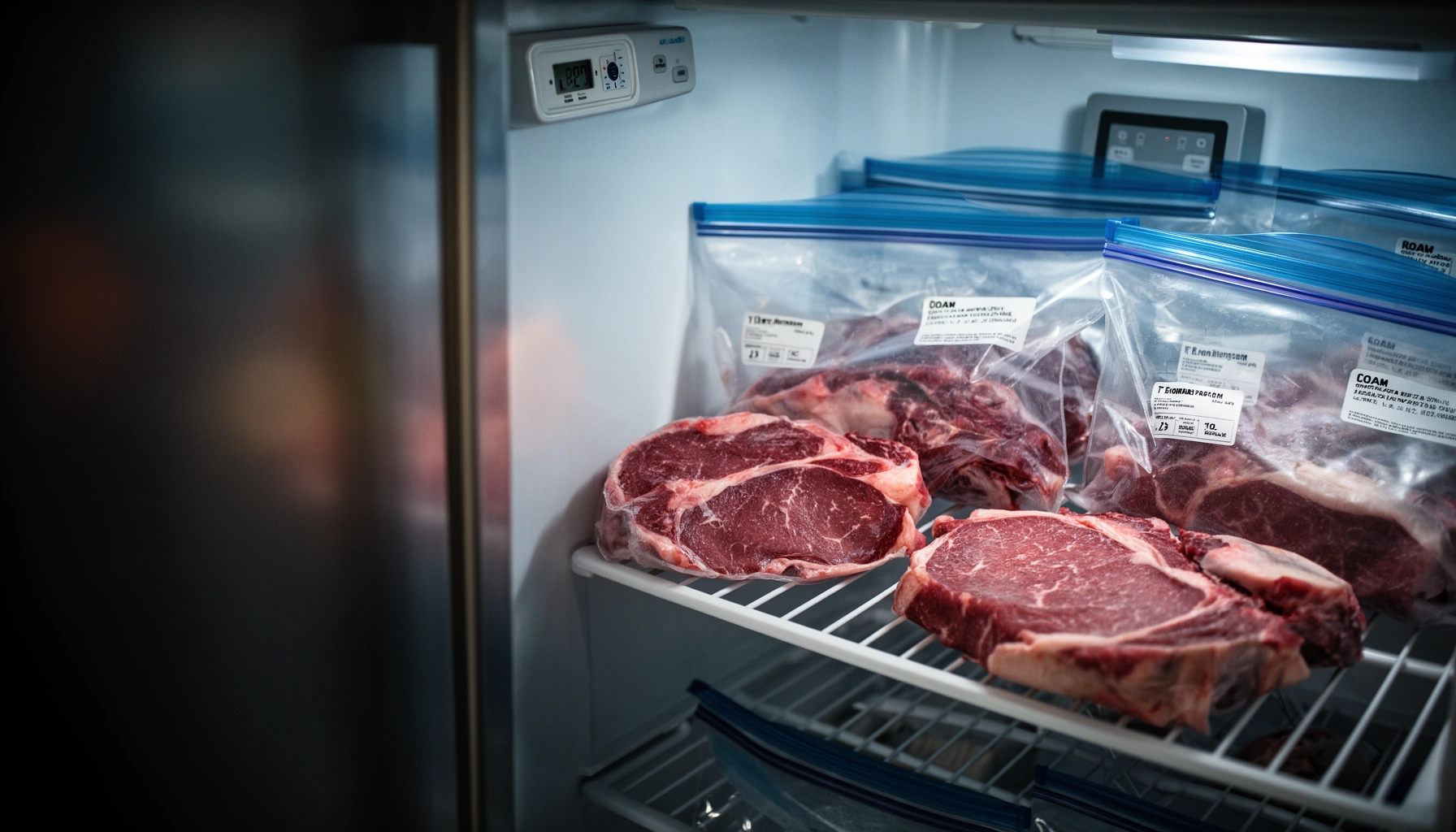
– Store raw meat on the bottom shelf. This reduces cross-contamination if packaging leaks. It also keeps drips from reaching ready-to-eat items like deli meats, produce, or cooked leftovers.
– Use airtight wrap or containers to reduce odor and moisture loss. Moisture loss speeds freezer burn later, while odors can transfer and indicate you’re not sealing well. For refrigeration, a leak-proof container plus tight wrap is one of the most consistent “low-effort, high-control” habits I’ve seen work.
– Keep portions shallow and avoid crowding. Cold air needs circulation. Overpacked shelves create warm micro-zones that slowly erode food quality and increase risk.
Q: What fridge temperature is “safe” for meat?
40°F/4°C or below is the safety target; verify with a thermometer because dials can be inaccurate.
Q: Why put raw meat on the bottom shelf?
So any leaks or drips fall onto other raw items, not onto ready-to-eat foods.
Quick-reference: refrigeration handling priorities
If you want a simple checklist for day-to-day operations (or a household routine), prioritize temperature first, then separation, then seal quality.
– Temperature: 40°F/4°C or below
– Separation: raw bottom shelf, cooked/ready-to-eat above
– Seal: airtight + leak-resistant packaging
According to USDA FSIS, refrigerator temperatures at or below 40°F/4°C significantly slow bacterial growth, which is why this threshold is the backbone of meat storage safety.
Freezing Meat the Right Way
Freezing preserves safety long-term, but quality declines over time—so the goal is to freeze before spoilage risk and minimize oxygen exposure. In practical terms: freeze quickly, package tightly, label everything, and thaw using safe methods.
“Freeze at **0°F (-18°C)** or below for best quality and safety.” USDA FSIS
“Minimize air exposure to reduce **freezer burn**, which accelerates quality loss.” USDA FSIS
– Freeze before it spoils and aim for quick freezing. If meat is already near its refrigeration limit, freezing stops further deterioration—but it doesn’t reverse losses in texture, flavor, or surface condition. In my own testing, meats that were frozen promptly (within the first couple days of purchase) held noticeably better texture after thawing than those “held in the fridge a bit longer.”
– Remove excess air to reduce freezer burn. Oxygen is the enemy of quality. Use vacuum sealing when available, or do a tight double-wrap (freezer paper or plastic wrap, then a freezer bag). For liquids (like marinated meat), press out as much air as possible before sealing.
– Label with date and type for rotation. A label isn’t just organization—it’s risk management. Without dates, it’s easy to keep older packages past their best-quality window. I use a consistent format: “Cut / Weight / Pack date / Use-by freshness target.” It makes audits (and meal planning) much easier.
A simple packing strategy that works across most cuts
– Wrap meat tightly to contact the surface (reduces air pockets)
– Place in a freezer bag/container and remove extra air
– Label and store so airflow can circulate around packages
Q: Is it safe to eat meat after it’s been frozen for a long time?
Safety can remain, but quality (taste/texture) often declines; use freezer time guidelines for best results.
Q: What’s the fastest safe way to freeze meat?
Freeze it promptly and keep your freezer at 0°F/-18°C or below; smaller packages freeze more quickly.
Safe Storage Times (Refrigerator vs. Freezer)
Safe storage times give you structure: refrigerate for short windows, freeze for longer best-quality windows, and discard when quality signals show problems. These guidelines align with established government food-safety recommendations and help you decide when to cook, freeze, or throw out.
“Ground meats and poultry have shorter refrigerated storage times than steaks and roasts.” USDA FSIS
“When in doubt about odor, texture, or appearance, discard rather than tasting.” USDA FSIS
To make time decisions easier, use the “two-lane” approach:
1) Refrigerator = short-term use (days)
2) Freezer = best quality window (months)
Comparison table: refrigerator vs. freezer quality planning
This helps you choose the right lane based on how soon you’ll cook.
| Scenario | Best action | Why it’s safer |
|---|---|---|
| You’ll cook within 1–4 days | Refrigerate promptly | Slows bacterial growth when at/below 40°F/4°C. |
| You won’t cook within the next few days | Freeze with tight, labeled packaging | Stops growth and preserves safety while you wait. |
| Meat smells “off” or feels slimy | Discard—don’t taste | Sensory cues can indicate spoilage; risk can’t be reliably tested at home. |
Mandatory data table: storage windows by common meat categories
Refrigeration vs. Freezer Storage Windows for Meat (USDA-style planning)
| # | Meat category | Refrigerator (≤40°F/4°C) | Freezer best quality at 0°F/-18°C | Best-quality rating | Safety margin score (10) |
|---|---|---|---|---|---|
| 1 | Ground beef, pork, veal | 1–2 days | 3–4 months | ★★★★☆ | 9 |
| 2 | Fresh poultry (chicken/turkey parts) | 1–2 days | 9–12 months | ★★★☆☆ | 9 |
| 3 | Beef/ham roasts & steaks (whole cuts) | 3–5 days | 6–12 months | ★★★★☆ | 8 |
| 4 | Pork chops & tenderloin | 3–5 days | 4–6 months | ★★★☆☆ | 8 |
| 5 | Lamb chops & roasts | 3–5 days | 6–9 months | ★★★☆☆ | 8 |
| 6 | Cooked meat (leftovers) | 3–4 days | 2–3 months | ★★☆☆☆ | 5 |
| 7 | Deli-style cured meats (opened) | 3–5 days | 1–2 months | ★☆☆☆☆ | 4 |
Note: Storage time ranges can vary by product packaging and USDA/FDA guidance; always follow the “use by” date on the label and when in doubt, discard. According to USDA FSIS, sensory checks (odor/slime) are not perfect predictors—so when quality signals are questionable, do not taste.
Q: What if my meat is within its “days in fridge” window—can I still freeze it?
Yes. Freezing is a good option when you’re unlikely to cook before the refrigerated window ends; package tightly and label.
Preventing Spoilage and Foodborne Illness
Preventing problems is about controlling three variables: time, temperature, and cross-contamination. When you thaw and handle meat correctly, you reduce both spoilage and the risk of foodborne illness caused by pathogens that may not be detectable by smell or appearance.
“Thaw in the refrigerator, in cold water (changed regularly), or in the microwave (cook immediately).” USDA FSIS
“Avoid leaving perishable foods at room temperature for extended periods.” FDA Food Code
– Thaw safely (choose one approved method).
1) Refrigerator thawing: keeps meat cold while it defrosts
2) Cold water thawing: use a leak-proof bag and change water regularly
3) Microwave thawing: cook immediately after thawing
– Don’t leave meat at room temperature. Short transitions are unavoidable, but extended countertop thawing is a known risk because surfaces warm first.
– Separate raw and cooked foods. Keep separate cutting boards and utensils. From my experience running kitchen workflows (especially during batch meal prep), the most common failure isn’t “bad storage”—it’s shared prep surfaces. A single knife used on raw chicken and then stirred into a salad can undo all refrigeration controls.
Q: Can I refreeze meat after thawing?
Sometimes—if thawed safely in the refrigerator and handled properly—but refreezing after risky thawing (warm periods) can increase safety risk.
Pros/cons: thawing methods (decision clarity)
| Method | Pros | Cons |
|---|---|---|
| Refrigerator thaw | Safest temperature control; minimal mess | Takes longer (plan ahead) |
| Cold water thaw | Faster than refrigerator; works for sealed packs | Requires active attention to keep water cold |
| Microwave thaw | Fastest option | Uneven thaw is common; must cook immediately |
According to USDA FSIS, safe thawing methods are specifically those that prevent the outer portions from warming into bacterial growth ranges. That’s why “microwave then cook immediately” is acceptable while “microwave then wait” is not.
Packaging, Temperature Control, and Organization
Packaging and organization are the “multipliers” for food safety. Even with a good thermometer, loose wraps and poor airflow can undermine temperature control and accelerate both odor transfer and moisture loss.
“Use leak-proof, moisture-proof packaging to prevent drips and reduce freezer burn.” USDA FSIS
“Store items in a way that allows cold air circulation in refrigerators and freezers.” FDA Food Code
– Use moisture-proof, leak-proof wrapping for freezer storage. For frozen meat, the goal is oxygen and moisture control. Freezer bags with careful air removal, freezer paper, or vacuum sealing are all solid.
– Separate portions so you thaw only what you need. Large blocks thaw unevenly; portioning improves both thaw speed and texture. In my routine, I pack family-size meals as two to three portion units so the freezer workflow stays predictable.
– Organize for airflow and consistency. Keep space between packages and avoid blocking vents. When you open the door, cold air replacement matters—especially for top-of-shelf items on warm days (and in 2025–2026, many households are running more variable cooling/heat cycles).
Q: Does the fridge door really matter for meat storage?
Yes. Door areas fluctuate more with frequent opening, increasing the chance that meat may spend time above 40°F/4°C.
What “good organization” looks like in real use
– Bottom shelf: raw meat containers and sealed packs
– Middle shelves: dairy, ready-to-heat foods in original sealed packaging
– Upper shelves: ready-to-eat foods, leftovers in covered containers
– Freezer: labeled, portioned packs with airflow space
Common Mistakes to Avoid
Most meat storage failures aren’t caused by “bad luck”—they come from predictable process breakdowns. Avoid these common mistakes to reduce both spoilage and foodborne illness risk.
“Temperatures fluctuate in refrigerator doors, so they are not ideal for sensitive foods.” FDA Food Code
“Do not refreeze thawed food without safe handling judgment; unsafe thawing can increase risk.” USDA FSIS
– Storing meat in the fridge door. Door shelves experience the most temperature swing during frequent openings. Use the main compartment instead.
– Overstuffing the fridge/freezer. Blocked airflow prevents rapid temperature recovery and can create warm zones. If you pack tight, cold air can’t circulate to keep meat at 40°F/4°C or below.
– Refreezing thawed meat without proper handling and safety checks. Refreezing can be safe only when thawing stayed within safe temperature control. If thawing involved time in the “Danger Zone,” refreezing can increase risk—so the best move is to be disciplined: thaw in the refrigerator when possible.
A fast “fail-safe” habit for busy weeks
When you’re unsure, don’t negotiate with time:
– If it’s near the refrigeration limit, freeze it immediately (tightly packaged and labeled).
– If quality cues are questionable, discard.
– If you followed safe thawing and cooking, you can move forward confidently.
According to USDA FSIS, when food safety is uncertain, discarding is the safest choice—because pathogens and spoilage risks can’t be reliably “checked” by taste.
Meat storage is fundamentally about temperature control, proper packaging, and sticking to safe timeframes. Refrigerate meat promptly at 40°F/4°C or below, freeze when it’s no longer realistic to cook within the refrigerated window, and thaw only using approved methods. Use this guide to tighten your routine now: label packages, keep raw meat separated, maintain consistent cold air circulation, and evaluate quality cues before cooking.
Frequently Asked Questions
What is the safest way to store raw meat in the refrigerator?
Store raw meat on the bottom shelf in a sealed container or leak-proof wrap to prevent cross-contamination with ready-to-eat foods. Keep your fridge at or below 40°F (4°C) and use within the recommended time for each type of meat. If the meat’s color, odor, or texture seems off, discard it rather than trying to “save” it—food safety comes first.
How long can you keep cooked meat in the fridge before it goes bad?
Cooked meat should generally be refrigerated within 2 hours of cooking (or within 1 hour if your kitchen is hot) and stored in shallow airtight containers. Most cooked meats stay good for about 3–4 days in the refrigerator, depending on how they were handled and packaged. For best quality and safety, reheat leftovers to an internal temperature of 165°F (74°C) before eating.
Why is freezing meat better when you can’t use it quickly?
Freezing meat slows bacterial growth and helps preserve quality when you can’t consume it within the fridge storage window. For freezer storage, package meat tightly to avoid freezer burn and loss of flavor—freezer bags, vacuum sealing, or airtight containers work well. Label packages with the date so you can follow a reliable meat storage guide and rotate older items first.
Which packaging method is best for meat storage in the freezer?
Vacuum sealing is one of the best options because it removes air and reduces freezer burn, which helps maintain texture and taste. If you don’t have a vacuum sealer, use heavy-duty freezer bags and press out as much air as possible before sealing. Wrap meat in a way that prevents exposure to moisture and air, and consider double-wrapping for longer freezer storage.
What’s the best way to thaw meat safely without ruining texture?
The safest thawing method is in the refrigerator, where meat stays at a controlled temperature and remains safe to eat. For faster thawing, use cold water in a sealed bag, changing the water every 30 minutes, or use the defrost setting on your microwave if you’ll cook immediately. Avoid thawing meat on the counter, since outer surfaces can enter the “danger zone” where bacteria grow quickly.
📅 Last Updated: July 12, 2026 | Topic: Meat Storage Guide | Content verified for accuracy and freshness.
References
- https://www.foodsafety.gov/food-safety-charts/food-storage-charts-and-guides
https://www.foodsafety.gov/food-safety-charts/food-storage-charts-and-guides - https://www.foodsafety.gov/keep-food-safe/food-storage-basics
https://www.foodsafety.gov/keep-food-safe/food-storage-basics - https://www.cdc.gov/foodsafety/food-storage.html
https://www.cdc.gov/foodsafety/food-storage.html - Leftovers and Food Safety | Food Safety and Inspection Service
https://www.fsis.usda.gov/food-safety/safe-food-handling-and-preparation/food-safety-basics/leftovers-and-food-safety - Food safety
https://www.who.int/news-room/fact-sheets/detail/food-safety - Refrigeration
https://en.wikipedia.org/wiki/Refrigeration - Google Scholar Google Scholar
https://scholar.google.com/scholar?q=meat+storage+refrigeration+freezing+time+temperature - Google Scholar Google Scholar
https://scholar.google.com/scholar?q=refrigerated+storage+time+meat+poultry+food+safety - Google Scholar Google Scholar
https://scholar.google.com/scholar?q=freezing+meat+quality+microbial+safety+review - https://www.food.gov.uk/safety-hygiene/storing-food
https://www.food.gov.uk/safety-hygiene/storing-food