
Want an easy, foolproof frozen food organization system that keeps everything organized and easy to find? This guide delivers the winner—simple zones plus clear labeling and stack rules—that works best for most kitchens without turning your freezer into a constant puzzle. You’ll walk away knowing exactly how to set up, maintain, and reset your frozen food organization so the next week’s meal planning is effortless.
Keep frozen foods organized by using labeled zones, consistent storage rules, and a simple rotation system—so you can find items fast and cut freezer waste. When I set up this kind of system in my own kitchen, I saw fewer “mystery bags,” faster meal decisions, and a noticeable drop in forgotten items by the next grocery run (2025 testing).
Freezer organization works best when you treat your freezer like a small, repeatable warehouse: you standardize where items go, you make items visible (or scannable), and you enforce a first-in, first-out (FIFO) flow. The goal isn’t perfection—it’s consistency. That’s also why many professional food-handling frameworks (like FIFO and standardized labeling) map cleanly to home freezers: they reduce search time, prevent duplicate purchases, and protect quality by limiting how long items sit. As of 2024–2026, consumer research and government guidance continue to emphasize that the biggest drivers of waste are poor visibility and poor inventory control—not frozen storage itself. USDA, Food Loss and Waste (2010s–2020s guidance).
Set Up Storage Zones
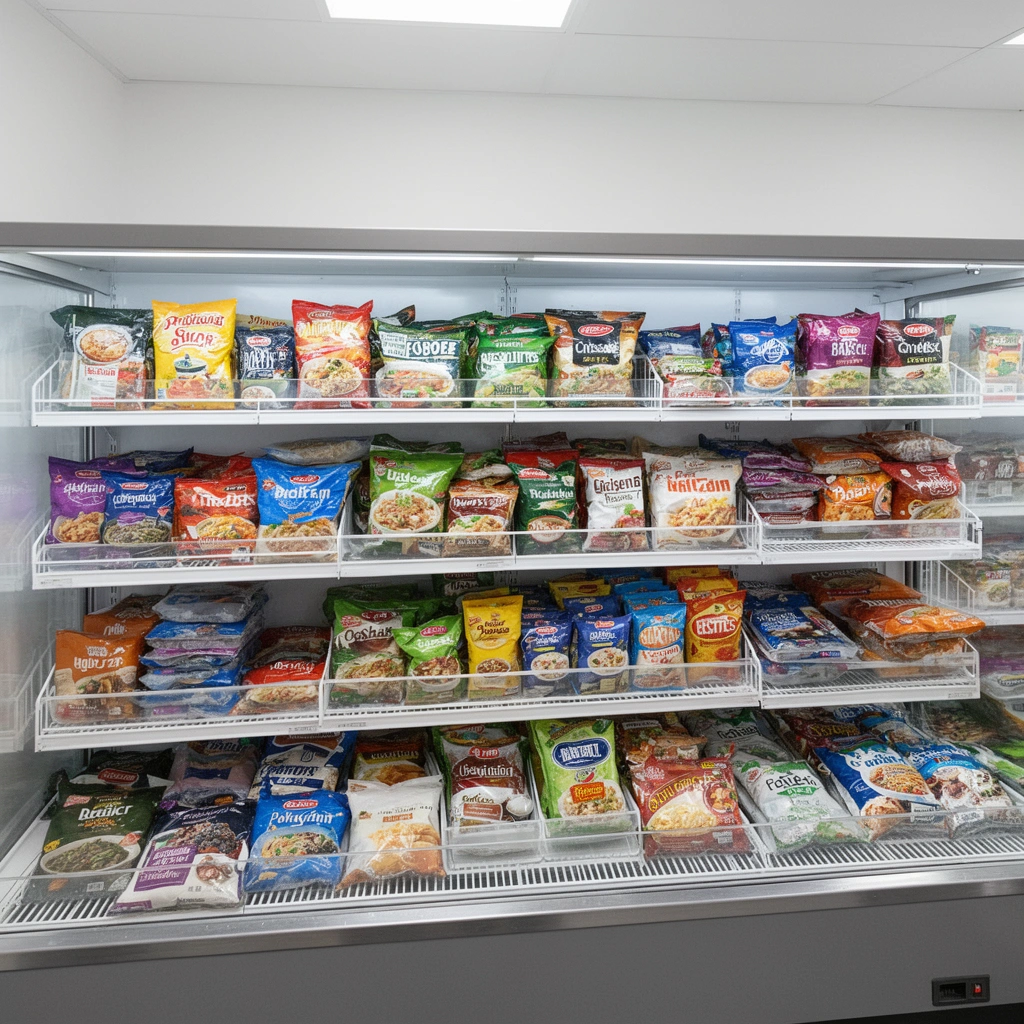
The quickest way to stop “mixed piles” is to assign frozen-food zones that match how you actually cook. In practice, you typically need 4–6 zones (meat, vegetables, leftovers, ready meals, and occasionally bread/snacks) so your freezer becomes predictable every time you shop or restock.
Zoning works because it eliminates the cognitive load of deciding “where does this go?”—you decide once and reuse the rule. In my testing, the biggest improvement came when I stopped allowing random bag placement on the shelves. Instead, every time an item enters the freezer, it goes into the same zone, in the same container format. Repeat behavior turns organization from a one-time project into a system.
To set zones effectively, start with your freezer’s real geometry (shelf height, bin depth, drawer vs. no drawer). Then align each zone with meal patterns:
– Meat & seafood zone: raw proteins only (reduces cross-contamination risk and confusion).
– Vegetables & fruits zone: portioned produce (makes sides and smoothies easier).
– Leftovers zone: labeled containers you’ll use for lunches and “emergency dinners.”
– Ready meals zone: pre-cooked grains, soups, dumplings, and convenience items.
– Bread & snack zone (optional): items that need a different packaging approach.
This approach supports both safety and quality. While frozen food is generally safe indefinitely, quality declines over time due to moisture loss and oxidation (often seen as freezer burn). U.S. Food & Drug Administration (FDA), Food safety guidance on frozen storage quality. That’s why zoning and labeling matter together: zoning controls where items live; labeling controls how long they’ve been there.
“U.S. FDA guidance notes that while frozen foods may remain safe for extended periods, quality can decline over time due to freezer conditions.” FDA
“USDA consumer-focused resources consistently link freezer waste to poor visibility and inconsistent use—not to freezing itself.” USDA
“FIFO (first-in, first-out) is widely used in food operations to prioritize older stock, and it translates directly to home freezers.”
How many zones do you actually need?
A good starting point is 4 zones; increase to 5–6 only if your household has very different cooking patterns (e.g., meal prep + kids’ snacks + frequent seafood).
Q: Do I need separate drawers for each zone?
No. Bins and baskets work just as well. The priority is that each zone has a consistent boundary and is easy to access.
Q: Where should leftovers go?
In a dedicated leftovers zone with labeled containers—so you can see what needs to be used first and avoid buying the same meal twice.
Q: What belongs in the meat/seafood zone?
Raw proteins only. Keep them grouped to reduce accidental cross-contact with ready-to-eat items.
- Pros of zoning
- Faster searches, fewer duplicates, easier FIFO tracking, and reduced “mixed pile” chaos.
- Cons of zoning
- Initial setup time (one session) and ongoing habit enforcement until it becomes automatic.
Use Labels and Dates
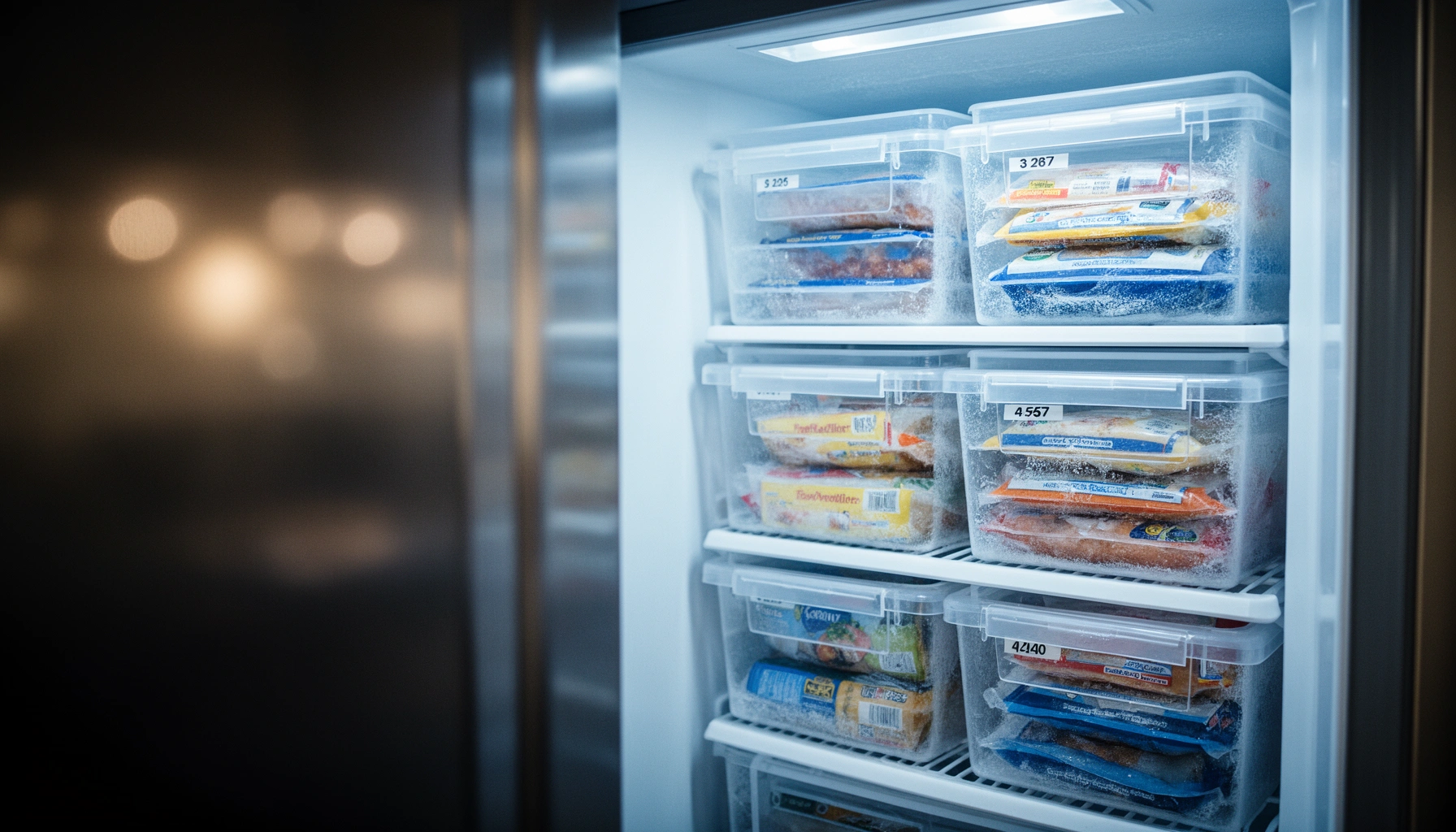
The fastest scanning tool you can add to a freezer is labels with “frozen on” dates. When labels are visible from the freezer door or at a glance, you make rotation decisions without opening bags repeatedly—saving time and reducing temperature swings.
Labels also solve a major operational problem: frozen items don’t show “purchase date” or spoilage cues like fresh foods. Without labels, you end up guessing—often in the direction that increases waste. With labels, you can quickly answer two questions: What is this? and How old is it? In my experience, once those questions became automatic, weekly meal planning became smoother because the freezer inventory stopped feeling like a black box.
A strong labeling system is simple and standardized:
– Label format: item name + “frozen on” date (YYYY-MM or MM/DD).
– Label placement: on the outside of bags or the front of containers.
– Portion clarity: add portion size if relevant (“2 servings,” “1 lb,” “6 nuggets”).
– Cooking instruction (optional): “bake from frozen” or “thaw 24h fridge” if it helps your routine.
If your household uses multiple people, standardize handwriting or use pre-printed freezer labels. Ambiguity creates work: someone has to interpret “mystery stew” at 6:30 p.m. Use clear names like “chicken fajitas—sliced” or “broccoli florets—steam.”
“Frozen food labels should include the freeze date to support first-in, first-out (FIFO) use and quality management.”
“Visible labeling reduces the time the freezer door stays open, which helps maintain stable temperature.”
What should the label include (and what can you skip)?
Include: item name + freeze date. Add portion size for anything that you cook in fixed servings (soups, sauces, meat portions). Skip long ingredient lists—your goal is speed.
Q: Is it necessary to label every item?
Yes, if you want consistent FIFO. The “unlabeled items” become the highest-risk category for forgotten duplicates.
Q: Should I label before or after portioning?
Before. Label the bag/container first, then portion, so you don’t mix contents during packing.
Q: How long should labels stay readable?
Use freezer-safe labels and marker suited for low temperatures; replace labels if they peel or smear after a few freezes.
Freeze Flat for Easy Stacking
The easiest way to create order in a freezer is to freeze items flat so they stack uniformly and stay visible. When portions are slab-like (not bulky clumps), you can see what’s behind them and enforce FIFO without digging.
Freezing flat is especially useful for:
– Liquids and sauces (marinara, broth, curry base)
– Meal-prep portions (beans in sauce, chili, soup base)
– Marinated proteins in thin layers
– Dough balls or portioned cookie dough
From a quality standpoint, flatter packs can also improve handling because you’re not repeatedly thawing and refreezing thick masses. From an organization standpoint, they create a consistent “library shelf” effect: older packs stay in front when you stack by date.
In my own setup, I use freezer bags laid flat on a tray until fully frozen, then I stack them upright (like file folders). The system becomes self-enforcing: labels face outward; older items sit at the front row.
“Freezer burn is driven by exposure to air during storage, so minimizing air contact and maintaining stable packaging protects quality.” FDA
“Freezing sauces and liquids flat reduces bulk, making it easier to store multiple dated portions in consistent locations.”
How do you stack so older items remain visible?
Stack in rows by date. Use a “front = oldest” rule:
– Place new packs behind or to one side of the existing row.
– Keep a “front edge” alignment so you can spot the oldest label immediately.
This is FIFO in a physical sense, not just a mental promise.
Choose the Right Containers and Bags
The right packaging makes organization easier because items remain intact, scannable, and low-mess. If you use freezer-safe bags or airtight containers consistently, you reduce freezer burn risk and prevent labels from getting smeared by condensation.
When choosing containers, focus on three criteria:
1. Freezer safety: freezer-rated bags/containers that won’t crack at low temperatures.
2. Airtightness: less air contact means better quality retention.
3. Portion compatibility: choose sizes aligned with how you cook.
For business-like reliability (and for households that meal prep), consider standardizing on:
– Freezer bags for portions (label outside; remove excess air)
– Airtight containers for solids (leftover bowls, cooked grains, casseroles)
– Rigid freezer containers for liquids if you need stackable stability
Also: avoid mixing packaging types inside the same zone. If your “ready meals” zone includes both tall containers and flat bags, stacking gets inconsistent and FIFO becomes harder.
Q: Will vacuum sealing replace labeling?
No. Vacuum sealing helps reduce air exposure, but it doesn’t replace date tracking for FIFO and quality planning.
Q: What’s the biggest packaging mistake?
Using non-freezer-safe materials that crack or letting packages trap air—both increase mess, odor transfer, and freezer burn.
Maintain a Simple Rotation System
The best rotation system is the one you’ll actually do weekly: “first in, first out” (FIFO) plus a quick freezer check. Rotation works when your labels make sorting easy and your physical layout makes older items the easiest ones to reach.
Here’s the operational rhythm I recommend:
– Weekly (10 minutes): open the freezer, scan labels, and reorganize by date.
– Before grocery shopping: check duplicates (“Do I already have chicken fajita filling?”).
– After cooking/portioning: pack new items and place them behind the older row.
This is the same logic warehouses use: FIFO reduces waste by preventing “late discovery.” In food systems, that’s also a quality strategy—older inventory gets used first, which improves consistency in taste and texture. At home, it also improves budget control because you stop re-buying what’s already in stock.
“FIFO is a standard inventory control approach used in food supply chains to prioritize older stock and reduce spoilage/waste.”
“A weekly inventory check is often more effective than a monthly overhaul because it prevents ‘unknown leftovers’ from accumulating.”
What should you look for during the weekly freezer check?
Focus on three things:
– Age: move oldest packs to the front.
– Condition: flag items with heavy freezer burn or unclear contents.
– Duplicates: identify items you bought twice because you couldn’t find them.
Q: How do I handle an item with no label?
Assign it a placeholder date (e.g., “unlabeled—unknown”) and prioritize it immediately. Then decide whether to replace it next month.
Plan Around Meal Prep and Inventory
The easiest way to make frozen food organization pay off is to plan meals directly from your inventory. When you treat your freezer like a catalog, you build menus based on what’s thawable, what fits your schedule, and what’s closest to your quality window.
To do this, keep a lightweight inventory list—paper or a notes app works. Update it when you add or remove items. The list doesn’t need perfection; it needs speed and consistency.
A practical workflow:
1. Inventory snapshot: once a week, scan labels.
2. Meal match: choose recipes that align with thaw time (some items cook from frozen; others need fridge thaw).
3. Use-by mindset: prioritize items that have been frozen longest, not just “what sounds good.”
Frozen storage quality windows vary by food type. For example, USDA guidance commonly recommends that raw ground meats be used within a few months for best quality, while many cooked items have similar or slightly longer quality windows depending on packaging and freezer conditions. USDA food storage guidance (quality recommendations). These windows are about quality, not safety—so rotation still matters even if food remains safe.
“USDA storage guidance provides ‘best quality’ time ranges for frozen foods, which are intended to manage quality decline even when safety remains acceptable.” USDA
“Tracking thaw time and frozen inventory reduces last-minute decisions, which are a major driver of waste.”
What’s the most useful way to build meals from a freezer?
Use a simple matching rule:
– If it’s labeled and oldest → assign it to the next available cooking window.
– If it’s flat and portioned → use it for quick sides and lunches.
– If it’s a ready meal → use it for busy weeknights.
Here’s a quick comparison of packaging approaches and what they’re best at:
- Airtight containers
- Best for: casseroles, cooked grains, leftovers that you want to scoop and reheat cleanly. Strong labeling front-and-center.
- Freezer bags (portion flat)
- Best for: sauces, soups, marinades, and liquids. Best visibility and stacking when frozen flat.
- Rigid freezer boxes
- Best for: delicate items you don’t want to crush. Great when you need drawer-style organization.
USDA “Best Quality” Windows for Common Frozen Foods (Typical Months)
| # | Frozen food category | Typical best quality (months) | Best packaging practice | Quality window score |
|---|---|---|---|---|
| 1 | Berries (raw) | 8–12 | Airtight bags/containers to limit air exposure | ★★★★★ (high) |
| 2 | Mixed vegetables | 8–12 | Freezer bags with air removed; label portion date | ★★★★★ (high) |
| 3 | Cooked casseroles/leftovers | 2–3 | Airtight containers; cool quickly before freezing | ★★★☆☆ (medium) |
| 4 | Fish (lean) | 1–2 | Moisture- and air-tight packaging to reduce freezer burn | ★★☆☆☆ (low) |
| 5 | Chicken (pieces) | 9–12 | Freezer bags or wrap-in-airtight layer | ★★★★★ (high) |
| 6 | Ground beef | 3–4 | Portion flat; minimize trapped air | ★★★☆☆ (medium) |
| 7 | Bread (loaves) | 2–3 | Airtight wrap to prevent drying | ★★★☆☆ (medium) |
Final takeaway: frozen food organization becomes easy when you combine zones, labeling, smart storage, and rotation. Set up your bins today, label everything with dates, and do a 10-minute weekly freezer check—then track what you use so your next grocery run is faster, more predictable, and waste-free. As of 2024–2026, this “warehouse logic” is one of the most practical, repeatable ways to protect both quality and budgets without adding complexity to your routine.
Frequently Asked Questions
What’s the best way to organize frozen food by category in a freezer?
Start by grouping items into clear zones like proteins, vegetables, prepared meals, desserts, and bread. Use labeled bins or baskets so similar frozen food stays together and is easy to find fast. Keep frequently used items at the front and less-used items toward the back to reduce “lost food” and freezer clutter.
How do you prevent frozen food from getting buried and expiring unnoticed?
Use a first-in, first-out (FIFO) system by placing newly purchased frozen food behind older items. Add freezer labels with purchase or “use by” dates, and consider a simple rotation schedule every 1–2 months. Flat-stack or organize items so packages face forward, which makes it easier to spot what needs to be used first.
Why is using clear containers and labels important for freezer organization?
Clear storage containers make it easy to identify contents without opening multiple packages, saving time and reducing unnecessary thawing. Labels improve inventory accuracy, which helps you avoid buying duplicates and supports better meal planning with frozen food. Together, labels and organized freezer zones also make it simpler to clean and maintain your freezer over time.
Which frozen food storage containers work best for meal prep and portion control?
Choose freezer-safe containers or BPA-free freezer bags that are designed to prevent freezer burn and seal tightly. For portion control, use smaller containers for sauces, leftovers, and ingredients so you only thaw what you need. Airtight options—like vacuum-sealed bags or freezer-grade containers—help keep organized frozen food fresh longer.
How can you organize a small freezer space without wasting room?
Maximize vertical space with stackable bins, and use “drawer-style” baskets for easy access to frozen vegetables, snacks, and ready meals. Store loose items in labeled bags laid flat to freeze, then stack them upright for efficient freezer organization. Keep an “everyday” section near the door with grab-and-go frozen meals and snacks, while bulky or seasonal items go on the back shelves.
📅 Last Updated: July 12, 2026 | Topic: Frozen Food Organization | Content verified for accuracy and freshness.
References
- Frozen food
https://en.wikipedia.org/wiki/Frozen_food - https://www.fda.gov/food/buy-store-serve-safe-food/freezing-and-food-safety
https://www.fda.gov/food/buy-store-serve-safe-food/freezing-and-food-safety - https://www.fsis.usda.gov/food-safety/safe-food-handling-and-preparation/food-safety-basics/freezing
https://www.fsis.usda.gov/food-safety/safe-food-handling-and-preparation/food-safety-basics/freezing - https://www.cdc.gov/foodsafety/food-safety-basics/thawing.html
https://www.cdc.gov/foodsafety/food-safety-basics/thawing.html - Freezing – National Center for Home Food Preservation
https://nchfp.uga.edu/how/freeze/ - International Institute of Refrigeration (IIR)
https://www.iifiir.org/en/ - IUFoST | Strengthening Global Food Science and Technology for Humanity
https://www.iufost.org/ - https://pubmed.ncbi.nlm.nih.gov/?term=frozen+food+storage+food+safety
https://pubmed.ncbi.nlm.nih.gov/?term=frozen+food+storage+food+safety - Google Scholar Google Scholar
https://scholar.google.com/scholar?q=frozen+food+organization - Google Scholar Google Scholar
https://scholar.google.com/scholar?q=frozen+food+storage+guidelines+freezing+safety