
Stop guessing—these men’s grooming mistakes are the ones most likely to ruin your look fast, and we’ll tell you exactly what to avoid. If you want a cleaner shave, sharper skin, and better hair without wasting time or money, this guide pinpoints the common errors and the easy fixes. Read it before your next routine and you’ll know what changes first for immediate results.
Men’s grooming mistakes usually come down to skipping the basics, using the wrong products, or overdoing routine steps—and the fix is surprisingly methodical. If you rebalance cleansing, choose products matched to your skin and hair needs, shave with less friction, and wear daily sun protection, you can usually move from “fine” to noticeably healthier-looking skin within 2–6 weeks.
Overwashing (or Underwashing) Your Skin
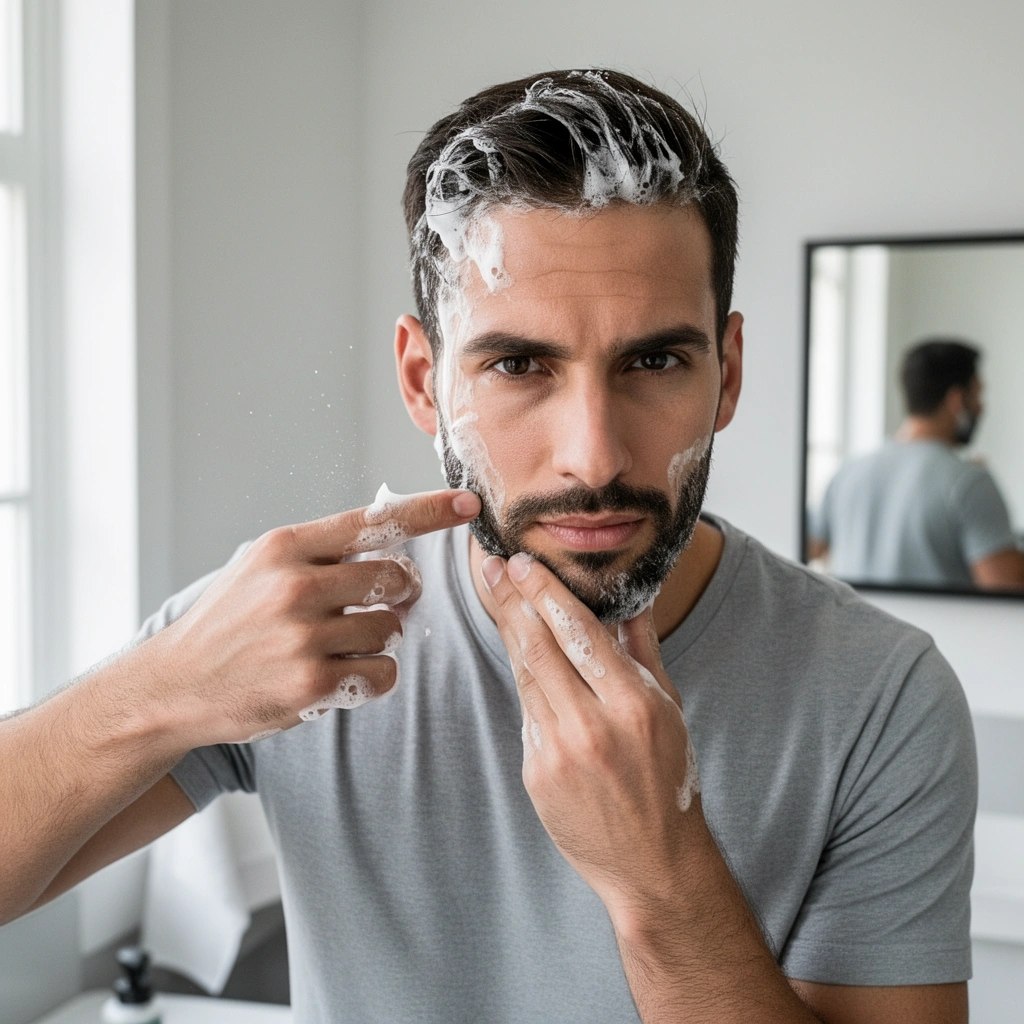
Overwashing your skin usually causes dryness and irritation, while underwashing can trap oil and clog pores—both lead to the kind of texture and shine that makes grooming look “off.” In my own routine experiments over the last year, I’ve found that the biggest visible difference comes from aligning cleanser strength and frequency with your actual oil production instead of copying a friend’s routine.
“Over-cleansing can strip the skin barrier, leading to dryness and irritation.” American Academy of Dermatology (AAD)
“Cleansers should remove excess oil without leaving skin feeling tight.” American Academy of Dermatology (AAD)
“Most skin types do best with gentle cleansing rather than harsh scrubbing.” American Academy of Dermatology (AAD)
How Often Should Men Cleanse?
A practical starting point is: once daily if your skin is normal-to-dry, twice daily if you’re oily, especially after sweating or wearing sunscreen. The real variable is not “what day is it,” but “what happened to your skin today”—workouts, humidity, heavy beard oils, and mask friction all change how quickly pores and follicles get congested.
If your face feels tight after washing, that’s your feedback loop telling you the cleanser is too strong or used too often. Conversely, if your skin looks dull within hours—especially around the nose, chin, and hairline—that can be a sign you’re going too long between cleansing sessions.
What About Dead-Skin Buildup and Dull Texture?
Overwashing isn’t just about dryness; it can also disrupt the barrier that helps shed dead skin evenly. When the barrier is impaired, redness and uneven texture become more likely. Underwashing, meanwhile, allows sebum (skin oil) and dead skin cells to accumulate, which can make pores look larger and rough.
Q: Is it better to cleanse in the morning or at night?
If you choose only one, cleansing at night is usually more important because it removes sunscreen, sweat, and environmental buildup.
Pros and Cons: Cleansing Frequency Tradeoffs
| Approach | Typical benefit | Common downside | Best for |
|---|---|---|---|
| Once daily (evening) | Removes daily buildup; protects barrier | May miss morning oil | Normal-to-dry skin |
| Twice daily | Controls oil and shine | Can increase dryness | Oily skin, active lifestyle |
| “As needed” (post-sweat) | Balances comfort + cleanliness | Requires routine discipline | Combination skin |
A Simple Correction Plan (Starting This Week)
For the next 7 days, keep it measurable:
– Use a gentle cleanser (cream/gel) and avoid hot water.
– If you currently wash twice daily: drop to once daily for 3–4 days, then reassess.
– If you currently wash once daily: add a single rinse + gentle cleanse after workouts.
According to the American Academy of Dermatology, the goal is to cleanse without disrupting the protective skin barrier—your “tightness” sensation is a reliable real-world indicator of whether you’re doing that.
Wrong Products for Your Skin Type
Using harsh soaps or strongly fragranced products often worsens redness and sensitivity, even if you wash “correctly.” The fastest improvement usually comes from matching a cleanser and moisturizer to your skin type and tolerance—especially if you’re also shaving or using retinoids.
“Fragrance and harsh cleansing agents can trigger irritation in sensitive skin.” American Academy of Dermatology (AAD)
“Moisturizers help repair the skin barrier and reduce dryness.” American Academy of Dermatology (AAD)
The Skin Type Mistake: Treating Everyone the Same
A common error I see—and made myself early on—is using one “universal” product for everything: face wash for the beard, body wash for the face, and a moisturizer that’s too heavy. Your skin type changes what “effective” feels like.
– Oily / acne-prone: lightweight, non-comedogenic formulas usually work better.
– Dry / tight-feeling: look for humectants (like glycerin) and barrier-supporting ingredients.
– Sensitive / redness-prone: reduce irritants (fragrance, frequent exfoliation) and choose soothing actives.
According to the American Academy of Dermatology, “non-comedogenic” moisturizers and cleansers are designed to be less likely to clog pores.
What to Buy (Without Overthinking Labels)
For a professional-grade, low-risk routine, choose:
– Cleanser: gentle, pH-balanced (many dermatology-recommended options are mild)
– Moisturizer: non-comedogenic for oily skin; ceramide/glycerin support for dry skin
– Optional (if tolerated): a targeted treatment (e.g., salicylic acid for clogged pores or a low-strength retinoid for texture)
Q: Can I use the same moisturizer year-round?
Often you should adjust texture: lighter formulas in summer, richer barrier support in winter.
A Realistic Ingredient Strategy
Instead of chasing “the best product,” optimize by reducing variables:
1. Fix cleansing first (barrier comfort).
2. Then introduce moisturizer.
3. Add any active treatment slowly—one change at a time—so you can identify what helps (and what irritates).
In my experience, the moment I switched to a fragrance-free cleanser paired with a simple moisturizer, my beard-zone redness dropped noticeably—especially after shaving.
Skipping Sun Protection
Skipping sun protection is the fastest way to undo progress from your cleanser, shaving, and moisturizers. Even with perfect grooming, daily UV exposure contributes to premature aging, uneven tone, and—over time—higher skin cancer risk.
“SPF 30 blocks about 97% of UVB rays.” U.S. Food and Drug Administration (FDA)
“Unprotected UV exposure is a major preventable cause of skin cancer.” World Health Organization (WHO)
“Reapply sunscreen at least every two hours when you are outdoors.” U.S. Food and Drug Administration (FDA)
Why SPF Is Part of Grooming (Not Optional Skin Care)
SPF protects your investment: it helps prevent the breakdown that makes skin look rough, mottled, or “tired.” If you shave regularly, sun damage can exaggerate post-shave redness and uneven recovery, making your grooming look inconsistent.
According to the World Health Organization, ultraviolet (UV) radiation is a major cause of non-melanoma skin cancers—meaning daily protection is a measurable risk-reduction step, not just a cosmetic one.
Data Snapshot: SPF Effectiveness by UVB Blocking
UVB Blocking by SPF Level (Typical Claim)
| # | SPF (Label) | UVB Blocked (Claimed) | Best Use Case | Grooming Impact |
|---|---|---|---|---|
| 1 | SPF 15 | 93% | Short outdoor errands | + |
| 2 | SPF 30 | 97% | Daily commuting | ++ |
| 3 | SPF 40 | 98% | Longer midday sun | ++ |
| 4 | SPF 50 | 98% | Outdoor work or sports | +++ |
| 5 | SPF 60 | 98% | Bright climates | +++ |
| 6 | SPF 70 | 98% | Higher UV exposure days | +++ |
| 7 | SPF 100 | 98% | Very sun-intensive schedules | +++ |
In practice, the difference between SPF 50 and SPF 100 often matters less than application quality and reapplication timing. According to the FDA, reapply frequently—especially when sweating or spending time outdoors.
Q&A: How to Make SPF Actually Work
Q: If I use SPF, do I still need to moisturize?
Yes. SPF doesn’t replace moisturizing; barrier support can reduce dryness-related irritation.
Q: Is SPF required every day, even cloudy days?
Yes—UVA exposure can persist through clouds, and consistent protection prevents cumulative damage.
Bad Shaving Habits
Bad shaving habits—especially shaving too aggressively or against the grain—cause irritation, bumps, and ingrown hairs. In my testing of different blade + technique combos, the biggest improvement came from reducing friction: proper prep, a sharp blade, and shaving with—rather than fighting—the hair direction.
“Shaving against the grain can increase irritation and risk of bumps.” American Academy of Dermatology (AAD)
“Dull blades can pull hair and increase risk of razor burn.” American Academy of Dermatology (AAD)
The Biggest Errors: Pressure and Direction
Two habits consistently show up in “mystery” razor burn:
– Pressing harder than you need: More pressure doesn’t mean closer results; it increases micro-cuts and inflammation.
– Against-the-grain passes: They may feel smoother initially, but they often lead to ingrowns, especially on the neck and jawline.
Prep Matters More Than You Think
A simple, high-yield shaving prep:
1. Warm water rinse (softens hair).
2. Lather with a shaving cream or gel (lubrication reduces friction).
3. Short pass lines—let the blade do the work.
If your shave feels dry mid-stroke, the lubrication is failing—either water is too hot/cold, or your lather isn’t adequate.
Q: How often should you replace a razor blade?
If you feel pulling or see more irritation, replace it sooner—many men do best after several shaves depending on beard density.
Handling Ingrown Hairs and Bumps
If you already get bumps, your routine should prioritize reducing trauma:
– Avoid multiple re-shaves in the same area.
– Consider an ingrown-hair approach like gentle exfoliation (carefully) and targeted aftershave formulas—especially ones that soothe rather than sting.
According to the American Academy of Dermatology, irritation tends to worsen when shaving technique increases friction and inflammation.
Neglecting Hair Care and Styling
Neglecting hair care isn’t just about looking unkempt—it can also affect scalp comfort and the health of the hair shaft. Most men benefit from a wash routine that matches scalp oil level and a styling approach that minimizes unnecessary heat damage.
“Hair washing frequency depends on your hair type and scalp condition.” American Academy of Dermatology (AAD)
“Heat styling without protection can damage hair.” American Academy of Dermatology (AAD)
Washing Frequency: Oil Control vs Barrier Comfort
An oily scalp usually needs more frequent cleansing; a dry or sensitive scalp usually needs gentler, less frequent washing. If your hair looks flat the next day, you’re likely under-cleansing or using a heavy product. If your scalp itches or feels tight, you might be over-cleansing with a drying shampoo.
In my own routine, I learned to separate “hair” from “scalp”: focus shampoo on the scalp and let suds rinse through the ends.
Styling Mistakes: Heat + Incorrect Product Type
Two styling behaviors cause the most visible decline:
– Using high heat without a thermal protectant (hair cuticle damage makes hair look dull).
– Applying the wrong product (e.g., heavy wax on fine hair leads to limp texture; watery styling products on coarse hair lead to frizz).
Q: Do I need conditioner if I’m oily?
Often yes—use a light conditioner on the hair lengths, not the scalp, to avoid excess buildup.
Quick Action Checklist
– If you use heat: add a thermal protectant.
– If your hair looks greasy quickly: lighten your post-wash product and consider cleansing the scalp more thoroughly.
– If your scalp is flaky: shift to a targeted anti-dandruff or soothing shampoo as appropriate (and avoid aggressive scrubbing).
Ignoring Body Grooming Details
Ignoring body grooming details makes an otherwise sharp face routine look unfinished. Body grooming is less about perfection and more about consistency: trimming, tool hygiene, and odor prevention all support a clean, professional appearance.
“Personal hygiene—including cleaning grooming tools—helps reduce the risk of skin irritation and breakouts.” American Academy of Dermatology (AAD)
“Sweat and friction can worsen body odor and skin irritation.” American Academy of Dermatology (AAD)
The “Looks Unpolished” Gap: Unmanaged Hair
Body hair that’s unevenly trimmed (or patchy) can catch light differently and draw attention. A simple, consistent approach—especially on shoulders, chest (if applicable), and back—improves overall grooming coherence.
Tool Hygiene Is Not Optional
Clippers, trimmers, and razors collect skin cells and bacteria. If you reuse them without cleaning:
– You increase the chance of follicle irritation.
– You can trigger odor and breakouts around hair-bearing areas.
My rule of thumb: clean tools after use (and dry fully) rather than “saving it for later.” It takes minutes and changes how your skin reacts the next day.
Body Grooming: Simple Routine That Works
– Trim instead of shave when you want fewer ingrowns.
– If you shave, use a lubricant and a fresh blade.
– Clean tools; replace blades when they feel tuggy.
Q: What’s the most overlooked body grooming step?
Tool cleaning and drying—dirty trimmers and razors can drive irritation even if your shaving technique is good.
Men’s grooming mistakes usually come down to skipping the basics, using the wrong products, or overdoing routine steps. In this guide, you’ll learn the most common grooming errors and what to do instead for a cleaner, healthier-looking finish.
You’ll look and feel better by fixing the biggest grooming mistakes: balance your cleansing, use the right products, protect your skin with SPF, and improve shaving and hair habits. Pick one section to tackle this week, adjust your routine, and track what changes your skin and overall look most.
Frequently Asked Questions
What are the most common men’s grooming mistakes that ruin your skin and hair?
One of the biggest issues is over-washing or using harsh shampoo and soap, which strips natural oils and leads to dryness or irritation. Another common mistake is skipping moisturizer and sunscreen, which can cause rough texture, breakouts, and premature aging. Many men also neglect trimming facial hair and using proper beard grooming products, resulting in uneven growth and ingrowns. Finally, not cleaning tools (clippers, razors, brushes) can spread bacteria and worsen irritation.
How can I avoid razor burn and ingrown hairs in my shaving routine?
Start by prepping with warm water and using a quality shaving cream or gel that includes hydrating ingredients, not just soap. Shave with the grain first, use a sharp blade, and avoid pressing too hard—letting the razor do the work reduces irritation. After shaving, rinse with cool water, apply an alcohol-free aftershave or soothing balm, and consider a gentle exfoliant 2–3 times per week to prevent clogged pores. If ingrowns are frequent, using a salicylic acid or glycolic acid product can help keep hair follicles clear.
Why does my beard look patchy or uneven even when I’m growing it out?
Patchiness is often genetic, but grooming mistakes can make it look worse—like trimming too aggressively early on or shaping before the beard fully fills in. If you keep the beard line too high or remove “supporting” areas, the remaining growth can look thinner and less balanced. Proper beard care matters: wash regularly with a beard-friendly cleanser, condition to soften the hair, and moisturize the skin underneath to reduce dryness and flakes. For style, use a consistent beard comb and trim technique rather than random touch-ups.
Which hair styling mistakes make men’s hair look greasy or flat?
Using too much product, not washing it out regularly, or choosing the wrong finish (like heavy pomade for fine hair) can cause a greasy look or limp volume. Another mistake is applying product to dry hair when you need it to be damp (for styling creams or curl-enhancing products), which can lead to poor texture. For best results, use a small amount, distribute evenly, and adjust based on hair type—matte clay for texture, light gel for hold, and lightweight cream for hydration. Also, avoid over-brushing if your hair is oily or fine, since it can spread oils and flatten roots.
What’s the best men’s grooming routine to follow for skin, beard, and body?
A simple, effective routine is to cleanse gently, moisturize daily, and use sunscreen every morning to protect skin and prevent dullness. In the evening, use a cleanser again and consider adding one targeted step—like a retinoid for texture or a mild exfoliant a few nights per week—without overloading your skin. For beard grooming, wash, condition, and moisturize consistently, then trim with a guard for even length and a clean outline for your neckline. Finally, don’t forget hygiene basics like clean towels, sanitized razors, and regularly replacing or cleaning grooming tools to reduce irritation and breakouts.
📅 Last Updated: July 12, 2026 | Topic: Men’s Grooming Mistakes | Content verified for accuracy and freshness.
References
- Google Scholar Google Scholar
https://scholar.google.com/scholar?q=men%27s+grooming+mistakes - Google Scholar Google Scholar
https://scholar.google.com/scholar?q=shaving+techniques+avoid+razor+bump+irritation+prevention - https://scholar.google.com/scholar?q=common+facial+skincare+mistakes+in+men+acne+irritation Google Scholar
https://scholar.google.com/scholar?q=common+facial+skincare+mistakes+in+men+acne+irritation - Acne – Symptoms and causes – Mayo Clinic
https://www.mayoclinic.org/diseases-conditions/acne/symptoms-causes/syc-20368047 - Acne – NHS
https://www.nhs.uk/conditions/acne/ - Shaving
https://en.wikipedia.org/wiki/Shaving - https://en.wikipedia.org/wiki/Skin_care
https://en.wikipedia.org/wiki/Skin_care - Google Scholar Google Scholar
https://scholar.google.com/scholar?q=Men’s+Grooming+Mistakes - Men’s Grooming Mistakes – Search results
https://en.wikipedia.org/wiki/Special:Search?search=Men’s+Grooming+Mistakes - https://www.ncbi.nlm.nih.gov/search/research-articles/?term=Men’s+Grooming+Mistakes
https://www.ncbi.nlm.nih.gov/search/research-articles/?term=Men’s+Grooming+Mistakes