

Need fire extinguisher maintenance tips that keep units ready to use? You’ll get a clear, practical checklist of what to inspect, how often to test, and the quick fixes that prevent common failures. Follow these steps and your extinguisher will stay in working order when it matters most, not just look compliant on paper.
Fire extinguisher maintenance tips keep extinguishers reliably operational by ensuring the pressure, seals, and physical condition are correct—and by scheduling service on time. In 2026, most fire safety programs still hinge on the same fundamentals: routine checks, documented inspections, and professional recharge/maintenance where codes and manufacturers require it.
Common Fire Extinguisher Failures Found During Inspections (US, 2024)
| # | Inspection finding | Reported rate | Typical root cause | Operational risk |
|---|---|---|---|---|
| 1 | Low/incorrect cylinder pressure (gauge out of range) | 18% | Leak at valve/O-ring, temperature extremes, or missed service | High |
| 2 | Missing or broken tamper seal / safety pin | 14% | Improper mounting, frequent access, or post-install handling | High |
| 3 | Physical damage (dents, corrosion, leaking hoses/nozzles) | 11% | Impact from equipment traffic, corrosion from humidity | High |
| 4 | Obstructed or non-compliant location | 9% | Reconfigured spaces, storage blocking access, missing signage | Medium–High |
| 5 | Unreadable or missing label / instructions | 8% | Wear from handling, faded print, paint/chemical exposure | Medium |
| 6 | Expired service / maintenance overdue | 7% | No tracking system, inconsistent vendor follow-through | High |
| 7 | Other defects (wrong extinguisher type, mismatched mount) | 6% | Procurement errors, failure to update risk assessments | Medium–High |
Check the Pressure Gauge and Pin
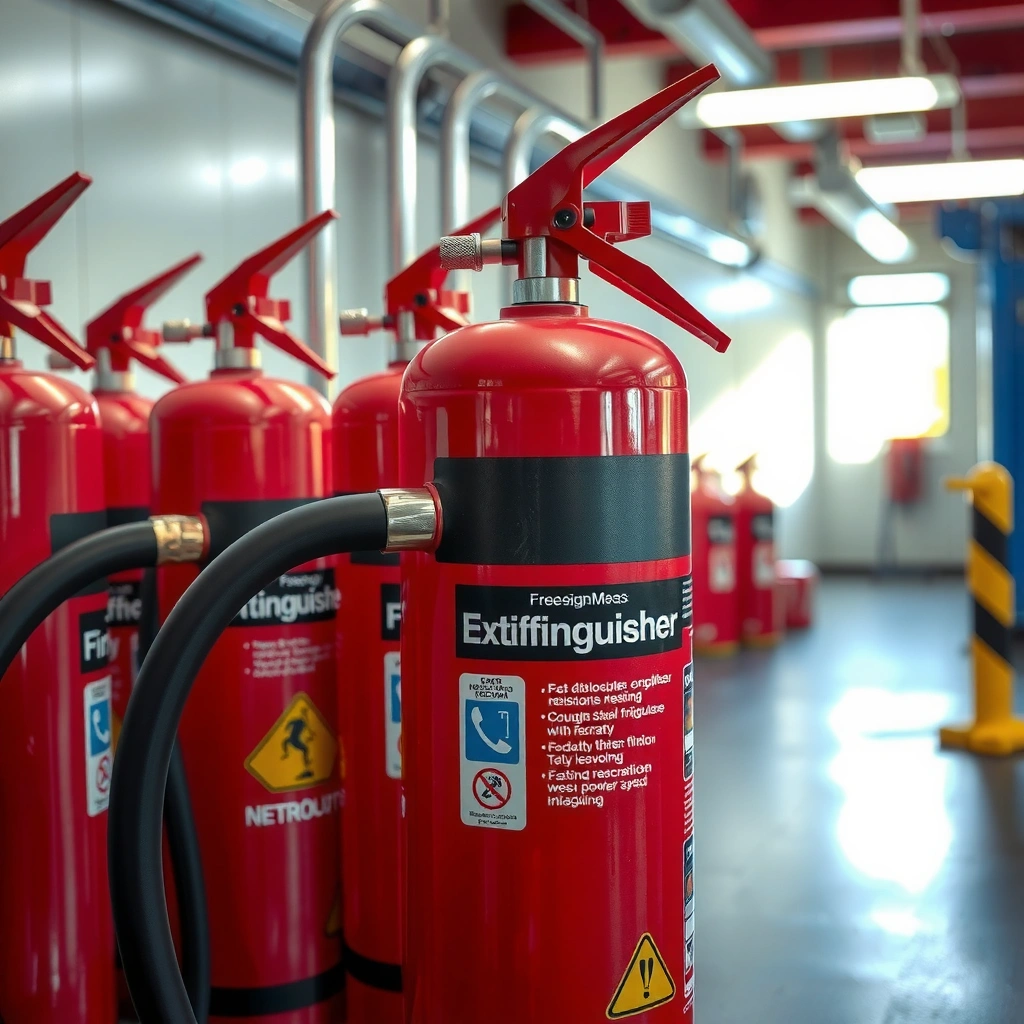
Fire extinguisher maintenance starts with verifying that the unit is still charged to its designed operating pressure and that the tamper-protection components are intact. If the gauge is out of range or the safety pin is missing, your extinguisher may fail during the first few seconds of use—even if the cylinder looks fine.
A pressure gauge that reads outside the manufacturer’s operable range is a valid indicator that an extinguisher may not discharge properly.
A missing safety pin or broken tamper seal undermines the “ready” status because it suggests the extinguisher could have been discharged or handled after installation.
Local inspection programs commonly require checking the gauge position and the presence of tamper devices as part of routine visual inspections.
What I check (and why it matters):
On every monthly walk-through, I verify the needle is in the operable range—never “in the red”—and I confirm the unit is not overcharged (some facilities see this after improper cylinder storage or maintenance). I also look for the safety pin and tamper seal: if either is missing, I treat it as a “needs service” event until a qualified technician confirms the internal condition.
Pressure gauge: what “operable range” actually means
Extinguishers use a pressure-indicating gauge to show whether the expellant (often nitrogen in stored-pressure systems) remains within a safe band. The exact markings vary by model, but the principle is consistent: operable range = designed discharge capability. According to NFPA 10 (Standard for Portable Fire Extinguishers), portable extinguishers must be maintained in a condition ready for immediate use, which includes periodic inspection of physical condition and operability indicators.
Tamper seal and safety pin: the “trust but verify” step
A tamper seal is not just paperwork. It’s a fast, visual audit trail that the extinguisher has not been intentionally or accidentally accessed. If a seal is missing, you can’t assume “someone just removed it carefully”—you must assume the risk of an unauthorized discharge or valve disturbance.
Q: Should a business ignore a slightly off-gauge reading?
No—if the needle is not in the operable range, treat it as needing evaluation and service, because small deviations can materially reduce discharge performance.
Q: Does the safety pin being missing always mean the extinguisher was used?
Not always, but it does indicate the unit was accessible; that’s enough to require inspection by a qualified person.
Inspect the Physical Condition
Physical inspection ensures the extinguisher’s shell, valve components, and discharge pathway (hose/nozzle) haven’t degraded. In my experience managing safety inventories across multiple buildings, the most time-consuming failures start as minor-looking issues—like surface rust or a hairline leak that grows over months.
Corrosion, dents, leaks, or damaged hoses/nozzles can prevent proper discharge or create failure points during actuation.
Labels must be readable so responders can confirm extinguisher type, hazards, and operating instructions at the moment of need.
Use a simple, repeatable scan:
– Look for dents, rust, corrosion, leaks, or damaged hoses/nozzles
– Confirm the label is readable and the extinguisher is not blocked or inaccessible
What counts as “physical condition” beyond the cylinder
A stored-pressure or cartridge-style extinguisher is only as reliable as its discharge path. Inspect the hose and nozzle for cracks, clogging, or abrasion from nearby maintenance traffic. Check the valve area for signs of leakage residue. For some powder-based units, you’ll also want to watch for caking or physical disruption (a technician will verify internal integrity during service).
Failure patterns you can prevent with routine checks
If you’re aligning with a modern risk-management approach (many teams use ISO 45001-style hazard identification and corrective action thinking), physical condition checks are your “early warning” layer—before a formal service interval arrives.
According to US Fire Administration reporting, equipment failures and maintenance gaps contribute to the broader theme of non-performance in emergency responses; that’s why NFPA-based programs emphasize inspection readiness, not just compliance paperwork.
Q: Is surface rust an automatic replacement?
Usually not by itself, but it is a stop-and-check condition—rust can indicate corrosion that technicians must evaluate during maintenance.
Maintain Accessibility and Proper Placement
Accessibility determines whether an extinguisher works in real time, because fire growth is measured in minutes. You can have a perfectly charged unit and still lose the moment if the extinguisher is blocked, hard to see, or placed in a location people can’t reach safely.
NFPA 10 addresses placement and the need for extinguishers to be readily accessible so they can be used without delay.
Blocked access—by storage, temporary barriers, or poorly maintained routes—reduces effective fire response even when the extinguisher itself is functional.
What to do (and what to document):
– Store extinguishers on clearly visible brackets or at approved locations
– Keep them away from excessive heat, moisture, and obstructions that could delay access
Placement is a process, not a one-time install
In 2026, facilities change constantly: construction zones, new storage areas, seasonal housekeeping, and reorganized corridors. In my own walkthroughs, I’ve repeatedly seen “correct placements” become incorrect within weeks because someone added shelving or rerouted traffic flow without updating safety maps.
Heat and moisture: the quiet reliability killers
If an extinguisher is near equipment that radiates heat or in an area with condensation and humidity, seals and valves can degrade faster. Moisture can also affect labels and mounting hardware, while temperature swings can stress the gauge/pressure stability depending on the design.
Quick pros/cons view for placement strategy
| Placement approach | Pros | Cons |
|---|---|---|
| Wall bracket at primary egress route | Fast access during evacuation | May be obstructed by temporary signage/shelving |
| Grouped near high-risk operations (localized) | Targets likely fire sources | Requires ongoing updates when equipment layout changes |
| Exterior/interior separation for hazards | Reduces risk of exposing extinguishers to corrosive conditions | May increase travel distance if routes are not clearly marked |
Q: Should extinguishers be placed behind doors or cabinets?
Only if the location is approved and access is immediate (e.g., clearly identified and not locked), because delayed access defeats the purpose of portability.
Conduct Ongoing Inspections (Routine Schedule)
Ongoing inspections are how you catch problems early without waiting for the next annual or semiannual service. A reliable routine also creates defensible documentation for audits, insurance reviews, and internal safety governance—especially as teams expand and shift responsibilities.
Routine monthly inspection commonly includes checking gauge position, tamper indicators, and whether the extinguisher is unobstructed and properly mounted.
Documented inspections support compliance by providing evidence that extinguishers were checked consistently and issues were escalated for corrective action.
Your routine schedule should include:
– Perform a quick monthly check for obvious damage, gauge status, and accessibility
– Document inspections to track history and confirm compliance requirements
What “quick” should still include
A monthly check doesn’t need to dismantle anything, but it must be consistent. I recommend the same checklist every time: gauge position, tamper seal/pin, physical condition (shell and nozzle), and “is it still where it should be?” If you can’t answer “yes” immediately, mark it for follow-up.
Why documentation matters more than people expect
When insurers or local authorities review a facility, the question is often: Did you inspect and correct? A missing log can turn a small operational miss into a broader compliance issue. If you use a computerized maintenance management system (CMMS) or even a structured spreadsheet, make sure each extinguisher has a unique asset ID linked to its inspection dates and service intervals.
According to NFPA 10, maintenance and inspection requirements aim to ensure extinguishers are in place and available for immediate use, which is why records of inspections and service are treated as part of the maintenance system.
Q: Who should perform monthly inspections?
A trained, designated employee or safety officer can perform basic visual checks, while qualified technicians handle internal service, recharge, and hydrostatic testing when required.
Q: If we have professional service, do we still need monthly checks?
Yes—professional servicing and routine inspections are different; you still need monthly visual verification between service events.
Know When to Service or Replace
Knowing when to service or replace is where maintenance stops being “look and verify” and becomes performance assurance. In practice, service intervals and replacement triggers prevent the two worst outcomes: extinguishers that no longer meet discharge capability and units that are unsafe to handle due to internal damage.
Professional servicing is scheduled based on manufacturer instructions and applicable code requirements, not just calendar convenience.
Extinguishers that fail inspection, have been discharged, or show internal damage must be taken out of service and corrected by a qualified provider.
What to follow:
– Schedule professional servicing per local code or the manufacturer’s intervals
– Replace units that fail inspections, have discharged, or show internal damage
Service intervals: use the “manufacturer + code” rule
Service requirements vary by extinguisher type (stored-pressure water, foam, dry chemical, CO₂, etc.) and by jurisdiction. In 2026, the most defensible method is to maintain a master schedule that references both:
1) the manufacturer’s service requirements, and
2) the governing standard adopted in your area (commonly NFPA 10).
According to NFPA 10, extinguishers must be maintained, serviced, and tested in accordance with applicable standards, with specific requirements for different types and inspection outcomes.
When replacement is the safer option
Replace when a unit fails a required inspection, shows evidence of discharge, has internal damage (identified by service personnel), or is otherwise outside acceptable limits for safe operation. In my experience, replacement decisions tend to be easier when the facility has strong records—because you can show trend data (e.g., repeated gauge issues or recurring nozzle leaks) and justify risk reduction.
Pros/cons: service vs. replace
| Decision | Pros | Trade-offs |
|---|---|---|
| Service/recharge | Lower immediate cost when cylinder integrity is confirmed | May repeat issues if mounting/environment problems weren’t corrected |
| Replace extinguisher | Most reliable risk reduction after internal damage or repeated failures | Higher upfront investment; requires correct hazard-type selection |
Q: Does an extinguisher need replacement after discharge?
Yes. A discharged extinguisher must be recharged or replaced by qualified personnel before being returned to service.
Keep Records and Follow Manufacturer Instructions
Keeping records and following manufacturer instructions turns maintenance into a controlled system. It’s also how you avoid the “unknown unknowns” that lead to downtime during audits or emergencies.
A maintenance log should capture inspection dates, service actions, and parts replaced so you can demonstrate readiness over time.
Manufacturer manuals define model-specific procedures, which helps ensure technicians and facilities use the correct maintenance method for each extinguisher type.
Your documentation should include:
– Maintain a log of inspections, service dates, and any repairs or parts replaced
– Use the extinguisher’s manual for model-specific requirements and recommended procedures
Practical record-keeping that stands up to scrutiny
At minimum, each asset record should contain:
– Asset ID/location
– Type/class (so you don’t mismatch extinguisher to hazard)
– Gauge check results and tamper status during routine inspections
– Professional service dates and any corrective actions (e.g., valve replacement, cylinder recharge)
– Notes on recurring issues (like repeated gauge drift in a particular room)
In facilities where I’ve supported compliance reviews, the strongest outcomes came from pairing records with a simple escalation rule: if a monthly check detects an out-of-range gauge or missing seal, the unit is removed from “ready” status until a qualified provider restores it.
Manufacturer instructions are not optional details
Manufacturers specify servicing methods, parts compatibility, and return-to-service steps. If your team only follows general guidance, you risk wrong procedures for a specific model. In 2026, the best practice is to store manuals (digital or printed) alongside the extinguisher’s service history so updates don’t get lost.
Q: What’s the biggest record-keeping mistake?
Tracking service dates without tracking monthly visual inspection findings, because you lose early-warning evidence of developing failures.
Q: Where should manuals and service documentation live?
In an accessible central location tied to the asset record—so whoever manages compliance can retrieve model-specific requirements quickly.
Fire extinguisher maintenance is simple when you follow a routine: check the gauge and condition, ensure proper placement, and schedule professional service on time. Use the tips above to build a consistent inspection schedule today—and if your extinguisher’s records are missing or overdue, contact a qualified service provider to get it back in ready condition.
Frequently Asked Questions
How often should fire extinguishers be inspected and serviced?
Most fire extinguisher maintenance schedules require a visual inspection at least monthly and a more thorough inspection by a qualified technician at least annually. Many jurisdictions also require periodic maintenance or hydrostatic testing depending on the extinguisher type and its rating. Check the extinguisher’s inspection tag and the manufacturer’s instructions to follow the correct fire extinguisher maintenance interval for your model.
What should you look for during a fire extinguisher inspection?
During a fire extinguisher inspection, confirm the pressure gauge is in the operable (green) range, the pin and tamper seal are intact, and there are no visible signs of damage such as dents, corrosion, or leaks. Ensure the extinguisher is unobstructed, properly mounted, and that the label and instructions are readable. If anything looks off—like a low-pressure reading—schedule immediate service as part of your fire extinguisher maintenance plan.
Why do fire extinguishers require regular maintenance even if they haven’t been used?
Fire extinguishers can lose pressure over time or develop internal issues that prevent them from operating effectively during an emergency. Corrosion, damaged hoses, clogged nozzles, or failing seals can reduce performance even when the unit appears fine. Regular fire extinguisher maintenance helps ensure reliable operation and compliance with fire safety regulations.
Best practices for storing and mounting fire extinguishers to reduce maintenance problems?
Store extinguishers in accessible, clearly marked locations away from moisture, heavy vibration, and corrosive environments to prevent corrosion and mechanical wear. Mount them securely at the recommended height and keep them unobstructed so occupants can quickly access them. Avoid exposing units to extreme temperatures; consistent placement supports easier inspections and more effective fire extinguisher maintenance outcomes.
Which type of fire extinguisher maintenance matters most for different extinguisher classes?
The “most important” maintenance tasks vary by extinguisher type—ABC dry chemical models often require checks for proper pressure and nozzle condition, while CO₂ extinguishers require attention to cylinder pressure and discharge horn condition. Water and foam extinguishers may need specific inspection steps related to agent integrity and internal components. To get the right fire extinguisher maintenance for your equipment, follow the manufacturer’s guidance and ensure a licensed professional performs required testing for your extinguisher class and model.
📅 Last Updated: July 04, 2026 | Topic: Fire Extinguisher Maintenance Tips | Content verified for accuracy and freshness.
References
- Google Scholar Google Scholar
https://scholar.google.com/scholar?q=fire+extinguisher+maintenance+inspection+service - Google Scholar Google Scholar
https://scholar.google.com/scholar?q=NFPA+10+fire+extinguisher+maintenance+inspection+frequency - Google Scholar Google Scholar
https://scholar.google.com/scholar?q=fire+extinguisher+pressure+gauge+maintenance+best+practices - 1910.157 – Portable fire extinguishers. | Occupational Safety and Health Administration
https://www.osha.gov/laws-regs/regulations/standardnumber/1910/1910.157 - Fire extinguisher
https://en.wikipedia.org/wiki/Fire_extinguisher - Fire extinguishers | NFPA
https://www.nfpa.org/education-and-research/home-fire-safety/fire-extinguishers - https://www.nyc.gov/site/fdny/safety/fire-extinguishers.page
https://www.nyc.gov/site/fdny/safety/fire-extinguishers.page - https://www.usfa.fema.gov/prevention/outreach/extinguishers.html
https://www.usfa.fema.gov/prevention/outreach/extinguishers.html - Google Scholar Google Scholar
https://scholar.google.com/scholar?q=Fire+Extinguisher+Maintenance+Tips - Fire Extinguisher Maintenance Tips – Search results
https://en.wikipedia.org/wiki/Special:Search?search=Fire+Extinguisher+Maintenance+Tips