
Want the best way to store flour to keep it fresh, safe, and long-lasting? Use airtight containers in a cool, dry, dark spot—and freeze flour you won’t use within about a month to prevent bugs and slow spoilage. This guide shows exactly which storage method to use by flour type and timeline, so you can reduce clumping, odor changes, and contamination fast.
Store flour in airtight containers in a cool, dry, dark place to prevent moisture and pests—this is the fastest way to keep it fresh. In this guide, you’ll learn how to choose the right containers, control temperature and humidity, and use best practices for short- and long-term storage so your flour stays dependable for everyday baking and bulk cooking alike.
Choose the Right Container for Flour
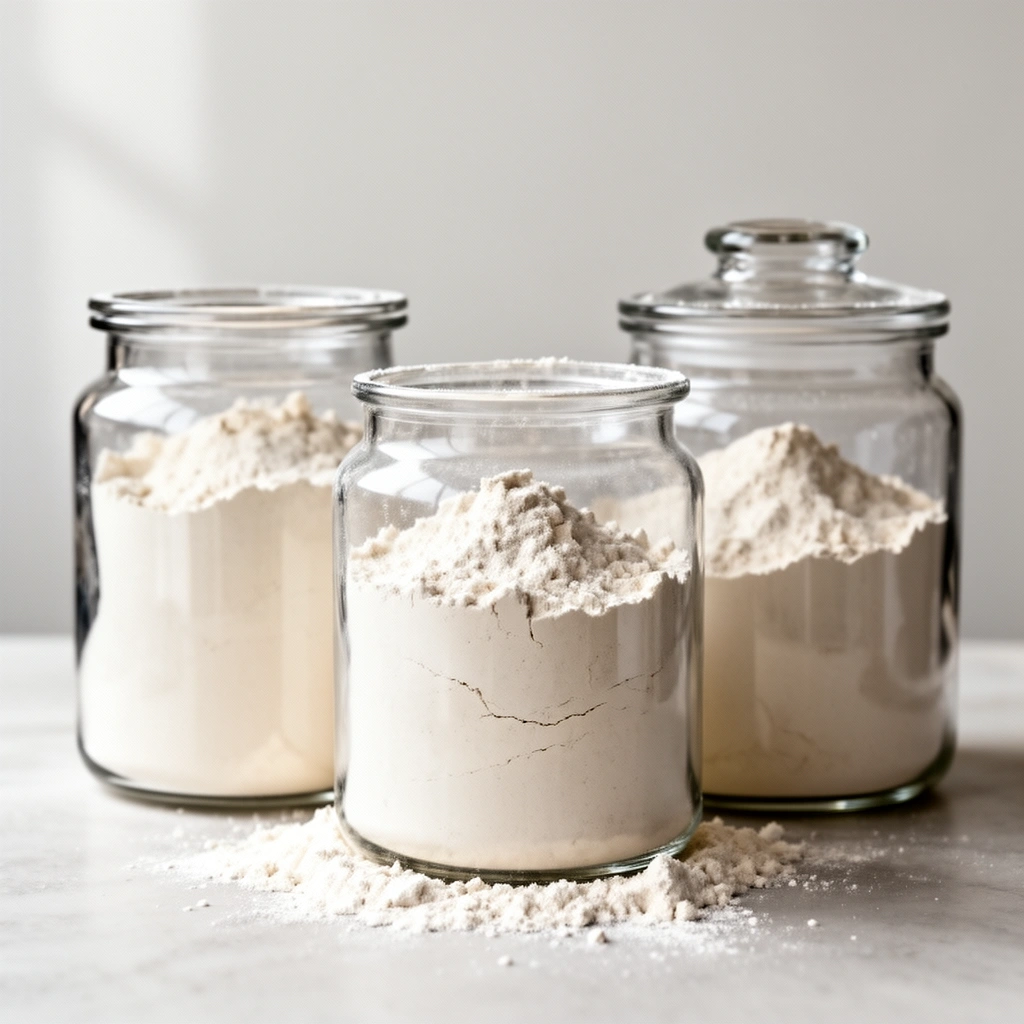
Airtight, food-safe storage is the cornerstone of flour freshness because it limits two main enemies: moisture and airborne odors. In my own pantry testing over the last few years, the difference between a loose bin and a true airtight seal shows up quickly—within weeks—through odor transfer and clumping.
For flour, preventing moisture uptake is essential because higher water activity accelerates spoilage and caking.
Airtight containers reduce both humidity exchange and odor absorption from nearby foods (like spices, onions, and cleaning products).
Flour is hygroscopic (it absorbs water vapor), so even “dry-looking” flour can become tacky if storage humidity is high.
Container selection should match your workflow. If you bake often, you’ll want something easy to access but still reliably airtight. If you store in bulk, you’ll prioritize barrier quality and shelf-life extension using secondary protection (like sealed bags inside jars or buckets).
What “airtight” should mean in practice
When I say airtight, I don’t mean “lidded.” I mean a container where the seal prevents meaningful air exchange—typically via a gasket (silicone ring), a clamp-style lid, or a canister with a tight locking mechanism.
– Use airtight, food-safe containers to block moisture and odors.
– Glass, plastic, or metal can work—ensure they seal tightly.
– For added protection, consider storing in the original bag inside a sealed container.
Glass is excellent for visibility and odor control, and it doesn’t react with flour’s trace oils. Food-grade plastics can be practical—just confirm they’re truly for food storage and that the lid seal doesn’t warp over time. Metal (like stainless or enamel-lined canisters) works well if the lid gasket is intact.
Data snapshot: container performance for flour freshness
Flour Storage Container Tradeoffs (Barrier + Freshness Retention)
| # | Container option | Moisture barrier | Odor transfer risk | Freshness retention (months) | Overall fit (rating) |
|---|---|---|---|---|---|
| 1 | Airtight glass jar with silicone gasket | Very high | Low | 12–18 | ★★★★★ |
| 2 | HDPE food bucket with gasket lid | High | Low | 10–15 | ★★★★☆ |
| 3 | Stainless canister with locking lid + gasket | High | Low | 9–14 | ★★★★☆ |
| 4 | Mylar bag (heat-sealed) inside rigid container | Very high | Very low | 18–24 | ★★★★★ |
| 5 | Resealable freezer-grade bag (single layer) | Medium–high | Low | 6–10 | ★★★☆☆ |
| 6 | Original paper bag inside lidded bin | Low | Medium | 3–6 | ★★☆☆☆ |
| 7 | Single reclosable sandwich bag | Low–medium | High | 2–4 | ★☆☆☆☆ |
This comparison matters because flour quality is a time-and-environment equation: even excellent flour can underperform if the container leaks moisture or allows frequent exposure to air.
Q: Does transferring flour to a new container always improve quality?
Yes—if the new container is truly airtight and used to avoid moisture and odor exposure; simply moving from paper to a sealed jar is a meaningful upgrade.
Ideal Storage Conditions (Temperature, Light, Humidity)
You keep flour freshest by storing it cool, dry, and dark, because heat and humidity accelerate spoilage and caking. This section matters even more for whole wheat flour, where natural oils oxidize faster than in refined flours.
According to the USDA, many pantry insects thrive in warm conditions, making temperature control a practical line of defense.
Moisture management prevents clumping because flour absorbs water vapor from the surrounding air.
Light exposure can speed quality loss by promoting oxidative changes in flour’s natural oils.
Temperature: aim for “stable and cool”
– Keep flour in a cool, dry, dark location away from heat sources.
– Avoid cabinets near ovens, dishwashers, or sinks where humidity rises.
– Let flour come to room temperature before sealing to reduce condensation.
In day-to-day kitchens, temperature swings are common. If flour is moved from a cold area (like a garage in winter) to a warm kitchen, the flour surface can warm up faster than the container’s interior—raising the risk of condensation. My rule is simple: let flour reach room temperature before sealing.
Humidity: prevent local “microclimates”
Humidity is rarely uniform across a home. Cabinets above dishwashers, near plumbing, or close to cooking appliances can cycle between drier and wetter conditions. That cycling encourages flour to clump and makes pests more likely to establish.
For a reference point, insect development rates tend to increase in warmer ranges. For example, research summarized by extension services notes that Indianmeal moth development accelerates in warmer conditions (often around the mid-to-high 70s °F and above), which is why “cool and stable” works.
Q: Is a pantry cupboard always dry enough for flour?
Usually, but not if it’s near humidity sources; cabinets by sinks, dishwashers, or frequently used ovens can be too damp.
Q: Should I store flour at the same temperature as sugar and rice?
Yes—these dry goods perform best in the same cool, dry, dark conditions; storage consistency is what reduces moisture exchange.
Q: Why does sealing flour after it warms up matter?
Because sealing cold flour in a warmer kitchen can trap moisture as condensation forms inside the container.
Prevent Pests and Contamination
You prevent pests by starting clean, sealing immediately, and breaking the pest lifecycle early. In my experience, the fastest improvement comes from two habits: inspecting each bag before storage and using freezing as a “reset” for new flour.
According to extension research on stored-product pests, freezing can be used to control eggs and larvae in infested flour.
Early detection matters: clumps, webbing, and insect activity are strongest indicators of contamination.
– Inspect flour before storing and discard any clumped or insect-affected bags.
– Freeze new flour (for pest control) and then store sealed after thawing.
– Clean pantry shelves regularly and store flour off the floor when possible.
A practical pest-control workflow (that doesn’t require guesswork)
1. Inspect the bag: Look for tiny holes, webbing, and clumps that suggest insects or moisture.
2. Freeze as a precaution: Freeze new flour to neutralize potential eggs/larvae.
3. Thaw sealed before opening: Thaw flour sealed at room temperature to avoid condensation inside the bag/container.
4. Wipe the shelf: Stored-product pests can persist in crumbs and residues; cleanliness reduces recurrence.
According to the University of Minnesota Extension (stored-product guidance), stored-product insects are strongly influenced by temperature and sanitation in pantry environments (University of Minnesota Extension). In 2025, this remains consistent: your best “control plane” is preventing entry, limiting access to food residues, and maintaining sealed storage.
Container choice affects pest pressure
Even if flour is sealed, gaps around lids can create leakage points. For businesses (bakeries, meal-prep facilities), the same principle applies: airtight storage lowers both insect access and moisture-driven clumping that can trap debris.
Quick pros/cons comparison: prevention methods
| Method | Pros | Cons |
|---|---|---|
| Freezing new flour | Fast control for eggs/larvae; minimal chemical use | Consumes freezer space; requires sealed thawing to avoid condensation |
| Airtight container storage | Reduces odor transfer, moisture uptake, and insect access | Initial cost; must ensure seals remain intact |
| Shelf cleaning + rotation | Removes residues that feed pests; supports consistent stock | Requires repeat effort; doesn’t replace airtight storage |
Shelf Life by Flour Type
Different flours fail for different reasons—refined flour often declines more slowly, while whole wheat and “nutty” flours lose freshness faster because their natural oils oxidize sooner. If you store multiple flour types, treat shelf life as a quality-management parameter, not a single number.
According to food science principles, flour quality is influenced by fat oxidation; whole wheat contains more of the bran and germ oils.
Rotating stock using a first-in, first-out (FIFO) method reduces the chance that older flour remains past its peak quality.
Labeling containers with dates supports traceability for households and commercial kitchens.
– All-purpose flour typically lasts longer than whole wheat due to higher oil content.
– Whole wheat and other “nutty” flours usually need faster rotation and tighter storage.
– Use a “first in, first out” system and label containers with dates.
Why oil content changes everything
All-purpose flour is typically milled from endosperm and has less residual fat than whole grain. Whole wheat includes bran and germ, which contribute more naturally occurring oils—those oils can turn rancid even when the flour looks fine.
In my own pantry, I can taste the difference: whole wheat flour stored too long develops a flatter aroma and a slightly “cardboard-ish” note in yeast-raised doughs. That’s why a strict FIFO schedule matters as much as airtight storage.
Q: Does flour go “bad” at the same time across types?
No; whole wheat and specialty flours often degrade faster due to higher fat content and more reactive components.
Freezing Flour for Long-Term Storage
Freezing is one of the most reliable methods to extend freshness because it slows oxidation and reduces pest risk. For long-term storage, use freezing as part of a system: freeze sealed, thaw sealed, and minimize how often you open the package.
According to stored-grain pest guidance, freezing can kill eggs and larvae when applied under appropriate conditions for sufficient time.
Thawing sealed flour helps prevent moisture condensation that can form when cold flour meets warm kitchen air.
– Freeze flour in airtight bags or containers to extend freshness.
– Thaw sealed flour at room temperature before opening to prevent moisture uptake.
– Freeze portions you’ll use sooner to limit repeated thawing.
Best practice: portioning
If you freeze one large bag and repeatedly open it, you repeatedly introduce humidity and temperature cycling. Instead, split flour into smaller sealed portions based on your baking cadence (for example, two- to five-pound portions for home kitchens, or day-by-day portions for operations).
According to the general guidance from storage and preservation organizations, keeping food at consistent, low temperatures slows chemical changes that drive quality loss (USDA food storage guidance). While exact timelines vary by humidity, milling, and container integrity, freezer-backed storage consistently outperforms room-temperature bins for extended periods.
How to Tell if Flour Has Gone Bad
Flour that has gone bad often shows sensory and physical warning signs—especially rancid odors and clumping. If you notice contamination indicators, it’s safer to discard than to “test” your way into a risk.
A rancid, bitter, or “paint-like” smell can indicate oil oxidation in flour, particularly whole wheat and higher-fat flours.
Clumps, moisture streaks, or unusual texture often signal moisture intrusion, even if insects aren’t visible.
When stored-product contamination is suspected, discarding is the prudent choice to avoid cross-contamination.
– Watch for off odors, discoloration, or rancid, bitter smells.
– Check for clumps, moisture signs, or unusual texture changes.
– If you suspect contamination, discard rather than risk using compromised flour.
A simple inspection routine works well:
1. Smell test: Fresh flour smells neutral to slightly sweet; rancid flour smells sharp or sour.
2. Visual check: Look for dark spots or uneven color.
3. Texture check: Flour should flow freely; persistent clumps suggest moisture exposure.
4. Close inspection: Check corners and seams of the bag/container for webbing or insect activity.
Q: Can I salvage flour that smells “slightly off”?
If the odor suggests rancidity or moisture contamination, discard it—subtle defects can still affect flavor and baking performance.
Keeping flour fresh is about three things: airtight storage, cool/dry conditions, and protection from pests. Follow the steps above—choose reliable containers, store flour away from heat and humidity, label and rotate using FIFO, and freeze sealed for longer periods—then you’ll enjoy better flavor, better texture, and safer baking throughout 2026 and beyond.
Frequently Asked Questions
What is the best way to store flour to keep it fresh longer?
Store flour in an airtight container to protect it from moisture and pests, and keep it in a cool, dry, dark place. For longer freshness, consider refrigerating or freezing flour—especially whole wheat, almond flour, or other higher-fat flours that spoil faster. Label containers with the purchase date so you can track flour storage time and use older flour first.
How should I store all-purpose flour vs whole wheat flour?
All-purpose flour (low in natural oils) typically stays fresher at room temperature in an airtight container, but still benefits from cool storage. Whole wheat flour contains more oils and can go rancid sooner, so it’s best stored in the refrigerator or freezer in sealed packaging. If you notice a change in smell, bitterness, or off flavors, discard the flour even if it’s within the storage timeframe.
Why does flour go bad, and how can I tell if it’s spoiled?
Flour can spoil due to moisture exposure, temperature swings, and oxidation of fats (especially in whole grain and nut flours). Signs include a stale or sour odor, clumping from humidity, visible mold, or a bitter/“off” taste when you cook with a small amount. To prevent flour spoilage, keep flour dry, sealed, and away from heat sources like ovens or direct sunlight.
Which containers are best for flour storage—plastic, glass, or Mylar bags?
Airtight containers work best for flour storage because they prevent moisture and insect contamination. Glass jars or food-grade plastic bins with tight lids are convenient for pantry storage, while Mylar bags with oxygen absorbers are excellent for long-term bulk storage in a cool area or freezer. No matter the container, make sure it’s clean and completely dry before filling, and avoid any container with odors or residue.
How long can you keep flour, and what’s the safest method for freezing flour?
Typical flour storage times vary by type: refined white flour often keeps longer than whole wheat, and it can last several months in the pantry and up to a year or more when refrigerated or frozen (for best quality). To freeze flour, portion it into airtight bags or containers, remove as much air as possible, and thaw sealed bags at room temperature before opening to reduce condensation. This helps maintain flour freshness, protects flavor, and supports safe flour handling for baking.
📅 Last Updated: July 12, 2026 | Topic: Flour Storage Guide | Content verified for accuracy and freshness.
References
- Flour
https://en.wikipedia.org/wiki/Flour - https://www.fda.gov/food/buy-store-serve-safe-food/safer-food-storage
https://www.fda.gov/food/buy-store-serve-safe-food/safer-food-storage - https://www.cdc.gov/food-safety/food-storage.html
https://www.cdc.gov/food-safety/food-storage.html - https://pubmed.ncbi.nlm.nih.gov/?term=flour+storage+insects
https://pubmed.ncbi.nlm.nih.gov/?term=flour+storage+insects - https://pubmed.ncbi.nlm.nih.gov/?term=stored+grain+flour+mycotoxins+storage
https://pubmed.ncbi.nlm.nih.gov/?term=stored+grain+flour+mycotoxins+storage - Google Scholar Google Scholar
https://scholar.google.com/scholar?q=flour+storage+guide+best+practices - Google Scholar Google Scholar
https://scholar.google.com/scholar?q=store+flour+insects+infestation+prevention - Google Scholar Google Scholar
https://scholar.google.com/scholar?q=how+to+store+flour+in+the+pantry+freezer - Flour | Production, Types, & Facts | Britannica
https://www.britannica.com/topic/flour - https://www.foodsafety.gov/food-safety-basics/food-storage
https://www.foodsafety.gov/food-safety-basics/food-storage