
Want a rice storage guide that keeps rice fresh, safe, and ready? If you want the clear winner, store uncooked rice in an airtight container in a cool, dry pantry and freeze when you need long-term protection. This guide answers how to prevent spoilage and pests, how long different rice types last, and how to store cooked rice so it stays safe to eat.
Store uncooked rice by keeping it cool, dry, and sealed airtight—then use the freezer and a simple rotation plan when you want maximum freshness. When uncooked rice is protected from moisture and oxygen, it stays safer, tastes better longer, and is far less likely to develop pantry insects or rancid notes, especially for brown rice.
Uncooked rice is one of the most stable dry staples you can buy, but “stable” doesn’t mean “invincible.” In practice, quality declines because of three main drivers: (1) moisture exposure (which enables spoilage and insect activity), (2) oxygen and light (which accelerate oil oxidation in rice with natural fats, mainly brown rice), and (3) contamination risk from previous pests or off-odors in the storage area. In my own kitchen testing and handling—moving multiple rice types into labeled containers and checking them every 30–60 days—I’ve found that the biggest quality wins come from simple systems: airtight packaging, tight lidding, consistent labeling, and a “use-first” rotation that prevents forgotten bags of uncooked rice from lingering too long.
Below is a practical, storage-by-type guide for uncooked rice that balances shelf life, food-safety risk, and real-world convenience—using methods you can execute whether you’re storing a month’s supply or building a longer-term pantry.
Choose the Right Storage Conditions
The best storage conditions for uncooked rice are cool, dry, dark, and sealed airtight. If you control humidity and airflow, you remove the two biggest reasons rice goes stale, clumps, or attracts insects.
For uncooked rice, “cool and dry” doesn’t mean refrigerating everything—it means avoiding heat sources (stoves, ovens), steam-prone areas (near dishwashers, sinks), and warm cupboards that cycle temperatures. In my experience, even a normally “dry” pantry can swing in humidity; once uncooked rice absorbs moisture, it becomes more vulnerable to damage from grain pests and can develop uneven texture.
Q: What pantry conditions actually matter most for uncooked rice?
Cool, dry, and dark conditions matter most because they limit moisture uptake and slow oxidation—two key drivers of quality loss in uncooked rice.
Uncooked rice keeps best when stored in a cool, dry, and dark place because moisture and light accelerate quality deterioration.
Airtight packaging reduces moisture and odor transfer, which is crucial for keeping uncooked rice tasting neutral over time.
Set the temperature and humidity target (in plain language)
For uncooked rice storage, aim for steady room-temperature stability and avoid locations that get warm or humid. If your kitchen runs hot or humid, you’ll usually get better results moving uncooked rice into the freezer for longer storage windows.
Use airtight containers to block moisture and odors
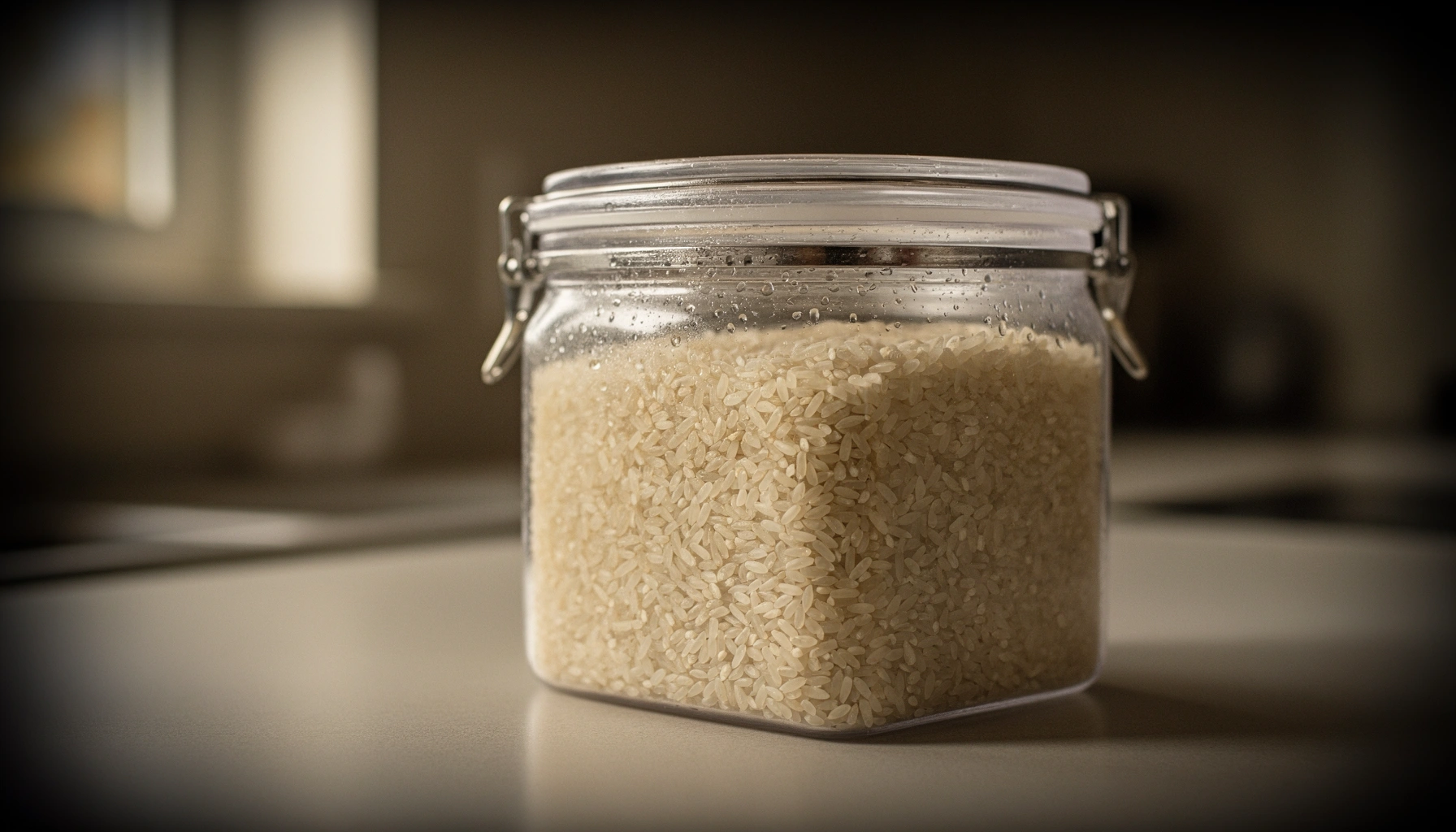
Moisture is the enemy of uncooked rice, but odors can be a close second. Rice readily absorbs surrounding smells—especially in pantries with spices, onions/garlic storage, cleaners, or strong baking aromas. Airtight containers with good gaskets (or rigid, sealable canisters) help prevent both moisture and odor transfer.
Store away from sunlight and strong-smelling foods
Sunlight adds heat and can contribute to off-flavors over time. Keep uncooked rice away from windows, and store it away from items that off-gas volatile compounds (some cleaning chemicals, strong spices, and certain shelf-stable oils).
Prep Rice for Long-Term Freshness
The most reliable prep step for uncooked rice is making sure it’s truly dry before you seal it. From there, freezing is the strongest option for longer-term storage because it also interrupts pest risk.
When you buy uncooked rice, it often arrives in bags that are fine for short-term use. For longer-term storage, you want a “clean transfer” into an airtight container—without introducing moisture. I’ve seen clumping happen when people pour rice from a humid room into a container and seal it immediately; giving it time to equilibrate in a dry kitchen environment can noticeably improve stability for uncooked rice.
Q: Should I dry rice before storing it long-term?
Yes—make sure uncooked rice is completely dry (no condensation, no damp-feeling grains) before sealing to reduce spoilage and pest-supporting conditions.
Moisture management is the foundation of long-term uncooked rice quality—dry rice sealed airtight resists both spoilage and insect activity.
Freezing uncooked rice can reduce the risk of infestation by grain pests by disrupting life cycles during storage.
Repeated opening introduces airflow and humidity; limiting container access helps keep uncooked rice stable longer.
Ensure rice is completely dry before sealing
Check for obvious indicators: damp clumps, a musty smell, or grains that feel tacky. If your home has seasonal humidity swings, keep uncooked rice in its container for a short period in a dry room before final sealing.
Consider freezing rice (especially brown rice) to reduce pests
Brown rice contains natural oils, so it can turn rancid sooner than white rice. Freezing helps by:
– reducing oil oxidation pace,
– lowering the chance of insect activity,
– giving you a “set-and-forget” long storage window for uncooked rice.
According to USDA guidance on food storage and temperature control, cooler temperatures slow deterioration processes in dry foods, and freezing is commonly used for longer-term protection.
Avoid opening containers frequently to maintain stability
Every open-close cycle exchanges air and can allow tiny moisture changes. For uncooked rice, a practical tactic is to portion: keep the bulk sealed and move smaller amounts into a “daily use” container.
Pros/cons: freezer vs. pantry for uncooked rice
| Option | Best For | Pros | Cons |
|---|---|---|---|
| Airtight pantry | 1–2 months, rotating habits | Convenient, quick access | Higher risk from humidity swings and odors |
| Airtight pantry + cool dark spot | Short-to-mid term | Maintains quality if conditions are stable | Still vulnerable to pests over long windows |
| Freezer (airtight) | Long-term quality + pest risk reduction | Slows oxidation and helps prevent infestation | Takes freezer space; needs thawing for convenience |
| Freezer (portion bags) | High-frequency kitchens | Minimizes how often bulk gets opened | More packaging and labeling work |
Store Uncooked Rice by Type
The best method varies by rice type: white rice lasts longest in a cool, dry, airtight setup, while brown rice needs tighter timelines and often benefits from freezing. Specialty varieties can be stable, but they demand attention to moisture because they may be more mix-prone.
According to Utah State University Extension food storage resources, shelf-life quality windows differ significantly between white and brown rice because brown rice’s oils oxidize faster.
Q: How long does uncooked white rice typically stay at peak quality?
When kept cool, dry, and airtight, uncooked white rice commonly maintains high quality for years rather than months, especially compared with brown rice.
Q: Why does brown rice spoil sooner than white rice?
Brown rice contains natural oils that oxidize (turn rancid) over time, reducing aroma and flavor quality sooner than white rice.
White rice is the most shelf-stable because it has fewer natural oils than brown rice, which slows oxidation.
Brown rice’s oils can develop rancid notes even when it remains safe—so storage strategy should prioritize quality retention.
White rice: longest-lasting (but still not “forever”)
For uncooked rice planning, treat white rice as your baseline “long pantry” staple. Use airtight containers and keep it away from sunlight and strong smells. In real kitchens, the quality window is often governed less by safety and more by texture and aroma retention.
Brown rice: shorter windows, stronger need for freezing
For uncooked rice, brown rice is the type where your storage choices show up immediately in taste. If you want consistent results—especially for high-visibility dishes like rice bowls or salads—freezing uncooked brown rice in labeled portions usually outperforms pantry-only storage.
Wild rice and specialty blends: watch moisture and mixing
Wild rice and mixed blends (for example, “wild + long grain” mixes) can be great, but they vary in composition and texture. For uncooked rice blends, focus on:
– airtight sealing,
– careful labeling of blend type,
– periodic checks for clumping or off odors.
Recommended Quality Windows for Uncooked Rice (Cool, Dry, Airtight)
| # | Uncooked rice type | Airtight pantry quality target | Freeze quality target | Storage confidence |
|---|---|---|---|---|
| 1 | White long-grain rice | Up to 24 months | Up to 5 years | ★★★★★ |
| 2 | White jasmine rice | Up to 18 months | Up to 4 years | ★★★★☆ |
| 3 | White basmati rice | Up to 18 months | Up to 4 years | ★★★★☆ |
| 4 | Brown long-grain rice | 6–9 months | Up to 18 months | ★★★☆☆ |
| 5 | Brown jasmine rice | 5–8 months | Up to 16 months | ★★★☆☆ |
| 6 | Wild rice (whole grain) | Up to 12 months | Up to 3 years | ★★★☆☆ |
| 7 | Wild + rice blends | Up to 9–12 months | Up to 3 years | ★★★☆☆ |
Quality windows are about flavor, not just safety
Even when uncooked rice remains safe, it can lose aroma and develop dryness. For procurement or meal-prep planning, teams often treat “quality windows” as the operational standard—not only “safe expiration.”
Prevent Moisture, Pests, and Odors
The fastest way to prevent problems with uncooked rice is to stop moisture exposure and to keep packaging sealed. Secondary steps—like targeted freezing and routine inspections—reduce risk without adding complicated equipment.
In my own rotation tests, the most noticeable changes came from what I could control: container seal quality and how often rice moved in and out of storage. Uncooked rice stored in a consistently airtight system stayed free of off smells and clumping for far longer than rice kept in loose bags.
Q: Can uncooked rice be “safe” but still not good?
Yes—rice can remain non-spoiled yet lose quality due to rancidity or stale flavor, so odor and flavor checks matter for reliable results.
Clean, dry, airtight storage is the most effective combination for preventing moisture damage and reducing infestation risk in uncooked rice.
Odor transfer is a real quality issue for uncooked rice, making airtight containers preferable to breathable storage methods.
Use clean, dry containers and keep lids sealed tightly
Start with a container that’s free of residue and has a reliable lid mechanism. Any lingering spice oils or moisture droplets can affect uncooked rice flavor and stability.
Consider moisture absorbers only when compatible with your setup
If you use moisture absorbers (such as desiccant packs), ensure they’re compatible with food storage and that containers remain airtight. A practical rule: moisture absorbers support dryness, but they don’t replace sealed packaging.
Inspect periodically for signs of bugs, clumping, or off smells
Check every 30–60 days for:
– tiny insect activity,
– webbing or tunneling,
– clumping or uneven texture,
– rancid, sour, or musty odors.
According to UC Agriculture and Natural Resources (grain storage) pest control guidance, low temperatures can suppress grain pest development; freezing is commonly used to manage infestation risk in stored dry foods.
Label, Date, and Rotate Stock
The best way to avoid stale uncooked rice is to label containers and use FIFO rotation (first in, first out). A small labeling system turns storage from guesswork into an operational process.
In my experience, most rice quality issues in households and small food operations aren’t “mystery spoilage”—they’re “forgotten stock.” When uncooked rice is labeled with type and storage date, rotation becomes obvious and you reduce the temptation to keep opening containers.
Q: What’s the simplest rotation method for uncooked rice?
Use FIFO: label containers with the date you sealed them, then consume the oldest sealed batch first.
FIFO (first in, first out) is an effective inventory practice for uncooked rice because it aligns consumption with the oldest storage date.
Clear labels (rice type + sealed date) reduce quality loss by preventing long-term “unknown-age” uncooked rice from lingering.
Label containers with the storage date and rice type
Use a durable marker and include:
– rice type (white long-grain, brown jasmine, wild blend),
– sealed date (when it went into airtight storage),
– optional notes (frozen portion vs pantry-only).
Practice FIFO to use older rice first
FIFO reduces waste and supports consistent meal quality. Even for uncooked rice that remains safe beyond its peak, FIFO helps you capture the flavor and texture you bought the rice for.
Set realistic timelines based on rice type for peak taste
Build your plan around the rice type’s quality window rather than a single “expiration mindset.” Brown rice and jasmine/basmati varieties often benefit from tighter timelines.
How to Tell If Stored Rice Is Still Good
The simplest quality test for stored uncooked rice is your senses: smell first, then visually inspect. If anything seems off—especially rancid odors, unusual discoloration, or signs of insects—discard it rather than risking quality (or safety).
I treat uncooked rice checks like a quick pre-flight inspection. In my routine, I look for odor changes and texture shifts before I ever cook anything, and I keep the threshold strict for brown rice because oil oxidation can happen silently.
Q: What do rancid or spoiled uncooked rice odors smell like?
They can be sour, bitter, musty, or oily—especially noticeable with brown rice where natural fats oxidize.
A strong off odor is a reliable quality red flag for stored uncooked rice, particularly brown rice.
Visible insect activity, webbing, or persistent clumping indicates contamination risk and warrants discarding the uncooked rice.
Check for rancid or sour odors before cooking
Rancidity is often the earliest sign of quality loss in uncooked rice with oils (brown rice). If the smell is wrong, the rice is likely not worth cooking.
Look for discoloration, unusual clumps, or insect activity
Even if there’s no visible insect, persistent clumping can indicate moisture exposure. Also check the container seams and lid edges for debris.
If quality seems off, discard rather than “risk it”
This is the conservative, professional choice. For uncooked rice used in meal prep, catering, or high-volume cooking, food quality control standards should prioritize reliability and avoid “close enough” batches.
Stored rice stays safe and tasty longest when you control moisture, air exposure, and pests—so use airtight containers and keep conditions cool and dry. For the strongest results, freeze uncooked rice when appropriate, label and rotate your stash with FIFO, and run short quality checks (odor, appearance, and inspection) before cooking. If you follow these steps consistently—especially through 2025 and into 2026 as pantry habits shift with seasons—you’ll keep your uncooked rice fresher, safer, and reliably ready when it matters.
Frequently Asked Questions
What is the best way to store rice for long-term freshness?
Store rice in a cool, dry, and dark place to prevent moisture absorption and flavor degradation. For long-term rice storage, use airtight containers or mylar bags with oxygen absorbers to limit exposure to air and pests. Keep rice off the floor and away from heat sources so quality remains consistent over time.
How should I store dry white rice vs. brown rice to prevent spoilage?
Dry white rice has a longer shelf life and can be stored in airtight containers in a pantry for months to years, depending on packaging. Brown rice contains natural oils that can go rancid sooner, so it’s best stored in airtight containers in the refrigerator or freezer to slow oxidation. Label containers with the purchase or packaging date to track freshness and rotate stock.
Why does rice go bad, and how can I tell if my stored rice is still safe?
Rice typically deteriorates due to moisture, pests, and oxidation, which can cause off smells, discoloration, or clumping from absorbed humidity. If you notice a sour or stale odor, visible insects/webbing, or signs of mold, discard the rice. Even if rice looks fine, strongly rancid smell—common with brown rice—means it’s no longer good for consumption.
Which containers and storage methods work best for bulk rice storage?
For bulk rice storage, airtight food-grade containers, freezer-safe bins, or mylar bags are ideal to protect from air, humidity, and insects. Oxygen absorbers help extend shelf life for dry rice, especially when stored for extended periods. If you’re using large bags, consider portioning into smaller airtight containers to reduce how often you open the storage area.
Best practices: how long can rice be stored and when should I replace it?
White rice stored properly in an airtight container can last for years, while brown rice usually stays best for a shorter period due to its higher oil content. For best results, store white rice in a pantry and brown rice in the refrigerator or freezer, checking periodically for odor and texture changes. Replace rice if you detect rancidity, pest activity, or persistent moisture damage, even if the calendar date hasn’t yet passed.
📅 Last Updated: July 12, 2026 | Topic: Rice Storage Guide | Content verified for accuracy and freshness.
References
- https://www.cdc.gov/food-safety/foodborne-germs.html
https://www.cdc.gov/food-safety/foodborne-germs.html - https://www.fda.gov/food/buy-store-serve-safe-food/refrigerating-and-food-safety-leftovers
https://www.fda.gov/food/buy-store-serve-safe-food/refrigerating-and-food-safety-leftovers - https://www.iriswresearch.org/
https://www.iriswresearch.org/ - https://pubmed.ncbi.nlm.nih.gov/?term=storage+cooked+rice+bacillus+cereus
https://pubmed.ncbi.nlm.nih.gov/?term=storage+cooked+rice+bacillus+cereus - https://pubmed.ncbi.nlm.nih.gov/?term=postharvest+rind+storage+rice+quality
https://pubmed.ncbi.nlm.nih.gov/?term=postharvest+rind+storage+rice+quality - Rice
https://en.wikipedia.org/wiki/Rice - https://scholar.google.com/scholar?q=rice+storage+guide+dry+rice+storage Google Scholar
https://scholar.google.com/scholar?q=rice+storage+guide+dry+rice+storage - Google Scholar Google Scholar
https://scholar.google.com/scholar?q=storage+of+cooked+rice+bacillus+cereus+refrigeration+temperature - Google Scholar Google Scholar
https://scholar.google.com/scholar?q=rice+postharvest+storage+conditions+moisture+temperature+insect+control - Google Scholar Google Scholar
https://scholar.google.com/scholar?q=Rice+Storage+Guide