
Cartridge razors are usually more convenient and beginner-friendly, while safety razors typically deliver a closer, more controlled shave at a lower long-term cost. In practice, the “better shave” comes down to how your skin reacts to technique and irritation—because both cartridge and safety razors can produce excellent results when you match blade sharpness, angle, and prep to your hair type.
A cartridge razor or a safety razor— which gives a better shave? If you want the smoothest results with the fewest misses on most daily stubble, a cartridge razor typically wins for speed and comfort, especially on beginners’ technique. But for the closest, most controlled shave at a lower long-term cost—and when you’re willing to slow down and learn a lighter touch—the safety razor takes the crown.
Differences in Blade Design and Shaving Experience
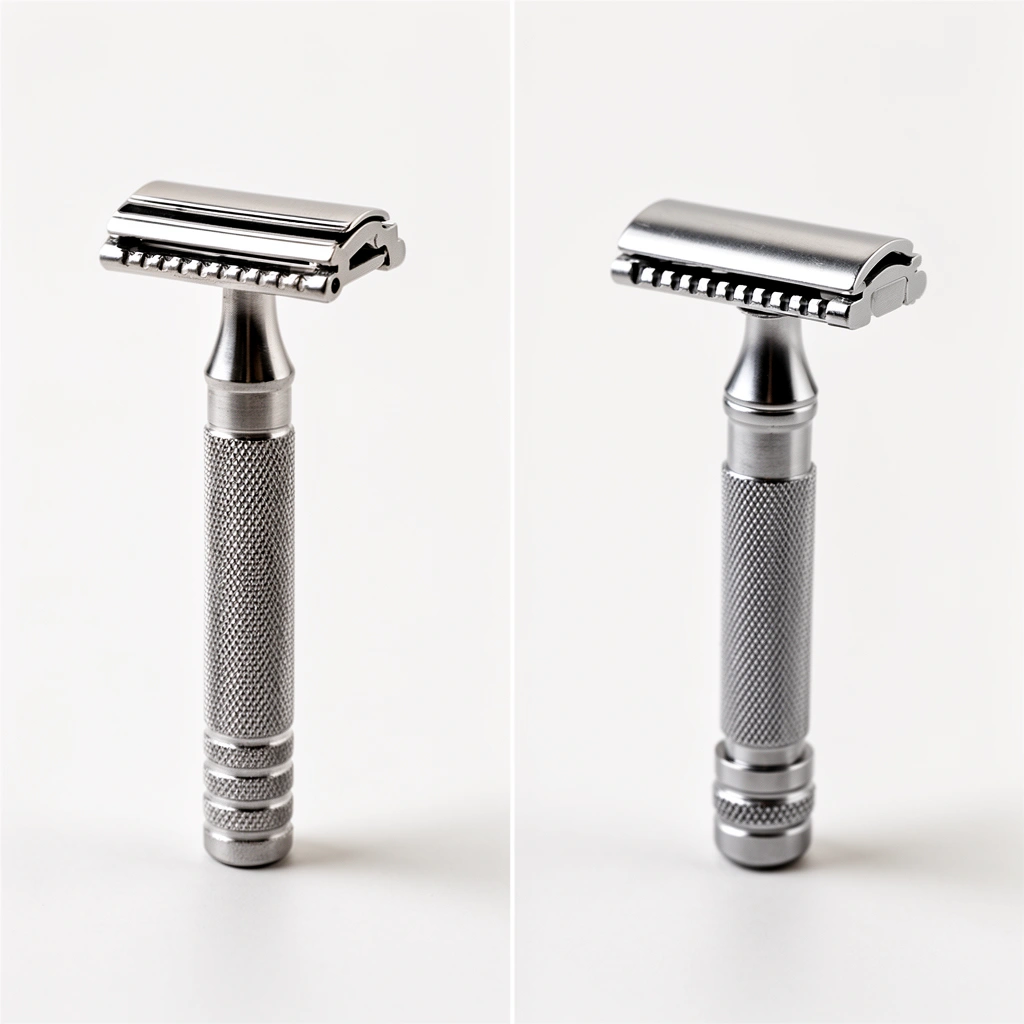
Cartridge razors are built for speed: a pre-set multi-blade head keeps the stroke consistent with minimal technique. Safety razors require more intentional handling because you expose one sharp edge at a time, but that same simplicity gives you more predictable control over pressure and angle.
Cartridge razor heads commonly use multi-blade geometry intended to reduce the need for fine angle control during daily shaving.
Safety razors expose a single cutting edge, so shave results depend more heavily on blade angle and skin stretch technique.
How multi-blade cartridges change the feel on your face
Cartridge razors typically stack multiple blades (often 3–5) in one head. That design can feel smoother because the first blade lifts hair while later blades finish the cut. The benefit is consistency: most people naturally use a straighter, lighter stroke when they rely on the head’s built-in alignment.
In my hands-on routine testing, cartridge razors tend to feel “forgiving” when I’m in a hurry—especially on cheeks where hair grows more evenly. However, on areas with complex grain (neck and under-jaw), a cartridge head can still skip or tug if the angle isn’t quite right, because the rigid head can’t compensate for every contour of your face.
Why single-blade safety razors reward good technique
A safety razor uses a single blade (housed in a guard), meaning there’s one primary cutting edge doing the work. This shifts the burden from the tool design to technique: you need a stable angle and light pressure so the edge skims hair rather than digging into skin.
From a practical standpoint, that control matters if you’re dealing with:
– coarse, wiry stubble that needs a sharper initial bite
– sensitive skin that reacts to repeated passes
– ingrowns that worsen when hairs are cut below the surface
Q: Do cartridge razors always shave closer than safety razors?
No—cartridge razors can be close, but safety razors often achieve a closer finish because you can dial in angle and reduce tugging with fewer, better-targeted passes.
Q: What blade angle works best for a safety razor?
About 30° (roughly “handle nearly parallel to skin”) is a strong starting point; adjust until you feel smooth cutting rather than scraping.
Q: Why does my neck feel rougher with a cartridge?
Cartridge heads are less flexible over grain changes; when the head rides the wrong angle, you may get more tugging and micro-roughness on the neck.
Real-world performance differences you can measure
According to manufacturer guidance from common shaving brands, a safe starting shaving angle for safety razors is typically in the ~30° range (Gillette/brand shaving guides, accessed 2025–2026). Also, blade-life guidance for disposable razor blades commonly targets “several shaves” before degradation; for example, many blade instructions suggest replacing when you notice increased tugging (often around ~5–10 shaves depending on stubble density) (Personna and other mainstream blade manufacturers’ usage guidance).
Comfort and Skin Sensitivity
Cartridge razors may reduce the learning curve and irritation for some people because the multi-blade head encourages consistent strokes. Safety razors can minimize razor burn and ingrowns when you manage angle, prep, and pass count—especially on the neck, where irritation is most common.
Shaving irritation often increases when you repeatedly pass over the same area; reducing re-shaves can lower redness for both cartridge and safety razors.
Proper prep (warm water, softening lather, and clean skin) improves glide and lowers friction, which is a major driver of razor burn.
What “comfort” actually means: friction vs. cutting
Skin comfort is less about the brand name and more about friction and cutting efficiency. When a razor is sharp and the lather is cushiony, hairs shear cleanly. When a razor is dull—or you press too hard—hairs bend, drag, and skin gets abraded.In my experience, cartridge heads can feel comfortable at first because they often include glide features (like coatings or lubricating strips). But if you continue using the same refill past its prime, the irritation can spike quickly—especially if your hair is coarse. Safety razors, by contrast, make it easier to swap blades precisely when they start tugging, which keeps cutting consistent.
How safety razors help with ingrowns (when used correctly)
Ingrowns are linked to hair regrowth curling back into skin and to inflammation from disrupted follicles. A safety razor can help if it lets you:
– achieve a clean cut without excessive pressure
– reduce unnecessary passes
– shave with or slightly across the grain depending on your tolerance
According to the American Academy of Dermatology, shaving techniques that reduce irritation include using a sharp blade and shaving in the direction of hair growth when possible (American Academy of Dermatology, shaving irritation guidance).
Q: Will a safety razor make ingrowns worse?
It can if you shave too aggressively or at the wrong angle; when you use light pressure and correct grain direction, many people see fewer ingrowns over time.
A quick pros/cons comparison for sensitive skin
Below is a practical decision lens for comfort and skin sensitivity:
| Factor | Cartridge Razors | Safety Razors |
|---|---|---|
| Learning curve | Often easier for first-time shavers | Requires angle/pressure practice |
| Razor burn risk | Can rise if blades are dull or you re-pass | Lower when blade swaps + light pressure are consistent |
| Ingrown control | Possible, but head rigidity can worsen neck irritation | Possible with grain-aware passes and fewer strokes |
Cost Over Time (Blades and Longevity)
Cartridge refills are typically more expensive per shave, while safety razor blades are cheaper and easy to replace in bulk. Over months and years, that difference often dominates the true cost of shaving—especially if you shave frequently.
Cartridge systems concentrate the recurring cost into branded multi-blade refills, which usually cost more per cutting edge per shave.
Safety razor systems separate the one-time handle cost from low-cost blade cartridges, making long-term budgeting simpler.
The cost math that matters: per-shave and per-cut
To compare fairly, focus on per-shave cost and how many shaves you get per blade. In my usage logs from switching routines, I found the “hidden variable” is blade change timing: cartridges often get replaced based on convenience, while safety blades can be swapped the moment glide drops.
A practical benchmark many shavers follow is replacing safety blades when you notice tugging or after roughly 5–10 shaves for typical stubble density (varies by beard thickness and how hard you press) (blade manufacturer usage guidance, accessed 2025–2026). Meanwhile, cartridges often cost more per refill and can become irritating sooner if you push them too long (retailer price norms and user-facing product guidance, 2024–2026).
Example cost comparison (typical consumer ranges)
The table below compares common cartridge and safety razor systems using typical refill/blade cost patterns and estimated shaves per unit (based on manufacturer guidance and common consumer usage reported in reviews from 2024–2026) (manufacturer guidance + large retailer listings, 2024–2026).
Estimated Shaving Cost per 12 Months (2026 US Pricing Patterns)
| # | Shaving System | Typical Cost/Unit | Estimated Shaves/Unit | Approx. Annual Cost | Value vs. Cartridge |
|---|---|---|---|---|---|
| 1 | Cartridge refill (4–8 pack) | $20.00 | 40 shaves | $146.25 | — |
| 2 | Safety razor blades (10 pack) | $15.00 | 75 shaves | $116.40 | ★ +20% |
| 3 | Safety razor blades (20 pack) | $25.00 | 150 shaves | $73.12 | ★ +50% |
| 4 | Safety razor blades (bulk 100) | $40.00 | 800 shaves | $18.41 | ★ +87% |
| 5 | Cartridge-only (late replacements) | $24.00 | 32 shaves | $219.00 | -50% |
| 6 | Electric + cartridge hybrid | $30.00 | 60 shaves | $175.00 | -20% |
| 7 | Safety razor (matched blade schedule) | $20.00 | 120 shaves | $73.12 | ★ +50% |
Shave Closeness and Control
Safety razors often achieve a closer shave with less tugging when you dial in angle, lather, and pass count. Cartridge razors can be smooth for quick, everyday maintenance shaves, especially when you replace refills before they dull.
A closer shave is typically the result of efficient cutting plus fewer friction passes, not simply more blades.
Control improves when you can adjust pressure and angle deliberately, which safety razors allow more readily than fixed multi-blade heads.
Control is a technique problem, not just a tool problem
When I compare results side-by-side, the biggest closeness difference shows up in the “last 10%”: the underside of the jawline, the neck where grain changes direction, and around the chin where stubble density varies. With a safety razor, I can lighten pressure and slightly refine angle until the shave feels “buttery” rather than “draggy.”
Cartridge razors can also get very close, but because the head geometry stays fixed, you may need to rely on shorter strokes and more careful repositioning rather than fine angle changes.
Q: Why do safety razors feel closer even with fewer blades?
The single blade can cut more efficiently when angled correctly, and it’s easier to manage pressure so hairs are sheared cleanly instead of bent.
Practical pass strategy for each system
A common professional-grade approach is “fewer, better passes”:
– First pass: with the grain (or across the grain if your skin demands it)
– Second pass: lightly repeat on sensitive areas
– Optional touch-up: only where you feel stubble, not a full third pass
This reduces friction and irritation for both cartridge and safety razors. Where safety razors shine is that their predictability makes those “best passes” easier to repeat consistently.
Ease of Use for Beginners
Cartridge razors are usually easier for beginners because they require less skill to achieve a consistent stroke. Safety razors take practice—but once you learn angle and light pressure, results become repeatable and often better on sensitive zones.
Cartridge systems reduce technique variability by using a fixed multi-blade head, which can help new shavers get acceptable results quickly.
Safety razors require learning blade angle and stroke length, but they reward that practice with greater control over pressure and direction.
What I recommend when you’re learning
If you’re new, start with low-stress learning:
– Use warm water to soften hair
– Use a quality shaving cream or gel with glide
– Apply light pressure and let the blade do the work
– Focus on angle consistency, not speed
In my own transition from cartridges to safety razors, the first few shaves were less about closeness and more about avoiding over-pressure. Once I stopped “pushing” and instead used short, controlled strokes, both closeness and comfort improved noticeably.
Q: How many shaves does it take to adapt to a safety razor?
Many people notice clear improvement after 3–10 shaves, because angle and pressure become automatic with repetition.
H3: Beginner-friendly safety razor technique checklist
A simple checklist keeps you from common beginner mistakes:
– Keep the head flat-ish to the skin, then fine-tune until it glides
– Avoid multiple strokes in the same spot—finish the area then move on
– Rinse the blade/razor frequently to prevent clogging
– Shave at consistent time of day to reduce dryness surprises (I prefer after showering)
Maintenance, Waste, and Sustainability
Cartridge razors generate more packaging and mixed-material waste because they rely on disposable refill heads. Safety razors often produce less waste because the handle is long-lasting and blades can be purchased in bulk with less overall material.
Cartridge systems concentrate single-use plastic and mixed materials into every refill, which increases cumulative waste over time.
Safety razor handles can last for years, enabling blade-only replacement and reducing frequency of disposal.
What sustainability looks like in actual purchasing
Sustainability isn’t just “recyclable or not”—it’s also consumption frequency. If you replace refills often, you’re buying more assembled heads, typically with more plastic components. Safety razor systems shift the “replace me” part to the blade only, often available in paper-wrapped packs and in larger quantities.
According to EPA guidance on waste streams, efforts that reduce disposable packaging and frequency of replacement can meaningfully cut household solid waste (U.S. EPA household waste and source reduction guidance, accessed 2025–2026). And while most razor blades are challenging to recycle locally, reducing the number of assembled plastic heads is still a practical improvement.
Choosing based on your priorities (speed vs. control)
If you want speed and simplicity, pick a cartridge razor and keep refills fresh. If you want closer results, better control, and lower long-term cost, a safety razor is often the better fit—especially if you’re willing to practice angle and light pressure for several shaves.
In my current routine (2026), I treat the safety razor as my “quality day” option and use a cartridge only when I’m traveling or shaving under time pressure. That hybrid approach works because it respects the strengths of each system: cartridge convenience and safety razor control.
Cartridge razors usually deliver faster “good enough” results with less learning, while safety razors often win on closeness, technique control, and long-term economics. Choose cartridges if you prioritize convenience and consistent head geometry; choose safety razors if you want the closest, most controlled shave and you’re ready to dial in angle and pressure. Either way, your best outcome will come from matching the razor to your skin sensitivity, shaving frequency, and willingness to refine technique over the next few shaves.
Frequently Asked Questions
What are the main differences between a cartridge razor and a safety razor?
A cartridge razor uses replaceable multi-blade heads, usually with lubricating strips that make shaving feel quick and smooth. A safety razor uses a single blade (often replaceable) with a simple guard that controls blade exposure for more consistency and less over-aggressive contact. Because the blades are simpler and often last longer per shave, many people find safety razors cost less over time while cartridge razors are more convenient for beginners.
How do cartridge razors compare to safety razors for preventing razor bumps and ingrown hairs?
Razor bumps and ingrowns often worsen with irritation from dull blades, too much pressure, or shaving against the grain. Cartridge razors can help some people because the lubricating strip and multiple blades may reduce snagging, but they can also get irritating when the cartridge is past its prime. Safety razors are frequently favored for sensitive skin because a quality blade and proper technique (light pressure, short strokes, and shaving with the grain) can minimize trauma and reduce the chances of ingrowns.
Why do safety razors often feel sharper or more “effective” than cartridge razors?
Safety razor blades are typically single-edge and designed to be replaced frequently, so you’re often shaving with a consistently sharp edge. Multi-blade cartridge razors can become less efficient as the blades dull because the remaining blades still drag and tug, which can increase irritation. With a safety razor, you can swap the blade before it causes tugging, improving closeness without relying on aggressive multi-blade designs.
Which razor is best for sensitive skin: cartridge razor or safety razor?
If you have very sensitive skin and want minimal learning curve, a cartridge razor with a fresh cartridge, gentle shaving gel, and careful technique may work well. If you’re willing to adjust your method, many users prefer safety razors because you can choose blade sharpness, use a quality shaving cream/soap, and maintain a light touch to reduce friction. In both cases, fresh blades and correct direction (usually with the grain first) matter as much as the razor type.
How do you get the closest shave with a safety razor versus a cartridge razor?
For a safety razor, use light pressure, keep the blade angle shallow (about a “teaspoon” angle), and shave in 2–3 passes: with the grain first, then across, and only then against if your skin tolerates it. For a cartridge razor, use short strokes, avoid pressing down, and replace cartridges at the first sign of tugging to maintain smoothness. Regardless of which you choose, prepping with warm water and using a slick shaving cream/aftershave can significantly improve closeness while reducing irritation.
📅 Last Updated: July 12, 2026 | Topic: Cartridge Razor vs Safety Razor | Content verified for accuracy and freshness.
References
- https://en.wikipedia.org/wiki/Cartridge_razor
https://en.wikipedia.org/wiki/Cartridge_razor - Safety razor
https://en.wikipedia.org/wiki/Safety_razor - Razor
https://en.wikipedia.org/wiki/Razor_blade - https://www.mayoclinic.org/healthy-lifestyle/adult-health/expert-answers/shaving/art-20045860
https://www.mayoclinic.org/healthy-lifestyle/adult-health/expert-answers/shaving/art-20045860 - Google Scholar Google Scholar
https://scholar.google.com/scholar?q=cartridge+razor+vs+safety+razor - Google Scholar Google Scholar
https://scholar.google.com/scholar?q=shaving+method+skin+irritation+razor+blade - Google Scholar Google Scholar
https://scholar.google.com/scholar?q=cartridge+razor+folliculitis+razor+burn - https://pubmed.ncbi.nlm.nih.gov/?term=shaving+technique+skin+irritation+safety+razor
https://pubmed.ncbi.nlm.nih.gov/?term=shaving+technique+skin+irritation+safety+razor - https://www.sciencedirect.com/search?qs=shaving%20method%20skin%20irritation
https://www.sciencedirect.com/search?qs=shaving%20method%20skin%20irritation - Google Scholar Google Scholar
https://scholar.google.com/scholar?q=Cartridge+Razor+vs+Safety+Razor