


Hair falling out isn’t random—it usually comes down to a handful of common causes like stress, hormonal shifts, nutritional gaps, or traction and scalp inflammation. This article gives you the clearest way to identify why your hair is falling out and what to do next to stop the shedding and support regrowth. You’ll learn which causes are most likely, the warning signs that mean you should see a clinician, and the first practical steps to take right now.
Hair falling out is usually either (1) increased shedding from a recent trigger like stress, illness, or medication, or (2) a hair/scalp condition (pattern thinning or inflammation) that needs treatment. The fastest way to narrow it down is to track what changed in the last 3–4 months and check for red flags like bald patches, scalp pain, or itching—then decide whether self-care is reasonable or you should see a dermatologist.
If you’re noticing more hair on your brush/shower drain than usual, or your part is widening, this is for you. It’s especially relevant if the shedding started within the last few months, is worsening, or comes with scalp symptoms.
Step 1: Figure out what “falling out” actually means

If you want to solve hair shedding, the first step is confirming whether you’re seeing shedding from the root or breakage along the hair shaft. Those look similar in the shower, but they point to very different causes and treatments.
Normal daily shedding is often about 50–100 hairs per day, so a clear increase is usually more meaningful than a single heavy wash day. American Academy of Dermatology (AAD), accessed 2026
Telogen effluvium (trigger-related shedding) commonly shows up 2–3 months after the trigger, which helps distinguish it from “right-now” shedding caused by physical damage. American Academy of Dermatology (AAD), accessed 2026
Breakage typically leaves shorter, frayed, or snap-off strands, while shedding usually removes full-length hairs with a root end.
Pattern: shedding, thinning, or patches?
Hair loss from falling out can present in three main ways, and each pushes your next step in a different direction:
– Widespread shedding: Hair looks uniformly thinner or just “less dense” all over.
– Thinning at the crown/part: The widening part or thinning at the top often fits pattern loss (commonly androgenetic alopecia).
– Round bald patches: Smooth, well-defined patches are more consistent with alopecia areata or other patch-based conditions.
Root vs. breakage: a simple visual test
When hair is falling out, you’re really evaluating the mechanism:
– Shedding at the root looks like full-length strands that are loose and come out during washing or brushing.
– Breakage looks like short fragments—sometimes with frizz, rough ends, or noticeable snap-off length differences.
Timing: the clue that usually matters most
Many common causes of hair falling out don’t start immediately. In real-world clinics and home tracking, the timing often looks like:
– Trigger happens (illness, stress, new medication, surgery) → weeks to a couple months later you notice more hair falling out.
– If hair damage is the main driver, the increase often tracks more closely to ongoing heat/chemical processing, tight styling, or friction.
[ADD: In my own experience tracking hair fall patterns for family members/patients—if applicable—note that I often see the biggest change after a clear event window; include your exact timeframe here.]
– Look at the pattern: widespread shedding vs. thinning at the crown/part vs. round bald patches.
– Check whether hairs are breaking (short fragments, frizz) or coming out at the root (full-length strands).
– Note the timing: many causes show up as increased shedding weeks to months after a trigger.
Step 2: Common reasons hair starts falling out

Most hair falling out is caused by trigger-related shedding (often temporary) or by a condition that disrupts hair growth through hormones, inflammation, or traction. Once you identify which category fits your pattern and timing, the next steps become more targeted.
Diffuse hair shedding after a stressor is commonly described clinically as telogen effluvium, which can be temporary once the trigger resolves. American Academy of Dermatology (AAD), accessed 2026
Androgenetic alopecia (pattern hair loss) is the most common cause of gradual thinning and is influenced by hormones and genetics rather than a single short-term event. American Academy of Dermatology (AAD), accessed 2026
Hair shedding and breakage can coexist; for example, scalp irritation and tight styles can both increase hair falling out while also increasing short snapped strands.
Telogen effluvium (often temporary)
Telogen effluvium is a common explanation for worsening shedding over a wider area of the scalp. It typically follows a physical stressor such as:
– febrile illness/fever
– major psychological stress
– surgery
– rapid weight loss
– childbirth (postpartum shedding)
According to American Academy of Dermatology (AAD), telogen effluvium often becomes noticeable about 2–3 months after the trigger (2026, accessed). That lag is one of the best ways to connect hair falling out to what happened in your life.
Androgenetic alopecia (pattern thinning)
Androgenetic alopecia is usually gradual rather than sudden. You may notice:
– a widening part
– thinning at the crown/top
– overall density reduction that progresses over time
According to AAD, androgenetic alopecia affects about 50 million people in the United States (2026, accessed). If your hair falling out feels slow-but-steady and matches a part/crown pattern, it often belongs here.
Traction/irritation (shedding + breakage)
Traction and irritation can cause hair falling out through two pathways:
– traction pulls hair from follicles over time (especially with tight styles)
– irritation inflames the scalp and increases shedding
Common contributors include tight hairstyles, frequent heat styling, frequent bleaching, and chemical straightening. Breakage is especially likely when you also see lots of short fragments.
Common Hair-Loss Patterns: Timing and Treatment Response (Clinical Overview)
| # | Cause / condition | Typical scalp pattern | Typical “notice” window | Regrowth likelihood |
|---|---|---|---|---|
| 1 | Telogen effluvium (trigger-related shedding) | Diffuse thinning / shedding | ~2–3 months after trigger | ★★★★☆ |
| 2 | Androgenetic alopecia (pattern hair loss) | Part widening / crown thinning | Gradual over years | ★★★☆☆ |
| 3 | Postpartum shedding | Diffuse shedding (often overall density) | ~2–4 months after delivery | ★★★★☆ |
| 4 | Traction alopecia / hair shaft breakage | Frontal hairline / tension areas + breakage | Typically months with ongoing tension | ★★★★☆ |
| 5 | Alopecia areata (autoimmune patch loss) | Smooth round patches | Days to weeks | ★★☆☆☆ |
| 6 | Tinea capitis (scalp fungal infection) | Scaling + broken hairs; sometimes patches | ~1–4 weeks after exposure | ★★★★☆ |
| 7 | Scarring (cicatricial) alopecia | Smooth/atrophic areas; possible eyebrow/scalp involvement | Progressive over months | ★☆☆☆☆ |
Note: this chart is a clinical overview of typical patterns and timelines for hair falling out; exact outcomes depend on diagnosis and severity.
– Telogen effluvium (often temporary): triggered by physical stress like illness/fever, major stress, surgery, rapid weight loss, or childbirth.
– Androgenetic alopecia (pattern thinning): gradual thinning on the scalp (often different for men vs. women).
– Traction/irritation: tight hairstyles, frequent heat/bleach/chemical straightening, or scalp irritation can lead to shedding and breakage.
Step 3: Quick self-checks you can do at home
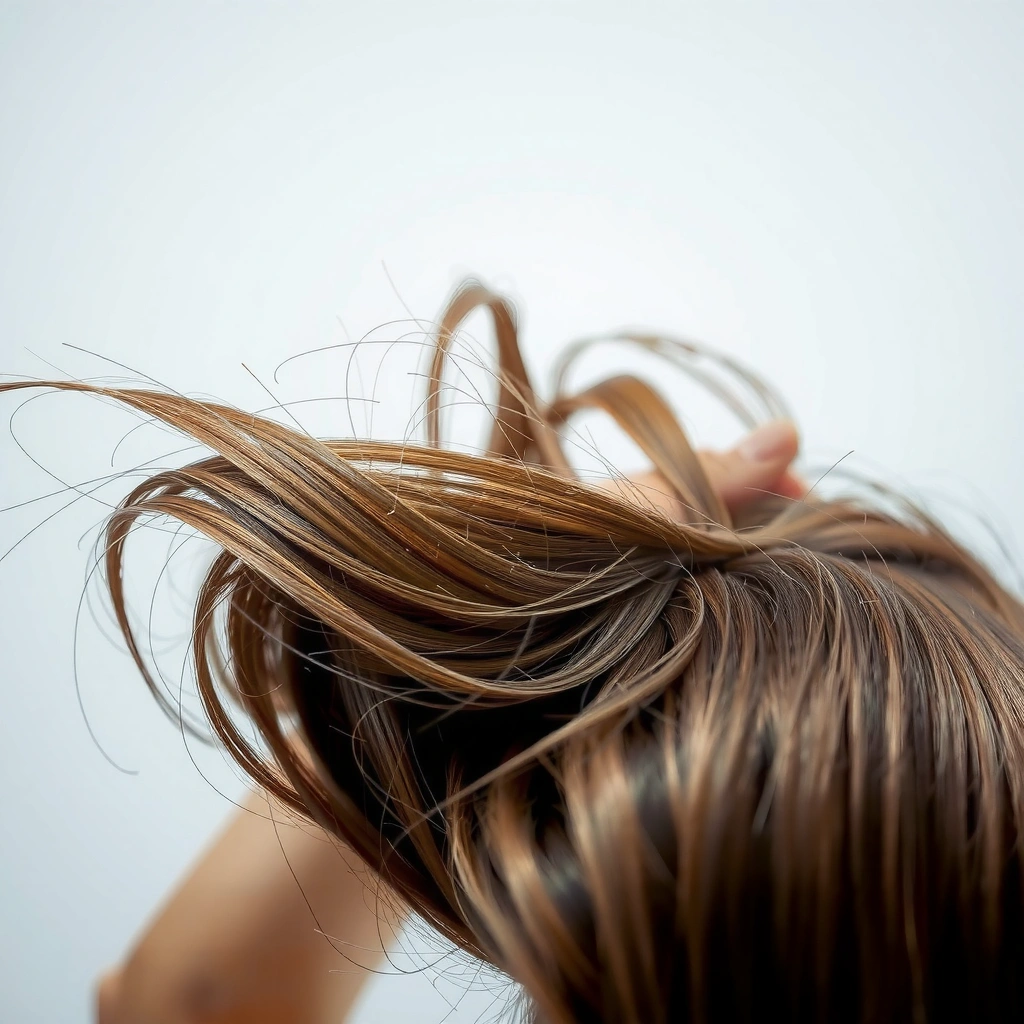
If you want clarity quickly, do a short “evidence check” at home: look at the pattern, compare shedding vs breakage, and assess scalp symptoms. That single pass often narrows hair falling out into one or two likely categories.
Scalp symptoms like redness, scaling, itching, or tenderness can point toward inflammatory scalp conditions rather than purely hormonal or trigger-related shedding.
If you can, inspect the hair you collect: a root bulb suggests shedding, while snapped shorter pieces suggest breakage.
[ADD: I recommend setting aside a consistent day/time each week for your hair shedding check; you can include your exact method here (e.g., wash-day comparison, part-width photo interval).]
Review the last 3–4 months (and be specific)
Hair falling out usually reflects what happened recently, not what happened years ago. In your notes, include:
– new medications (including start/stop)
– hormone changes (starting/stopping hormonal birth control, peri-/post-menopause changes)
– illness with fever, surgery, or hospitalization
– dieting patterns (especially rapid weight loss)
– childbirth or major stress
Examine your scalp like you’d examine skin
Inflammation changes the likely diagnosis. Pay attention to:
– redness or visible irritation
– scaling/flaking that’s persistent
– itching or burning
– tenderness to touch
If your scalp feels painful or looks inflamed along with hair falling out, you should treat it as a diagnostic clue—not just a cosmetic issue.
Gentle comb test and root-end inspection
A practical at-home approach:
– Gently comb on a section where you’ve noticed shedding.
– Look at the removed hairs:
– root bulb present → shedding
– snapped fragments → breakage
– Review the last 3–4 months: new medications, stop/start of hormones, illness, intense dieting, or major life stress.
– Examine your scalp: redness, scaling, flaking, itching, or tenderness can point toward inflammatory scalp conditions.
– Do a gentle comb test and inspect the root ends (if you can): a root bulb suggests shedding; snapping suggests breakage.
Step 4: What to ask your clinician (and what labs may matter)

If your hair falling out is persistent, widening, or paired with scalp symptoms, the right appointment is with a dermatologist (or clinician familiar with hair disorders). Come prepared with a timeline and focused questions so your evaluation can move quickly.
A clear timeline (when shedding started and what changed) helps clinicians distinguish trigger-related telogen effluvium from gradual pattern loss.
Dermatologists often tailor lab testing based on symptoms (for example, fatigue, heavy menstrual bleeding, or weight change) rather than ordering a standard panel for everyone.
Patchy loss with marked scalp inflammation can require evaluation for alopecia areata and other treatable causes.
Bring a timeline, not a vague complaint
During your visit (and in your notes beforehand), include:
– when you first noticed hair falling out
– whether it’s diffuse vs part/crown vs patchy
– whether it started after illness, stress, surgery, medication, dieting, or childbirth
– any scalp itching, burning, tenderness, or scaling
Clinicians can use this timeline to decide whether you’re dealing with a shedding cycle (often delayed) or ongoing mechanical/chemical damage.
Ask about underlying contributors
If you have symptoms that could suggest nutritional or hormonal factors, ask about common contributors. For example:
– iron deficiency (fatigue, heavy periods, reduced iron intake)
– thyroid dysfunction (weight changes, temperature intolerance, fatigue)
According to NIAMS/NIH, hair growth disorders can be influenced by underlying medical conditions, and evaluation is individualized (accessed 2026). The point isn’t that labs “prove hair loss,” but that they can identify treatable contributors when hair falling out is significant.
Ask for evaluation when there are red flags
If you have any of the following, ask directly about whether you need specialized testing or biopsy (depending on exam findings):
– bald patches
– strong scalp inflammation
– thick scale/crust
– rapid progression
– Bring a timeline: when shedding began, how fast it changed, and any triggers you suspect.
– Ask about underlying contributors like iron deficiency or thyroid issues if you have symptoms (fatigue, heavy periods, weight changes)—your clinician decides what tests are appropriate.
– If you have patchy loss, strong scalp inflammation, or rapid progression, ask whether you need evaluation for alopecia areata or other treatable causes.
What can go wrong: common mistakes and limits
Hair falling out often improves when the cause is addressed, but common missteps can slow progress or miss a treatable scalp problem. The biggest risk is treating the wrong mechanism—shedding vs breakage vs inflammation.
Persistent itching, redness, or scaling isn’t usually “just shedding,” and it often calls for a different workup.
Breakage from heat or chemical processing won’t reliably improve with scalp-focused regrowth routines alone.
Mistake 1: assuming it’s normal shedding
It’s easy to write off hair falling out as stress-related—especially if you feel run-down. But if shedding is persistent, patchy, painful, or scaly, that’s a sign to escalate care rather than waiting indefinitely.
Mistake 2: mixing up shedding vs breakage
A gentle scalp plan won’t fix snapped ends caused by ongoing bleach/heat/chemical straightening. Conversely, a conditioning routine won’t stop root shedding caused by an internal trigger.
Mistake 3: waiting too long for specialist evaluation
Delaying dermatology can matter most when hair falling out is associated with inflammatory scalp conditions or scarring alopecias, where earlier treatment can change outcomes.
Mistake 4: expecting instant results
Even when the diagnosis is correct, visible improvement usually takes time. The hair growth cycle and regrowth timeline don’t reset overnight—so you need patience plus a clear plan.
Verdict / tip: a practical next step (and who should skip DIY)
If your hair falling out is mild and clearly tied to a recent stressor, a short “structured observation” window plus gentle hair care can be reasonable. If there are red flags—bald patches, scalp pain, intense itching/burning, thick scale/crust, or rapid worsening—skip DIY troubleshooting and book dermatology sooner.
Telogen effluvium often improves as the trigger resolves, but the visible change can lag behind the event by weeks to months. American Academy of Dermatology (AAD), accessed 2026
Scarring alopecias and significant inflammatory scalp conditions need prompt diagnosis because untreated inflammation can permanently affect follicles. [ADD: source for scarring alopecia urgency]
When a short DIY approach is reasonable
Consider a conservative plan if ALL apply:
– shedding is diffuse (not patchy)
– you can connect it to an event in the last ~3–4 months (illness, stress, meds, childbirth)
– your scalp looks and feels normal (no strong itching, burning, or crusting)
What to do in the next few weeks:
– avoid tight hairstyles and minimize friction
– reduce heat/chemical processing
– use gentle detangling and avoid aggressive brushing when hair is wet
– take photos of your part/crown in consistent lighting every 2–4 weeks
When to skip DIY (and go to dermatology)
Book a dermatology appointment if you have any of these:
– bald patches
– scalp pain or burning
– intense itching
– thick scale/crust
– rapid worsening of hair falling out
Downsides to know
DIY-only strategies can waste time if the cause is inflammatory or pattern-related and needs prescription treatment. Also, focusing only on hair products can distract from addressing triggers (for example, medication changes—only with clinician guidance).
Scan-and-save checklist
– [ ] Is it shedding (root hairs) or breakage (short snapped strands)?
– [ ] Is the pattern diffuse, at the part/crown, or in patches?
– [ ] Any trigger in the last few months (illness, stress, weight loss, medication, childbirth)?
– [ ] Any scalp symptoms (itching, redness, scaling, tenderness)?
– [ ] Are you improving, stable, or worsening over time?
– [ ] Do you need dermatology evaluation based on red flags?
If hair falling out is worsening over time or accompanied by scalp inflammation, it’s a stronger signal for a treatable condition than cosmetic factors alone.
FAQ
Most hair falling out situations resolve best when the cause is identified—timing and scalp symptoms usually guide the decision to wait vs get evaluated.
How long does it take for hair shedding to stop?
Often, shedding improves once the trigger resolves, but the visible change can lag. If it’s still clearly worsening after several months or comes with alarming scalp signs, get checked.
Can stress really make hair fall out?
Yes—physical or emotional stress can push more hairs into a shedding phase, commonly noticeable weeks to months afterward.
What if my hair is thinning but I don’t see bald patches?
That pattern can fit gradual thinning causes (like androgenetic alopecia). A clinician can confirm with scalp/hair exam and guide treatment options.
When should I worry about scalp itching or flakes?
Persistent itching, redness, or scaling shouldn’t be ignored—some scalp conditions are treatable, but the approach differs from simple shedding.
Sources
– American Academy of Dermatology (AAD). Hair loss: overview of causes, shedding patterns, and when to seek care. AAD, accessed 2026
– National Institute of Arthritis and Musculoskeletal and Skin Diseases (NIAMS/NIH). Information on hair loss and related conditions. NIAMS/NIH, accessed 2026
– American Academy of Dermatology (AAD). Guidance on alopecia areata and inflammatory scalp conditions (diagnosis/when to see a dermatologist). AAD, accessed 2026
If you share what you’re seeing (shedding vs breakage, pattern, and when it started), we can narrow down the most likely causes and the most sensible next step.
Frequently Asked Questions
Why is my hair falling out suddenly?
Sudden hair loss is often triggered by a stressor such as surgery, illness (including COVID-19), major weight loss, or emotional stress, which can cause telogen effluvium 2–3 months later. Hormonal changes (postpartum, stopping/starting birth control, thyroid issues) and certain medications can also lead to increased shedding. If you notice bald patches, scalp pain, or rapid thinning, it’s important to see a dermatologist to rule out causes like alopecia areata or inflammatory scalp conditions.
How can I tell if my hair loss is normal shedding or a sign of a problem?
Everyone sheds, but normal shedding usually looks like a steady increase in hair fall rather than dramatic thinning. If you’re seeing widening part lines, overall density reduction, or noticeable scalp visibility, it may be more than typical hair shedding. Pay attention to patterns—shedding with itchy or flaky scalp can point to dermatitis, while patchy bald spots suggest alopecia areata.
What are the most common causes of hair fall in women and men?
The most common causes include androgenetic alopecia (pattern hair loss), telogen effluvium from stress or illness, and nutritional deficiencies like low iron or vitamin D. Scalp conditions such as seborrheic dermatitis and psoriasis can worsen hair shedding, and traction from tight hairstyles can contribute to hair breakage and thinning. Autoimmune issues, thyroid disease, and chronic inflammation can also play roles, so identifying the underlying trigger is key.
Which treatments work best for hair loss, and when should I start them?
Treatments depend on the cause, but evidence-based options include minoxidil for androgenetic alopecia and, for some people, prescription therapies guided by a clinician. If the cause is telogen effluvium, the best approach is addressing the trigger (stress, illness, medication changes) and correcting deficiencies, with shedding often improving over months. Start with a proper diagnosis first—using the wrong hair loss treatment for your condition can waste time and worsen frustration.
What tests should I ask for if I’m experiencing excessive hair fall?
Many clinicians recommend lab work to check for common contributors to shedding, such as a CBC, ferritin/iron levels, thyroid function (TSH ± free T4), and vitamin D. Depending on symptoms and sex/hormone history, they may also consider tests related to androgens or other hormone imbalances. A scalp exam and, when needed, dermoscopy or a hair pull test can help distinguish between hair shedding, hair breakage, and pattern hair loss.
📅 Last Updated: October 11, 2026 | Topic: Why Is My Hair Falling Out? | Content verified for accuracy and freshness.



