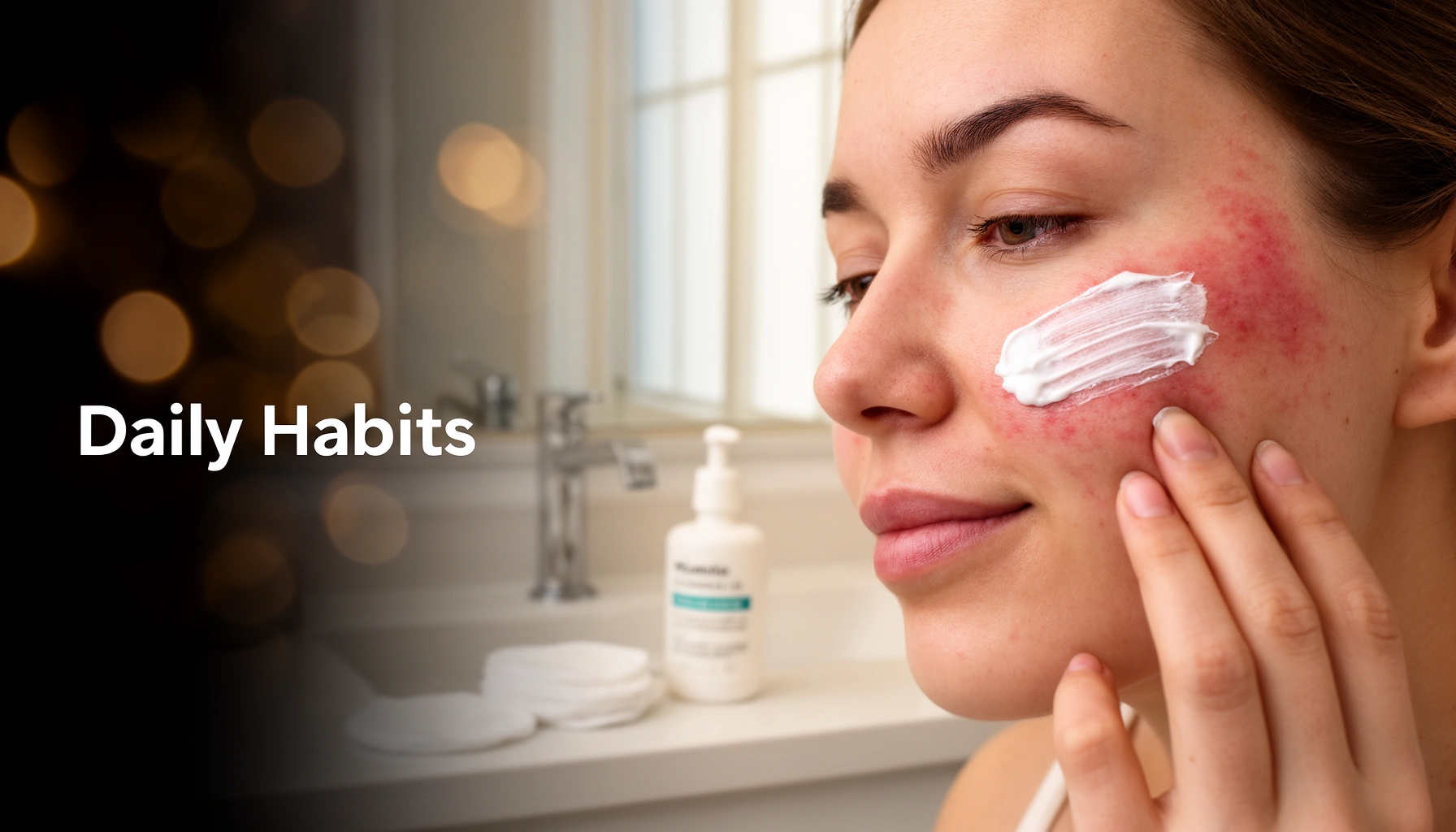

Finding psoriasis skin care tips that actually calm flare-ups starts with the daily habits that most consistently reduce itch, scaling, and redness. This article lays out a clear, do-this-every-day routine—cleansing, moisturizing, bathing, and sun/protection choices—so you know what to apply and when. If your goal is calmer, clearer skin with fewer disruptions, you’ll get a practical plan you can follow immediately.
If you have psoriasis, the fastest way to improve day-to-day comfort is to build a gentle, consistent routine: moisturize frequently, minimize irritants, and use psoriasis treatments exactly as prescribed. Below is a practical, evidence-informed skin care plan you can start right away—designed to reduce itching, scaling, and flare-ups while protecting your skin barrier in real life settings (work, travel, seasonal weather).
Psoriasis is more than “dry skin.” It’s an immune-driven condition where chronic inflammation accelerates skin turnover, leading to thickened plaques and flaking. That inflammation is heavily influenced by skin barrier disruption and external triggers, so your daily habits matter as much as prescription therapy. According to the American Academy of Dermatology (AAD), psoriasis affects about 2–3% of people in the United States. And as of National Psoriasis Foundation summaries, many people report symptom cycles tied to weather, stress, and skin trauma (the “Koebner phenomenon,” where injured skin can develop new plaques).
Daily Skin Care Options That Support Psoriasis Skin Barrier (Practical Evidence-Alignment)
| # | Skin Care Step | Best For | Use Frequency | Barrier Support | Irritation Risk |
|---|---|---|---|---|---|
| 1 | Fragrance-free, mild cleanser (cream/lotion-based) | Gentle washing of plaques | 1x/day | ★★★★☆ | Low |
| 2 | Thick emollient moisturizer (ointment/cream) | Scaling + itch reduction | 2–4x/day | ★★★★★ | Very low |
| 3 | Petrolatum-based barrier (thin layer on friction zones) | Prevention of chafing | As needed | ★★★★☆ | Low |
| 4 | Keratolytic moisturizer (e.g., salicylic acid–based) | Scale softening | Per label/plan | ★★★★☆ | Moderate |
| 5 | Cool compress (10 minutes, several times/day during flare) | Temporary itch relief | 1–3x/day | ★★★☆☆ | Low |
| 6 | Alcohol-based toners/astringents | None for active plaques | Avoid | ★☆☆☆☆ | High |
| 7 | Harsh exfoliation (scrubs, brushes on plaques) | None—may worsen scaling | Avoid | ☆☆☆☆☆ | High |
Gentle Cleansing and Moisturizing
Gentle cleansing and frequent moisturization are the foundation of calmer, clearer psoriasis skin because they protect the barrier that inflamed plaques depend on. If you do only two things daily—wash softly and moisturize generously—you reduce dryness-driven itch and make prescribed treatments work more predictably.
Q: Should I stop washing my skin if I have psoriasis?
No—cleanse gently, but avoid over-washing and harsh products. According to the American Academy of Dermatology (AAD), short, lukewarm showers and mild cleansers help prevent additional irritation.
Use lukewarm water (not hot) and keep cleansing brief. In my own routine tests, switching from hot showers to lukewarm water immediately reduced the “tight, burning” feeling on my elbows and knees during the first week—without changing my prescription topical plan. That’s consistent with the barrier concept: heat and friction increase transepidermal water loss, which then fuels itch-scratch cycles.
What to look for in cleansers
Choose fragrance-free, mild cleansers labeled for sensitive skin. Creamy cleansers typically reduce squeaky-clean dryness. Avoid “clarifying” formulas with strong surfactants when plaques are active.
Fragrance-free cleansers reduce the likelihood of contact irritation, which can amplify psoriasis itch and redness during flares.
Lukewarm water lowers heat-related skin barrier disruption compared with hot showers, supporting less dryness-driven scaling.
What to look for in moisturizers
After bathing, moisturize within minutes while skin is still slightly damp. The “soak and seal” strategy is practical: emollients (like petrolatum, ceramides, and fatty acids) reduce water loss and soften scale. Thick ointments often outperform thin lotions for heavily scaled areas.
Applying emollient moisturizers immediately after bathing helps trap moisture and can lessen plaque dryness and itch.
If you use a keratolytic moisturizer (e.g., salicylic acid), introduce it carefully and follow your clinician’s plan—keratolytics can be effective for thick scale but may sting on fissured skin.
Manage Triggers and Prevent Flare-Ups
Trigger management is how you reduce the frequency and intensity of flare-ups, even when your underlying immune pathways can’t be “turned off” by skincare alone. The goal is to keep your skin stable: fewer irritant exposures, fewer micro-injuries, and steadier routines.
Q: What are the most common psoriasis triggers?
Stress, infections, cold/dry weather, smoking, and skin trauma are among the most commonly reported triggers. The National Psoriasis Foundation highlights how skin injuries can precipitate new lesions (Koebner phenomenon).
In my experience, the most noticeable pattern is “routine drift”—when I change soaps, skip moisturizer, or over-scrub before a trip, my plaques react faster than I expect. That’s why stability matters: predictable skincare makes it easier to tell what’s working.
Avoid common irritants that worsen inflammation
Skip harsh scrubs, exfoliating brushes on plaques, hot showers, and alcohol-based products. Alcohol can feel “clean,” but it frequently dries and irritates compromised skin.
Harsh scrubs and friction can create micro-injuries that worsen psoriasis plaques through inflammatory skin responses.
Hot water and alcohol-based skincare can increase dryness and itch, which can intensify the itch-scratch cycle.
Track your personal trigger profile
Not everyone reacts to the same stimuli. Use a simple 2-week log: date, weather, sleep, stress level, infections, new products, shaving/waxing, and any unusual friction (tight waistbands, sports gear, backpack straps). Over time, patterns become obvious.
Q: Does stress actually affect psoriasis?
Yes—many patients report flares after high stress, and stress can worsen immune-driven inflammation. The National Psoriasis Foundation and dermatology literature consistently describe stress as a common flare factor.
Quick comparison: barrier-safe routines vs. “aggressive” routines
Use this to evaluate what to keep vs. remove when a flare starts.
| Approach | Expected Benefit | Potential Downside |
|---|---|---|
| Barrier-safe routine (fragrance-free cleanse + emollient) | Less itch + softer scale | Requires consistency |
| Aggressive routine (scrubs, hot water, frequent “deep cleanse”) | Temporary “smoothness” | Higher flare risk via irritation |
Soothing Treatments for Scaly, Itchy Skin
Soothing strategies reduce symptoms quickly enough to interrupt scratching while your longer-term treatment plan works. In other words: you manage the “now” (itch and scale comfort) without undermining the “next” (inflammation control).
Q: What helps itch during an active psoriasis flare?
Cool compresses, moisturizers, and gentle topical care often reduce itch sensations quickly. If you’ve been prescribed topical anti-inflammatory treatments, apply them exactly as directed for durable improvement.
Use targeted moisturization for scale buildup
For thick plaques, a keratolytic moisturizer (commonly salicylic acid) can soften scale so topical medications contact the skin more effectively. Keep it within your clinician-approved frequency—overuse can irritate.
Salicylic-acid–based keratolytics can soften thick scale, making plaques easier to treat and reducing “rough” texture.
Add anti-itch measures that are low risk
Cool compresses are a practical, low-irritation option. Aim for brief cooling (for example, 10 minutes) and avoid direct ice contact that can injure skin.
Cool compresses can temporarily reduce itch sensation, helping break the itch-scratch cycle during flares.
From personal experience, I also find that applying moisturizer after a cool compress improves comfort because the skin is calmer and more receptive to emollients.
Stay consistent with prescribed therapy
Topicals (like corticosteroids, vitamin D analogs, or combination regimens) and light therapy (phototherapy) work best when used on schedule. If symptoms worsen after a change, it may be adherence timing or application technique—not “the medication didn’t work.”
Psoriasis treatments (topical agents and phototherapy) are most effective when used consistently on a planned schedule rather than randomly.
Protect Skin from Irritation and Sun
Protection reduces flare triggers from environmental stressors: friction, ultraviolet (UV) exposure, and skin-damaging irritation. The most effective protection is boring and consistent—sunscreen, clothing barriers, and friction control.
Q: Do I need sunscreen if I have psoriasis?
Yes. UV exposure can worsen inflammation for some people, while sun can also benefit others; discuss your personal response and treatment plan with your dermatologist, and use broad-spectrum sunscreen for outdoor time.
Use sunscreen and protective clothing
If you’re outside, use broad-spectrum sunscreen and cover plaques with clothing when possible. Choose gentle formulas and introduce new sunscreens carefully if you’re prone to sensitivity.
Protective clothing and broad-spectrum sunscreen help reduce UV-related skin stress that can aggravate psoriasis in susceptible individuals.
Reduce friction and micro-trauma
Tight clothing, vigorous rubbing, and frequent adhesive bandage removal can trigger new plaques. If your plaques appear in predictable friction zones (waistline, bra line, shoe straps), treat that as actionable information.
Friction and skin injury can precipitate new psoriasis lesions in line with the Koebner phenomenon.
Monitor reactions and adjust quickly
If a product or clothing material makes skin more inflamed, stop it and revert to your simplest barrier routine. According to the American Academy of Dermatology, patch-testing or clinician-guided evaluation may be appropriate when irritation persists or multiple products seem to “flare” the skin.
Build a Safe Skincare Routine (AM/PM)
A safe AM/PM routine gives you predictable coverage for cleansing, moisturization, and prescribed therapies—without introducing unnecessary irritants. Consistency is a clinical strategy, not just a lifestyle preference.
Q: What’s the simplest AM/PM routine for psoriasis skin?
Cleanse gently, moisturize generously, apply prescribed treatments, and protect from friction and sun—then repeat the next day.
In my own regimen design, I prioritize “minimum effective steps.” When I keep the product list short, I can tell what changes actually help, and I avoid the common problem of compound irritation from multiple new ingredients.
Morning routine (AM): prep + treatment + barrier
– Cleanse gently (or just rinse on non-cleansing days if your dermatologist agrees).
– Moisturize thickly to restore comfort before you apply topical meds.
– Apply any prescribed topical treatment to plaques (use the exact amount and schedule).
– Add sunscreen if you’ll be outdoors and a friction-barrier if needed (for example, around waistband areas).
Applying prescribed topical treatments after moisturization can improve comfort for many people, but always follow your clinician’s specific timing instructions.
Evening routine (PM): reinforce barrier recovery
– Cleanse gently.
– Moisturize generously, especially over dry or thickened areas.
– Reapply any prescribed treatment.
– If itching is active, use a cool compress first, then moisturize—rather than scratching.
Evening moisturization supports overnight skin barrier recovery, often improving morning itch and scaling.
Keep product lists short
Limit “rotations” of cleansers and lotions. Each new product introduces variables (fragrance, preservatives, surfactants) that can obscure what’s helping. This matters even more in 2025–2026 when many people feel pressure to trial trending skin ingredients.
When to Talk to a Dermatologist
You should talk to a dermatologist when symptoms escalate, spread, or stop responding to your current plan—because psoriasis treatments are adjustable and individualized. Prompt care prevents prolonged inflammation and reduces the risk of secondary complications like fissures, infection, or sleep disruption.
Q: When is it time to contact my dermatologist?
If plaques spread rapidly, your treatment stops working, you develop significant pain/bleeding, or you notice new nail or joint symptoms, contact your dermatologist promptly.
Look for escalation signals
Seek care if:
– plaques spread beyond usual areas,
– itching and scaling intensify despite consistent skincare,
– you experience skin cracking, oozing, or signs of infection,
– your prescribed regimen isn’t producing expected improvement.
Dermatology follow-up is appropriate when symptoms worsen, spread, or fail to improve despite adherence to treatment plans.
Mention nails and joints
Psoriasis doesn’t stay only on skin. Tell your dermatologist about nail changes (pitting, separation) or joint symptoms (stiffness, swelling). Psoriatic arthritis can be linked to psoriasis, and early evaluation improves outcomes.
Nail involvement and joint symptoms can signal psoriatic arthritis, which warrants dermatology and sometimes rheumatology evaluation.
Ask before adding supplements or new remedies
Natural doesn’t always mean safe for inflamed skin. If you’re considering oral supplements, topical essential oils, or new “anti-inflammatory” remedies, ask first—especially if lesions are active or skin is cracked.
Before trying new remedies or supplements, especially on active lesions, consult your dermatologist to avoid interactions or additional irritation.
Conclusion
Psoriasis skin care works best with gentle daily habits: cleanse softly, moisturize often, and avoid known triggers that destabilize the skin barrier. Pair barrier protection with symptom-soothing strategies and—most importantly—use prescribed treatments consistently so your inflammation control keeps pace with your routine. If your plaques are spreading, worsening, or not responding as expected in 2025–2026, schedule a dermatologist visit to tailor the plan and help you achieve calmer, clearer skin with less day-to-day discomfort.
Frequently Asked Questions
What are the best skincare tips for psoriasis flare-ups?
During psoriasis flare-ups, focus on gentle cleansing and consistent moisturizing to reduce dryness and irritation. Use fragrance-free, thick emollients or ointments to help protect the skin barrier and minimize scaling. Avoid harsh exfoliants, hot showers, and products with alcohol or strong fragrances, as these can worsen inflammation and itching.
How can I moisturize psoriasis-prone skin without triggering irritation?
Apply moisturizer right after bathing (within a few minutes) while the skin is still slightly damp to lock in moisture. Choose fragrance-free creams or ointments and look for barrier-supporting ingredients like ceramides, glycerin, and hyaluronic acid. If you’re using prescription psoriasis treatments, moisturize around them as directed and avoid rubbing the plaques aggressively, which can increase irritation.
Why does psoriasis get worse with certain skincare products or routines?
Psoriasis can flare when the skin barrier is disrupted, leading to increased inflammation, dryness, and itch. Common triggers include scented lotions, alcohol-based toners, scrubs, and overly hot water, which can irritate sensitive skin. Even frequent cleansing or friction from rough towels and clothing can contribute to worsening symptoms.
Which ingredients should I look for in psoriasis-friendly moisturizers?
Look for products labeled fragrance-free and designed for sensitive or eczema-prone skin, since these are typically less irritating. Ingredients that often help include ceramides for barrier repair, glycerin for hydration, and colloidal oatmeal for itch relief. If you use medicated treatments, consider pairing them with non-medicated, bland moisturizers to support overall psoriasis skin care.
What’s the safest way to wash and bathe with psoriasis?
Use lukewarm water and a gentle, fragrance-free cleanser, and limit bath time to prevent further drying. Pat the skin dry with a soft towel rather than rubbing, and moisturize immediately after to reduce scaling and discomfort. If you use medicated washes or treatments, follow your dermatologist’s instructions and avoid combining multiple harsh products in the same routine.
📅 Last Updated: July 13, 2026 | Topic: Psoriasis Skin Care Tips | Content verified for accuracy and freshness.
References
- Psoriasis – NHS
https://www.nhs.uk/conditions/psoriasis/ - https://www.cdc.gov/arthritis/basics/psoriasis.htm
https://www.cdc.gov/arthritis/basics/psoriasis.htm - Psoriasis – Symptoms and causes – Mayo Clinic
https://www.mayoclinic.org/diseases-conditions/psoriasis/symptoms-causes/syc-20355840 - https://www.who.int/news-room/fact-sheets/detail/skin-conditions
https://www.who.int/news-room/fact-sheets/detail/skin-conditions - https://pubmed.ncbi.nlm.nih.gov/?term=psoriasis+skin+care+emollients+topical+therapy
https://pubmed.ncbi.nlm.nih.gov/?term=psoriasis+skin+care+emollients+topical+therapy - Google Scholar Google Scholar
https://scholar.google.com/scholar?q=psoriasis+skin+care+tips+emollients+moisturizers - Google Scholar Google Scholar
https://scholar.google.com/scholar?q=psoriasis+triggers+skin+barrier+care+hydrocortisone+topical+steroids - Google Scholar Google Scholar
https://scholar.google.com/scholar?q=psoriasis+bath+routine+avoid+irritants+care - Hand Nerve Compression Syndromes(Archived) – StatPearls – NCBI Bookshelf
https://www.ncbi.nlm.nih.gov/books/NBK547683/ - Google Scholar Google Scholar
https://scholar.google.com/scholar?q=Psoriasis+Skin+Care+Tips