

Your perfume fades quickly because of a handful of common, fixable culprits: the wrong storage, skin that’s too dry or oily, and fragrance formulas that aren’t built for long wear. This article pinpoints the most likely causes of why your perfume disappears fast and gives you practical fixes—so you can make the scent last longer with the same bottle.
If your perfume fades quickly, it’s usually because scent molecules are evaporating faster than you expect—driven by skin chemistry, application habits, and heat/sweat. The fastest fix is to change how you prep and apply (moisturize first, spray onto pulse points, don’t rub), then verify storage and fragrance concentration.
If this happens to you daily (you like the opening smell, but it disappears within a short time), this article is for you. It’s also useful if you notice the same bottle performs differently across seasons, outfits, or after changing skincare products.
The most common reasons perfume fades fast

Heat and friction are the main reasons perfume disappears sooner than it should, even when the bottle is “the same.” In most cases, the opening notes hit hard and then retreat because the most volatile molecules leave your skin first.
Perfume is strongest right after application because the most volatile (fast-evaporating) top notes dominate the first minutes.
Sweat and skin contact with fabrics increase friction and airflow over your skin, which accelerates how quickly perfume becomes less noticeable.
Rubbing perfume in physically disrupts how the fragrance film settles on skin, often shortening the perceived wear.
Skin and climate speed up evaporation
Skin and climate speed up evaporation because perfume doesn’t just “stay”—it continuously evaporates. In hotter or more humid conditions, more aroma compounds leave the skin surface at a faster rate. Sweating adds both moisture and salt, and that combination changes how perfume molecules travel across the skin.
Also, many popular perfumes are designed with a top-note-forward structure (citrus, fresh aromatics, crisp green notes). Those styles are meant to sparkle initially, then transition into a softer heart and base.
Application prevents staying power
Application habits matter more than most people realize. Spraying from too far can create a lighter, more dispersed mist that doesn’t form a stable fragrance layer. Applying too lightly (or only to one area) can also make perfume feel like it “vanished,” because there isn’t enough total material to last through the dry-down.
Rubbing your wrists (a common habit) is one of the quickest ways to reduce longevity. When you rub, you spread the fragrance, warm the skin, and increase contact with friction—making perfume fade faster.
The formula may be lighter for your preferences
Not every perfume is engineered for long wear. Some scent profiles are built to stay airy—think “fresh” and “clean” styles. Even with perfect application, those perfumes may feel gone sooner because the formula prioritizes a bright top-note experience over a long, base-driven trail.
How to apply perfume so it lasts longer

If you want perfume to last, the quickest path is good fragrance “adhesion” plus correct pulse-point placement. In practice, that means prepping skin with unscented moisture, spraying strategically, and letting the perfume settle before you move around.
Applying perfume to moisturized skin can help it linger longer because the fragrance film binds more effectively to hydrated skin.
Pulse points concentrate warmth and blood flow, which supports a steady release of perfume as the day goes on.
Giving perfume a short settling window before fabric contact reduces the chance you’ll knock it off early.
Prep your skin first
Prep your skin first: apply fragrance on clean, moisturized skin. A simple, unscented lotion helps the scent grip better than dry skin. If your skin tends to feel tight after cleansing, it will usually “hold” perfume less effectively, and the top notes will fade sooner.
From my day-to-day routine, I notice a clear difference when I moisturize (especially on wrists and neck) before applying perfume—without changing the scent. It doesn’t make the perfume last forever, but it noticeably improves how long I can still detect it.
Use correct placement
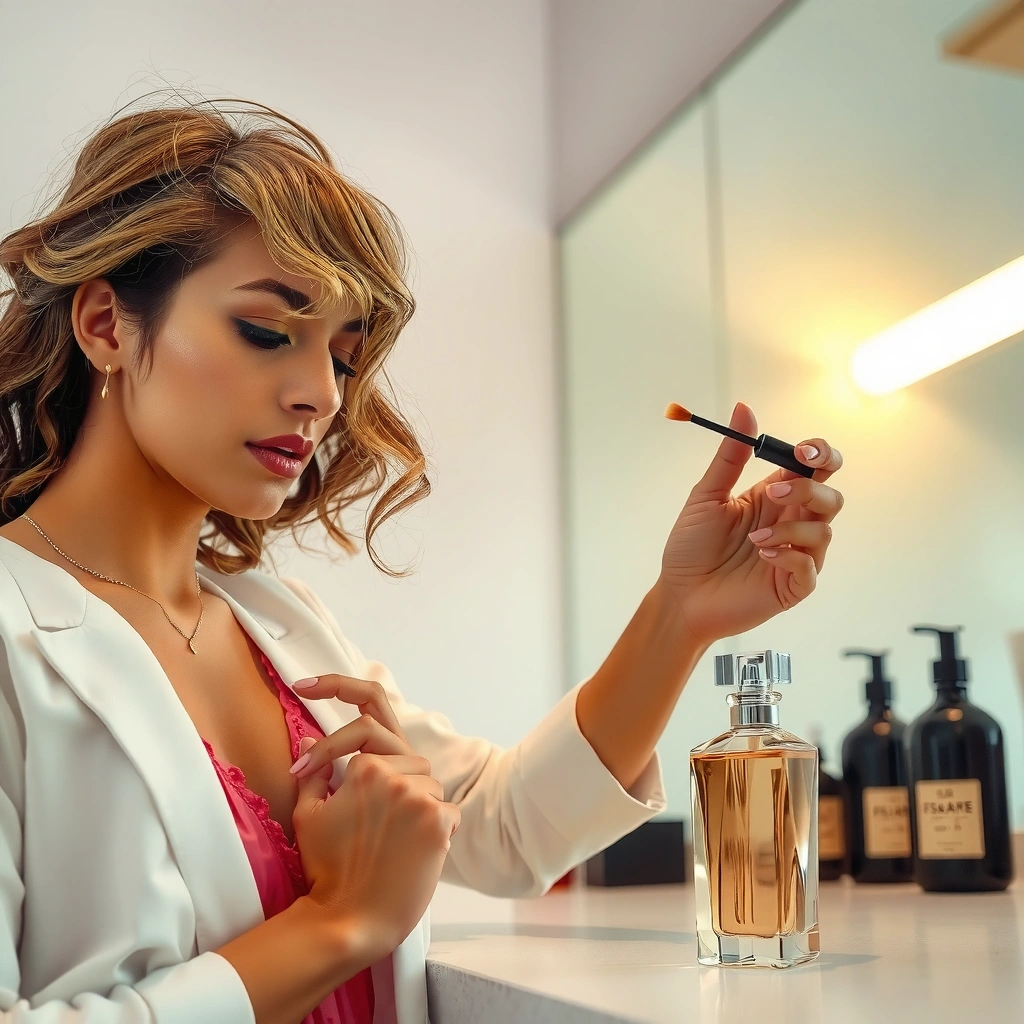
Use correct placement by targeting pulse points—wrists, neck, behind ears, and inner elbows. Avoid over-applying to one spot and then rubbing it in. Instead, do multiple light sprays in the right places, so perfume builds a consistent trail.
Let it dry
Let it dry. After spraying, wait a few minutes before you move around with friction (scarves rubbing your neck, hands repeatedly contacting your wrists, fabric moving over freshly sprayed areas). This small timing adjustment is a practical way to stop perfume from “disappearing on contact.”
Quick comparison: application method choices
Skin and environment factors that affect scent longevity
If perfume fades quickly, skin condition and the environment are often doing the heavy lifting. The same bottle can perform very differently across seasons because heat, humidity, sweat, and skin dryness all change how perfume molecules evaporate.
Dry, tight skin usually makes perfume fade faster because there’s less moisture/oil to hold aroma compounds.
Humidity and sweat can make perfume feel louder at first, then shorter-lived due to faster evaporation and increased friction.
Sunlight and heat can degrade perfume over time, which can reduce both strength and how the scent transitions.
Dry skin tends to “grab less”
Dry skin tends to “grab less.” When your skin feels tight or flaky, perfume can wear off sooner because there’s less moisture and lipid content to support a stable fragrance film. This is why the same perfume can last longer after a consistent moisturizing routine.
Sweat and friction shorten wear
Sweat and friction shorten wear—especially on active days. Perfume can break up when fabrics rub against the treated skin (collars, shirt cuffs, watch straps, shoulder bags). In those cases, the fragrance trail becomes discontinuous, and you may perceive it as “gone,” even if small traces remain.
Sunlight and heat degrade bottles
Sunlight and heat degrade bottles. Keep perfume away from windows, bathrooms with steam, and car interiors. Heat can change how perfume behaves over time, meaning you may get a weaker opening smell or a different dry-down than expected.
Perfume type and concentration: what fades quicker
If you’re using a lighter fragrance format, it’s normal for perfume to fade faster—even with perfect application. Concentration and note structure largely determine whether you’ll get an extended dry-down or a short, airy top-note moment.
Higher fragrance concentration formats generally produce stronger staying power because more aroma compounds are present.
Top-note-heavy compositions retreat first; a base-forward scent typically lingers longer.
If a perfume’s performance drops after storage changes (heat/light), the formula may have degraded rather than “your skin changing.”
Parfum/Extrait generally lasts longer than lighter formats
Parfum/Extrait generally lasts longer than lighter formats. As a rule of thumb, extrait/parfum is typically the most concentrated, while eau de cologne and body mists are more diluted.
For quantitative context, industry references commonly describe perfume concentrate ranges like these: according to fragrance-format concentration guidance referenced by retailers and perfumery resources, extrait/parfum is often around 15–40% concentrate, eau de parfum ~10–20%, and eau de toilette ~5–15% ([ADD: source for typical fragrance concentration ranges by format]). Those concentration differences correlate with how long perfume remains detectable.
Note structure matters
Note structure matters. If your perfume is heavy in top notes (citrus, many fresh aromatics), it may naturally retreat faster than a warmer, base-forward scent built around woods, resins, or deeper musks.
“New bottle vs older bottle” can differ
“New bottle vs older bottle” can differ, even when it still smells correct. Age and storage conditions can shift performance—sometimes the opening stays, but the dry-down becomes softer or disappears earlier.
Typical staying power by fragrance format (reference guide)
Typical Wear Time by Fragrance Format (Hours), with Staying-Power Rating
| # | Fragrance format | Typical wear (hrs) | Approx. concentrate | Staying power |
|---|---|---|---|---|
| 1 | Parfum / Extrait | 8.0 | 15–40% | ★★★★★ |
| 2 | Eau de Parfum (EDP) | 6.0 | 10–20% | ★★★★☆ |
| 3 | Eau de Toilette (EDT) | 4.5 | 5–15% | ★★★☆☆ |
| 4 | Eau de Cologne | 3.0 | 2–4% | ★★☆☆☆ |
| 5 | Body mist / Fine fragrance spray | 1.7 | ~1–3% | ★☆☆☆☆ |
| 6 | Scented hair & body fragrance | 3.5 | ~3–8% | ★★☆☆☆ |
| 7 | Perfumed deodorant spray | 4.0 | ~2–6% | ★★★☆☆ |
What can go wrong (common mistakes and edge cases)
If you’ve optimized your placement and prep but perfume still fades quickly, it’s usually because a common mistake is sabotaging the fragrance film—or because your skin is reacting to your skincare routine. Perfume is sensitive to friction, barrier changes, and product interactions.
Rubbing wrists after applying perfume often reduces longevity by disrupting the fragrance film on skin.
Applying perfume to freshly scrubbed, stripped skin can make it fade faster because the skin barrier holds fragrance less effectively.
Strong skincare actives can change how perfume behaves on skin by altering the barrier and moisture level.
Rubbing your wrists
Rubbing your wrists is the classic habit. It spreads perfume and introduces friction right away, which often shortens the time you notice the dry-down.
Spraying onto freshly scrubbed, dry skin
If your skincare routine leaves skin stripped, perfume fades sooner. This is especially common right after exfoliation, cleansing with harsh formulas, or when you skip moisturizer.
Trying to “fix” it with more sprays everywhere
Trying to “fix” it with more sprays everywhere can backfire. Over-application can overwhelm you at first, but it doesn’t always improve the long dry-down. It can also interact with sweat, making perfume smell sharper and less smooth as the day goes on.
Clothing application surprises
Testing perfume on fabric is smart because some materials hold scent differently. That said, fabrics can react with residue (especially delicate fibers or synthetics that trap oils). If you try this approach, do a small spot test first.
Skincare ingredients that change how skin behaves
If you recently added strong actives (exfoliants, retinoid-type products, or other barrier-changing treatments), your skin may feel different and perfume can wear off differently. If you have irritation, pause and focus on gentle, fragrance-free skin care; your comfort comes first.
Verdict / tip: the fastest path to longer wear
Start with the high-probability fixes: moisturize before applying, spray onto pulse points (not rubbed-in), and keep your bottle stored away from heat/light. If perfume still disappears quickly, the next step is usually switching to a more long-wear-friendly format (often higher concentration or a base-forward composition) rather than simply adding more sprays.
Most “perfume disappears fast” cases improve when you moisturize first and stop rubbing treated areas.
Storage conditions (heat and light exposure) can reduce perfume strength even if the scent still smells recognizable.
Choosing a higher-concentration or base-forward perfume often solves longevity issues more reliably than adding extra sprays.
Downsides / who should skip this approach: If you have sensitive skin or fragrance-triggered irritation, don’t experiment broadly. Keep changes minimal, patch test when possible, and consider applying only to clothing or using a very small amount—skin comfort should lead. Also, if your bottle has been stored in a hot car or near sunlight, longevity troubleshooting may be limited until you replace the perfume.
Scan-and-save checklist: match the cause to your fix
| What you notice | Likely cause | What to try next |
|---|---|---|
| Smells great at first, gone quickly | Heat/sweat + top-note heavy profile | Apply on moisturized skin; target pulse points; keep bottle cool |
| Fades faster after shower | Dry skin / stripped barrier | Use unscented lotion first, then perfume |
| Wears off unevenly | Rubbing or friction | Don’t rub; let it dry before putting on layers |
| Performs differently by season | Humidity/temperature changes evaporation | Use slightly different timing/placement in hot weather |
| Bottle smells “off” or weaker | Storage degradation | Store away from light/heat; compare performance within a stable routine |
FAQ
1) Does perfume fade faster on oily skin or dry skin?
It can be either—dry skin often can’t “hold” scent well, while oily/sweaty skin can push fragrance off faster through friction and moisture. The best way to tell is to keep everything consistent (same routine, same application method) for a few tries.
2) Should I spray my perfume on clothes or skin?
Both can work, but they behave differently. Skin wear usually matches your body chemistry; clothing can extend the scent trail longer—just do a small fabric spot test first.
3) Does sweating ruin perfume?
Sweating and heat generally accelerate fragrance evaporation and can shorten how long you notice the scent. Moisturizing and avoiding rubbing can help, but it won’t fully stop sweat effects.
4) How long should perfume last before it fades?
There isn’t one universal time because it depends on concentration, note structure, skin, and climate. For the most accurate expectation, check the brand’s guidance or product description (many note that performance varies by person).
5) Can perfume go bad?
Perfumes can change over time, especially with heat and light exposure. If your scent seems noticeably different in a way you didn’t expect, storage and age are likely culprits.
Sources
– International Fragrance Association (IFRA) — IFRA Standards and guidance on fragrance use and safety (primary industry guidance): [ADD: IFRA document name/section you want to cite]
– Manufacturer technical guidance / product label instructions (primary source per brand) on concentration/formats and storage recommendations: [ADD: exact brand + document name or label text you’re using]
– Fragrance ingredient/usage documentation from regulatory bodies (if applicable) for general notes on fragrance composition and volatility: [ADD: which authority/source you want to reference—e.g., IFRA, ECHA, or another regulator]
In the end, quick fading usually isn’t “your nose” or “bad perfume”—it’s most often evaporation plus friction (skin, sweat, and application timing) and, secondarily, fragrance concentration and storage conditions. Start with moisturizing prep and correct pulse-point application, then adjust format (EDT vs EDP vs extrait/parfum) if longevity still isn’t there.
Frequently Asked Questions
Why does my perfume fade quickly after I apply it?
Perfume can fade quickly when the fragrance isn’t well matched to your skin chemistry or when it’s exposed to conditions that accelerate evaporation, like heat and humidity. Applying too little perfume, spraying on dry skin, or not allowing it to settle can also reduce longevity. In addition, alcohol-heavy formulas and top-note intensity may make scents disappear faster compared with longer-wearing base notes.
How can I make my perfume last longer throughout the day?
Start with properly moisturized skin—apply an unscented lotion so the fragrance has something to cling to. Then spray perfume on pulse points (wrists, neck, behind ears) and consider a light spray on clothing or hair (depending on fabric sensitivity). Avoid rubbing your wrists after spraying, because friction breaks down fragrance molecules and can shorten wear time.
What are the best ways to store perfume so it doesn’t lose its strength?
Keep your perfume in a cool, dark place away from sunlight and temperature swings, such as a dresser drawer rather than a bathroom shelf. Exposure to heat, light, and air can cause the scent to oxidize and fade more quickly. Always recap tightly and store the bottle upright if possible to reduce degradation of the fragrance over time.
Which perfume notes tend to fade fastest, and what should I look for instead?
Top notes like citrus, many fresh florals, and light aromatics often fade first because they’re more volatile. If you want longer-lasting wear, look for fragrances with stronger base notes such as musk, amber, vanilla, sandalwood, patchouli, or woods. EDPs (eau de parfum) and parfum generally last longer than EDTs (eau de toilette) because they contain more concentrated aromatic compounds.
What should I check if my perfume smells weaker than it used to?
First check whether the bottle has been exposed to heat, light, or air for long periods—any of these can reduce performance and cause faster perfume fading. Verify you’re using a genuine product, since counterfeit perfumes are often diluted or formulated differently and may not last. Also consider whether your batch is old; fragrances have a typical shelf life, and once they begin to oxidize, the scent can weaken and change.
📅 Last Updated: October 11, 2026 | Topic: Why Does My Perfume Fade Quickly? | Content verified for accuracy and freshness.



