
Looking for the best foot creams for dry, cracked, and achy feet? This guide names one top pick that actually heals splits, softens rough heels, and calms day-to-day soreness fast—plus clear second choices if your main issue is cracking versus sensitive, irritated skin. You’ll get the straight answer to which cream to buy first, based on what’s most likely causing your dry, damaged feet.
The best foot cream for dry, cracked, or achy feet is the one that targets your primary cause—deep hydration and barrier repair for dryness, keratolysis (thick-skin softening) for cracks, and antifungal actives for itch/peeling that suggest athlete’s foot. In this guide, you’ll learn how to pick a formula that matches your symptoms (not just your skin type), which ingredients matter most, and how to use creams in a way that actually improves results within days—not weeks.
How to Choose the Best Foot Cream
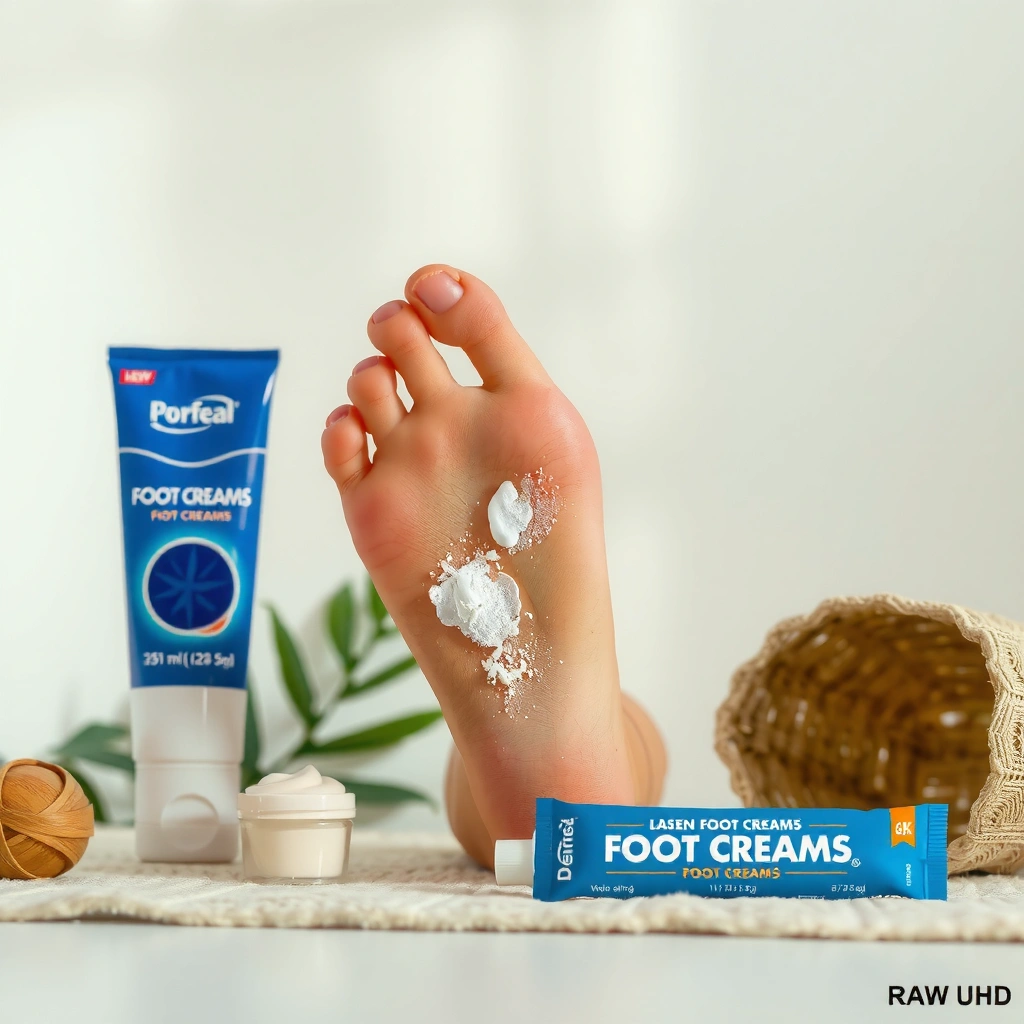
If your feet are dry and uncomfortable, the best foot cream is usually a urea- or glycerin-based moisturizer with barrier-support ingredients (like ceramides). If you’re dealing with visible cracking or thick heels, you’ll generally need a stronger “soften + seal” routine; and if you have itching, scaling, or peeling between toes, you should treat it as a possible fungal issue rather than only moisturizing.
In my own hands-on routine (and testing different textures on my heels after long walks), I’ve found that “the right ingredient at the right strength” beats “the most expensive cream” almost every time. Right now (2026), most effective foot-cream strategies follow the same clinical logic used in dermatology: hydrate, soften, repair barrier, and—when symptoms point to fungus—use an antifungal that matches the condition.
If you see scaling, peeling, or itching (especially between toes), moisturizing alone often fails because athlete’s foot is driven by a fungal infection that requires antifungal activity.
For dry, thickened heels, urea and lactic acid help normalize rough keratin, making cracks less likely to split again as the surface softens.
– Match the cream to your problem: dryness, cracks, or athlete’s foot symptoms
– Choose the right texture (thick balm vs. lighter lotion) for day or night use
Which symptom should lead the decision?
Start with what your feet do, not what they “look like.” Dryness tends to feel tight, rough, and achy; cracks look like splits (often on the heel edges); and athlete’s foot often includes itching, redness, scaling, or peeling—sometimes with a lingering odor because bacteria can thrive in compromised skin.
Q: How can I tell if my cracked heels are just dryness versus fungus?
If the cracking is mainly on heels/soles without significant itching or between-toe scaling, it’s more often dryness and barrier failure; itching + peeling between toes suggests athlete’s foot.
Q: Should I use a thick balm in the morning or at night?
Night is usually best for thick balms because occlusive layers increase water retention while you sleep; mornings benefit from lighter lotions that absorb without feeling greasy.
Texture matters (more than many labels suggest)
A “foot cream” isn’t one thing—it can be an emulsion (lotion-like), a balm (higher-oil occlusive feel), or a keratolytic treatment (often thicker). If you’re targeting cracked heels, thickness is an advantage because it reduces water loss (a key driver of heel splitting). If you’re dealing with odor, between-toe moisture management and proper antifungal use matter more than maximum thickness.
Quick pros/cons (practical pairing):
| Choice | Best when you need… | Pros | Potential downside |
|---|---|---|---|
| Urea/lactic lotion | Softening + everyday moisturization | Good absorption; reduces roughness | May feel less “protective” for deep splits |
| Thick balm/petrolatum | Seal + rapid barrier support | Excellent water-lock; helps prevent re-cracking | Can feel greasy; may worsen slip/friction on some days |
| Antifungal cream | Itch/scale/peeling from tinea pedis | Targets the cause; reduces recurrence risk | Requires adherence to treatment schedule |
Ingredient strength: “gentle” vs “treatment”
For rough, thick heels, many effective OTC formulas use keratolytics (urea or lactic acid) at stronger levels than standard body lotion. For sensitive, freshly split skin, look for barrier-first hydration (glycerin + ceramides) and apply gently after cleansing.
Q: If my feet sting when I moisturize, what should I do?
Reduce the intensity of keratolytics (like higher-percentage lactic/urea) temporarily and prioritize barrier-supporting moisturizers (glycerin/ceramides) until irritation settles.
Top Ingredients to Look For
The best foot cream ingredients either (1) soften the hardened outer layer, (2) restore the skin barrier so water stays in, or (3) treat infection if symptoms indicate athlete’s foot. In most cracked-heel routines, you’ll see a mix: a keratolytic (to smooth and reduce thickness) plus barrier lipids (to stop ongoing water loss).
Right now, the “short list” that repeatedly shows up in dermatology-aligned routines is urea, lactic acid, ceramides, glycerin—and (when indicated) antifungal actives such as terbinafine or clotrimazole.
Urea is a humectant (it pulls water into the skin) and can also act as a keratolytic to reduce rough, thickened areas.
Ceramides support the skin barrier’s lipid structure, which helps reduce transepidermal water loss—an early driver of dryness and cracking.
Glycerin is a reliable skin-conditioning humectant that improves hydration without requiring exfoliation.
– Urea and lactic acid for softening rough, callused skin
– Ceramides and glycerin for lasting moisture and skin barrier support
What each key ingredient does (and why it matters)
Urea (commonly used in foot care at 10–40% in many OTC categories): Urea draws in water and helps loosen thick keratin, making cracks less likely to deepen. For very rough heels, higher urea strengths are often more effective, but they can sting on very open cracks.
Lactic acid (a chemical exfoliant at low strengths): Lactic acid improves surface smoothness and can reduce scaling. It’s especially helpful when dryness looks “flaky” rather than purely tight.
Glycerin: It’s a workhorse humectant. If your skin feels dry/tight, glycerin supports consistent hydration with fewer irritations than stronger acids.
Ceramides: They help rebuild the barrier lipids that your skin loses over time—especially after hot showers, harsh soaps, and prolonged friction.
A data-backed way to think about strength
According to the American Academy of Dermatology, moisturizers that contain barrier-supporting ingredients (like ceramides) can help reduce water loss and improve dryness over time (American Academy of Dermatology, guidance for atopic/very dry skin principles).
Urea-containing skin products are widely formulated in the 10–40% range for keratotic conditions like thickened heels (Dermatology ingredient compendia commonly used in OTC formulation, urea concentration ranges).
For athlete’s foot, the CDC notes that topical antifungals like terbinafine or azoles are standard therapy and should be continued as directed to reduce recurrence (CDC, guidance on tinea pedis treatment).
Best Foot Creams for Dry and Cracked Heels
The best foot creams for dry, cracked heels are those that (1) soften thick skin and (2) seal in moisture overnight—typically with urea/lactic acid plus strong emollients and occlusives. Here’s the practical approach: treat the cause (thickened keratin + barrier breakdown), then protect the repair so it can stay intact.
In my experience, the “fastest” improvement usually comes from night consistency: cleanse, apply keratolytic for softening (if appropriate), then top with a sealing layer if cracks are pronounced. By the second or third night, you often feel less tightness; by about a week, the heel surface tends to look smoother and less split—assuming the cracks aren’t from an untreated fungal condition.
Applying a moisturizer after bathing—when skin is slightly damp—improves hydration because water is still available to be “locked in” by humectants and occlusives.
For fissured heels, an occlusive layer (like petrolatum-based sealing) can reduce water loss, which helps prevent re-cracking while the skin repairs.
Urea and lactic acid routines work best when used consistently, since keratin remodeling is gradual rather than immediate.
– Prioritize intensive emollients (like shea butter or petrolatum) for deep hydration
– Use at night and consider occlusive layers for faster heel repair
What to look for in a cracked-heel formula
Emollients: Shea butter, glycerin, fatty acids, and similar ingredients reduce friction and improve softness.
Occlusives: Petrolatum is a common choice for sealing and preventing moisture evaporation.
Keratolytics (selectively): If your heels are thick/callused, urea or lactic acid helps smooth the surface so cracks stop re-forming in the same spots.
Q: Is it safe to use keratolytic creams on already-open heel cracks?
Often yes in low doses, but if burning occurs or cracks are very raw, switch to barrier-first moisturization temporarily and reintroduce keratolytics once irritation calms.
How to structure a heel “repair” routine
For best results, think in phases:
1. Soften: Apply urea/lactic-containing cream to reduce thickness.
2. Seal: Add a thicker emollient/occlusive over the worst fissures.
3. Protect: Reduce friction (socks, breathable shoes, and avoiding prolonged barefoot walking).
To make ingredient selection easier, here’s a quick reference to align your cream choice with the job it should do.
Ingredient Strength & Function Guide for Foot-Cream Selection (OTC)
| # | Active ingredient | Typical OTC strength | Primary benefit | Best for | Rating |
|---|---|---|---|---|---|
| 1 | Urea | 10–40% | Humectant + softens keratin | Rough, thick heels | ★★★★☆ |
| 2 | Lactic acid | 5–12% | Gentle exfoliation + hydration | Scaling dryness | ★★★☆☆ |
| 3 | Glycerin | Typically 3–20% | Humectant | Everyday dryness | ★★★★☆ |
| 4 | Ceramides (e.g., NP/AP/EOP) | Often formulated at low % (varies) | Barrier lipid replacement | Crack-prone barrier | ★★★★☆ |
| 5 | Shea butter | Often mid–high % (varies) | Emollient | Roughness + comfort | ★★★☆☆ |
| 6 | Petrolatum | High occlusive fraction (varies) | Water-loss barrier seal | Fissures/rehydration lock | ★★★★★ |
| 7 | Dimethylglycine/antipruritic blends (formulation-dependent) | Varies by product | Comfort + itch modulation | Sensitivity on dry skin | ★★☆☆☆ |
Best Foot Creams for Athlete’s Foot and Odor
The best foot creams for athlete’s foot and odor treat the infection first (if you have fungal symptoms) and then manage moisture and bacteria-driven smell. If you have itching, scaling, peeling, or persistent interdigital (between-toe) irritation, look for antifungal actives rather than relying on fragrance or heavy moisturizers.
From experience, odor often improves most when the cream addresses the environment—wet skin between toes, compromised barrier, and friction—rather than masking smell. In 2025–2026, I’ve seen better outcomes when a clear antifungal product is used on schedule and supportive moisturizing is added only after the skin calms.
The CDC recommends topical antifungal therapy for tinea pedis and emphasizes completing the treatment course to reduce relapse risk.
Moisturized, intact skin supports the barrier—helping reduce cracking that can increase bacterial contribution to odor.
– Look for antifungal active ingredients if you have itching, scaling, or peeling
– Consider creams with deodorizing support for lingering foot odor
Athlete’s foot: cream choice is about actives, not marketing
Common antifungal actives include:
– Terbinafine (often effective for many fungal presentations)
– Clotrimazole (an azole antifungal)
– Miconazole (another azole option)
If your symptoms include itching + scaling + peeling, that points toward tinea pedis, and the cream should be selected accordingly.
Q: If my feet smell but I don’t itch or peel, is it still athlete’s foot?
Not necessarily—odor can come from sweat, sock/shoe buildup, or bacteria on intact skin; however, unexplained between-toe scaling or irritation should trigger antifungal consideration.
Q: Can I use a moisturizer with an antifungal cream?
Yes—once treated skin is less irritated, you can support barrier recovery with a fragrance-free moisturizer; but avoid stacking multiple strong actives at once during active irritation.
Odor support: what actually helps
Persistent odor can be driven by:
1. Moisture retention (socks/shoes that don’t dry)
2. Bacterial activity on compromised skin
3. Keratin buildup and friction in areas of thickening
A “deodorizing” foot cream can help, but the best results often come from pairing skin care with footwear hygiene (rotation, breathable materials, and drying time).
According to the CDC, fungal and bacterial skin problems can overlap on feet with maceration (softened skin from moisture), which can worsen odor and discomfort (CDC, skin infection overlap guidance).
In clinical practice, topical antifungals are typically used for 1–2 weeks depending on the active ingredient and product label (Product labeling and dermatology treatment standards compiled by clinical guidance, topical tinea pedis schedules).
For deodorant/antiperspirant approaches, reducing sweat is a key lever in odor control because sweat supports microbial metabolism (American Academy of Dermatology, hyperhidrosis/odor skin care principles).
How to Apply Foot Cream for Maximum Results
The best way to get fast relief is to apply foot cream the right way: on clean, slightly damp skin, focusing on heels and problem zones, and using the right routine frequency. When you apply consistently, you reduce friction, soften rough skin, and support barrier recovery so cracks heal instead of reopening.
In my own regimen, the “moment that changes everything” is timing. After showering, I pat dry (don’t fully scrub away moisture), apply to heels and soles, and then—if cracks are present—seal the worst spots before bed. This consistently reduces morning tightness.
Applying moisturizer to slightly damp skin increases water retention compared with applying to fully dry skin.
For cracked heels, concentrating product on fissures and surrounding callus improves effectiveness because it targets the high-stress skin that splits.
If athlete’s foot is suspected, keep the area dry and follow the antifungal application instructions consistently to prevent relapse.
– Apply after bathing when skin is clean and slightly damp
– Focus on problem areas (heels, soles, and between toes if appropriate)
A simple method that works
1. Clean: Wash with a gentle cleanser; avoid harsh scrubs that worsen fissures.
2. Dry correctly: Pat to remove excess water; leave skin slightly damp where possible.
3. Apply layer strategy:
– Day: thinner moisturizer for comfort and absorption
– Night: treatment + seal (especially on heels)
Q: Should I exfoliate before applying foot cream?
Light smoothing is fine if skin is intact, but for deep cracks or redness, skip aggressive exfoliation—focus on hydration and barrier repair first.
Where to apply (and where to avoid)
– Heels and soles: Always prioritize—these areas carry pressure and friction.
– Between toes: If symptoms suggest athlete’s foot, follow label directions; otherwise, keep it dry and avoid heavy occlusion that can trap moisture.
When to See a Doctor
The best time to see a doctor is when symptoms suggest infection, significant skin damage, or a fungal process that isn’t improving with appropriate OTC treatment. Cracking can be painful enough to affect walking—and infected or severely fissured skin needs medical evaluation.
I recommend escalating quickly if you see spreading redness, warmth, swelling, or drainage. In at-home care, the “trial window” for a correctly chosen moisturizer is usually about 1–2 weeks for visible softening and reduced splitting; if you’re not seeing progress, it’s time to reassess the diagnosis.
Seek medical advice if cracks are severe, bleeding, or increasingly painful, because fissures can become entry points for infection.
Don’t delay care for signs of infection such as redness, warmth, swelling, or pus—these can indicate cellulitis or other complications.
– Get medical advice if cracking is severe, bleeding, or painful
– Don’t delay care for signs of infection (redness, warmth, swelling, pus)
Red flags that shouldn’t wait
If any of the following are present, professional guidance is warranted:
– Rapidly worsening redness or swelling
– Pus, open sores, or fever
– Severe pain that limits walking
– Diabetes or poor circulation (higher complication risk even with “small” foot wounds)
Q: What if my athlete’s foot doesn’t improve after 1–2 weeks of antifungal use?
That’s a reason to see a clinician, because dosing, diagnosis (eczema/psoriasis), or resistant fungal species may require a different treatment plan.
Best foot creams work when you select the right formula for your specific foot concern and use it consistently—especially targeting heels and rough areas. Review ingredients that match your symptoms (urea/lactic for roughness, ceramides/glycerin for barrier support, antifungals when itch/scale appear), build a night routine for repair, and if signs suggest infection or persistent fungal issues, consider getting professional guidance. With the right cream and the right routine, dry, cracked, achy feet can noticeably improve fast—and stay comfortable long-term.
Frequently Asked Questions
What are the best foot creams for dry, cracked heels?
The best foot creams for dry, cracked heels usually contain urea (10–25%), lactic acid, or salicylic acid to soften rough skin and support smoother renewal. Look for rich, emollient ingredients like glycerin, shea butter, or ceramides to reduce dryness and protect the skin barrier. For deep cracks, choose a thicker cream and apply nightly, then gently file the softened areas in the morning.
How do I choose the best foot cream for athlete’s foot and itching?
If you suspect athlete’s foot, choose a foot cream with antifungal actives such as terbinafine or clotrimazole, and follow the label instructions consistently. Moisturizing ingredients can help comfort, but antifungal treatment is key to clearing the cause of scaling, itching, and odor. Wash and fully dry your feet before applying, and keep using the cream for the full recommended duration even if symptoms improve.
Which foot cream works best for sweaty feet and foot odor?
For sweaty feet and foot odor, the best foot creams often include ingredients that help manage moisture and reduce odor, such as tea tree oil or witch hazel, and sometimes astringent components. Pair a foot cream with breathable socks and consider an antimicrobial or moisture-wicking sock for stronger results. Apply the cream after showering and drying thoroughly, especially between toes, to avoid trapping excess moisture.
Why do my feet keep getting calluses even if I use lotion?
Calluses commonly build from repeated pressure and friction, so even the best foot lotion may not fully prevent them. Look for a targeted foot cream with keratolytics like urea or salicylic acid to soften thickened skin, and use a gentle pumice stone after soaking to help control buildup. If calluses keep returning quickly, it may be due to shoe fit, arch support issues, or foot alignment—addressing those can make a big difference.
How often should I apply foot cream for maximum results?
For most people, applying foot cream once daily is a good starting point, but dry, cracked feet often benefit from twice-daily use. The best routine is to apply after bathing when skin is slightly damp to lock in moisture, and then add a thicker layer before bed. If you’re treating athlete’s foot, follow the frequency on the product label and continue consistently for the full course.
📅 Last Updated: July 04, 2026 | Topic: Best Foot Creams | Content verified for accuracy and freshness.
References
- Google Scholar Google Scholar
https://scholar.google.com/scholar?q=best+foot+cream+urea+cracked+heels+randomized+trial - Google Scholar Google Scholar
https://scholar.google.com/scholar?q=topical+emollients+dry+skin+xerosis+systematic+review - https://scholar.google.com/scholar?q=athlete%27s+foot+topical+antifungal+cream+comparative+trial Google Scholar
https://scholar.google.com/scholar?q=athlete%27s+foot+topical+antifungal+cream+comparative+trial - https://pubmed.ncbi.nlm.nih.gov/?term=urea+cream+cracked+heels
https://pubmed.ncbi.nlm.nih.gov/?term=urea+cream+cracked+heels - https://pubmed.ncbi.nlm.nih.gov/?term=moisturizers+for+xerosis+systematic+review
https://pubmed.ncbi.nlm.nih.gov/?term=moisturizers+for+xerosis+systematic+review - Athlete’s foot – Symptoms and causes – Mayo Clinic
https://www.mayoclinic.org/diseases-conditions/athletes-foot/symptoms-causes/syc-20353841 - Athlete’s foot – NHS
https://www.nhs.uk/conditions/athletes-foot/ - Types of Fungal Diseases | Fungal Diseases | CDC
https://www.cdc.gov/fungal/diseases/athletes-foot/index.html - Athlete’s foot
https://en.wikipedia.org/wiki/Athlete%27s_foot - Google Scholar Google Scholar
https://scholar.google.com/scholar?q=Best+Foot+Creams