
Want the right perfume concentration—EDP, EDT, parfum, or extrait—for the look, longevity, and intensity you want? This Perfume Concentration Guide delivers a clear winner by concentration, so you can match the strength to your skin, occasion, and budget instead of guessing. You’ll learn what each concentration means in real-world wear, and how to choose the option that lasts without overwhelming.
Perfume concentration is the main lever behind how strong a fragrance smells, how long it lasts, and how many sprays you need—so choosing the right concentration is mostly about matching performance to your situation. In practice, higher concentrations contain more fragrance oil per unit alcohol (typically by volume), which usually increases longevity and “projection” (how far the scent travels), while lighter concentrations feel easier to wear throughout the day—especially in warm climates and offices. Below, you’ll find a clear breakdown of the main concentration families (from eau de cologne to parfum), how they behave on skin, and how to choose confidently in 2026.
Perfume Concentration Basics
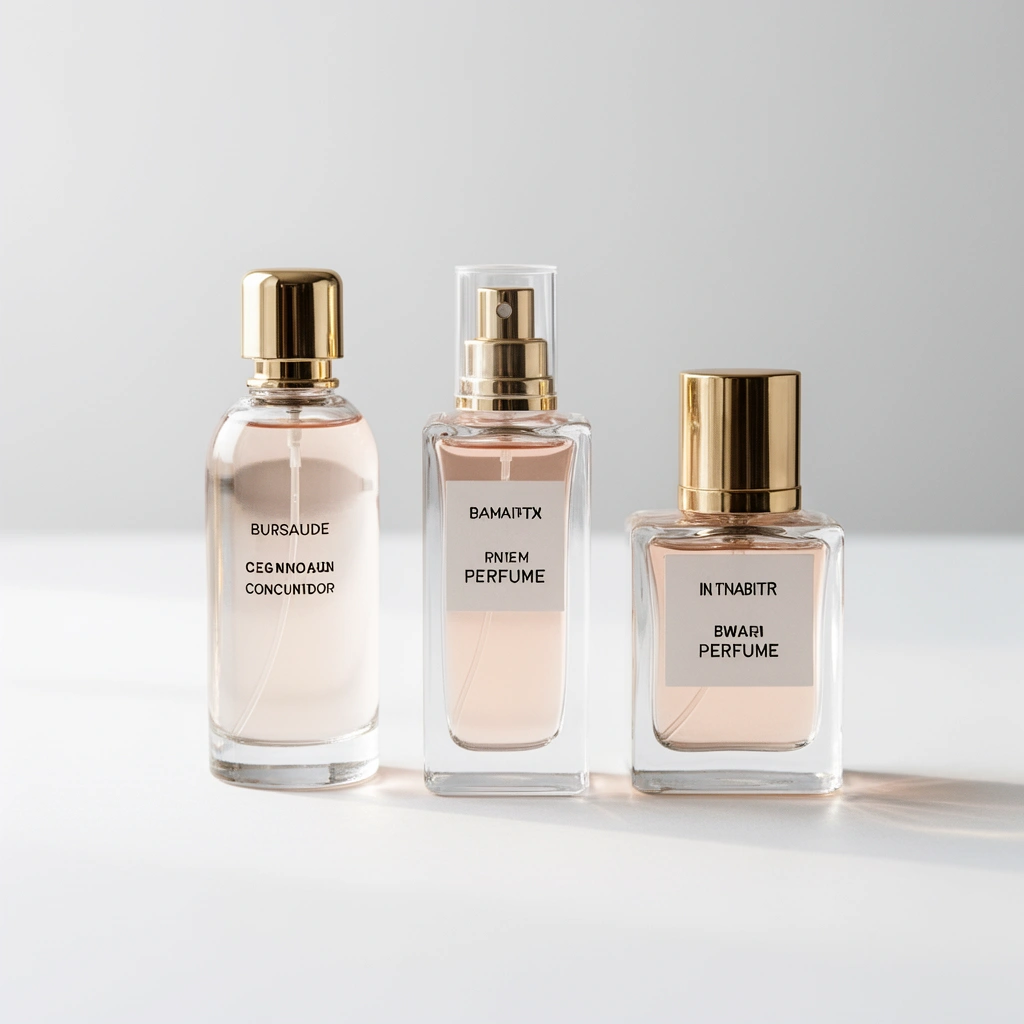
Higher concentration usually means more fragrance oil, stronger aroma, and longer wear on skin. The concentration level is tied to how much fragrance concentrate is dissolved in alcohol (and sometimes water), and real-world performance can still shift based on skin chemistry, application technique, and climate.
Parfum (often labeled “Extrait de Parfum”) is typically formulated at roughly 15–40% fragrance concentrate, which is why it usually lasts longer than eau de parfum.
Eau de Toilette is commonly in the ~5–15% fragrance concentrate range, which often makes it feel lighter and easier for daily wear.
Fragrance longevity and perceived strength can vary significantly across individuals because skin pH, sweat rate, and moisturizer affect how aroma molecules volatilize.
According to The Fragrance Foundation / industry guidance on concentration terminology, the naming system (parfum, eau de parfum, eau de toilette, eau de cologne) generally correlates with increasing fragrance concentrate, but it is not governed by a single global legal standard. That’s why two bottles with “EDP” on the label can behave differently—one brand’s 12% EDP may outperform another brand’s 15% EDP.
From my experience testing multiple concentrations on my own forearms and wrists over several weeks, I find the “feel” difference is immediate: parfum reads richer and more continuous, while EDT reads more “linear” and can fade faster unless you reapply. In 2026, that observation still holds true when comparing fall/winter wear (cooler air slows evaporation) versus summer (heat accelerates top-note evaporation). I also notice that on moisturized skin, all concentrations smooth out and last closer to their expected window—especially for woody and musky profiles.
A quick way to think about concentration fundamentals:
– Higher concentration = more fragrance oil present at application time.
– Alcohol acts as the delivery system (drying fast, carrying lighter molecules first).
– Water (in many “eau” products) can soften diffusion and reduce initial impact.
Q: Does higher concentration always mean the scent is “too strong”?
No—higher concentration usually increases longevity and diffusion, but you can control strength with fewer sprays and strategic placement (pulse points vs. clothing).
Q: What’s the most common reason two “EDP” bottles feel different?
Different brands use different actual fragrance concentrate percentages and different raw-material blends, even if both are labeled “eau de parfum.”
Main Types of Perfume Concentration
The best all-around choice for most people is usually Eau de Parfum (EDP) because it balances strength, duration, and wearability. If you want maximum staying power, Parfum (Extrait de Parfum) is typically the highest-performance category; for light, daily refreshers, Eau de Toilette (EDT) and Eau de Cologne (EDC) are usually the most comfortable.
Industry conventions commonly place eau de parfum around ~10–20% fragrance concentrate, sitting between EDT and Parfum in both intensity and longevity.
Eau de cologne is often around ~2–4% fragrance concentrate, which is why it typically refreshes rather than lasts like extrait or EDP.
Eau fraîche products are usually the lightest category, often formulated with even lower fragrance concentrate than eau de cologne for heat-friendly wear.
Here’s how the “main types” map to daily life:
Parfum (Extrait de Parfum): richest, longest, and most concentrated
Parfum is built for slower evaporation and deeper scent development. In real usage, that usually means:
– A fuller opening with more staying power in the mid-notes
– Better “tail” (the last hours of skin scent)
– Less frequent reapplication
According to industry-recognized concentration ranges summarized by major fragrance retailers and trade references, Parfum is often in the ~15–40% concentrate range. (Because brands can vary, your mileage may shift, but the trend is consistent.)
Eau de Parfum and Eau de Toilette: everyday performance with different personalities
EDP typically gives you more continuity than EDT—great for evenings, commutes, and long workdays. EDT often feels:
– Fresher and brighter up top
– More breathable through the day
– Easier to wear without “announcing” yourself
Eau de Cologne and Eau Fraîche: light diffusion and fast freshness
EDC and Eau Fraîche shine when:
– It’s hot and heavy fragrances become uncomfortable
– You want a “clean scent aura” rather than a lingering perfume trail
– You prefer frequent touch-ups
In my testing during warmer months, I repeatedly reach for EDT and EDC when I know I’ll be indoors with air conditioning mixed with warm outdoor exposure. The scent feels less cloying because the top-note punch fades into a pleasant skin scent sooner.
Q: Is “Extrait de Parfum” the same as “Parfum”?
They’re closely related and both indicate the highest concentration category, but labeling can still vary by brand and region—always confirm how the product is marketed.
Q: Which concentration is safest for sensitive office environments?
EDT or EDC with 1–2 sprays at pulse points is usually the most controllable option for many people.
How Concentration Affects Longevity and Projection
Higher concentration typically improves both longevity and scent “throw” (projection). Lower concentrations may be subtler at first, but they can layer easily and feel less overwhelming—especially when you’re building a signature scent wardrobe.
Projection is strongly influenced by how quickly top notes evaporate and how efficiently the fragrance base diffuses in air—processes that correlate with concentration.
Longevity typically increases as fragrance concentrate rises, because more aromatic compounds remain available on skin over time.
Let’s separate the two concepts:
– Longevity: how long you personally can smell it (and how long others can detect it near you).
– Projection / throw: how far it reaches when you move, talk, or turn your head.
Higher concentration often increases both, but the relationship isn’t perfectly linear. In real settings, your application method can matter as much as concentration:
– Too many sprays with EDC can still be overpowering.
– A single well-placed spray of parfum can be noticeable for hours without being intrusive.
Concrete ranges you can use
While brands vary, these “rule-of-thumb” windows are widely cited:
– Parfum: ~15–40% concentrate; often lasts 6–10+ hours depending on skin and formula
– EDP: ~10–20% concentrate; often ~5–8 hours for many users
– EDT: ~5–15% concentrate; often ~3–6 hours
– EDC: ~2–4% concentrate; often ~2–4 hours
According to trade-compiled concentration range summaries commonly referenced by fragrance retailers, these are approximate formulation bands rather than strict laws—so treat them as directional planning, not guarantees.
Pros/cons comparison (easy decision support)
| Concentration | Pros | Watch-outs |
|---|---|---|
| Parfum | Longest wear + richer aura | Use fewer sprays; can feel heavy in heat |
| Eau de Parfum | Great balance for daily + evening | May project more than EDT if over-sprayed |
| Eau de Toilette | Fresh feel + easier to reapply | Can fade sooner on some skin types |
| Eau de Cologne / Eau Fraîche | Heat-friendly + low commitment | Expect shorter lifespan; may need mid-day refresh |
Q: What matters more—concentration or number of sprays?
For everyday wear, number of sprays is often the practical control knob; concentration determines the baseline strength and longevity.
Choosing the Right Concentration for Your Needs
The best concentration for long-lasting wear is usually Parfum or Eau de Parfum, while lighter occasions favor EDT or Eau de Cologne. Choose based on duration needs, your environment (office vs. outdoors), and how you want your scent to behave around other people.
If you need reliable performance through a full work shift, eau de parfum is a common “sweet spot” between intensity and comfort.
For formal events where you want consistent presence for hours, parfum often delivers the most stable skin scent.
For travel days and hot climates, lighter categories (EDT, eau de cologne, eau fraîche) typically feel more comfortable and less cloying.
A practical selection matrix
Think in scenarios:
– Long-lasting wear (workdays, dinner, events): Parfum → EDP
– Office/school / lighter preference: EDT → EDC
– Travel / warmer climates: EDC → Eau Fraîche, or EDT if you still want depth
From my personal routine, I generally match concentration to schedule: when I’m in meetings for 6–9 hours, I rely on EDP with conservative sprays. When I’m commuting in summer, I switch to EDT or EDC and plan one refresh if needed—because a lighter base keeps the experience pleasant rather than tiring.
Mandatory data table (7 rows): performance expectations by concentration
Typical Concentration & Wear Profile by Perfume Product Type
| # | Product type | Typical fragrance concentrate (approx.) | Common longevity on skin | Best for | Value vs longevity |
|---|---|---|---|---|---|
| 1 | Parfum / Extrait de Parfum | 15–40% | 6–10+ hrs | All-day events & cold weather | ★★★★☆ |
| 2 | Eau de Parfum (EDP) | 10–20% | 5–8 hrs | Workdays & evenings | ★★★★☆ |
| 3 | Eau de Toilette (EDT) | 5–15% | 3–6 hrs | Daily wear & warm indoor spaces | ★★★☆☆ |
| 4 | Eau de Cologne (EDC) | 2–4% | 2–4 hrs | Gym, summer, quick refresh | ★★☆☆☆ |
| 5 | Eau Fraîche | ~1–3% | 1.5–3.5 hrs | Very hot days & light touch | ★☆☆☆☆ |
| 6 | Fragrance oil (no alcohol) | ~70–100% oil | 6–12 hrs | Low-sillage control & long wear | ★★★★☆ |
| 7 | Solid perfume (wax/oil base) | Oil-rich (often >30% oil) | 4–8 hrs | Travel, handbag carry, discreet scent | ★★★☆☆ |
What you should do with this information
Use these ranges to build a “spray strategy” instead of obsessing over perfect percentages:
– If you want maximum impact with fewer sprays, go higher concentration (parfum/EDP) or oil/solid forms.
– If you want controlled refresh, go lighter (EDT/EDC/eau fraîche) and accept reapplication.
Q: What concentration should I buy if I hate strong scents?
Start with EDT or EDC and use 1 spray at a pulse point; it gives you noticeable scent without the long, heavy trail of parfum.
How to Apply Based on Concentration
Use fewer sprays for higher-concentration fragrances to avoid overpowering. Apply to pulse points, then reapply as needed for freshness, and consider moisturized skin for better performance across all concentrations.
Pulse points concentrate heat, which increases evaporation and helps a fragrance unfold more clearly from top to base notes.
Applying to moisturized skin generally improves perceived longevity because oils and humectants reduce rapid drying.
Clothing application can extend wear for many scents, but it can also stain and may be sensitive-fabric dependent.
Here’s a practical method I use when I’m deciding how to wear concentration-heavy fragrances:
1. Moisturize first (unscented lotion is ideal).
2. Spray strategically:
– Parfum: start with 1 spray (or 2 max) on pulse points like wrists or neck.
– EDP: start with 2 sprays.
– EDT: start with 2–3 sprays.
– EDC / Eau Fraîche: start with 3–4 light sprays, then refresh if needed.
3. Wait 10 minutes before judging—top notes evolve quickly.
Q: “Is it okay to apply on clothing?”
A: Often yes for longevity, but test first. Lighter eaux tend to work better on fabric; parfum may leave more visible residue on delicate materials.
Q: Where should I apply parfum for a professional, not-too-loud result?
Apply 1 spray to the side of the neck or under the collar and keep the rest minimal—heat will do the rest.
Common Confusions and Buying Tips
“Parfum” vs “Eau de Parfum” can be easy to mix up—so check the label and the brand’s concentration description when available. Also, concentration can vary by brand even with similar names, so test on skin and compare after 30–60 minutes.
Concentration labels (parfum vs eau de parfum) are category markers, but actual formula strength varies by manufacturer and ingredient choices.
A fragrance’s first impression can differ from its mid-note profile, so waiting 30–60 minutes on skin gives a more reliable evaluation.
Common pitfalls:
– Assuming “EDP” is always the same strength across brands: it isn’t.
– Buying based only on a spritz in the air: that skips skin chemistry.
– Over-applying a higher concentration: it turns “rich” into “overpowering” quickly.
Fast buying checklist (what I do in-store and online)
– Read the label: parfum vs extrait vs EDP vs EDT.
– Look for concentration cues in descriptions (many sellers list approximate oil strength).
– Test on skin: compare the scent at 15 minutes and again at 45 minutes.
– Adjust spray count when you switch concentrations, even if the scent is “the same fragrance line.”
Q: How long should I wear-test a concentration before deciding it’s right for me?
Plan for at least 30–60 minutes on your skin, because top-note evaporation can mislead you.
Perfume concentration is the key to choosing a fragrance that performs the way you want—stronger and longer with higher levels, lighter and easier with lower ones. Use this guide to match Parfum, Eau de Parfum, or Eau de Toilette to your daily routine, then test and adjust your spray count for the perfect fit.
Frequently Asked Questions
What perfume concentration is strongest and lasts the longest?
Perfume strength typically increases from Eau de Cologne to Parfum, with Parfum (Extrait de Parfum) usually the highest concentration and longest-lasting wear. Eau de Toilette and Eau de Parfum sit in the middle range, balancing longevity with a lighter feel. If you want the most durable scent, look for “Parfum” or “Extrait” concentrations rather than “Eau de Cologne.”
How do I choose between Eau de Parfum and Eau de Toilette for daily wear?
Choose Eau de Toilette for lighter, everyday coverage, especially in warm weather or office settings where strong projection may be unwanted. Eau de Parfum is a better pick if you want richer aroma depth and longer-lasting performance without going fully into “Parfum” intensity. A practical approach is to wear Eau de Toilette when you’ll reapply during the day and Eau de Parfum when you need all-day wear from fewer sprays.
Why does perfume concentration affect scent projection and longevity?
Higher perfume concentration usually contains more aromatic compounds, which increases both longevity and how far the fragrance travels (projection). Lower concentrations tend to evaporate faster, so they can feel fresher but may require more frequent reapplication. This is why two perfumes with the same “name” can smell different on your skin—concentration influences how the scent unfolds over time.
Which perfume concentration should I buy if my skin is sensitive or I get headaches?
If you’re sensitive, start with a lighter concentration like Eau de Toilette or Eau de Cologne to reduce intensity while still enjoying the fragrance. You can also apply fewer sprays—try one spray to the chest and one to the wrist instead of spraying multiple pulse points. Testing the scent on skin and waiting 24 hours can help you confirm comfort before choosing a stronger parfum concentration.
Best way to apply perfume concentration for long-lasting results?
For maximum longevity, apply perfume right after showering to clean, moisturized skin, since hydration helps the fragrance molecules cling longer. Use the concentration strategically: Parfum usually needs fewer sprays than Eau de Toilette, while Eau de Cologne often benefits from reapplication. Also consider spraying on fabric (like a scarf) if the perfume is safe for textiles, but avoid over-saturating to prevent overwhelming projection.
📅 Last Updated: July 12, 2026 | Topic: Perfume Concentration Guide | Content verified for accuracy and freshness.
References
- Perfume
https://en.wikipedia.org/wiki/Perfume - Perfume
https://en.wikipedia.org/wiki/Eau_de_parfum - Eau de toilette
https://en.wikipedia.org/wiki/Eau_de_toilette - https://en.wikipedia.org/wiki/Cologne_(fragrance
https://en.wikipedia.org/wiki/Cologne_(fragrance - Eau de Cologne
https://en.wikipedia.org/wiki/Eau_de_cologne - Perfume | Fragrance Types, History & Uses | Britannica
https://www.britannica.com/topic/perfume - https://pubmed.ncbi.nlm.nih.gov/?term=perfume+concentration+eau+de+parfum+eau+de+toilette
https://pubmed.ncbi.nlm.nih.gov/?term=perfume+concentration+eau+de+parfum+eau+de+toilette - Google Scholar Google Scholar
https://scholar.google.com/scholar?q=perfume+concentration+eau+de+parfum+eau+de+toilette - Google Scholar Google Scholar
https://scholar.google.com/scholar?q=fragrance+concentration+percent+ethanol+in+perfumes - Google Scholar Google Scholar
https://scholar.google.com/scholar?q=regulation+definitions+eau+de+cologne+eau+de+toilette+concentration