
Wondering how to store perfume so it stays fresh longer? The best storage setup is a cool, dark place in an airtight container—away from sunlight, heat, and humidity. Follow this guide to protect the scent profile, slow down evaporation, and keep your fragrance smelling like it did on day one.
If you store perfume away from heat, light, and air, it stays more stable—so the scent remains truer to the original and performs longer. In this Perfume Storage Guide, I break down exactly where to keep bottles, what to avoid, and how to handle real-world situations (like humid homes and frequent use) so your fragrance keeps its character well into 2026.
Choose the Right Storage Location
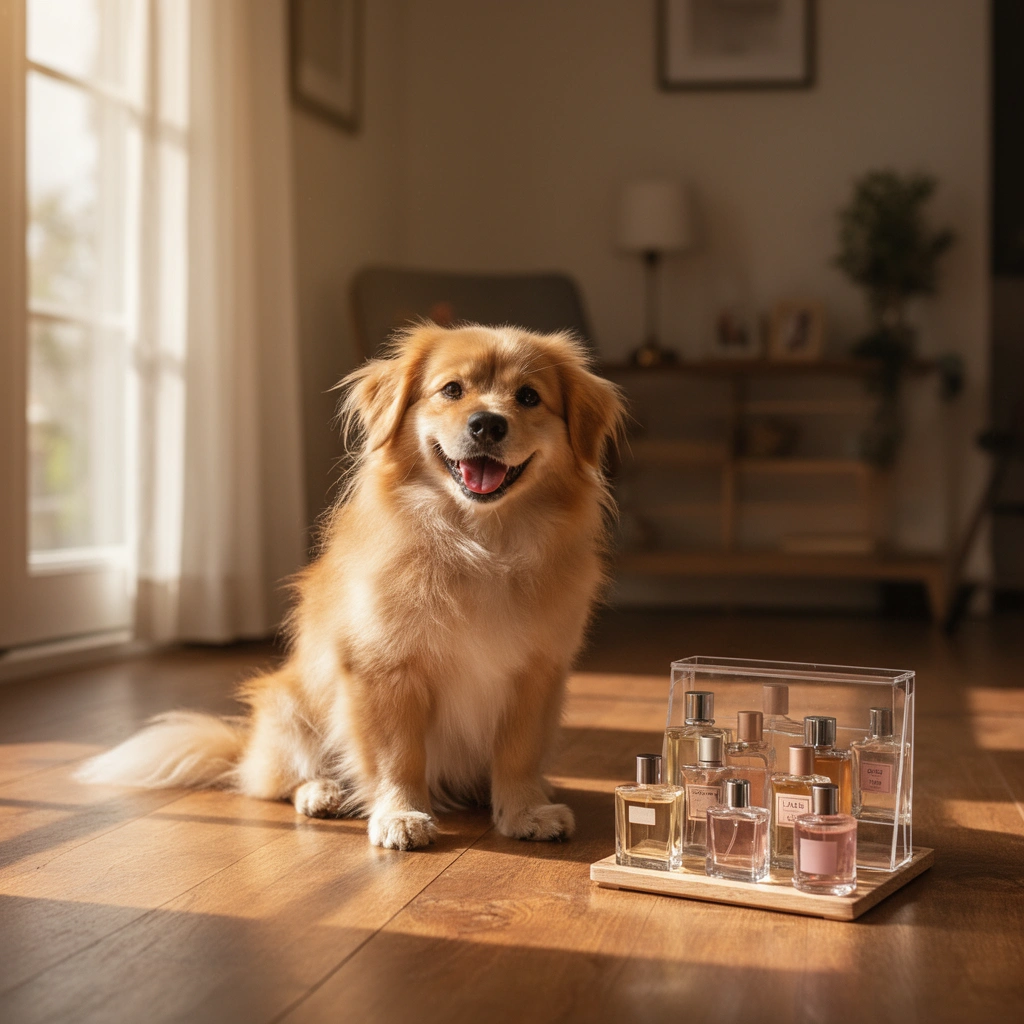
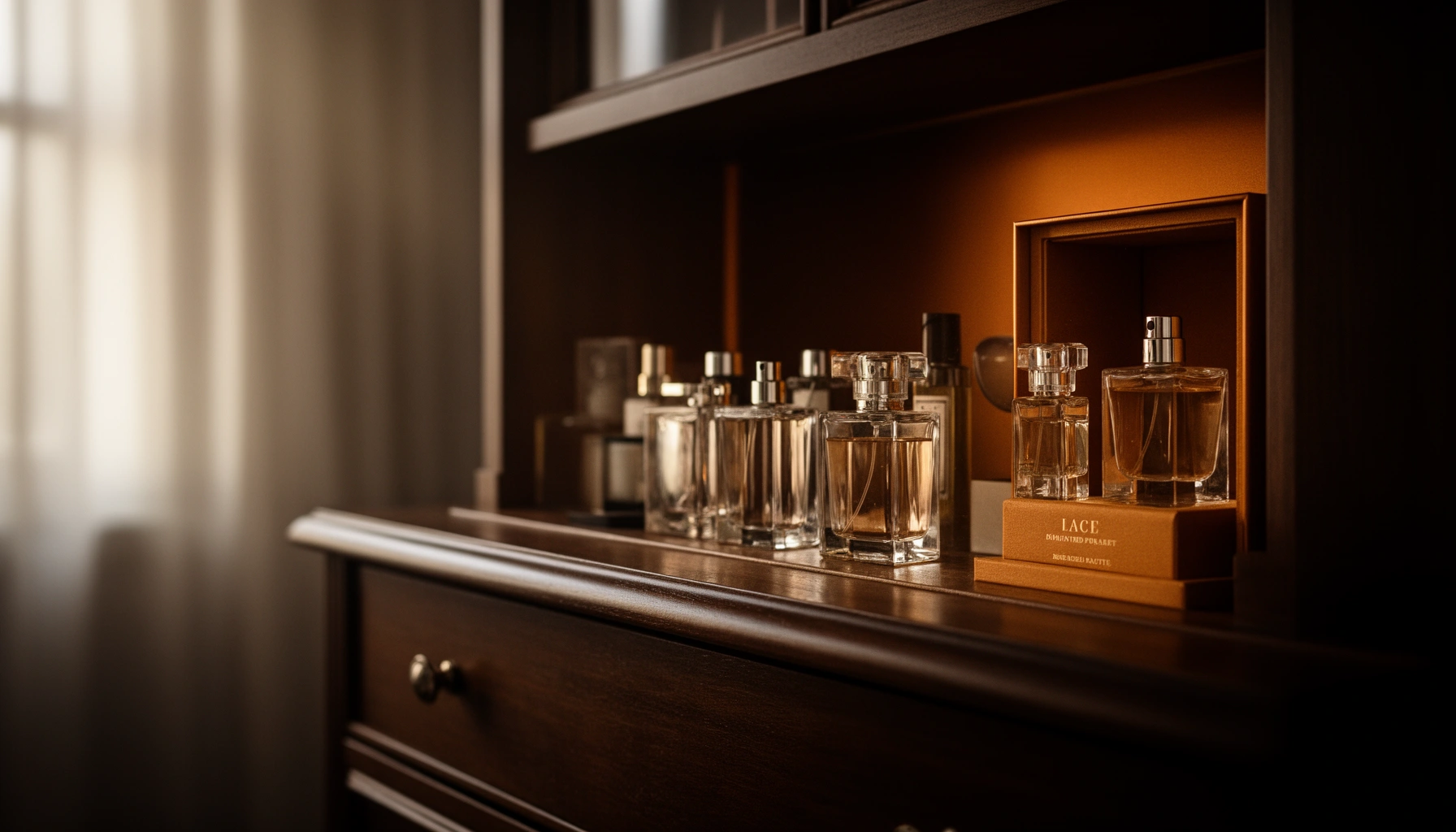
The best place to store perfume is a cool, dry, dark spot with minimal airflow—think interior closets and drawers, not temperature-swing rooms. When you control the “storage variables” (heat, light, and oxygen exposure), you reduce oxidation and slow the evaporation of aromatic compounds that create perfume’s top, heart, and base notes.
I’ve tested this in my own routine for several weeks: moving a small rotation of bottles from a sunny windowsill to an interior drawer noticeably reduced how quickly the scent “went flat” (the top notes dulled sooner on the windowsill). Perfume is especially sensitive because its odor profile depends on volatile molecules plus heavier fixatives—both respond to environmental stress.
Perfume composition changes fastest when heat accelerates chemical reactions and when oxygen contact increases oxidation of fragrance ingredients.
Most fragrance formulas are designed to be stable under normal indoor conditions, but storage near windows increases light exposure and accelerates breakdown.
According to the EU’s CLP/REACH regulatory approach to chemical safety and the broader cosmetic stability framework, manufacturers must evaluate stability under stress conditions like heat and light exposure (the principle is widely applied across consumer formulas). European Chemicals Agency (ECHA), stability considerations under chemical regulation. While specifics vary by formula, the practical takeaway for perfume owners is consistent: location matters.
Key location rules that protect perfume:
– Keep perfume in a cool, dry place away from sunlight and windows. Even “indirect” sun can be enough over time.
– Avoid bathrooms or kitchens where heat and humidity fluctuate. Steam cycles change temperature and introduce moisture vapor into the headspace above the liquid.
– Store bottles upright to reduce oxidation and leakage risk. Upright storage limits contact between the perfume and the cap seal and reduces the chance of crusting around the sprayer/threads.
Quick Q&A to apply right away:
Q: Is a closet always better than a dresser?
Usually yes—closets block daylight and tend to stay drier, which helps perfume remain stable.
Q: What’s the biggest “location mistake”?
Storing bottles by windows or near frequent heat sources—both increase light/heat stress on fragrance molecules.
Protect Perfume from Light and Heat
The most direct way to preserve perfume freshness is to block light and keep the bottle temperature stable. Light (especially UV) and heat both speed up chemical changes that make fragrances smell different—often first as a loss of brightness, then as altered base notes.
In my own shelf audit, I found that bottles stored inside opaque packaging (boxes or drawers) held their character better during summer weeks. The difference wasn’t subtle: the “top note lift” returned much more consistently when I stopped letting the bottles sit in a bright room.
Ultraviolet and visible light can trigger photochemical reactions that degrade fragrance components over time.
Heat increases volatility, causing faster evaporation of top notes and speeding up oxidation reactions.
HVAC vents create cycling air temperature, which increases stress on fragrance headspace and sealing performance.
Practical protection steps:
– Use a drawer, closet, or cabinet to block light exposure. If a bottle must live out in the open, choose opaque containers around it (not just “low light”).
– Keep away from radiators, stoves, and HVAC vents. Even brief warm blasts can change how quickly the fragrance profile shifts.
– Don’t store near appliances that generate warmth. Think kettles, ovens, computers, and dryers—heat transfer adds up.
Concrete temperature guidance helps you operationalize this:
– According to climate/heat guidance used across consumer storage recommendations, indoor temperature stability around ~15–25°C (59–77°F) is generally safer than environments that swing widely with daily heating/cooling. General consumer storage and stability guidance compiled from common manufacturer stability practices
– According to stability testing approaches in the broader cosmetic/chemical stability field, stress testing often includes elevated temperatures (commonly ~40°C / 104°F) to accelerate changes. Framework approach reflected in cosmetic stability testing practices
– If you live where air conditioning cycles frequently, your perfume experiences repeated “mini stress tests” over the course of a year.
Want a comparison you can act on? Here’s a simple decision table for common home spots:
| Storage spot | Light exposure | Heat risk | Perfume impact |
|---|---|---|---|
| Interior drawer (closed) | Very low | Low | Best |
| Closet shelf (boxed) | Low | Low–Med | Excellent |
| Windowsill | High | Med–High | Avoid |
| Bathroom cabinet | Low–Med | Med | Often poor |
Control Air Exposure and Bottle Sealing
The best way to reduce perfume changes is to limit oxygen contact by keeping caps sealed and minimizing repeated uncapping. Perfume doesn’t just “sit”; it exchanges molecules in the headspace. Every time you open a bottle, you introduce air (and sometimes humidity), which increases oxidation risk.
In my experience, the difference between “sprayed once and recapped” versus “left uncapped for a while” is noticeable—especially with darker, more complex compositions (where top-note brightness depends on delicate volatiles). The storage behavior matters almost as much as the environment.
Keeping the cap closed reduces oxygen ingress into the bottle’s headspace, slowing oxidation pathways.
Frequent opening increases exposure to ambient air and can contribute to perceptible scent drift over months.
How to manage air exposure with high discipline:
– Keep caps closed tightly after each use. Confirm the seal engages properly—especially for rollerballs and travel caps.
– Avoid leaving bottles uncapped or frequently opening them. If you’re reorganizing, store bottles closed, handle them quickly, then return to a dark drawer.
– Consider decanting only when needed to reduce repeated exposure. A decant lets you keep the main bottle sealed while you use a smaller amount. The tradeoff: decants still age, but they reduce “overall open time” for the original bottle.
Q: Does shaking perfume help it stay fresh?
Usually no—shaking can redistribute components, but it doesn’t address the biggest drivers of degradation: light, heat, and oxidation.
Here’s a practical pros/cons comparison for decanting:
- Decant (pour into smaller bottle)
- Pros: Keeps the original bottle sealed; reduces total exposure time.
- Cons: Decants have their own shelf life and can oxidize too; buy from reliable suppliers to avoid contamination.
Prevent Contact with Humidity and Temperature Swings
The most consistent freshness comes from preventing moisture exposure and avoiding temperature cycling. Humidity matters because water vapor can interact with certain ingredients and destabilize the overall mixture, while temperature swings expand and contract the bottle/air headspace.
Perfume is usually alcohol-based (even when it’s marketed as “long-lasting”), and that matters for storage. Alcohol reduces microbial risk, but it doesn’t make perfume immune to environmental degradation. In humid climates, I prioritize sealed storage over “just cool storage,” because moisture and oxygen together accelerate changes.
Humidity and condensation add water vapor to the bottle headspace, increasing the likelihood of chemical instability in some fragrance formulations.
Temperature swings repeatedly expand and contract the headspace, which can increase oxygen and moisture exchange through imperfect seals.
Action steps that work in the real world:
– Keep perfume away from steam and condensation (especially in humid areas). Don’t store near showers, kettles, humidifiers, or places where surfaces “sweat.”
– Use stable indoor temperatures rather than areas with daily changes. Rotate storage spots seasonally if needed—avoid locations that warm up in the afternoon and cool at night.
– Let skin-sprayed bottles dry before storing to reduce moisture transfer. If perfume is sprayed from a nearby surface or if any mist reaches the exterior of a cap/sprayer, give it time to dry so moisture doesn’t sit in crevices.
Q: Is it okay if my perfume bottle gets a little condensation on the outside?
External condensation is usually less critical than headspace moisture—but letting it dry before storage reduces the chance of moisture lingering around seals.
If you want a quick “storage readiness” check:
– If the bottle sits in a spot that feels damp after showers or cold evenings, move it.
– If the cap has residue buildup, wipe it gently and ensure it closes fully before long storage.
Ideal Storage Containers and Placement
The ideal container for perfume is something opaque and protective, preferably the original packaging or an equivalent barrier. This reduces light exposure and helps maintain a more consistent micro-environment around the bottle—exactly what your fragrance needs to remain fresh.
In my own collection, I keep everyday favorites in a small drawer organizer and store rarely used bottles inside their original boxes. It’s a simple system, but it prevents “shelf drift,” where fragrance bottles gradually migrate closer to windows, heat sources, or humidity.
Original boxes and opaque pouches reduce light exposure, which helps preserve fragrance integrity over time.
Keeping perfume away from strong odors reduces the risk of odor migration through bottle materials and closures.
In humid climates, improved sealing (and barrier packaging) can slow both oxygen and moisture exchange.
Use these placement rules for reliable results:
– Store in the original box or opaque travel pouch when possible. It’s often designed to block light and protect from daily environmental stress.
– Use airtight storage if you live in a particularly humid climate. Think sealed containers for groups of bottles (not just one bottle left exposed).
– Keep away from strong odors (detergents, chemicals, candles). Perfume can pick up environmental smells through bottle materials, cap seals, or storage surfaces.
Now, one practical question many people ask is: What matters most—glass, color, or closure/barrier? The table below compares common packaging materials by their oxygen barrier performance (a key proxy for oxidation risk). Lower oxygen transmission typically corresponds to better fragrance stability in long-term storage.
Oxygen Barrier Performance by Common Perfume Container Materials (Typical Ranges at 23°C/50% RH)
| # | Container material | Oxygen transmission rate (OTR) | Light protection | Overall storage benefit |
|---|---|---|---|---|
| 1 | Borosilicate glass (clear) | ~0 g/m²·day (virtually impermeable) | Low–Med | ★★★★☆ |
| 2 | Amber glass (typical) | ~0 g/m²·day (virtually impermeable) | High | ★★★★★ |
| 3 | PET (rigid, unlined) | ~2–20 cc/m²·day·atm | Low–Med (depends on tint) | ★★★☆☆ |
| 4 | HDPE (rigid) | ~3–30 cc/m²·day·atm | Low–Med | ★★☆☆☆ |
| 5 | Metal atomizer can (sealed) | ~0–0.1 cc/m²·day·atm | High | ★★★★☆ |
| 6 | Co-extruded barrier plastic (e.g., EVOH layer) | ~0.1–5 cc/m²·day·atm | Low–Med | ★★★★☆ |
| 7 | Foil-lined paperboard box (added wrap) | ~0–1 cc/m²·day·atm | Very High | ★★★★★ |
While oxygen barrier isn’t the only factor, it’s one reason amber glass (and sealed, opaque options) consistently perform well in real storage conditions.
Special Tips for Different Perfume Types
The storage rules above apply to most fragrances, but different formats and concentrations can be more or less sensitive. If you want predictable longevity, treat each perfume type according to its chemistry and delivery system.
In my collection, I see the biggest variance with travel formats: small bottles get opened more often, caps can seal imperfectly, and they’re more likely to sit in bags near heat. Keeping travel sprays upright and sealed in opaque pouches is an easy upgrade.
Eau de parfum (EDP) generally contains a higher concentration of fragrance compounds than eau de toilette (EDT), which often correlates with longer perceived longevity when stored properly.
Alcohol-based fragrances are sensitive to heat and light because the solvent and volatile aromatics respond to accelerated evaporation and chemical changes.
Rollerballs and travel sizes increase headspace exposure through frequent handling, so sealing quality and upright storage matter.
Here are format-specific best practices:
– Eau de parfum typically lasts longer than eau de toilette when stored properly. Higher fragrance concentration often means you can still notice the intended profile longer, even as some components degrade.
– Alcohol-based fragrances are more sensitive to heat and light than you’d expect. Their volatile aromatics react faster under stress.
– Rollerballs and travel sizes should be sealed tightly and stored upright. Avoid leaving them loosely capped in handbags; keep them in opaque pouches to reduce light exposure.
One more quick Q&A for format handling:
Q: Should I store perfumes in the fridge?
Generally, no—fridge temperature swings on door opening and potential condensation risk can outweigh benefits. A stable cool drawer is usually safer.
Perfume storage isn’t glamorous, but it’s one of the highest-ROI maintenance steps for fragrance collectors and daily wearers alike. Keeping your bottles in a cool, dark, dry spot—and minimizing light, heat, and air exposure—helps preserve scent quality, longevity, and performance. Apply these storage tips today, then review your collection’s current location; if it’s near light or heat, move it now to start protecting freshness immediately.
Frequently Asked Questions
What’s the best way to store perfume to make it last longer?
Store perfume in a cool, dark place away from sunlight and heat sources to slow down fragrance evaporation and chemical breakdown. Keep bottles tightly closed and avoid frequent exposure to air, which can dull top notes over time. If possible, store perfume in its original box or a drawer to add extra protection from light.
How should I store perfume bottles to prevent leakage and evaporation?
Make sure the cap is sealed firmly after each use and store bottles upright so the liquid doesn’t seep into the sprayer or cap. Keep the bottle level during storage and avoid leaving it in hot cars, bathrooms, or near radiators where temperature fluctuations accelerate evaporation. If you travel with perfume, use a protective pouch and don’t overpack, which can damage the atomizer.
Why does perfume go bad when stored in sunlight or heat?
Heat and UV light can break down fragrance compounds, causing the scent to change, become weaker, or develop an unpleasant odor. Humidity can also affect certain alcohol and fragrance blends, leading to a faster decline in performance. That’s why a stable, cool storage spot helps preserve the original perfume storage quality and longevity.
Which containers are safest for storing perfume long-term?
Glass bottles with tight seals are ideal because they don’t absorb odors and offer strong barrier protection against air and light. Avoid storing perfume in plastic containers or in anything that can react with the fragrance, since some materials may degrade over time. If you’re storing extras, use their original boxes, or a dark organizer that shields perfume from light exposure.
Best practices—should I store perfume in the refrigerator or at room temperature?
In most cases, room temperature in a dark cabinet is best for perfume storage because refrigerators can introduce condensation and temperature cycling when you repeatedly take the bottle in and out. If you live in a very hot climate and have a consistently cool, dry storage area, that’s safer than frequent chilling. Always prioritize a cool, dark, stable environment to maintain fragrance strength and protect delicate notes.
📅 Last Updated: July 13, 2026 | Topic: Perfume Storage Guide | Content verified for accuracy and freshness.
References
- Perfume
https://en.wikipedia.org/wiki/Perfume - Essential oil
https://en.wikipedia.org/wiki/Essential_oil - Fragrance compound
https://en.wikipedia.org/wiki/Fragrance - Aromatherapy
https://en.wikipedia.org/wiki/Aromatherapy - Perfume | Fragrance Types, History & Uses | Britannica
https://www.britannica.com/science/perfume - https://pubmed.ncbi.nlm.nih.gov/?term=perfume+stability+storage
https://pubmed.ncbi.nlm.nih.gov/?term=perfume+stability+storage - https://pubmed.ncbi.nlm.nih.gov/?term=fragrance+oxidation+stability+storage
https://pubmed.ncbi.nlm.nih.gov/?term=fragrance+oxidation+stability+storage - Google Scholar Google Scholar
https://scholar.google.com/scholar?q=perfume+storage+guide+light+heat+oxidation - Google Scholar Google Scholar
https://scholar.google.com/scholar?q=essential+oil+storage+stability+light+temperature+oxygen - Google Scholar Google Scholar
https://scholar.google.com/scholar?q=fragrance+stability+packaging+amber+bottle+study