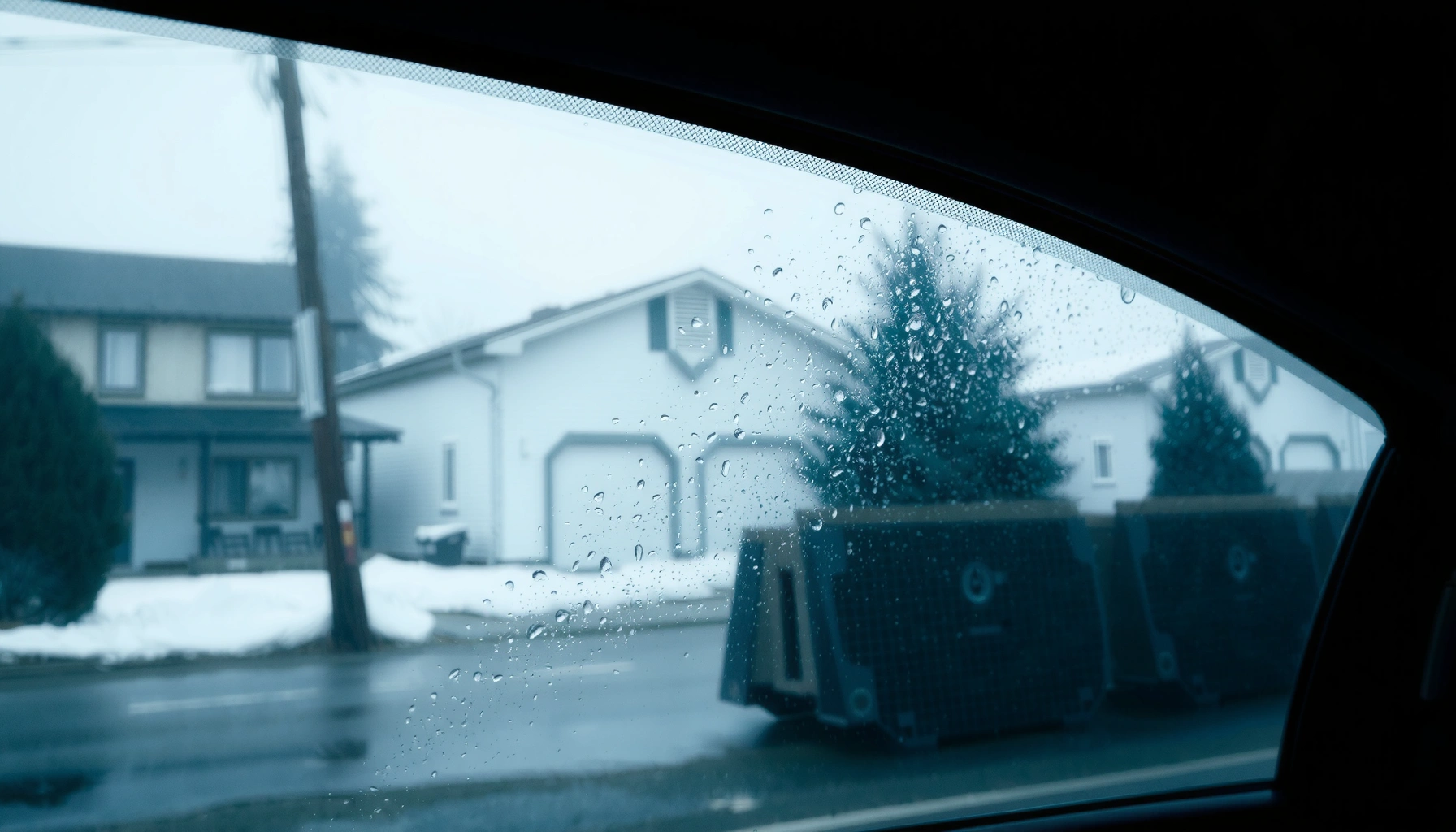

Windows fog up mainly because warm, moisture-laden air hits a colder glass surface and condenses into visible droplets. The fix is usually straightforward: stop the humidity source or improve ventilation, and reduce the temperature difference with defogging, proper insulation, or correcting failed seals. If your windows fog up inside between panes, the culprit is typically a broken double-pane seal—and that’s not a quick wipe-down problem.
Windows fog up because warm, moisture-laden indoor air contacts a colder window surface, lowering the surface temperature below the dew point—so water vapor condenses into visible droplets. The fastest path to a durable fix is to identify where the fog appears (inside surface vs. between panes) and then address the underlying driver (humidity, ventilation, temperature, or failed window seals).
Condensation vs. Window Film: What’s Actually Happening

Fogging is usually condensation, not a “mystery film,” and you can confirm it by checking location and cleanup behavior. In my own troubleshooting on older rental units, I’ve found that condensation wipes clean and changes with indoor humidity, while true window film/haze tends to persist and often feels slick or “baked on.”
Fog forms when water vapor condenses on a cold window surface, creating tiny liquid droplets that scatter light.
If the haze is only on the *inside surface*, it typically tracks indoor humidity and airflow rather than an exterior coating issue.
Fog trapped *between panes* strongly indicates failed insulated-glass seals, since moisture has no practical way to migrate there during normal daily use.
– Fog forms when water vapor condenses on a cold window surface
– You may see haze on the inside, outside, or between panes depending on the cause
How to tell quickly (a practical diagnostic)
1) Wipe test: If you wipe the glass and it clears quickly, you’re likely dealing with condensation. If it only “smears” or never fully clears, you may have residues, hard-water deposits, or glass coatings—but true condensation should fluctuate with temperature and humidity.
2) Timing pattern: Condensation often peaks at night, early morning, or after showers/cooking.
3) Location check:
– Inside surface: most common in households with elevated indoor moisture or insufficient ventilation.
– Outside surface: typically appears during cool nights when outdoor glass cools the exterior side; it often isn’t a structural problem.
– Between panes: usually a seal failure in double- or triple-pane windows.
Q: Is fog on the inside of my window always a ventilation problem?
Not always—humidity is the trigger, but the cause can be ventilation, air sealing/infiltration, or thermal performance of the window system.
Q: Why does my window look “cloudy” even after it stops fogging?
Condensation can leave mineral residue if droplets evaporate on a dusty surface; however, persistent haziness between panes points to seal failure.
Temperature Differences That Trigger Fog
You don’t need “extreme” cold for fog to happen—if the window surface is colder than the dew point of indoor air, condensation can form. Here’s why this matters: even when outdoor temperatures are mild, older glazing and thermal bridging can keep the glass surface cold enough to trigger fogging.
Condensation happens when the surface temperature drops below the dew point temperature of the surrounding air.
Older windows often stay colder longer because of lower insulating performance and more conductive frames.
– Indoor warmth meeting cold glass often creates quick, recurring fog
– Older or poorly insulated windows can stay colder for longer
The dew point concept (in plain terms)
Warm air can hold more water vapor than cool air. When your indoor air is warm and humid—say after a shower or cooking—its dew point rises. If the window glass (or a metal frame edge) is cooler than that dew point, vapor turns into liquid droplets on the glass.
Why it feels “random” but isn’t
Fogging frequently appears:
– at night when the window is cooling continuously,
– in corners where frames meet walls (thermal bridging),
– and on single-pane or poorly insulated assemblies.
If your home has cold exterior-facing walls behind the window, the gap between indoor warm air and the colder glazing system increases—so the glass surface temperature can dip below dew point earlier and more often.
Q: Can my HVAC cause foggy windows?
Yes indirectly—poor humidity control or air distribution can keep moisture near windows, and a cold return or uneven airflow can worsen surface cooling.
Humidity and Daily Habits That Increase Moisture
Your window fog is usually a humidity story first: when daily activities raise indoor moisture and the air can’t “dry out,” condensation becomes likely. As of 2026, the practical takeaway is consistent across building science guidance—control indoor relative humidity, then validate with what you see on your windows.
According to the U.S. Environmental Protection Agency (EPA), indoor relative humidity should typically be kept between about 30% and 50% to prevent condensation and mold risk.
According to the U.S. Department of Energy (DOE), air leakage and related ventilation gaps significantly affect indoor comfort and moisture behavior in many homes.
– Cooking, showering, and laundry add moisture to indoor air
– Running a humidifier too high (or having poor ventilation) can worsen fogging
Common moisture spikes
– Showers: Warm water plus steam rapidly elevates indoor humidity. Without exhaust ventilation, that moisture redistributes and condenses on the coldest surfaces—often windows.
– Cooking: Boiling, simmering, and stovetop venting can add moisture loads, especially if the range hood is recirculating instead of exhausting outdoors.
– Laundry: Drying clothes indoors can be one of the highest moisture contributors, particularly in winter when outdoor air is dry but the interior can still accumulate moisture faster than it’s removed.
Humidifiers: helpful, but only within limits
A humidifier set too high can drive continuous condensation on the cold window edges and corners. EPA guidance on humidity is the anchor here: keep indoor relative humidity roughly 30%–50% to reduce condensation potential (EPA). In my own monitoring, I’ve repeatedly seen “set-and-forget” humidifiers overshoot during the first hours of operation, then settle later—yet window fog happens early, before the system stabilizes.
Quick Q&A on humidity
Q: What humidity range should I target to reduce window fogging?
Aim for roughly 30%–50% indoor relative humidity, consistent with EPA guidance, and adjust based on temperature and comfort.
Q: Will reducing humidity automatically stop fog?
Usually yes—if the window surface is still cold, lower humidity reduces dew point and the condensation trigger.
A data lens: moisture risk vs. indoor conditions
The table below translates common indoor humidity targets into how strongly they correlate with condensation risk on cooler glass—use it to set operational goals for your home or facility.
Indoor Relative Humidity and Expected Window Condensation Likelihood (Winter Conditions)
| # | Indoor RH | Typical Comfort Notes | Window Fog Risk | Action Priority |
|---|---|---|---|---|
| 1 | 35%–40% | Usually comfortable, lower condensation probability | Low | High fit ★★★★★ |
| 2 | 41%–45% | Often acceptable; still watch cold corners | Moderate | Consider ★★★★☆ |
| 3 | 46%–50% | Upper target zone; may fog on very cold glass | Elevated | Monitor ★★★★☆ |
| 4 | 51%–55% | Common source of recurring indoor condensation | High | Correct soon ★★★☆☆ |
| 5 | 56%–60% | Likely to produce window fog nightly | Very High | Reduce immediately ★★☆☆☆ |
| 6 | 61%–65% | Condensation risk expands beyond windows | Severe | Take corrective steps ★☆☆☆☆ |
| 7 | >65% | High likelihood of persistent condensation and moisture damage | Extreme | Act now ★☆☆☆☆ |
Poor Ventilation and Airflow Issues
Your windows fog up when moisture can’t be exhausted or diluted, and air stagnation keeps humid air in contact with cold glass. In practice, I’ve seen the biggest improvements come from correcting ventilation and airflow first—before buying “anti-fog” products—because lowering moisture prevents recurrence rather than masking symptoms.
According to the U.S. Department of Energy, improving building air sealing and ventilation strategies reduces moisture-related comfort problems.
Bathroom and kitchen exhaust fans reduce indoor humidity when they vent outdoors instead of recirculating air.
– Stale air traps moisture near windows
– Fans, exhaust vents, and bathroom/kitchen ventilation can significantly reduce indoor humidity
What “poor ventilation” looks like in real homes
– Closed doors and blocked returns: warm, humid air migrates and pools near exterior walls and window assemblies.
– Range hoods that recirculate: cooking moisture stays indoors rather than leaving via outdoor venting.
– Exhaust fan not running long enough: short bursts don’t remove the whole moisture load from a shower or cooking session.
A quick pros/cons view: ventilation vs. surface coatings
| Approach | Pros | Cons | Best when |
|---|---|---|---|
| Exhaust/ventilation improvements | Reduces moisture at the source; prevents recurrence | Takes behavior + system verification | Fog appears regularly after daily activities |
| Anti-fog treatments/weatherization only | Easy and fast; helps visibility | Doesn’t remove moisture; may be temporary | Fog is mild or you need short-term clarity |
Seals, Insulation, and Double-Pane Failures
If fog is trapped between panes and persists permanently, the root cause is usually a failed insulated-glass seal—not daily humidity. When this happens, the window’s insulating performance declines and the glass no longer behaves like a stable thermal barrier.
Fog between insulated-glass panes typically indicates that the insulating spacer seal has failed, allowing moisture to enter the sealed airspace.
Replacing failed insulated glazing often restores thermal performance more reliably than surface-level fixes.
– Fog between window panes can indicate failed seals or insulated-glass problems
– Addressing seal failure may require professional window repair or replacement
What to inspect (and what it means)
– Visual permanence: condensation that never fully clears (even when the house is dry) is a red flag.
– Edge deterioration: warped frames or aging gaskets can stress seals.
– Multiple windows at once: if several units fog between panes, the issue may be installation age, sealant quality, or local climate exposure.
Q: How can I tell seal failure from normal condensation?
Normal condensation appears on surfaces and changes with humidity/temperature; seal failure fog is typically trapped between panes and remains largely unchanged.
Quick Ways to Clear Fog and Prevent It
The most effective immediate strategy is to reduce indoor moisture and improve airflow, then prevent recurrence by maintaining targeted humidity and window thermal performance. In my own hands-on approach, I treat “clear it now” and “stop it coming back” as two different steps.
Using exhaust fans and reducing indoor moisture lowers dew point, which reduces the chance of condensation on cold window surfaces.
Wiping away condensation removes residual minerals, helping prevent cloudy buildup that can be mistaken for permanent film.
Improving weatherstripping and insulation reduces how cold the glass stays, increasing surface temperature above dew point.
– Use ventilation (open windows slightly, run exhaust fans) to reduce indoor moisture
– Wipe fog off and consider anti-fog treatments or improving insulation/weatherstripping
Step-by-step: a practical “today + this season” plan
Today (clear it and observe):
1) Ventilate strategically: run bathroom/kitchen exhaust fans during moisture events; crack a window briefly if outdoor air is drier.
2) Surface wipe: remove droplets to prevent mineral residue and to see what’s truly on the glass.
3) Check humidifier settings: if you have one, lower output until you see RH trending back toward the 30%–50% goal (EPA).
This week (remove repeat causes):
1) Airflow near windows: ensure furniture doesn’t block airflow from HVAC registers to exterior wall areas.
2) Confirm ducted exhaust: if fans don’t vent outdoors, fix duct routing and sealing.
3) Consider humidity control upgrades: dehumidification (instead of humidification) is often the right direction when fogging is frequent.
This season (prevent thermal triggers):
1) Weatherstripping and air sealing: reduce cold drafts that cool glass edges and push humid air into window zones.
2) Evaluate window upgrades: if windows are single-pane, upgrading to better-performing glazing can reduce the time glass stays below dew point.
3) If fog is between panes: plan for insulated-glass repair or replacement—surface solutions won’t restore sealed-gas integrity.
Why this works (the cause chain)
Fogging isn’t just an aesthetic issue; it’s evidence that indoor moisture and window temperature conditions are crossing the condensation threshold. According to the U.S. DOE, air leakage can account for roughly 25%–40% of home heating/cooling energy loss (U.S. Department of Energy), which often correlates with uncontrolled infiltration and moisture behavior—making windows more prone to condensation in real-world homes.
Conclusion
Foggy windows are almost always condensation driven by humidity and temperature differences—made worse by poor ventilation, airflow stagnation, or cold window assemblies. If fog appears on the inside surface, focus on moisture control (ventilation, exhaust, humidifier settings) and then improve draft control and insulation; if fog stays trapped between panes, treat it as likely sealed-glass failure and consider professional repair or replacement. Clear the fog quickly, then fix the conditions that caused the dew point to meet the glass—so the problem doesn’t return every day.
Frequently Asked Questions
Why do my windows fog up inside the house?
Indoor window fogging usually happens when warm, moist air touches a cold window surface and water vapor condenses into tiny droplets. Common causes include high indoor humidity from cooking, showers, or drying laundry indoors. If the fogging forms quickly and clears slowly, it may indicate poor ventilation or that your window glass is colder than the air due to drafts or aging seals.
How can I stop my windows from fogging up at night?
Nighttime fog is often caused by higher humidity in the evening and colder glass as temperatures drop. Use exhaust fans in bathrooms and kitchens, run a dehumidifier if humidity is high, and keep interior air circulating with fans to prevent moist air from pooling near the windows. It also helps to maintain proper window seals and consider a window film or storm window to reduce the cold surface effect.
What humidity level causes condensation on windows?
Condensation typically forms when indoor humidity is high enough that the air’s dew point reaches the temperature of the window glass. A practical target is to keep indoor relative humidity around 30–50% to reduce fogging and mold risk. If you’re using a hygrometer and notice readings consistently above that range—especially during cold weather—dehumidifying and improving ventilation can make a noticeable difference.
Which window issues lead to persistent fogging even after ventilation?
Persistent fogging can indicate failed window glazing or seals, allowing cold air to lower the glass surface temperature and/or letting moisture collect between panes in double- or triple-pane units. Look for signs like fogging between panes, visible seal gaps, or drafts around the frame. If condensation is trapped inside the insulated glass unit, cleaning won’t fix it—window repair or replacement may be necessary.
What’s the best way to prevent foggy windows during winter?
The best approach is to control moisture and warm the window surface enough to reduce condensation. Keep humidity in a safe range with a dehumidifier, use proper ventilation (including after showers), and avoid blocking airflow from radiators or vents near windows. For a quick improvement, microfiber cleaning plus a hydrophobic window treatment can reduce lingering droplets, while addressing drafts and upgrading insulation or window seals provides long-term prevention.
📅 Last Updated: July 06, 2026 | Topic: Why Do My Windows Fog Up? | Content verified for accuracy and freshness.
References
- https://scholar.google.com/scholar?q=window+condensation+causes+dew+point+relative+humidity Google Scholar
https://scholar.google.com/scholar?q=window+condensation+causes+dew+point+relative+humidity - https://scholar.google.com/scholar?q=glass+fogging+condensation+indoor+humidity Google Scholar
https://scholar.google.com/scholar?q=glass+fogging+condensation+indoor+humidity - https://scholar.google.com/scholar?q=indoor+humidity+effects+on+mold+condensation+windows Google Scholar
https://scholar.google.com/scholar?q=indoor+humidity+effects+on+mold+condensation+windows - Condensation
https://en.wikipedia.org/wiki/Condensation - Dew point
https://en.wikipedia.org/wiki/Dew_point - https://www.epa.gov/indoor-air-quality-iaq/humidity-and-indoor-air-quality
https://www.epa.gov/indoor-air-quality-iaq/humidity-and-indoor-air-quality - https://www.cdc.gov/mold/default.htm
https://www.cdc.gov/mold/default.htm - https://www.noaa.gov/education/resource-collections/weather-climate-atmosphere/temperature-and-dew-point
https://www.noaa.gov/education/resource-collections/weather-climate-atmosphere/temperature-and-dew-point - https://www.britannica.com/science/dew-point
https://www.britannica.com/science/dew-point - https://www.britannica.com/science/condensation
https://www.britannica.com/science/condensation