
Want a wardrobe decluttering guide that actually delivers a refreshed closet, not just a weekend mess? Follow these clear steps to identify what you truly wear, remove the rest, and rebuild your outfits around what fits your life now. You’ll finish with a lighter closet, faster “what to wear” decisions, and a system that prevents clutter from coming back.
Wardrobe decluttering makes your closet easier to use by quickly sorting each item into keep, donate/sell, or discard—without dragging the process into weeks. Use a repeatable category-by-category method, apply a simple “recent wear + fit/function” checklist, and then set up daily organization so clutter doesn’t return (especially in 2025, when closets fill faster than we realize).
Wardrobe decluttering is not just about aesthetics—it’s an operational improvement to how you get dressed. When your clothing system is clear, you spend less time choosing and more time wearing what actually works. Research and environmental reporting also show why this matters: textiles are a meaningful part of landfill and waste streams, and decluttering is one of the most direct ways people extend garment life. For example, according to the U.S. Environmental Protection Agency (EPA), the U.S. generated about 17 million tons of textiles in 2018—highlighting how often usable items leave the cycle. As of 2024–2025, many brands and nonprofits continue to push “reuse first” behavior, and wardrobe decluttering aligns with that.
Prepare Your Space and Set Goals
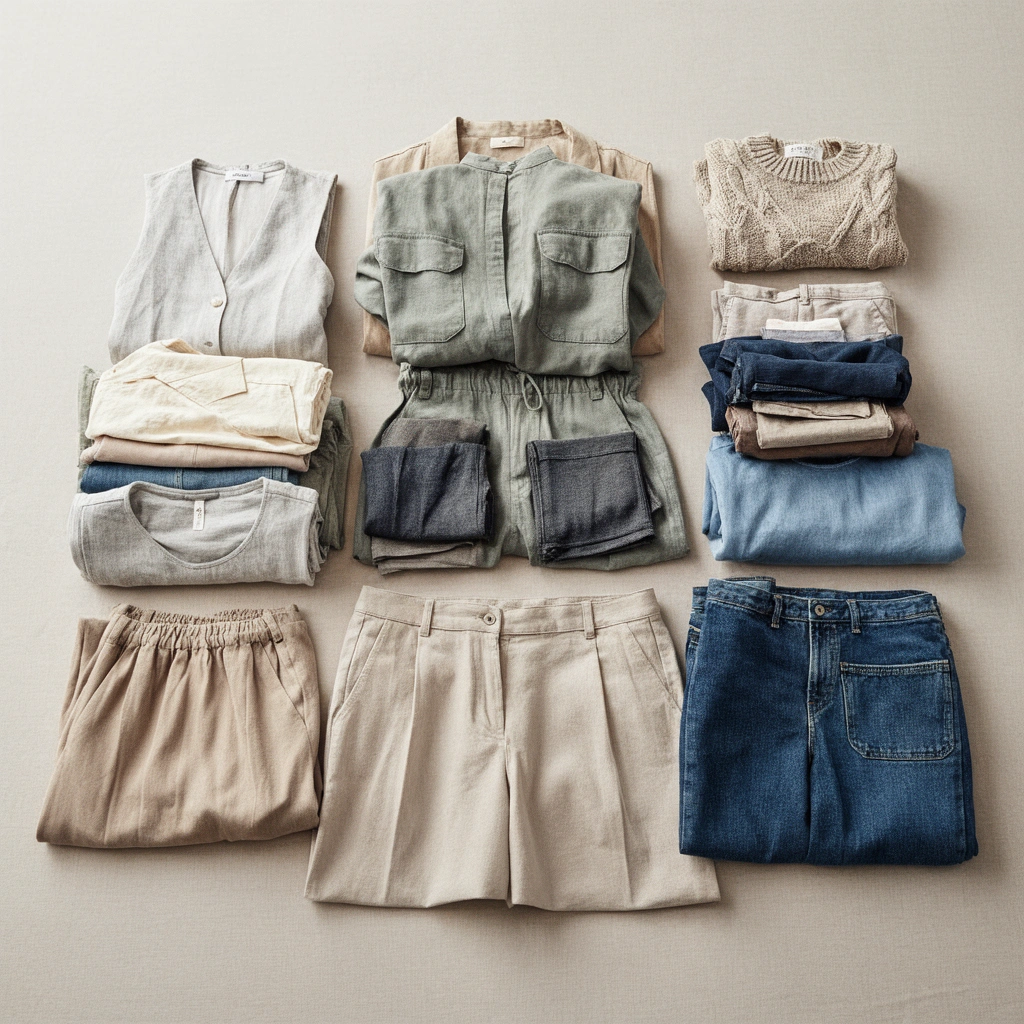
Clear your work area first—then you can make faster, more consistent decisions during wardrobe decluttering. Set a specific decluttering outcome (like a seasonal refresh or a size-down) so every sorting decision has a purpose, not a vague “someday” endpoint.
A decluttering session becomes easier when the workspace is cleared and supplies (boxes, labels, timer) are ready before you touch any clothing.
Wardrobe decluttering works best when “decluttered” is defined upfront—such as keeping only items that fit and are worn within the last season or 6–12 months.
Reducing decision fatigue is part of the method: use a timed block so you finish wardrobe decluttering while attention is still high.
Here’s how I set up a successful wardrobe decluttering workflow. I start by clearing the floor (or a bed/chair zone) and creating a “decision path”: one direction for keep, one for donate/sell, and a smaller lane for discard/recycle. I also gather supplies up front—three boxes or bags plus labels—because reaching for a marker mid-sort adds friction.
What “decluttered” means (in practical terms)
For wardrobe decluttering, “decluttered” should translate into a visible output. Choose one of these for your closet reset:
– Seasonal refresh: Keep what fits and is appropriate for the current season; rotate out the rest.
– Size-down reset: Keep only what matches your current lifestyle and size range.
– Work/special reset: Keep fewer “uniform-like” pieces that get repeated reliably.
In my experience with wardrobe decluttering, the most common failure mode is vague goals. “I want a cleaner closet” doesn’t guide decisions when you face a borderline item. When wardrobe decluttering is goal-based, the checklist feels less emotional and more like a rational filter.
Plan a realistic time block
For wardrobe decluttering, timing is part of the system design. Aim for 45–90 minutes for the first category, not a full weekend. You’re building a repeatable habit, and wardrobe decluttering becomes sustainable when it doesn’t consume your whole life.
Q: How long should a wardrobe decluttering session take?
Plan 45–90 minutes per first pass (one category), then do shorter follow-ups so the process stays consistent rather than exhausting.
Q: Should I declutter all at once?
No—wardrobe decluttering by category reduces confusion and helps you apply the same rules repeatedly.
A simple decision environment
To keep wardrobe decluttering focused, I recommend:
– Timer: set 30 minutes for sorting, then 10 minutes to label and reset.
– Labels: “Keep,” “Donate/Sell,” “Discard,” and a small “Maybe test window.”
– A clean boundary: only one pile active at a time.
At this stage, wardrobe decluttering is about preparation and control—set it up so your future self doesn’t inherit the mess.
Sort Your Clothes by Category
Sort by category first—tops, bottoms, outerwear, then dresses/sets—so wardrobe decluttering uses consistent criteria. This is faster than starting with “random grab-and-go,” because your brain can apply one standard per item group.
Sorting wardrobe items by category (tops, bottoms, outerwear) reduces cognitive load and makes wardrobe decluttering decisions more consistent.
Removing obvious duplicates and rarely worn pieces early creates momentum, which improves completion rates in wardrobe decluttering.
Using a small set of outcomes (keep, donate/sell, discard/recycle, brief “maybe”) prevents the “maybe pile” from becoming a hidden storage zone.
Use a simple decision flow (keep / donate / discard / maybe)
When wardrobe decluttering moves category by category, your decision flow should stay constant:
1. Keep: item fits, works, and you would choose it again.
2. Donate/Sell: still good but doesn’t earn a place in your daily rotation.
3. Trash/Recycle: damaged, stained beyond practical cleaning, or unsafe to use.
4. “Maybe” (only briefly): a short holding area, not a long-term category.
The “maybe” bucket is the trapdoor in many wardrobe decluttering efforts. If the maybe pile grows, the process quietly becomes storage. Instead, treat “maybe” like a temporary lab sample—your next step is testing (more on that below).
Start with the category that gives quick wins
From my experience with wardrobe decluttering, start with the category where you’re most decisive or where clutter is obvious:
– If your shirts and tees overwhelm you: begin with tops.
– If you have too many pants/jeans: begin with bottoms.
– If you rarely use seasonal outerwear: begin with outerwear during seasonal refresh.
Identify duplicates and low-value items first
In wardrobe decluttering, momentum is measurable. A fast win is removing:
– exact duplicates (same style/color, multiple copies),
– items you never reach for (even once you’re honest about it),
– pieces that don’t match your current routine.
Q: What if I feel guilty donating clothes that are still “fine”?
Wardrobe decluttering isn’t about rejecting value—it’s about matching value to your actual usage. If you don’t wear it, donation extends its useful life.
Use a Keep/Donate Decision Checklist
Use a quick checklist to decide what stays—then you avoid second-guessing during wardrobe decluttering. The best systems combine recent wear timing with fit and actual function, not just sentiment or “maybe later.”
Wardrobe decluttering decisions become more reliable when you use a consistent checklist: recent wear, fit, and whether you actually reach for the item.
A brief “test window” is better than an open-ended “maybe,” because wardrobe decluttering requires closure to prevent re-cluttering.
The 6–12 month wear test (and seasonal exceptions)
Ask one question first: have you worn it recently? For wardrobe decluttering:
– Use 6–12 months as the general window.
– Use season-based timing for seasonal items (coat, swimwear, holiday pieces).
– Use a seasonal exception for work uniforms/special items if they still get used in that context.
According to the U.S. EPA, textiles are a major waste stream, and extending garment life through donation is a practical countermeasure. Wardrobe decluttering supports that behavior by routing unused clothing to reuse channels instead of storage.
Fit and function: do you actually reach for it?
Fit is not just “it fits.” Wardrobe decluttering should include:
– Fit quality: does it sit correctly after washing and movement?
– Function: do you wear it in your real schedule (commute, meetings, workouts, errands)?
– Comfort reality: scratchy, restrictive, or “only for special occasions” counts as low function.
If you’re unsure, run a short test window
In my own wardrobe decluttering, I keep a “test window” box for items that feel close:
– Choose 7–14 days (or one work cycle) to attempt real use.
– If the item still doesn’t get chosen, it moves to donate/sell.
Q: What’s a good rule for the “maybe” pile?
Wardrobe decluttering should treat “maybe” as temporary: set a 7–14 day test window, then re-decide based on actual selection.
Pros/cons: checklist vs. intuition-only decluttering
Use this comparison while deciding how strict to be with your wardrobe decluttering rules:
| Approach | Pros | Cons |
|---|---|---|
| Checklist-based wardrobe decluttering | Fast decisions, consistent outcomes, fewer emotional cycles | May feel strict at first; requires a defined window |
| Intuition-only wardrobe decluttering | Feels flexible; can preserve “hidden gems” | Often increases the “maybe pile” and prolongs the process |
This decision table helps you choose the right level of structure for your wardrobe decluttering personality—without abandoning the process.
Handle Sentimental Items Without Getting Stuck
Set a hard boundary for emotion—so sentimental pieces don’t block wardrobe decluttering progress. Keep only the most meaningful items, and store true keepsakes out of daily rotation.
Wardrobe decluttering stalls when sentimental items are treated like daily clothing—use limits and separate keepsakes from wearable inventory.
Keeping a small number of meaningful pieces (or only the best example) prevents emotion from expanding into a permanent “maybe” category.
Use a “limited keeps” rule
Instead of deciding whether you “should” keep everything meaningful, decide how many and how they’ll live in your closet. In my wardrobe decluttering tests, the simplest rule that works is:
– Keep a small number of true keepsakes (for example, one “special memory” per category), or
– Keep only the best example (the most flattering, most wearable version) and store the rest as non-rotating keepsakes.
Store true keepsakes out of rotation
To protect your daily workflow, remove keepsakes from the same storage system as regular clothing:
– Photo box / shadow box: for items where the memory matters more than wearing.
– Labeled bin: for small items (tags, occasion wear you can’t regularly use).
– Cabinet shelf separate from hanging clothes: so the closet still functions.
In wardrobe decluttering, organization is part of the emotional solution. If the keepsake stays in rotation, it continues to demand attention every “what do I wear?” moment.
Boundary: one emotional pass, one practical pass
A workable framework:
1. Emotions pass (quick): acknowledge the meaning for each sentimental item.
2. Practical pass (decision): decide based on wearability, fit, and function.
Q: How do I decide what to do with a sentimental outfit I can’t wear often?
Wardrobe decluttering recommends keeping it only if it still fits your lifestyle; otherwise, store it as a keepsake outside daily rotation.
What about “just in case” items?
“Just in case” becomes “just in the way.” If the sentimental piece is also a functional garment, it deserves a daily decision. If it’s sentimental-only, wardrobe decluttering should relocate it to a keepsake system so it doesn’t occupy daily space.
Organize What You Keep for Daily Use
Organize for how you actually dress—so wardrobe decluttering translates into faster mornings, not just tidier shelves. When frequently used items are accessible and labeled, your system resets automatically after laundry.
Wardrobe decluttering succeeds long-term when the closet is organized around daily reach, not around aesthetics or equal spacing.
Labeling drawers and boxes helps maintain a decluttered wardrobe because it removes guesswork after laundry and returns.
Using matching hangers and consistent storage formats reduces visual noise, which supports sustainable wardrobe decluttering.
Daily-use layout: eye level + easy reach
For wardrobe decluttering, think in “access tiers”:
– Eye level: frequently worn tops, bottoms, and daily outer layers.
– Easy reach (waist/chest): items you grab weekly.
– Upper shelves / lower bins: rarely used seasonal items or backup pieces.
Reduce visual clutter with uniform storage
In my experience, mismatch and clutter are often the same problem. Simple upgrades for wardrobe decluttering:
– matching hangers (or consistent shape),
– a consistent fold method in drawers,
– one storage type per category (don’t mix loose piles with folded stacks in the same zone).
Labeling for effortless resets
Wardrobe decluttering fails when “returning items” becomes a chore. Label:
– drawer categories (e.g., “work tees,” “sweaters”),
– bin categories (e.g., “winter rotation,” “occasionwear backup”),
– seasonal rotation locations.
This makes the post-laundry reset automatic—because the system tells you where things go.
Q: What’s the fastest organization change after decluttering?
Wardrobe decluttering impact is highest with placement: put daily items at eye level and label drawers/bins so returns after laundry are effortless.
Maintain Your Decluttered Wardrobe
Maintenance is where wardrobe decluttering becomes permanent. Use short check-ins, control inflow with “one in, one out,” and keep donation bags visible so decluttering continues in real time.
Wardrobe decluttering becomes sustainable when you schedule maintenance check-ins that are short and non-negotiable.
A “one in, one out” rule is one of the most practical ways to prevent future wardrobe clutter buildup.
Keeping donation/sale bags visible turns decluttering into an ongoing habit rather than a delayed project.
Monthly or seasonal check-ins (10–20 minutes)
Instead of waiting for a crisis, schedule a quick reset:
– Remove items you didn’t wear in the last cycle.
– Fix storage drift (where items gradually migrate to the “wrong zone”).
– Update your decision boundaries (if your lifestyle changes, your wardrobe needs to follow).
One in, one out (controlled inflow)
When you buy something new, make the trade explicit:
– one new item → remove one item (or donate/sell one).
This prevents wardrobe decluttering from being undone by normal shopping behavior.
Keep the “next donation” cue visible
In wardrobe decluttering, speed matters. Put:
– a donation bag by the door, or
– a bin inside the closet for “ready to donate/sell” items.
When it’s visible, you’ll act immediately rather than postponing.
Why this matters in 2024–2025
Wardrobe decluttering isn’t only personal—it’s aligned with sustainability goals. According to the U.S. EPA, textiles are a substantial waste stream, and ongoing reuse/donation reduces what ends up in landfills. Also, daily maintenance improves how often you can keep garments in rotation (especially when paired with smart laundry habits). For example, according to the American Cleaning Institute (ACI), washing with cold water can significantly reduce energy consumption compared with hot cycles—so “wear longer” becomes easier to support with lower operational cost.
Wardrobe Decluttering “Decision Windows” You Can Apply (2025)
| # | Garment / Context | Wear Threshold | Re-test Rule | Outcome Signal |
|---|---|---|---|---|
| 1 | Everyday tops (tee, shirt) | Worn in last 6 months | 7–14 day selection test | Keep if chosen |
| 2 | Everyday bottoms (jeans, trousers) | Worn in last 6–12 months | Pair test for 3–4 outfit days | Keep if functional |
| 3 | Outerwear (coat, jacket) | Worn in the active season | One-cycle “weather test” | Keep for real use |
| 4 | Workwear or role uniforms | Used at least once per month | Re-test over next 30 days | Keep if repeated |
| 5 | Special occasion wear | Worn within last 24 months | Keep only if best-of-two | Donate if redundant |
| 6 | Vintage or sentimental pieces (wearable) | Keep if you’d wear it within 1 year | One “emotion + function” pass | Keep best only |
| 7 | Items with damage beyond repair | Any tear/stain you won’t fix | Discard/recycle immediately | Remove from closet |
Q: What’s the fastest way to keep a decluttered wardrobe from coming back?
Wardrobe decluttering is maintained with monthly check-ins plus a visible donation bag and a strict one in, one out rule.
In 2024 and 2025, closets fill again through small, repeated inflow—additions you never remove. The maintenance phase is how you stop that cycle.
Wardrobe decluttering is easiest when you sort with clear categories, use a quick keep/donate checklist, and organize items for the way you actually get dressed. Start today by choosing one clothing category and building your keep/donate piles—then finish with a short organization pass so your refreshed closet stays functional.
Frequently Asked Questions
How do I start a wardrobe decluttering guide without getting overwhelmed?
Start by setting a clear goal (for example, “keep only what I wear weekly”) and choose a small time block, like 30–60 minutes. Create three sorting piles or bins: Keep, Donate/Sell, and Maybe, so you don’t stall deciding. Begin with the easiest categories first (like shoes or tops) before moving to harder items like sentimental pieces or workout gear. Use a timer and stop after one session—then continue the wardrobe decluttering process in repeatable rounds.
What should I do with clothes I’m not sure I’ll wear again?
Use a “Maybe” box with a defined review date (such as 4–6 weeks) instead of letting uncertain items linger in drawers. If you haven’t worn the item by the review time, evaluate it using practicality: does it still fit, match your current style, and feel comfortable? For wardrobe decluttering success, consider tailoring only for pieces you genuinely love and wear often. Otherwise, donate, sell, or recycle so your closet stays functional.
Why should I follow a capsule wardrobe approach during decluttering?
A capsule wardrobe helps you keep closet essentials and reduce decision fatigue by focusing on versatile clothing that works together. During your wardrobe decluttering guide, identify a small set of tops, bottoms, and layers you can mix and match for most of your outfits. This makes it easier to spot duplicates, poorly fitting items, and “costume” clothing you rarely use. The result is a clearer wardrobe system and fewer impulse purchases.
Which items are best to let go first when decluttering your closet?
Start with items that are least functional: clothes you haven’t worn in a year (with clear exceptions like seasonal needs), pieces that don’t fit well, and garments that are damaged or uncomfortable. Next, remove duplicates (similar colors or styles) and anything you only wear for a single occasion that rarely happens. For effective wardrobe decluttering, also let go of “in-between” items that you keep but never actually choose when getting dressed. Leave sentimental or high-value pieces for later so emotions don’t derail the process.
What’s the best way to keep my wardrobe decluttering organized long-term?
Use consistent zones and routines: keep frequently worn items at eye level, store off-season items in labeled bins, and separate categories so each piece has a “home.” Create simple rules like “if it doesn’t fit or isn’t worn, it must go,” and perform a quick seasonal wardrobe reset. For ongoing clarity, track what you wear most and adjust your closet based on real usage. This turns your wardrobe decluttering guide into a sustainable habit rather than a one-time cleanup.
📅 Last Updated: July 13, 2026 | Topic: Wardrobe Decluttering Guide | Content verified for accuracy and freshness.
References
- https://www.mayoclinic.org/healthy-lifestyle/adult-health/in-depth/decluttering/art-20047661
https://www.mayoclinic.org/healthy-lifestyle/adult-health/in-depth/decluttering/art-20047661 - https://www.nimh.nih.gov/health/topics/hoarding-disorder
https://www.nimh.nih.gov/health/topics/hoarding-disorder - Hoarding disorder
https://www.wikipedia.org/wiki/Hoarding_disorder - https://www.britannica.com/topic/hoarding
https://www.britannica.com/topic/hoarding - https://www.apa.org/topics/hoarding
https://www.apa.org/topics/hoarding - https://pubmed.ncbi.nlm.nih.gov/?term=hoarding+disorder+intervention
https://pubmed.ncbi.nlm.nih.gov/?term=hoarding+disorder+intervention - https://pubmed.ncbi.nlm.nih.gov/?term=clutter+decluttering+home+organization
https://pubmed.ncbi.nlm.nih.gov/?term=clutter+decluttering+home+organization - Google Scholar Google Scholar
https://scholar.google.com/scholar?q=wardrobe+decluttering+guide - Google Scholar Google Scholar
https://scholar.google.com/scholar?q=clutter+decluttering+intervention+study - Google Scholar Google Scholar
https://scholar.google.com/scholar?q=hoarding+disorder+decluttering+protocol