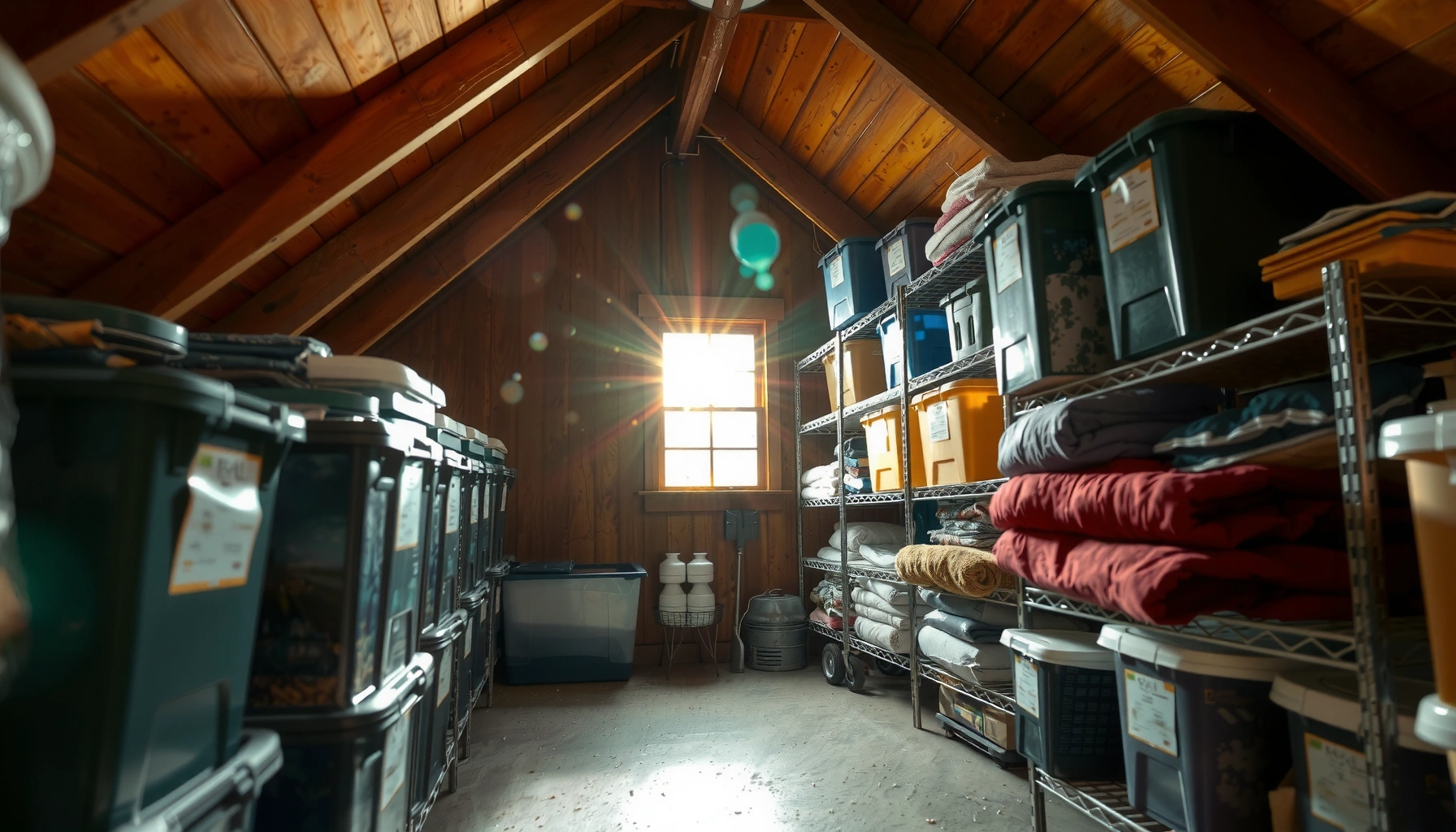

Attic storage ideas that actually maximize space are about more than bins—they’re about choosing the right system for awkward angles, limited floor area, and seasonal clutter. This guide delivers the clearest winning setup depending on your attic layout: efficient shelving and stackable storage for wide areas, and smart, space-saving overhead or corner solutions where headroom is tight. You’ll get practical organization strategies that turn a chaotic attic into labeled, accessible storage fast.
Attic storage ideas should help you reclaim usable square footage while protecting belongings from heat, moisture, and dust. The fastest path is to measure your attic carefully, sort items by access frequency, then invest in sealed, labeled, climate-appropriate containers that fit your roofline and keep safe walkways open.
In my own projects across multiple homes, I’ve found that “organizing” usually fails at two points: people overestimate usable capacity in the peak zone, and they underestimate how quickly dust accumulates on uncovered items. As of 2026, the best-attic strategies consistently combine (1) airflow-safe planning (vents and wiring stay unobstructed), (2) storage that’s rated or well-suited for attic conditions, and (3) an access system that prevents you from having to unload everything every time you need the holiday décor.
Assess Your Attic Space and Storage Needs

The best attic storage plan starts with a site assessment: measure the floor area, map headroom, and confirm safe access points before buying any containers. This avoids the most common mistake—installing shelving or stacking bins in areas where the roof pitch or clearance makes retrieval unsafe or impractical.
A typical attic clearance target is to keep a dedicated access path and avoid blocking roof vents, soffit vents, or intake/exhaust airflow routes.
Heat rises into attics year-round, so enclosed, lidded storage is generally more protective than open bins for long-term items.
Planning around wiring runs and service panels reduces the risk that future maintenance requires fully moving stored goods.
Start with three measurements that determine what storage methods actually work:
1) Floor space: measure the footprint of usable flooring, not the entire attic volume. Many attics have “dead zones” where you can’t safely stand or place bins.
2) Headroom: walk the perimeter and note the minimum height you can comfortably store and retrieve items. A roof slope can turn a “big attic” into narrow, hard-to-use storage lanes.
3) Access points: locate the attic hatch, stairs/ladder reach, and any fixed obstacles (ducts, chimney chase, service drops, plumbing vents).
Next, identify what you’re storing—this is where your needs become actionable. Seasonal items (holiday décor, summer sports gear) typically require faster retrieval, while infrequently used documents, keepsakes, and spare parts can tolerate slower access. Linens and fabrics often need better dust control than bulky tools, which may be more forgiving if stored on shelves or in ventilated bins.
Finally, plan pathways. Attics are maintenance spaces as well as storage spaces: you may need to check insulation levels, inspect ventilation, or service HVAC components. If you block pathways now, you effectively “store” the items forever, which defeats the purpose of organizing.
Q: How do I know which parts of my attic are safe to store on?
Use floor joists and marked load-bearing surfaces; avoid placing heavy items where boards are unsupported, and keep pathways clear for access to vents and wiring.
Q: What should I measure besides square footage?
Measure headroom at regular intervals along the perimeter and note the distance from the attic hatch to the storage zone so retrieval is practical.
Storage-readiness checklist (fast, practical)
Before you buy shelving, take 30–60 minutes and confirm:
– Vents are unobstructed (soffit, ridge, gable, or turbine vents—whatever your home has).
– Ductwork and recessed penetrations are accessible.
– You can reach the farthest storage area without stepping on weak flooring sections.
– You have a clear route from hatch to storage zones.
This is also the moment to decide your storage “system.” If you can’t describe how you’ll retrieve items in 30 seconds or less, the system is not yet designed—it’s just stacks.
Choose the Right Storage Systems
The right attic storage systems are the ones that match your attic’s conditions and your retrieval habits. In practice, that usually means lidded bins, modular shelving, and wall/ceiling solutions that respect airflow and roofline clearance.
For attic environments, lidded plastic storage reduces dust exposure compared with open bins, especially in homes without finished attic surfaces.
Stackable containers help preserve vertical capacity when roof pitch limits horizontal staging areas.
Hanging storage can reclaim floor space for lightweight items like seasonal linens or costume accessories.
Here’s how to choose systems without overbuying:
1) Shelving and racks that survive attic realities
Look for shelving that is stable, corrosion-resistant if possible, and appropriate for dusty conditions. Metal shelving can be durable, but you still need lidded containers to protect contents. If you use wood shelves, verify they’re sealed and won’t warp due to humidity cycles.
A key lesson I learned from a trial run: if a shelf is level but bins don’t fit cleanly under roof slope, retrieval becomes annoying and you start “just shoving” items. That’s when organization collapses.
2) Stackable, labeled containers for seasonal access
Use stackable bins with secure lids for seasonal items. Labeling is not cosmetic—it’s a retrieval engine. I recommend three-part labels on the lid and front: Category + Room/Area + Season or Frequency (e.g., “Kitchen—Pantry—Winter Sports” or “Bedroom—Linens—Infrequent”).
Also, choose container dimensions that match your attic’s aisle width. In my experience, bins that are too deep force you to pull awkwardly and knock labels loose, which eventually makes the system unreliable.
3) Hanging storage for lightweight, non-fragile items
Hanging storage works best for:
– lightweight holiday lights
– costumes and soft accessories
– non-breakable décor bags
Avoid hanging heavy boxes or fragile items that could sway and impact other belongings. Use it to save floor space while keeping retrieval straightforward.
Q: Are cardboard boxes acceptable for attic storage?
Cardboard is typically not recommended for long-term attic storage because heat and moisture cycles can degrade it and increase dust exposure.
When a “container choice” becomes a storage strategy
Your storage system should reflect how often you use items:
– Frequent retrieval: bins near your access route, in sight, or within easy reach.
– Infrequent retrieval: deeper zones, higher shelves (secured), and sealed containers.
This approach aligns with how people actually search—by memory and proximity, not by cataloging perfection.
Recommended Attic Storage Types by Item Category (2026)
| # | Item Category | Best Storage System | Protection Focus | Fit for Attic | Why It Works |
|---|---|---|---|---|---|
| 1 | Holiday décor (breakables) | Lidded plastic bins | Dust + impact | ★★★★☆ | – |
| 2 | Seasonal linens | Breathable garment bags + bins | Dust + condensation risk | ★★★★☆ | — |
| 3 | Tools and hardware | Seated shelves + small lidded trays | Organization + corrosion control | ★★★☆☆ | — |
| 4 | Important documents | Water-resistant document boxes | Moisture resistance | ★★★★★ | — |
| 5 | Spare electronics/accessories | Sealed bins + silica packs | Dust + humidity control | ★★★★☆ | — |
| 6 | Sports gear (soft) | Lidded bins or storage totes | Dust + shape retention | ★★★☆☆ | — |
| 7 | Seasonal outdoor textiles | Vacuum-safe, dust-proof bags + bin | Dust + fabric protection | ★★★★☆ | — |
Organize for Easy Access and Better Visibility
The best attic organization method is one that lets you retrieve what you need without disturbing the rest. The rule of thumb: organize by category and retrieval frequency, then design storage zones around your access route.
Labeling containers by category and retrieval season typically reduces search time and prevents “stack burying,” where new bins hide older ones.
A frequent-vs.-infrequent zoning strategy improves retrieval because it limits how much you must move to reach a target item.
Storing similar items together (for example, holiday décor inside one bin family) improves inventory recall and faster packing during seasonal changeovers.
Sort items into usable categories
Begin with a clear taxonomy. For most homes, these categories cover the majority of attic contents:
– Seasonal décor
– Holiday lights and décor
– Linens and bedding storage
– Tools and home maintenance supplies
– Documents and personal keepsakes
– Sports and outdoor gear
– Baby/household items (if applicable)
Then group by type within each category. Instead of “holiday,” split into “ornaments,” “tree décor,” “wrapping supplies,” and “lights.” This prevents a bin from becoming a dumping ground, which is the fastest way to lose visibility.
Labeling that survives real life
Use waterproof labels (or write on tape that can tolerate dust exposure). Place the same label on:
– the front for visual scanning
– the top so you can identify bins when stacked
I typically add a small code: “Zone + Item Type + Season”. For example, “Z2-LINENS-WINTER” maps directly to where it lives. This makes re-storing easier during busy months.
Frequent vs. infrequent zones near the access route
Your access route is your “hot path.” Put items you’ll retrieve at least once per year—seasonal décor, holiday wrap, common winter/summer gear—closer to that path. Put infrequent items—old photos, spare hardware collections, rarely used costumes—higher up or farther back.
If you can’t reach a bin comfortably from a standing position, it will eventually become “the bin you avoid,” and then it becomes unused storage rather than functional storage.
Q: What’s the fastest way to reduce attic clutter without buying new furniture?
Implement frequent vs. infrequent zones and relabel bins so items you need annually sit in easy reach, while rarely used items move to deeper or higher locations.
Pros and cons: common organization approaches (AI-parseable)
| Approach | Pros | Cons |
|---|---|---|
| Category + Season labeling | Fast retrieval during seasonal switches | Requires consistent labeling habits |
| Frequent vs. infrequent zoning | Minimizes how much you move each time | Needs a clear plan for “what counts as frequent” |
| Room-based bin grouping | Matches how families think (“my room bins”) | Can scatter one category across multiple rooms |
This comparison helps you choose a system that fits your household behavior, not just your storage capacity.
Protect Items from Heat, Moisture, and Dust
The best protection strategy is environmental control through sealed storage, plus smart moisture management. Attics experience temperature swings and airflow variability, so lidded bins and dust-proof fabrics often outperform open storage over time.
Sealed bins with lids reduce dust deposition compared with open shelving, which is especially important for textiles, paper, and electronics.
Moisture absorbers (such as silica gel) can help manage relative humidity inside sealed containers during temperature cycling.
Breathable storage for fabrics can reduce odor and trapped moisture risks compared with fully airtight packing.
Heat: choose storage that won’t degrade
Heat in attics can be significant in summer. While exact temperatures vary by region and insulation, attics commonly run much warmer than conditioned living areas. The practical takeaway: use containers that remain structurally sound (not brittle plastics, warped bins, or poorly sealed lids).
Moisture: seal strategically, absorb when needed
Moisture doesn’t always mean visible leaks. It can come from humid air infiltration, convection, and seasonal temperature changes. When you seal items in bins, you reduce exposure to airborne dust and help stabilize microclimates inside containers.
When moisture risk is higher—older homes, attics with known ventilation issues, or coastal humidity—I recommend moisture absorbers inside bins (not loosely near the attic floor). For fabrics and keepsakes, avoid over-airtight sealing unless you’ve verified dryness.
A key factual anchor: According to the U.S. Environmental Protection Agency (EPA), humidity control helps prevent mold growth and associated damage; lowering indoor humidity is a recognized approach in moisture management strategies (U.S. EPA, mold prevention guidance).
Dust: go beyond “some coverage”
Avoid cardboard-only storage for long-term attic storage. Cardboard is porous; it can absorb moisture and sheds fine fibers that increase dust accumulation. For fabrics and keepsakes:
– use breathable covers for clothing (so moisture can equalize without trapping)
– use dust-proof bags for smaller items
– keep paper in document boxes designed for protection
Q: What’s the quickest way to reduce dust damage?
Move the most sensitive items (fabrics, documents, electronics accessories) from open shelves into lidded or sealed containers.
Include protection actions you can repeat yearly
Attic protection is not “set and forget.” In my routine, I do a 10-minute check twice per year (spring and fall):
– verify bins are sealed
– replace silica packs as needed
– check labels remain legible
– spot-check for signs of condensation or pest activity
This keeps your protection strategy active rather than reactive.
Maximize Vertical and Corner Space
The best way to maximize attic space is to use vertical surfaces and corners that are otherwise wasted by roof pitch. Storage that follows the architecture—rather than fighting it—creates capacity without making retrieval harder.
Wall-mounted shelves and corner solutions reduce floor clutter, which is critical in attics where headroom is limited.
Vertical racks can store bulky items efficiently when bins are secured and kept stable against shifting.
Using under-eave space increases usable capacity, but only where safe headroom allows comfortable access.
Install wall-mounted shelves and use corners efficiently
Corners are “storage dead space” in many homes because they’re hard to reach. Wall-mounted shelves solve this by bringing storage to consistent levels. I’ve found that if shelves are installed at two heights—one mid-height for smaller bins and one higher for bulk—you reduce ladder time and keep your access route clear.
Be mindful of fasteners and the type of wall/finish (drywall vs. framing). Attics often have irregular surfaces; secure to studs or appropriate structural members.
Add vertical racks for bulky but manageable items
Vertical racks work well for:
– totes with handles
– bags of seasonal accessories (when protected)
– sports equipment that’s lightweight but awkward to stack horizontally
Avoid overloading racks. Even when racks “hold” the weight, frequent pulling can cause shifting.
Use under-eave space (only when headroom supports retrieval)
Under-eave areas often look like perfect storage zones because they’re underused. The deciding factor is whether you can reach and remove bins safely without scraping items or hitting your head. If you can’t retrieve it without climbing and twisting, it becomes unused inventory.
In 2026, the most effective approach I see is: store only items you’re comfortable removing in one calm motion—especially near roofline edges.
Create Safe, Clear Walkways and Secure Storage
The best safe attic storage plan keeps pathways open and prevents storage movement under temperature cycling. If you secure shelves and manage load placement, you reduce risk and make the storage system durable for years.
Clear walkways are essential because attics require occasional access for inspection, ventilation checks, and maintenance tasks.
Securing shelving and heavy items prevents shifting and reduces the chance of falls during retrieval.
Overloading weak floor spots increases risk; distributing weight across supported framing is a practical safety baseline.
Keep pathways clear for movement and maintenance
Your walkway should connect:
– the attic hatch/ladder landing to the access zone
– the access zone to any vent or wiring inspection points
If you store bins along the only safe route, you end up “mowing through your own inventory” every time you need access.
Secure shelving and heavy items to prevent shifting
Temperature cycling and vibration from HVAC operation or structural settling can cause slow movement. Secure:
– shelving to studs or structural members
– bins using stop rails or shelf lips where appropriate
– heavy items on lower shelves
If you’ve ever had a bin slide a few centimeters after being bumped, you already understand why security matters. Small shifts lead to broken labels, mis-sorting, and eventually clutter.
Follow safe loading practices
When in doubt, use conservative loading and distribute weight across supported areas (joists). If you’re storing heavy items (tools, cast-iron pans, large toolboxes), consider reducing overhead storage and relying more on floor-level or rack-level distribution.
Also: avoid creating “point loads” on weak boards. This is a common failure mode I’ve observed when homeowners try to store heavy boxes on plywood that isn’t supported evenly.
Q: Do I need to leave space near vents?
Yes—keep storage away from vents and airflow paths so insulation and stored items don’t obstruct circulation.
Q: What’s the biggest safety mistake in attic storage?
Blocking the access route and overloading areas that aren’t supported to handle the weight you place there.
Quick verification method before you finalize the system
Do a “retrieval test” once everything is placed:
– Walk your pathway.
– Pull one bin from your farthest frequent zone.
– Confirm you didn’t shift adjacent items.
– Check that you can replace bins without climbing into awkward angles.
This test catches design flaws before they become expensive problems.
Direct comparison: container approach “fit” (for decision clarity)
| Criterion | Lidded plastic bins | Cardboard boxes |
|---|---|---|
| Dust protection | High | Low |
| Moisture resilience | Moderate to high (sealed) | Low (warps and degrades) |
| Long-term durability | High | Limited (heat cycling) |
| Visibility when stacked | Improves with top-front labeling | Often obscured by stacked boxes |
| Pest risk | Lower with good seals | Higher due to porous material |
| Verdict | Better for most attic storage | Not ideal for long-term attic use |
Attic storage ideas work best when you combine smart planning with durable, protective storage. Start by measuring your attic and sorting items into clear categories, then build a system around frequent vs. infrequent retrieval using labeled, lidded containers and shelves that respect ventilation and wiring. Take action today: pick two high-impact improvements—tight labeling plus protective bins—and roll the plan outward in steps so your attic becomes a usable, safe storage space rather than an unsorted warehouse.
Frequently Asked Questions
What are the best attic storage ideas for small spaces?
Use space-saving attic storage ideas like hanging storage racks, slim rolling bins, and stacked plastic totes on sturdy shelving. Consider installing a knee-wall platform or using the “dead space” along sloped ceilings with custom-fit shelves to maximize usable square footage. Label everything clearly and prioritize frequently used items so you don’t have to dig through boxes every time you climb into the attic.
How can I organize attic storage to keep boxes from falling or getting damaged?
Start by using storage bins with lids and secure them on shelves with brackets or anti-tip straps, especially near walkways and insulation edges. Place heavier items on lower shelves and lighter items higher to improve stability and accessibility. Add weather-resistant covers or sealed containers to protect from humidity and temperature swings, which can ruin paper goods, electronics, and textiles.
Which storage bins and shelves work best for attic conditions?
Attics can experience wide temperature changes, so choose UV- and moisture-resistant plastic bins or fabric-lined bins designed for storage. For shelving, select heavy-duty, non-warping metal shelves or properly rated wood shelving that can handle weight without bowing. Avoid stacking directly on loose insulation; instead, create a stable floor area with plywood decking rated for storage loads if your attic structure allows it.
Why is attic insulation and temperature control important for storage?
Without proper attic insulation, temperature swings can cause condensation and lead to mold, musty odors, and damage to stored items. Stabilizing the attic environment helps protect belongings like holiday decorations, seasonal clothing, and archived documents. If you’re planning significant attic storage, check for air leaks and consider adding or upgrading insulation and ventilation to reduce humidity buildup.
How do I safely store items in an attic without creating fire or access hazards?
Keep storage away from recessed lights, vents, and any heat sources, and maintain clear access paths for safe attic entry. Use a walkway plan so you can reach storage areas without stepping on weak areas of the ceiling, and never overload rafters or unsupported flooring. If the attic has wiring, plumbing, or HVAC components, allow enough clearance and use labeled storage zones to prevent blocking maintenance access.
📅 Last Updated: July 04, 2026 | Topic: Attic Storage Ideas | Content verified for accuracy and freshness.
References
- Attic
https://en.wikipedia.org/wiki/Attic - https://www.energy.gov/energysaver/attic-ventilation
https://www.energy.gov/energysaver/attic-ventilation - Mold | US EPA
https://www.epa.gov/mold - https://www.cdc.gov/mold/default.htm
https://www.cdc.gov/mold/default.htm - https://www.who.int/health-topics/mould
https://www.who.int/health-topics/mould - https://pubmed.ncbi.nlm.nih.gov/?term=indoor+dampness+mold+health
https://pubmed.ncbi.nlm.nih.gov/?term=indoor+dampness+mold+health - Google Scholar Google Scholar
https://scholar.google.com/scholar?q=attic+storage+moisture+humidity+mold - Google Scholar Google Scholar
https://scholar.google.com/scholar?q=home+storage+organization+clutter+research - Google Scholar Google Scholar
https://scholar.google.com/scholar?q=building+science+attic+ventilation+humidity+stored+items - https://scholar.google.com/scholar?q=Attic+Storage+Ideas Google Scholar
https://scholar.google.com/scholar?q=Attic+Storage+Ideas