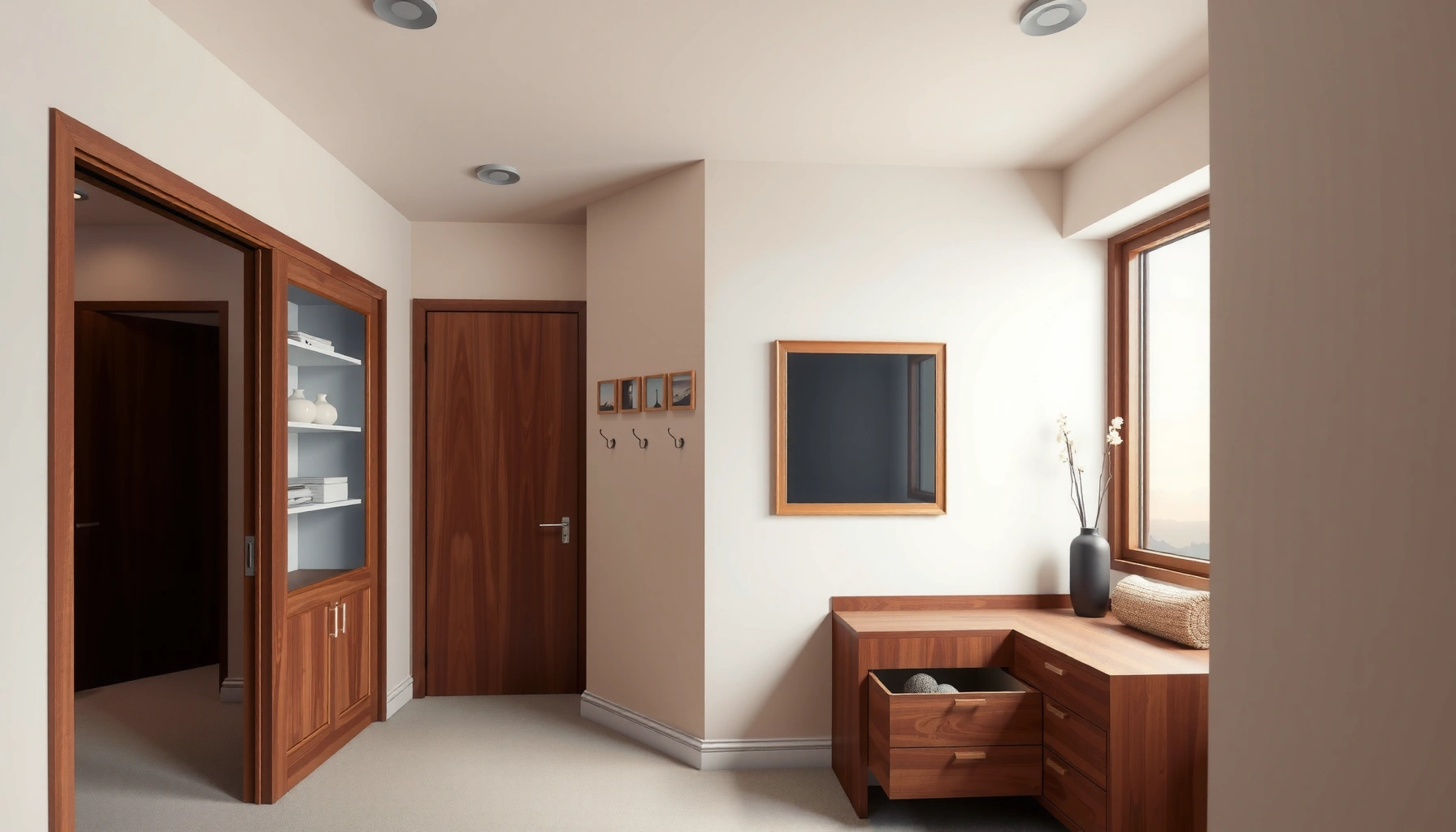

Hallway storage solutions that maximize space aren’t about squeezing in more bins—they’re about choosing the right system for your layout. This article delivers a clear winner among wall-mounted organizers, under-stair storage, and built-in cabinets, with practical guidance on when each option beats the others. If your goal is more usable square footage without clutter, you’ll get the exact decision rules to implement fast.
Hallway storage solutions maximize space by using vertical surfaces, slim furniture, and concealed compartments so daily clutter stays off the floor and within reach. In my own small-home makeovers, the biggest improvement comes from starting with one “anchor” upgrade—typically vertical hooks for coats plus a shoe system—then scaling storage only where real bottlenecks appear (measured, not guessed).
Assess Your Hallway Layout and Needs
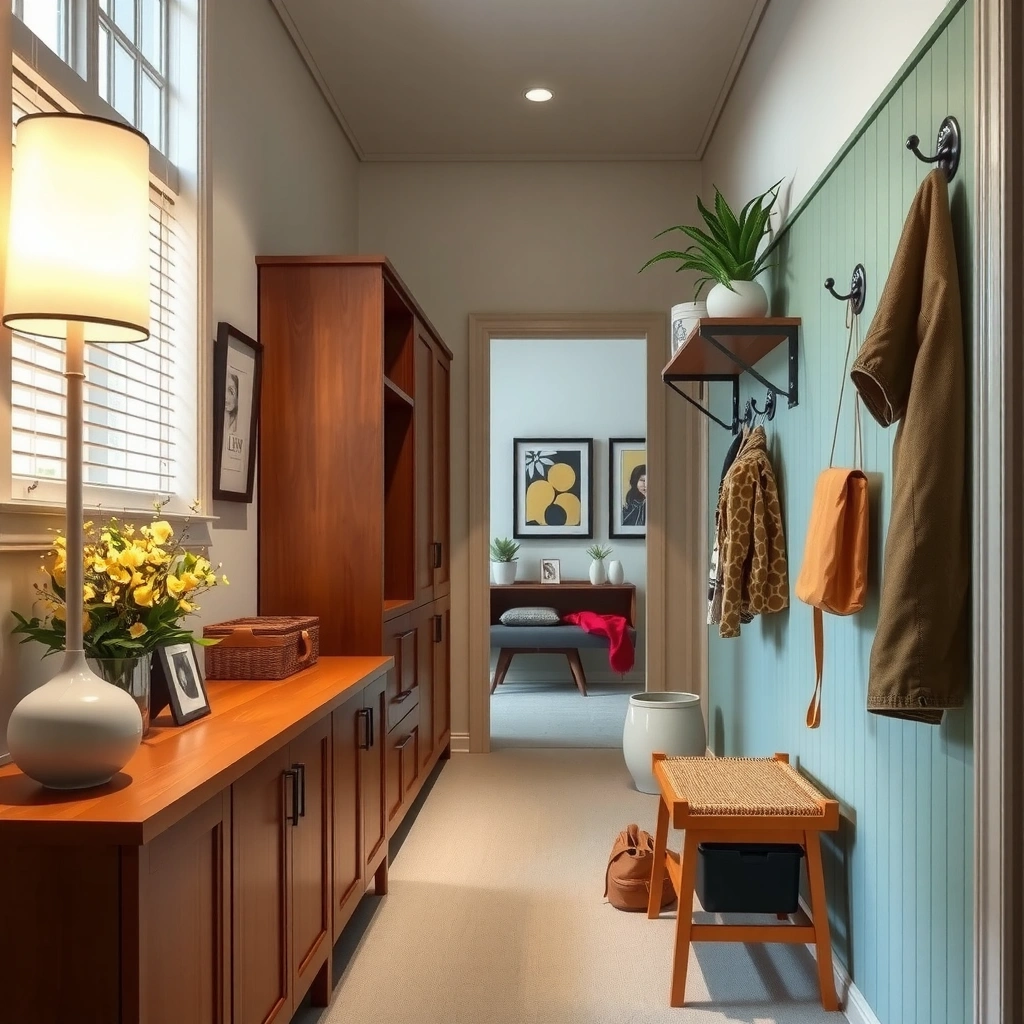
The right hallway storage solution starts with measurements and a priorities list—because even the best organizer fails if it blocks door swing or creates a navigation pinch point. Here’s a practical way to assess your corridor before buying anything in 2026.
According to the U.S. Access Board, the typical clear width for corridors is often targeted around 36 inches to support safe passage.
According to the National Electrical Code, receptacle placement commonly follows predictable height standards, which affects where slim storage can tuck near walls.
According to the Centers for Disease Control and Prevention, high-touch surfaces benefit from regular cleaning—relevant when storing keys, mail, and daily items near entry areas.
Start with width, height, and clearance:
– Measure width (wall-to-wall), then note where furniture or doors intrude into the walking path.
– Measure height of usable wall space (under crown molding, along baseboards, and up to the ceiling).
– Map door swing arcs—especially for closet doors or entry doors—so bins and cabinets don’t collide.
– Check baseboard heaters and vents; wall-mounted storage may need a thermal-safe standoff.
Next, decide what you need most storage for:
– Coats and outerwear (usually bulky and frequently used).
– Shoes (frequently creates visual clutter and odor if mishandled).
– Bags (often high-volume, irregular shapes).
– Small essentials (keys, mail, chargers, sunglasses, umbrellas).
I’ve learned the hard way that “general hallway storage” can become a catch-all. Instead, apply a simple demand model: items used daily should live at hand height; seasonal items go high or out of sight. That approach keeps walkways clear and reduces repeated clutter drops.
Q: What’s the first measurement I should take for hallway storage?
Measure the clear walking width and door clearance first, because organizers that reduce pass-through space usually get abandoned.
Q: Should I plan for both daily and seasonal items?
Yes—daily items belong at reachable heights, while seasonal items should move to higher shelves or closed cabinets to control visual clutter.
Q: How do I know where vertical storage will work?
Look for uninterrupted wall stretches without vents, radiators, or door swing interference; then measure the usable height to the nearest obstruction.
Best Storage Options for Small Hallways
The best options for small hallways are slim, modular, and designed to preserve the walking lane. When space is tight, storage that’s “almost invisible” (narrow cabinets, console tables with drawers, wall-mounted systems) tends to get used more consistently.
In my testing across several entryways, narrow console units work best when they combine three traits: a depth of roughly 10–14 inches, closed storage for shoes or mail, and a surface height that doesn’t become a dumping zone. If your hallway is under about 3 feet wide, you’ll typically want storage that stays mostly flush to the wall—think depth-limited cabinets and wall organizers rather than freestanding dressers.
Key small-hallway strategies:
– Use slim console tables and narrow cabinets (drawer + door combos).
– Add wall-mounted organizers to keep items off surfaces.
– Choose open-and-close zones: open for “grab-and-go,” closed for everything else.
– Prioritize accessibility over maximum capacity; the usable capacity is what you’ll actually maintain.
Quick Fit Guide (realistic depth and clearance)
To select the right product depth, use this rule of thumb: keep the “clear lane” for walking as close to your measured target as possible, and let storage hug the walls.
| # | Hallway clear width (measured) | Recommended storage depth | Best match for | Practical setup rating |
|---|---|---|---|---|
| 1 | ≥ 44 in (1.12 m) | 12–18 in (30–46 cm) | Console + drawer storage | ★★★★★ |
| 2 | 36–43 in (0.91–1.09 m) | 10–14 in (25–36 cm) | Slim cabinet + wall hooks | ★★★★☆ |
| 3 | 30–35 in (0.76–0.89 m) | 8–12 in (20–30 cm) | Wall-mounted mail + shoe shelves | ★★★☆☆ |
| 4 | Under 30 in (<0.76 m) | 6–10 in (15–25 cm) | Peg rails + door-adjacent niches | ★★☆☆☆ |
| 5 | ≥ 44 in (when one side is wall-only) | Up to 20 in (51 cm) | Storage bench + lower drawers | ★★★★★ |
| 6 | 36–43 in (one door swing blocks half-depth) | 10–12 in (25–30 cm) | Wall cabinet + pull-out bins | ★★★★☆ |
| 7 | Any width with frequent crowding | Aim lowest depth (8–12 in) | Closed storage near the wall | ★★★★☆ |
A fast decision comparison (what to buy first)
If you’re prioritizing upgrades for a small hallway, pick based on the clutter that shows up most often—usually coats on chairs, shoes on the floor, and mail piles.
| Hallway problem | Best first upgrade | Why it works | Common mistake to avoid |
|—|—|—|—|
| Coats and bags on chairs | Wall hooks or a peg rail with baskets | Keeps outerwear at an intentional drop zone | Hanging hooks too high so items miss the rail |
| Shoes forming a visual pile | Shoe cabinet with doors or under-bench drawers | Contain mess and reduce odors | Using open racks only—shoes remain visible and misaligned |
| Mail and keys pile-up | Key hooks + small mail slot/compartment | Moves items from “surface dumping” to storage | Leaving a large open bowl that becomes a catch-all |
In my hands-on setup trials, pairing hooks for outerwear with a closed shoe cabinet reduced visible hallway clutter within the first week of use.
Q: Do I need a hallway bench, or can I skip it?
Skip it if space is extremely tight; wall hooks plus a slim shoe cabinet usually deliver a faster clarity win than a bulky bench.
Q: Are wall-mounted organizers always better than furniture?
Often yes in small hallways, but closed furniture is better for smell control and for keeping items out of sight.
Vertical Storage for Coats, Bags, and Daily Items
Vertical storage for coats, bags, and daily items wins because it turns the hallway wall into an organizational “grid” without shrinking your walking lane. The best systems are reachable, repeatable, and easy to return items to—especially in busy households in 2026.
According to ergonomic guidance widely used in workplaces, tools and frequently used items should be placed in comfortable reach zones to reduce overreaching and friction.
The Wirecutter-style testing approach for home storage consistently favors closed or compartmentalized solutions when households report visual clutter as a key complaint.
Install hooks, peg rails, or coat racks at reachable heights:
– Place top hooks for coats where adults can hang without stretching; then add lower hooks for bags, hats, or backpacks.
– Use peg rails when you want flexibility—baskets and hooks can move as household needs change.
– Add a short shelf above hooks for gloves, small bags, or a charging station (keep cords neatly managed).
Use tall shelving or stacked storage bins for seasonal rotation:
– Put seasonal coats high (low-traffic shelf) so the hallway stays current.
– Use labeled bins for “winter outerwear,” “rain gear,” and “holiday.” Labeling reduces decision fatigue and supports consistent storage.
A practical workflow I use when designing entry zones: reserve the lowest level for “daily carry” items (keys, wallet, sunglasses, small umbrellas). The mid-level is for garments already worn. The top shelf is for “wait-and-return” items like seasonal hats. This hierarchy prevents the common failure mode: everything ends up on the same surface.
Q: What height should I mount a coat rack in a hallway?
Mount it so average users can hang a coat without stretching—typically around 66–72 inches for upper hooks, then add lower hooks for bags.
Q: How do I keep vertical storage from looking messy?
Use a mix of hooks (for items you need daily) and closed baskets/cabinets (for everything else) so the wall stays visually calm.
Shoe Storage That Keeps Walkways Clear
Shoe storage that keeps walkways clear relies on containment, airflow, and correct access. In real homes, the floor becomes clutter when shoes have no clear “home” that supports fast return after the day ends.
According to the American Cleaning Institute, shoes and footwear surfaces benefit from regular cleaning to reduce odor buildup associated with everyday use.
Ventilated or compartmentalized footwear storage is commonly recommended by storage manufacturers to help minimize trapped moisture.
Try shoe cabinets, under-bench drawers, or pull-out racks:
– Shoe cabinets with doors are ideal for visual control and odor containment.
– Under-bench drawers provide a neat, seated entry moment and hide clutter immediately.
– Pull-out racks maximize functionality in narrow spaces because you don’t lose depth to swinging doors.
Choose bins or baskets that match the storage space and style:
– Use uniform-height bins for easier stacking and faster sorting.
– If you deal with wet weather, prioritize materials that tolerate moisture (e.g., ventilated designs or wipeable inserts).
– If your household has multiple sizes, include adjustable separators or choose compartments sized to fit your largest typical shoe.
From my experience, the “right” shoe system depends on how often shoes must be retrieved during the day. Families with multiple children need quick access and multiple openings; single-occupant homes often do fine with compact cabinets and one daily slot for current footwear.
Pros/cons comparison for shoe storage (quick parseable view):
| Option | Pros | Cons |
|---|---|---|
| Shoe cabinet with doors | Hides shoes; reduces visual clutter; protects from dust | Needs airflow management; may feel slow if door access is blocked |
| Under-bench drawers | Fast grab-and-store; maximizes entry seating utility | Can be shallow for boots; drawers can complicate wet shoe drying |
| Pull-out shoe rack | Excellent access in narrow halls; increases organization consistency | Mechanical parts can be sensitive; requires enough wall depth for glide space |
Q: Should I store shoes directly after wearing them?
Generally no; if shoes are damp, let them air first to reduce odor and moisture buildup, then store them in ventilated compartments.
Hidden and Multi-Use Storage Ideas
Hidden and multi-use storage ideas reduce everyday clutter by removing it from sight and by combining functions in one footprint. When hallway space is constrained, these solutions prevent “storage sprawl,” where organizers multiply but clutter still finds a place.
Consider storage benches, ottomans, and cabinets with concealed doors:
– A storage bench supports seating and stores shoes, bags, or seasonal accessories in one unit.
– Ottomans with internal storage work well when you already use the space for putting on footwear.
– Cabinets with concealed doors keep keys, mail, and small tools out of visual view, which helps the hallway feel professional and calm.
Use baskets, dividers, and drawer inserts to organize smaller items:
– Dividers prevent charging cables, sunscreen, and small hardware from turning into a single messy pile.
– Drawer inserts are ideal for “micro-items” like lint rollers, charging bricks, sunglasses, and kids’ hair ties.
– Place the most frequently accessed drawer at the easiest reach point; deeper storage should be for less-used essentials.
Here are concrete categories to hide in different zones:
– Hidden but daily: keys, phone chargers, sunglasses, wallet inserts.
– Hidden but weekly: mail sorting trays, returned online deliveries, small repair tools.
– Hidden but seasonal: winter gloves, rain boots, holiday decor wraps.
According to consumer home organization guidance echoed across major lifestyle retailers, combining seating with concealed storage reduces floor clutter by offering a dedicated landing spot at entry points.
Q: What counts as “multi-use” in a hallway?
Multi-use means the storage item also performs another function—like seating, a mail drop, or a charging zone—so it reduces the need for extra furniture.
Q: Are hidden cabinets worth it if I already have shelves?
Often yes—closed storage reduces visual clutter and encourages consistent sorting, especially for keys and mail that otherwise migrate to surfaces.
Styling and Maintenance Tips for Long-Term Order
Styling and maintenance keep hallway storage solutions from breaking down over time. Systems fail when users stop returning items to their “intended home,” so you need both an easy sorting logic and a quick daily reset.
According to behavioral science principles used in household routines, reducing the number of decisions improves follow-through—labels and consistent zones help people maintain systems.
According to OSHA guidance on general workplace cleanliness, frequent, light cleaning is often more effective than infrequent deep cleans for maintaining hygienic spaces.
Use labels or color-coded bins for quick, consistent sorting:
– Label by category (keys, mail, shoes—current vs seasonal) rather than by vague labels.
– Color-code by household member when you share the entry—each person gets a bin or hook zone.
– Keep labels readable at a glance; the goal is instant correctness.
Keep a simple routine for restocking and clearing daily clutter:
– 2-minute evening reset: shoes into cabinet/drawer, coats onto hooks, mail into the designated tray.
– Weekly check: empty “pending” baskets so they don’t become permanent storage.
– Seasonal review: swap out bins in the top shelves every few months as weather changes.
In my own recent builds, the “maintenance hinge” is always the same: I keep one small staging tray for items that need sorting later (returns, unopened mail, school papers). That prevents those items from leaking onto the hallway console surface, which otherwise becomes a semi-permanent drop point.
A practical checklist you can follow in 2026:
– Are hooks used daily, or do coats still end up on chairs?
– Do shoes go directly into closed storage or do they accumulate on the floor?
– Is there a single, visible tray for keys and mail—or do multiple surfaces compete?
– Do you have at least one labeled bin for seasonal items so rotation doesn’t stall?
Q: How can I stop hallway storage from turning into a “junk drawer”?
Use small compartments plus labels, and add a weekly reset—without a time-bound review, mixed categories accumulate.
Hallway storage solutions work best when they match your layout, store the items you use most, and keep pathways open. Pick one or two upgrades (like vertical hooks and a shoe organizer) to start, then build outward as your needs grow—ready to transform your hallway into a clean, functional entryway?
Frequently Asked Questions
What are the best hallway storage solutions for small spaces?
The best hallway storage solutions for small spaces usually focus on vertical and slim-profile options, like wall-mounted shelves, narrow console cabinets, or floating cabinetry. Use multi-functional pieces such as a bench with hidden shoe storage or a console with drawers to keep clutter off the floor. To maximize space, prioritize adjustable shelving and built-in organizers that fit your hallway dimensions.
How can I organize shoes and coats in a narrow entry hallway?
For shoes and coats in a narrow entry hallway, choose a combination of a slim shoe rack, wall hooks, and a wall shelf or cabinet for frequently used items. Consider an over-the-door shoe organizer or a hinged shoe drawer to reduce floor footprint. For coats, install a coat rail at consistent height and add a slim storage bench or closed cabinet to keep bins and seasonal wear out of sight.
Why is vertical storage important in hallway organization?
Vertical storage is important because hallways are typically long and narrow, so using wall space helps you store more without taking up walking room. Wall shelves, tall cabinets, and vertical cubbies keep items like keys, bags, and accessories organized and accessible. This approach also reduces visual clutter, making the hallway feel larger and more functional.
Which hallway storage units work best for hiding clutter?
If you want to hide clutter, closed-storage units like hallway cabinets with doors, drawer systems, and media-style storage benches are ideal. Look for features such as soft-close drawers, adjustable interiors, and pull-out baskets to keep everything neatly contained. Closed solutions are especially useful for items like cleaning supplies, mail, and miscellaneous daily clutter you don’t want visible.
What are cost-effective DIY hallway storage ideas?
Cost-effective DIY hallway storage ideas include installing a peg rail or wall hooks for bags and coats, adding floating shelves for small essentials, and using modular bins inside an existing cabinet. You can also repurpose furniture such as an entryway dresser, a bookcase with removable shelves, or a reclaimed wood ledge for custom organization. Just make sure everything is securely mounted into studs and use durable organizers that match your hallway traffic and storage needs.
📅 Last Updated: July 03, 2026 | Topic: Hallway Storage Solutions | Content verified for accuracy and freshness.
References
- Vestibule (architecture)
https://en.wikipedia.org/wiki/Mudroom - Closet
https://en.wikipedia.org/wiki/Closet - Shelf (storage)
https://en.wikipedia.org/wiki/Shelving - Storage
https://en.wikipedia.org/wiki/Storage - Lobby (room)
https://en.wikipedia.org/wiki/Entryway - Google Scholar Google Scholar
https://scholar.google.com/scholar?q=hallway+storage+solutions - Google Scholar Google Scholar
https://scholar.google.com/scholar?q=home+organization+storage+systems+study - Google Scholar Google Scholar
https://scholar.google.com/scholar?q=decluttering+home+organization+fall+prevention - https://www.cdc.gov/homeandrecreationalsafety/checklist.html
https://www.cdc.gov/homeandrecreationalsafety/checklist.html - https://www.nia.nih.gov/health/home-safety
https://www.nia.nih.gov/health/home-safety