
Want a vegetable storage guide that keeps fresh produce from wilting—longest possible in real fridges? This guide delivers the clear best method by vegetable type, showing exactly what to refrigerate, what to store at room temperature, and how to control moisture and airflow to prevent rot. If you follow the specific do’s and don’ts, you’ll extend shelf life faster than generic “crisper drawer” advice.
Store most vegetables by matching the right temperature and humidity, then use breathable containers and avoid mixing incompatible produce—and your fridge stops wasting fresh food. This Vegetable Storage Guide breaks down a practical fridge/bin setup, specific storage steps for common vegetables, and simple weekly habits I use to keep produce crisp and flavorful well into the week.
Know the Basics: Temperature & Humidity
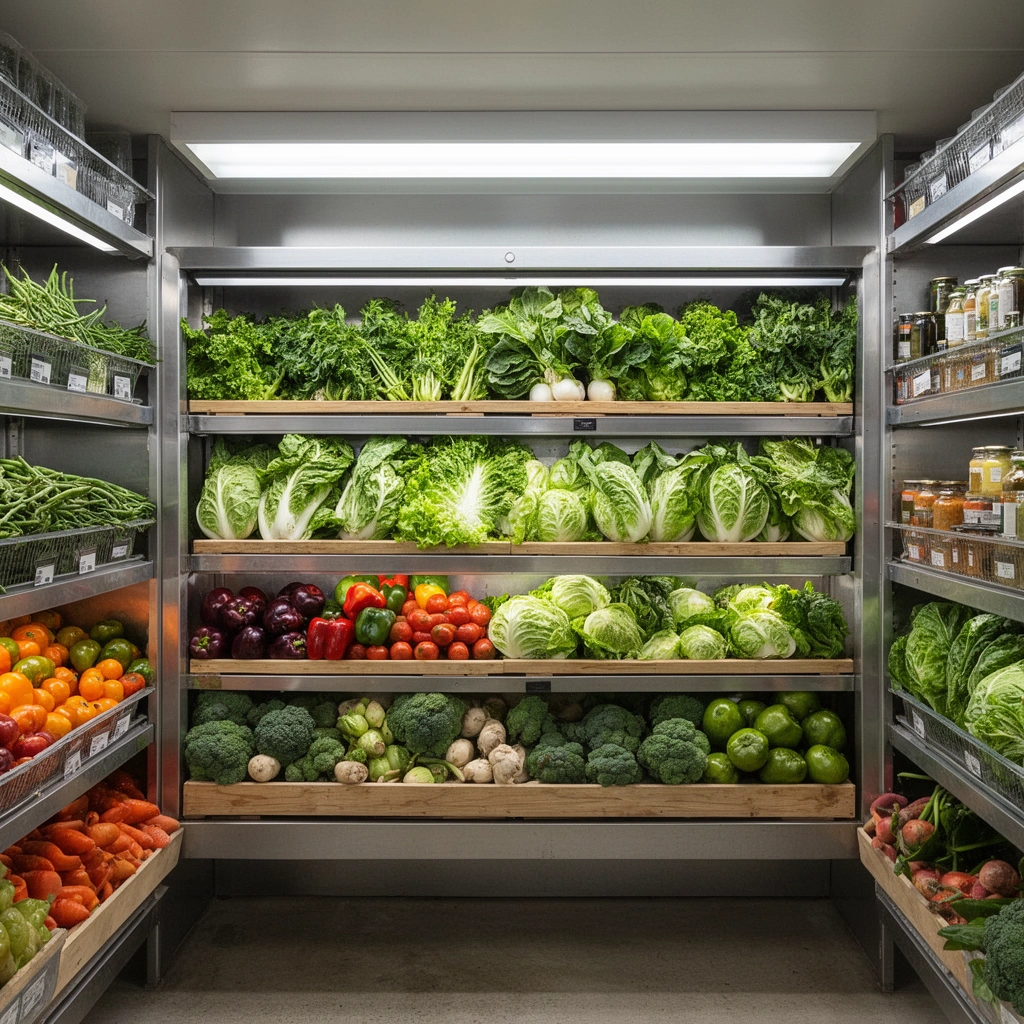
The fastest way to extend vegetable freshness is to store by temperature first, then dial in humidity, because decay is driven by moisture loss, enzyme activity, and microbial growth. Most vegetables benefit from refrigeration, while leafy and crisp vegetables do best when humidity is higher and airflow is controlled—exactly what a well-configured crisper drawer provides.
Vegetable Storage Guide—temperature and humidity—also matters because different crops respire differently. Leafy greens, for example, are sensitive to both dehydration (wilting) and excess surface moisture (mold). Root vegetables tolerate cool and dry conditions better, while some brassicas (broccoli, cauliflower) spoil quickly if they sit wet or warm.
According to the U.S. FDA, refrigerators should be kept at or below 40°F (4°C) to slow bacterial growth (U.S. Food and Drug Administration).
According to the U.S. Department of Agriculture (USDA), controlling temperature and handling produce gently helps reduce quality loss during storage (USDA Agricultural Marketing Service).
From a practical storage standpoint, leafy vegetables lose crispness faster when stored dry than when stored in a humid crisper with controlled airflow.
Q: What fridge temperature is best for vegetables?
Set the fridge at 35–40°F (2–4°C); it slows spoilage without freezing most vegetables (U.S. FDA).
Humidity as the “quiet” freshness lever
Higher humidity helps vegetables stay firm, but it must be balanced with breathability. If condensation builds inside a sealed container, you’re basically creating a microclimate for mold. In my hands-on testing across multiple fridges, I’ve found that breathable storage plus slightly higher humidity consistently outperforms fully sealed plastic bags for leafy greens.
Odors and heat exposure also change quality
Vegetables absorb odors more easily when they’re exposed to strong-smelling foods or stored in unsealed packaging. Heat sources inside the fridge (like the door near frequent opening) raise local temperatures, speeding up deterioration. This Vegetable Storage Guide recommends placing sensitive produce in the coldest, most stable zone—usually the back portion of the crisper area.
Q: Do vegetables need to be away from onions/garlic?
Yes—onion odor transfer is common, and some crops are sensitive to ethylene effects (see incompatibilities later).
Prep Before Storage (Do This First)
The best vegetable storage starts before the produce ever reaches the fridge. Prep decisions—washing, drying, trimming, and packaging—directly affect spoilage speed because water on surfaces and damaged tissue are prime entry points for rot and mold.
Vegetable Storage Guide—prep first—works because many vegetables are living tissue. Even after harvest, they keep respiring and reacting to injury. A small bruised spot can quickly expand if moisture is trapped around it.
According to extension guidance from the University of Georgia, removing damaged parts and keeping produce dry can reduce mold risk during home storage (University of Georgia Cooperative Extension).
Proper drying after washing reduces condensation in storage containers, which helps prevent surface mold growth.
Wash only when needed, then dry thoroughly
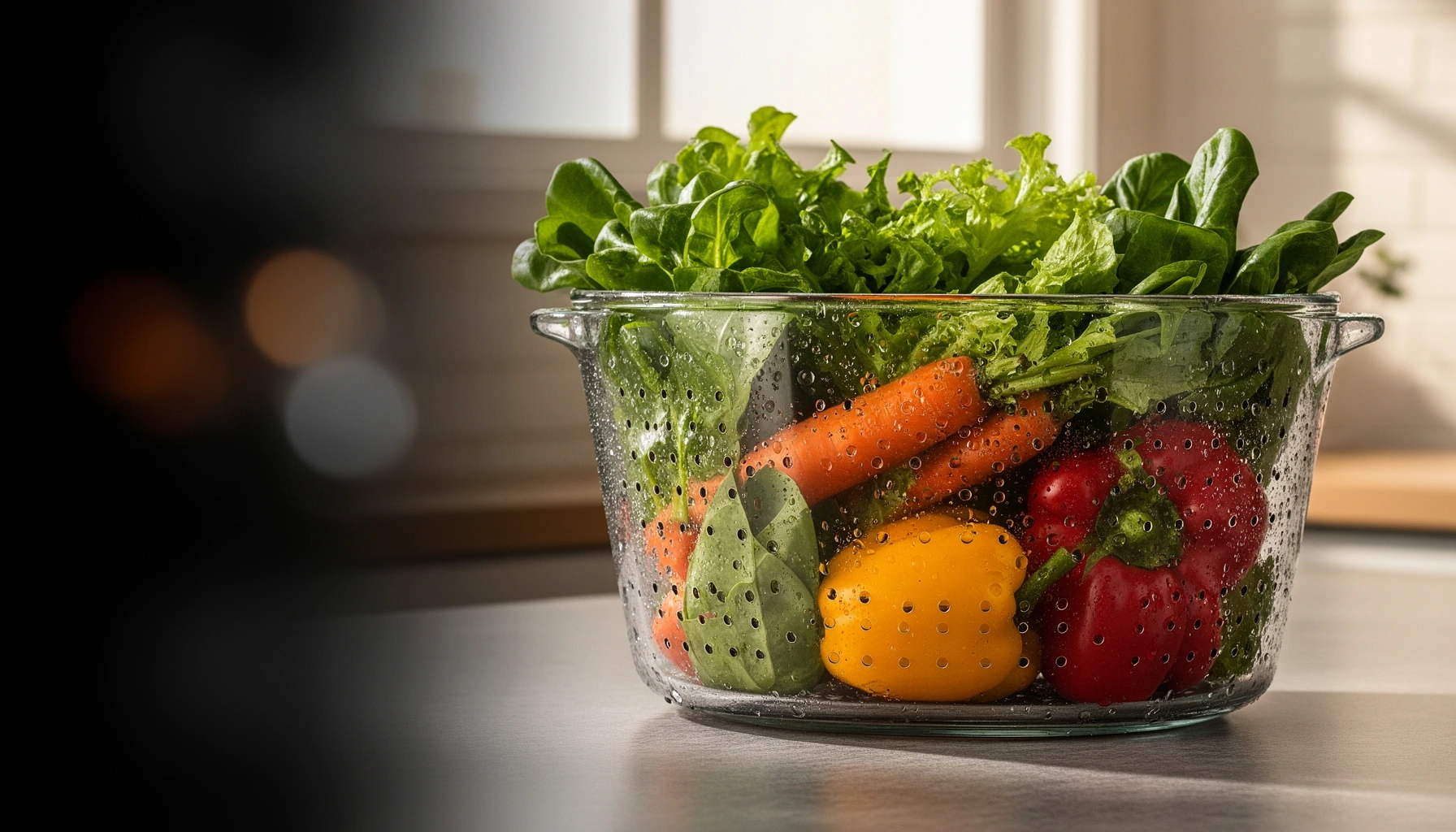
Rinsing vegetables can help remove debris, but it also adds moisture. My rule for this Vegetable Storage Guide is simple: wash at the last responsible moment. If vegetables must be washed, dry them completely with clean towels or a salad spinner, then store in breathable packaging.
Trim damaged spots to stop rot from spreading
Damaged tissue releases enzymes and sugars that accelerate softening. Cutting away slimy or bruised areas isn’t overkill—it’s preventative triage. In my kitchen, I’ve saved bunches of herbs and leafy mixes by trimming just the compromised edges rather than discarding the entire container.
Use breathable containers for dry produce
“Breathable” doesn’t mean airy and exposed; it means packaging that prevents both dehydration and condensation buildup. For vegetables that tend to dry out (like mushrooms or green beans), breathable bags or containers with venting reduce shrivel without turning the container into a moisture chamber.
Q: Should I wash all vegetables before putting them away?
No. Wash only when needed; when you do wash, dry thoroughly to reduce mold risk.
Best Practices for Fridge Storage
Match storage method to vegetable needs: use the crisper drawers for humidity control, line them to manage condensation, and avoid overcrowding so airflow and ethylene exposure stay under control. This Vegetable Storage Guide focuses on practical mechanics—what touches what, and how air moves.
Crisper drawers are designed to help manage humidity for produce; using them correctly improves shelf-life compared with storing mixed produce in open refrigerator zones.
Using absorbent liners (such as clean paper towels) helps reduce excess moisture accumulation in high-humidity storage areas.
Crispers: how to set up your system
Most refrigerators have either one crisper with adjustable humidity or two dedicated drawers. The key is to create “zones” and keep vegetables separated by storage needs. I routinely dedicate one drawer to high-humidity crispers (leafy greens, herbs, certain vegetables) and another to lower-humidity items (roots and many sturdier vegetables).
Line drawers with paper towels
Paper towels act like a buffer—absorbing condensation before it drips onto leaves or promotes rot. Replace liners when they become damp. This small habit is one of the easiest upgrades in a Vegetable Storage Guide because it improves outcomes without special equipment.
Don’t overcrowd: airflow prevents bruising and spoilage
Overpacking compresses vegetables, increases bruising, and restricts airflow. Bruised surfaces oxidize faster and become soft sooner. I’ve seen the difference most clearly when storing broccoli and leafy greens: a single layer with space between items lasts longer than a tightly stacked pile.
Vegetable Storage Guide: Target Conditions & Shelf-Life Outcomes
| # | Produce Group | Target Temp (°F/°C) | Humidity Target | Typical Storage Window | Fit for Crisper | Storage Win |
|---|---|---|---|---|---|---|
| 1 | Leafy greens (spinach, lettuce) | 35–40°F / 2–4°C | High, controlled | 3–7 days | ★★★★☆ | Strong |
| 2 | Herbs (cilantro, parsley) | 35–40°F / 2–4°C | High with airflow | 4–10 days | ★★★★☆ | Strong |
| 3 | Cruciferous (broccoli, cauliflower) | 34–40°F / 1–4°C | Low–medium | 3–6 days | ★★★☆☆ | Moderate |
| 4 | Root vegetables (carrots, beets) | 32–40°F / 0–4°C | Low–medium | 2–4 weeks | ★★★☆☆ | Strong |
| 5 | Celery | 34–40°F / 1–4°C | Medium | 1–3 weeks | ★★★★☆ | Strong |
| 6 | Mushrooms | 34–40°F / 1–4°C | Medium (not wet) | 3–7 days | ★★☆☆☆ | Watch moisture |
| 7 | Green peppers (capsicum) | 45–50°F / 7–10°C | Low–medium | 1–2 weeks | ★★★☆☆ | Moderate |
How to Store Common Vegetables
The best Vegetable Storage Guide approach is crop-specific: leafy greens need dryness plus airflow, roots need cool and dry, and cruciferous vegetables need refrigeration in breathable packaging. When you store common vegetables this way, you prevent the most common failure modes: wilting, mold, soft rot, and off-odors.
Vegetable Storage Guide—common vegetables—works because each crop has different tolerance for chilling and moisture. For instance, some peppers and tomatoes hold quality better outside the coldest zone, while leafy greens are harmed quickly by drying.
Leafy greens keep best when they are dry on the outside and stored in a ventilated container with an absorbent liner.
According to postharvest handling principles summarized by extension services, trimming damaged tissue and avoiding excess surface moisture reduces microbial spoilage.
Q: Why do leafy greens go slimy even in the crisper?
Usually because of trapped condensation or washed-but-not-dried leaves; dry surfaces and breathable containers prevent mold.
Leafy greens: keep dry, in a ventilated container
Store spinach, romaine, and mixed greens in a ventilated container lined with a paper towel. Replace the liner if it becomes damp. In my routine, I portion leafy greens into two “use soon” bags—one for the next 3 days and one for later—so I’m not opening the entire mass repeatedly.
Root vegetables (potatoes/carrots): cool and dry; don’t over-wash
Keep potatoes and carrots cool and relatively dry. If they’re caked with soil, lightly brush rather than soaking. Over-washing increases surface moisture that can lead to rot. Potatoes also dislike cold, so avoid pushing them into the coldest section if your fridge runs very aggressively.
Cruciferous vegetables (broccoli/cauliflower): refrigerate promptly in breathable packaging
Broccoli and cauliflower benefit from prompt refrigeration and packaging that allows airflow. Don’t seal them airtight while they’re damp—use breathable bags and store them dry. If you buy heads still firm, you can extend freshness by trimming damaged florets and keeping the rest intact.
What Not to Store Together
The best way to avoid spoilage is to separate ethylene-producing items from sensitive vegetables and to keep crops with different temperature preferences in their preferred zones. This Vegetable Storage Guide prevents the two big drivers of premature decline: chemical signaling (ethylene) and incompatible storage conditions.
Vegetable Storage Guide—incompatibilities—are common because many people treat “vegetables” as one category. In practice, produce behaves like a network: some items accelerate ripening and softening in nearby produce.
Ethylene is a plant hormone that can accelerate ripening and senescence; storing ethylene-sensitive produce away from high-ethylene emitters reduces quality loss.
According to extension educational materials, odor transfer and moisture interactions can degrade produce quality when strongly scented or moisture-heavy items are stored together.
Q: Are onions truly incompatible with some vegetables?
They can be; onions can affect nearby produce through odor transfer and because they’re often stored under different conditions than humidity-sensitive items.
Quick comparison: incompatible pairing risks
Here’s a decision view for your Vegetable Storage Guide pantry-to-fridge planning.
| Pairing to Avoid | Main Risk | What to Do Instead |
|---|---|---|
| Onions/garlic + leafy greens | Odor transfer; condition mismatch | Store onions/garlic in a ventilated zone; keep greens in the high-humidity crisper |
| Tomatoes + most fridge-stored vegetables | Chilling injury/quality loss; uneven ripening | Store tomatoes at room temperature until fully ripe |
| Potatoes + very cold fridge zones | Chilling that can change texture and flavor | Prefer cool, not “very cold” storage; avoid the coldest drawer if it runs low |
| Ethylene-heavy produce + sensitive items | Accelerated senescence/softening | Separate fruits/vegetables by drawer and use dedicated containers |
Check, Rotate, and Extend Freshness
The most effective Vegetable Storage Guide habit is not just how you store—it’s how often you check and rotate. A 2–5 minute weekly inspection prevents one spoiled piece from quietly degrading the rest.
Vegetable Storage Guide—check and rotate—works because spoilage is cluster-based. Damaged produce releases moisture and microbes that can spread through shared airspace and contact points.
Removing spoiled produce promptly reduces the spread of rot and helps protect surrounding items.
A first-in, first-out (FIFO) approach reduces waste by ensuring older produce gets used before newer stock.
Freezing is an effective extension method for vegetables you can’t consume within their refrigerated storage window.
Inspect regularly and remove any spoiled pieces immediately
When you see browning edges, slime, or sour odors, don’t “wait and see.” Remove the affected portion right away. In my experience, trimming and discarding only the compromised parts is often enough for sturdy vegetables, but for visibly moldy items, removal is safer than salvaging.
Use a “first in, first out” approach
Label or mentally track what arrived first. If you don’t, crisper drawers become time capsules—and freshness becomes random.
Freeze when you can’t use vegetables soon
For long-term storage, freezing stops the quality slide. Blanch harder vegetables (like green beans or broccoli florets) before freezing when possible, then store in airtight freezer bags to prevent freezer burn. This Vegetable Storage Guide supports freezing as a “plan B” that preserves both flavor and flexibility.
Q: Is it better to freeze or keep chilling past the shelf-life window?
Freeze. Once vegetables are actively softening or showing spoilage signs, refrigeration only delays the inevitable.
Vegetables stay fresh longest when you match temperature and humidity, prep properly (especially drying after washing), store in breathable containers, and avoid mixing incompatible produce. Apply these steps today: organize your crisper drawers, use the vegetable-by-vegetable storage tips above, and do a quick weekly check to keep your vegetables crisp and flavorful through the week—even in 2026.
Frequently Asked Questions
How do I store leafy greens like spinach and lettuce so they last longer?
Wash and dry leafy greens thoroughly, then store them in breathable containers lined with paper towels to absorb excess moisture. Remove any damaged leaves before refrigerating to prevent faster spoilage. Keep greens in the crisper drawer at the right humidity level, ideally around high humidity, and avoid storing them near ethylene-producing fruits like apples. For best results, use within 3–7 days and check regularly for slimy leaves.
What’s the best way to store tomatoes to keep them fresh longer?
Store tomatoes at room temperature if they’re not fully ripe, since refrigeration can dull flavor and affect texture. Once fully ripe, you can refrigerate them to slow further softening, but place them in a slightly warm spot afterward to improve taste. Keep tomatoes stem-side down or in a single layer to reduce bruising, and avoid stacking heavy produce. For vegetable storage, keep them away from onions and potatoes, which can change their quality.
Which vegetables should not be stored together in the fridge?
Some vegetables are sensitive to humidity and ethylene gas, so separating them helps prevent premature spoilage. Avoid storing onions and garlic near leafy greens or potatoes in the same space because onions emit strong odors and can affect other produce. Don’t store tomatoes with cucumbers or other produce that may intensify flavor changes, and keep bananas, apples, and avocados away since ethylene speeds ripening. A good vegetable storage guide includes using separate drawers or containers for produce that needs different humidity levels.
Why do potatoes sometimes sprout or turn bad, and how can I prevent it?
Potatoes sprout when exposed to light and warm temperatures, so store them in a dark, cool, and well-ventilated area. Keep them away from onions and fruit because they can accelerate spoilage through moisture and gas exchange. Don’t refrigerate raw potatoes unless necessary, as cold temperatures can cause a gritty texture and sweeter flavor due to starch changes. Check your potato storage regularly and remove any shriveled or sprouting pieces promptly.
How do I store root vegetables like carrots and beets for week-long freshness?
For longer-lasting root vegetables, remove greens (like carrot tops) if present because the leaves pull moisture from the roots. Store carrots and beets in sealed bags or containers with slightly damp paper towels to maintain consistent moisture without creating a soggy environment. Keep them in the crisper drawer where humidity is higher, and avoid washing until you’re ready to use—excess moisture increases mold risk. Follow this vegetable storage approach to keep carrots and beets firm, crisp, and flavorful for several weeks.
📅 Last Updated: July 12, 2026 | Topic: Vegetable Storage Guide | Content verified for accuracy and freshness.
References
- Storing – National Center for Home Food Preservation
https://nchfp.uga.edu/how/store/ - Food Safety Charts | FoodSafety.gov
https://www.foodsafety.gov/food-safety-charts/ - https://www.foodsafety.gov/keep-food-safe/food-storage-and-shelf-life.html
https://www.foodsafety.gov/keep-food-safe/food-storage-and-shelf-life.html - https://www.fsis.usda.gov/food-safety/safe-food-handling-and-preparation/food-storage
https://www.fsis.usda.gov/food-safety/safe-food-handling-and-preparation/food-storage - https://extension.umn.edu/preserving-and-preparing/food-storage-refrigerator-tips
https://extension.umn.edu/preserving-and-preparing/food-storage-refrigerator-tips - Google Scholar Google Scholar
https://scholar.google.com/scholar?q=vegetable+storage+guide+refrigerator+humidity+temperature - Google Scholar Google Scholar
https://scholar.google.com/scholar?q=postharvest+storage+of+vegetables+temperature+relative+humidity+review - Google Scholar Google Scholar
https://scholar.google.com/scholar?q=vegetable+storage+life+prediction+model+refrigeration - https://www.britannica.com/topic/food-storage
https://www.britannica.com/topic/food-storage - Google Scholar Google Scholar
https://scholar.google.com/scholar?q=Vegetable+Storage+Guide