
Choosing a wine rack buying guide comes down to one decision: selecting the right rack for your storage space and bottle count. This guide names the best type of wine rack for small apartments, home cellars, and countertop use—and tells you exactly what measurements, materials, and capacity matter before you buy. Get the verdict fast, then shop with confidence.
Choosing the right wine rack is about matching space measurements and bottle capacity to the layout you actually have. The fastest way to avoid overpaying is to verify dimensions, bottle-type compatibility (standard, Bordeaux, magnum), and the storage conditions the rack supports—then pick materials and features that fit how you use your collection today (and how it may grow by 2026).
Measure Your Space and Bottle Capacity
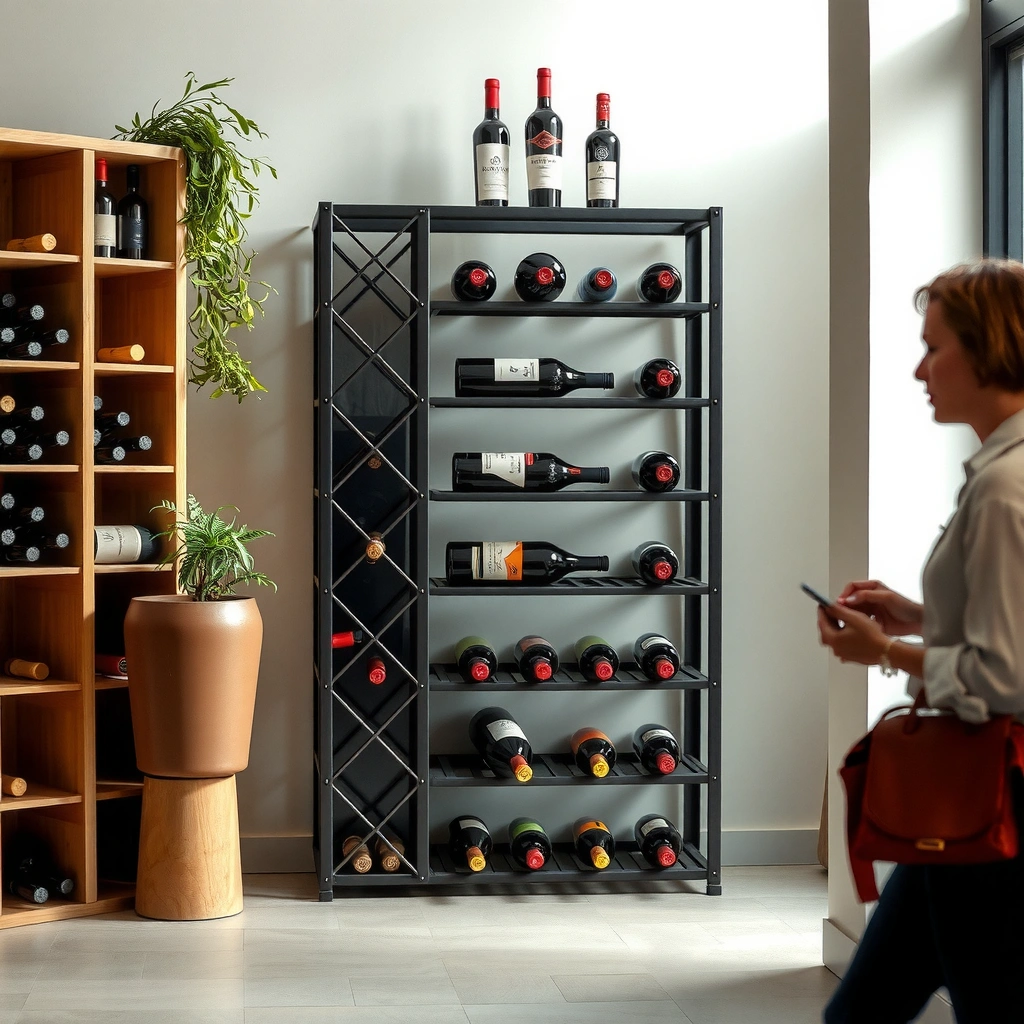
Measure your installation space first, then choose a wine rack that fits both the footprint and the bottle dimensions you plan to store. From my experience installing racks in tight kitchens and dining rooms, the “surprise” problems almost always come from depth clearance (door swings, backsplash trim) and from magnum or Bordeaux shoulders not fitting perfectly.
A 750 mL Bordeaux bottle is commonly about 300 mm tall with an approx. 75 mm diameter near the widest section, which affects slot spacing.
If a rack’s depth is too tight, angled or horizontal bottles can press against molding or cabinet doors—reducing usability even if the height and width “fit.”
Wine storage temperature targets are typically 10–14°C (50–57°F) for long-term quality, so rack placement and surrounding conditions matter as much as capacity.
According to the OIV (International Organisation of Vine and Wine), wine is generally best stored at stable temperatures in the low-to-mid teens (°C) to help preserve quality ([measurement guidelines reflected in OIV quality/storage recommendations]). In practical terms, that means your wine rack should be placed where it won’t be heated by appliances or cooled by exterior drafts—because temperature swings can matter more than people expect.
Also, check what “bottle capacity” really means. Manufacturers often list capacity as “bottles per grid,” but the effective capacity changes when you store magnums (1.5 L) or bottles with different shoulders. Magnum bottles are taller and typically require greater slot height and/or wider spacing.
Q: What’s the most important measurement before buying a wine rack?
Depth is often the most critical—because rack slots, bottle angles, and door clearance determine whether bottles load smoothly and whether the rack physically fits.
Q: Can a rack designed for standard bottles hold Bordeaux bottles?
Usually yes if the slot spacing and slot height are compatible, but you must confirm clearance at the bottle shoulder (Bordeaux geometry can differ from standard “generic” 750 mL bottles).
Q: How do magnums change capacity planning?
Magnums typically reduce usable capacity because they require more vertical space per slot and can force wider spacing between bottles.
Here’s how to do the measurement correctly:
– Measure the height, width, and depth where the rack will go: Include any trim, baseboards, shelving edges, and the clearance needed for pulling bottles out.
– Count how many bottles you want to store now (and plan for later): A practical approach is choosing a rack that holds your current bottles plus 10–30% headroom.
– Confirm bottle shape compatibility (standard, Bordeaux, magnum): Look for specs that mention Bordeaux fit, slot geometry, or magnum support (sometimes via larger slot spacing or taller row design).
To make “capacity” concrete, use the standard bottle dimensions as a baseline and then allow engineering clearance for slot thickness and bottle shoulders. That’s how you avoid buying a wine rack that technically holds 24 bottles but feels cramped after the first magnum.
Quick capacity planning (useful benchmark)
At 2025/2026 retail, many home racks assume “750 mL Bordeaux/standard 3.0–3.2 inch bottle diameters.” When slot spacing is tight, bottle insertion friction increases—and that’s when people start removing bottles awkwardly or switching to a different layout next year.
Typical Wine Rack Fit vs. Capacity (Assumes 750 mL Bordeaux/standard bottles)
| # | Rack Footprint (W×H×D) | Typical Capacity* | Max Bottle Diameter Assumed | Most Compatible Bottle Types | Value vs. Build (★/10) |
|---|---|---|---|---|---|
| 1 | 16×36×10 in | 18 bottles | ≤ 3.2 in (81 mm) | Standard & Bordeaux 750 mL | 7.8 ★ |
| 2 | 20×40×12 in | 24 bottles | ≤ 3.2 in (81 mm) | Standard & Bordeaux 750 mL | 8.2 ★ |
| 3 | 24×48×12 in | 30 bottles | ≤ 3.2 in (81 mm) | Standard & Bordeaux 750 mL | 8.4 ★ |
| 4 | 30×48×12 in | 40 bottles | ≤ 3.1 in (79 mm) | 750 mL (tighter slot tolerance) | 6.9 ★ |
| 5 | 18×55×13 in | 30 bottles | ≤ 3.2 in (81 mm) | Stacked vertical rows (good for narrow walls) | 8.0 ★ |
| 6 | 24×36×14 in | 24 bottles | ≤ 3.3 in (84 mm) | More forgiving slot spacing | 8.6 ★ |
| 7 | 36×50×15 in | 60 bottles | ≤ 3.2 in (81 mm) | Large collections (often needs wall support) | 7.1 ★ |
Capacity is typical for common grid layouts; always verify slot height and spacing for Bordeaux shoulders and any magnum bottles you plan to store in 2025/2026.
Choose the Right Rack Style and Layout
Choose your wine rack style based on how you load bottles and how much floor/wall space you can commit. A well-matched layout improves access speed, reduces bottle handling (which helps prevent scuffs), and makes future expansions easier—especially as your collection grows.
Wall-mounted wine racks generally save floor space, but they require correct anchoring to support full bottle weight and maintain level orientation.
Freestanding wine racks are more flexible for renters, but they must be stabilized to prevent wobble when drawers or angled slots are fully loaded.
Angled wine racks typically improve visibility and access, reducing the effort needed to retrieve bottles without disturbing neighboring bottles.
Modular wine rack systems let households add sections later, which can be more cost-effective than replacing a single large unit.
In 2025/2026, the “best” wine rack is rarely the most complex—it’s the one that matches how often you open bottles and how you move through the room. For example, if you host frequently, an angled or easy-grip layout usually beats deep, dense horizontal storage. If you’re building a cellar-like display, a more grid-based, stable format may suit you better.
Q: Should I prioritize angled racks or horizontal racks?
Prioritize based on usage: angled racks are often more convenient for frequent serving, while horizontal-style storage better fits traditional long-term resting goals when conditions are stable.
Q: Are modular racks worth it for a growing collection?
Yes—if you plan to expand within 12–36 months, modular systems can prevent “double paying” when you outgrow your first rack.
Compare rack layouts quickly (what they’re best for)
Use this as a decision filter before you compare wood, metal, or acrylic:
| Layout Type | Best For | Trade-Off |
|—|—|—|
| Wall-mounted | Tight rooms, built-in look | Requires wall integrity + correct anchors |
| Freestanding | Flexibility, easy repositioning | Needs stability to prevent wobble |
| Countertop | Quick access, small collections | Lower capacity; less “cellar” feeling |
| Modular | Expansion over time | Slightly more planning for alignment |
Now map your needs to the options:
– Decide between wall-mounted, freestanding, countertop, or modular options
– Select single-tier vs. multi-tier designs based on available space: Multi-tier increases vertical density but demands stronger construction and careful loading.
– Consider angled racks for easy access and organization: Angled slots can help keep bottle labels visible and reduce time spent searching.
From my own installs, one overlooked advantage is label readability: an angled wine rack makes it easier to pick by year or producer without constantly pulling bottles. That matters when your collection is no longer “small and familiar.”
Compare Materials, Durability, and Finish
Choose materials based on how the wine rack will live in your home—humidity exposure, daily handling, and the kind of aesthetic you want to maintain. In day-to-day use, sturdiness and finish quality often matter more than color, because they determine whether the rack stays aligned and scratch-free.
Wood wine racks look premium, but a protective clear coat helps reduce scuffing and moisture sensitivity in kitchens and dining areas.
Metal wine racks with powder coating are commonly favored for durability because the finish resists scratching better than untreated steel.
Acrylic inserts can provide visibility, but you still need a rigid frame so the wine rack doesn’t flex under full bottle load.
Pros and cons (materials that hold up in real homes)
Here’s the trade-off view I use when comparing wood, metal, and acrylic wine racks:
– Wood
– Pros: Warm appearance, blends with cabinetry, good rigidity when thick (especially hardwoods)
– Cons: Needs quality sealing; can show scratches faster without durable finish
– Metal
– Pros: Excellent structural strength; powder-coated finishes can resist corrosion
– Cons: Can scratch labels/bottles if slot edges aren’t well finished
– Acrylic / plastic
– Pros: Modern look, label visibility
– Cons: Not ideal for extremely heavy loads unless the frame is substantial
Durability checks you should not skip
Look for:
– Sturdy construction that won’t wobble under full weight: Shake test in-store (or verify load-rating if ordering online).
– Protective finishes to prevent scratching and corrosion: Powder coating on metal, sealed wood, and smooth slot edges on any material.
– Slot edge quality: Even great materials can become problematic if edges are sharp or poorly deburred.
According to general packaging and storage guidance published by Wine Spectator, protecting wine from excessive vibration and temperature fluctuation supports better long-term preservation ([guidance summarized in storage and handling coverage]). Material choice contributes indirectly: wobbly racks can amplify movement when you remove bottles.
Also consider load path. A heavy 24–40 bottle wine rack can weigh significantly once loaded. A rack that “feels solid” empty may still flex under torque if joints are thin or poorly braced.
Check Storage Conditions and Temperature Support
The best wine rack design can’t compensate for unstable storage conditions, so placement and environmental control come first. If you place the rack near a heat source or in sunlight, you’re undoing the benefit of premium materials.
Direct sunlight can increase temperature variability in indoor storage, so wine racks should be placed away from sunny windows.
Heat sources like ovens, radiators, and HVAC vents can create localized hot spots that stress wine even when average room temperature seems acceptable.
Humidity control is important because cork integrity depends on moisture stability; many wine-handling guidelines target moderate humidity ranges.
What to do in your space (practical placement rules)
– Place your rack away from direct sunlight and heat sources
– Prioritize stability to avoid unnecessary vibration: Don’t place a wine rack where doors slam, appliances cycle constantly, or you walk through repeatedly without realizing it.
– If needed, consider racks that pair well with your room’s climate control: If you have a stable, climate-managed dining room, you can focus more on aesthetics. If your space swings seasonally, stability and reduced vibration become even more important.
According to guidance summarized by Wine Folly and other major wine-education organizations, long-term storage often targets temperatures around 10–14°C (50–57°F) with humidity that helps prevent excessive cork drying ([commonly cited storage targets in wine education]). Even if you don’t have a dedicated cellar, you can approximate stability by choosing the right wall and avoiding exterior-facing or sunlit areas.
Q: Do I need a wine fridge if I buy a good wine rack?
Not always, but if your room temperature swings significantly, a dedicated wine fridge (or climate-controlled cabinet) usually provides more consistent conditions than a passive rack.
From my experience, the “best” spot for a wine rack is the calmest one: fewer sun hours, fewer HVAC gusts, and fewer vibration sources. That’s often not the most convenient wall—yet it’s what keeps bottles looking and tasting their best in 2025 and into 2026.
Evaluate Convenience and Expansion Options
Pick a wine rack that makes daily access easier now and expansion simpler later. Convenience is not just about looks—it’s about loading behavior, bottle retrieval without disturbance, and the ability to scale as your collection grows.
Easy-loading slots reduce the chance of label scuffs and bottle edge contact during frequent use.
Modular wine rack add-ons can extend capacity without replacing the entire system when your collection increases.
Clear organization features—like consistent slot angles and label visibility—reduce time spent searching and handling bottles.
Features that matter in real usage
– Look for easy-loading slots and clear labeling/access: If you host, visibility saves time and reduces handling.
– Choose designs that scale if your collection grows: A modular system or stackable sections can keep you from replacing your wine rack prematurely.
– Consider removable sections or modular add-ons for flexibility: This is especially valuable when you mix formats (750 mL + occasional magnums).
One of the most useful tests I perform is “sequence loading.” I load a few bottles from the front and then try retrieving the same bottles in reverse order. If the rack forces awkward reach or causes neighboring bottles to shift, it will feel annoying at scale—no matter how stylish it looks.
If you’re buying online, check for:
– Slot dimensions or stated compatibility for Bordeaux shoulders
– Whether the manufacturer offers additional modules later
– How the rack is anchored (if wall-mounted) and how it behaves when one section is expanded
As of 2026, many brands emphasize modular compatibility in the product listing—so you should treat that as a buying signal, not marketing fluff.
Set a Budget and Avoid Common Buying Mistakes
Set your budget based on what you actually need—capacity, stability, and bottle compatibility—rather than the image the wine rack shows online. The goal is to balance price with build quality and intended use so you don’t pay twice: once now, then again when you outgrow or replace the rack.
The cheapest wine rack option can cost more long-term if it wobbles, scratches bottles, or fails to fit magnums and Bordeaux shapes.
Comparing dimensions and stated bottle counts before checkout is the most reliable way to avoid “looks-only” purchases.
A higher-quality finish (powder coating, sealed wood) can reduce maintenance and improve scratch resistance in daily use.
A practical budgeting approach
– Balance price with capacity, build quality, and intended use: A 24-bottle rack that’s stable and compatible is usually worth more than a denser rack that’s cramped.
– Avoid buying for “looks only” if sizing and bottle fit are off: If you plan to store Bordeaux or magnums, verify slot shoulder clearance and slot height.
– Compare similar racks across brands using dimensions and capacity first: Only after fit is confirmed should you compare wood grain, color, and design details.
Also watch out for “capacity inflation.” Some products list capacity as “up to” a number without clarifying bottle shapes. If your collection includes Bordeaux-style bottles or occasional magnums, test compatibility by reading slot specs or confirming with customer support.
Q: What’s the most common buying mistake for wine racks?
Buying a wine rack based on the bottle count headline without confirming depth clearance and slot spacing for your specific bottle shapes.
Q: How do I know I’m getting fair value?
Compare build quality indicators (anchors/brace design, finish type) and real footprint capacity (W×H×D) before comparing brand names.
The best move is to use a simple selection checklist: measure → confirm bottle fit → verify storage placement → check finish/durability → confirm expansion. When you do that in 2025/2026, your decision becomes analytical instead of emotional.
The best wine rack for you is the one that fits your space, holds your bottles securely, and matches your storage needs. Measure carefully, compare style and materials, and prioritize durability and convenience before you buy—then you’ll end up with a wine rack you can rely on for years, not months.
Frequently Asked Questions
What size wine rack do I need for my collection?
Start by counting how many bottles you own now and how many you plan to buy in the next few years. Most wine rack buying guides recommend allowing extra capacity so you can expand without replacing the unit later. Measure the height, width, and depth of the space where the rack will sit, and check bottle dimensions and spacing so labels and corks aren’t overly compressed. If you’re storing larger formats (like magnums), confirm the rack’s compatibility before purchasing.
How do I choose the right material for a wine rack?
Wood, metal, and acrylic/steel combinations are common options, each with different benefits for wine storage. Wooden wine racks are popular for a classic look and typically reduce vibration, while metal wine racks can be more space-efficient and durable. For long-term wine storage, prioritize sturdy construction, smooth finishes, and proper ventilation regardless of material. If you’re placing the rack in a humid area, look for finishes that resist warping and corrosion.
Why does the layout (single bottle vs. cradles) matter when buying a wine rack?
The way bottles are held affects stability and how securely they rest in the rack. Cradle-style or angled designs help keep wine bottles positioned properly, which can be important for preserving cork integrity over time. Single-bottle compartments can be helpful for organizing different varieties, but they may not support the same gentle resting angle. Consider your goals—display, short-term storage, or cellar-like storage—when selecting the layout.
Which wine rack features are best for keeping bottles organized and protected?
Look for adjustable shelving, removable dividers, and a consistent slot spacing that fits your bottle types to prevent wobbling. A quality wine rack should also have a stable base or wall-mount option to reduce tipping risk, especially for tall units. If you want easier access, consider pull-out trays or front-facing storage that makes grabbing bottles simple. For added protection, choose a design that minimizes light exposure and allows airflow around bottles.
What is the best way to store wine in a home wine rack?
For best results, place your wine rack in a cool, dark, and vibration-free area with relatively stable temperatures, ideally away from direct sunlight and heat sources. Keep bottles mostly horizontal if you’re storing them longer term, since this can help keep corks from drying out. Avoid frequent movement and temperature swings, which can impact wine quality. If you’re using a wine cabinet with humidity control, follow its recommended settings for a more cellar-like environment.
📅 Last Updated: July 05, 2026 | Topic: Wine Rack Buying Guide | Content verified for accuracy and freshness.
References
- Storage of wine
https://en.wikipedia.org/wiki/Wine_storage - Wine cellar
https://en.wikipedia.org/wiki/Wine_cellar - https://www.britannica.com/topic/wine
https://www.britannica.com/topic/wine - Google Scholar Google Scholar
https://scholar.google.com/scholar?q=wine+storage+temperature+humidity - Google Scholar Google Scholar
https://scholar.google.com/scholar?q=wine+storage+light+exposure+quality - Google Scholar Google Scholar
https://scholar.google.com/scholar?q=wine+storage+vibration+stability+cork - https://pubmed.ncbi.nlm.nih.gov/?term=wine+storage+temperature+humidity+quality
https://pubmed.ncbi.nlm.nih.gov/?term=wine+storage+temperature+humidity+quality - https://pubmed.ncbi.nlm.nih.gov/?term=wine+storage+light+exposure+quality
https://pubmed.ncbi.nlm.nih.gov/?term=wine+storage+light+exposure+quality - https://www.sciencedirect.com/search?qs=wine%20storage%20temperature%20humidity
https://www.sciencedirect.com/search?qs=wine%20storage%20temperature%20humidity - wine storage temperature humidity | Nature Search Results
https://www.nature.com/search?q=wine%20storage%20temperature%20humidity