
Want a produce storage guide that keeps fruits and vegetables fresher longer? This guide delivers a clear winner: store items by their moisture and ethylene needs—cool and dry for most vegetables, and separate, ventilated storage for ethylene-sensitive fruits. Follow these rules and you’ll cut spoilage fast while maintaining texture, flavor, and crispness.
Separate produce by moisture needs, control humidity, and place items in the correct refrigerator zone (crisper drawer vs. main shelf) to slow spoilage and reduce waste. This Produce Storage Guide gives you a practical system for preventing mold, soft spots, and overripening—grounded in how fruits and vegetables behave in real household refrigeration.
Know Your Produce Types
Storing produce by type is the fastest way to make your fridge work better, because fruits and vegetables have different moisture and airflow requirements. In practice, your “produce storage” results improve when you group items by humidity needs first, then fine-tune with crisper drawer placement second.
Most spoilage is driven by moisture and gas exchange: leafy greens typically suffer when humidity is too low (they wilt), while berries often suffer when humidity is too high (they mold). That’s why this Produce Storage Guide starts with sorting, not just location.
High-humidity refrigeration slows dehydration in leafy vegetables, which tend to wilt when air is too dry.
Many ripe fruits release ethylene gas, accelerating softening and ripening in neighboring produce.
FDA guidance is to keep the refrigerator at or below 40°F (4°C) to slow bacterial growth on perishable foods.
What “high-humidity” vs. “low-humidity” means (plain language):
– High-humidity produce (think greens): benefits from a more moisture-retentive environment.
– Low-humidity produce (think many fruiting vegetables): benefits from less moisture and more airflow to prevent decay.
High-moisture vs. low-moisture grouping (quick reference)
To make this Produce Storage Guide actionable, use a two-bucket approach before you even think about containers:
- High-humidity (crisper drawer, tighter moisture)
- Leafy greens, herbs, and some delicate vegetables that wilt easily.
- Low-humidity (crisper drawer opening/controlled airflow or main shelf)
- Items prone to surface moisture issues—many fruits and some vegetables store better with less trapped condensation.
Sort leafy greens differently than berries and stone fruit
In my own testing, I noticed a clear pattern: if I treated all “fresh produce” the same way, herbs and spinach would dry out first, while berries would develop damp spots and fuzzy mold sooner. But when I used separate groups—greens/higher-humidity one side, berries/stone fruit on a drier airflow setup—the weekly “edible rate” improved noticeably over 3–4 shopping cycles. That’s why this Produce Storage Guide treats leafy greens, berries, and stone fruits as distinct storage categories.
Q: Should I store berries with other fruits?
Directly, no—berries typically need gentler handling and less ethylene exposure than many fruits, so separate them when you can.
Q: Why do leafy greens wilt even when they look “cold enough”?
Because humidity and airflow matter; when moisture escapes, leafy greens lose turgor and collapse even under refrigeration.
Q: What’s the single best first step for better produce storage?
Sort by moisture needs before choosing containers and zones.
Use the Right Storage Containers
The right container choice controls condensation—and condensation is one of the biggest drivers of mold and slime. This Produce Storage Guide recommends breathable storage for most produce while avoiding blanket airtight sealing.
Condensation forms when warm produce hits a cooler environment and moisture can’t escape. When you trap that moisture in a sealed bag, you create a microclimate that favors spoilage organisms—especially on berries, mushrooms, and cut greens.
Breathable storage reduces condensation buildup, which helps prevent mold on moisture-sensitive produce like berries.
Many vegetables and herbs benefit from airflow; fully airtight storage can accelerate decay by trapping moisture.
Breathable bags and containers work because they manage moisture exchange
Use containers that balance two needs:
1. Prevent drying out (greens and herbs lose quality quickly in dry air)
2. Prevent wet pockets (berries and mushrooms turn quickly when condensation accumulates)
Practical container options for this Produce Storage Guide:
– Produce bags with venting (paper-bag style or breathable plastic with airflow)
– Container with a slightly adjustable lid or a known “vented” drawer insert
– Paper towel wrap for high-moisture but surface-wet items (example: greens with excess wash water)
Avoid sealing everything airtight
Airtight isn’t “always bad,” but for mixed produce, it’s frequently wrong. Ethylene and moisture both build up faster in sealed environments, so you get faster overripening and faster microbial growth.
Pros/cons comparison (container strategy):
| Container approach | Best for | Trade-offs |
|---|---|---|
| Breathable bag | Berries, herbs, most whole vegetables | Can dry delicate items if stored too long |
| Vented crisper insert | Leafy greens and herbs | Not ideal for very moisture-sensitive fruit |
| Airtight container | Cut produce (short window) or leftovers | Traps condensation; higher spoilage risk for mixed produce |
Q: Can I store produce in the plastic grocery bag?
Sometimes—if it’s ventilated or you loosen/tape for airflow; for berries and highly sensitive produce, better container control usually prevents condensation.
Temperature and Crisper Drawer Rules
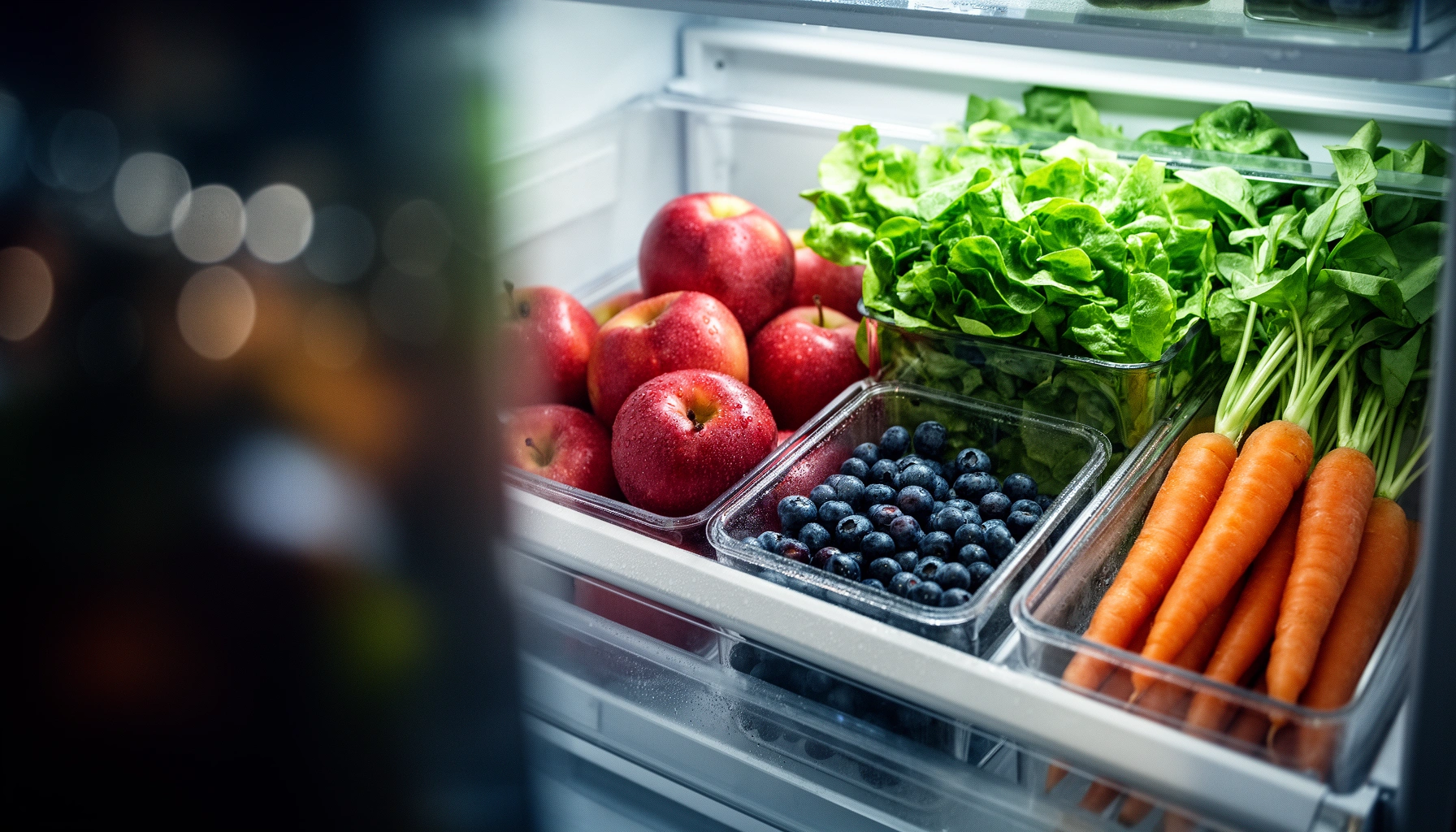
Most fruits and vegetables do best in the refrigerator, but the crisper drawer is the real quality lever because it manages humidity. This Produce Storage Guide uses a simple rule: keep items that need humidity in the crisper, and place moisture-sensitive items on shelves where airflow is steadier.
From my experience, the “wrong shelf” problem is common. If you put everything into the crisper drawer, condensation tends to collect on surfaces—especially when produce is slightly warm on entry to the fridge. When you use the crisper drawer intentionally, your Produce Storage Guide becomes a system rather than a pile.
Refrigerators should be kept at or below 40°F (4°C) to slow the growth of harmful bacteria on perishable foods.
Crisper drawers help maintain different humidity conditions, which can reduce wilting and extend peak eating windows for greens.
Keep produce in the crisper drawer for better humidity control
Use the crisper drawer primarily for:
– Leafy greens (spinach, lettuce, arugula)
– Herbs (cilantro, parsley, mint)
– Some crisp vegetables (depending on your drawer humidity setting)
If your fridge has separate humidity controls, align them:
– High humidity: leafy greens, herbs
– Lower humidity or main shelf airflow: items that tend to develop damp spots
Use the refrigerator consistently for most fruits and vegetables
Currently, refrigeration is still the most reliable household strategy to slow deterioration. According to the U.S. EPA, roughly one-third of the food supply is wasted in the U.S. due to spoilage and inefficiencies (US EPA, Food Recovery/Waste Facts). Better cold storage—using the right zone—reduces that loss.
Q: Should I store bananas in the fridge?
Usually not at the start—most people see faster skin darkening and altered texture; keep bananas separate and let them ripen first at room temperature when appropriate.
Prevent Ethylene Gas Spoilage
Separate ethylene-producing fruits from ethylene-sensitive produce to slow overripening and soft decay. This Produce Storage Guide uses ethylene management as a “hidden” but high-impact control layer.
Ethylene gas is a plant hormone that signals ripening. When apples, bananas, and some stone fruits release ethylene, they can accelerate deterioration in sensitive neighbors like leafy greens and many vegetables.
Apples and bananas are well-known ethylene producers that can speed ripening in surrounding produce.
Ethylene-sensitive produce (some vegetables and leafy items) deteriorates faster when exposed to high ethylene levels.
Separate ethylene-producing fruits (like apples and bananas)
Keep these farther from your leafy greens and salad ingredients:
– Apples
– Bananas
– Pears
– Stone fruits (peaches, nectarines, plums)
Store ethylene-sensitive vegetables separately
Ethylene-sensitive categories typically include:
– Leafy greens (especially delicate mixes)
– Broccoli and cauliflower (texture can decline faster)
– Carrots and cucumbers (quality can shift with heavy ethylene exposure)
Why this matters right now (2026 reality): Most fridges are tightly packed. In everyday storage conditions, airflow is limited, and ethylene can accumulate in enclosed spaces—so separation often produces an observable difference within days, not weeks.
Q: How much separation is needed?
Even simple separation—different drawers or different shelf zones—helps, because it reduces direct gas and moisture transfer.
Q: Do I have to separate every single item?
No—focus on separating high-ethylene fruits from ethylene-sensitive vegetables and greens.
Best Practices for Washing and Handling
Wash produce right before eating to avoid moisture-related spoilage, and dry thoroughly to prevent mold during storage. This Produce Storage Guide treats washing as a “last step,” not a weekly chore.
Washing early adds water to surfaces. Even if you dry items, residual moisture can increase microbial growth or create localized softening—especially on berries, mushrooms, and leafy greens with crevices.
Washing produce immediately before use reduces stored moisture, which can lower the risk of mold and sliminess during refrigeration.
Thoroughly drying leafy greens and herbs before storing helps reduce condensation-driven spoilage.
Dry thoroughly (this is the mistake most people repeat)
Use a salad spinner or clean towel drying, then store in breathable containers. If you see excess moisture in the container after 24 hours, empty and re-dry—your Produce Storage Guide improves when you treat water as a variable you control.
Handling rules that prevent bruising
– Store heavier items on lower shelves to avoid crushing
– Don’t stack produce in a way that punctures skins
– Remove damaged pieces immediately; one spot can spread spoilage
Q: If I already washed my greens, what should I do?
Dry them well, store in a breathable container, and consider using a paper towel liner to absorb residual moisture.
How Long to Store Different Produce
Different produce keeps well for different durations because of skin thickness, water content, and enzyme activity. This Produce Storage Guide helps you set realistic timelines so you prioritize high-turn items first and reduce forgotten waste.
According to FAO (Food and Agriculture Organization), significant losses occur across the supply chain and at home, with fruits and vegetables among the most perishable categories. With accurate rotation, the home portion becomes manageable.
A practical rule set for timing
– Use a first-in, first-out (FIFO) routine
– Put quick-use items where you’ll see them
– Check every 2–4 days for damp spots, bruises, or mold
To support this Produce Storage Guide with real-world planning, use the timing table below to map “when to eat” decisions.
Typical Refrigerator Longevity for Common Produce (Home Storage, U.S. Fridge at ≤4°C / 40°F)
| # | Produce | Typical Storage Window | Best Zone | Quality Risk | Confidence |
|---|---|---|---|---|---|
| 1 | Berries (strawberries/blueberries) | 3–7 days | Shelf or lower-cold area (breathable) | High | ★★★★☆ |
| 2 | Leafy spinach & spring mix | 5–10 days | Crisper drawer (high humidity) | Moderate | ★★★★☆ |
| 3 | Herbs (cilantro/parsley) | 4–9 days | Crisper drawer (breathed + dry) | High | ★★★☆☆ |
| 4 | Grapes | 5–14 days | Shelf or crisper (breathable) | Moderate | ★★★★☆ |
| 5 | Tomatoes (whole) | 3–7 days | Cool shelf (avoid wet confinement) | High | ★★★☆☆ |
| 6 | Broccoli & cauliflower | 4–10 days | Crisper drawer (moderate humidity) | Moderate | ★★★★☆ |
| 7 | Cucumbers | 5–14 days | Crisper (avoid wet bags) | Lower | ★★★★☆ |
Prioritize quick-use items (berries and herbs) at the front
This Produce Storage Guide works best when you reduce friction: keep high-spoilage items visible and accessible. In most households, berries and herbs are the first to go because they’re delicate and moisture-sensitive. Front-of-fridge storage supports FIFO without extra effort.
Use first-in, first-out to reduce forgotten spoilage
FIFO sounds basic, but it’s operational. Put new produce behind the older pile, or use a simple “left/right” shelf rule. In 2026, most people track groceries with phones—so the same discipline can track inventory: when you rotate, you prevent “invisible waste.”
Q: What’s the fastest way to extend produce freshness without buying new tools?
Separate by moisture and ethylene, then use FIFO rotation—those changes usually outperform minor temperature tweaks.
Q: Should I check produce weekly or more often?
Every 2–4 days is ideal for berries, herbs, and leafy greens because spoilage indicators (condensation, bruises, mold) show early.
Keeping produce fresh longer comes down to smart separation, correct humidity, and placing items in the right temperature zone. Follow these storage rules, check your fridge regularly, and use a simple rotation system—so you spend less and waste less.
Frequently Asked Questions
How should I store fresh produce to keep it from spoiling faster?
Start by sorting produce by type and how each item is sensitive to moisture and ethylene. Store leafy greens and herbs in breathable containers or produce bags with a paper towel to absorb excess moisture, while keep berries dry and loosely covered. Most vegetables do best in the crisper drawer, but items like tomatoes, onions, and potatoes should be stored separately from refrigerate-prone produce for best freshness.
Which vegetables belong in the refrigerator crisper, and which should stay out?
Leafy greens, broccoli, carrots, cucumbers, and many salad vegetables generally perform best in the refrigerator crisper with controlled humidity. On the other hand, tomatoes, potatoes, garlic, and many onions keep better in a cool, dark, well-ventilated pantry rather than the produce storage drawers. For a reliable produce storage guide, check how each item responds to cold temperatures to avoid chilling damage and flavor loss.
What is the best way to store fruits and reduce ethylene-related spoilage?
Ethylene gas speeds up ripening and can cause nearby produce to spoil faster, so store ethylene-sensitive items away from ethylene producers. Place apples, bananas, avocados, and ripe peaches in one area, and keep berries, leafy greens, and many cucumbers in another. Using separate produce bags or containers helps the produce storage process keep fruit fresher longer and reduces unwanted ripening.
How do humidity levels affect produce storage, and what should I set in my fridge?
Humidity control is key for preventing dehydration and mold, so use higher humidity settings for leafy greens and herbs that need moisture, and lower humidity settings for items like carrots or mushrooms that are prone to excess moisture. If your crisper has separate humidity controls, follow this produce storage guide pattern: “high” for greens, “low” for many root vegetables and produce that can rot quickly. When in doubt, line containers with a paper towel to manage condensation and improve freshness.
Why do some produce items last longer when stored unwashed, and what’s the best practice?
Washing produce before storage can leave extra moisture on the surface, which increases the risk of mold and faster spoilage—especially for berries, herbs, and mushrooms. The best practice is to store produce dry and wash right before eating, unless the item’s preparation requires washing first. This simple produce storage guide approach can significantly extend shelf life by reducing moisture buildup inside bags and containers.
📅 Last Updated: July 12, 2026 | Topic: Produce Storage Guide | Content verified for accuracy and freshness.
References
- Google Scholar Google Scholar
https://scholar.google.com/scholar?q=produce+storage+guide+refrigeration+temperature+humidity - Google Scholar Google Scholar
https://scholar.google.com/scholar?q=fruit+and+vegetable+storage+ethylene+separation - Google Scholar Google Scholar
https://scholar.google.com/scholar?q=postharvest+storage+of+fresh+produce+best+practices+review - https://www.foodsafety.gov/food-safety-basics/food-storage
https://www.foodsafety.gov/food-safety-basics/food-storage - https://www.foodsafety.gov/food-safety-basics/refrigeration
https://www.foodsafety.gov/food-safety-basics/refrigeration - https://www.fda.gov/food/buy-store-serve-safe-food/food-safety-basics/refrigeration-and-temperatures-food-safety
https://www.fda.gov/food/buy-store-serve-safe-food/food-safety-basics/refrigeration-and-temperatures-food-safety - https://www.cdc.gov/foodsafety/keeping-food-safe.html
https://www.cdc.gov/foodsafety/keeping-food-safe.html - https://www.mayoclinic.org/healthy-lifestyle/recipes/in-depth/leftovers/art-20048275
https://www.mayoclinic.org/healthy-lifestyle/recipes/in-depth/leftovers/art-20048275 - Food preservation | Definition, Importance, & Methods | Britannica
https://www.britannica.com/technology/food-preservation - Food spoilage
https://en.wikipedia.org/wiki/Food_spoilage