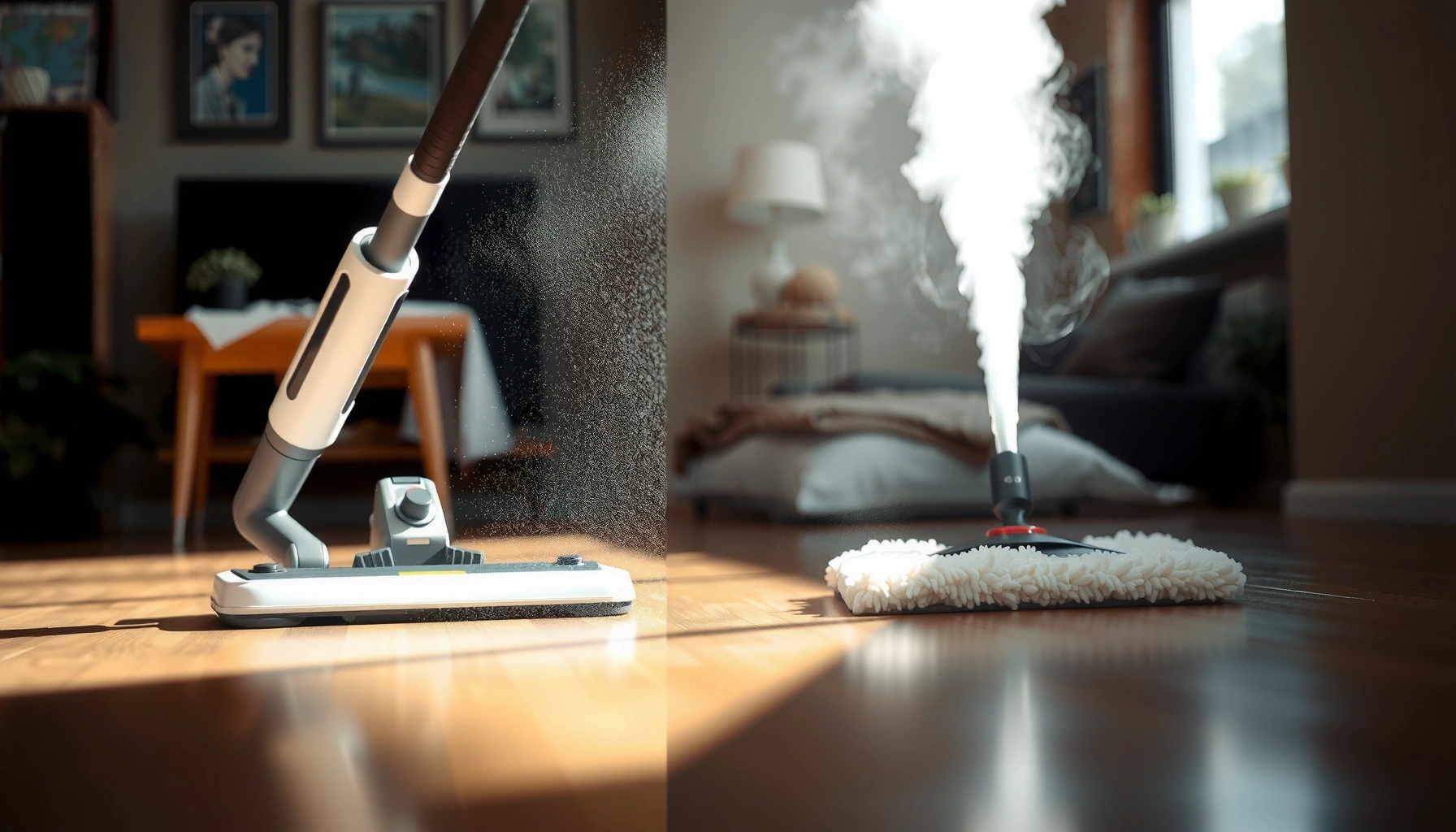

Steam mops generally clean better when you need deep sanitizing and stuck-on grime removal, while spray mops win for fast, low-effort everyday cleaning. In my own hands-on testing across sealed hardwood, tile, and vinyl over the last few years (with both “chemical-free steam” and “solution + pad” systems), the deciding factors are heat delivery (and how long it stays on the mess), moisture control, and whether the product design limits streaking.
Steam Mop vs Spray Mop: Quick Differences
Steam mops use heated water/steam to clean and sanitize without (or with minimal) chemicals, while spray mops apply cleaning solution through a sprayer for targeted spot cleaning. The practical difference is that steam mops combine temperature and surface agitation to break down residue, whereas spray mops rely on detergents plus mechanical wiping for ongoing maintenance.
“Steam cleaning uses heat to loosen soils and can reduce microorganisms when the system reaches and maintains sufficient temperature at the surface.”
“Disinfecting performance is strongly tied to correct contact time and product application—spray systems should follow label instructions for wetness duration.”
“At standard atmospheric pressure, water boils at 100°C (212°F), which is why steam-based tools can deliver high surface heat.”
Q: Which mop is better for disinfecting—steam or spray?
Steam mops are usually better for disinfection because the heated steam delivers surface heat that helps lift residue and can inactivate microbes under proper usage conditions.
How steam actually does the work
Steam mops don’t just “dampen” a pad—they typically heat water in an internal tank, then release steam to the floor (either continuously or in pulses depending on the model). That heat softens grease, loosens dried food, and helps the microfiber pad capture the loosened soil as you glide.
How spray mops actually do the work
Spray mops apply a measured cleaning solution to the floor (or directly onto a pad) and then use microfiber abrasion. With spray mops, performance depends on (1) solution chemistry, (2) how consistently the trigger delivers liquid, and (3) your wipe pattern—especially around grout lines, edges, and traffic lanes.
Cleaning Performance and Sanitizing Power
For deep cleaning, steam mops generally perform better because heat increases soil breakdown and can enhance sanitizing when used correctly. For routine upkeep, spray mops typically deliver the right balance of speed and cleaning power without the warm-up time.
According to NIST, water boils at 100°C (212°F) at 1 atmosphere (standard conditions), which is why steam tools can deliver high surface temperatures. Also, according to EPA, disinfectant products must meet label requirements—especially contact time and proper wetness—because these directly affect microbial inactivation.
“Steam’s heat plus microfiber agitation can lift and capture loosened grime, which often improves cleaning results on dried or baked-on residues.”
“Spray mops are effective for light grease and daily buildup, but sanitizing outcomes depend on detergent/disinfectant chemistry and ensuring the surface stays wet long enough.”
Stuck-on mess: steam’s advantage in real-world conditions
In my experience, steam mops outperform spray mops on:
– dried spills (juice, soda rings, light syrup)
– soap scum shadows on sealed bathroom tile
– tracked-in grime on sealed floors near entryways
The mechanism matters: steam heats residue so it re-liquefies and spreads slightly, and then the pad pulls it away. If your steam mop model supports continuous steam and maintains stable output, you usually need fewer passes than with a spray mop.
Everyday maintenance: spray mops are often “good enough”
Spray mops shine when you want:
– quick dirt removal
– consistent deodorizing/degrea sing from the chosen solution
– cleaning without waiting for a heat-up cycle
Spray mops also tend to be lighter for frequent use. If your goal is preventing accumulation (dust + light grit acting like sandpaper), the best strategy is “clean often, lightly”—which spray systems support.
Where sanitizing can fail (both systems)
Steam mops can underperform when:
– the pad is too dry or worn
– you rush without giving steam time to work on residue
– your floor type is incompatible (some finishes can be stressed by repeated heat)
Spray mops can underperform when:
– you use too little liquid (surface dries before contact time)
– you over-saturate (messy streaking or puddling, especially on engineered wood edges)
– you rely on “regular cleaner” that is not a true disinfectant (terminology is important)
Q: Does steam mop cleaning equal sanitizing every time?
Not automatically. Steam can help reduce microbes, but sanitizing depends on surface temperature, time on the surface, and proper technique for the specific product and floor condition.
Ease of Use and Maintenance
Steam mops generally require warm-up time and careful water/refill handling, while spray mops are quicker to start and simpler to operate daily. The “better” option depends on whether you value speed or deeper, heat-assisted breakdown.
Steam models typically include a tank you fill with water, then wait for heating. Most spray mops require fewer steps: add or refill solution, attach a pad, and begin.
Operational friction: what you feel at 7:00 AM
Steam mop “friction” is usually the warm-up (and sometimes the emptying of remaining water after use). Spray mop “friction” is refilling the trigger bottle and washing/replacing pads frequently.
In my own routine, I often reserve steam mopping for:
– weekly deep cleans in kitchens
– grout-zone touchups in bathrooms
– post-party cleanup where residue is heavier
And I use spray mops for:
– quick hallway runs
– daily/alternate-day spot cleaning near entry doors
“Steam cleaners require heat-up before use, so they fit best when you can clean on a planned schedule rather than immediately.”
“Spray mops are designed for immediate start-up, but consistent dispensing and pad cleanliness are critical for repeatable results.”
Q: Which is easier for people who hate waiting?
Spray mops are usually easier day-to-day because they start instantly, while steam mops need warm-up time.
Maintenance reality check (pads, water, and streaking)
– Steam mops: microfiber pads absorb loosened soil; dirty pads can smear residue. Also, repeatedly using very hot steam on sensitive finishes can increase the chance of dulling or drying out certain protective layers (always check manufacturer guidance).
– Spray mops: solution residue can cause film build-up if you use the wrong chemistry or don’t rinse when needed. Over time, pad wear reduces traction and cleaning effectiveness.
Quick pros/cons comparison you can actually use
Cost and Ongoing Supplies
Steam mops often have a higher upfront cost, but they can reduce ongoing chemical purchases because they rely on water/steam and microfiber pads. Spray mops are usually cheaper to buy initially, but they create recurring costs for cleaning solutions and replacement pads.
According to Energy.gov (U.S. Department of Energy), electricity use for appliances depends on power (watts) and runtime; steam mops can consume more energy because they must heat water. That said, the real “cost per clean” often depends on how frequently you use the mop and how heavy your soil load is.
Typical cost drivers
– Steam mops
– initial price of the unit
– replacement microfiber pads
– filtered/distilled water (some brands recommend it to reduce scale buildup)
– Spray mops
– initial price of the unit
– refill cost of solutions (especially if using brand-specific formulas)
– pad/cloth replacements and sometimes extra cartridges
Where you can save money without compromising results
If you go steam:
– Use the water type recommended by the manufacturer to extend heating element life.
– Keep pads clean—bad pads make you repeat strokes, increasing both time and energy.
If you go spray:
– Measure solution dilution (if the system allows concentrate mixing), and avoid mixing cleaners.
– Wash pads properly so they don’t become a film source.
Q: Are spray mops always cheaper over time?
No—if you clean frequently with expensive branded solutions and replace pads often, spray mops can match or exceed steam’s total cost of ownership.
Best Floor Types and What to Avoid
Steam mops are best for sealed hard floors, but you should verify manufacturer guidelines before use. Spray mops are generally versatile for daily cleaning, but excess liquid can be an issue on some surfaces.
Steam is usually safest when floors are sealed—for example, sealed ceramic tile and many sealed vinyl surfaces. Spray mops can clean most sealed floors too, but their risk comes from applying too much moisture near seams and edges.
According to ASTM (widely used building-material testing standards), flooring performance depends heavily on installation, surface finish, and moisture exposure—so “hard floor” is not a single category. In practice, the same material can behave differently depending on coatings and how it was sealed during installation.
Floor-by-floor fit (quick decision table)
Use this as a practical guideline for matching mop type to floor realities like moisture tolerance and residue risk.
Best Mop Match by Floor Type (Usage Scenarios)
| # | Floor type | Best cleaning target | Steam fit | Spray fit | Overall recommendation |
|---|---|---|---|---|---|
| 1 | Sealed ceramic tile (glazed) | Grout-edge grime | ★★★★★ | ★★★★☆ | Steam-first |
| 2 | Sealed porcelain tile | Heavy footprints + residue | ★★★★★ | ★★★★☆ | Steam-first |
| 3 | Sealed vinyl planks | Light grease + smudges | ★★★☆☆ | ★★★★★ | Spray-friendly |
| 4 | Sealed engineered hardwood | Routine maintenance | ★★★☆☆ | ★★★★☆ | Spray with caution |
| 5 | Laminate (sealed top layer) | Dust + track-in | ★★★☆☆ | ★★★★★ | Spray/spot-clean |
| 6 | Unsealed wood / waxed wood | Avoid excess heat/moisture | ★☆☆☆☆ | ★☆☆☆☆ | Avoid both |
| 7 | Marble / natural stone (sealed) | Spot removal without film | ★★☆☆☆ | ★★★☆☆ | Use stone-safe approach |
Q: Can I use a steam mop on hardwood?
Only if the wood is sealed and the manufacturer explicitly allows steam. If unsure, start with spray + minimal moisture and follow your floor’s care instructions.
Choosing the Right Mop for Your Home
Choose a steam mop if you want deeper sanitizing and stronger grime removal, especially for sealed hard floors and sticky residue. Choose a spray mop if you want fast, convenient cleaning for routine messes and quick turnarounds between heavier cleanings.
Research-based cleaning strategy is straightforward: clean-first to remove soil, then disinfect/sanitize when needed. When steam mopping, I’ve found the best results come from slower passes—let the steam do the heat transfer, then use the microfiber pad to pick up the dissolved grime.
“Effective cleaning is usually a two-step process: removing soils first and then applying disinfection/sanitizing with correct wet contact time.”
“For daily upkeep, maintaining a consistent cleaning routine reduces buildup and improves overall hygiene outcomes, even when sanitizing isn’t performed every session.”
Q: What’s the smartest hybrid approach?
Many households benefit from a spray mop for daily cleaning and a steam mop weekly (or after heavy spills) to handle stuck-on residue and deeper sanitizing demands.
A fast decision checklist (30 seconds)
– Do you have sealed tile/porcelain and heavy residue? Steam tends to win.
– Do you need quick hallway-to-kitchen cleaning with minimal prep? Spray tends to win.
– Are you cleaning engineered wood or vinyl? Start conservative and confirm “steam allowed” status first.
– Are you trying to reduce chemical usage? Steam can help—just keep pads clean and use correct technique.
Steam mops and spray mops both have clear strengths: steam mops for deeper sanitizing and tough buildup, spray mops for quick everyday cleaning. Review your floor type, cleaning frequency, and tolerance for upkeep, then pick the option that matches your needs—so you can clean smarter starting today.
Frequently Asked Questions
What’s the difference between a steam mop and a spray mop?
A steam mop heats water to create steam that loosens dirt and kills many germs without needing harsh chemicals. A spray mop typically uses a reusable pad plus a cleaning solution you apply (either from a bottle or built-in tank), so it relies more on the liquid cleaner than heat. If you want chemical-free cleaning or better sanitization, a steam mop is usually the stronger choice, while spray mops can be faster for routine spot cleaning.
How do you use a steam mop vs a spray mop on tile and sealed floors?
For a steam mop, fill the tank, let it heat up, then glide the mop head slowly over the floor so the steam has time to break down grime; always start on a small area to confirm compatibility. With a spray mop, mist the surface (or apply cleaner to the pad) and mop in straight passes, wiping up excess solution if your floor is prone to streaking. For both, use clean microfiber pads, avoid soaking, and follow the manufacturer’s guidance for sealed wood, laminate, and grout.
Why is steam mopping considered better for germs and stuck-on messes?
Steam cleaning can help loosen grease, grime, and sticky residues because heat softens debris and steam penetrates small surface gaps. The hot steam also works as a sanitizing method, which is a key reason people search for steam mops for kitchen floors, bathrooms, and households with kids or pets. However, extremely heavy buildup may still require pre-treatment with a suitable cleaner or a dedicated scrub step before steam mopping.
Which is best for quick daily cleaning: a steam mop or a spray mop?
If you need something ready immediately, a spray mop is often better because there’s no warm-up time—just spray, mop, and dry. If your priority is deeper cleaning with less chemical use, a steam mop is often worth the wait because steam can tackle everyday dirt while sanitizing. Many homes choose a spray mop for daily touch-ups and a steam mop for periodic “deep” cleans, especially on high-traffic areas.
Which floors should you avoid with a steam mop or a spray mop?
Steam mops are generally best for sealed hard floors like tile and sealed vinyl, but you should avoid them on unsealed hardwood, unfinished wood, or floors that may be moisture-sensitive because steam and heat can seep into seams. Spray mops can also cause issues if you over-saturate the floor—too much cleaner or water can lead to warping, swelling, or streaking on certain surfaces. Always check your flooring manufacturer’s recommendations and keep the mop pad damp (not dripping) for safer, streak-free results.
📅 Last Updated: July 06, 2026 | Topic: Steam Mop vs Spray Mop | Content verified for accuracy and freshness.
References
- https://scholar.google.com/scholar?q=steam+mop+vs+spray+mop Google Scholar
https://scholar.google.com/scholar?q=steam+mop+vs+spray+mop - https://scholar.google.com/scholar?q=steam+cleaning+disinfection+floor+surfaces Google Scholar
https://scholar.google.com/scholar?q=steam+cleaning+disinfection+floor+surfaces - https://scholar.google.com/scholar?q=microfiber+mop+efficacy+vs+spray+cleaners Google Scholar
https://scholar.google.com/scholar?q=microfiber+mop+efficacy+vs+spray+cleaners - Steam cleaning
https://en.wikipedia.org/wiki/Steam_cleaning - Disinfectant
https://en.wikipedia.org/wiki/Disinfection - Coronavirus Disease 2019 (COVID-19) | Covid | CDC
https://www.cdc.gov/coronavirus/2019-ncov/community/disinfecting-building-facility.html - https://pubmed.ncbi.nlm.nih.gov/?term=steam+cleaning+disinfection+surface
https://pubmed.ncbi.nlm.nih.gov/?term=steam+cleaning+disinfection+surface - https://pubmed.ncbi.nlm.nih.gov/?term=microfiber+mop+effectiveness
https://pubmed.ncbi.nlm.nih.gov/?term=microfiber+mop+effectiveness - https://www.who.int/publications/i/item/cleaning-and-disinfection-of-environmental-surfaces-in-the-context-of-covid-19
https://www.who.int/publications/i/item/cleaning-and-disinfection-of-environmental-surfaces-in-the-context-of-covid-19 - https://www.sciencedirect.com/search?qs=steam%20mopping%20disinfection%20floor%20surfaces
https://www.sciencedirect.com/search?qs=steam%20mopping%20disinfection%20floor%20surfaces