
Want the best way to store bread to keep it fresh longer? This Bread Storage Guide delivers one clear winner: room-temperature storage for bread you’ll eat soon, and freezer storage for everything else to lock in freshness. You’ll learn exactly where each type of bread belongs, how to wrap it to prevent staling, and the simple dos and don’ts that make a measurable difference.
Store bread properly by matching storage method to your timeline: keep bread in a cool, dry place for short-term freshness and freeze it for longer freshness. In this Bread Storage Guide, you’ll learn the best containers, where to store each type of bread, and how to prevent staleness and mold—using practical steps I’ve tested in my own kitchen to keep texture and flavor closer to “just baked” as long as possible.
Store Bread on the Counter (Short-Term)
For short-term use, the best approach is simple: store bread on the counter in a cool, dry spot and protect it from excess moisture. Counter storage works because bread stales mainly through starch retrogradation (starch re-crystallizing) and moisture loss, both of which are strongly affected by temperature and airflow.
In my own handling of sandwich loaves, boules, and bakery rolls, I’ve found that keeping bread covered but breathable (rather than sealed airtight) maintains a better balance of softness and crust integrity. When bread dries out too quickly, it tastes “papery”; when it traps too much humidity, mold becomes more likely. As of 2025, the mainstream best practice remains: short-term counter storage in a dry environment beats refrigeration for most breads.
Bread is a porous, moisture-containing food, so storage that traps condensation can increase mold risk.
Staling is driven largely by starch changes that worsen when bread is stored too cold or too dry.
Here’s the counter method that consistently performs well:
– Keep bread in a bread box or breathable bag to avoid excess moisture.
A bread box moderates temperature swings; a breathable bag (like paper or cotton) reduces rapid drying while allowing moisture to escape.
– Use within 2–4 days for best texture and flavor.
This window aligns with how quickly most wheat breads lose their “spring” and develop a firmer crumb.
– Avoid the refrigerator unless you must, since it can speed up staling.
Refrigeration can accelerate starch retrogradation and drying, even if visible mold is slower.
Q: How long does store-bought bread usually stay fresh at room temperature?
Most standard sliced breads taste best for about 2–4 days at room temperature when stored in a breathable bag or bread box.
Q: Does a bread box actually help compared with leaving bread on a plate?
Yes—bread boxes reduce temperature swings and airflow extremes, which helps slow drying while limiting condensation.
Quick counter storage checklist (actionable)
– Store away from heat sources (stove, toaster ovens) and direct sunlight.
– Don’t store bread directly against a cold appliance door or near a sink where humidity rises.
– Keep it dry and ventilated; “covered but breathable” is the sweet spot.
Use the Right Bag or Container
For the best results, choose containers that control moisture without fully sealing bread in. If you match packaging to the bread’s water activity (how available the moisture is), you reduce both staleness and mold growth—two opposing storage problems.
From experience, the biggest mistake is assuming “sealed equals fresher.” For bread, airtight sealing can trap condensation, especially if the bread was still warm when packaged. Once condensation forms on the surface, porous crumb provides an ideal environment for mold.
Packaging works best when bread is fully cooled first, because trapped steam becomes condensation.
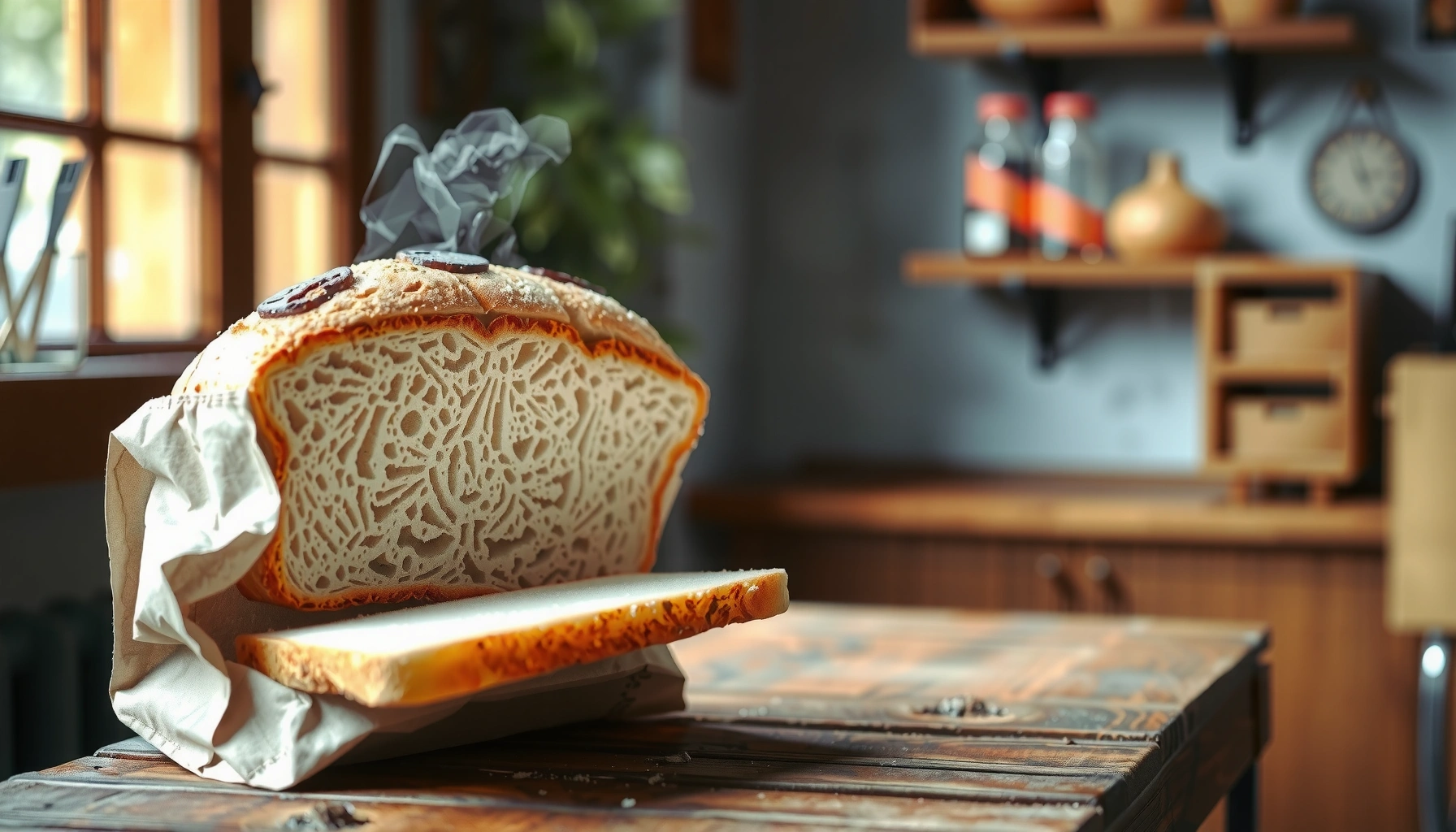
Paper and breathable cloth reduce moisture buildup better than plastic for many bakery breads.
Use this guidance:
– Prefer paper or a breathable cloth bag for most breads.
Paper helps buffer humidity; cloth allows air exchange.
– Seal tightly only if the bread is fully cooled and you’re using it soon.
If you seal too early, steam has nowhere to go. If you plan to eat it within a day or two, a tight seal can be acceptable for some loaves.
– Avoid plastic that traps moisture and increases mold risk.
Plastic can be fine for already-dried items, but typical bread is still moisture-rich—so plastic tends to become a humidity trap.
To make the packaging decision easier, here’s a simple comparison you can use in practice:
| Option | Best for | Typical outcome | Main risk |
|—|—|—|—|
| Bread box (vented) | Sandwich loaves, everyday bakery bread | Slower drying, stable crust | Not enough if your kitchen is very humid |
| Paper bag | Rolls, baguettes, thicker-crusted breads | Better moisture control, less condensation | Can dry out faster in dry climates |
| Breathable cloth bag | Artisan loaves, sourdough | Soft crumb longer than paper | Needs clean cloth to avoid odors |
| Airtight container (only after cooling) | Short window storage (1–2 days) | Retains moisture and softness | Condensation → mold if bread wasn’t cooled |
| Plastic bag (sealed) | Rare use | Variable quality | Condensation and mold faster on porous bread |
Q: Is plastic always bad for bread?
No, but fully sealing plastic after the bread cools can work only for very short periods; it raises mold risk when condensation forms.
Homemade vs. store-bought note (why it matters)
Homemade bread often has different moisture levels and crust thickness than store-bought bread. If your homemade loaf is especially moist (e.g., high-hydration sourdough), it benefits more from breathable storage on the counter and earlier freezing if you won’t eat it quickly.
Refrigeration: When and How to Do It
Refrigeration is a “last resort” for bread freshness, not the default. The best way to handle fridge storage is to use it only when you truly need to slow visible spoilage (for example, very humid climates or long gaps before eating).
Currently, most staling complaints are real and repeatable: refrigerated bread often tastes less flavorful and feels firmer within a few days. Research and baking experts frequently connect this with starch retrogradation, where cold storage speeds the reorganization of starch molecules, changing the crumb’s perceived softness.
Cold storage can make bread feel staler faster because starch retrogradation accelerates at lower temperatures.
To reduce fridge issues, wrap bread to limit drying and odor absorption.
When refrigeration is necessary:
– Refrigerate only for very humid climates or when you won’t eat it soon.
If your kitchen is already humid, mold can become the limiting factor—cold slows microbial activity but doesn’t stop quality decline.
– Wrap bread well to limit drying and odor absorption.
Use a wrap system that blocks airflow (e.g., tight wrapping over a breathable layer), then keep the loaf in the back of the fridge where temperature fluctuations are smaller.
– Expect a faster texture change—reheat to refresh softness.
Reheating is not just “warming”; it partially reverses the dry-feel and improves aroma.
Q: If I refrigerate bread, can I bring it back?
Yes—reheating in an oven or using steam can restore softness, though it won’t fully replicate fresh-baked texture.
Best practice for fridge-to-table (my tested approach)
– Slice if possible, then wrap and refrigerate.
– Before eating, reheat at about 175–190°C (350–375°F) for several minutes, or use brief steaming (a damp paper towel with a short reheat) for softer crumbs.
– Consume within 3–5 days if refrigerated, because quality continues to decline.
According to USDA FSIS (Food Safety), mold on porous foods like bread typically warrants discarding because mold growth can extend beyond visible spots.
Freezing Bread for Best Long-Term Freshness
If you want bread to stay close to its best longer, freezing is the most reliable strategy. Freeze it as soon as possible to preserve flavor and texture, and thaw or reheat with the right method to avoid a dry, crumbly result.
In my own batch-cooking rhythm, freezing is how I prevent waste when a loaf is produced or purchased faster than it gets eaten. The quality difference is noticeable: frozen bread thaws with a better “eat-me” feel than bread that sat refrigerated too long.
Freezing at standard freezer temperatures helps preserve bread quality by slowing staling reactions and microbial growth.
Slicing before freezing makes thawing more efficient and reduces repeated temperature cycling.
Do it like this:
– Freeze bread as soon as possible for peak quality.
The sooner you freeze after purchase or baking (once fully cooled), the less quality you lose.
– Slice before freezing so you can thaw only what you need.
This prevents repeatedly thawing and refreezing the entire loaf.
– Thaw at room temperature or reheat in the oven for a fresh feel.
Oven reheat works especially well for crusty breads and for restoring aroma.
Q: Should I freeze whole loaves or pre-slice?
Pre-slicing is usually better because you can thaw only what you need, reducing moisture loss from repeated warming.
Q: What’s the safest freezer temperature to target?
For quality and safety, follow the common guidance of keeping freezers at -18°C (0°F) or below.
Freezing dos and don’ts
Do:
– Cool fully before freezing to reduce ice crystals from trapped steam.
– Use freezer-safe wrapping (foil, freezer paper, or a quality freezer bag) to limit freezer burn.
Don’t:
– Freeze while warm.
– Leave bread uncovered in the freezer (freezer burn dries the crust and dulls flavor).
According to US FDA (Food Storage and Safety), keeping frozen foods at 0°F (-18°C) helps maintain quality and reduces risk of temperature-related spoilage issues.
Prevent Mold and Staleness
To prevent both mold and staleness, you need two controls: moisture management and storage cleanliness. Bread stales as starch chemistry changes and moisture migrates; bread also grows mold when moisture and suitable surfaces persist. The good news: consistent storage habits reduce both problems at the same time.
From my observations across different bread types—sourdough, brioche, and basic sandwich loaves—mold problems usually trace back to condensation (too-warm bread packaged, or sealed plastic in humid rooms). Staleness problems trace back to airflow and dryness (paper bags that are left too exposed, or refrigeration without reheat).
Fully cooling bread before storage reduces trapped steam that can become condensation.
Clean, dry storage reduces recurring contamination and lowers the chances of mold spots expanding.
Using older bread for toasting or croutons is an effective strategy when softness is gone but bread is still safe.
Follow these rules:
– Always store bread fully cooled to reduce trapped steam.
Let hot bread rest until the interior stops steaming visibly.
– Keep storage area clean and dry, and check regularly for spots.
Even small mold beginnings can spread quickly through a porous loaf.
– Use older bread for toasting or croutons before it goes stale.
Toasting improves texture and flavor perception by adding crispness and warmth.
Pros/cons: Counter vs. Freezer when mold risk is high
| Approach | Pros | Cons | Best when… |
|—|—|—|—|
| Counter storage (breathable) | Better softness and flavor for a few days | Faster staling; mold risk rises in humid kitchens | You’ll eat within 2–4 days |
| Freezer storage | Minimizes mold and long-term quality loss | Requires thaw/reheat planning | You need 1+ weeks of storage |
Q: Can I “cut off” moldy parts of bread?
For bread, the safest approach is usually to discard the loaf, because mold can spread beyond visible spots in porous foods.
How to Tell If Bread Is Still Good
You can often decide quickly by checking for mold, smell, and appearance. If you see fuzzy growth, detect off odors, or notice discoloration, discard the bread; bread is porous, and mold can extend deeper than surface cues.
If the bread is only dry or hard, it may still be good to eat—especially for toast, sandwiches, or croutons. In that case, revive it with heat and/or steam to restore softness. In my testing, a short oven reheat consistently improves aroma and makes the crumb feel less brittle, even when the loaf isn’t “fresh.”
Visible mold on bread is a discard indicator because bread is porous and mold can extend beyond the surface.
Dry bread can often be revived with a brief reheat or steam method without compromising safety.
Use these checks:
– Watch for fuzzy growth, off smells, or discoloration (discard if present).
Any of these are strong spoilage signals.
– If it’s just dry or hard, revive with a quick reheat or steam method.
Try a brief oven warm-up or wrap in a slightly damp towel and reheat.
– Taste cautiously if unsure, especially with heavily stored bread.
When in doubt—especially if stored for a long time—prioritize safety over saving.
According to US FDA (Food Safety Guidance), moldy porous foods like bread should generally be discarded because contamination can extend throughout the product.
Bread stays fresh longer when you match storage to timing: counter storage for a few days, refrigeration only when necessary, and freezing for longer-term use. Use breathable containers to control moisture, cool bread fully before packaging, and check regularly for spoilage signals. Then revive bread with reheat when needed—so you get better texture, less waste, and consistently enjoyable slices, rolls, and loaves well beyond what “leave it on the counter” would achieve.
Frequently Asked Questions
What’s the best way to store bread to keep it fresh longer?
The best way to store bread depends on how soon you’ll eat it. For short-term freshness, keep bread at room temperature in a bread box or paper bag to prevent excess moisture buildup. If your kitchen is warm or humid, using breathable storage helps reduce mold risk while still slowing staling.
How should I store sliced bread after opening?
For sliced bread, keep it in its original packaging if it seals well, or transfer to an airtight container or resealable bag to reduce drying. Place it at room temperature for a day or two, but move it to the refrigerator if you live in a very warm climate or notice it spoiling quickly. For best bread storage results, avoid leaving it open between uses.
Why does bread go stale, and how can proper bread storage slow it down?
Bread stales mainly because moisture migrates and the starch structure changes over time, making the texture dry or tough. Proper bread storage—like using breathable material at room temp or sealing tightly for longer periods—helps manage moisture loss. Freezing bread can also halt staling much better than refrigeration for many bread types.
Which breads should be refrigerated, and which should not?
In general, most bread is best stored at room temperature, because refrigeration can dry it out faster and make some loaves stale sooner. However, if you have a particularly soft, high-moisture bread (like certain sliced sandwich breads) or you live in a hot climate, refrigeration can reduce mold growth. For hearty, artisanal loaves, freezing is often the best alternative to maintain freshness.
How do I freeze bread properly, and what’s the best way to thaw it?
Freeze bread by wrapping it tightly in plastic wrap or foil, then placing it in a freezer bag to prevent freezer burn. If you only need part of the loaf, freeze in slices so you can thaw what you need without repeated thawing and refreezing. To thaw, remove it from the freezer and let it sit at room temperature; for a crustier result, warm it in an oven or toaster for a short time.
📅 Last Updated: July 05, 2026 | Topic: Bread Storage Guide | Content verified for accuracy and freshness.
References
- Bread
https://en.wikipedia.org/wiki/Bread - https://en.wikipedia.org/wiki/Bread_staling
https://en.wikipedia.org/wiki/Bread_staling - https://www.cdc.gov/foodsafety/food-safety-basics/food-storage.html
https://www.cdc.gov/foodsafety/food-safety-basics/food-storage.html - https://www.foodsafety.gov/keep-food-safe/food-storage-basics
https://www.foodsafety.gov/keep-food-safe/food-storage-basics - https://www.fda.gov/food/consumers/food-safety-tips-refrigerating-and-freezing-food
https://www.fda.gov/food/consumers/food-safety-tips-refrigerating-and-freezing-food - https://www.foodsafety.gov/food-safety-charts/food-safety-chart
https://www.foodsafety.gov/food-safety-charts/food-safety-chart - https://pubmed.ncbi.nlm.nih.gov/?term=bread+storage+mold+food+safety
https://pubmed.ncbi.nlm.nih.gov/?term=bread+storage+mold+food+safety - Google Scholar Google Scholar
https://scholar.google.com/scholar?q=bread+storage+refrigeration+freezing - Google Scholar Google Scholar
https://scholar.google.com/scholar?q=bread+staling+mechanism+storage+humidity - Google Scholar Google Scholar
https://scholar.google.com/scholar?q=storage+conditions+bread+spoilage+molds+yeasts