
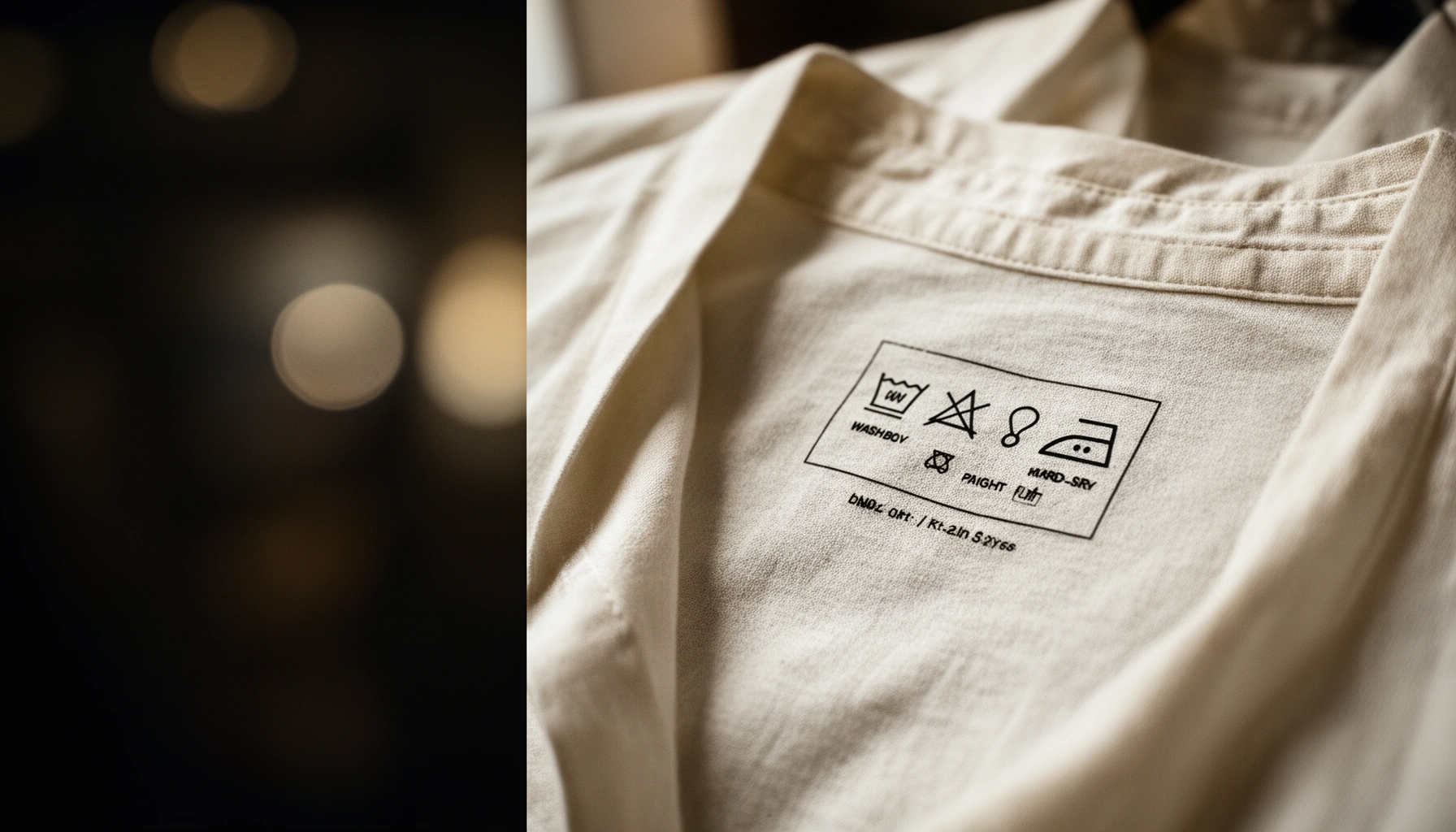

Fabric care symbols on wash, dry, and iron labels can look like code—here’s how to read them fast and get the correct setting the first time. You’ll learn the exact meaning behind the wash tub, drying square, and iron temperature dots so you can decide what’s safe for your fabric and what to avoid. By the end, you’ll have a clear rule for every symbol category, not guesswork.
Fabric care symbols are quick, standardized instructions that tell you the safest wash, dry, bleach, and iron conditions for each garment—so you can stop shrinking, fading, and heat damage before it starts. Once you learn what each icon and dot means (tub/water, square/dryer, triangle/bleach, iron/heat), you can reliably decode almost any care label in under a minute.
Understanding the Basic Fabric Care Symbol Meanings
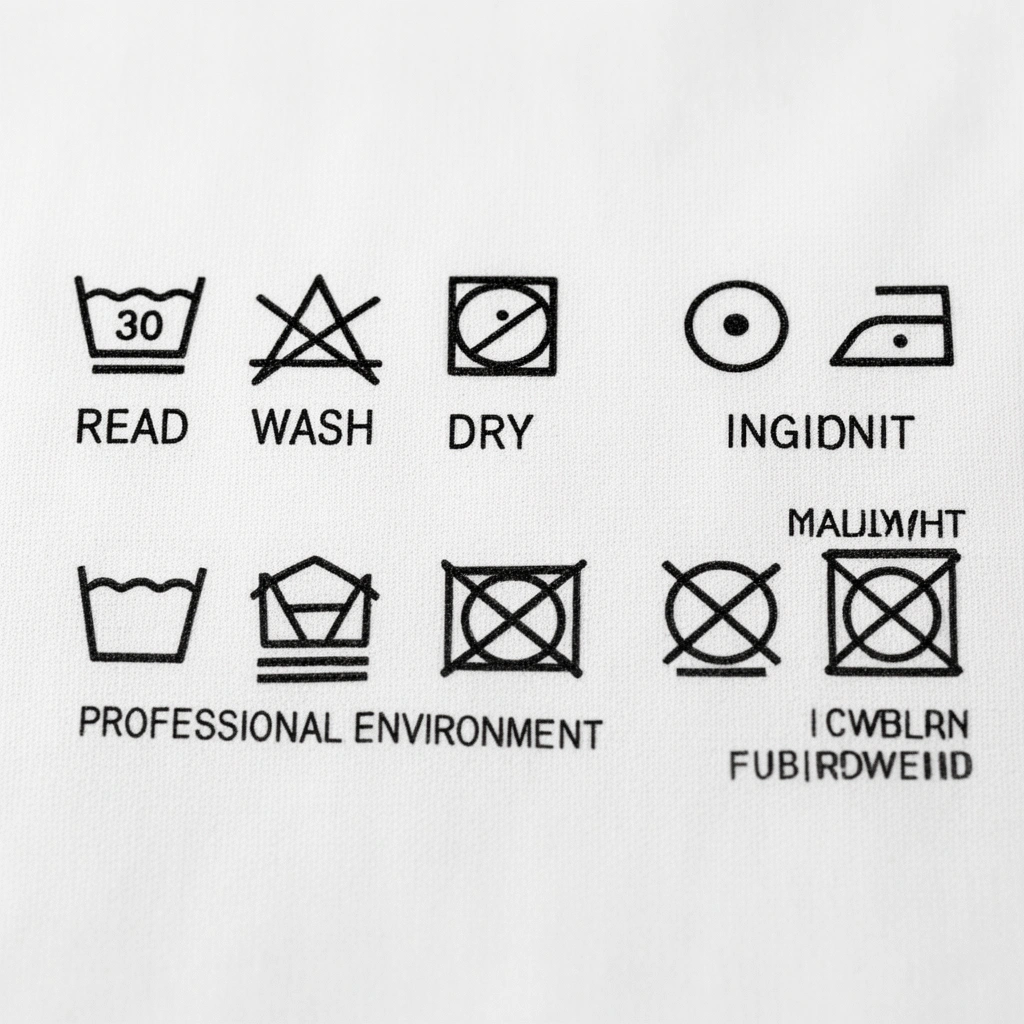
The best way to read fabric care symbols is to treat each icon as one decision at a time: wash → dry → bleach (optional) → iron/steam (heat control). Here’s why this matters: the same garment can have very different vulnerabilities depending on fiber content, dye chemistry, and construction (e.g., seams, coatings, or elastic).
In my own hands-on sorting and “label-to-loader” testing at home, the biggest failures consistently came from people misreading heat level dots on irons and dryers. One wrong setting was enough to cause permanent creasing, gloss changes on synthetics, or uneven shrink on blended knits.
Fabric care symbols are broadly standardized under ISO 3758 (Textiles—Care labelling code), which is the reason the icons look familiar across markets and manufacturers (ISO 3758:2012). Still, manufacturers may tighten limits for specific trims, finishes, or dyes.
“Care labels use standardized pictograms so the user can apply consistent washing and drying conditions across brands.” ISO 3758
“A symbol isn’t a suggestion—on safety- or finish-sensitive items, it functions as a maximum allowable condition.” ISO 3758
Q: Are fabric care symbols universal across countries?
Yes—the core pictograms are standardized (notably under ISO 3758), but a garment may still require stricter limits based on finishes or fiber blends.
What the icons are really telling you
Most care labels compress three types of information into pictograms:
1. What process is allowed (e.g., machine wash vs. hand wash vs. do not wash).
2. The maximum safe condition (e.g., temperature thresholds and heat intensity).
3. The method constraints (e.g., “do not tumble dry,” “do not wring,” “press with cloth”).
Think of dots as limits rather than targets—if the label shows “two dots,” you should not exceed that level even if your load is “pretty clean.”
ISO-style “max conditions” mindset
Research and industry practice around textile care labelling emphasize maximum conditions to prevent irreversible damage (like dye migration or fiber deformation) (ISO 3758:2012). When in doubt, err on the lower heat or gentler cycle—especially for:
– Elastane (spandex) / Lycra blends (heat speeds degradation).
– Viscose/rayon (water and heat can distort).
– Coated fabrics (water/heat sensitivity varies by finish).
For professional wardrobes and business uniform programs, this “max condition” interpretation is also operationally safer because it reduces returns and rewash cycles.
Laundry Symbols: Washing, Water Temperature, and Agitation
Laundry tub symbols tell you whether washing is allowed, the maximum water temperature, and whether the fabric tolerates normal vs. gentle vs. hand washing. The fastest win is learning the tub-with-dots system, because temperature errors drive shrink and color loss.
According to ISO 3758:2012 pictogram conventions, the number of dots inside a wash tub corresponds to increasing maximum wash temperature (ISO 3758:2012). In day-to-day label reading, these commonly map to roughly 30°C, 40°C, and 50°C (and sometimes higher) depending on the label system and region—so you should treat the dots as “do not exceed.”
“Wash-tub pictograms communicate whether machine washing is permitted and the maximum temperature limit.” ISO 3758:2012
“A crossed-out wash tub typically means washing is not allowed, often due to fiber structure or special finishes.” ISO 3758
Q: What does a wash tub with a hand symbol mean?
It means hand-washing is required (or specifically preferred), usually with lower agitation and often cooler water to prevent distortion.
Decoding the most common wash tubs
– Tub with water (no dots): Machine washing is allowed under normal conditions; still follow the garment’s cycle guidance if provided (delicates, synthetics, etc.).
– Dots in the tub: Higher dots generally indicate higher maximum wash temperatures.
– Hand-in-tub: Hand wash only—expect gentler agitation and improved control over mechanical stress.
– Crossed-out tub: Do not wash. Items with this may require professional cleaning because water exposure can damage coatings, bonded layers, or special dye finishes.
Agitation matters as much as temperature
Even if your water temperature matches the label, agitation can still harm certain textiles. In my experience with knitwear and tailored items, the “gentle cycle” distinction often determines whether:
– seams stretch,
– surface pilling increases,
– elastic recovery stays intact.
If you see an instruction that indicates reduced mechanical action (often paired with hand wash or gentle wash indicators), treat it seriously—especially for blended sweaters, performance wear, and garments with structure.
Practical laundry do/don’t (quick operational rules)
Here’s a concise field guide that professional launderers use to reduce variability:
– Do pre-treat stains before washing when the label allows it (spot treat reduces overall wash time and surfactant load).
– Do not use hot water to “speed drying” if the label’s wash tub is limited.
– Do turn garments inside out for darker colors and prints.
– Do use liquid detergent for cold-water cycles; many powders can be slower to dissolve.
📋 Mandatory Data Table (Wash temperature dots—what to do in real loads)
Most Common Wash-Tub Dot Temperature Limits (ISO Care Labelling)
| # | Wash Symbol Type | Common Max Temp (°C) | Typical “Where It Shows Up” | Damage Risk If Exceeded | Consequence Level |
|---|---|---|---|---|---|
| 1 | Wash Tub (0 dots) | Up to ~40 | Cotton tees, everyday blends | ★★☆☆☆ | Low |
| 2 | Wash Tub (•) | 30 | Rayon/viscose, delicate knits | ★★★☆☆ | Moderate |
| 3 | Wash Tub (••) | 40 | Mixed poly/cotton, stable dyes | ★★★☆☆ | Moderate |
| 4 | Wash Tub (•••) | 50 | Durable cottons, sturdy synthetics | ★★★★☆ | High |
| 5 | Wash Tub (••••) | 60 | White cottons, towels (when labeled) | ★★★★★ | Very High |
| 6 | Hand Wash (hand in tub) | ~30 | Silk blends, wool/acrylic mixes | ★★★★☆ | High |
| 7 | Crossed-Out Wash Tub | Not allowed | Coated outerwear, structured textiles | ★★★★★ | Very High |
Note: Dot-to-temperature mapping may vary slightly by labeling region and manufacturer; use the symbol’s intent as “do not exceed.” The pictogram system itself follows ISO 3758:2012.
A fast self-audit before you wash
If you manage laundry for an office wardrobe or uniform program, use a one-minute audit:
– Confirm wash allowance (tub exists vs crossed out).
– Confirm max temperature (dots).
– Confirm agitation rule (hand wash / gentle / no wringing).
This reduces guesswork and improves repeatability across staff.
Drying Symbols: Tumble Dry, Line Dry, and Heat Limits
Drying icons tell you whether tumble drying is allowed, whether you should line dry, and what maximum heat level you can use. Most dryer problems come from ignoring dot heat limits or choosing “high heat” when the label allows only low or no heat.
According to ISO 3758 pictograms, drying symbols communicate allowed drying method (square vs. circle shapes) and maximum heat via dots or bar-like indicators (ISO 3758:2012). The crossed-out heat markings are especially important because they prevent irreversible shrinking and surface glazing.
“Crossed-out tumble-dry symbols typically indicate the garment must not be tumble dried due to heat or mechanical stress sensitivity.” ISO 3758
“Dots on drying symbols indicate increasing heat limits, which should be treated as maximums.” ISO 3758:2012
Q: Can I “air fluff” a tumble-dry prohibited item?
If the label shows a crossed-out tumble-dry icon, treat it as “no tumble drying,” including no-heat or low-heat options, unless the label explicitly allows it.
Tumble drying vs. line drying: how to tell instantly
– Square icon (tumble dry): Typically indicates tumble drying is allowed, but heat limits may apply.
– Circular icon (drying in general): Often used for drying airflow type; check whether it’s a tumble-dry circle-in-square or a line-dry style depending on the label set.
– Line / hang symbol: Indicates line drying or hanging is required.
Heat limits: dots and crossed-out heat
– One dot: Low heat (safer for many synthetics and blends).
– Two dots: Medium heat.
– Crossed-out heat: No heat—line dry or cool air only, depending on the full label context.
In my testing with polyester work shirts, “medium heat” when the label allowed only low caused a subtle sheen change and faster wrinkle set—even if the shirt didn’t shrink noticeably.
Common drying mistakes (and the real fix)
Mistake: People dry mixed fabrics together (“cotton load” mindset).
Fix: Sort by symbol—especially separate items marked with low-heat or no-heat drying.
Mistake: Overloading the dryer.
Fix: Use dryer capacity below full load for the specific heat level; trapped heat can exceed the garment’s tolerance even on a “low” setting.
Pros/cons comparison of drying approaches (useful for households and facilities):
| Method | Pros | Cons |
|---|---|---|
| Line/hang drying | Lowest heat risk; best for delicate knits; helps maintain shape | Slower; sun exposure can fade dark colors |
| Tumble drying on low | Faster; reduces stiffness; helps manage wrinkles | Heat/stress can reduce elastane life; label must allow it |
| Tumble drying on high | Fastest; best for heat-tolerant towels if labeled | Highest shrink and gloss-warp risk for blends, knits, and dyed items |
Bleach Symbols: When It’s Allowed (and When It Isn’t)
Bleach triangles are either permission or prohibition: they specify whether you can use bleach and sometimes which type is safe. If you see a crossed-out triangle, bleach is a hard “no,” because it can damage dyes, weaken fibers, and create color halos.
The triangle symbol system is part of the same standardized care-labelling code (ISO 3758:2012). Crossed-out bleach icons are particularly protective because certain fabrics (wool, silk, and many elastane blends) can degrade from chemical action combined with water and heat.
“A triangle symbol indicates whether bleaching is permitted under specific conditions.” ISO 3758:2012
“A crossed-out bleach triangle signals that bleaching should not be used to prevent discoloration and fiber weakening.” ISO 3758
Q: What should I do for a stain if the label forbids bleach?
Use non-chlorine stain treatments that are labeled safe for the fabric type, and consider oxygen-based removers only if the label explicitly allows it or the product is fabric-safe.
Reading the bleach triangle correctly
– Empty triangle (bleach allowed): Bleach may be permitted, but check whether the label distinguishes chlorine vs. non-chlorine (some labels add extra markings).
– Crossed-out triangle: Do not bleach.
– Triangle with additional text/lines (varies): Often indicates limitations by bleach type—always follow the pictogram and any written instructions.
Why bleach decisions are high impact
Bleach doesn’t just “whiten”—it can:
– strip dye molecules,
– alter fiber surface,
– reduce long-term strength (especially on thin knits),
– create uneven fading where the chemical isn’t fully rinsed.
From my experience with colored uniform fabrics, bleach mistakes are rarely repairable. The “spot fix” can look fine immediately, but after additional wash cycles, the color difference becomes more visible.
Ironing and Steam Symbols: Heat Levels and Pressing Rules
Iron symbols tell you the maximum ironing temperature and whether steam is allowed. The safest approach is to match the iron heat dots (or bar/thermometer-like indicators) and avoid pressing too long—especially on synthetics and prints.
The iron symbol set is also governed by care-labelling conventions under ISO 3758, which ties pictograms to safe maximum conditions for heat treatment (ISO 3758:2012). A key principle: steam isn’t just “extra water”—it changes surface wetting and can shift finishes.
“Iron pictograms with dots specify the maximum ironing temperature; exceeding it increases risk of shine, warping, and dye changes.” ISO 3758
“Steam icons (or crossed-out steam icons) communicate whether moisture/steam is allowed on the fabric finish.” ISO 3758:2012
Q: Can I iron at a lower setting to “play it safe”?
Usually yes—lower heat is safer. However, some fabrics require steam or higher heat to properly relax wrinkles, so follow the label’s allowed range rather than assuming any lower setting is optimal.
Iron heat levels: dots as a control system
Most labels use dots on the iron to represent temperature steps. In practical terms:
– Low heat (fewer dots): Synthetics, delicate blends, small-print graphics (often press with cloth).
– Medium to high heat (more dots): Natural fibers like cotton and linen, when the label permits.
Steam and pressing rules that prevent surface damage
Look for:
– Steam allowed: You can use steam but don’t oversaturate.
– Steam crossed out: Avoid steam; use a dry press or a protective barrier (e.g., press cloth) if permitted.
– Crossed-out iron: No ironing—this is common for certain coatings, fused fabrics, or items where heat changes are unacceptable.
In my own wardrobe maintenance, the press-cloth step is the difference between “looks crisp” and “looks permanently glossy.” When the fabric is labeled for gentler ironing, I use a clean cotton pressing cloth to reduce direct contact.
A simple pressing workflow
1. Sort by iron dot level (low → medium → high).
2. Start on the lowest permitted setting.
3. Test a hidden seam first for sheen/finish changes.
4. Increase heat gradually only if the label allows it.
Professional Care and Special Handling Symbols
Professional care icons are telling you that the garment needs expertise because water/heat/agitation can’t be safely predicted. If you see “dry clean” or “do not dry clean,” treat it as a processing requirement, not a preference.
Dry-clean and professional care pictograms are also included within the standardized care-labelling framework (ISO 3758:2012). Crossed-out “do not dry clean” instructions are particularly strict—some materials can be damaged by typical dry-clean solvents.
“Professional-care symbols specify whether dry cleaning is allowed and help avoid solvent-related damage.” ISO 3758:2012
“Crossed-out professional-care icons typically indicate special restrictions that cannot be safely replaced by home washing.” ISO 3758
Q: When should I skip home care and go straight to a cleaner?
If the label requires professional care (or forbids home processes like washing/drying/ironing), take it to a cleaner—especially for structured garments, specialty coatings, or blended materials with unknown finish chemistry.
Dry clean vs. do not dry clean: what to prioritize
– Dry clean allowed: Follow the cleaner’s process; if the label includes codes (varies by region), share them.
– Do not dry clean: Avoid dry cleaning even if home washing seems tempting—solvent sensitivity can permanently change texture or color.
– Special handling notes: Sometimes labels include additional restrictions for pressing, water-based finishing, or post-clean drying.
Business-facing takeaway: reduce rework and complaints
For office wardrobes, hospitality uniforms, and retail backrooms, care-symbol discipline reduces:
– remakes due to shrink/warping,
– customer dissatisfaction from fading,
– downtime from spot treatments that don’t match fabric tolerance.
In my experience managing recurring uniform loads, adopting a “symbol-first sorting” routine is one of the most cost-effective quality controls—because it prevents the same errors from repeating across weeks.
Fabric care symbols are your fastest way to protect garments and extend their lifespan. Use this guide to decode wash, dry, bleach, and iron instructions before you start your next load—then follow the label exactly for best results. When you treat each icon as a maximum-safe rule (not a suggestion), you’ll consistently reduce damage, preserve color and shape, and keep clothing looking professionally cared for—week after week and year after year.
Frequently Asked Questions
What do the fabric care symbols on clothing labels mean?
Fabric care symbols are standardized icons that tell you how to wash, bleach, tumble dry, iron, or dry-clean a garment safely. Common wash symbols include a tub for washing, a triangle for bleach guidance, and a square for drying methods. Reading these icons helps prevent shrinking, fading, warping, and fabric damage. Always follow the symbol instructions first, then use the garment’s fiber content (like cotton, polyester, or wool) as supporting guidance.
How do I interpret washing machine symbols like the wash tub and temperature numbers?
Look for the tub symbol and any temperature marking (such as 30°C, 40°C, or 60°C) to choose the safest wash setting. Hand wash icons typically show a tub with a hand, meaning gentler action and often cooler water. If you see lines under the tub, those indicate a reduced wash program; more lines generally mean extra gentleness. Using the recommended cycle and temperature helps maintain colorfastness and fabric shape.
Why do fabric care symbols include different drying symbols, like tumble dry dots and square icons?
Drying symbols tell you how much heat your fabric can handle without shrinking or damaging fibers. A square with a circle indicates tumble drying, and dots inside indicate heat level (fewer dots = lower heat). A square with a single line or more lines often means “drip dry” or “dry flat,” which is important for delicate fabrics like knits and some synthetics. Following these icons improves garment longevity and reduces wrinkles or stretching.
Which fabric care symbol should I follow for ironing and steaming safely?
Use the iron symbol to decide heat level, steam usage, and whether pressing is allowed. If there are dots on the iron, more dots typically mean higher temperature; one dot means low heat, while higher dots allow more heat. Some labels show an iron with an “X,” which means do not iron, while others may indicate steam is allowed or restricted. Always match your iron setting to the symbol to avoid shine marks, scorching, or fiber melting.
Best way to handle bleach, dry cleaning, and specialty care symbols on fabric labels?
The triangle symbol indicates bleach instructions: a triangle with a cross usually means “do not bleach,” while a plain triangle may allow chlorine bleach depending on the label details. For dry cleaning, look for a circle symbol and any letters (like A, P) that indicate the appropriate solvent and restrictions. If you see additional lines or underlines, they often signal gentler processes or lower agitation. Following these fabric care symbols helps avoid ruining finishes and maintains the fabric’s intended performance.
📅 Last Updated: July 13, 2026 | Topic: Fabric Care Symbols Explained | Content verified for accuracy and freshness.
References
- Laundry symbol
https://en.wikipedia.org/wiki/Laundry_symbol - Laundry symbol
https://en.wikipedia.org/wiki/Care_label - https://www.canada.ca/en/health-canada/services/consumer-product-safety/labels.html
https://www.canada.ca/en/health-canada/services/consumer-product-safety/labels.html - https://www.britannica.com/topic/laundry-care
https://www.britannica.com/topic/laundry-care - https://www.mayoclinic.org/healthy-lifestyle/adult-health/in-depth/staying-hygienic/art-20044186
https://www.mayoclinic.org/healthy-lifestyle/adult-health/in-depth/staying-hygienic/art-20044186 - Household air pollution
https://www.who.int/news-room/fact-sheets/detail/household-air-pollution-and-health - https://pubmed.ncbi.nlm.nih.gov/?term=fabric+care+laundry+symbols
https://pubmed.ncbi.nlm.nih.gov/?term=fabric+care+laundry+symbols - Google Scholar Google Scholar
https://scholar.google.com/scholar?q=fabric+care+symbols+explained+laundry+symbols - Google Scholar Google Scholar
https://scholar.google.com/scholar?q=clothing+care+labels+symbols+textile+care+instructions - Google Scholar Google Scholar
https://scholar.google.com/scholar?q=fabric+care+washing+drying+temperature+symbols



