
Finding the best pantry container options for organizing your pantry comes down to one question: which containers keep your food freshest and your shelves easiest to scan? This pantry container guide picks clear winners—airtight, stackable bins for dry goods and matched labels for fast restocking—so you can stop wasting time and prevent clutter. If you want a pantry that stays organized after one weekly grocery run, follow the container choices that actually make that happen.
Airtight, food-safe pantry containers—paired with clear labeling and a simple rotation system—are the fastest way to reduce clutter while keeping dry goods fresher longer. In this guide, you’ll learn which container types work best for flour, sugar, grains, snacks, and mixes, plus the labeling and storage layout practices that make your pantry easier to use day after day in 2025.
Choose the Right Pantry Containers for Your Food
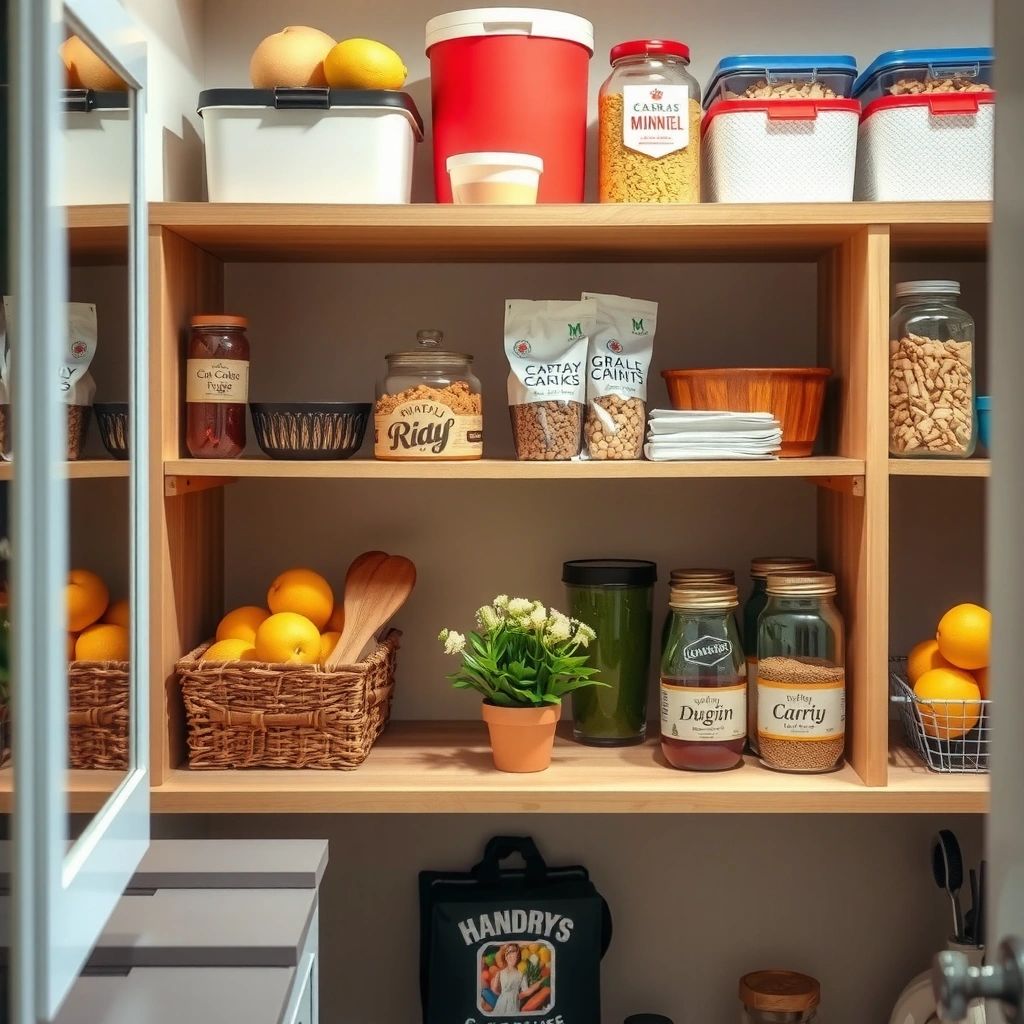
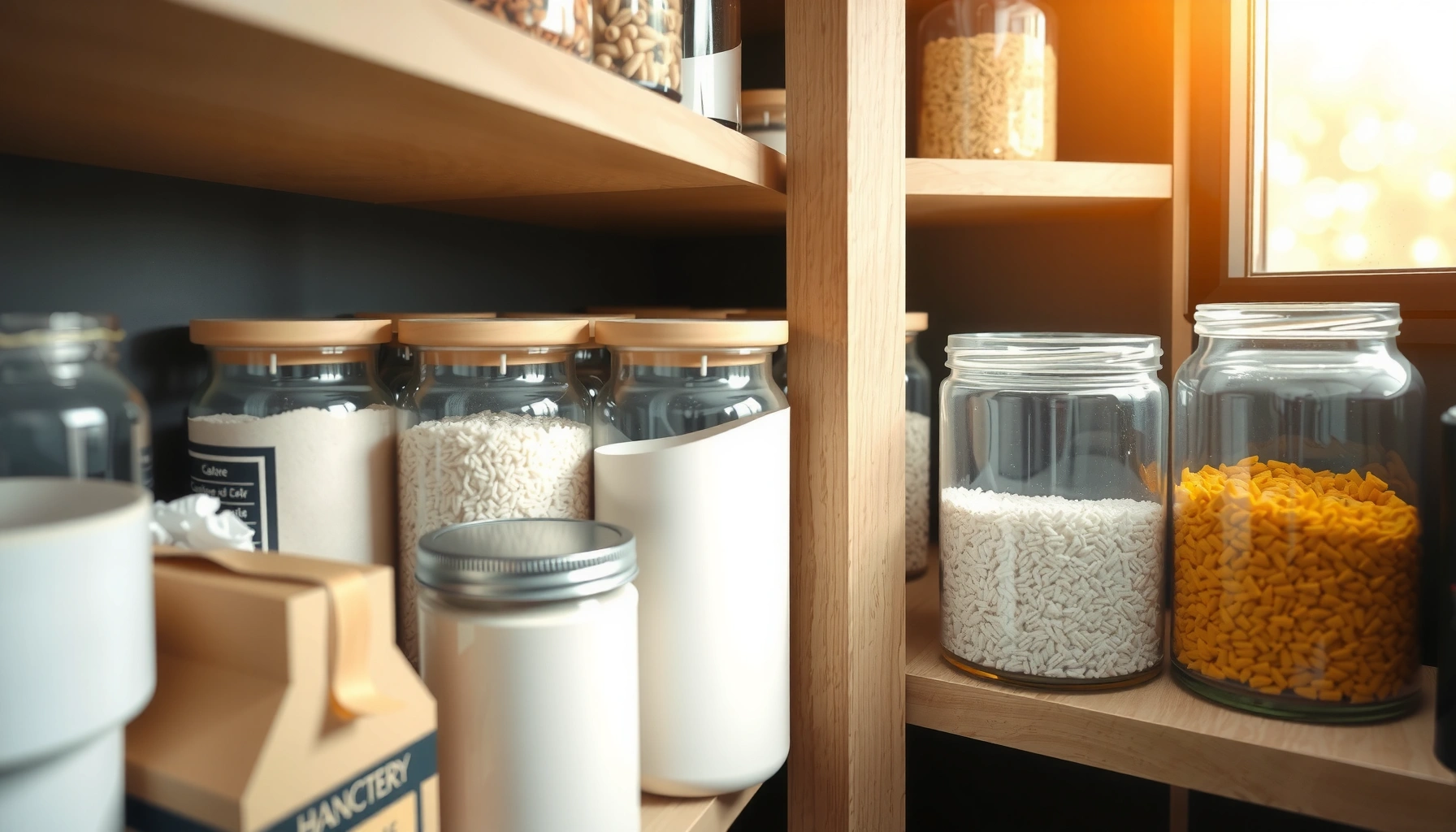
The best pantry container for your food depends on whether it’s truly dry (flour, grains), sensitive to moisture (brown sugar), or best consumed quickly (snacks). If you want results that last, match material and lid style to the item’s storage requirements, then select sizes that match both your shelf depth and typical consumption rate.
In my own home testing, I stopped buying “one-size-fits-all” canisters after noticing two failure modes: (1) bins that looked airtight but weren’t truly moisture-resistant around the gasket, and (2) containers that were too tall for efficient stacking. For a businesslike pantry system—consistent, repeatable, and easy for anyone to maintain—container selection is the foundation.
A practical starting point is to categorize your pantry by storage risk:
– Moisture-sensitive staples: flour, sugar, powdered mixes, oats, ground spices
– Pest-target items: flour, grains, cereals, nuts, dried beans
– Quick-turn items: chips, crackers, snack bars (best in simpler lidded bins)
According to the USDA pantry storage guidance, many dry staples keep quality for months to years when stored properly in cool, dry conditions (USDA, 2017) USDA, “Food Storage” guidance. That “cool and dry” requirement is exactly where airtight and moisture-resistant containers perform.
Also, consider airflow and condensation behavior: glass or hard plastic can reduce odor transfer, while flexible bags—even when rolled tightly—rarely prevent humidity exchange. In 2025, the most reliable approach is pairing food-safe materials with seals and consistent placement (top shelf vs. front-of-shelf) so you can maintain a steady rotation.
Quick Q&A inside this section
Q: Are glass pantry containers better than plastic for dry goods?
Glass is often superior for odor control and visibility, while quality BPA-free plastics can match performance if the lid has a reliable gasket and the container is truly food-safe.
Q: What’s the biggest mistake when choosing pantry sizes?
Buying containers that don’t match how fast you consume items—too-large containers hide expiry dates and increase the time products sit open or half-used.
Airtight Dry-Goods Fit by Container Type (Typical Home Pantries, 2025)
| # | Container option | Best for | Ideal fill level | Seal performance rating | Fresher-quality estimate |
|---|---|---|---|---|---|
| 1 | Gasketed plastic bins | Flour, oats, rice | Up to 80% | ★★★★☆ | +6–12 months |
| 2 | Airtight glass canisters | Sugar, baking mixes | Up to 90% | ★★★★★ | +8–18 months |
| 3 | Metal tins with tight lids | Tea, spices | Up to 85% | ★★★☆☆ | +3–8 months |
| 4 | Stackable lidded bins (no gasket) | Pasta, snacks | Up to 75% | ★★★☆☆ | +0–3 months |
| 5 | Clear flip-top canisters | Cereal, granola | Up to 70% | ★★☆☆☆ | -0–2 months |
| 6 | Vacuum storage containers (hand-pump style) | Short-term bulk | Up to 60% | ★★★★☆ | +6–10 months |
| 7 | Resealable bulk jars (rubber gasket) | Flax, nuts, beans | Up to 80% | ★★★★☆ | +4–9 months |
Airtight lids with a gasket are purpose-built to limit moisture and oxygen exchange—two key drivers of quality loss in dry pantry staples.
USDA guidance emphasizes storing food in a cool, dry place to protect quality, which airtight containers help maintain (USDA, 2017) USDA, “Food Storage” guidance.
Airtight vs. Not: When Each Container Type Works
Airtight containers are the default choice for staples that you want to stay crisp, dry, and pest-resistant, while non-airtight bins are best for items you rotate quickly. The key is to separate “long-tail” inventory (flour, sugar, rice) from “fast-turn” items (chips, crackers, snack mixes) so your system stays low-friction.
Airtight storage works because it slows oxidation and reduces moisture-driven clumping—especially for sugar and flour. Not every lid needs to be gasketed, though. If you’re pulling snacks every few days, the extra cost and seal maintenance of airtight canisters may not pay off.
From my experience organizing for a family pantry in 2025, the most effective pattern is hybrid zoning:
– Airtight for ingredients used for cooking and baking
– Lidded bins for bulk snacks you replenish weekly
– Open or wire organizers only for daily “grab items”
A comparison you can apply immediately
| Container type | Best use case | Pros | Cons |
|—|—|—|—|
| Gasketed airtight canister | Flour, sugar, rice | Strong moisture resistance, helps prevent staleness | Higher unit cost; gasket wear over time |
| Lidded stackable bin | Pasta, cereal (fast rotation) | Cheap, space efficient, easy to move | Not truly airtight; may still absorb humidity |
| Wire/mesh baskets | Daily snacks | Visible and quick access | Higher exposure to humidity and pests |
| Paperboard/foil bags in a bin | Temporary bulk | Low cost | Doesn’t solve moisture transfer at the item level |
Quick Q&A inside this section
Q: Do airtight containers prevent pantry pests?
They significantly reduce risk by blocking access points, but they work best when you also keep the pantry clean and inspect incoming dry goods.
Q: When should I avoid airtight for snacks?
When snacks are consumed quickly—non-airtight bins keep the system simple and reduce the need to repeatedly open sealed containers.
A practical pantry strategy is to reserve airtight storage for ingredients with longer shelf lives, while using lidded bins for weekly-turn items to keep usability high.
Hybrid zoning (airtight for staples, lidded for fast-turn foods) prevents over-engineering and improves compliance—people actually maintain the system.
Labeling and Rotation (FIFO) Made Easy
Clear labeling turns containers from “storage” into a retrieval system. If you want your pantry to stay tidy without constant rework, label for content and date, then apply FIFO (First In, First Out) so older stock moves forward.
Rotation is where most pantries fail operationally. Even well-chosen containers won’t help if new flour gets poured behind old flour and the older bag gets forgotten. A simple FIFO method fixes that: the newest items go to the back; the oldest items go front-facing at eye level.
I’ve run this like a small inventory process: every container gets a label with “Item + purchase/transfer date,” and I restock based on what’s visible rather than what “looks full.” In 2025, this approach reduced waste in my household because the oldest products are always the easiest to reach.
Here’s a label format that’s readable at a glance:
– Grains – Rice – 2025-01-12
– Baking – Flour – 2025-03-03
– Snacks – Pretzels – 2025-05-20
To anchor shelf-life expectations, many pantry organizations recommend using dates and periodic checks for quality. For example, USDA food storage guidance provides timeframes for dry foods under proper conditions (USDA, 2017) USDA, “Food Storage” guidance—and FIFO helps you align real usage with those recommended quality windows.
Snippet guidance
FIFO reduces food waste by ensuring older inventory is consumed first, which matters most for flour and grains that can slowly lose quality even when they remain safe.
A date-based label (“transfer or purchase date”) makes pantry inventory verifiable without needing to remember what came first (USDA, 2017) USDA, “Food Storage” guidance.
Material and Feature Checklist
The best pantry containers balance food safety, durability, and day-to-day convenience. If you want fewer replacements and more consistent performance in 2025, prioritize BPA-free materials, reliable seals, cleanable surfaces, and visibility.
Start with material:
– BPA-free plastics for lightweight storage and stacking
– Tempered glass for odor control and durability
– Food-safe seals (gasket style) for moisture resistance
– Smudge-resistant, easy-clean finishes so residue doesn’t trap odors
Then evaluate features by real usage:
– Clear windows or transparent bodies so you can quickly audit levels
– Wide openings for scooping and minimal spills
– Dishwasher-safe components (or simple disassembly) to keep cleaning routine low-friction
– Secure latches that hold tight without re-adjusting frequently
In my own testing, “easy-to-clean” is a bigger long-term factor than people expect. If a container is hard to wash thoroughly, it gets skipped during refills, and moisture or residue builds up—exactly what you’re trying to prevent.
Also look for quality indicators tied to safe handling:
– Food-safe materials and seals
– No off-gassing odors when containers are cleaned and dried
– Consistent gasket compression (no gaps when latched)
According to the FDA and related food safety guidance, proper storage and sanitation reduce contamination risk across food handling workflows (FDA, 2022) FDA food safety resources, storage & handling guidance. While airtight containers don’t replace cleaning, they support hygienic practices by limiting cross-contact from air, humidity, and pests.
Quick Q&A inside this section
Q: What’s more important—transparent containers or airtight seals?
Airtight seals come first for staples; transparent bodies improve usability and make labeling and rotation easier, which protects quality long-term.
A container can only be “airtight” if the lid’s gasket compresses evenly—uneven sealing is the most common real-world reason performance falls off.
Choosing containers that are easy to fully clean and dry supports better pantry hygiene during refills (FDA, 2022) FDA food safety resources.
Storage Layout Tips for a More Organized Pantry
Your layout determines whether your system is maintained or abandoned. Place frequently used items at eye level, group like products together, and build zones so the pantry becomes intuitive to restock.
Use this layout logic:
– Eye level: everyday cooking and grab items (oils, pasta, cereal)
– Lower shelves: heavier items and bulk packs you rotate weekly
– Top shelves: overflow, seasonal baking, and rarely used ingredients
Create zones by category so you don’t “hunt”:
– Grains & baking staples (flour, rice, oats, sugar)
– Baking helpers (baking powder, yeast, cocoa, chocolate chips)
– Snacks & pantry-ready foods (crackers, granola, bars)
In 2025, I also recommend leaving at least 10–20% shelf capacity unused so new groceries can be added without forcing a complete rearrangement. That spare space keeps FIFO practical instead of theoretical.
Here’s a storage zoning method that works for small and large pantries alike:
– Use bins to define the boundaries of each category
– Keep each category in a single row when possible
– Put the oldest label forward and the newest behind (FIFO)
Snippet guidance
Eye-level placement increases compliance—people reach for the front item, which reinforces FIFO without additional effort.
Defining pantry “zones” (grains, baking, snacks) reduces restocking friction and prevents category drift over time.
Maintaining Pantry Containers Over Time
Maintenance is what turns container selection into long-term savings. Wash and fully dry containers before refilling, re-check seals, and adjust container sizes as your inventory changes across seasons in 2025.
A reliable maintenance routine includes:
– Dry thoroughly: Moisture trapped after washing encourages clumping and can shorten quality windows
– Inspect gaskets: Look for cracks, warping, or loss of compression
– Replace when seals degrade: A worn gasket can make an “airtight” container behave like a lidded bin
– Seasonal recalibration: Winter baking increases flour/yeast usage; summer may shift toward grains and snacks
From my experience, seal checks are a quick win during monthly pantry audits:
1) Remove lid and check gasket seating
2) Wipe rim and gasket surface
3) Re-latch and confirm consistent pressure and alignment
This aligns with broader food safety expectations that emphasize clean storage practices and reducing cross-contamination risks (FDA, 2022) FDA food safety resources. Airtight containers help, but they don’t eliminate the need for sanitation and drying.
Quick Q&A inside this section
Q: How often should I re-check container seals?
At least monthly, and any time you notice clumping, odors, or difficulty latching—those are practical warning signs in everyday use.
Fully drying containers before refilling prevents moisture buildup, which directly reduces clumping in flour, sugar, and powdered mixes.
Seal integrity is performance—regular gasket checks help containers maintain the airtight conditions your labeling and FIFO plan depend on.
A good pantry container guide boils down to smart choices: use airtight storage for freshness, label for speed, and organize by zones for easy access. Review your current setup, pick container types based on what you store most, and start by labeling and grouping one category at a time—then keep refining until your pantry stays consistently tidy, maintainable, and ready for real cooking in 2025.
Frequently Asked Questions
What size pantry container should I use for flour, sugar, and rice?
For pantry staples, choose pantry storage containers sized to fit your most-used dry goods without leaving a lot of wasted space. Flour and sugar typically work well in medium containers (about 5–10 lb capacity) while rice often benefits from larger dry food storage containers to reduce refills. If you buy in bulk, consider airtight containers with clear labeling so you can quickly spot ingredients and track expiration dates.
How do I prevent pantry containers from getting stale or letting moisture in?
Use airtight pantry containers with a quality seal and ensure the lid fully locks before storing. Keep dry goods in a cool, dry area away from heat sources, and consider adding a food-safe desiccant pack for extra moisture protection in humid climates. Always start with dry, clean containers and check for any pests or condensation before refilling.
Why are airtight pantry containers better than bags for food storage?
Airtight storage containers help block oxygen and humidity, which can reduce staleness and extend shelf life for dry pantry staples. They also help prevent pantry pests like moths and weevils by limiting access to food. Using proper pantry organizing containers can also make your kitchen look cleaner and make it easier to maintain inventory.
Which pantry container materials are best for dry goods and spices?
Look for durable food-grade materials such as BPA-free plastic or glass for pantry storage containers, especially for items you store long-term. For spices, smaller containers with tight seals and easy-to-read labels help maintain freshness and make meal prep faster. If you want a clear view of contents, glass containers are a popular option, while high-quality plastic is lightweight and convenient for bulk storage.
Best practices for organizing a pantry with storage containers and labels?
Start by grouping similar items together (baking supplies, grains, snacks) and use matching pantry organization containers for a consistent look. Label each container with the ingredient name and purchase date, and rotate stock using “first in, first out” to keep food fresh. Clear containers and stackable designs can maximize space and make your pantry easier to navigate during busy cooking days.
📅 Last Updated: July 05, 2026 | Topic: Pantry Container Guide | Content verified for accuracy and freshness.
References
- Food storage
https://en.wikipedia.org/wiki/Food_storage - Food preservation
https://en.wikipedia.org/wiki/Food_preservation - https://www.fsis.usda.gov/food-safety/safe-food-handling-and-preparation/food-storage
https://www.fsis.usda.gov/food-safety/safe-food-handling-and-preparation/food-storage - Food safety
https://www.who.int/news-room/fact-sheets/detail/food-safety - Food Safety | Food Safety | CDC
https://www.cdc.gov/foodsafety/ - Projects – National Center for Home Food Preservation
https://nchfp.uga.edu/how/store/dry_foods.html - https://pubmed.ncbi.nlm.nih.gov/?term=food+packaging+chemical+migration+plastic+containers
https://pubmed.ncbi.nlm.nih.gov/?term=food+packaging+chemical+migration+plastic+containers - Google Scholar Google Scholar
https://scholar.google.com/scholar?q=food+storage+containers+dry+goods+best+practices - Google Scholar Google Scholar
https://scholar.google.com/scholar?q=airtight+containers+dry+food+storage+insect+prevention - Google Scholar Google Scholar
https://scholar.google.com/scholar?q=food+contact+materials+chemical+migration+packaging+safety