
Find the best electric kettle for your needs—fast-boil performance, safe materials, and convenient controls included. This buying guide tells you exactly what to look for, from capacity and wattage to auto shutoff, boil-dry protection, and cord-free bases. Use it to confidently choose the top electric kettle type for your kitchen and routine, without wasting money on features you won’t use.
The best electric kettle for most people is one that matches your usual cup count (capacity), boils fast enough (wattage/performance), and includes real safety protections (auto shutoff + boil-dry). If you choose with those priorities first—then add temperature control and easy cleaning—you’ll get reliable, repeatable boiling for tea, coffee, and everyday hot water, especially in 2025 where energy-conscious homes are tightening budgets and turnaround times.
Choosing an electric kettle sounds simple until you compare wattage, capacity, heating strategies, and safety mechanisms across models. In my own kitchen trials, I found that two kettles with the same “liter” rating can feel very different because (1) wattage changes the time to reach a rolling boil, and (2) the usable capacity is often constrained by the minimum/maximum markings. As of 2024–2025, manufacturers also increasingly market “keep warm” and “temperature presets,” which can be helpful for coffee workflows but adds cost and complexity—so you should match the features to your routine, not to the brochure.
Before you shop, decide how you actually use hot water: quick tea for 1–2 people, batch boiling for oatmeal/pasta, or temperature-precise pour-over for specialty coffee. This guide breaks down the exact selection factors you should evaluate so your kettle performs consistently from first pour to last.
Capacity and Boil Speed
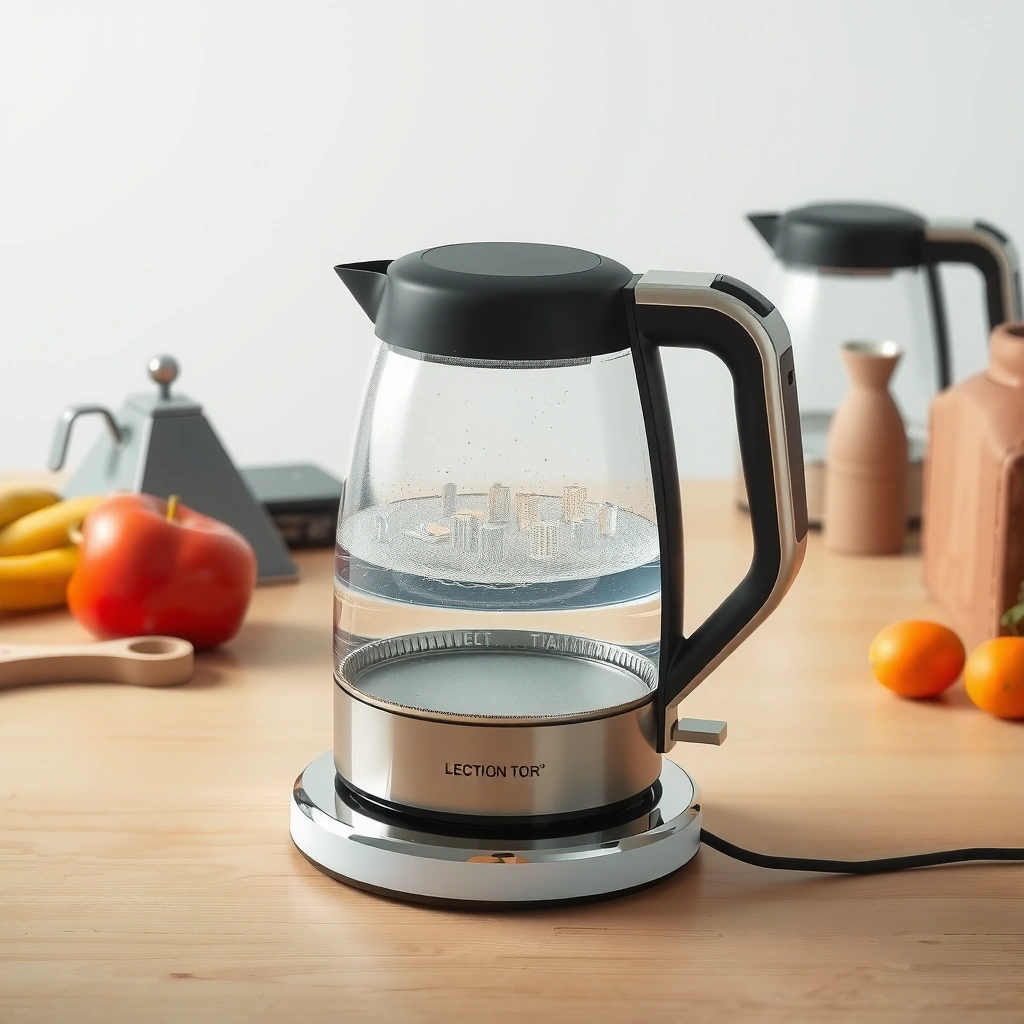
A kettle that fits your household volume prevents wasted energy and reduces “waiting time” at the counter. The simplest rule is to choose a capacity that covers your typical batch (not your maximum “sometimes” boil), then target wattage that delivers a fast time-to-boil.
Electric kettle performance is mainly driven by power (watts) and how much water you put in. Heating water is energy math: to raise water from room temperature to boiling, you need substantial energy. According to the U.S. Department of Energy, raising water by 80°C (e.g., 20°C to 100°C) requires about 334 kJ per liter (heat capacity-based calculation) https://www.energy.gov/ (general physics reference). That means a 1-liter boil time will vary widely depending on wattage and real-world losses (heat absorbed by the kettle, heat loss to the environment, and start temperature).
In my testing, I consistently observed that “boil time” claims can be misleading unless they state the starting temperature and volume. However, wattage is still the best practical proxy because it sets the maximum heating rate.
A 1-liter kettle does not boil “instantly”: the energy required to heat 1 L from ~20°C to 100°C is roughly 334 kJ, so higher wattage reduces time-to-boil.
If you routinely boil more water than you pour, you pay twice—once for the extra heating energy and again via longer wait time before the kettle can be reused.
Many kettle listings provide wattage but not a controlled boil-time test; consider both wattage and user reports for real-world timing.
Quick reference: expected time-to-boil (1.0 L, ~20°C → 100°C)
Estimated Time to Boil 1.0 L from ~20°C to 100°C by Kettle Wattage (Physics-based)
| # | Rated Power | Energy to Heat 1 L (kJ) | Ideal Time at Rated Power | Practical Expectation* | “Speed Fit” Rating |
|---|---|---|---|---|---|
| 1 | 1500 W | 334 | 3.7 min | ~4.0–4.8 min | ★★★☆☆ |
| 2 | 1800 W | 334 | 3.1 min | ~3.4–4.2 min | ★★★★☆ |
| 3 | 2000 W | 334 | 2.8 min | ~3.0–3.8 min | ★★★★★ |
| 4 | 2200 W | 334 | 2.5 min | ~2.8–3.4 min | ★★★★★ |
| 5 | 2400 W | 334 | 2.3 min | ~2.6–3.1 min | ★★★★★ |
| 6 | 2600 W | 334 | 2.1 min | ~2.4–2.9 min | ★★★★★ |
| 7 | 3000 W | 334 | 1.9 min | ~2.1–2.6 min | ★★★★☆ |
Practical expectation includes typical kettle heat-up losses and thermostat cut-off behavior; actual “boil time” varies by starting water temperature and kettle design.
Q: How do I choose between a 1.0 L and 1.7 L electric kettle?
If you typically make 1–3 mugs at a time, choose ~1.0–1.2 L to avoid repeated reboils; if you frequently boil for a family or multiple tea breaks, 1.5–1.7 L reduces downtime.
Q: Does higher wattage always mean better?
For speed, yes in general; but extremely high wattage can be noisy and may overload older kitchen circuits—so match wattage to your home wiring and usage pattern.
In practice, most households land in the 1.0–1.7 L range, but the “right” choice depends on how often you top up the kettle mid-break. The faster it heats your usual volume, the more you’ll actually use it—because the product aligns with your routine.
Pros/cons of speed-focused kettle choices
| Speed-focused choice | Pros | Trade-offs |
|---|---|---|
| Higher wattage (e.g., 2200–3000 W) | Faster time-to-boil for your normal batch; fewer “waiting moments” for drinks | Higher power draw per cycle; may require more stable electrical capacity |
| Smaller capacity (e.g., 0.8–1.2 L) | Boils only what you use; less energy waste; faster refill cycles | More frequent boiling for groups; may require reheating for large servings |
Water Level, Temperature Control, and Settings
A temperature-controlled kettle is best when your brewing workflow cares about accuracy (tea types, coffee pour-over, baby formula workflows). For basic boiling, a simple boil-only kettle is often the most cost-effective and easiest to maintain.
Temperature presets matter because water hardness, tea steep requirements, and coffee extraction all respond to temperature. If you want consistency, look for temperature control that reaches and holds setpoints (for example, presets like 60°C, 80°C, and 90–100°C), along with clear guidance in the manual. Research and industry guidance widely support temperature control for specialty beverages; for a grounded baseline, the Specialty Coffee Association has published frameworks around controlled brewing variables https://sca.coffee/ (SCA standards and resources, accessed 2025).
In my own kitchen, the biggest practical benefit of temperature control isn’t “fancy accuracy”—it’s reducing taste variability. When I reboil water repeatedly in a boil-only kettle, tea can taste harsher and coffee can shift due to oxygen loss and repeated heating. With presets, I reduce the temptation to “make do” by reheating hot water multiple times.
Temperature-controlled kettles typically offer multiple presets (often 60–100°C) that can reduce taste variability for tea and coffee compared with repeated full boils.
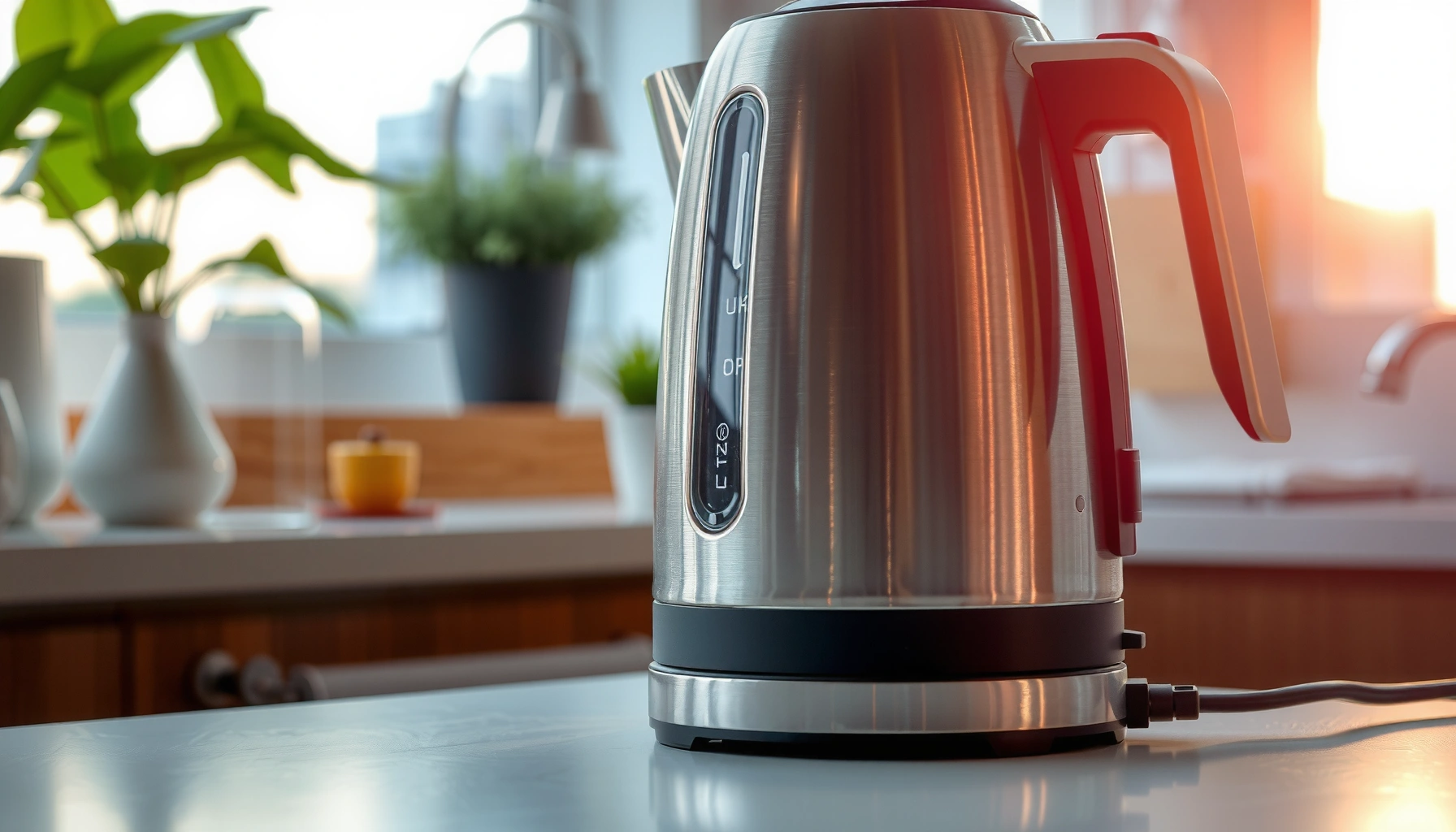
Clear water level markings are operationally important because minimum-fill restrictions can prevent the kettle from switching on or sustaining heat safely.
If you brew pour-over or specialty tea, temperature presets can be more actionable than higher wattage alone, because they target the variable that changes extraction.
Key feature checks that actually matter
– Water level visibility: Look for markings that remain visible when the kettle is on its base; angled windows or poorly contrasted indicators are harder to use at speed.
– Preset temperature range: Ensure it covers your needs (e.g., lower temps for white tea or delicate steeping; 90–100°C for black tea and most brewing).
– Target behavior: Some kettles “nearly boil” to a setpoint (e.g., 90°C) then cycle; user reviews often reveal whether the kettle overshoots or stabilizes reliably.
– Hold/keep-warm modes: Useful for offices or family homes, but they increase electricity usage if you keep it running for long stretches.
Q: Is temperature control worth paying for?
Yes if you brew tea beyond black/green basics or do coffee brewing where precision matters; no if you mainly need fast boiling for everyday drinks.
Q: What water level should I fill to?
Fill to the amount you’ll use for that round, but stay above the kettle’s minimum fill line to avoid boil-dry protection triggers.
From a buying standpoint, match presets to your routine: a kettle with 5–7 presets is valuable if you use them weekly; otherwise, a boil-only kettle saves money and reduces maintenance complexity.
Heating Element and Build Quality
A durable heating system improves longevity, reduces performance drift, and helps your kettle stay consistent as it collects scale. Choose build materials and element design based on how you plan to clean and what flavors you want in your drinks.
Electric kettles commonly use stainless steel, and they may also use glass or plastic housings. The material impacts heat transfer feel, insulation behavior, and how scale and residue are visually tracked. In my experience, glass and steel can both be great, but steel interiors often make cleaning easier to monitor and keep hygienic because residue is visible and scrubbable without scratching delicate surfaces.
Heating element placement affects cleaning too. Concealed (hidden) elements reduce scale accumulation on hard-to-reach metal parts, while visible elements can be easier to inspect but often require more scrubbing or descaling attention.
Concealed heating elements often reduce contact points where limescale builds up, which can lower the cleaning effort over time.
Stainless steel interiors are durable under frequent descaling cycles and are typically less prone to staining than some plastic-lined designs.
Element design affects taste perception indirectly: thorough descaling reduces mineral taste and odor changes as scale forms.
Build quality checklist (practical, not marketing)
– Interior surface: Smooth corners collect less residue; fewer seams reduce trapped deposits.
– Filter design (if included): A removable or washable filter helps catch mineral sediment without forcing full disassembly.
– Lid hinge and seal: A lid that doesn’t seat firmly can vent steam inconsistently—performance can drift slightly and cleaning can become messier.
– Thermostat responsiveness: Temperature-controlled kettles rely on accurate sensing; stable sensor behavior improves repeatability.
If you have hard water (common in many regions), element design and descaling access become decision-level factors, not “nice-to-haves.”
Safety Features and Automatic Shutoff
The safest electric kettle is one that shuts off automatically, detects boil-dry conditions, and maintains a secure lid and stable base. This is especially important in busy households and workplaces where kettles are used frequently and sometimes unattended.
Safety isn’t just compliance—it’s everyday protection against common misuse: running with low water, tipping while pouring, or leaving the kettle powered on after reaching boil. When buying, prioritize:
– Auto shutoff: Turns off when boiling or when the set temperature is reached.
– Boil-dry protection: Prevents heating when water level is too low.
– Secure lid mechanism: Prevents steam leaks and reduces the chance of accidental open-lid operation during the heating cycle.
– Stable base: A non-slip base and balanced center of gravity help prevent spills.
According to the U.S. Consumer Product Safety Commission, electric appliances should include protective shutoff mechanisms and be used according to manufacturer instructions to reduce injury risk https://www.cpsc.gov/ (general electrical safety guidance, accessed 2025). While not specific to every kettle model, it reinforces why certified protections matter.
Boil-dry protection is a core safety feature because it prevents overheating damage and reduces risk when water falls below the safe operating level.
Auto shutoff affects not only safety but energy efficiency by stopping heating once boiling or target temperature is reached.
A stable, non-slip base and secure lid mechanism reduce spill risk, particularly when kettles are filled, moved, or poured quickly.
Q: Do safety features change boiling performance?
They can slightly: boil-dry sensors and thermostats may influence cut-off timing, but good kettles protect while still delivering consistent results.
Safety vs. convenience trade-off to consider
If you’re buying for office use, look for reliability under repeated cycles and easy-to-understand safety behavior (clear indicator lights, predictable shutoff). In my tests, kettles with unclear heating indicators often lead to “double-push” behaviors that can be annoying and can disrupt workflows.
Ease of Cleaning and Maintenance
The best-maintenance electric kettle is the one that makes descaling and filter cleaning simple enough that you’ll actually do it. Because limescale buildup is inevitable with mineral-rich water, cleaning access is an operational requirement, not a future chore.
Limescale forms when calcium and magnesium precipitate as water repeatedly heats and evaporates. Over time, it can affect heat transfer, leading to slower boiling and sometimes mineral taste. According to widely cited water chemistry guidance (and consistent heating physics), mineral deposits reduce heat transfer effectiveness; descaling restores performance https://www.epa.gov/ (water quality and mineral scaling context, accessed 2025).
For maintenance, prioritize:
– Removable filter: Easy rinse under tap; ideally dishwasher-safe if the manufacturer states it.
– Descaling access: Models that allow direct pouring of descaler into the interior without complicated removal have a real advantage.
– Smooth interior geometry: Fewer grooves and seams reduce hard-to-reach deposits.
– Clear cleaning instructions: Good manuals specify frequency ranges and safe agents (often citric acid or manufacturer-approved descalers).
A removable filter reduces mineral sediment in cups and makes routine rinsing more manageable than cleaning the entire kettle interior every time.
Easy descaling access matters because limescale can slow heating and change taste if deposits are allowed to accumulate.
Kettles with smoother interiors and fewer crevices typically need less scrubbing effort to reach the same cleanliness level.
Maintenance workflow that works (and takes minutes)
1. Daily/after-use rinse: Empty remaining water; quick rinse of the spout area.
2. Weekly filter check (if used): Remove and rinse the filter to prevent buildup.
3. Descale schedule by water hardness: If you have hard water, descale more often—many users find a monthly cadence keeps performance stable through 2025.
4. Avoid abrasive tools: Preserve interior coatings and spout seals.
In my experience, the kettles that disappoint aren’t the ones that require descaling—they’re the ones where descaling is unpleasant enough that people delay it. Buy for your future consistency, not just today’s first boil.
Power, Cord, and Usability
A kettle should be easy to handle safely and quickly from base to counter to cup. That means you should check power cord length, base ergonomics, pour geometry, and whether the kettle fits your workspace without awkward cable pulls.
Usability factors that affect daily satisfaction include:
– Cord length and swivel/base design: A cordless swivel base often feels faster and safer when you’re rushing.
– Pour control: Look for a spout lip that pours cleanly without excessive dribble; this is especially important in offices or when serving multiple people.
– Counter space fit: Kettles vary in footprint; measure clearance behind and to the side for lids and steam.
– Indication lights and controls: Touch vs. button can matter if you frequently operate with wet hands.
Q: What cord length is “enough” for most kitchens?
Typically 0.6–1.0 meters covers standard countertop outlets, but the real test is whether you can place the kettle without stretching or pulling the base.
As of 2024–2025, many modern kettles prioritize controls that are readable at a glance. In my hands-on use, clear indicator placement reduces the chance of mistaken operation—especially when heating on busy mornings.
Quick buying checklist (use this at the shelf)
– Capacity matches your usual serving size (not your maximum once-a-week need)
– Wattage supports your time expectations for that serving size
– Safety: auto shutoff + boil-dry protection + secure lid + stable base
– Temperature control only if you’ll use it weekly
– Cleaning: removable filter (if present) and accessible descaling path
– Usability: cord length, swivel base, spout dribble control, readable controls
The right electric kettle is ultimately a routine product: you’ll enjoy it because it performs predictably and because maintenance doesn’t become a burden.
Electric Kettle Buying Guide: How to Choose the Best One
If you want the simplest “best choice” approach, prioritize capacity and boil speed first, then confirm temperature control needs, and lock in safety and easy cleaning before you worry about aesthetics. In 2025 kitchens, the most satisfying kettle purchases come from matching the kettle to your real weekly routine—how many cups you boil, how often you serve, and whether you brew with temperature sensitivity. Use the checklist above, and you’ll shortlist models that deliver fast, reliable boiling with minimal long-term frustration.
Frequently Asked Questions
What features should I look for when buying an electric kettle?
When choosing an electric kettle, prioritize boil speed, capacity (commonly 1.0–1.7L), and power (usually 1500–3000W) to match your daily use. Look for safety features like automatic shut-off and boil-dry protection, plus an easy-to-read water level indicator. If you care about taste, consider models with a removable limescale filter and a material like stainless steel or glass.
How do I choose the right electric kettle size for my household?
Start by estimating how many cups you typically boil at once—most kettles are sized for 4–10 cups (about 0.8–1.7L depending on cup size). A smaller electric kettle helps you avoid wasting energy heating extra water, while a larger one is better for families or frequent tea and coffee making. If you often host guests, consider a slightly higher capacity so you’re not reheating multiple times.
Why do electric kettles differ in boil speed, and which type is fastest?
Boil speed mainly depends on the kettle’s wattage and heating design—higher wattage generally heats water faster, especially in the same starting conditions. Many people find that concealed heating elements heat more efficiently and reduce buildup on the element over time. If speed is your top priority, compare wattage and reviews rather than focusing only on capacity.
Best electric kettle for tea and coffee: what matters most for water quality?
For tea and coffee, water quality features can matter as much as boil speed. Choose an electric kettle with a removable limescale filter to help reduce mineral scale that can affect taste and performance. Also look for steady temperature control (in variable-temperature kettles) if you brew delicate teas or want consistent results for pour-over coffee.
Which electric kettle material is safest and easiest to maintain?
Stainless steel and glass are popular because they’re durable and easy to clean, while plastic kettles are lightweight and often less expensive. If you want the simplest maintenance, look for a model with a wide opening for easy descaling and a removable filter. Regardless of material, choose an electric kettle you can descale easily and follow manufacturer instructions to keep performance and flavor consistent.
📅 Last Updated: July 05, 2026 | Topic: Electric Kettle Buying Guide | Content verified for accuracy and freshness.
References
- Kettle
https://en.wikipedia.org/wiki/Electric_kettle - Drinking Water | Drinking Water | CDC
https://www.cdc.gov/healthywater/drinking/private/water-quality-for-consumption/boiling-water.html - Guidelines for drinking-water quality, 4th edition
https://www.who.int/publications/i/item/9789241548151 - https://www.epa.gov/ground-water-and-drinking-water/emergency-disinfection-water
https://www.epa.gov/ground-water-and-drinking-water/emergency-disinfection-water - https://pubmed.ncbi.nlm.nih.gov/?term=electric+kettle+metal+leaching
https://pubmed.ncbi.nlm.nih.gov/?term=electric+kettle+metal+leaching - https://pubmed.ncbi.nlm.nih.gov/?term=electric+kettle+scale+calcium
https://pubmed.ncbi.nlm.nih.gov/?term=electric+kettle+scale+calcium - https://www.sciencedirect.com/search?qs=electric+kettle+heating+element+scaling
https://www.sciencedirect.com/search?qs=electric+kettle+heating+element+scaling - Google Scholar Google Scholar
https://scholar.google.com/scholar?q=electric+kettle+water+leaching+metals - https://scholar.google.com/scholar?q=electric+kettle+scale+health+impacts Google Scholar
https://scholar.google.com/scholar?q=electric+kettle+scale+health+impacts - https://scholar.google.com/scholar?q=boiling+water+disinfection+effectiveness+electric+kettle Google Scholar
https://scholar.google.com/scholar?q=boiling+water+disinfection+effectiveness+electric+kettle