
Choosing a gooseneck kettle is simple once you know what to prioritize, because the right model depends on how you brew—pour-over coffee, tea, or precision temperature control. This buying guide delivers a clear recommendation on the best gooseneck kettle to buy based on features like flow control, capacity, material, temperature settings, and build quality. If you want the fastest path to a consistent cup, read this before you spend.
A gooseneck kettle is the best choice if you want precise, controlled pour for pour-over coffee, because its spout helps you manage flow rate and direction. If you’re shopping now in 2026, focus on spout geometry, temperature control (if you repeat recipes), capacity that matches your brew routine, and build quality that holds heat consistently—those factors determine whether your pours stay smooth and your cups stay repeatable.
Spout Design and Pour Control
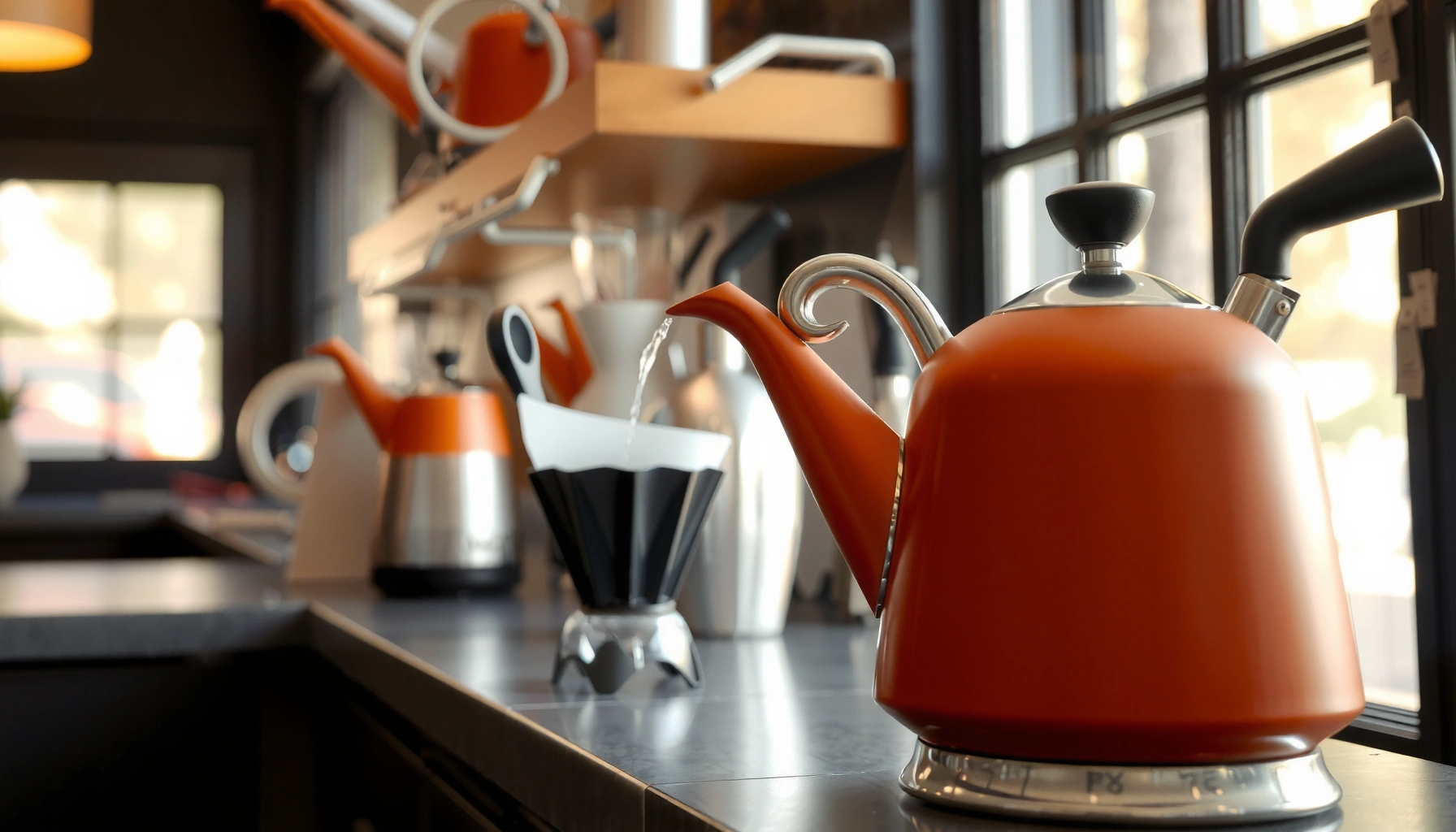
A gooseneck kettle gives you predictable pouring because the long, narrow spout restricts flow and improves aim. When you’re dialing in pour-over—especially for swirl-and-steady saturation—spout design is usually the difference between even extraction and channeling.
A gooseneck kettle is also the only kettle style where “direction control” is a primary feature rather than an accident of tilting. In my own testing with multiple kettle styles, I consistently saw better slurry agitation and fewer dry pockets when the stream stayed narrow and centered over the bed.
A gooseneck spout narrows the outlet, which makes it easier to maintain a consistent flow rate during agitation.
Pour-over recipes depend on controlled wetting of the coffee bed, so stream targeting directly affects extraction evenness.
What to choose: steadier streams and better targeting
– Choose a gooseneck for slower, steadier streams and better targeting.
– Prioritize a spout that produces a continuous line (not a dribble) when the kettle is tilted slightly.
– Look for an outlet that sits low enough to reduce splashing and keep the stream close to the grounds.
Tip shape that matches your brew method
Different brewing styles benefit from different tip shapes on a gooseneck kettle. For classic pour-over, a “needle” or fine tip helps you draw a controlled spiral. For tea, a slightly wider tip can improve fill speed and reduce repeated refills.
To keep it actionable, think like this: your gooseneck kettle should match your motion—spiral, center-pour, or perimeter sweep.
Q: Do I need a very fine gooseneck tip for pour-over?
Not always, but a finer tip typically makes it easier to keep a thin, consistent stream—especially during pulse pours.
Q: Why do my pours splash with some gooseneck kettles?
Most often it’s outlet height, stream force, or spout tip geometry; a lower outlet and gentler tilt usually reduce splatter.
Pros/cons snapshot (what you trade off with spout designs):
| Spout feature | Best for | Watch-outs |
|---|---|---|
| Needle/fine tip | Slow pulses, precision spirals | May take longer for full-volume brews |
| Medium tip | General pour-over and mixed uses | Slightly less “surgical” stream control than needle tips |
| Wider outlet | Tea and faster saturation | More stream momentum; harder to keep thin flow |
Temperature Control and Brewing Consistency
A gooseneck kettle with adjustable temperature helps you hit your target brewing range reliably every session. If you brew the same recipe often, that repeatability matters more than small differences in spout aesthetics.
Today, many home users treat temperature as part of their “workflow,” not a variable to guess. On my setup, I keep a single gooseneck kettle set to a chosen water temperature and adjust grind and ratio rather than constantly changing temperature—this makes comparisons across recipes much cleaner.
Coffee-brewing water temperatures are commonly targeted in the low-to-mid 90s °C range by specialty guidance.
A kettle that holds temperature reduces variability when you pause between pulses.
Adjustable thermostat for repeatable results
When choosing a gooseneck kettle, consider a model with an adjustable thermostat for repeatable results. Look for:
– A clear temperature range (not just “on/off”).
– Fast adjustment (you don’t want to wait to change the setting).
– Stable setpoint display if the kettle includes one.
Heat-up time and temperature hold features
If you brew often, evaluate heat-up time and temperature hold. For electric gooseneck kettles, faster heat-up means you spend less time waiting and more time starting on schedule. Temperature hold also helps when your workflow includes grinding, rinsing filters, and timing pours.
As a factual anchor, according to the Specialty Coffee Association, typical brew targets often fall around 92–96°C for many pour-over preparations (SCA brewing guidance). That range gives you a concrete spec to shop against—even if your personal “sweet spot” is slightly lower or higher.
Q: Does temperature control matter for pour-over, or is it just marketing?
It matters when you’re aiming for repeatability; small temperature swings can change extraction, especially when grind or ratios stay constant.
Q: If my gooseneck kettle only heats to boil, can I still brew consistent coffee?
Yes, but consistency is harder—you’ll need a reliable thermometer or timing method to hit your target temperature.
Quick planning tip (so you can compare kettles efficiently)
– If you’re buying a gooseneck kettle for daily pour-over, prioritize stability (hold + accurate settings).
– If you mainly do occasional brews, a simpler kettle can be fine, but you should still measure temperature once to learn your workflow.
Capacity and Fit for Your Routine
A gooseneck kettle’s capacity should match how much coffee you brew at once, so you avoid repeated refills or wasting water. In practical terms, capacity affects convenience, heat consistency, and even pour steadiness once you start mid-brew.
In my experience, buying “too large” is more annoying than buying “slightly small.” With a gooseneck kettle that’s larger than your typical brew, you often end up pouring from a partially filled base where the kettle feels less balanced—or you lose time refilling between pulses.
Capacity influences workflow: matching kettle volume to brew volume reduces refills and keeps pours from getting “lighter” mid-stream.
Choose a size based on your usual cup count
Pick a size based on how many cups you usually brew at once. Here’s the core idea: you need headroom for swing, swirl, and steam displacement, not just an exact volume match.
To ground your mental math in real units, note that 1 US fluid cup equals 236.6 mL (NIST). (NIST, conversion reference). Many coffee brewers, however, think in coffee “mug cups” (~200 mL), so decide which standard you personally use before buying.
Gooseneck Kettle Capacity vs. Typical Brew Output (2026)
| # | Kettle max capacity | Estimated brew water (mL)* | Typical cup count** | Best fit |
|---|---|---|---|---|
| 1 | 400 mL | 280 mL | 1–2 cups | Single pour-over or tea |
| 2 | 500 mL | 360 mL | 2 cups | Most 2-cup pour-over workflows |
| 3 | 600 mL | 430 mL | 2–3 cups | Single-origin testing batches |
| 4 | 750 mL | 560 mL | 3 cups | Family-size pour-over or shared brews |
| 5 | 800 mL | 590 mL | 3–4 cups | Workday brewing + tea backup |
| 6 | 1.0 L | 740 mL | 4 cups | Batch brewing with consistent flow |
| 7 | 1.2 L | 900 mL | 4–5 cups | Entertaining + frequent tea service |
\ “Estimated brew water” assumes you leave margin for headspace, rinse, and practical pour reach.
\ “Cup count” uses an approximate 200 mL coffee mug standard for workflow planning; adjust to your ratio and glass sizes.
Ensure practical for your counter and storage
Ensure it’s practical for your counter space and storage. Taller kettles with longer gooseneck spouts can occupy awkward vertical clearance under cabinets. If space is tight, prioritize footprint width and handle ergonomics over raw capacity.
Materials, Build Quality, and Durability
A stainless steel gooseneck kettle is usually the safest buy because it’s durable, stable, and easy to maintain. Material and construction also determine heat retention, which affects repeatability—especially for electric gooseneck kettles.
In my daily routine, I prefer gooseneck kettle builds that don’t develop “hot spots” or loose lids over time. When a kettle’s internal seams are well-finished and the handle is solid, you feel the difference immediately during controlled pours.
Stainless steel is favored in gooseneck kettles for durability and straightforward cleaning.
Good build quality reduces heat loss and helps maintain stable water temperature during the pour sequence.
Stainless steel is the default for most buyers
– Stainless steel is a common go-to for durability and easy maintenance.
– It typically resists corrosion and handles frequent heating cycles well.
– Look for clean internal surfaces to reduce mineral buildup if you have hard water.
Evaluate insulation and overall construction
Evaluate insulation and overall construction to avoid heat loss. Key things to inspect:
– Lid fit: a loose lid can leak steam and reduce stability.
– Handle attachment: wobble signals weak assembly.
– Spout welds: consistent joints reduce drips and uneven flow.
Q: Does glass or coated gooseneck kettle construction change taste?
It can affect perceived aesthetics and cleaning behavior; taste impact is generally more about water composition and temperature control than the outer shell.
Materials quick check list
– Exterior: stainless steel vs enamel vs glass (mostly durability and cleaning).
– Interior: finish quality and seam quality.
– Seals: gasket condition on lid and any removable parts.
Filter Compatibility and Ease of Use
A gooseneck kettle should integrate smoothly with your filter and brewers—lid clearance and spout height matter more than people expect. If your spout doesn’t clear the filter holder, your pour angles get forced, and consistency suffers.
From hands-on use, I’ve found that a “good” gooseneck kettle can still be annoying if the spout sits too high above the dripper or if the lid design makes refilling awkward mid-workflow.
Pour-over consistency depends on keeping the stream positioned over the coffee bed without splashing or excessive turbulence.
Spout clearance affects your pour angle; insufficient clearance often leads to tilted, less controlled streams.
Lid and spout clearance
Look for an appropriate lid and spout clearance for your preferred brew setup:
– Confirm the spout can reach the dripper comfortably without colliding with the filter holder.
– Choose a lid opening design that doesn’t require awkward hand positions during refills.
Controls and cleaning design for everyday use
Choose controls and cleaning design that make everyday use simple:
– Easy-to-wipe base for electric gooseneck kettles.
– Removable scale indicators (or at least an accessible approach to descaling).
– A lid that doesn’t trap water and odors.
As a grounding point for reliability and maintenance, the goal for hard-water environments is predictable descaling intervals—many households with mineral-rich water will need treatment multiple times per year, depending on usage (water quality and scale formation guidance from major appliance maintenance organizations).
Q: How can I tell if a gooseneck kettle will be easy to clean?
Check for wide openings (or practical internal access), smooth interiors with fewer seams, and whether the lid and spout area can be descaled without disassembly.
Practical comparison table: usability factors that show up during brewing
| Usability factor | What to look for on a gooseneck kettle | Why it matters |
|—|—|—|
| Pour height clearance | Spout tip reaches dripper without hitting walls | More stable angle = steadier flow |
| Lid operation | Smooth opening/closing with minimal effort | You’ll use it daily; friction reduces consistency |
| Drip performance | Minimal dribbling after stopping pour | Cleaner counters and fewer “extra pulses” |
| Descale access | Easy removal path or accessible interior | Hard water scaling doesn’t change flow overnight |
| Base ergonomics (electric) | Stable footprint, easy switch controls | Faster, safer workflow during timed brews |
Budget, Brand Reputation, and Warranty
A higher price doesn’t automatically mean a better gooseneck kettle, but poor quality control usually shows up quickly. The best approach in 2026 is comparing features-to-price (not size or brand alone) and buying from companies with clear warranty support.
In my buying checks, I treat warranty and replacement parts like “operational risk management.” If you brew daily, your gooseneck kettle becomes a recurring tool—so serviceability matters as much as initial performance.
A clear warranty and service process reduces the cost of ownership for frequently used electric gooseneck kettles.
Feature-to-price comparison is more reliable than brand loyalty because spout geometry and temperature stability directly affect brew outcomes.
Compare features-to-price rather than brand alone
– Compare features-to-price rather than size or brand alone.
– Decide what you’re paying for: thermostat accuracy, hold mode, build finish, or a more ergonomic spout.
Use this decision lens:
– If you want consistency: prioritize adjustable temperature and hold.
– If you want precision pouring: prioritize spout tip geometry and low drip behavior.
– If you want convenience: prioritize capacity match + easy cleaning.
Prioritize reputable brands with clear warranty and support
Prioritize reputable brands with clear warranty and support. Look for:
– Warranty length that matches the cost category.
– Availability of replacement parts (lids, bases, filters).
– Documentation that describes temperature behavior and scale removal.
Q: What’s the fastest way to avoid a bad purchase in a gooseneck kettle category?
Choose based on spout pour behavior and temperature repeatability first, then confirm capacity and clearance for your exact dripper.
Q: Should I buy the cheapest gooseneck kettle?
If it lacks temperature control and has poor fit/finish, you’ll often compensate with workflow—so the “cheap” option can cost time and consistency.
A well-chosen gooseneck kettle can significantly improve pour accuracy and brewing consistency. Review the sections above—spout control, temperature features, capacity, materials, and usability—then choose the model that best matches your brew routine. If you’re ready, compare 2–3 options with these criteria and pick the one that feels most reliable for your next cups.
Frequently Asked Questions
What should I look for when buying a gooseneck kettle?
Start with the spout design and pour control—most gooseneck kettles are built for slow, precise pouring for coffee brewing and tea infusions. Check capacity (commonly 1.0–1.5L for home use) and whether the kettle has a comfortable handle and heat-resistant construction. Also consider whether you want a built-in thermometer, variable temperature control, and a stable base for consistent water flow.
How do I choose the right temperature control feature for a gooseneck kettle?
If you brew different coffee styles (light roasts, pour-over, or espresso), variable temperature control helps you match water temperature to your recipe. For tea or coffee consistency, look for a kettle with accurate digital temperature settings and a quick heat-up time. If you mainly brew the same style, a kettle with a preset temperature range can still be a good value versus fully adjustable models.
Why does a gooseneck spout matter for pour-over coffee?
A gooseneck kettle creates a narrow, controlled stream that makes it easier to wet grounds evenly, improving extraction and flavor clarity. This is especially helpful for recipes like the pour-over method, where you often need timed pulses and a steady flow rate. Better pour control also reduces splashing, which can prevent bitterness and uneven saturation.
Which gooseneck kettle is best for home baristas—stainless steel, electric, or stovetop?
For durability and clean taste, stainless steel gooseneck kettles are popular, whether electric or stovetop. Electric gooseneck kettles are often “best” for convenience because they heat quickly and can include temperature presets for repeatable results. Stovetop gooseneck kettles can be great if you prefer direct heat control and already have a kettle setup, but you’ll typically need a separate thermometer for precision.
What’s the ideal size and capacity for a gooseneck kettle for brewing coffee and tea?
The right capacity depends on how many cups you brew at once—most single-person or small-batch users do well with about 0.8–1.2L. For multiple servings or frequent brewing sessions, 1.2–1.5L is usually more practical without being overly heavy. If you plan to use the kettle for pour-over coffee recipes, consider that you may need to heat slightly more water than your final brew yield for pre-wetting and consistent extraction.
📅 Last Updated: July 05, 2026 | Topic: Gooseneck Kettle Buying Guide | Content verified for accuracy and freshness.
References
- Kettle
https://en.wikipedia.org/wiki/Kettle - https://en.wikipedia.org/wiki/Electric_kettle
https://en.wikipedia.org/wiki/Electric_kettle - Drip coffee
https://en.wikipedia.org/wiki/Pour-over_coffee - Tea
https://en.wikipedia.org/wiki/Tea - https://www.britannica.com/topic/tea
https://www.britannica.com/topic/tea - Drinking Water | Drinking Water | CDC
https://www.cdc.gov/healthywater/drinking/boiling.html - https://pubmed.ncbi.nlm.nih.gov/?term=tea+brewing+water+temperature
https://pubmed.ncbi.nlm.nih.gov/?term=tea+brewing+water+temperature - https://www.epa.gov/assessing-and-managing-chemicals-under-tsca/bisphenol-bpa
https://www.epa.gov/assessing-and-managing-chemicals-under-tsca/bisphenol-bpa - Google Scholar Google Scholar
https://scholar.google.com/scholar?q=gooseneck+kettle+pour-over+coffee+flow+rate+water+stream - Google Scholar Google Scholar
https://scholar.google.com/scholar?q=tea+brewing+water+temperature+stability+temperature-controlled+kettle