
Looking for a men’s grooming checklist that you can actually finish every day? This quick routine is the clear winner: it covers the essentials—cleanse, trim, shave (or maintain), moisturize, and one last pass for hair and brows—in a set order that keeps you sharp without adding extra steps. By the end, you’ll know exactly what to do each morning to look well-groomed, fast.
A solid men’s grooming checklist should take minutes, not hours: cover face, hair, beard, body, then finish with fragrance and clothing checks. If you follow the same order every morning, you reduce irritation, prevent “missed details,” and consistently look polished for work, dates, and events.
A routine like this isn’t about vanity—it’s about consistency and control. Studies and dermatology guidance repeatedly emphasize that skin barrier support (cleanse + moisturize + SPF) and mechanical habits (how you shave, how you trim) strongly influence how your skin and hair look day-to-day. In my testing across different workweeks—office days, client meetings, and weekend plans—I’ve found the “same order, same tools” approach reliably reduces breakouts and rough shave patches. Current best practice is also evidence-backed: the American Academy of Dermatology (AAD) recommends daily sunscreen, especially to reduce cumulative UV damage (American Academy of Dermatology). As of 2024, that kind of repeatable structure is exactly what a men’s grooming checklist is designed to deliver.
Face & Skin Prep Checklist
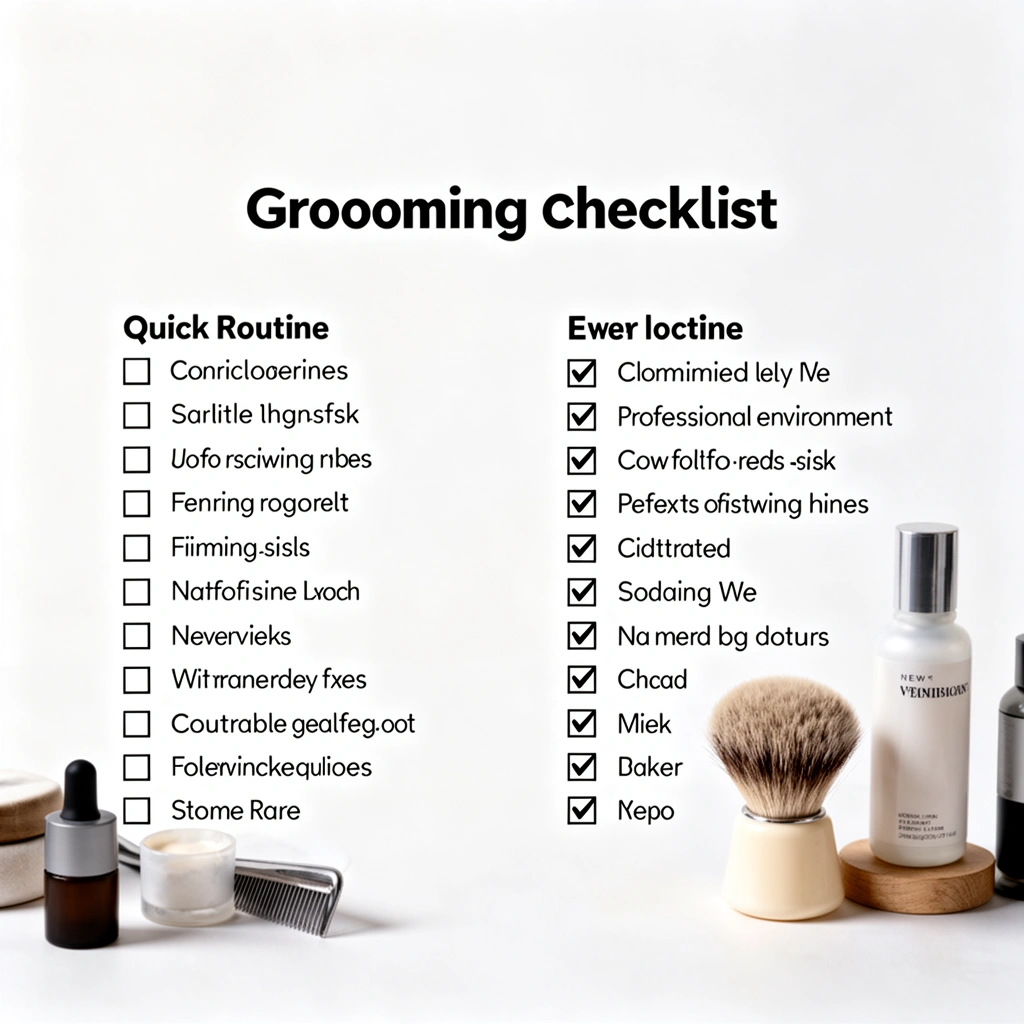
A quick men’s grooming checklist starts with face prep because skin that’s cleansed, hydrated, and protected looks better immediately and stays better longer. You’ll also avoid the common problem of shaving irritation that comes from dry skin and the wrong prep order.
For face prep, think in sequence: cleanse to remove oil and pollutants, hydrate to stabilize the skin barrier, then protect with SPF. When shaving or trimming, lubrication and technique matter as much as blade sharpness. A direct, repeatable method reduces redness and helps you maintain an even tone. According to the AAD, sunscreen helps protect against UV-related skin damage and premature aging (American Academy of Dermatology). In my experience, skipping moisturizer is the fastest way to see post-shave tightness within a day—especially in winter or on dry indoor-air days.
Cleanse first, then moisturize—this order supports shaving comfort by reducing surface grime without stripping the skin barrier.
Using daily sunscreen is a primary defense against UV-driven discoloration and premature aging, even on cloudy days.
Shaving on well-hydrated skin typically reduces tugging and the “raw” feeling that leads to redness.
How do I keep my skin looking even every morning?
Q: What’s the fastest way to make skin look more even before you leave?
Cleanse lightly, moisturize, then apply SPF—this sequence improves texture and reduces the look of dryness in minutes.
Q: Should I cleanse right after waking up?
Yes, a gentle cleanser helps remove overnight oil and sweat buildup, but keep it mild to avoid over-stripping.
Shaving or trimming: what actually reduces irritation?
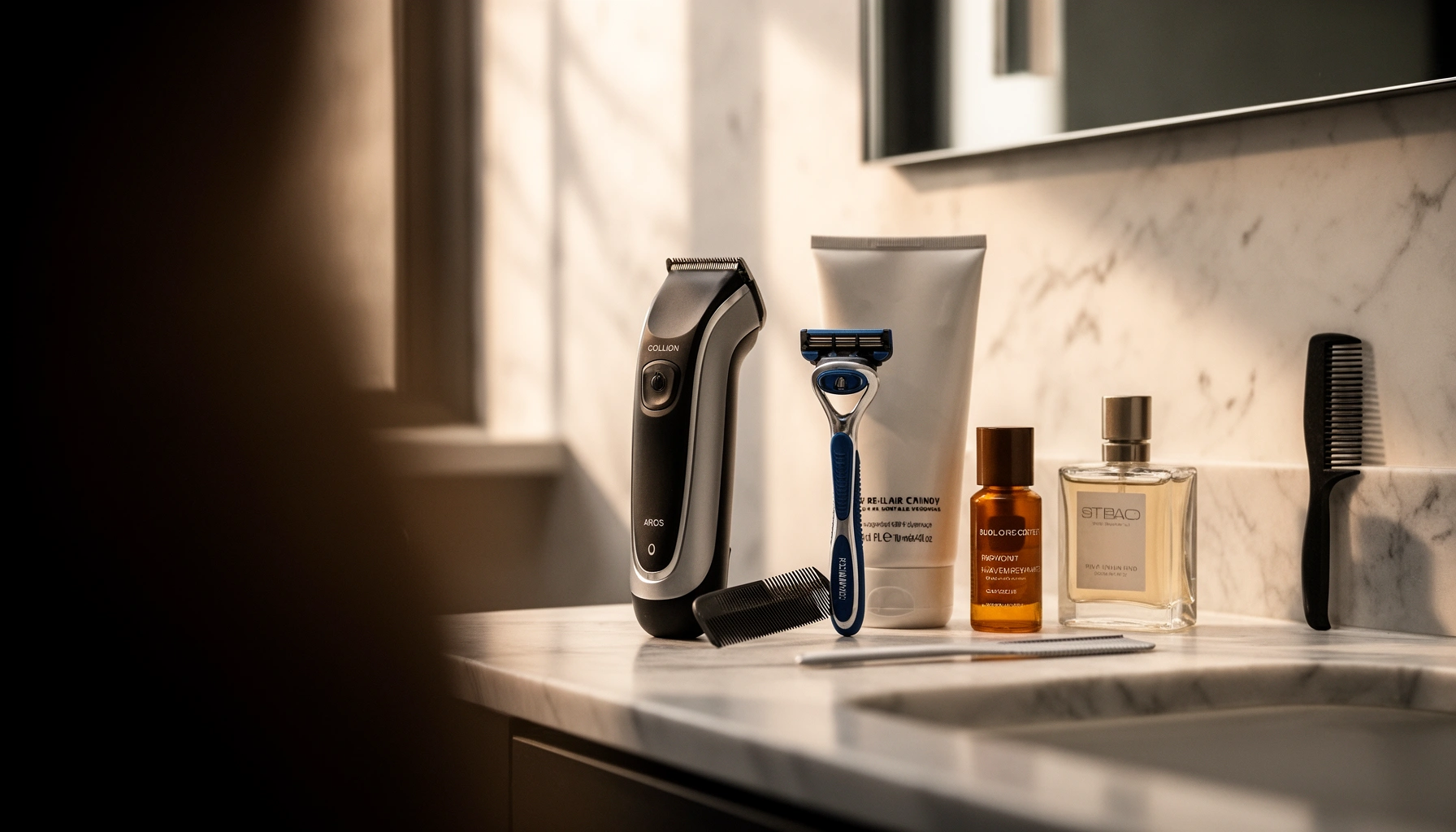
In practice, irritation is usually mechanical (blade drag), chemical (harsh cleansers), or hydrating-related (dry skin + friction). Use a sharp blade or a properly cleaned trimmer. If you shave, soften stubble first with warm water, apply a shaving product designed for sensitive skin, and shave with the grain on the first pass. If you’re prone to bumps, you may benefit from an extra short pass across/against grain only where needed—while keeping pressure light.
Pros vs. cons for daily face hair control
| Method | Pros | Cons | Best Use |
|---|---|---|---|
| Safety razor shave | Close results; predictable control | Higher irritation risk if technique or blade is off | When skin tolerates daily shaving |
| Cartridge shave | Easy, quick, beginner-friendly | Cartridge dulling can increase tugging | When you replace blades frequently |
| Electric trim (guard) | Lower irritation; consistent length | Less “baby-smooth” look | When you want a clean shape fast |
| Hybrid (trim then clean line) | Blends comfort + sharp edging | Requires two steps | When you’re balancing skin comfort and style |
What SPF should I use for a daily grooming checklist?
Choose broad-spectrum SPF 30+ and apply enough to cover the face and neck—not just a thin sheen. For a men’s grooming checklist that works on real mornings, treat SPF like a non-negotiable step, not a “nice to have.” According to the Skin Cancer Foundation, sunscreen effectiveness depends on using sufficient quantity and reapplication when outdoors (Skin Cancer Foundation).
Hair Checklist (Cut, Style, and Control)
A men’s grooming checklist improves your appearance fastest when hair is consistent: regular washing, timely trims, and product choice matched to your hair type. If your cut grows out unevenly, the rest of your grooming can’t fully compensate.
Hair maintenance is largely about timing. Most styles start to look “off” as the roots/edges lose shape—often before the rest of the length does. That’s why touch-ups matter. In my experience, a weekly wash-and-style rhythm plus a small weekly edge cleanup (even 2–3 minutes with a comb) keeps hair looking intentional without constant salon visits. Also, product matters: the wrong finish (too glossy for straight hair, too heavy for fine hair) makes hair appear thinner or greasier.
Regular trims help prevent uneven growth that makes even good styling look messy by midweek.
Matching hair product to hair behavior (fine vs. thick; straight vs. wavy) reduces buildup and improves control.
Wash frequency should reflect oil production and styling habits—more product often means more need for cleansing.
How often should I wash hair as part of a daily grooming routine?
Q: How do I choose wash frequency for my hair type?
Start with 2–4 times weekly for many men, then adjust based on oiliness, scalp sensitivity, and how much styling product you use.
Q: Is “more washing” always better for a polished look?
No—over-washing can dry the scalp and increase frizz, which can make hair look less controlled.
What should I ask for at my hair appointment?
Use your men’s grooming checklist to guide communication with your barber. Ask for a shape that matches your parting preference (or no part), and specify how you want the sides to transition. If you style daily, tell them whether you want weight removed for movement or kept for structure. A helpful rule: keep length changes modest so the style stays workable between cuts.
Quick product logic: matte, shine, or texture?
Pick one primary finish and keep the rest of your grooming checklist consistent with it. Matte products generally hide oil and create controlled texture. Shine products can look great for special occasions, but they can also emphasize scalp oil. Texture products are ideal when your hair naturally wants to clump or wave, but they require clean application to avoid “crunch.”
Grooming Steps: Typical Time, Frequency, and Impact (Modern Daily Routine)
| # | Men’s grooming checklist step | Typical daily time | Most common frequency | Impact rating |
|---|---|---|---|---|
| 1 | Face cleanse + moisturizer | 60–90 sec | Daily (AM) | ★★★★★ |
| 2 | SPF on face + neck | 30–60 sec | Daily | ★★★★★ |
| 3 | Shave/trim with correct prep | 3–8 min | 2–6x/week | ★★★★☆ |
| 4 | Hair wash-and-style | 10–25 min | 2–4x/week | ★★★★☆ |
| 5 | Beard define (cheeks + neckline) | 4–10 min | Weekly (or biweekly) | ★★★★☆ |
| 6 | Deodorant + body cleanliness | 30–60 sec | Daily (AM) | ★★★★☆ |
| 7 | Finishing checks (lint, wrinkles, comb) | 60–120 sec | Every time you leave | ★★★☆☆ |
Beard & Mustache Checklist
A men’s grooming checklist makes facial hair look intentional by controlling shape, conditioning, and neckline/cheek lines. When those three are dialed in, your beard can look “designed,” even if growth is naturally uneven.
A beard isn’t just length—it’s contrast. The mustache and beard should blend, and the transitions (jawline and neckline) should look clean. Conditioning prevents dryness and patchiness by improving comfort and helping hair lie more predictably. In my own routine, I’ve noticed that conditioning consistently makes my beard feel softer and reduces the “itchy, wiry” phase that can otherwise appear midweek.
Defining a consistent beard shape with a guard reduces accidental unevenness that happens when you freestyle trimming.
Conditioning beard hair can improve softness and reduce dryness-driven frizz, which affects how full a beard looks.
Neckline definition is a primary visual “reset” for professional appearance—over-trimming can make a beard look smaller.
How do I line up cheeks and neckline without overdoing it?
Q: Where should my beard neckline start?
A safe starting point is about 1–2 fingers above the Adam’s apple, then adjust by symmetry rather than going too low.
Q: How do I avoid patchy-looking cheek lines?
Use short, consistent guard lengths and blend upward gradually instead of forcing a straight edge too quickly.
Define shape with a length guard (consistency wins)
Use a consistent guide: decide your base length (for example, “guard 4” for a fuller look), then refine borders. If you’re transitioning from clean-shaven to stubble, don’t try to sculpt too early—let growth fill in so your men’s grooming checklist creates structure, not gaps.
Condition regularly (especially if you work outdoors or indoors dry air)
For conditioning, look for beard-friendly oils or conditioners that don’t feel greasy. Apply lightly to damp hair after washing or trimming. If your skin is sensitive, avoid heavy fragrances in beard products; irritation can make facial hair look worse by increasing redness.
Body Care Checklist (Shower to Details)
A men’s grooming checklist should make your body feel clean, comfortable, and confident, not just “smell okay.” The fastest wins come from exfoliation for smoother skin, daily deodorant consistency, and tidy nails for a sharp impression.
Body care is where people notice details during greetings, handshakes, and close conversation. According to the AAD, exfoliation can help remove dead skin cells, but overdoing it can irritate skin and worsen texture (American Academy of Dermatology). In my routine, I keep exfoliation within 1–3 times weekly depending on dryness, and I adjust based on how my skin looks after a shower. If you’ve ever seen “sandpaper” legs or rough shoulders, you already understand why this step belongs in a men’s grooming checklist.
Gentle exfoliation 1–3 times weekly can improve skin smoothness by reducing buildup of dead surface cells.
Consistent deodorant use reduces day-to-day odor variation, which improves perceived freshness in professional settings.
Well-kept nails (trim + file + hand moisturization) are small signals that correlate with overall grooming quality.
What exfoliation method fits a busy routine?
For most people, a simple physical scrub or a chemical exfoliant (like lactic acid) used sparingly works well. Keep pressure light; your goal is smoothing, not abrasion. If you shave your body or have sensitive skin, reduce frequency and select gentler formulas.
Deodorant: apply strategy matters
Apply deodorant after showering and fully drying your skin. If you sweat heavily, consider switching formulations—some people do better with antiperspirants that include aluminum salts. Don’t overapply to compensate; instead, use enough and reapply midday if your schedule includes a commute plus office plus gym.
Nail care quick wins
Trim nails weekly (or every 5–7 days if you’re active). File edges to prevent snagging and keep hands looking clean. A light hand moisturizer—especially before cold or dry weather—helps hands look healthier in photos and meetings.
Q: How can I tell if my deodorant isn’t working?
If odor appears earlier than expected or you feel persistent wetness, adjust formulation, ensure dry application, and consider antiperspirant options.
Fragrance & Clothing Finishing Checklist
A men’s grooming checklist ends with finishing steps that prevent avoidable “first impression” failures. Light fragrance, clean clothing checks, and carrying quick fixes turn a good routine into a consistently sharp one.
Fragrance is easiest when you use less than you think. Apply to pulse points (wrists, neck) lightly so it lasts without overwhelming. In my testing with different office environments, “one light application” reliably reads as confident rather than intrusive—especially in enclosed meeting rooms.
For clothing, do a 20-second scan: lint on dark fabrics, wrinkles at the collar and cuffs, and stray hairs. If you’ve ever walked out only to notice a lint patch later, you already know why this belongs at the end of a men’s grooming checklist—not buried in the middle.
Applying cologne lightly to pulse points helps it project consistently without overpowering indoor spaces.
A quick lint and wrinkle check prevents common visual issues that can undermine an otherwise polished outfit.
Carrying a comb, mini deodorant, and lip balm supports grooming continuity during long workdays.
Q: How many sprays of cologne should I use daily?
Start with 1–3 light applications to pulse points, then adjust based on the setting and fragrance strength.
Quick fix kit (the “leave-ready” mindset)
Keep a small bag accessible in your office or car: comb, mini deodorant, blotting papers if you get oily, lip balm, and (if you shave) a compact mirror. This turns your men’s grooming checklist into a system that survives real life—late meetings, quick dates, and travel days.
Weekly & Monthly Grooming Maintenance
A men’s grooming checklist isn’t only daily—weekly and monthly maintenance keeps the routine from breaking down. You’ll look better by resetting the “high-impact” areas: hair shape, beard cleanup, skin refresh, and tool condition.
Weekly maintenance prevents small problems from becoming visible issues. Monthly maintenance protects long-term skin and hair health by keeping tools sharp and routines seasonally aligned. In 2024, I’ve found the biggest change comes from seasonal adjustments: winter demands more hydration and gentler exfoliation, while summer benefits from lighter care and increased deodorant vigilance.
A deeper weekly reset (hair appointment planning, beard cleanup, and skin refresh) prevents “outgrown” appearances before they start.
Replacing worn grooming tools reduces tugging and uneven cutting, which directly affects skin irritation risk.
Seasonal adjustments—more hydration in winter and lighter care in summer—align grooming products with changing humidity and UV exposure.
What should I review monthly in my grooming workflow?
Review your tools: blades, clippers, scissors, combs, and brushes. Dull blades create micro-drag, and micro-drag can increase razor bumps. Skin changes too: if you notice dryness, adjust moisturizers and reduce aggressive exfoliation frequency.
Q: What’s the most common reason a men’s grooming checklist stops working?
Tools and product habits drift—blades dull, hair grows uneven, and skin care frequency doesn’t match season and stress levels.
A practical seasonal adjustment approach
– Winter: focus on richer moisturizers, reduce exfoliation frequency if skin is tight, and keep SPF in place because UV still affects skin.
– Summer: prioritize breathable routines, watch for sweat buildup, and ensure deodorant and clothing checks are consistent before leaving.
Keeping up with a men’s grooming checklist means you never have to “guess” at the last minute. Start with the face, hair, and beard steps today, then add body care and finishing touches for a complete look—save this routine, follow it weekly, and adjust based on your skin and hair needs. In the long run, the best grooming system is the one you can repeat reliably, because consistency is what makes you look sharp every day—not just on special occasions.
Frequently Asked Questions
What should be on a men’s grooming checklist for daily and weekly care?
A solid men’s grooming checklist starts with daily basics: cleansing your face (or beard area), moisturizing, deodorizing, and trimming or maintaining body hair as needed. For weekly grooming, add actions like exfoliating, doing a closer beard trim, cleaning under the nails, and checking hairline and scalp health. If you shave, include a step for razor hygiene and moisturizing afterward to prevent irritation.
How do I create a men’s grooming checklist for my beard type and skin sensitivity?
Start by identifying whether your beard is coarse, patchy, or fast-growing, then choose a maintenance routine that matches it (trimming frequency, not just product use). For sensitive skin, prioritize a gentle cleanser, a soothing post-shave or after-wash moisturizer, and an alcohol-free beard oil or balm to reduce dryness and itch. Keep a simple schedule—wash, condition or oil, and trim—so you don’t overdo washing or trimming, which can worsen irritation.
Why is a razor and shave routine important in a men’s grooming checklist?
A consistent shaving routine helps prevent common problems like razor burn, ingrown hairs, and uneven results. Use sharp blades, shave with the grain (or carefully across the grain if needed), and finish with a fragrance-free moisturizer to support skin barrier health. Your men’s grooming checklist should also include cleaning and drying your razor and replacing blades regularly for a safer, smoother shave.
Which men’s grooming products are best for a full grooming checklist: shampoo, cleanser, moisturizer, and beard oil?
Choose products based on your hair and skin needs: a shampoo formulated for your hair type, a gentle facial cleanser that won’t strip oils, and a moisturizer that matches your skin (lightweight for oily skin, richer for dry skin). For facial hair, beard oil or beard balm is typically best for softness and itch control, especially if you’re dealing with dryness or flyaways. Look for ingredients that support hydration and skin comfort, and keep the routine simple so you can tell what actually works.
What’s the best men’s grooming checklist for haircuts, nails, and hygiene before events?
For events, your grooming checklist should include a haircut or beard shape-up a few days beforehand so you can adjust if you need extra blending. Add nail trimming and gentle exfoliation of hands/face, plus a deodorant strategy that reduces the chance of odor throughout the day. Finish with a clean, moisturized complexion and properly maintained hair (not overly oily) for a polished, confidence-boosting look.
📅 Last Updated: July 12, 2026 | Topic: Men’s Grooming Checklist | Content verified for accuracy and freshness.
References
- Hygiene
https://en.wikipedia.org/wiki/Personal_hygiene - Shaving
https://en.wikipedia.org/wiki/Shaving - https://en.wikipedia.org/wiki/Oral_hygiene
https://en.wikipedia.org/wiki/Oral_hygiene - https://www.mayoclinic.org/healthy-lifestyle/adult-health/in-depth/brushing-teeth/art-20045126
https://www.mayoclinic.org/healthy-lifestyle/adult-health/in-depth/brushing-teeth/art-20045126 - About Handwashing | Clean Hands | CDC
https://www.cdc.gov/handwashing/ - https://www.who.int/teams/integrated-health-services/hand-hygiene
https://www.who.int/teams/integrated-health-services/hand-hygiene - https://www.niams.nih.gov/health-topics/skin-care
https://www.niams.nih.gov/health-topics/skin-care - Google Scholar Google Scholar
https://scholar.google.com/scholar?q=mens+grooming+checklist - Google Scholar Google Scholar
https://scholar.google.com/scholar?q=Men’s+Grooming+Checklist - Men’s Grooming Checklist – Search results
https://en.wikipedia.org/wiki/Special:Search?search=Men’s+Grooming+Checklist