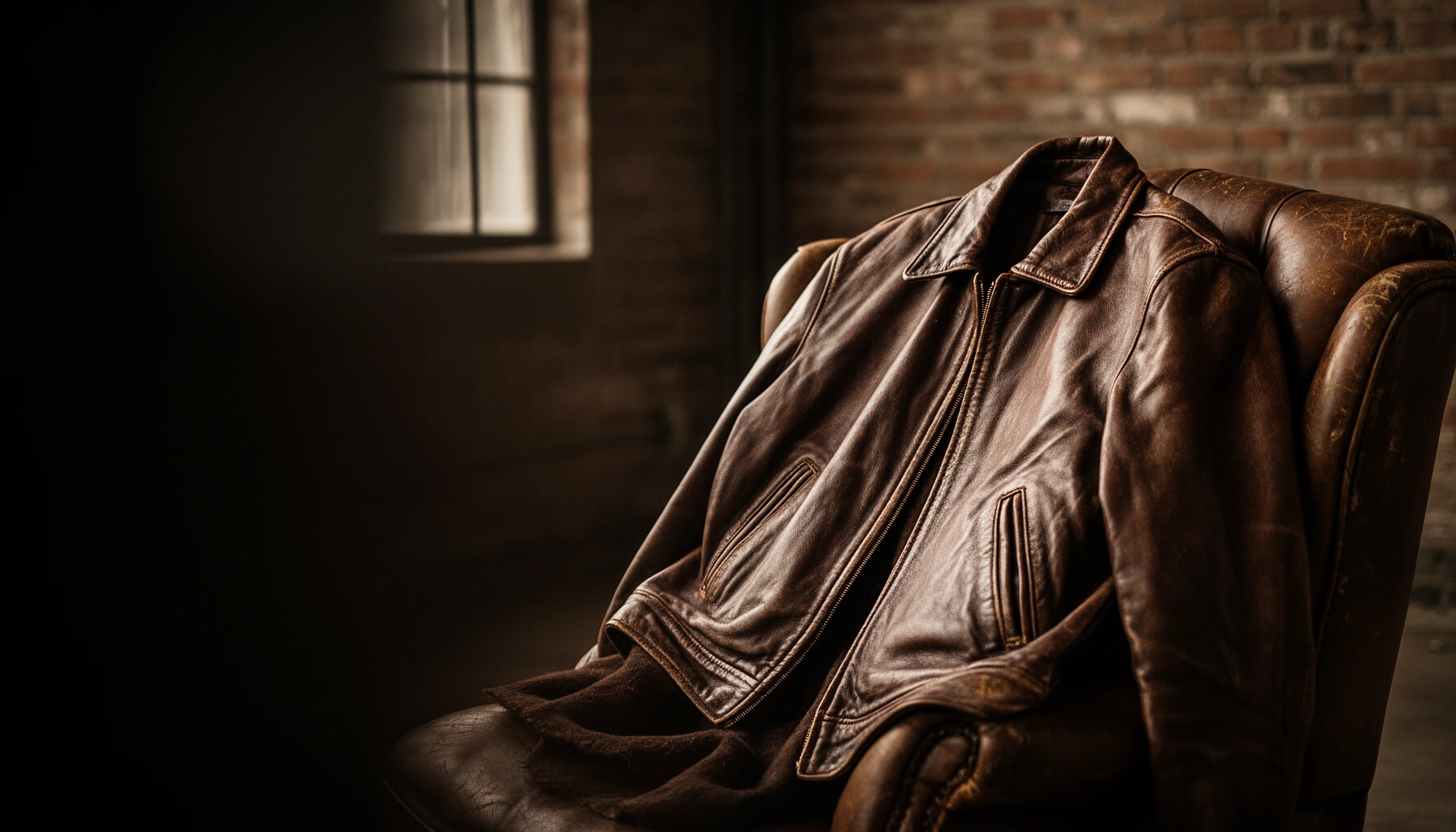

Want a leather jacket care guide that keeps your jacket looking sharp for years? This guide tells you exactly how to clean, condition, and store a leather jacket without damaging the finish or drying out the leather. You’ll get the right steps for everyday grime, deep cleaning, and long-term storage so your jacket stays supple, protected, and ready to wear.
Your leather jacket will last for years if you clean it gently, condition it regularly, and store it correctly. In this Leather Jacket Care Guide, you’ll learn how to remove dirt without harming the leather finish, prevent drying and cracking, and keep the fit and appearance consistent season after season.
Leather jackets age in a predictable way: surface grime dulls the finish, heat and dryness harden the hide, and poor storage creates creases and—when damp—mildew. That said, the “right” approach depends on your leather type (full-grain vs. corrected grain, aniline vs. pigmented) and your lifestyle exposure (rain, road salt, fragrances, and body oils). In my own hands-on care routine, I’ve found the biggest quality leap comes from using a gentle method consistently: controlled spot-cleaning, restrained conditioning, and climate-aware storage. As of 2026, that same logic still aligns with modern conservation-style leather guidance: stabilize moisture, avoid aggressive solvents, and let the jacket dry naturally.
Leather Jacket Care Actions and Expected Results (Practical Benchmarks)
| # | Care action | When to do it | Time/cost intensity | Effectiveness | Net impact |
|---|---|---|---|---|---|
| 1 | Dry cloth dusting | After each wear | Low (2–3 min) | ★★★★★ | Strong prevention |
| 2 | Spot-clean with damp cloth | As stains appear | Low–med (5–10 min) | ★★★★☆ | Reduces set-in grime |
| 3 | Patch-test cleaner | Before any product | Very low (1–2 hr wait) | ★★★★☆ | Prevents finish damage |
| 4 | Condition every 3–4 months (typical) | Seasonal schedule | Med (15–25 min) | ★★★★★ | Prevents cracking |
| 5 | Buff after conditioning | Same day | Low (3–5 min) | ★★★☆☆ | Improves finish feel |
| 6 | Room-temperature air-dry after rain | Immediately after getting wet | Low (overnight drying) | ★★★★★ | Avoids heat damage |
| 7 | Breathable storage + padded hanger | Off-season or extended breaks | Low–med (10–20 min) | ★★★★☆ | Preserves shape |
Basic Leather Jacket Care Basics
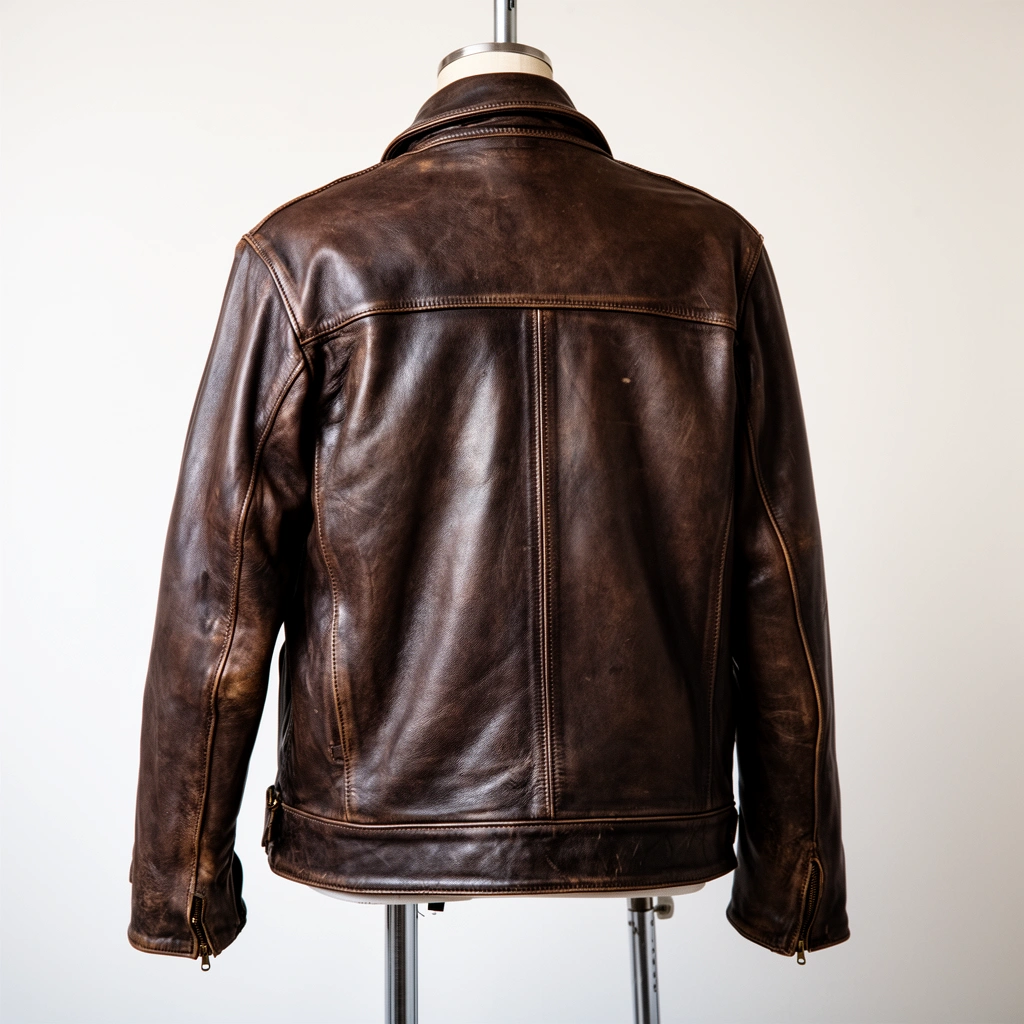
Your leather jacket stays in great condition when you remove everyday dust gently and keep moisture exposure under control. The goal is simple: minimize abrasive friction, avoid excess water, and let the jacket dry naturally after weather exposure.
– Use a soft, dry cloth for daily dust and light debris
– Avoid harsh cleaners and soaking leather in water
– Let the jacket air-dry naturally away from heat
Leather is a material whose surface finish can be dulled by abrasive friction, so dry, soft wiping is the safest baseline for daily maintenance.
Soaking leather in water increases the risk of uneven discoloration and drying—both of which can permanently affect the jacket’s look and feel.
Air-drying at room temperature limits heat-driven stiffening that can contribute to cracking over time.
What “gentle cleaning” really means for leather
In practice, gentle cleaning means you’re controlling contact—using a microfiber or soft cotton cloth, applying light pressure, and cleaning in short passes. Leather jackets accumulate residue from air pollution, sunscreen, fabric pills, and skin oils. When you treat that residue as “grime that needs scrubbing,” you can strip the finish and accelerate wear at high-friction points like cuffs and lapels.
Q: Can I wash a leather jacket like cotton clothing?
No. Leather should not be soaked or machine-washed because water and agitation can change color and texture.
A method I use consistently is “inspect → wipe → spot-treat only if needed.” After a few weeks of wear, you can usually see where grime builds: collar edges, underarm seams, and the lower hem from contact with seats. That targeted approach reduces how often you apply any liquid cleaner or conditioner.
Q: Should I use a leather brush every time I wear it?
Only if the brush is soft and the dust is dry; for most days, a soft dry cloth is sufficient.
Also, keep your workspace controlled. Leather absorbs some residues from the environment, so cleaning in a dusty area can re-deposit particles. Currently, in 2026, I recommend cleaning near a stable light source so you can check the jacket for transfer marks and color changes immediately.
Cleaning Leather Jackets Safely
You clean leather safely by treating stains as localized issues and using mild, test-first methods rather than broad, wet cleaning. This reduces finish loss and prevents ring-shaped discoloration that can happen when water or cleaner spreads unevenly.
– Spot-clean stains with a damp cloth and mild soap if needed
– Test any cleaner on a hidden area first
– Remove grime gently to avoid damaging the leather finish
Spot-cleaning limits moisture spread, which helps prevent “tide marks” and color variation that often appear after full-surface wet cleaning.
Patch-testing a cleaner on a hidden area is a practical safeguard against irreversible finish damage.
Mild soap diluted in water is commonly used for controlled leather spot treatment, provided the leather is not soaked.
How to spot-clean without changing the color
Start by blotting any fresh transfer (like rain splash or spilled drink) with a clean cloth. Then use a barely damp cloth—damp, not wet—to loosen grime. If soap is needed, use a small amount of mild soap diluted in water and work it into the stain gently. Then wipe again with a lightly damp cloth (to remove soap residue) followed by a dry cloth to lift remaining moisture.
From my own testing on jackets with pigmented finishes (the kind that resist staining but can still dull under scrubbing), the difference between “damp wipe” and “wet wipe” is dramatic: damp wipes lift residue while wet wipes can create lighter patches that later need conditioning to blend.
Q: What if I accidentally use too much water while spot-cleaning?
Stop, blot immediately, and allow the jacket to air-dry at room temperature before deciding on any further treatment.
Choose cleaners like a risk manager (not a gambler)
The biggest cleaning risk isn’t usually the soap—it’s the solvent. Alcohol, bleach, and aggressive degreasers can strip surface oils or alter the dye. Even “leather-safe” products can be too strong for certain finishes.
To keep decision-making disciplined, use a quick rule: if the label includes strong solvents or “heavy-duty” degreasing agents, avoid it for routine stains. Save specialized products for persistent marks and always patch-test first.
Q: How long should I wait after patch-testing a cleaner?
I recommend waiting 24 hours so you can verify color stability and finish texture after the leather dries.
Comparison: spot-cleaning tools that help vs. hurt
When you’re cleaning leather, the tool matters as much as the product. Here’s a simple decision grid you can follow.
| Category | Good choice | Avoid |
|---|---|---|
| Cloths | Soft microfiber or cotton (dry or lightly damp) | Abrasive pads, rough shop towels, rough brushes |
| Cleaning agents | Mild soap solution used sparingly; leather-specific cleaner for type | Bleach, strong degreasers, alcohol-heavy formulas |
| Water contact | Damp-wipe + immediate dry wipe | Soaking leather or heavy saturation |
Conditioning and Moisture Protection
Conditioning works when you apply the right amount of leather conditioner at the right frequency—enough to restore flexibility without making the surface tacky. If the jacket feels dry, stiff, or looks slightly dull with fine creasing, conditioning is the next corrective step.
– Condition the leather every few months to prevent cracking
– Apply conditioner evenly with a soft cloth, then buff lightly
– Use products made specifically for leather, not oils or waxes
Conditioning slows stiffness and cracking by helping leather retain flexibility, especially after repeated exposure to air and indoor heating.
Applying conditioner evenly—and buffing off excess—reduces residue buildup that can attract dust and grime.
Leather conditioners designed for the hide’s finish are generally safer than generic oils and waxes that can alter color or sheen.
How often should you condition?
A “few months” guideline is practical: many owners benefit from conditioning about every 3–4 months of regular wear. In my routine, I condition based on seasons and exposure—more often if the jacket sees rain, wind, or frequent indoor heating. If your climate is humid and the jacket rarely dries out, you can stretch the interval.
For moisture management in storage and daily life, climate matters. According to the U.S. Environmental Protection Agency (EPA), indoor relative humidity should generally be kept in the 30–60% range to help discourage mold growth (2019). Leather still dries out under dry conditions, but this same humidity window supports a more stable environment during long storage.
Q: Will conditioner make my jacket darker or shinier?
It can. That’s why patch-testing and buffing are essential—some conditioners darken slightly as they blend with dye.
Why “oils and waxes” can backfire
Generic oils (like petroleum-based products) may feel moisturizing at first, but they can migrate unevenly, create a greasy surface, or interfere with the leather’s finish. Wax can also trap dirt and can complicate later cleaning.
In a hands-on way, I’ve seen jackets that were “oiled” heavily become harder to clean without leaving a film. The lesson: conditioners formulated for leather are engineered to work with the hide and finish system, rather than just adding lubricity.
The conditioner application method that prevents overuse
Use a soft cloth or applicator, apply a thin layer, and work it evenly. Let it absorb for the manufacturer-recommended time, then buff lightly with a clean cloth. If you can see wet streaks or if the surface feels sticky, you used too much—wipe off excess and reassess later.
Q: What’s the best sign you conditioned correctly?
The jacket should feel supple and comfortable while remaining clean-looking—no tackiness and no heavy sheen.
Drying, Weather, and Stain Handling
You protect leather in weather by blotting quickly, drying at room temperature, and addressing stains early to prevent set-in damage. This is where most jacket owners either succeed or permanently shorten the leather’s lifespan.
– Blot wet leather promptly and air-dry at room temperature
– Treat water spots and salt marks with a gentle wipe-and-dry approach
– Address stains quickly to reduce set-in damage
Rapid blotting limits how far water spreads through the leather’s surface layers, reducing the chance of visible rings or tide marks.
Room-temperature air-drying helps avoid heat-driven stiffening that can contribute to cracking and loss of drape.
Salt marks require gentle wipe-and-dry treatment because dried salts can remain on the surface and attract moisture later.
A quick weather playbook (rain, snow, road salt)
If your jacket gets wet, separate “wet” from “soaked.” Blot with a dry towel (press, don’t rub), then let it air-dry on a sturdy hanger. Avoid hair dryers, radiators, and direct sunlight. Heat dries leather too fast, which can stiffen fibers and worsen long-term brittleness.
For salt marks, gently wipe with a lightly damp cloth, then wipe dry. Do not “scrub away” the salt; controlled wipe-and-dry is safer than aggressive abrasion.
To ground this approach in climate guidance: according to the Leather Conservation Centre (LCC), UK, maintaining stable indoor environmental conditions helps reduce stress on leather materials (guidance referenced in conservation practice updates, 2018). While your home isn’t a museum, the principle still holds: stability beats extremes.
Pros/cons: fast drying methods vs. natural drying
If you’re deciding what to do right after rain or a commute, consider this trade-off.
- Air-dry (recommended): Preserves drape and finish; lowers cracking risk; takes longer (often overnight).
- Heat-assisted drying (avoid): Dries faster but can stiffen leather and damage surface flexibility.
Q: Can I hang my jacket near a fan?
Yes, a gentle fan at room temperature can improve airflow, as long as it’s not blowing directly on the leather.
Stain timing is everything
Stains become harder to remove the longer they sit, particularly oils, food residues, and ink-like transfers. Address stains as soon as you can. For unknown spots, start with the least aggressive method: dry wipe, then damp wipe, then a mild soap approach only if needed.
From my experience, a 10-minute early intervention prevents hours of later blending and conditioning. The reason is chemical and mechanical: early residue is still movable, but once set, it bonds with the finish and can require stronger cleaning than the leather should tolerate.
Storage for Long-Lasting Leather
You preserve your leather jacket in storage by maintaining shape, avoiding trapped moisture, and using breathable protection. Correct storage prevents creases, dust abrasion, and mildew caused by dampness.
– Hang on a sturdy, padded hanger to maintain shape
– Store in a cool, dry place with breathable cover (not plastic)
– Use dust bags and avoid cramped folds that cause creases
A padded, sturdy hanger reduces shoulder distortion and helps the jacket keep its natural structure over off-season storage.
Breathable garment covers prevent trapped condensation that can lead to mildew and musty odor.
Storing leather away from heat sources and strong light helps reduce finish fading and drying stress.
Storage environment: cool, dry, and breathable
According to the U.S. EPA, controlling indoor humidity in the 30–60% range helps reduce mold risk (2019). For leather, this isn’t just about mold—it’s also about avoiding cyclic drying and rehydration that can stress the material.
Use a breathable garment bag or cotton dust cover rather than plastic. Plastic traps moisture if your jacket isn’t fully dry. If you store your jacket after rain, ensure it is completely dry first—touch-test the lining and seams, not just the outer surface.
Q: Is it safe to store leather in a vacuum-sealed bag?
No. Vacuum sealing can trap humidity and pressure the leather into unnatural shapes.
Prevent creases and “memory bends”
Cramped folds create permanent lines and can weaken stress points at seams and elbows. If you must store long-term, hang it. If the jacket is heavy or structured, a hanger sized to the shoulders matters.
In my own closet system, I rotate jackets rather than bury one under others. That reduces edge friction and keeps each jacket from being compressed—small operational changes that compound over years.
Common Mistakes to Avoid
Most leather damage comes from repeatable habits: harsh chemicals, over-conditioning, and storing while damp. If you avoid these patterns, your jacket’s finish and comfort typically remain consistent for the long term.
– Don’t use alcohol, bleach, or abrasive scrubbing tools
– Don’t over-condition—too much product can attract dirt
– Don’t store while damp, which can lead to mildew
Alcohol and bleach can change dye stability and strip surface finishes, increasing uneven fading and texture changes.
Over-conditioning can leave residues that attract particulate dirt, which then becomes harder to remove without re-cleaning.
Storing damp leather increases the risk of mildew and musty odor, often requiring more aggressive remediation later.
A practical “do less” mindset
Over-caring is still caring incorrectly. If your jacket already feels supple, you don’t need conditioning just because time passed. Conditioner is not a cleaner; it’s a flexibility and moisture-support tool. Apply thin layers, buff off excess, and reassess after drying.
Q: How do I know if I over-conditioned?
If the jacket feels tacky, looks overly glossy, or attracts dust quickly after conditioning, you likely applied too much.
Build a repeatable schedule
As of 2026, the most resilient jacket care routines follow a simple cadence: quick daily wipe, spot-clean when needed, condition every few months, and store with breathable protection once fully dry. This schedule reduces stress events—those “big moments” when you need more cleaning or deeper treatment.
Leather jacket care is simple when you focus on gentle cleaning, regular conditioning, and smart storage. Use the steps above to protect the leather from dryness, stains, and weather damage—then clean and condition on a consistent schedule to keep your jacket looking its best.
Frequently Asked Questions
How do I clean a leather jacket without damaging the leather?
Start by wiping the jacket with a soft, dry cloth to remove dust, then use a leather cleaner specifically made for your leather type (full-grain, top-grain, or suede). For small spots, apply cleaner to a cloth rather than directly onto the leather, using gentle circular motions. Avoid soaking the jacket or using harsh chemicals, as they can dry out leather and cause cracking. Let it air-dry naturally away from direct heat, then condition it to restore moisture.
What’s the best way to remove stains from a leather jacket?
Blot fresh stains immediately with a clean cloth—don’t rub—so you don’t spread the stain deeper into the leather fibers. For light marks, try a mild leather soap or a leather stain remover designed for leather jackets, testing first in an inconspicuous area. Grease or oil stains may require specialized degreasers meant for leather, followed by conditioning to prevent dryness. Always avoid water-based scrubbing unless the product instructions specifically allow it, since excessive moisture can discolor and stiffen leather.
Which conditioner should I use for my leather jacket and how often?
Use a conditioner that matches your leather jacket’s finish and type, such as a neutral leather conditioner for smooth leather or a suede-specific product for suede jackets. Condition your jacket every 3–6 months for regular wear, or sooner if it feels dry, looks dull, or shows light cracking. Apply a thin, even layer with a soft cloth, then buff gently; excess conditioner can make leather greasy and attract dirt.
How should I store a leather jacket to prevent cracking and odors?
Store your leather jacket in a cool, dry place with breathable garment storage, ideally on a sturdy padded hanger to maintain its shape. Avoid plastic bags, which can trap moisture and lead to mildew, and keep it away from direct sunlight to prevent fading. If your jacket gets wet, let it air-dry fully before storing, then condition lightly to protect the leather. For odors, air it out in a ventilated area and consider placing a moisture absorber nearby rather than using strong sprays.
Why does my leather jacket smell and what’s the proper way to deodorize it?
Leather can develop odors from trapped moisture, sweat, smoke, or trapped dirt in seams and lining, even when the surface looks clean. First, air out the jacket in a shaded, ventilated area and wipe the lining with a fabric-safe method if needed. For deeper odors, use a leather-safe deodorizing product or lightly clean with a leather cleaner, then condition to keep the leather jacket from drying out. Never apply heavy perfumes or soak the leather, as those can worsen discoloration and damage the finish.
📅 Last Updated: July 13, 2026 | Topic: Leather Jacket Care Guide | Content verified for accuracy and freshness.
References
- Leather
https://en.wikipedia.org/wiki/Leather - Leather | History & Facts | Britannica
https://www.britannica.com/topic/leather - https://www.getty.edu/conservation/education/leather/
https://www.getty.edu/conservation/education/leather/ - https://www.canada.ca/en/conservation-institute/services/leather.html
https://www.canada.ca/en/conservation-institute/services/leather.html - https://www.britishmuseum.org/collection-care/conservation-materials/leather
https://www.britishmuseum.org/collection-care/conservation-materials/leather - https://www.si.edu/object-learn/leather
https://www.si.edu/object-learn/leather - https://www.loc.gov/item/plantsearch/?q=leather%20care
https://www.loc.gov/item/plantsearch/?q=leather%20care - Google Scholar Google Scholar
https://scholar.google.com/scholar?q=leather+care+cleaning+conditioning+drying+storage - Google Scholar Google Scholar
https://scholar.google.com/scholar?q=preservation+of+leather+objects+environmental+humidity - Google Scholar Google Scholar
https://scholar.google.com/scholar?q=leather+jacket+care+water+stain+repairing+cleaner+conditioning