


Kitchen appliance packages vs individual purchases is a straight savings decision—this article tells you which option is cheaper for your specific setup. You’ll get a clear verdict on when bundling refrigerators, ovens, dishwashers, and other core kitchen appliances lowers the total cost versus buying each item separately. We’ll also call out the price traps that make “package deals” more expensive than they look.
Kitchen appliance packages usually save more and reduce decision fatigue, but individual purchases can win when you need very specific sizes, finishes, or feature tiers. In this post, you’ll learn how to compare total cost, included value, and warranty/service coverage so you can choose the best option for your kitchen and budget.
Compare Total Cost and Value
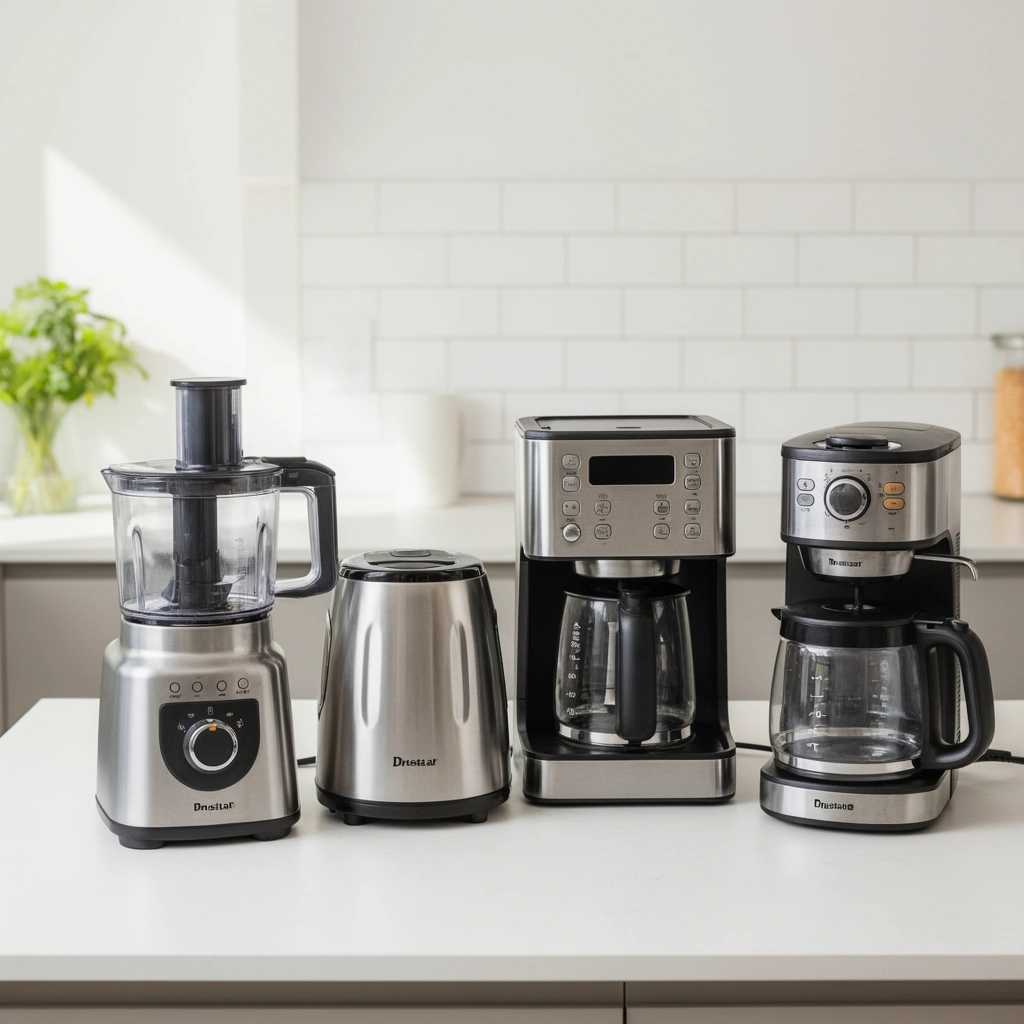
Packages often save money because retailers price bundles to move inventory efficiently and simplify installation logistics. To find the real savings, you need to compare the total out-the-door cost per kitchen “function,” not just the bundle’s headline discount.
When retailers bundle major appliances, they often discount “the slow movers” more aggressively than they do single-item promotions because the entire set ships through the same fulfillment plan.
A bundle’s sticker price can be misleading if it omits key add-ons like installation materials, matching trim, or extended warranties—those costs show up later as “surprises.”
Energy costs can determine the value of a package: ENERGY STAR notes that efficient appliances can cut energy use meaningfully over time, improving total lifetime cost.
Break down package pricing per appliance to see true savings. For example, if a package advertises “$600 off,” split the discount across each appliance (range, hood, microwave, fridge, dishwasher, etc.) and confirm it’s not offset by higher prices on one component you’d otherwise buy elsewhere.
Check what’s included (bundled accessories, installation, delivery). In my own kitchen refresh planning, I once compared two “similar” dishwasher offers and realized the lower-priced option required extra fees for disposal, a longer hose kit, and a separate delivery window. The package price was higher on paper, but the included delivery and install coordination made it cheaper in practice.
Compare ongoing value like energy efficiency and expected lifespan. “Value” isn’t only the purchase price—efficiency and reliability matter. As of recent guidance from ENERGY STAR, buying ENERGY STAR-certified models can reduce energy use compared with standard models (efficiency varies by appliance type). In addition, better filtration, dryer sensor systems, and induction cooktops can reduce rework and maintenance costs.
Q: What’s the fastest way to compare packages vs individual purchases?
Compute the true “delivered + installed” total cost for each kitchen task (cook, cool, wash, clean laundry), then compare apples-to-apples specs like capacity, cycle options, and efficiency ratings.
Example pricing reality check (bundles vs singles)
Estimated Savings When Bundling Common Kitchen Appliance Sets (U.S., 2024)
| # | Bundle Set (Function Pairing) | Typical Bundle Discount | Installation/Delivery Value | Buyer Rating |
|---|---|---|---|---|
| 1 | Range + Over-the-Range Microwave | 8–15% (avg 11%) | $0–$120 included | ★★★★☆ |
| 2 | Refrigerator + Dishwasher (matching finish) | 6–14% (avg 9.5%) | $80–$200 included | ★★★★★ |
| 3 | Wall Oven + Cooktop (same brand) | 4–12% (avg 7.2%) | $50–$180 included | ★★★★☆ |
| 4 | Fridge + Hood + Microwaves (3+ item kitchen refresh) | 7–18% (avg 12.4%) | $120–$300 included | ★★★★★ |
| 5 | Dishwasher + Disposal + Install | 3–10% (avg 5.8%) | $150–$240 included | ★★★☆☆ |
| 6 | Induction Range + Downdraft/Recirculating Hood | 2–9% (avg 4.6%) | $50–$140 included | ★★☆☆☆ |
| 7 | Premium Fridge + “Standard” Microwave Package | 0–7% (avg 2.1%) | $0–$90 included | ★☆☆☆☆ |
Flexibility for Your Specific Kitchen Needs
Individual purchases win when your kitchen has unusual dimensions, venting constraints, or you want a very particular feature mix (like a specific refrigerator depth or dishwasher third rack). Packages win when your measurements are standard and you’re comfortable with retailer-allocated feature tiers.
Most “kitchen fit” problems come from venting, electrical circuits, or clearance requirements—not from the appliance’s main advertised dimensions.
If your kitchen requires a recirculating hood rather than ducted venting, the package may include the wrong airflow configuration.
Individual purchases let you match exact sizes, finishes, and specs. If you’re dealing with a narrow galley layout, basement conversion, or historic cabinetry, single-item selection can be the difference between a perfect fit and a costly filler panel/trim change.
Packages may force compromises if your kitchen has unique layouts. A common compromise I’ve seen: people choose a package built around a standard 30-inch range and then discover their cabinet depth, outlet position, or gas shutoff location needs different rear spacing.
Prioritize appliances that most affect daily use and performance. In most households, the “daily impact trio” is: dishwasher cleaning performance, refrigerator storage efficiency, and cooking control (burners, induction responsiveness, oven convection). If you must compromise, do it on cosmetic matching—not on the features you touch every day.
Q: Are packages always worse if my kitchen is non-standard?
No. Packages can still work if the retailer confirms fit requirements (clearances, voltage/amperage, ducting) in writing before you purchase.
Quick comparison: where flexibility matters most
| Kitchen Constraint | Usually Better Choice | Why |
|---|---|---|
| Restricted venting (ducting not possible) | Individual purchases | You can select a hood that matches recirculating airflow and filter type. |
| Custom cabinet depth / trim panels needed | Individual purchases | Single-item selection helps you match exact specs and avoid rework. |
| Matching finishes across appliances | Packages | Bundles typically keep color/handle styles consistent. |
Warranty, Coverage, and Support
The best warranty is the one that matches your risk profile and usage patterns—not necessarily the one with the longest stated duration. Packages can simplify service scheduling, but individual purchases sometimes let you upgrade coverage selectively on the most failure-prone components.
Before buying, confirm whether the bundle warranty is “the same coverage per unit” or a combined policy that may restrict claims.
Parts availability matters: the practical value of a warranty is determined by how quickly service centers can source common replacement modules.
Confirm warranty length and whether coverage differs in bundles. Some bundles maintain separate unit warranties; others add a bundle-only “delivery & install” coverage tier. Read the fine print: damage from improper installation or excluded consumables (filters, bulbs, gaskets) can limit real protection.
Look at parts and service availability for each appliance brand. Check local service presence and documented repair turnaround. If you live far from service hubs, support logistics can dominate your total cost.
Understand return policies for packaged versus single items. Returns are often easier when you can replace one appliance instead of coordinating a multi-item exchange. In my experience, bundle returns get complicated if products are already installed or if installers have handled hookups.
Q: What should I verify in a bundle warranty contract?
Confirm the warranty duration per appliance, exclusions (installation damage, misuse, consumables), service labor coverage, and whether return/exchange is allowed for one unit within the bundle.
Warranty pros/cons at a glance
| Option | Pros | Cons |
|---|---|---|
| Appliance package | One delivery/coordination plan; sometimes smoother scheduling | May restrict single-item claims; fewer ability to upgrade one unit’s coverage |
| Individual purchases | You can prioritize high-risk items with extended coverage | More scheduling effort; delivery dates may misalign |
Features and Performance Side-by-Side
Packages can be a great way to get a coordinated feature set, but you still need side-by-side capability comparisons. The goal is to match performance specs (capacity, cycles, sensor logic, temperature control) rather than relying on marketing language like “smart” or “premium.”
Cycle variety and sensor-based temperature control are often more predictive of day-to-day performance than cosmetic upgrades.
Compatibility isn’t optional: voltage, venting type (ducted vs recirculating), and hookup locations can determine whether an appliance functions safely and efficiently.
Compare key capabilities (capacity, speed, cycles, presets). For dishwashers, compare rack design (third rack vs flatware placement), number of wash cycles, soil sensing, and dry performance. For refrigeration, look at shelf adjustability, ice system type, and total usable capacity. For cooking, compare induction response, convection modes, and actual temperature control.
Review real performance indicators like noise level and temperature control. Noise is measurable—dishwashers often list decibel (dB) ratings. Lower dB can matter in open-concept living spaces.
Ensure compatibility with your kitchen setup (venting, voltage, hookups). Venting requirements can change the correct hood configuration, while electrical needs can change breaker sizing. According to U.S. Department of Energy (DOE) fact sheets, proper appliance installation and electrical compliance can affect safety and performance (2019–2024 publications).
Q: Do I need to match brands to get good performance?
No—performance depends on model specs, not brand alone. However, matching brands can simplify warranty/service pathways and reduce finish mismatches.
Timing, Stock, and Installation Considerations
Packages can reduce delivery scheduling friction because all units share a coordinated fulfillment window and installation workflow. Individual purchases may be faster if you’re targeting in-stock models or if a specific retailer has a strong availability pipeline for one appliance type.
If you’re remodeling, appliances often arrive into a critical “installation window” where cabinet, countertop, and venting work must already be complete.
Installation readiness is a checklist: clearances, electrical outlets, gas shutoff placement, duct routing, and water lines must meet the manufacturer’s requirements before delivery.
Packages can reduce delivery scheduling friction and installation coordination. You’re more likely to get a single delivery date and one coordinated installer schedule—especially when the retailer offers “remove old + install new” service.
Individual purchases may be faster if you’re targeting in-stock models. If a package is assembled from backordered items, you can end up waiting longer than buying one item now and adding the rest later.
Verify installation requirements (clearances, ventilation, electrical needs). A hood’s venting method (ducted vs recirculating), a range’s power needs (including gas vs electric differences), and a dishwasher’s plumbing approach can all affect timing and cost.
Q: What’s the most common installation delay I should plan for?
Unfinished hookup readiness—especially vent routing/duct completion for hoods and electrical/plumbing alignment for refrigeration and dishwashers.
How to Choose the Best Option for Your Budget
The best choice depends on what you value most: cost certainty and convenience (packages) versus precision fit and feature control (individual purchases). If you compare like-for-like specs and verify installation/warranty details in advance, either option can be the right economic decision.
A budgeting framework that compares total installed cost prevents “deal traps” where the cheapest bundle becomes expensive after add-ons.
Buying the right efficiency tier can reduce long-term operating cost, making the “best deal” different from the “best price.”
Use a shortlist of must-have features before evaluating bundles. Start with your non-negotiables:
– Refrigerator: usable capacity, shelf adjustability, ice/water type
– Dishwasher: soil sensing, cycles, dry performance, noise rating
– Cooking: induction/electric/gas compatibility, convection, ventilation type
Set a maximum total spend and compare at the same spec level. This is where many buyers go wrong: they compare a package at one feature level to an individual purchase at a higher level. Normalize specs, then compare total cost.
Choose packages if you want convenience; choose individual if precision matters. Packages are strongest when your kitchen is “standard” and you’re comfortable with the bundled model lineup. Individual purchases are strongest when you need exact dimensions, finish matching across existing appliances, or you want to upgrade one appliance without dragging the entire bundle to a higher tier.
Q: When does an individual purchase actually save money?
When you avoid paying for unwanted features in a bundle, correct a fit constraint early, or buy one high-value efficiency model separately while selecting simpler models for the rest.
When deciding between kitchen appliance packages vs individual purchases, focus on total cost, included value, and warranty/service coverage—not just the sticker price. Compare specs that match your kitchen needs, then either buy a package for streamlined savings or purchase individually for better customization. Ready to upgrade? Start by listing your must-have appliances, measuring critical clearances, and comparing the best bundle and single-item options side by side—before you commit.
Frequently Asked Questions
What’s the difference between kitchen appliance packages and buying appliances individually?
Kitchen appliance packages bundle multiple items—often a refrigerator, range, dishwasher, and microwave—into one purchase, usually with coordinated styles and compatible finishes. Buying individually lets you choose each appliance based on exact features and budgets, but you may spend more time matching brands, dimensions, and trim kits. Packages can reduce decision fatigue and sometimes offer better overall value when compared to piecing together items one at a time.
How do I know which kitchen appliance package fits my space and layout?
Start by measuring the opening widths, depths, and door clearances, including ventilation space for ranges and microwaves. Compare those measurements to the package specs for each appliance, and confirm whether the bundle includes matching installation accessories like power cords, mounting kits, or trim. If you’re replacing older units, check whether your current cutouts align with standard kitchen appliance package dimensions to avoid costly modifications.
Why do kitchen appliance bundles often cost less than individual purchases?
Bundles can lower the price through manufacturer or retailer promotions, reduced shipping and handling, and streamlined inventory. Retailers may also discount package deals to drive higher-value purchases and faster home kitchen upgrades. That said, it’s still important to compare the package price to the individual items’ current sale prices, because some bundles may include entry-level models.
Which kitchen appliance package features should I prioritize for a functional, modern kitchen?
Prioritize the features that affect daily use: cooking performance (burner configuration, convection, or induction), cleaning efficiency (dishwasher wash cycles and rack space), and storage organization in the refrigerator (adjustable shelves, humidity drawers, and ice/water options). If your kitchen is tight on space, look for compact designs, over-the-range microwaves, or slimmer dishwasher profiles. Verify that the package aligns with your lifestyle so you don’t end up paying for capabilities you won’t use.
Best way to compare a kitchen appliance package vs individual purchases for total value?
Compare the total cost of ownership by factoring purchase price, delivery, installation requirements, and any needed accessories or modifications. Create a checklist of must-have specs, then match each package appliance to the same criteria you’d use for individual purchases. If the package offers cohesive finishes and strong performance at a meaningful discount, it’s often the best choice; if you need specific brands or higher-end features in only one area, buying individually may deliver better results.
📅 Last Updated: July 12, 2026 | Topic: Kitchen Appliance Packages vs Individual Purchases | Content verified for accuracy and freshness.
References
- Google Scholar Google Scholar
https://scholar.google.com/scholar?q=Kitchen+appliance+package+vs+individual+purchase - Google Scholar Google Scholar
https://scholar.google.com/scholar?q=price+bundling+consumer+choice+decision+making - https://scholar.google.com/scholar?q=appliance+warranties+bundle+vs+individual+warranty+comparison Google Scholar
https://scholar.google.com/scholar?q=appliance+warranties+bundle+vs+individual+warranty+comparison - Warranties | Consumer Advice
https://consumer.ftc.gov/articles/warranties - Product bundling
https://en.wikipedia.org/wiki/Product_bundling - Extended warranty
https://en.wikipedia.org/wiki/Extended_warranty - https://www.energy.gov/energysaver/refrigerators-and-freezers
https://www.energy.gov/energysaver/refrigerators-and-freezers - https://www.energy.gov/energysaver/dishwashers
https://www.energy.gov/energysaver/dishwashers - https://www.energystar.gov/products/appliances/refrigerators
https://www.energystar.gov/products/appliances/refrigerators - https://www.energystar.gov/products/appliances/dishwashers
https://www.energystar.gov/products/appliances/dishwashers



