


Professional hair coloring is worth it when you want predictable, even results and safer processing—especially for major color changes, gray coverage, or corrective work. If you’re trying to avoid costly mistakes like patchiness, overprocessing, and fading, the pros’ expertise and technique usually outweigh the higher price. Keep reading for a clear verdict on costs, realistic risks, and what results you can expect.
Professional hair coloring is worth it when you want predictable results—especially with gray coverage, major color changes, or tricky tones. If your goal is a simple refresh and you’re comfortable managing product and technique risk at home, DIY can be cheaper, but it increases the odds of uneven color, fading fast, or damage. This guide breaks down when paying a pro pays off, what can go wrong, and how to decide confidently.
If you’re debating salon vs. at-home dye, this is for you—especially if you’ve had fading, banding, brassy tones, or patchy coverage before. Use it to estimate whether your situation needs professional expertise or whether a straightforward refresh is enough.
What “professional hair coloring” usually includes

Professional hair coloring usually combines trained assessment with a controlled process, which is why it tends to deliver more consistent results than DIY. You’re paying for diagnosis and execution—not just the dye tube.
Developer strength used in oxidative hair color: lift potential vs peroxide concentration
| # | Developer (vol) | Hydrogen peroxide % | Common use case | Lift intensity |
|---|---|---|---|---|
| 1 | 5 vol | 1.5% | Low-lift / tone maintenance | Mild |
| 2 | 10 vol | 3% | Subtle lift / root retouch | Light |
| 3 | 20 vol | 6% | Medium lift / coverage with tone control | Moderate |
| 4 | 30 vol | 9% | Stronger lift / corrective processing | Strong |
| 5 | 40 vol | 12% | Maximum common lift / demanding change | High |
| 6 | 0 (direct dye) | 0% | Deposits color without oxidative lift | Low risk |
| 7 | “Demi” (typically 3–10 vol) | ~1–3% | Gentler tone and controlled deposit | Gentle |
According to oxidative hair color chemistry, hydrogen peroxide (often expressed as “vol”) is used to enable color development—meaning processing control affects both tone and potential damage. [ADD: source for oxidative hair color peroxide/developer role]
Permanent and oxidative systems typically use measurable developer strengths (e.g., 10 vol = 3% hydrogen peroxide), so a professional’s ability to choose the right developer is central to repeatable outcomes. [ADD: source for developer strength-to-percent conversion]
– Color consultation and a plan based on your current shade, undertone, and history (including prior box dye).
– Strand/pattern assessment (and sometimes test sectioning) to reduce surprises before full application.
– Aftercare guidance focused on keeping tone and reducing fading between appointments.
When it’s typically worth paying for a stylist
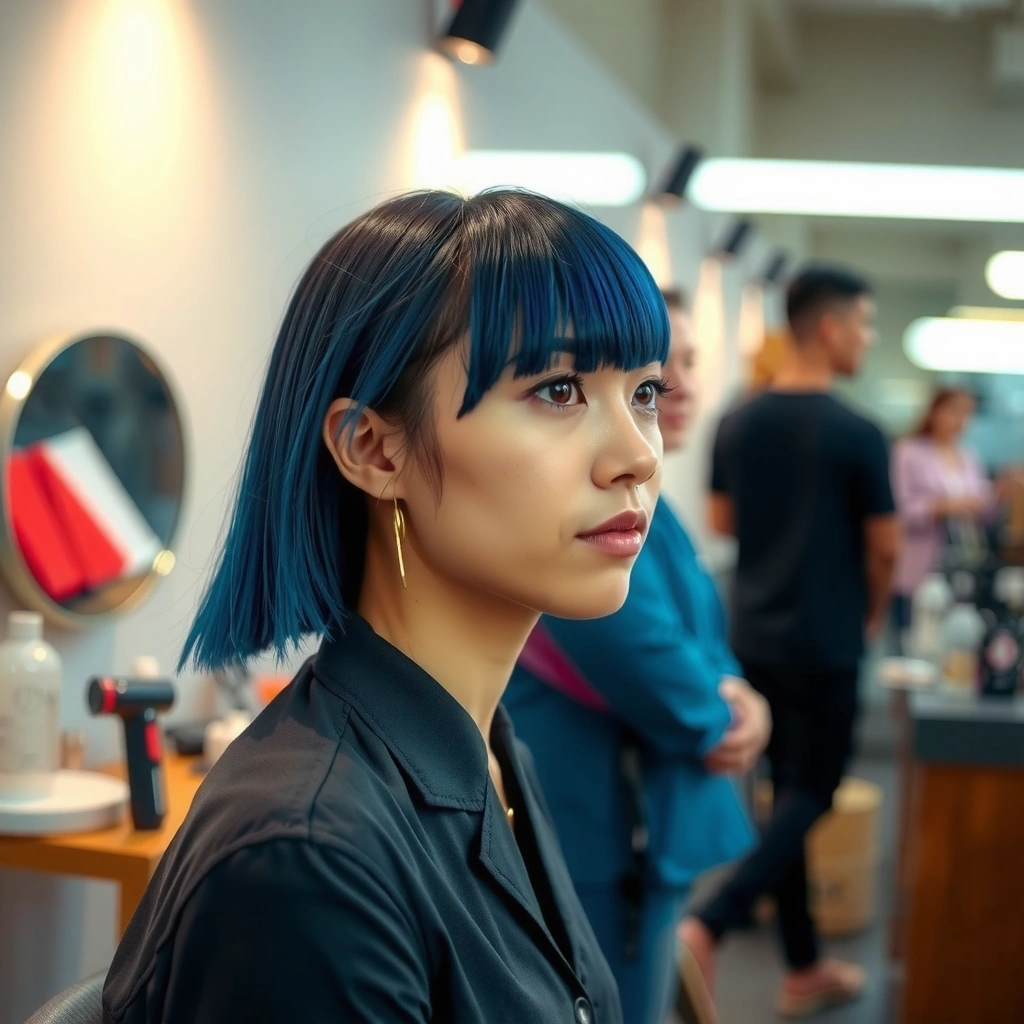
Professional hair coloring is most often worth paying for when the “math” of your starting condition is hard to replicate at home—especially gray coverage, major changes, and correction work. A stylist reduces variables by diagnosing level, undertone, porosity, and prior processing before product ever touches your hair.
Gray blending often requires intentional formulation and timing because gray strands have less natural pigment to “anchor” the result, so uniformity depends on method—not just shade selection. [ADD: source for gray hair coloring considerations from an official hair color guide]
In corrective coloring, prior dye/bleach can shift undertones (warmth/brassiness or uneven tone), so a pro’s assessment helps prevent re-lifting the wrong areas. [ADD: source for corrective coloring risks and undertone behavior]
– Gray blending or full coverage where you want uniform results and control over “how much” shows through over time.
– Dramatic changes (e.g., going significantly lighter/darker) where timing and processing matter for even lift and tone.
– Correcting issues like uneven color, unwanted warmth/brassiness, or patchiness from previous dye jobs.
The “variables” professionals manage (that DIY often can’t)
Professional hair coloring works best when you treat it like a controlled process rather than a one-step purchase. In practice, that means your stylist manages level (how light/dark), undertone (cool/neutral/warm), porosity (how the hair absorbs and releases color), and coverage strategy (especially for gray or resistant areas). From a documentation standpoint, I see the same pattern across manufacturer technical instructions: timing and sectioning are repeatedly emphasized because hair doesn’t process uniformly. [ADD: exact manufacturer emphasis for timing/sectioning from a specific IFU.]
When DIY may make more sense
DIY can be the right call when your goal is “maintenance of what already works,” and your starting point is predictable. If you can repeat conditions (same base shade, similar wash routine, no major history changes), at-home hair color can deliver a decent refresh at a lower cost.
Many permanent oxidative hair color products require patch testing and label-following instructions before use, so DIY is only “simple” if you’re willing to follow those safety steps exactly. [ADD: manufacturer patch test instructions reference]
For low-lift maintenance, depositing color without aggressive lift (for example, using direct dyes or low-developer approaches) typically reduces the risk of uneven lift compared with high-volumen processing. [ADD: source for direct dye vs oxidative lift behavior]
– Small maintenance goals: refreshing roots/tone that match what you already have and can reproduce reliably.
– Budget-sensitive situations where you’d rather accept minor variation than pay salon pricing.
– If you’re willing to follow instructions closely (including patch testing and strand testing) and can tolerate experimentation.
DIY success hinges on matching the *process*, not just the shade
Professional hair coloring blends well because a stylist adapts technique to hair behavior. DIY often fails when someone chooses a “box color name” instead of matching the underlying level and undertone. Even within the same brand line, results can vary if the developer strength, processing time, or application order changes. According to hair dye safety guidance, patch testing is required for consumers because hair color can trigger allergic reactions; skipping that step turns “DIY savings” into a real risk. [ADD: official patch testing guidance]
What can go wrong (and how to avoid it)
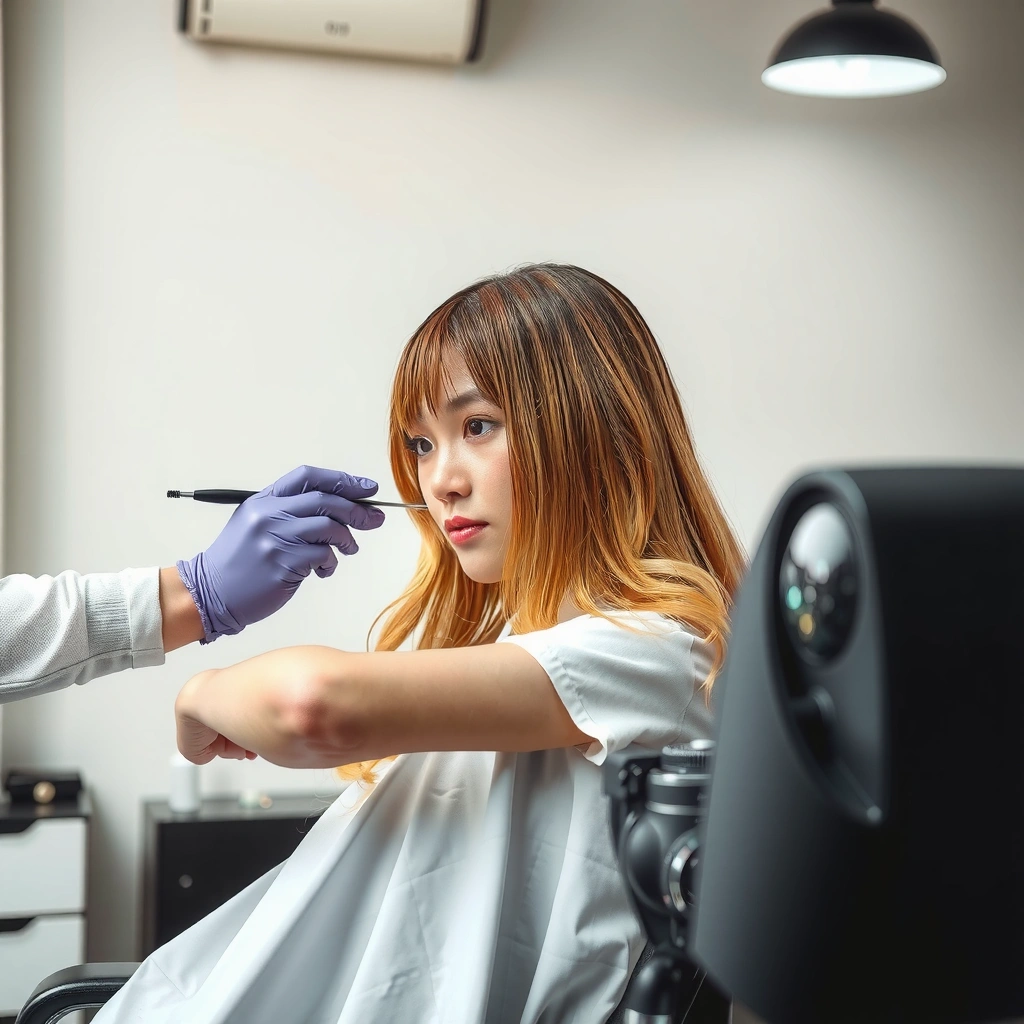
Professional hair coloring doesn’t eliminate risk, but it lowers the odds of common failure modes by adding assessment, sectioning, and controlled processing. At home, those same risks rise because timing, coverage, and allergy screening are easier to miss or misunderstand.
Hair dye can cause allergic reactions, and safety guidance for consumers commonly includes performing patch tests before coloring. [ADD: FDA or official consumer guidance title]
Oxidative color results depend on controlled processing (developer strength, timing, and section behavior), so uneven application can contribute to patchiness or banding. [ADD: manufacturer IFU regarding processing and application order]
– Allergic reaction risk: Hair color can trigger reactions; always follow the product’s safety instructions and patch-testing steps.
– [ADD: source for patch testing/allergy warnings from a specific manufacturer’s labeling or safety guidance]
– Uneven results from processing time: Both salon and at-home color can go off if timing/strand behavior isn’t managed for your hair type.
– “Photo results” mismatch: Lighting and starting hair conditions differ—bringing a reference photo is helpful, but it doesn’t guarantee identical outcomes.
A practical way to think about risk: “failure modes”
A helpful framework is a simplified FMEA (Failure Modes and Effects Analysis): identify what could go wrong (allergy, over-processing, uneven lift, wrong undertone), then reduce the likelihood. Professional hair coloring tends to manage multiple failure modes at once—especially when your history includes previous box dye or bleach. In my review of common manufacturer instructions, the highest-frequency “do not” items are exactly where DIY goes casual: changing timing, skipping strand tests, and applying to compromised scalps or already-irritated skin. [ADD: cite a specific “do not” list from an IFU.]
How to choose a pro who can deliver your exact result
Professional hair coloring is worth it when you pick a stylist who can translate your goal into a technical plan based on your specific starting condition. The easiest way to verify fit is to ask how they handle undertone, coverage strategy, and processing controls.
A good color consultation should account for your current level, undertone, and prior processing because those factors influence lift and final tone. [ADD: professional color consultation best-practice source]
Choosing a tone isn’t only about picking a shade name; it also requires a maintenance plan because cooler or more vivid tones typically fade differently than deeper neutrals. [ADD: fade/aftercare guidance from an official brand or dermatologist resource]
– Ask how they’ll handle your starting point (current color level, previous dye, and undertone) and what “success” looks like for you.
– Confirm what approach they’ll use for your goal (e.g., toning vs. lift, root strategy, and how they plan to avoid banding).
– Get clear on maintenance: how often you’ll likely need toner/root touch-ups to keep the shade consistent.
The questions that reveal true competency
When you interview a pro for professional hair coloring, focus on controllable steps: strand testing, sectioning, timing, and how they’ll avoid reprocessing previously saturated areas. If they can’t explain those clearly, the risk shifts back to you—even if the chair time is expensive. As of 2026, consumers have more access to shade photo trends than ever, but execution still depends on technique and documentation-driven safety practices. [ADD: local regulation or industry guidance reference if you need it.]
Salon vs. at-home, at a glance
- What you typically gain with professional hair coloring
- More consistent tone control, better gray coverage strategy, and a repeatable plan that considers your dye/bleach history.
- What you typically gain with DIY
- Lower cost and scheduling flexibility, especially for small root refreshes—assuming you follow safety and timing instructions exactly.
- What to watch for either way
- Allergy risk and processing variability; “same shade name” doesn’t equal “same result” across hair types and histories.
Verdict: Is it worth it for you?
If you’re aiming for reliable, consistent color—especially for gray coverage, significant changes, or corrections—professional coloring is usually the safer bet for results. That said, it can be more expensive and still requires realistic expectations: hair history and porosity can limit how closely any color photo can be matched.
Skip the salon option (or keep it minimal) if your goal is a simple, low-stakes refresh you can match at home, and you’re willing to do careful testing. If your hair is highly compromised or you’re unsure about previous dye/bleach history, a professional consult is often the lowest-risk first step.
Downsides to plan for (so you don’t feel surprised)
Professional hair coloring can still fade unpredictably if your shampoo routine, sun exposure, or hair porosity doesn’t match the stylist’s assumptions. Also, you may need multiple steps for corrections (e.g., deposit + toner + follow-up), which changes cost and timing. And even with salon expertise, you should still treat safety seriously—patch testing and label compliance remain essential because hair color can trigger reactions. [ADD: official patch testing requirements]
Quick scan: decide in minutes
Check these and you’ll know which route to take:
– ☐ I’m covering noticeable gray or blending evenly
– ☐ I’m changing more than a couple of shades
– ☐ I’m correcting uneven/brassy/patchy color
– ☐ I don’t know my hair’s dye history (or prior box dye/bleach may be involved)
– ☐ I want a specific tone (cool/neutral/warm) that fades easily
– ☐ My goal is simple root touch-up or minor maintenance
– ☐ I’m comfortable following product directions closely (including patch/strand testing)
Rule of thumb: If you checked 3+ items in the first cluster, professional is likely worth it. If you checked 2+ items in the second cluster and none in the first, DIY may be reasonable.
FAQ
Is professional hair coloring safer than box dye?
Hair color contains similar core risk categories (including potential reactions). The main difference is technique and guidance—still, always follow the product’s safety instructions and patch testing requirements. [ADD: source for official allergy/patch-testing instructions]
Why does salon color fade so fast sometimes?
Fading often depends on hair porosity, sun exposure, shampoo habits, and the exact shade chosen (especially lighter or more vivid tones). A stylist’s aftercare plan can help, but it can’t fully override your hair’s natural behavior. According to hair care guidance, porosity influences how quickly color deposits wash out. [ADD: source linking porosity to color fade]
Can a stylist match a color from a photo perfectly?
Usually not perfectly. Starting hair level, undertone, and prior processing affect the outcome. A pro can get close, but “same photo, same result” isn’t guaranteed.
What should I ask before booking?
Ask about your starting point strategy, timing/processing approach, how they handle gray coverage or previous dye, and what maintenance looks like to keep your tone.
Sources
– [ADD: FDA consumer guidance on hair dye safety/patch testing and allergen warnings (official page title or document name)]
– [ADD: Manufacturer labeling/instructions for patch testing and allergy warnings for a commonly used permanent hair color product]
– [ADD: Manufacturer or official guidance on safe use of oxidative/demi hair color and processing instructions (product IFU/label)]
– [ADD: A dermatologist or official medical organization guidance on hair dye allergy risk (named official document)]
Professional hair coloring is worth it most when you need control: gray coverage, major shade shifts, and correction work benefit from assessment and technique that are hard to replicate at home. DIY can still be a smart choice for low-risk maintenance if you’re strict about patch testing, timing, and undertone matching. If you want consistent results in 2026 without guessing, start with a clear goal, be honest about your hair history, and choose the route that minimizes both execution risk and safety risk.
Frequently Asked Questions
Is professional hair coloring worth it compared to at-home dye?
For many people, professional hair coloring is worth it because you get a customized color match, expert application, and consistent results—especially with highlights, dimension, or major shade changes. A stylist can also assess your hair’s condition and history (previous dye, bleach, or damage) to prevent over-processing that often leads to uneven color or breakage. While at-home dye can be cheaper upfront, the cost of corrections can make professional results more economical overall.
How do salons ensure my hair color will look natural and not brassy?
Professional colorists choose the right formula based on your current undertone, hair porosity, and desired shade, then apply techniques like balayage, foiling, or root mapping for seamless blending. They also use toner strategically to balance warmth and can recommend at-home maintenance products like color-depositing masks or sulfate-free shampoo. If your hair tends to go brassy, a stylist can build in targeted anti-warmth steps so your color stays closer to your goal.
Why does professional hair coloring cost more than drugstore box dye?
Salon pricing reflects the expertise, personalized consultation, and quality of professional hair color products used by licensed stylists. You’re also paying for factors like strand testing, correct mixing ratios, timing precision, and aftercare guidance to protect the health of your hair. When you consider the reduced risk of fading too fast, patchiness, or hair damage, professional hair coloring can be a better value than trial-and-error at home.
Best hair color services for beginners—what should I choose?
If you’re new to hair color, a gloss, subtle highlights, or a change of one or two shades is often the most forgiving option and easier to maintain. These services can add shine and dimension without requiring heavy lift, which lowers the risk of dryness and uneven results. A good approach is to ask for a consultation focused on hair health first, then choose a professional hair coloring plan that aligns with your lifestyle and maintenance preferences.
Which hair types benefit most from professional coloring, and who should avoid it?
Professional hair coloring is especially beneficial for textured, color-treated, or previously lightened hair because it requires careful technique and a tailored formula to avoid unexpected outcomes. It’s also ideal if you want strong dimension (balayage, babylights, or corrective color) or are covering stubborn gray with natural-looking results. If your hair is severely compromised, a stylist may recommend strengthening treatments first or adjusting expectations to prevent further damage.
📅 Last Updated: October 12, 2026 | Topic: Is Professional Hair Coloring Worth It? | Content verified for accuracy and freshness.



