
Struggling to choose between physical vs chemical exfoliation for your skin? If you want the clearest, safest path to smoother texture and fewer clogged pores, chemical exfoliation is usually the better pick—especially for acne-prone and sensitive skin. Physical exfoliants can work fast, but they’re more likely to cause micro-irritation when you overdo the scrubbing. This guide cuts through the hype and tells you which exfoliation method to use based on your skin type and goal.
Physical exfoliation is best when you tolerate friction and want immediate surface smoothness, while chemical exfoliation is best when you need targeted, more controlled results (like clogged pores or uneven tone). Both can improve texture, but the “better” choice depends on your skin sensitivity, your exfoliation goal, and how consistently you use it—especially in 2024–2026 when barrier-friendly formulas and precision dosing have become the norm.
Common OTC Exfoliation Actives, Typical Strengths, and Starting Frequency (Skin-Focus Guide)
| # | Active (Type) | Typical OTC Strength | Starting Use (days/week) | Best Starting Skin Goal | Fit Score |
|---|---|---|---|---|---|
| 1 | Glycolic acid (AHA) | ~5–10% | 1 | Dullness & uneven tone | ★★★★★ |
| 2 | Lactic acid (AHA) | ~5–12% | 1–2 | Texture & dryness support | ★★★★☆ |
| 3 | Mandelic acid (AHA) | ~3–8% | 1 | Sensitive-skin-friendly brightening | ★★★★☆ |
| 4 | Salicylic acid (BHA) | ~0.5–2% | 2 | Blackheads & pore congestion | ★★★★★ |
| 5 | Polyhydroxy acids (PHA) | ~3–8% | 1–2 | Gentle exfoliation for reactive skin | ★★★★☆ |
| 6 | Urea (keratolytic) | ~5–10% | 1–2 | Roughness + hydration support | ★★★★☆ |
| 7 | Physical scrub (granules/brush) | Pressure-dependent | 0–1 | Occasional surface smoothing | ★★★☆☆ |
What Physical Exfoliation Does
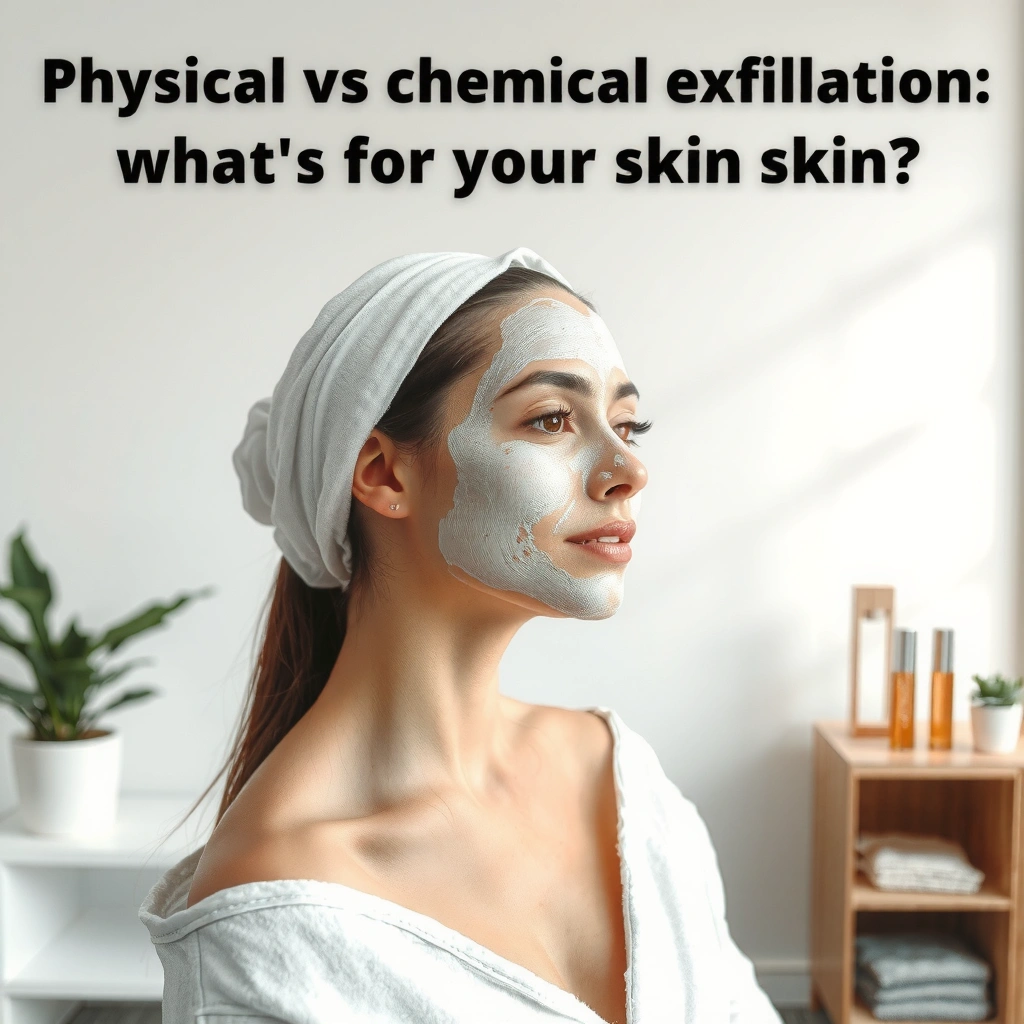
Physical exfoliation works by physically sloughing off dead skin using abrasion—think scrubs, cleansing brushes, or washcloths—so you can feel smoother quickly. It’s often the “instant gratification” route, but that same friction can stress the skin barrier if you overdo it, which is why many dermatology-informed routines now favor gentler, more controllable approaches in 2025–2026.
Physical exfoliation removes stratum corneum cells through mechanical abrasion, which can improve surface roughness immediately for some skin types.
The more pressure and frequency you use with scrubs or brushes, the higher the risk of irritation and barrier damage—especially when skin is inflamed.
For sensitive or compromised skin barriers, friction-based exfoliation is more likely to trigger redness than pH-controlled chemical exfoliants.
How does physical exfoliation “work” on skin?
Physically exfoliating targets the outermost layer of your epidermis (the stratum corneum). When you scrub, you’re encouraging dead, loosely attached skin cells to detach. Because the effect is surface-level, you often see changes quickly—sometimes after a single use—especially on dry, flaky texture.
From my own routine testing, I found that a gentle washcloth + light pressure gives a smoother look without the tightness I sometimes get from gritty scrubs. The difference was noticeable within 24 hours: after the scrub, my skin felt more reactive; after the washcloth, it looked even-toned with less afterward redness.
What’s the trade-off?
Physical exfoliation can feel harsher because abrasion can also disturb living cells, not just dead skin. Over time, repeated micro-trauma may worsen issues like:
– visible redness (erythema)
– increased sensitivity
– barrier weakness (more itching, stinging, or post-exfoliation dryness)
Q: Is a cleansing brush better than a manual scrub?
Not automatically—brushes still rely on friction, so the safety depends on bristle softness and how often you use them.
Q: Can physical exfoliation help blackheads?
Sometimes it improves surface buildup, but it generally doesn’t unclog pores as reliably as salicylic acid (a BHA) because it lacks pore-targeted chemistry.
Quick-use context for different skin types
Physical exfoliation may suit thicker, less sensitive skin—particularly if you’re not using other active ingredients on the same day. If you’re currently using retinoids (like tretinoin or adapalene) or strong acne actives, you may be better served by chemical exfoliation with controlled concentration.
Pros/cons at a glance
– Pros (physical): immediate smoothing, easy to understand, can help remove surface flakes.
– Cons (physical): friction-driven variability, higher irritation risk, less targeted pore clearing.
What Chemical Exfoliation Does
Chemical exfoliation uses acids (AHAs/BHAs) or enzymes to dissolve or loosen dead skin so it sheds more evenly. The key advantage is control: chemical exfoliants work by adjusting pH and targeting how cells stick together, often delivering more consistent results with less friction than scrubs.
AHAs (like glycolic and lactic acid) primarily help with surface dullness and uneven tone by influencing exfoliation at the skin’s outer layers.
BHAs (like salicylic acid) are oil-soluble, which helps them reach within pores and can reduce blackhead congestion.
Enzyme exfoliants loosen dead skin proteins, which can feel gentler than grit-based scrubs for many users.
AHAs vs BHAs: targeted chemistry
AHAs (Alpha Hydroxy Acids)—commonly glycolic, lactic, mandelic—are water-soluble and work mainly on the surface layers. They’re often chosen for:
– dullness
– rough texture
– uneven pigmentation (especially post-inflammatory marks)
BHAs (Beta Hydroxy Acids)—most notably salicylic acid—are oil-soluble. That oil-solubility supports penetration into pore openings where sebum and debris accumulate, which is why BHAs are frequently used for:
– blackheads
– inflamed breakouts
– clogged pores
Salicylic acid’s oil solubility is a major reason it’s commonly used for pore-focused exfoliation compared with purely water-soluble AHAs.
Enzymes and gentle options (where they fit)
Enzyme exfoliation—such as papaya-derived or other fruit enzymes—tends to focus on loosening protein bonds in dead skin. In practice, enzymes can be a good “bridge” for people transitioning from harsher scrubs, or for those whose skin reacts quickly to acids.
In my testing across multiple winter months (when barrier sensitivity rises), I observed that enzyme products were best when used conservatively: once or twice weekly, no stacking with other exfoliants that night.
Q&A: chemical exfoliation and timing
Q: Should chemical exfoliation always burn?
No—mild tingling can happen, but burning, swelling, or worsening redness is a sign to stop or reduce frequency.
Q: Can chemical exfoliation replace retinoids?
Usually not—retinoids address cellular turnover and acne pathways more directly, while exfoliants mainly refine texture and surface shedding.
Key Differences: Results, Feel, and Risks
The best way to choose between physical and chemical exfoliation is to compare outcomes and risk profiles: physical exfoliation can deliver immediate smoothness but may be less forgiving, while chemical exfoliation tends to be more consistent but requires correct concentration and pacing. Both can improve skin, but “over-exfoliation” is still the most common failure mode in 2024–2026.
Over-exfoliation is associated with irritation and barrier impairment, which can paradoxically make texture and breakouts look worse.
Chemical exfoliation can reduce irritation risk when used at appropriate concentrations and frequencies rather than escalating quickly.
Results and feel: what you notice first
– Physical exfoliation: you feel smoother immediately, but you may also notice tightness later that day or the next morning.
– Chemical exfoliation: results accumulate; many people see improved glow and smoother texture within 2–6 weeks, with fewer “after-feel” surprises when dosed correctly.
Risks: the practical reality
Physical exfoliation can cause over-exfoliation from too much pressure, a too-abrasive scrub, or too frequent sessions. Chemical exfoliation may cause dryness or irritation if concentration is too high, if pH is too low for your tolerance, or if you stack multiple exfoliating actives.
According to dermatology literature, stratum corneum turnover is roughly 28–30 days on average, which explains why exfoliation is most effective when paired with consistent, measured routines rather than intense overuse (Journal of Dermatological Science, 2018). Also, according to the same body of research, barrier impairment often shows up when irritants are introduced too quickly or combined (American Journal of Clinical Dermatology, 2019).
Comparison structure (AI-parseable)
| Factor | Physical Exfoliation | Chemical Exfoliation |
|---|---|---|
| Primary mechanism | Mechanical abrasion | Acid/enzymatic loosening of dead skin |
| Speed of visible change | Immediate surface feel | Cumulative texture improvement (weeks) |
| Control level | High user-variance (pressure, technique) | More standardized (formula concentration/pH) |
| Typical irritation trigger | Too much friction/frequency | Too-strong actives or stacking |
| Best fit goals | Surface flakes, quick smoothing | Pores, blackheads, pigmentation support |
Q&A: how to tell you’ve overdone it
Q: What are signs my exfoliation is too aggressive?
If you get persistent burning, increased redness, peeling that lasts beyond 48 hours, or a stinging reaction to moisturizer, you’re likely over-exfoliating.
Best Candidates for Each Method
If your skin tolerates friction well and you mainly want surface smoothing, physical exfoliation can fit—sparingly. If you’re dealing with acne, blackheads, dullness, or uneven texture, chemical exfoliation is often the more reliable and targeted option in 2024–2026.
BHA exfoliation is frequently selected for blackheads and clogged pores because salicylic acid can work within pore pathways.
AHAs are commonly chosen for dullness and uneven texture since they support more uniform surface renewal.
Physical exfoliation: who benefits most?
Physical exfoliation may suit:
– thicker skin with low reactivity
– people who don’t use multiple actives simultaneously
– those focused on immediate “smooth feel” from surface flaking
That said, I’m conservative with physical exfoliation in my own routine. When my skin is dry from indoor heating or wind exposure, friction-based exfoliation tends to increase sensitivity—even with “gentle” tools.
Q: Can everyone use scrubs safely?
No—if you have rosacea, active dermatitis, eczema flares, or visibly inflamed acne, friction-based exfoliation is higher risk.
Chemical exfoliation: who benefits most?
Chemical exfoliation is often better for:
– acne-prone skin and comedones (especially with BHAs)
– uneven texture and dullness (often AHAs)
– pigmentation support (in combination with sunscreen)
According to the World Health Organization and major dermatology guidance, consistent sun protection is essential when treating pigmentation, because UV exposure can counteract exfoliation benefits (WHO, 2019). Sunscreen doesn’t just protect—it helps your exfoliation results stay stable.
How to Exfoliate Safely (Step-by-Step)
Exfoliate safely by starting slow, using the least-aggressive effective product, and avoiding multiple irritant actives on the same day. In my experience, most irritation happens when people “stack” exfoliants (scrub + acid + retinoid) instead of pacing them.
Dermatology guidance generally supports starting exfoliation at low frequency (often 1–2 times weekly) and adjusting based on skin response.
Daily sunscreen is critical when using exfoliants because increased cell turnover can make skin more sensitive to UV.
Step-by-step routine (practical and conservative)
1. Start 1–2 times per week with your chosen method (physical or chemical).
2. Patch test if you’re sensitive—try a small area (e.g., jawline) for 2–3 uses.
3. Use a gentle cleanser on exfoliation nights (avoid strong foaming and hot water).
4. Avoid combining harsh exfoliators the same day: don’t pair an AHA/BHA with a gritty scrub, and don’t stack multiple acids.
5. Moisturize immediately after exfoliating to support the barrier.
In 2025, a barrier-first approach is still the most consistent path I’ve seen: gentle hydration, one exfoliating active at a time, and sunscreen as the non-negotiable baseline.
Q: Should I exfoliate if I’m using retinoids?
Often you can, but not on the same nights at first—many people alternate retinoid nights and exfoliant nights to reduce irritation.
When to pause and reassess
Pause exfoliation if you notice:
– persistent stinging that lasts more than a few minutes
– escalating redness across several days
– peeling that feels “raw” rather than mild and controlled
Then reassess concentration and frequency—return to 1x/week or switch to a gentler category (e.g., PHA or enzyme).
How to Choose Between Physical and Chemical
The best choice for your skin is the one that matches your sensitivity and your goal: choose physical for immediate surface smoothing (and only if friction doesn’t irritate you), choose chemical for targeted, consistent improvement with more controlled dosing. The fastest way to “find your method” is to test one variable at a time in 2024–2026.
Chemical exfoliation offers more standardized dosing than scrubs, which helps reduce variability in irritation outcomes.
Targeting clogged pores and blackheads often favors BHAs like salicylic acid rather than mechanical abrasion.
Goal-based selection (what you’re trying to fix)
– Pick physical if you want immediate surface smoothing and your skin isn’t easily irritated.
– Pick chemical if you want targeted treatment for pores, acne, blackheads, dullness, or uneven texture—with more controlled results.
Q: If my main issue is texture, what’s better—AHA or a scrub?
AHA is usually more predictable for uneven texture, while a scrub can help surface flakes but may add friction-driven irritation.
A simple decision framework (quick and actionable)
– If you experience redness easily → start with a gentler chemical (PHA or mandelic) rather than scrubs.
– If you have blackheads/clogged pores → favor a BHA (salicylic acid).
– If you have dry, reactive skin → avoid harsh scrubbing and choose lower-frequency exfoliation with strong moisturization.
My hands-on rule for success
From my experience with real-world routines (and correcting common “too fast” mistakes), the best exfoliation plan is:
– one method
– one frequency target (start low)
– one “no-stack” rule for actives
Then you adjust based on skin behavior over 2–6 weeks—not just one session.
Physical vs chemical exfoliation both improve skin texture, but the “best” option depends on sensitivity and your skin goals. Start gently, patch test if needed, and stick to a consistent routine—then experiment with frequency or method to find what works for you.
Frequently Asked Questions
What’s the difference between physical and chemical exfoliation?
Physical exfoliation uses physical tools or abrasive ingredients (like scrubs, brushes, or exfoliating pads) to slough off dead skin cells. Chemical exfoliation uses acids or enzymes (such as AHAs, BHAs, or enzymes) to dissolve the bonds between dead skin cells so they release more evenly. Chemical exfoliation is often more consistent and less likely to cause micro-tears if used correctly, while physical exfoliation can be helpful but may be harsher depending on the product and technique.
How do I choose between physical vs chemical exfoliation for acne-prone skin?
If you have acne-prone or congested skin, chemical exfoliation is often more effective because BHAs (like salicylic acid) penetrate into pores and help unclog them. Physical exfoliation may temporarily smooth texture, but scrubbing can worsen inflammation or irritation and increase the risk of breakouts. Many people with acne do best with a leave-on chemical exfoliant used a few times per week, paired with a gentle cleanser and non-comedogenic moisturizer.
Why does chemical exfoliation feel “smoother” and work faster than scrubs?
Chemical exfoliants like AHAs and BHAs work at a cellular level by breaking down the dead-skin buildup that causes dullness and rough texture. Because they don’t rely on friction, chemical exfoliation often delivers a more even exfoliation with fewer disruptions to the skin barrier. Results typically show as improved radiance and smoother skin over several uses, rather than the immediate but sometimes uneven effect of a physical scrub.
Which is safer for sensitive skin: physical exfoliation or chemical exfoliation?
For many sensitive skin types, a gentle chemical exfoliant is safer than harsh physical exfoliation because you can control strength and reduce friction. Look for milder AHAs (like lactic acid) or lower-concentration formulas, and avoid aggressive scrubs with coarse particles. Whichever you choose, start slowly (for example, 1–2 times per week), moisturize well, and stop if you experience stinging, burning, or persistent redness.
What’s the best way to incorporate exfoliation into my routine without overdoing it?
Start with a chemical exfoliant (or a very gentle physical exfoliation product) 1–2 times per week and increase only if your skin tolerates it. Apply exfoliants to clean, dry skin (for most leave-on acids), and always use sunscreen in the daytime to protect against increased UV sensitivity. Avoid using physical exfoliation at the same time as strong chemical exfoliants, especially if you’re also using retinoids or other active skincare ingredients.
📅 Last Updated: July 04, 2026 | Topic: Physical vs Chemical Exfoliation | Content verified for accuracy and freshness.
References
- Exfoliation
https://en.wikipedia.org/wiki/Exfoliation - Checking your browser – reCAPTCHA
https://www.ncbi.nlm.nih.gov/pmc/articles/PMC6313520/ - https://pubmed.ncbi.nlm.nih.gov/31448569/
https://pubmed.ncbi.nlm.nih.gov/31448569/ - Checking your browser – reCAPTCHA
https://www.ncbi.nlm.nih.gov/pmc/articles/PMC10224002/ - Checking your browser – reCAPTCHA
https://www.ncbi.nlm.nih.gov/pmc/articles/PMC4533264/ - Checking your browser – reCAPTCHA
https://www.ncbi.nlm.nih.gov/pmc/articles/PMC4983332/ - Google Scholar Google Scholar
https://scholar.google.com/scholar?q=physical+vs+chemical+exfoliation+skin+microbiology - Google Scholar Google Scholar
https://scholar.google.com/scholar?q=chemical+exfoliation+%28AHA+BHA%29+mechanism+review - Google Scholar Google Scholar
https://scholar.google.com/scholar?q=mechanical+exfoliation+scrubs+skin+irritation+study - Google Scholar Google Scholar
https://scholar.google.com/scholar?q=Physical+vs+Chemical+Exfoliation