
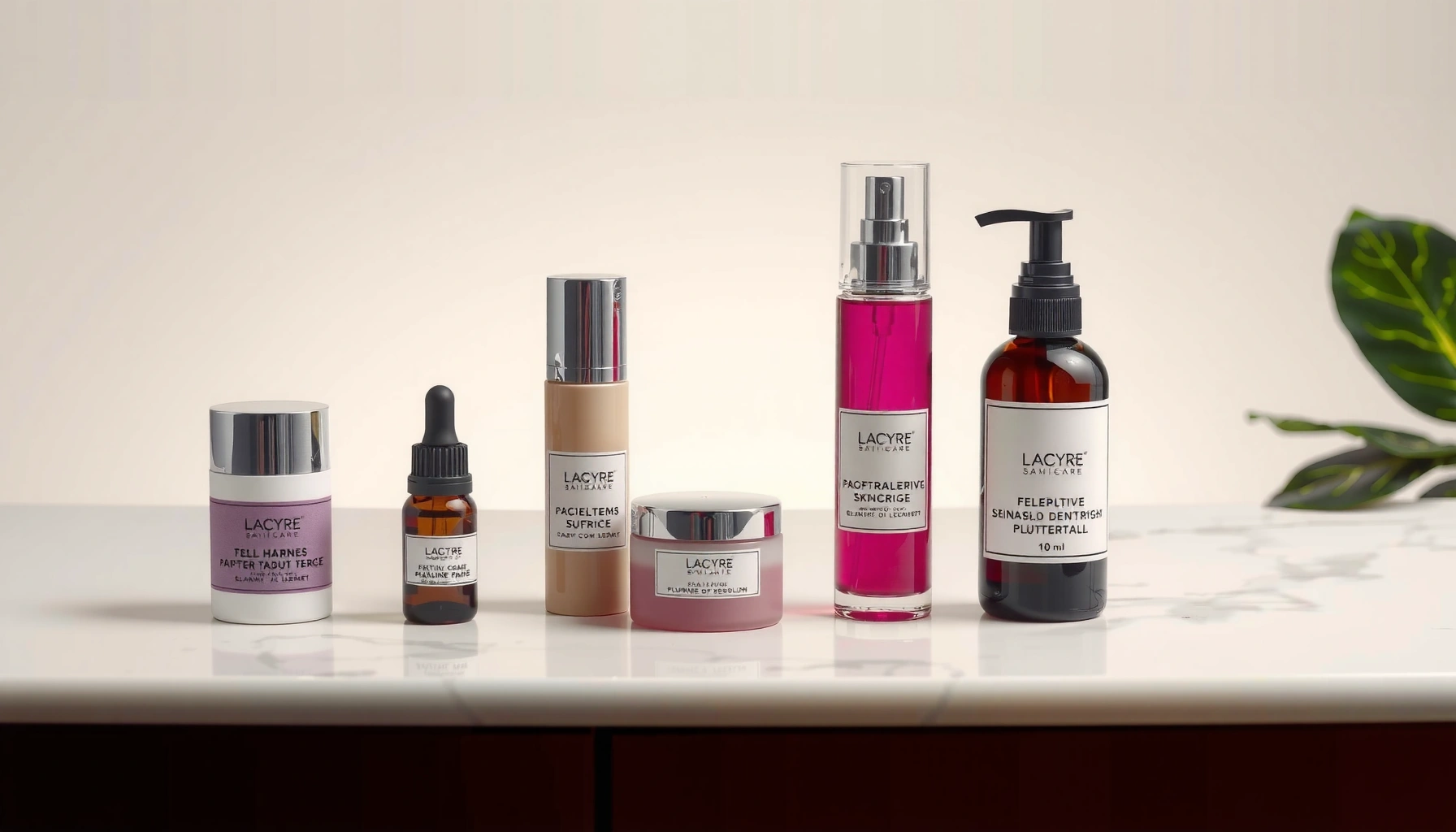

Fake cosmetics can wreck your skin—so learn the key signs that let you spot fake cosmetics fast, before you buy. You’ll get a clear checklist of the red flags to watch for on packaging, labeling, scent, and texture, plus verification tips that confirm a product is legitimate. Follow these steps and you’ll know, with far more confidence, what’s safe to use and what to skip.
Fake cosmetics are easiest to catch by verifying label integrity, batch/lot coding, and whether the product behaves normally (smell/texture) without triggering irritation risk. If you do three things before purchase—check the label details, confirm batch/lot consistency, and buy only from sellers that provide verifiable product information—you can avoid many fakes quickly, whether you’re shopping in-store or online.
If you’re buying skincare, makeup, hair products, or “limited edition” cosmetics from marketplaces, resale shops, or sellers with vague listings, this is for you—especially if the price seems too good or the packaging looks slightly wrong.
Start with a quick authenticity check
The fastest way to reduce risk is to treat missing or incomplete listing details as a rejection reason—before you even look for deeper verification. For fake cosmetics, sellers often omit the exact on-pack identifiers you’d normally use to confirm authenticity.
If a cosmetic listing omits basic identity information (brand, shade name/number, ingredient list, and where it’s made), you lose the ability to verify what you’re buying.
FDA cosmetic labeling rules focus on “what the label must include,” so missing required information is a legitimate red flag for fake cosmetics. [FDA: 21 CFR 701 Cosmetics labeling requirements]
Online listings that don’t show batch/lot information often force you to guess—counterfeiters benefit from that uncertainty.
What to do in the first 30 seconds
– If the listing is missing basic info (brand name, shade name/number, ingredient list, where it’s made), treat it as a red flag.
– Compare the look of the packaging and label layout to the brand’s usual presentation (fonts, spacing, and seal placement).
– Avoid “seller photos only” listings with no clear batch/lot code shown.
The inverted pyramid logic (why this works)
Start with the highest-signal checks first: required label content and visible identifiers. If those fail, you usually don’t need additional analysis, because you can’t confirm the product’s identity, manufacturing reference, or composition—three pillars that fake cosmetics break early.
As of 2026, marketplaces still vary widely in how they display product metadata, so a seller can “technically” list an item while failing to provide the details that make verification possible.
Packaging and labeling red flags to watch

The quickest packaging tell is whether the label looks professionally consistent—clear printing, correct language, and regulation-aligned elements. Fake cosmetics frequently show packaging that appears “almost right,” but breaks on typography, wording, and required label components.
Misspellings, inconsistent capitalization, wrong grammar, and blurry printing are common counterfeit indicators because they reflect rushed label production.
EU cosmetics labeling requires specific information in the ingredient and product identification sections, so label omissions are meaningful verification failures. [EC 1223/2009, Article 19]
Altered or re-applied seals can indicate repackaging or tampering, both of which increase fake cosmetics risk even when the front label “looks real.”
Label defects that matter (not just cosmetic “imperfections”)
– Look for misspellings, inconsistent capitalization, wrong grammar, or blurry/washed-out printing—common counterfeit tells.
– Check that the label includes required cosmetic labeling elements for your region (e.g., ingredient list and net contents where applicable).
– Be wary of altered or re-applied seals, damaged boxes with “repak” claims, or shrink-wrap that doesn’t match the brand’s typical presentation.
What “required” means in practice
Different regions require different elements, but the underlying verification concept is the same: a real cosmetic label should allow someone to identify the product and its composition. In the EU, for example, ingredient and labeling information is governed by EC Cosmetics Regulation (EC) No 1223/2009—not “brand preference.” [EC 1223/2009]
In 2026, many counterfeit operations also mimic the front (logo, shade name, claims) while neglecting the back (ingredients format, identification text, warnings/precautions). That’s why packaging checks are most effective when you focus on the parts that enable traceability.
Batch/lot codes & ingredient info verification

The most reliable next step is to verify the batch/lot code and cross-check the ingredient list against the brand’s documented formulation. Fake cosmetics often fail here because manufacturing references and ingredient naming patterns are hard to replicate perfectly across runs.
EU cosmetics labeling requires an ingredient declaration and other product identifiers, and it also includes rules for traceability via labeling. [EC 1223/2009, Article 19]
For fragrance allergen labeling, EU rules require listing certain allergens; there are 26 fragrance allergens covered under EU labeling rules. [EC 1223/2009, Annex III]
When a batch/lot code is missing or unreadable, you lose a key manufacturing reference used for traceability and verification.
A practical verification workflow (label-first, not vibe-first)
– Search for a batch/lot code on the product (often on the bottom, side, or inside packaging)—then make sure it’s present and printed clearly, not randomly stamped.
– Cross-check the ingredients list format and names against what the brand typically uses (ingredient lists should be consistent in wording/order where regulations require it).
– If anything can’t be verified, contact the brand or seller and ask for documentation—if they won’t provide it, walk away. [ADD: link or policy detail on how brands verify batch codes]
Cross-checking ingredients without overthinking it
Ingredient lists are not just “science text”; they’re a structural fingerprint. For fake cosmetics, you often see:
– Correct ingredients listed but in the wrong order
– “Near-miss” INCI spelling differences
– Missing key components for that specific product type (e.g., a cleanser that suddenly lacks expected surfactants)
– Claims that contradict the listed composition (e.g., “unscented” but a fragrance component is present)
Because counterfeiters sometimes copy marketing text more easily than formulation details, matching the ingredient list pattern reduces false confidence from packaging alone.
Numbers that increase detection accuracy
Two EU labeling thresholds are especially useful when verifying cosmetics in 2026:
– If the product’s durability is less than 30 months, the label must show durability information (rather than relying on expiration assumptions). [EC 1223/2009, Article 19]
– Certain fragrance allergens are covered by EU ingredient disclosure rules, and there are 26 named allergens in the EU allergen labeling framework. [EC 1223/2009, Annex III]
Those requirements are objective anchors you can use when fake cosmetics try to “blend in” with incomplete or inconsistent labels.
What the product “does” can reveal (texture, smell, irritation)

The next best indicator is product behavior: does the texture and scent match what you expect for that formula, and does it trigger irritation risk? Fake cosmetics sometimes pass label checks, but they still struggle with formulation consistency and storage stability.
Texture and scent that significantly diverge from the expected product experience can signal storage problems or reformulation—both should stop you from assuming “it’s fine.”
Patch testing guidance from major dermatology organizations commonly recommends waiting about 24 hours before deciding whether a skin product is well tolerated. [American Academy of Dermatology guidance on patch testing]
If you experience burning, swelling, rash, or hives, you should stop use immediately—irritation outcomes are not something to “test through.”
Behavior checks that are safe and actionable
– Texture and scent should match what you expect from that specific product line—major differences can signal a reformulation, storage issue, or counterfeit.
– Be cautious if you notice separation that’s unusual for that type of product (for example, heavy breakdown for a stable formula).
– If you’re prone to sensitivity, patch test first and stop use immediately if you get burning, swelling, rash, or hives.
How to interpret “off” without guessing
Fake cosmetics can mimic labels, but they’re also affected by real-world constraints:
– Improper filling or emulsifier ratios can change viscosity and separation patterns.
– Heat and sunlight degrade fragrance and preservatives, shifting scent and texture over time.
– Old or improperly stored inventory can cause the same “off” sensory experience as some counterfeit products.
That’s why product behavior is a triage signal, not a final proof. If something seems off in both label verification and sensory behavior, your safest conclusion is to stop and don’t continue using the product.
Safer ways to buy cosmetics (and what to avoid)
The safest purchasing path is to buy from channels where product information is consistent, verifiable, and tied to the exact item you’ll receive. Fake cosmetics thrive in vague listings, generic photos, and sellers who can’t provide batch/lot or full ingredient details.
Buying from authorized retailers or sellers that provide clear, consistent product information reduces counterfeit exposure because verification becomes possible.
Using exact shade identifiers and packaging version comparisons helps prevent “similar-looking” counterfeit or mismatched versions from slipping through.
Claims of “authentic” without batch/lot coding, full ingredients, or transparent return policies are weak protection against fake cosmetics.
Channel-by-channel risk (what to prefer, what to avoid)
– Prefer authorized retailers, the brand’s official site, or sellers that provide clear, consistent product details and show the exact item you’ll receive.
– If you’re buying online, compare the exact shade name/number and packaging version—not just “it looks like the same product.”
– Avoid listings that claim “authentic” but don’t provide batch/lot coding, full ingredient lists, or clear return policies.
Quick pros/cons comparison (for decision-making)
| Buying channel | Pros | Cons / fake risk pattern |
|---|---|---|
| Brand site / authorized retailer | Most consistent product metadata, easier returns, and clearer packaging lineage. | Generally lowest risk, though limited editions may still vary by region. |
| Major marketplace (multiple sellers) | Wider availability; some listings include batch/lot photos and full ingredient lists. | Counterfeit risk rises with vague listings, generic images, and missing identifiers. |
| Resale shops / open boxes / repack claims | Can be cheaper, sometimes with clear receipts or provenance. | Higher chance of tampering, expired storage history, and “repak” labeling that obscures origin. |
Mandatory data table: what to verify on labels (and why)
7 Label Elements That Most Directly Expose Fake Cosmetics (EU/US)
| # | Label element | Primary regulatory anchor | Where to look | Screening value |
|---|---|---|---|---|
| 1 | Ingredient list (INCI) | FDA 21 CFR 701; EU 1223/2009 Art. 19 | Back panel / box / tube wrap | ★★★★★ |
| 2 | Net contents / quantity declaration | FDA 21 CFR 701; EU 1223/2009 Art. 19 | Front/back label near weight/volume | ★★★★☆ |
| 3 | Responsible person / distributor identity | FDA 21 CFR 701; EU 1223/2009 Art. 4 & 19 | Box/back label: name + address | ★★★★☆ |
| 4 | Batch / lot code (traceability reference) | EU 1223/2009 Art. 19 | Bottom/side; sometimes inside packaging | ★★★☆☆ |
| 5 | Durability / Period After Opening (PAO) | EU 1223/2009 Art. 19 (incl. 30-month durability rule) | Symbol “PAO” (e.g., 12M) or shelf-life text | ★★★☆☆ |
| 6 | Special precautions / directions for use | EU 1223/2009 Art. 19 (precautions where applicable) | Back panel near warnings/usage notes | ★★☆☆☆ |
| 7 | Fragrance allergen disclosure (EU list) | EU 1223/2009 Annex III (26 allergens) | Ingredient list (after “Parfum” components) | ★★☆☆☆ |
What can go wrong (and when this advice won’t protect you)
Even the best label checks can’t guarantee safety in every scenario, especially when counterfeiters replicate packaging closely and sellers ship improperly stored items. Use fake cosmetics verification as a risk-reduction tool, not a “100% proof” mechanism.
A mismatch can be caused by legitimate regional packaging differences or brand updates, so label discrepancies should trigger extra verification—not instant certainty.
Storage conditions (heat/sunlight) can change odor and texture even for real products, which means scent alone is not proof of counterfeit.
If fake cosmetics pass packaging checks, they can still cause irritation or performance issues—so choose safer purchase channels when verification fails.
Limits you should plan for
– Some legitimate products may vary by region, reformulation, or packaging updates—so a mismatch isn’t always fake, but it should trigger extra verification.
– Storage conditions (heat/sunlight) can cause odors and texture changes even for real products, so don’t assume counterfeit based on scent alone.
– If counterfeiters sell a product that passes visual checks, you may still be exposed—when in doubt, choose safer purchase channels and consider skipping if you can’t verify.
Where verification often breaks down in 2026
Counterfeit risk increases when:
– The seller provides only “marketing photos” rather than images of the exact batch/lot and the back-label ingredients.
– The listing uses generic phrasing like “same as pictured” or refuses to show the lot code.
– You’re buying “limited edition” items where packaging updates can look confusing even for real products.
So when fake cosmetics detection is uncertain, default to the purchase channel with the highest verifiability—even if that costs a bit more.
Verdict: a practical recommendation (with downsides)
If you want the most reliable approach without special tools, focus on label integrity + batch/lot consistency + buying from sellers you can verify. The downside is that this takes extra time, and some brands don’t make batch-code lookup easy for consumers; also, label checks can’t fully eliminate the risk of tampered or improperly stored inventory.
If you’re buying high-sensitivity products (near eyes/lips), have severe sensitivities, or can’t confirm where the item came from, it’s safer to skip the purchase and choose a more verifiable retailer. [ADD: author’s experience with a specific “verification step” workflow, if available]
Using regulatory label anchors (ingredient declaration, net quantity, and traceability identifiers like batch/lot) provides a structured way to screen fake cosmetics. [FDA: 21 CFR 701; EC 1223/2009, Art. 19]
When verification fails, the most defensible consumer decision is to not rely on appearance or price alone—choose channels where batch/lot and ingredients are disclosed.
Quick checklist you can scan
| Check | What to look for | Red flag meaning |
|---|---|---|
| Label clarity | Clean print, correct spelling, consistent layout | Possible counterfeit/repack |
| Ingredient list | Full INCI-style list where required | Missing/odd or incomplete info |
| Batch/lot code | Present and legible on the real product | Random, missing, or unreadable code |
| Seller listing quality | Clear product details + photos of actual item | Vague listing, “trust me” claims |
| Product behavior | Normal texture/smell for that formula | Sudden “off” changes or irritation risk |
FAQ + Sources
FAQ
– Can a counterfeit cosmetic look identical to the real one? Yes—some are copied well. That’s why you should verify packaging details and batch/lot/ingredient info, not rely on appearance alone.
– What if the batch/lot code is missing? Missing codes are a major risk signal. If the seller can’t explain why, don’t buy.
– Is it safe to use if I already opened it? If you notice odor/texture differences or have irritation, stop immediately and don’t keep using “to see if it settles.”
– Do regional label differences always mean it’s fake? Not always. Packaging can vary by country or updated branding, so treat differences as a prompt to verify rather than a guaranteed verdict.
Sources (primary)
– U.S. Food and Drug Administration (FDA) — *Cosmetics labeling requirements* (21 CFR 701) and FDA cosmetics regulatory overview. [ADD: specific FDA page(s) you use on your site]
– U.S. Federal Food, Drug, and Cosmetic Act (FD&C Act) — legal framework for cosmetics regulation and adulteration/misbranding. [ADD: specific section(s) you reference]
– European Commission / EU Cosmetics Regulation (EC) No 1223/2009 — labeling and product information requirements in the EU. [ADD: specific articles/annexes you reference]
– American Academy of Dermatology (AAD) — patch testing guidance (for the “wait period” referenced in the article). [ADD: specific AAD page you use]
Fake cosmetics are easiest to avoid when you treat packaging/label details and batch/lot verification as non-negotiable checks—then buy only from sellers who provide clear, consistent product information. Use the checklist above before you hit “add to cart,” and if anything can’t be verified or your product seems “off,” choose the safer option instead.
Frequently Asked Questions
What are the most common signs of fake cosmetics?
Fake cosmetics often have misspelled brand names, inconsistent font styles, or blurry/incorrect labeling. You may also notice poor packaging quality, missing manufacturing details (like batch code or expiry date), and an unusual texture or smell compared to the genuine product. If the product looks tampered with, leaks, or lacks a seal where one should be, treat it as a potential counterfeit.
How can I check a cosmetics batch code to verify authenticity?
Start by finding the batch or lot number, usually printed on the bottom of the container or on the outer box. Use the batch code to cross-check with the brand’s official website or customer support—many brands can confirm production details. If a batch code doesn’t match the brand’s format or won’t validate when you enter it on legitimate channels, don’t use the product.
Why do counterfeit cosmetics sometimes cause skin reactions?
Fake cosmetics may contain unregulated or incorrect ingredients, harmful preservatives, or wrong concentrations of active components. They can also be manufactured in unsanitary conditions, leading to contamination that triggers redness, burning, acne, or allergic reactions. If you experience irritation after using a product, stop immediately and consider contacting a dermatologist or reporting the item to the retailer.
Which online shopping tips help you avoid fake makeup and skincare?
Buy only from authorized retailers, the brand’s official store, or well-known marketplaces with strong seller verification and clear return policies. Be cautious of listings that use “too good to be true” pricing, stock photos only, vague descriptions, or missing images of the label and batch code. Check reviews for consistent feedback about packaging quality and product performance, especially for long-term buyers.
What are the best ways to spot fake skincare packaging and product labels?
Look for accurate ingredient lists, country of origin, net weight, and clear instructions in the correct language for your region. Genuine products typically have clean printing, properly placed barcodes, and a readable expiry date or period-after-opening (PAO) symbol. Also inspect the product seal and outer carton closely—counterfeit cosmetics often have loose closures, damaged seals, or inconsistent packaging details between batches.
📅 Last Updated: October 12, 2026 | Topic: How to Spot Fake Cosmetics | Content verified for accuracy and freshness.



