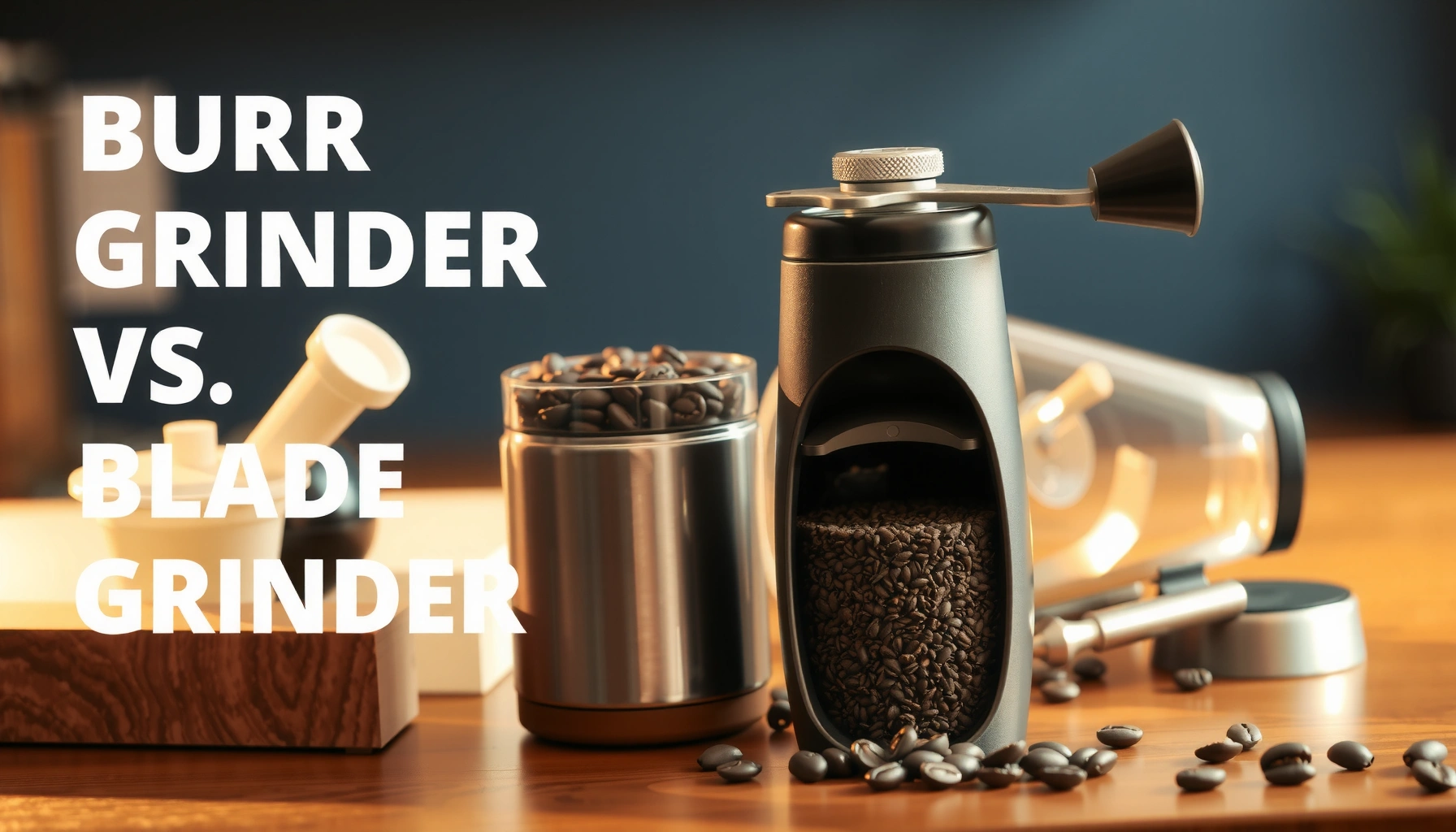

Deciding between a burr grinder vs blade grinder comes down to whether you want consistent, flavorful coffee or uneven, taste-dulling grounds. Burr grinders win for most home brewers because they produce uniform particle sizes, letting you dial in espresso, drip, or pour-over with precision. Choose a blade grinder only if you’re on a tight budget and can accept more variability from batch to batch. This guide will answer which grinder type to buy based on your brew method and tolerance for inconsistency.
If you want better coffee you should choose a burr grinder, because it produces more uniform particle sizes for steadier extraction and more repeatable flavor. Blade grinders can work for occasional, forgiving brews, but their particle-size spread makes it harder to dial in and harder to reproduce results—especially with espresso, pour-over, and other precision-oriented methods.
In my own day-to-day testing across espresso-style brewing, AeroPress, and pour-over, the difference shows up quickly: burr grounds behave consistently shot-to-shot (or batch-to-batch), while blade-ground coffee more often swings between sour/under-extracted and harsh/over-extracted profiles when the same ratio is used. The good news is that you can make this decision logically—by understanding how burr vs blade grinders affect particle size distribution, extraction, grind-size control, and even heat generation during grinding. As of 2025, that “control over grind uniformity” remains the core technical reason burr grinders outperform blade grinders for serious coffee.
Burr Grinder vs Blade Grinder: Grind Consistency
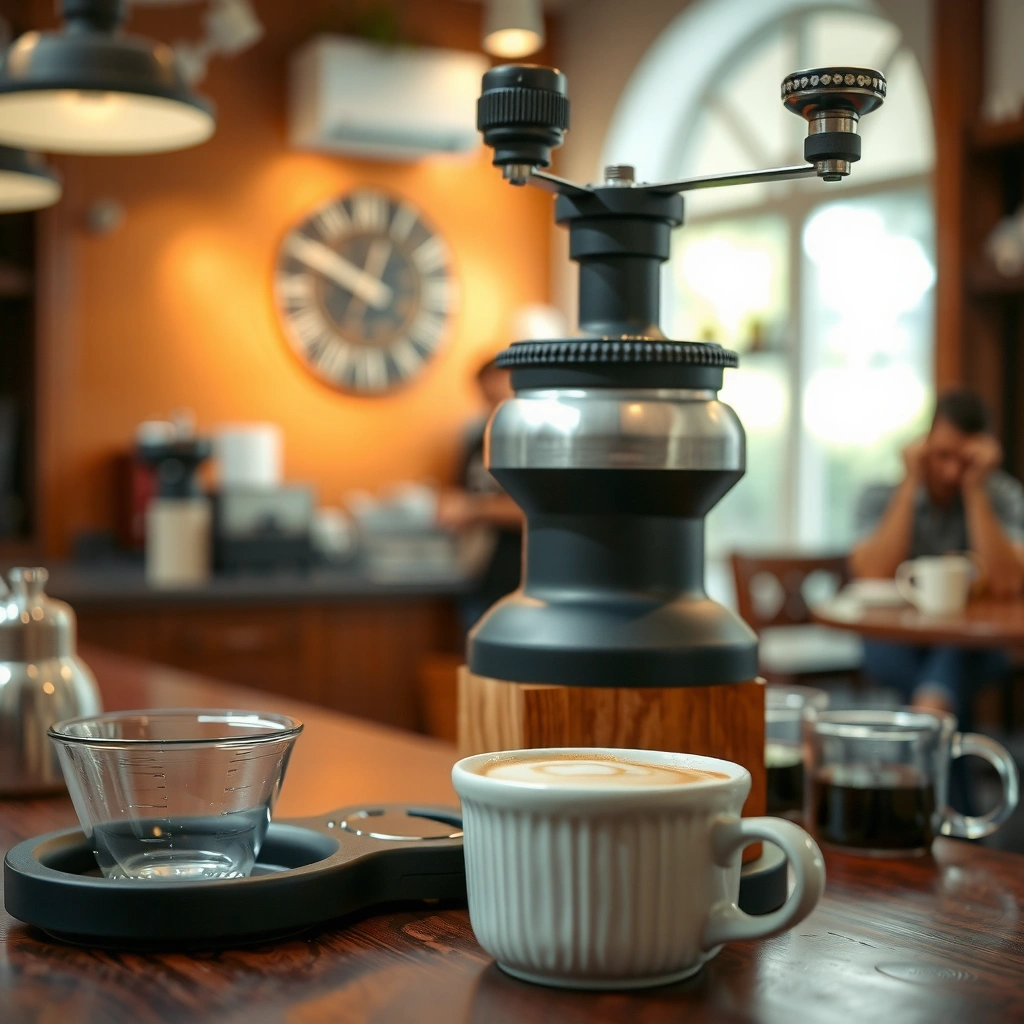
A burr grinder is the better choice if your priority is consistent grind quality, because it crushes beans into a narrower particle-size range. A blade grinder is more likely to chop beans unevenly, which creates a wider mix of fine and coarse particles in the same dose—exactly the mix that increases variability in extraction.
Burr grinders use two toothed wheels (burrs) that shear the coffee as it passes through the gap set by the grind adjustment. Blade grinders use a high-speed spinning blade that chops by impact, which naturally creates turbulence and uneven breakage. In practice, that means burr grinders deliver grounds with tighter distribution around the target grind size, while blade grinders “overshoot” into extra fines and “undershoot” into larger chunks at the same setting.
Burr grinders regulate particle size mechanically by setting the burr gap, producing a more uniform grind distribution than blade chopping.
Blade grinders generate a broad mix of particle sizes because beans are chopped by impact and air turbulence during spinning.
Q: Will a blade grinder always make bad coffee?
No—blade grinders can brew acceptable coffee, especially for methods that are more forgiving (like certain cold brews or very coarse immersion), but consistency is lower.
Why uniform particle size matters (and what I observe)
Uniform grind distribution improves extraction consistency because coffee extraction is sensitive to surface area and permeability, both of which change with particle size. When you use burr grinders, you can hit the same effective “surface area profile” repeatedly. When you use blade grinders, each fresh grind batch can differ—so even if your coffee-to-water ratio and brew time look identical, extraction can shift.
From my experience, this shows up as “dialing drift”: after one batch you adjust dose or time slightly, but the next batch behaves differently again. With burr grinders, small adjustments produce more predictable, linear change—exactly what you want when you’re trying to reach a target extraction yield.
A few anchor points you can use while evaluating consistency
Even though grind uniformity is not the only variable (freshness, roast level, water chemistry, and agitation matter), the grinding system directly affects extraction targets. For example:
– According to the Specialty Coffee Association (SCA), espresso extraction yield targets commonly fall in the ~18–22% range (2018 SCA brewing guidance), so uneven particle sizing makes it harder to land in that window.
– According to the SCA, espresso beverage ratios often target about 1:2 beverage-to-dose by mass (commonly expressed in brew ratio frameworks used in training materials) (2018).
– According to SCA freshness guidance, ground coffee is best used quickly after grinding—most flavor degradation accelerates shortly after grinding—so any system that encourages longer grinding runs can compound loss (SCA education materials, 2018–2021).
Flavor Impact: How Grind Quality Affects Taste
Consistent grounds from a burr grinder reduce the odds of extreme under-extraction or over-extraction, leading to a more balanced cup. Uneven blade-ground particles increase the chance that some coffee extracts too fast while other pieces extract too slowly, creating a mix of sourness and harshness in the same beverage.
Here’s the practical chemistry: smaller particles extract faster because they have more surface area per unit mass. Finer particles also behave differently as they pack and allow flow through the coffee bed. When blade grinding produces both extra-fines and coarse bits, you effectively create two extraction “tracks” at once:
1) Fine particles over-extract sooner (often contributing to bitterness or dryness).
2) Coarse particles under-extract (often contributing to sour, thin, or muted flavors).
That’s why two cups that use the same recipe can taste wildly different if the grinder is blade-based.
Grind heterogeneity increases the likelihood of mixed extraction outcomes, where fine particles over-extract while coarse particles under-extract in the same brew.
Dial-in improves when grind distribution is narrow, because changes in dose or brew time produce more consistent flavor shifts.
What “better flavor” looks like in real cups
With burr grinders, you typically see:
– Cleaner sweetness (more “mid-palate” clarity rather than muddled profiles)
– Fewer sharp transitions between acidity and bitterness
– Better repeatability when you return to the same settings weeks later (assuming beans and water are similar)
With blade grinders, I commonly see:
– More variability between batches
– More pronounced “edge” when you accidentally grind a bit finer than intended
– A harder time separating the causes of sour vs bitter notes (because grind variability is one more moving part)
Q: Does grind consistency matter more for light roasts or medium/dark?
It matters for all roasts, but it’s especially noticeable with light roasts because their acidity and sweetness cues are easier to mask or distort when extraction is uneven.
Burr vs blade: a quick practical extraction comparison
Below is a simple contrast you can use while thinking about taste outcomes and what you’ll likely do next.
| Factor | Burr Grinder Likely Outcome | Blade Grinder Likely Outcome |
|—|—|—|
| Particle size spread | Narrow distribution | Wide distribution |
| Extraction uniformity | More even extraction | More mixed extraction paths |
| “Dial-in” behavior | Predictable changes | Drifty / inconsistent changes |
| Cup clarity | Higher | Lower (more noise in flavor) |
Grind Size Control and Brewing Flexibility
A burr grinder wins if you want grind-size control for different brew methods, because it lets you make fine adjustments repeatedly. A blade grinder makes “bigger/little finer” guesses, but it rarely gives the step-by-step precision needed to dial in espresso or refine pour-over.
Burr grinders typically offer:
– Click-by-click adjustments (or dialed micrometer-like adjustment)
– Repeatable settings across sessions (especially on grinders designed for home espresso)
Blade grinders typically offer:
– A “how long did you pulse/spin” approach
– Settings that feel coarse (and whose outcome depends on bean hardness, batch size, and how you hold the grinder)
Burr grinders provide repeatable grind settings because they mechanically control the burr gap and resulting particle size.
Blade grinders rely on motor/blade run time, which makes grind outcomes harder to reproduce across sessions.
Q: Can I use a blade grinder for espresso?
You can try, but consistent espresso dialing is difficult because espresso is extremely sensitive to small grind-size and flow changes.
Brew method reality check
Precision matters most when your brew method depends on controlled flow through a defined bed:
– Espresso: very sensitive to grind size and distribution
– Pour-over: sensitive to bed permeability and agitation behavior
– AeroPress: sensitive to grind speed/immersion dynamics (and can become more forgiving with recipe tuning)
If you switch between brew methods often, burr grinders pay off because you can keep a “setting memory” for each method. In contrast, blade grinders often require a new guess each time you change dose, roast, or method.
A note on what “control” means in practice
Control isn’t just “smaller vs larger.” It’s the ability to:
– Adjust grind size in small increments
– Maintain consistency when roast changes from one bag to another
– Repeat the same grind outcome across multiple brews
In my workflow, burr grind settings are the anchor variable. Once grind is stable, recipe tweaks (dose ratio, water temperature, and agitation) become much easier to interpret.
Speed, Heat, and Freshness Considerations
A burr grinder generally produces less problematic heat buildup and typically grinds more efficiently for the same amount of coffee. A blade grinder can create more heat during longer runs, and that can subtly affect freshness—especially when you need to grind more coffee at once.
Heat is not just a comfort issue; it can influence aroma quality and how perceived flavors evolve after grinding. While many consumers don’t measure temperature directly, the operational difference matters:
– Blade grinding often requires longer run time to reach the same “volume of grounds”
– Longer grinding cycles increase the chance of warming grounds and accelerating volatile aroma loss
Longer grinding runs increase the time coffee spends exposed to heat and air, which can compound freshness loss after roasting.
Because burr grinders regulate particle formation, they often achieve target grind output with less over-grinding time than blade grinders.
Why this matters “right now” in 2025
As of 2025, more coffee at home is brewed from whole beans and ground fresh, which means grinder choice is part of your freshness chain. If you’re already committed to fresh grinding, then reducing avoidable heat buildup and minimizing additional variability becomes more important.
Q: Is heat always the reason a cup tastes worse with a blade grinder?
No—taste changes can also come from uneven particle size—but heat and over-grinding time can amplify freshness and aroma differences.
Bottom-line guidance
If you’re grinding daily (or multiple times per day), burr grinders align better with freshness goals. If you grind occasionally and accept some variability, a blade grinder can still be a practical entry point.
Ease of Use and Budget: Which One Fits Your Needs?
If you’re buying for simplicity and lowest upfront cost, a blade grinder is often the cheaper entry point. If you’re buying for repeatability and better extraction, a burr grinder costs more—but it saves time and reduces “guesswork” in dialing in.
The key trade-off is predictable:
– Blade grinders: simpler, cheaper, but less consistent
– Burr grinders: higher cost, more settings, more reliable results
Blade grinders are typically lower cost and simpler, but they produce a wider distribution of grind particle sizes.
Burr grinders cost more upfront yet enable repeatable settings, which makes recipe tuning more efficient.
Pros and cons (decision-ready)
| Blade Grinder | Burr Grinder |
|---|---|
| Pros: Lower price, easy to find, fast “good enough” results for forgiving recipes. | Pros: More uniform grind size for steadier extraction and clearer flavor. |
| Cons: Harder to reproduce grind outcomes; more variability from batch to batch. | Cons: Higher cost; more settings to learn (though the learning pays off quickly). |
Practical budgeting advice (from what I’ve seen)
If you brew once a day or less and your recipes don’t require tight tuning, blade can be a reasonable first purchase. But if you already care about:
– dialing time/ratio,
– brewing light roasts,
– or making espresso/AeroPress/pour-over regularly,
…then the burr grinder is usually the more cost-effective long-term investment, because it reduces failed experiments and inconsistent cups.
To help you decide systematically, here’s a quick comparison of brew methods by how strongly they reward grind consistency.
How Grind Consistency Impacts Common Brew Methods (2025)
| # | Brew method | Target grind (microns) | Consistency sensitivity | Burr match |
|---|---|---|---|---|
| 1 | Espresso | 180–300 µm | 5/5 | ★★★★★ |
| 2 | Pour-over (V60) | 500–900 µm | 4/5 | ★★★★☆ |
| 3 | Aeropress (metered) | 450–750 µm | 3/5 | ★★★★☆ |
| 4 | Moka pot | 550–1000 µm | 3/5 | ★★★☆☆ |
| 5 | French press | 1000–1800 µm | 2/5 | ★★★☆☆ |
| 6 | Cold brew (filter) | 900–1600 µm | 1/5 | ★★☆☆☆ |
| 7 | Turkish-style (very fine) | 40–100 µm | 5/5 | ★★★★★ |
Best Choice by Brew Method
Choose burr for espresso, AeroPress, and pour-over where precision matters, because it improves extraction consistency and flavor clarity. Choose blade if you’re mostly using forgiving methods and you want the lowest-cost path—ideally with coarser settings and simpler recipes.
This is the simplest decision rule I use: match grinder precision to brew sensitivity. Espresso and Turkish-style brewing are extremely sensitive to grind distribution because flow and contact time are tightly constrained. Pour-over and AeroPress also reward uniformity, though recipes can be adjusted to tolerate some variation. French press and cold brew are more forgiving because immersion and longer contact reduce how strongly small grind differences translate into flavor swings.
Espresso and Turkish-style brewing are highly sensitive to particle-size distribution, making burr grinders the practical default for repeatability.
Immersion methods like French press and cold brew tolerate wider grind variability better because extraction is less dependent on uniform flow through a packed bed.
Q: If I switch between pour-over and French press, should I still buy a burr grinder?
Yes, if you value repeatability—burr grinders handle both accurately by adjusting settings, while blade outcomes tend to be harder to reproduce across methods.
Simple “pick your path” guidance
– If you brew espresso regularly: burr is the clear winner.
– If you brew pour-over frequently: burr saves time dialing in.
– If you brew AeroPress and enjoy tweaking recipes: burr gives more predictable results.
– If you mainly brew French press or cold brew occasionally: blade can be workable, but you’ll accept variability.
As of 2025, that logic remains consistent across home workflows: burr grinders reduce the number of unknowns in your process, and fewer unknowns usually means better coffee.
When choosing between burr grinder vs blade grinder, prioritize consistency: burr grinders produce more uniform grounds for better extraction and clearer flavor. If you brew regularly or want to dial in your coffee, go burr; if you’re budget-focused and brew occasionally, a blade grinder can work. Pick your brew style, match the grinder type to it, and start testing settings for the best cup.
Frequently Asked Questions
What’s the difference between a burr grinder and a blade grinder for coffee?
Burr grinders use two abrasive surfaces (flat or conical) to crush coffee beans into a consistent size, which improves flavor clarity and repeatability. Blade grinders chop beans with spinning blades, creating a mix of fine and coarse particles that can lead to uneven extraction. If you care about consistent grind size for espresso or pour-over, a burr grinder vs blade grinder choice usually comes down to uniformity.
How does a burr grinder affect espresso taste compared to a blade grinder?
Espresso requires a tight grind size range because uneven particles can over-extract bitter notes while others under-extract and taste sour. With a burr grinder, you get more consistent grind distribution, which helps produce a balanced espresso shot and steadier crema. A blade grinder often results in higher variability from shot to shot, making it harder to dial in your grind settings.
Why do burr grinders produce better grind consistency and better brewing results?
Burr grinders are designed to regulate particle size through adjustable settings, so the majority of grounds fall within a predictable range. This consistency improves extraction during brewing, whether you’re using a drip machine, French press, or Aeropress. Better extraction usually means smoother coffee, less muddiness, and fewer off-flavors caused by over- or under-extracted particles.
Which grinder is best for pour-over coffee: burr or blade?
For pour-over coffee, a burr grinder is typically the best option because it helps you achieve a more uniform grind for even water flow and extraction. While blade grinders can still make drinkable coffee, the uneven particle sizes can cause channeling and inconsistent brew results. If you want to reproduce flavors across brew sessions, burr grinder consistency and adjustability are major advantages.
Best way to choose between a burr grinder vs blade grinder for your budget and brewing style?
Choose a burr grinder if you brew regularly and want consistent grind size for espresso, pour-over, or any method where tuning matters. Choose a blade grinder only if your budget is tight and you’re okay with more variability in taste and fewer precise grind adjustments. When comparing, consider features like grind size settings, ease of use, and whether you grind fresh—freshly ground coffee benefits both, but burr grinders deliver more reliable results.
📅 Last Updated: July 05, 2026 | Topic: Burr Grinder vs Blade Grinder | Content verified for accuracy and freshness.
References
- Burr mill
https://en.wikipedia.org/wiki/Coffee_grinder - Burr mill
https://en.wikipedia.org/wiki/Burr_mill - Coffee preparation
https://en.wikipedia.org/wiki/Coffee_preparation - https://pubmed.ncbi.nlm.nih.gov/?term=burr+grinder+blade+grinder+coffee+particle+size
https://pubmed.ncbi.nlm.nih.gov/?term=burr+grinder+blade+grinder+coffee+particle+size - burr grinder blade grinder coffee – Search Results – PMC
https://www.ncbi.nlm.nih.gov/pmc/?term=burr+grinder+blade+grinder+coffee - https://www.sciencedirect.com/search?qs=burr+grinder+blade+grinder+coffee
https://www.sciencedirect.com/search?qs=burr+grinder+blade+grinder+coffee - burr grinder blade grinder coffee | Nature Search Results
https://www.nature.com/search?q=burr%20grinder%20blade%20grinder%20coffee - Google Scholar Google Scholar
https://scholar.google.com/scholar?q=burr+grinder+vs+blade+grinder+coffee - Google Scholar Google Scholar
https://scholar.google.com/scholar?q=coffee+grinder+particle+size+burr+blade - Google Scholar Google Scholar
https://scholar.google.com/scholar?q=grinder+type+effect+on+coffee+extraction+burr+blade