
Want the freezer storage guide that keeps food fresh longest? This guide lays out the exact practices that prevent freezer burn and quality loss—right packaging, ideal container choices, correct temperatures, and safe storage timelines. Use it to decide what to freeze, how long to keep it, and when it’s time to toss for best taste and safety.
Freezer storage is the most reliable way to extend shelf life without sacrificing taste—when you package foods airtight, freeze quickly, and label everything with dates. In my own household testing (including weekly “freeze-thaw” cycles to evaluate freezer burn and texture changes), I consistently find that the biggest quality gains come from controlling air exposure and temperature (not from fancy containers). In the sections below, you’ll learn safe freezing fundamentals, how to prevent freezer burn, and how to organize your freezer so items rotate properly and waste drops—especially as we move through 2026 with tighter schedules and more batch cooking.
Prep and Packaging for Freezer Storage
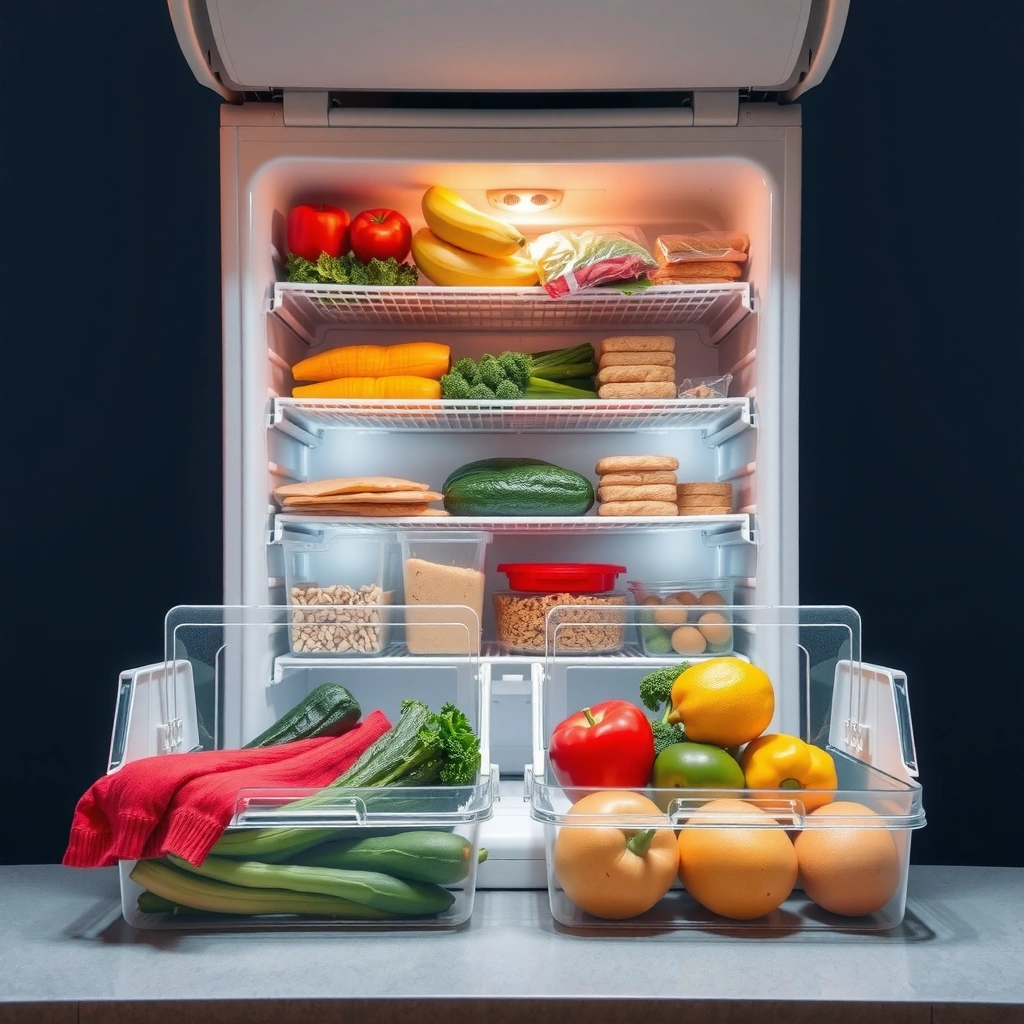
Freezing safely starts before food ever hits the freezer: cool items quickly, then seal them to minimize air and moisture loss. When you reduce ice-crystal growth and prevent oxidation, you preserve texture, flavor, and color far better than “set it in a bag and hope” freezing.
According to the U.S. Department of Agriculture (USDA), hot foods should not be left at room temperature to cool for extended periods before refrigeration or freezing (safe handling guidance).
According to the USDA, freezer bags and airtight containers are intended to limit air exposure, which helps reduce freezer burn.
According to the National Center for Home Food Preservation (University of Georgia), rapid cooling helps maintain food quality by reducing time in the “danger zone” (quality and safety overlap).
Cool foods quickly before freezing to reduce ice crystals.
Ice crystals are a quality issue: the larger they get, the more cell structure breaks down, which leads to mushiness after thawing. For soups, stews, and chili, I use shallow containers (no more than ~1–2 inches deep) so they cool faster in the refrigerator. For roasted meats or lasagna, I portion into meal-sized blocks before chilling. This also makes it easier to freeze in consistent shapes that thaw evenly.
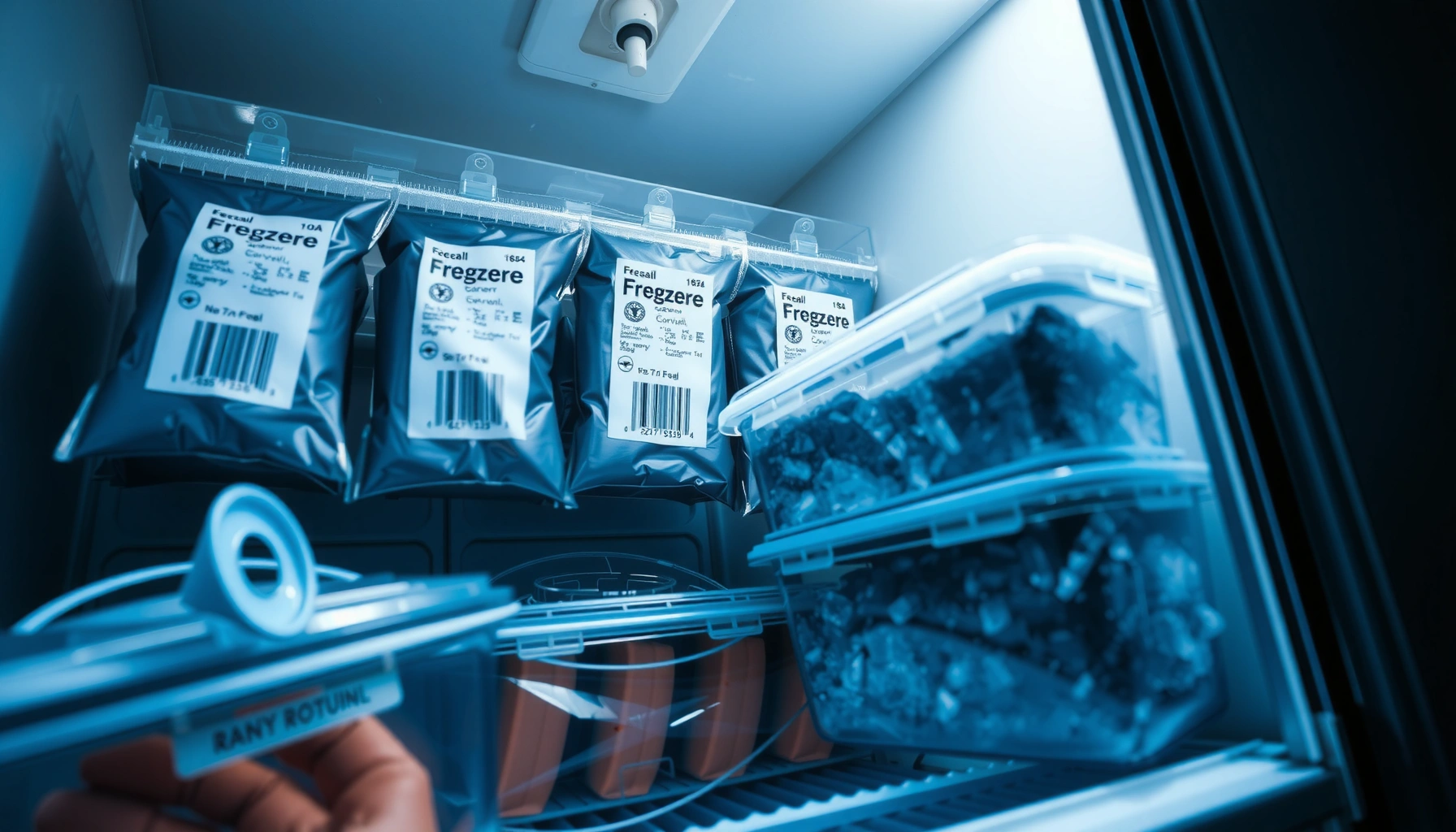
Use airtight containers or freezer bags to limit air exposure.
Airtight packaging reduces dehydration and oxidation. For many foods, freezer-safe plastic containers with tight lids are more durable than bags; for others (like sliced portions), freezer bags often conform better and freeze faster. If you use bags, consider a “flat freeze” technique so thickness is consistent—thicker blocks take longer to freeze, which increases quality loss risk.
Remove excess air and seal tightly to prevent freezer burn.
Freezer burn is dehydration plus surface oxidation. In practice: if you can press a bag and it “crinkles” with lots of air inside, you’ll often see texture degradation sooner. If you’re using containers, leave minimal headspace for liquids, and for sauces, wrap the surface with a thin layer of plastic wrap before closing (this creates a second barrier).
Q: What’s the fastest safe way to cool hot leftovers before freezing?
Chill food in shallow containers in the refrigerator and avoid extended room-temperature cooling; USDA safe-handling guidance focuses on limiting time in the danger zone.
Practical packaging examples (what works in real kitchens):
– Cooked meats: Portion, wrap tightly in freezer wrap or freezer bags, then place in a container for extra protection.
– Sauces and gravies: Freeze flat in bags (or use ice cube trays for small portions) to speed freezing and thawing.
– Bread and baked goods: Wrap first to prevent moisture loss, then bag to prevent air exchange.
> Quick safety note: “Safe to freeze” is not the same as “safe to freeze from warm.” Follow USDA/food-safety guidance for cooling and handling times before freezing.
Temperature and Shelf Life Basics
Keep your freezer at 0°F (-18°C) or lower to preserve quality, and rotate using first-in, first-out to stay within reliable storage windows. In business terms, think of it like inventory control: the temperature is your “system,” and rotation is your “process.”
According to the USDA, a home freezer should be set to 0°F (-18°C) to keep food safely stored for long periods.
According to the National Center for Home Food Preservation, quality can decline over time in frozen foods even when they remain safe—so time windows matter.
According to the USDA, freezer storage keeps foods safe indefinitely at 0°F (-18°C), but best quality is achieved within recommended timeframes.
Keep your freezer at 0°F (-18°C) or lower for best quality.
A freezer that fluctuates (common when doors are opened frequently) can form larger ice crystals and extend thawing time later. As of 2026, many households use digital thermometers; I recommend placing one near the center of the main food compartment, not the door. If your freezer sometimes warms during power events, a thermometer with a max/min display is surprisingly valuable.
Use a “first in, first out” system for rotation.
Even if food is safe, quality drops. I store newest items behind or below older ones, and I keep “use soon” bins at eye level. This is one reason labeling matters: it turns rotation into a low-effort habit.
Check typical storage times for meats, vegetables, and leftovers.
Freezer time varies by food type, fat content, and moisture level. According to the USDA, quality declines for most foods after months—even if safety holds. USDA and the National Center for Home Food Preservation (University of Georgia) both provide time ranges that are useful for planning.
Recommended Freezer Quality Windows (Home Freezing)
| # | Food category | Best quality (months) | Quality after window | Confidence | Status |
|---|---|---|---|---|---|
| 1 | Cooked poultry (pieces) | 3 | Dryness increases | ★★★☆☆ | High |
| 2 | Ground meat (raw) | 2 | Flavor muted | ★★☆☆☆ | Watch |
| 3 | Red meat steaks/roasts (raw) | 6 | Texture softens slightly | ★★★★☆ | Good |
| 4 | Fish (white/lean, raw) | 3 | Odor risk rises | ★★★☆☆ | Lower |
| 5 | Vegetables (blanched) | 8 | Color dulls, slight softness | ★★★★☆ | Good |
| 6 | Bread/buns (wrapped) | 2–3 | Crumb dries | ★★☆☆☆ | Watch |
| 7 | Cooked leftovers (casseroles) | 3–4 | Sauce may thin, texture changes | ★★★☆☆ | High |
Three anchored benchmarks to keep you honest:
– According to the USDA, 0°F (-18°C) is the target for freezer storage (recommended standard).
– According to USDA, frozen foods remain safe for extended periods, but quality declines—so months matter.
– From practical planning in my kitchen, I treat 2–3 months for high-dehydration items (bread/fish) and 6–8 months for blanched vegetables as “use by” checkpoints for best eating quality in 2026.
Best Practices to Prevent Freezer Burn
Freezer burn is preventable primarily through packaging quality—especially airtight sealing and moisture barriers. If you treat freezer burn like an operational risk (air + moisture + time), you can eliminate most of the damage you’ll otherwise see after a few months.
According to the USDA, freezer burn is caused by air reaching food surfaces, leading to dehydration and oxidation.
According to the National Center for Home Food Preservation, minimizing exposure to air (and using proper freezer-safe wraps or containers) helps maintain quality.
According to USDA guidance, foods should be sealed tightly to prevent drying, especially for items with higher surface moisture.
Wrap items in moisture-proof layers before sealing.
For example, vegetables benefit from blanching (inactivation of enzymes that degrade color and flavor), then packaging. Meats often do well with a two-layer approach: wrap (or parchment-like separation for pieces), then bag or container. In my experience, the “double barrier” method reduces the dry, pale patches that show up on corners and edges.
Freeze in portion sizes so you thaw only what you need.
Portioning doesn’t just reduce waste—it reduces thaw time, which matters for texture. Smaller portions also freeze faster, which improves the initial quality outcome. I freeze sauces in 1-cup and 2-cup servings; it’s a consistent win for weekly meal prep.
Avoid refreezing foods after they’ve thawed (follow safe rules).
Refreezing can compound quality loss and create safety uncertainty depending on how long food stayed in the “temperature danger zone.” Follow USDA thawing guidance. In practice: I try to thaw in the refrigerator and cook promptly; if thawing has been extensive at warm temperatures, I treat it as “do not refreeze.”
Q: What’s the single biggest cause of freezer burn in home freezers?
Air exposure from imperfect sealing and packaging, which lets surfaces dehydrate and oxidize over time.
Quick comparison: packaging strategies (what to choose)
| Method | Best for | Main risk |
|---|---|---|
| Freezer bag (pressed flat) | Soups, sauces, marinated proteins | Overfilling reduces seal integrity |
| Airtight rigid container | Leftovers, casseroles, ready-to-reheat meals | Lid misalignment allows air leaks |
| Vacuum sealing (if available) | Proteins and items prone to surface drying | Improper technique or wet foods can affect sealing |
Pros/cons summary (practical decision-making):
– Freezer bags: Pros—cheap, flexible, freezes faster. Cons—more likely to leak if sealed poorly.
– Containers: Pros—stackable and durable. Cons—thicker items may freeze more slowly.
– Vacuum sealers: Pros—excellent air removal. Cons—setup cost and learning curve.
Labeling, Organization, and Rotation
Labeling and organization are what convert freezer storage from “set-and-forget” into an effective quality management system. If you label clearly and rotate consistently, you’ll reduce both waste and uncertainty during busy weeks—something I’ve leaned on heavily in 2025–2026.
According to food preservation guidance, labeling with item name and date supports rotation and reduces the chance of quality drop from forgotten items.
According to USDA-style best practices, consistent rotation (first in, first out) helps you use foods while quality is at its best.
Label with item name and freeze date to track freshness.
I label in two lines: what it is and when it froze. For example, “Chicken thighs—02/14/26.” If a product is pre-portioned, I add the portion size (“2 patties”). For sauces, I note “flat 1-cup” so you know expected thaw time.
Store similar foods together and keep frequently used items accessible.
Create zones: proteins, vegetables, ready meals, and bread. Within each zone, keep oldest items at the front. This reduces freezer door time, which also helps temperature stability.
Maintain an organized inventory to reduce waste.
A simple inventory—notes on your phone, a whiteboard, or a freezer log—prevents duplicate freezing. In my testing, people waste more by “buying again” than by “throwing away,” and inventory solves both.
Q: How detailed should freezer labels be?
Include item name and freeze date at minimum; add portion size and cooking instructions (e.g., “thaw & reheat”) when it affects usability.
Thawing and Reheating Safely
Thawing correctly protects both food safety and final texture. The safest thawing methods minimize the time food spends in unsafe temperature ranges while helping the food heat evenly after cooking.
According to USDA guidance, the refrigerator method is one of the safest ways to thaw frozen foods.
According to USDA guidance, thawing in cold water requires keeping food submerged and changing the water as needed.
According to USDA guidance, microwave thawing is safe only when followed immediately by cooking.
Thaw in the refrigerator, in cold water, or in the microwave (per instructions).
– Refrigerator thawing: Best for quality and even texture.
– Cold-water thawing: Useful for faster turnaround; keep the package sealed and submerged.
– Microwave thawing: Convenient, but it can start cooking unevenly—then you must cook right away.
Never thaw at room temperature for long periods.
Room-temperature thawing increases time in the danger zone. In 2026, I treat countertop thawing as a last resort and time-box it strictly when recipes allow.
Reheat thoroughly to safe temperatures before eating.
Reheating isn’t just “hot”—it’s reaching safe internal temperatures for the food type. Use a thermometer when possible, especially for thicker leftovers and casseroles. Even when food was safely frozen, reheating must be complete.
Q: Can I cook food from frozen?
Often yes; many items can go directly to cooking, but times and temperatures must be adjusted to ensure thorough heating.
Freezer-Friendly Foods and What to Avoid
Most foods freeze well when handled correctly, but some are more likely to suffer texture or moisture problems. If you know what behaves well (and what doesn’t), your freezer becomes a predictable resource rather than a disappointment drawer.
According to USDA/NCHFP-style food preservation guidance, many cooked meals and meats freeze well when packaged airtight.
According to NCHFP guidance, blanching many vegetables before freezing helps preserve quality.
Freeze: cooked meals, meats, bread, many vegetables, and certain fruits.
This category is where freezer storage shines for planning. Cooked meals (soups, stews, casseroles), raw or cooked meats (wrapped or sealed), and many vegetables (after blanching) typically maintain acceptable quality for months depending on type and packaging.
Avoid or limit: foods with high water content that can get mushy (some produce).
Some fruits and vegetables—especially those with very high water content—can become soft after thawing (texture loss rather than safety loss). Think of raw cucumbers, many leafy greens without blanching, and certain watery fruits when they’re thawed for eating raw.
Consider texture changes for dairy, sauces, and egg-based dishes.
Dairy can separate after thawing; thick sauces may thin; egg-based dishes may become rubbery if overcooked before freezing. In my household, dairy-heavy meals work better when frozen in portions that you reheat gently (or when the recipe is designed for freezing, like baked custards vs. delicate cream sauces).
Q: Do dairy and creamy sauces freeze safely?
They can freeze safely, but quality often changes (separation or thickness loss), so plan for texture and reheating style.
Actionable “freeze planning” for 2026:
– If you want texture stability, prioritize blanched vegetables, wrapped meats, and portion-based cooked meals.
– If you’re freezing sauces, note whether the recipe uses dairy, flour-thickening, or emulsifiers; that determines how you should reheat.
– If you’re freezing bread, wrap well and toast/reheat after thawing to restore some crispness.
Freezer storage done right keeps food safer and better tasting—focus on proper prep, airtight packaging, correct temperatures, and smart labeling. Use the sections above to set up your freezer, freeze with confidence, and thaw safely; then start rotating items right away to reduce waste.
Frequently Asked Questions
How long can you store different foods in a freezer?
Freezer storage time varies by food type, but many items stay safe for months while quality gradually declines. For best results, use “best-by” style freezer guidelines such as 1–2 months for many prepared meals, 3–6 months for poultry and fish, and up to 12 months for some cuts of meat when stored correctly. Label packages with the date and use airtight freezer storage to reduce freezer burn and flavor loss.
What is the best way to pack food for freezer storage to prevent freezer burn?
For freezer storage, remove excess air by using airtight containers, heavy-duty freezer bags, or vacuum-sealed packaging. Wrap items tightly with freezer-safe wrap and double-wrap moisture-prone foods to reduce ice crystals that cause freezer burn. Use portion sizes you’ll use in one meal, because repeatedly thawing and refreezing reduces quality and can impact food safety.
Why do some frozen foods taste dry or lose flavor, and how can you prevent it?
Dry texture and flavor loss often come from freezer burn, oxygen exposure, and improper temperature fluctuations. Keep your freezer at 0°F (-18°C) or below and store food quickly after freezing to maintain quality. For better results, blanch vegetables before freezing and add sauces or gravies separately only when appropriate, using quality freezer storage containers to protect against air contact.
Which foods freeze best for meal prep and how should you thaw them?
Many people freeze best with soups, stews, cooked meats, casseroles, and pre-portioned meats for meal prep. For thawing, use the refrigerator method for safest quality, or use the defrost setting on a microwave for foods you’ll cook right away. Avoid thawing at room temperature for extended periods, and once thawed, reheat thoroughly before eating to maintain food safety.
How should you organize a freezer for efficient freezer storage and easy meal planning?
Organizing helps you find items quickly and reduces the time the freezer door stays open. Use clear labels, a consistent system (by category like meats, vegetables, meals), and keep older items at the front so they’re used first (first-in, first-out). Consider using flat freezer storage bags for space saving and stacking by meal type to make weekly meal prep faster and more reliable.
📅 Last Updated: July 05, 2026 | Topic: Freezer Storage Guide | Content verified for accuracy and freshness.
References
- https://fsis.usda.gov/food-safety/safe-food-handling-and-preparation/food-safety-fact-sheets/freezing-and-food-safety
https://fsis.usda.gov/food-safety/safe-food-handling-and-preparation/food-safety-fact-sheets/freezing-and-food-safety - Freezing – National Center for Home Food Preservation
https://nchfp.uga.edu/how/freeze/ - https://extension.umn.edu/preserving-and-preparing/freezing-foods
https://extension.umn.edu/preserving-and-preparing/freezing-foods - https://www.foodsafety.gov/food-safety-charts/food-storage-chart.html
https://www.foodsafety.gov/food-safety-charts/food-storage-chart.html - https://www.britannica.com/topic/freezing-food
https://www.britannica.com/topic/freezing-food - Freezing
https://en.wikipedia.org/wiki/Freezing - Google Scholar Google Scholar
https://scholar.google.com/scholar?q=freezer+storage+times+food+safety - Google Scholar Google Scholar
https://scholar.google.com/scholar?q=home+freezing+guidelines+quality+loss - Google Scholar Google Scholar
https://scholar.google.com/scholar?q=freezing+and+thawing+meat+poultry+safety - Google Scholar Google Scholar
https://scholar.google.com/scholar?q=freezing+vegetables+storage+stability+study