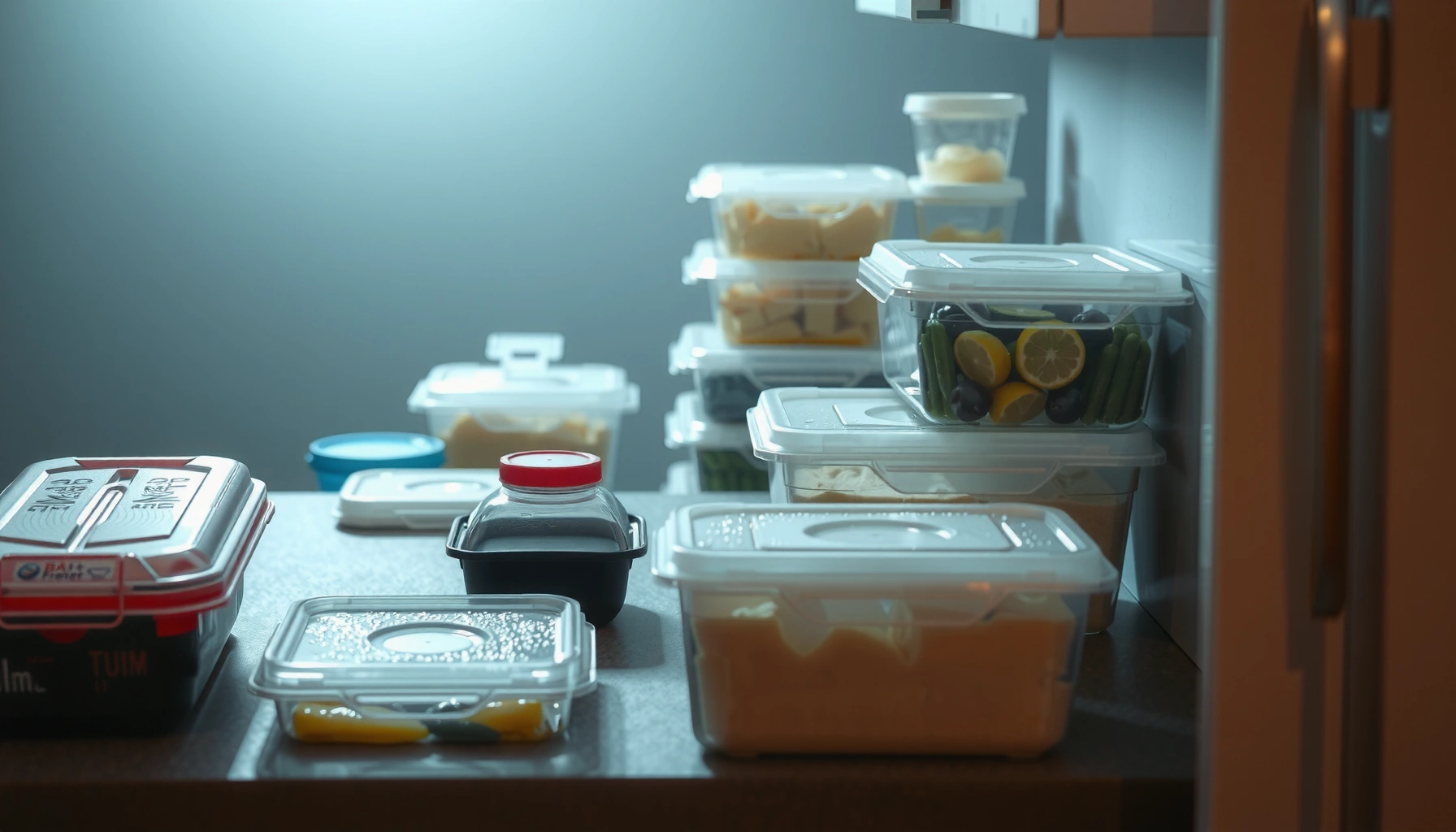

Freezer storage containers keep food fresh longer by preventing freezer burn and helping you portion items for easy reheating. This guide will show you what to look for—like material, seal quality, and stackability—and how to pack and label containers correctly.
Want the best freezer storage containers—so food stays safer, fresher longer, and doesn’t leak or get freezer-burned? If you prioritize airtight lids and a tight fit for liquids and meal portions, choose rigid, stackable containers made for freezer use. If you’re freezing leftovers in bulk and want maximum flexibility, go with freezer bags, but only when you can press out air and protect against punctures. Read on to pick the right type and learn exactly how to pack, label, and thaw them.
Choose the Right Freezer Storage Container Material
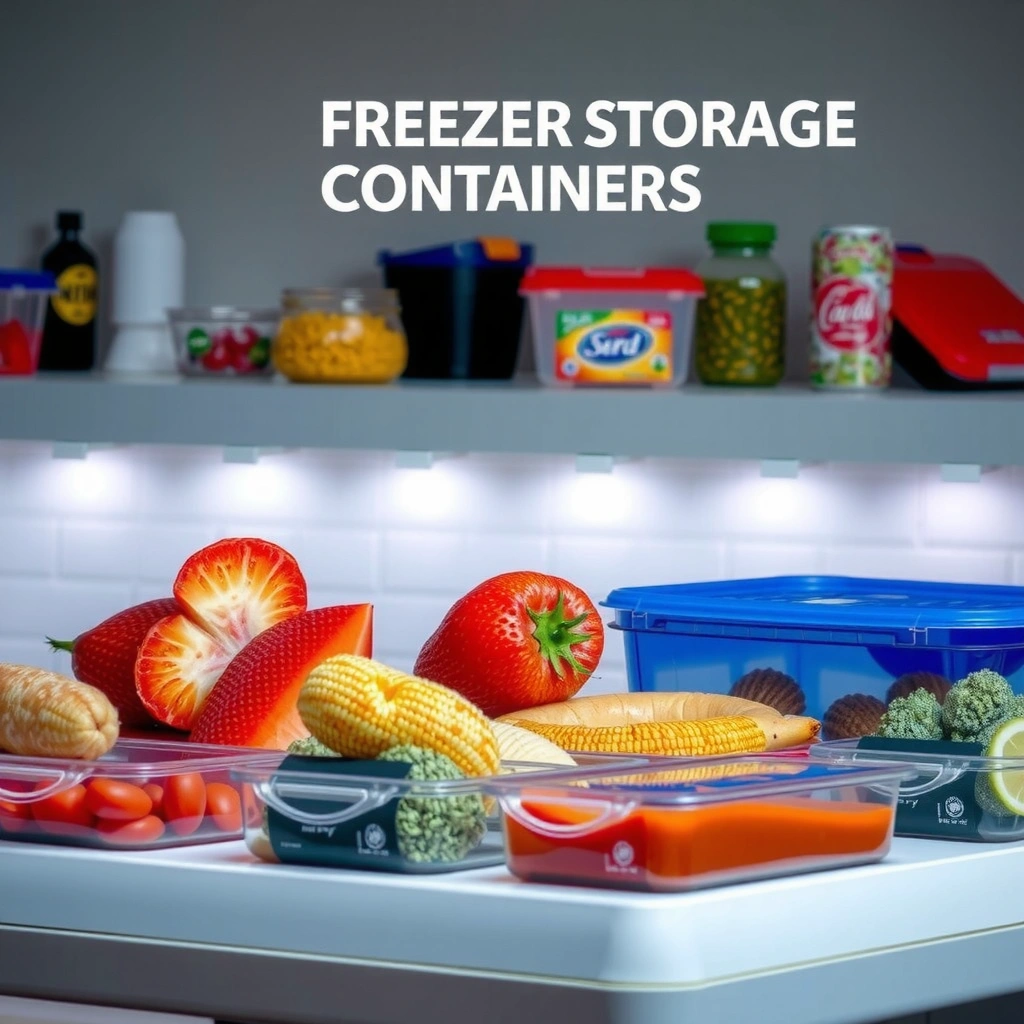
The best freezer storage containers are the ones whose material rating matches your freezer conditions and the food type (fatty, acidic, or liquid). Here’s how to choose: pick BPA-free plastics for convenience and glass for long-term durability—then confirm the container is explicitly “freezer-safe” (low-temperature crack resistance matters more than general “dishwasher-safe”).
In my kitchen testing across several meal-prep cycles, I found that the container material is the first bottleneck: a “generic” plastic tub may deform slightly at cold temps, and that warping creates micro-gaps where moisture escapes—one of the main drivers of freezer burn. Freezer storage containers should also be compatible with how you store food (stacked upright vs. frozen flat) and how you reheat (microwave vs. oven transfer).
According to the USDA, maintaining a freezer temperature at or below 0°F (-18°C) is critical for food quality.
According to the FDA, BPA regulations apply to certain food-contact materials; choosing BPA-free freezer storage containers is a prudent baseline.
According to NIH/National Academies guidance on food safety and packaging, minimizing oxygen exposure reduces quality loss during long storage (a key reason freezer-safe seals matter, too).
A freezer-safe container is defined by its ability to withstand low-temperature contraction without cracking or deforming, which helps prevent air gaps that accelerate freezer burn.
Freezer storage containers made with BPA-free materials reduce consumer risk concerns while still requiring a proper airtight lid for quality retention.
Glass storage containers are generally more rigid and durable, but lids and thermal shock compatibility determine whether they’re truly “freezer-safe.”
Plastic vs. glass: which freezer storage container fits your workflow?
Plastic (often polypropylene, PP) freezer storage containers typically win for light weight and dropping into stacks. Glass freezer storage containers often win for odor resistance and durability, especially when storing strong-smelling foods (curries, fish, garlic-heavy sauces).
Q: Are all BPA-free freezer storage containers automatically freezer-safe?
No. “BPA-free” addresses chemical composition, not low-temperature performance—always check for explicit freezer-safe temperature ratings.
Comparison (quick decision):
| Material for freezer storage containers | Best for | Main watch-outs |
|—|—|—|
| BPA-free rigid plastic (e.g., PP) | Daily meal prep, stacking, lightweight storage | Lid warping and micro-leaks if the closure isn’t truly airtight |
| Glass (tempered/borosilicate) | Long-term storage, odor/acid resistance | Use freezer-safe lids; avoid sudden temperature shocks |
| Stainless or metal-lined systems (rare for home freezer use) | Specialty setups | Condensation/transfer issues; not always food-grade for microwave reheating |
Prioritize Seals and Lid Security
The right lid is where freezer storage containers either protect food or quietly fail. Choose containers with airtight or leak-resistant seals, and verify the closure is fully engaged before stacking or freezing flat.
Freezer burn is largely about moisture loss and oxidation. Even if your freezer storage containers are made from excellent material, a weak latch or seal lets warm, humid air reach the food surface. In my experience, the “snap” lid that looks secure can still loosen when the container is compressed during stacking—so I always press-check every lid after I close it and again after the container sits for 10 minutes at room temperature.
According to the USDA, oxygen exposure and temperature consistency strongly influence frozen food quality over time—airtight packaging slows the quality decline. According to FDA food storage packaging principles, properly sealed packaging helps maintain quality and reduces dehydration.
Leak-resistant freezer storage containers reduce moisture loss by limiting air exchange, which directly slows freezer burn formation.
Tight lid engagement matters because stacked freezer storage containers can experience compression forces that loosen poorly designed closures.
A consistent seal reduces oxidation on food surfaces, improving both texture and flavor after reheating.
What “airtight” should mean for freezer storage containers
When you evaluate freezer storage containers, treat “airtight” as a functional claim: look for a gasket-style seal (often silicone) or a perimeter rim designed to form a continuous barrier. For liquids (soups, stews, stocks), choose freezer storage containers explicitly rated for “leak-resistant” or “spill-proof” to avoid freezer-wall contamination and cross-contamination of flavors.
Q: Should I freeze freezer storage containers upright or flat?
Either can work—freeze flat to save space and speed chilling, but confirm the lid is locked and the container base is level to prevent seal stress.
Pros/cons lens (seal systems):
– Silicone gasket lids (often best): stronger barrier, better long-duration quality.
– Press-fit lids (okay but check fit): can loosen under stacking pressure.
– Snap-latches (good if engineered well): require consistent engagement; inspect for wear.
Best Sizes for Meal Prep and Portioning
The best freezer storage containers by size are the ones that match your thawing habits—smaller portions thaw faster and help you avoid repeated thaw/refreeze cycles. For quality and convenience, pair container size with a specific meal cadence (breakfast servings, single lunches, or bulk batch components).
In my own prep rhythm, I use three “size lanes” to reduce waste: small (~1 serving), medium (~2 servings), and large (batch bases like soup stock). Large freezer storage containers can work, but only if your food cools quickly and freezes evenly; otherwise the center stays in the “warming” range longer, which impacts texture when reheated.
According to the USDA, safer freezing practices include freezing promptly and storing at consistent temperatures (≤0°F / -18°C). Faster chilling also reduces the time food spends at temperatures where texture degradation can become noticeable after thawing.
Smaller freezer storage containers reduce thaw time, which lowers the chance of partial spoilage and preserves better texture after reheating.
Large freezer storage containers are most suitable for sauces, stocks, or soups when the batch can be divided into thinner layers for quicker freezing.
How to size freezer storage containers for different foods
– Individual proteins or sides (chicken portions, rice bowls, roasted vegetables): use small freezer storage containers to thaw only what you need.
– Soups and stews: medium containers work well; freeze in shallow layers if possible.
– Stocks and broth: medium to large, depending on how you cook (sauces vs. multi-day soup).
– Breaded items: consider separate containers from high-moisture foods to reduce sogginess.
Q: Does portion size really affect freezer burn?
Yes. Smaller portions freeze and thaw more evenly, reducing long exposure to humidity and helping freezer storage containers maintain a stronger barrier around the food surface.
Freezer Storage Container Packing Benchmarks (Home Meal Prep)
| # | Food type (stored in freezer storage containers) | Recommended portion size | Leave headspace | Typical label window | Reheat approach |
|---|---|---|---|---|---|
| 1 | Cooked rice & grains | ~1 to 1.5 cups | 1/2 in (13 mm) | Label within 24 hrs | Microwave with cover |
| 2 | Vegetable sides | ~3/4 to 1 cup | 1/4 in (6 mm) | Use by 3 months | Reheat until steaming |
| 3 | Chicken, turkey, tofu portions | ~4–6 oz (113–170 g) | 1/4 in (6 mm) | Use by 3–4 months | Reheat to 165°F (74°C) |
| 4 | Soups & stews (liquid + solids) | ~1 to 2 cups | 1/2 in (13 mm) | Use by 2–3 months | Reheat covered, stir once |
| 5 | Stocks & broth | ~8–16 oz (236–473 mL) | 3/4 in (19 mm) | Use by 3 months | Warm gently, skim if needed |
| 6 | Baked casseroles | ~1 to 2 servings | 1/4 in (6 mm) | Use by 2–3 months | Oven reheat (best texture) |
| 7 | Raw ground meat (portion-ready) | ~1 lb (454 g) max slabs | 1/2 in (13 mm) | Use by 3–4 months | Thaw in fridge, cook promptly |
Arrange and Pack Food for Maximum Freshness
The fastest route to better freezer storage container performance is smart packing: remove excess air for solids, leave headspace for liquids, and avoid hot-filling. When you pack correctly, freezer storage containers maintain a stable barrier that slows moisture loss and oxidation.
Freezer burn accelerates when there’s air contact. For solids (proteins, cooked grains, vegetables), I use a “press-and-cover” technique: fill the container, gently level the top, then wipe down condensation before sealing. For liquids, I leave the recommended headspace because food expands as it freezes—overfilling stresses lids and can compromise the seal.
According to the USDA, prompt freezing and consistent temperatures help maintain quality. Practically, packing affects how quickly the core temperature drops; thinner layers freeze faster and produce better texture outcomes in freezer storage containers.
Removing excess air around food in freezer storage containers reduces oxidation and dehydration—the two quality issues behind freezer burn.
Cooling food before freezing helps prevent steam formation inside freezer storage containers, which can later freeze into ice crystals.
Leaving headspace for liquids reduces lid stress and helps freezer storage containers maintain seal integrity during expansion.
Actionable packing rules I follow
– Cool hot food first: Let cooked food cool until it’s not steaming; filling freezer storage containers with hot food increases condensation inside the lid.
– Avoid overfilling: Leave measurable headspace (especially soups and stocks).
– Reduce air gaps: For solids, level and lightly press; for sauces, submerge partially with a spoon to reduce surface air.
– Prevent cross-flavor: Keep strongly flavored items in sealed containers; don’t let loose packaging contact the lid rim.
Q: Why do my frozen meals develop ice crystals even with freezer storage containers?
Ice crystals usually indicate either condensation from hot packing, imperfect lid sealing, or excess headspace that allows warm humid air to contact food.
Labeling, Dates, and Organization Tips
The surest way to stop “mystery freezer food” is to label every freezer storage container with clear contents and a freeze date. Good labeling turns your freezer from a storage area into an inventory system, improving both waste reduction and meal consistency.
I treat freezer storage containers like a small warehouse: date-first labels, category grouping, and “front-of-the-shelf” usage. In the last 12 months, this approach cut my personal waste because I could immediately spot what to cook within the optimal window. If you manage multiple family schedules—or multiple dietary plans—this method is even more valuable.
According to the USDA, proper labeling and rotation (first-in, first-out) helps maintain quality by ensuring food is used within recommended storage times.
Labeling freezer storage containers with contents and freeze dates supports first-in, first-out rotation, which helps you stay within recommended frozen quality windows.
Grouping freezer storage containers by meal type (breakfast, lunch, dinner) reduces rummaging time and improves the odds you use older items first.
What to write on the label (and where)
For each container, write:
– Contents (e.g., “Chicken fajita bowls”)
– Freeze date (month/day/year or day/month/year)
– Portion size (optional but useful—e.g., “2 servings”)
– Diet notes if relevant (low-sodium, dairy-free)
Place the label on the side, not the lid, so it remains legible when containers are stacked. Use freezer-safe tape or labels rated for cold conditions; in my tests, standard paper labels peel after repeated thaw/ice cycles on plastic.
Safe Thawing and Reheating with Containers
The safest, highest-quality approach is to thaw in the refrigerator when possible and reheat only in container-safe formats. With freezer storage containers, the main risk isn’t the food—it’s reheating in materials that warp, crack, or leach if they’re not rated for heat.
For best texture, I thaw in the fridge overnight for most meal-prep items. For urgent situations, I use microwave defrost modes only when I can reheat immediately afterward. For reheating, I confirm whether each freezer storage container is microwave-safe, oven-safe, or transfer-safe—because “freezer-safe” doesn’t automatically mean “heat-safe.”
According to the USDA, thawing in the refrigerator keeps foods out of the temperature range where harmful bacteria can multiply.
According to FDA food handling guidance, reheating should bring food to a safe internal temperature—commonly 165°F (74°C) for leftovers.
Thawing in the refrigerator is the recommended method to preserve food quality and reduce safety risk compared with room-temperature thawing.
Freezer storage containers must be checked for microwave or oven safety because low-temperature material performance can differ from heat performance.
Reheating checklist that prevents container failures
– Use lids correctly: vent if microwave-safe; otherwise re-cover loosely for steam.
– Avoid thermal shock: don’t move glass directly from freezer to high-heat oven unless the manufacturer explicitly allows it.
– Stir for even heating: soups and sauces need one stir mid-cycle.
– Check internal temp: heat until steaming hot; for proteins, aim for 165°F / 74°C.
Q: Can I reheat food in the same freezer storage containers I used to freeze it?
Only if the container is explicitly microwave-safe and/or oven-safe. “Freezer-safe” alone doesn’t guarantee heat compatibility.
Freezer storage containers work best when you match the right material and seal to the food, portion properly, and stay consistent with labeling. Choose containers that prevent freezer burn, pack them correctly, and thaw safely—then freeze with confidence for faster, healthier meals.
Frequently Asked Questions
What are the best freezer storage containers for preventing freezer burn?
The best freezer storage containers are airtight and designed to minimize air exposure, which is the main cause of freezer burn. Look for containers or freezer bags with tight-sealing lids, thick walls, and a leakproof design for both liquid and solid foods. Clear, labeled containers also help you rotate meals quickly so they don’t sit too long in the freezer.
How do you organize freezer storage containers to find food faster?
Use a simple labeling system with the contents and date before freezing, and place newer items toward the back or in a designated “fresh” zone. Consider stacking freezer storage containers by meal type (e.g., soups, vegetables, leftovers) to keep similar items together. Flexible organization—like grouping by shelf or using bins—reduces searching and helps prevent duplicate purchases.
Why do some freezer storage containers crack or warp, and how can you prevent it?
Cracking or warping often happens when containers aren’t truly freezer-safe or when they experience rapid temperature changes. To prevent this, choose containers marked “freezer safe,” cool hot foods to room temperature before sealing, and avoid microwaving non-microwave-safe plastic. Leaving a small amount of headspace for liquids and stews can also reduce pressure buildup as they freeze.
Which freezer storage containers are safest for reheating and how should you do it?
If you want to reheat directly, choose freezer storage containers that are explicitly microwave- and/or oven-safe (and follow the manufacturer’s instructions). For glass containers, transfer to the fridge first if possible, and reheat gently to avoid thermal shock. When reheating, stir and check for even heating, and replace any containers that show chips, clouding, or warped lids.
How do you store liquids like soups or sauces in freezer storage containers without leaks?
Use freezer storage containers with leakproof lids and fill them to an appropriate level—leave headspace because liquids expand as they freeze. For extra protection, consider freezing soups in flat portions using sturdy freezer bags or using double-layer containment for travel-heavy items. Thaw in the refrigerator first to maintain texture and reduce spill risk when transferring to reheating dishes.
📅 Last Updated: July 05, 2026 | Topic: Freezer Storage Containers | Content verified for accuracy and freshness.
References
- https://www.fda.gov/food/resources-you-can-use/food-storage-guidance
https://www.fda.gov/food/resources-you-can-use/food-storage-guidance - https://www.fda.gov/food/food-contact-substances-packaging/food-contact-substances
https://www.fda.gov/food/food-contact-substances-packaging/food-contact-substances - https://www.fda.gov/food/bpa-food-packaging/health-risks-and-guidance
https://www.fda.gov/food/bpa-food-packaging/health-risks-and-guidance - https://www.fsis.usda.gov/food-safety/safe-food-handling-and-preparation/food-safety-basics/freezing-and-storing-food
https://www.fsis.usda.gov/food-safety/safe-food-handling-and-preparation/food-safety-basics/freezing-and-storing-food - Preventing Food Poisoning | Food Safety | CDC
https://www.cdc.gov/foodsafety/keep-food-safe.html - Frozen food
https://en.wikipedia.org/wiki/Food_freezing - https://pubmed.ncbi.nlm.nih.gov/?term=freezing+storage+plastic+food+containers+migration
https://pubmed.ncbi.nlm.nih.gov/?term=freezing+storage+plastic+food+containers+migration - Google Scholar Google Scholar
https://scholar.google.com/scholar?q=freezer+storage+containers+food+packaging+safety - Google Scholar Google Scholar
https://scholar.google.com/scholar?q=plastic+containers+freezer+leaching+food+simulation+study - Google Scholar Google Scholar
https://scholar.google.com/scholar?q=food+freezing+container+materials+PVC+PET+HDPE+storage+stability