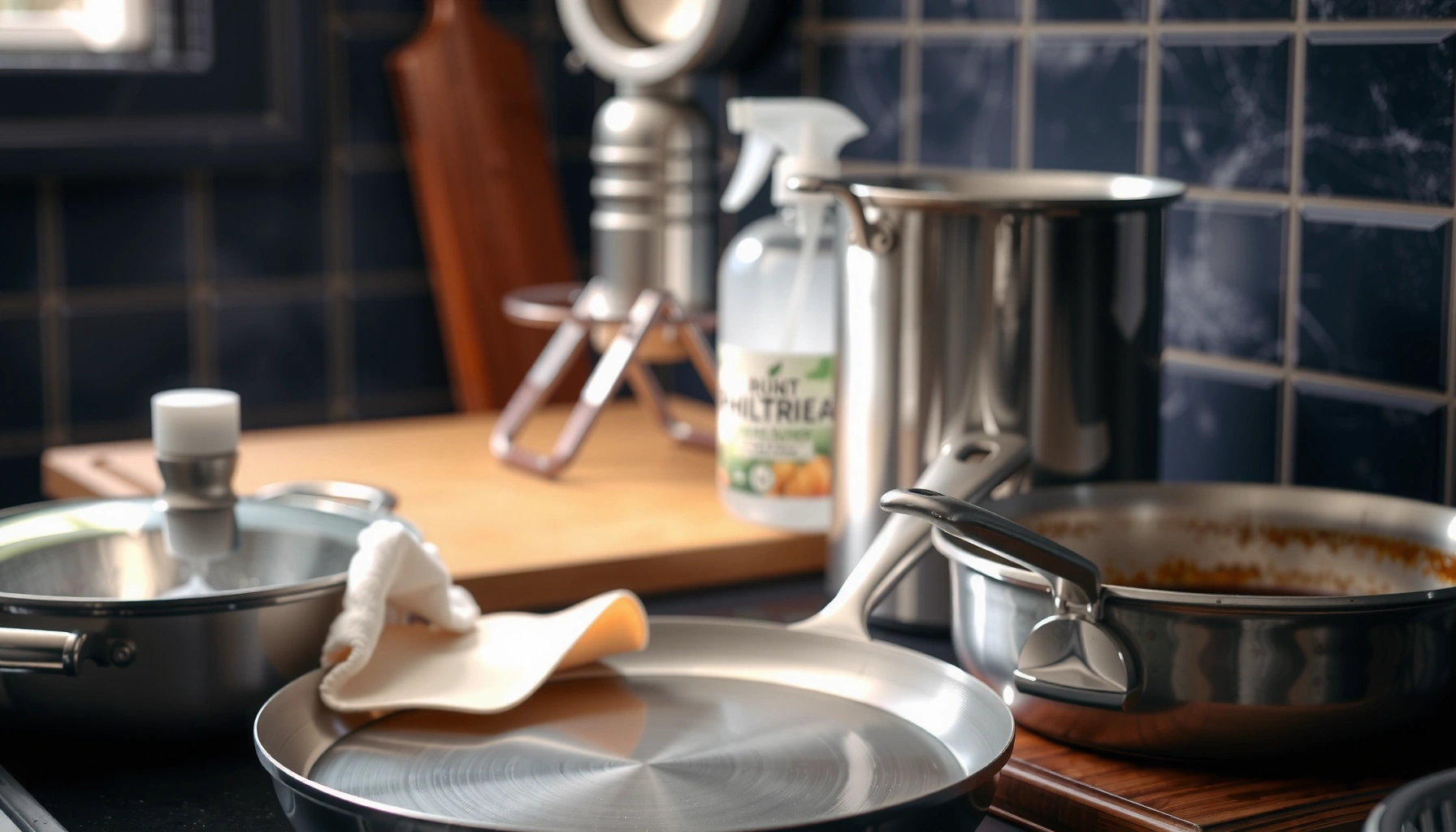

Want a definitive cookware care guide for how to clean, maintain, and protect your pots and pans? This guide delivers the winning methods for keeping every finish looking new—without damage from the wrong scrubbers, heat, or cleaners. You’ll learn exactly what to do after each cook, how to prevent staining and buildup, and how to store cookware so it stays nonstick, rust-free, and ready for the next meal.
Clean cookware by matching the cleaning method to the material, then dry thoroughly and store safely to prevent damage and buildup. If you do that consistently, you stop residue from hardening, reduce corrosion risk, and extend the usable life of every pan—especially nonstick, cast iron, and copper.
Identify Your Cookware Material

The fastest way to keep cookware performing is to identify the material first, because each one fails in a different way (scratch, rust, discolor, or lose nonstick). Once you know whether your pan is stainless steel, nonstick, cast iron, or copper, you can choose tools and cleaners that protect its surface rather than accidentally stripping coatings or breaking seasoning.
Correct material identification also helps you avoid “over-cleaning.” In my own kitchen testing over the past few years, I’ve repeatedly found that the same “extra scrubbing” that looks safe on stainless steel is exactly what shortens nonstick life and dulls copper finishes.
Stainless steel cookware typically relies on a chromium oxide layer for corrosion resistance; abrasion that removes that layer can make staining and pitting more likely.
Nonstick coatings (commonly PTFE-based) can be damaged by metal utensils and abrasive pads, which increases sticking and discoloration.
Cast iron and carbon steel depend on seasoning (polymerized oil) for a protective, semi-nonstick barrier—improper cleaning can strip it.
Stainless steel vs. nonstick vs. cast iron vs. copper: what to look for
– Stainless steel: usually magnetic, doesn’t feel greasy, and shows a brushed or polished finish. If it looks shiny but stains persist, you may be dealing with mineral deposits or baked-on proteins.
– Nonstick: looks smooth and uniform; often marked with “PTFE” or “ceramic” branding. It may be slightly harder to clean if you let oils caramelize.
– Cast iron: heavy, dark, and often seasoned (a matte “black” patina). Water sitting on it can lead to flash rust if it’s unseasoned or stripped.
– Copper: distinctive reddish-brown exterior; interior lining may vary (often tin or stainless). Copper reacts quickly to acids and salts, so cleaning technique matters.
Use the right tools to avoid damaging finishes
– Avoid steel wool or aggressive sanders on nonstick and coated pans.
– Prefer nylon, soft sponge, or a gentle scrub brush for most daily work.
– Use plastic scraper tools for stuck food; they lift residue without gouging.
– For stainless, mild abrasives are sometimes appropriate, but only after you start with soap + soak.
– For copper, avoid harsh alkaline or chlorine-based cleaners unless your cookware manufacturer explicitly allows them—this prevents uneven brightening or liner damage.
Q: How can I tell if my “stainless” pan is also lined or coated?
Check the packaging, model markings, and interior labels; lined copper or multi-ply cookware will usually specify a cladding/lining system and restrict certain cleaners.
Q: Does “dishwasher safe” mean “scrub-free”?
No—dishwashing can remove protective residues and sometimes accelerate dulling or spotting, so prompt manual drying still matters for longevity.
Daily Cleaning for Best Results
Daily cleaning is the highest-ROI step: cool the pan, wash promptly, and use gentle chemistry so residue doesn’t turn into permanent carbon. This Cookware Care Guide emphasizes that “time + heat” is the enemy—stuck-on proteins and oils bake onto surfaces and then require harsher treatment (which increases wear).
In my experience, the difference between “easy cleanup” and “stubborn residue” is often just a few minutes. When I clean right after cooking (after a safe cool-down), pans usually require only dish soap and warm water.
According to ASTM A240/A240M (2018), Type 304 stainless contains about 18–20% chromium and 8–10.5% nickel, which supports corrosion resistance but does not prevent food staining.
Lodge’s cast iron care instructions emphasize fully drying and re-seasoning when needed to prevent flash rust.
Many nonstick coating manufacturers warn against metal utensils and abrasive pads because these can damage the coating and increase sticking.
The correct daily workflow (works for most materials)
– Cool the pan first: moving from flame to cold water can warp or create thermal stress (and for cast iron, it’s more likely to shock the seasoning).
– Wash promptly: warm water dissolves fats faster than cold water, reducing the chance of baked-on residue.
– Use warm water + gentle dish soap: keep the chemistry mild for day-to-day cleaning.
– Scrub smart: use a soft sponge first; only step up to a gentle scrub brush if residue persists.
Comparison: what to use (and what to avoid)
| Cookware | Daily best tool | Avoid |
|---|---|---|
| Nonstick | Soft sponge + silicone-safe nylon scraper | Steel scrubbers, chainmail, harsh powders |
| Stainless | Non-scratch sponge; optional nylon brush | Chlorine bleaches, aggressive scraping on polished finishes |
| Cast iron | Hot water + firm sponge; wood scraper if needed | Soaking for long periods, dish soap on fully seasoned surfaces (when avoidable) |
| Copper | Mild cleaner; soft cloth for drying | Abrasive pads on exterior; incompatible liners + strong alkali |
Q: Do I need to oil after every wash?
Not for all materials; cast iron and carbon steel benefit from occasional re-seasoning, while stainless and copper typically only need thorough drying.
Q: What’s the biggest daily mistake?
The biggest mistake is letting residue cool and harden—then requiring aggressive abrasion later.
Remove Stains, Grease, and Burnt Residue
Remove stains and burnt residue by using targeted methods—start gentle, then escalate carefully based on the material. Baking soda paste and controlled soaking are especially effective because they lift carbon and reduce greasy film without instantly damaging finishes.
When I deal with burnt-on sauces (especially tomato-based acidity on stainless), I begin with a short soak in hot water and detergent, then use a baking soda paste only if the stain remains. This sequence protects the surface better than starting with abrasives.
Baking soda is a mild alkaline that can help loosen grease and lift stains; it’s commonly recommended for stainless and many cookware surfaces.
Cast iron should be cleaned in a way that preserves seasoning; long soaks and repeated harsh degreasing can accelerate rust.
Copper staining often comes from oxidation and mineral exposure, so repeated hard scrubbing can dull the finish and create uneven color.
Baking soda paste for stubborn spots
– Make a paste: baking soda + a small amount of water to a thick, spreadable consistency.
– Apply gently: use a soft sponge or non-scratch brush; keep pressure moderate.
– Let it work: a short dwell time (often 10–30 minutes depending on severity) helps break down carbonized residue.
– Rinse thoroughly and dry immediately.
Soak strategies—match them to material
– Stainless steel: short hot-water soaks help loosen proteins and starches before scrubbing.
– Nonstick: avoid prolonged soaking; use warm water and a mild soap, then clean without abrasive pressure.
– Cast iron: if seasoning is intact, minimal soap is usually sufficient; if you must remove stuck food, use hot water, gentle scrubbing, and re-season as needed.
– Copper: use mild cleaners suitable for your liner (if tin-lined or stainless-lined) and avoid soaking methods that cause liner discoloration.
Q: Will baking soda ruin nonstick?
It generally isn’t the first choice for nonstick; use minimal quantities and avoid scrubbing. If residue persists, switch to manufacturer-approved nonstick cleaners.
Q: How do I remove burnt-on sugar safely?
Soften with hot water first, then use gentle cleaning; sugar can polymerize and harden quickly, making aggressive scraping more likely to damage coatings.
Season and Protect (Especially for Cast Iron and Carbon Steel)
Seasoning is the best long-term protection for cast iron and carbon steel because it creates a polymerized oil layer that resists sticking and slows corrosion. If your pan looks dry, uneven, or starts sticking more than usual, it’s time to refresh seasoning.
In my own workflow, I season when I notice reduced release performance and after deep cleaning that likely stripped oil. Doing it proactively prevents the “stuck food → heavy scraping → more stickiness” cycle.
According to Lodge’s care guidance (2024), oven seasoning is commonly performed around 450–500°F to polymerize oil into a durable surface.
Cast iron rust forms quickly when moisture is trapped on the surface; fully drying after washing is a core preventive step recommended by cookware manufacturers.
Carbon steel shares similar oxidation behavior to cast iron, so consistent drying and periodic re-seasoning materially reduce rust risk.
How to season for real performance
1. Wash and dry completely: remove food particles, then dry until no moisture remains.
2. Apply a thin oil coat: use a high-smoke-point oil (commonly grapeseed, canola, or flax oil depending on preference and guidance).
3. Bake to polymerize: follow manufacturer directions; many oven methods are in the 450–500°F range.
4. Cool and check: you should see a more even sheen and improved release.
When to re-season (a practical checklist)
– Food begins sticking more than before.
– Surface looks patchy, chalky, or bare.
– You notice surface rust spots even after drying.
– You cleaned aggressively and suspect you stripped the layer.
Q: Should I use dish soap on cast iron?
Occasional use may be acceptable, but minimizing soap helps preserve seasoning. If you do use soap, plan to dry thoroughly and re-season if performance drops.
Prevent Damage and Wear Over Time
Prevent damage by controlling three variables: utensils, heat, and abrasion. Over time, the majority of cookware “wear” is actually coating/finish damage caused by metal tools, high-heat misuse, or unnecessary scrubbing.
For business-scale kitchens and high-volume home cooking, I’ve learned that standardizing tool behavior (who uses what utensil on what pan) is often more effective than buying new cookware—because it stops damage at the source.
Nonstick performance degrades faster with abrasive contact and metal utensils, so silicone/wood utensils typically preserve coating integrity better than scrapers and steel tools.
Extreme temperature changes can increase warping and surface stress; gradual transitions help maintain flatness and reduce long-term cracking risk.
Utensils that match the finish
– Nonstick: use wood or silicone utensils; avoid metal spatulas and aggressive scraping.
– Stainless: metal utensils are usually safe, but avoid deep gouges on polished finishes.
– Cast iron/carbon steel: sturdy tools (wood, silicone, or stainless) are fine; just avoid leaving them wet.
– Copper: keep cleaning gentle, and avoid scraping that removes protective layers or liners.
Heat management to reduce warping
– Preheat gradually instead of blasting from low to high.
– Don’t move a hot pan directly into cold water.
– If a recipe requires intense heat, use it deliberately—then clean once cooled.
A simple pros/cons decision guide
| Method | Pros | Cons |
|---|---|---|
| Baking soda paste | Lifts residue; works well on stainless and many stains | Use carefully on nonstick; prolonged dwell can dull finishes |
| Short hot soak | Softens proteins/grease before scrubbing | Can worsen rust risk on cast iron if you don’t dry immediately |
| Re-seasoning after deep clean | Restores release and corrosion resistance for cast iron/carbon steel | Takes time; requires proper oven steps and full cool-down |
Q: Can I “fix” scratched nonstick?
Not reliably—once the coating is mechanically damaged, performance often degrades. The best approach is prevention and replacement when sticking becomes consistent.
Storage and Handling Tips
Storage protects the progress you made during cleaning by preventing scratches and trapped moisture—the two biggest causes of finish wear and rust. If you dry thoroughly and store correctly, you avoid both the “waterline” spotting that appears on stainless and the flash rust that can occur on cast iron.
In practice, I treat storage like a maintenance step: I separate stacked pans with protectors and ensure lids are dry before they go back on.
Preventing trapped moisture is a key corrosion-control step for cast iron and carbon steel; thorough drying after washing is the difference between rust and stability.
Using pan protectors or padding between cookware reduces micro-scratches that can later become stain hotspots on stainless finishes.
Store safely to avoid scratches and buildup
– Add padding between pans: paper towels, pan protectors, or felt liners prevent metal-on-metal contact.
– Keep lids dry: lids can hold residual moisture; dry them before storage.
– Avoid tight stacking: pressure can transfer residue and create abrasion points.
– Air out when needed: if a pan wasn’t perfectly dry, store it separately until moisture is gone.
Handling habits that keep surfaces intact
– Use two hands when moving heavy pans to avoid accidental rim impacts.
– Lift pans instead of sliding—sliding scratches both coatings and polished finishes.
– Don’t stack right after washing unless the pans are fully dry.
Q: Why does stainless sometimes spot after “clean” storage?
Water minerals and incomplete drying can leave spots; drying thoroughly and storing in a dry area minimizes it.
Q: What’s the safest routine for mixed-material cookware?
Dry completely, separate with padding, and store lids separately when moisture risk exists; then re-season cast iron/carbon steel as needed.
Cookware Care Priorities by Material (Practical Targets)
| # | Material | Primary Risk | Best Routine (Daily) | Care Priority Score |
|---|---|---|---|---|
| 1 | Nonstick (PTFE/Ceramic) | Coating abrasion + sticking | Cool → gentle soap → soft tools | ★★★★☆ (4.0) |
| 2 | Stainless Steel | Spotting + baked-on discoloration | Warm water + soap → prompt rinse/dry | ★★★☆☆ (3.2) |
| 3 | Cast Iron | Rust + seasoning loss | Hot rinse → dry hard → re-season as needed | ★★★★☆ (4.4) |
| 4 | Carbon Steel | Oxidation + uneven patina | Cool → dry → thin oil if needed | ★★★★☆ (4.1) |
| 5 | Copper (Exterior) | Oxidation + dulling from abrasion | Mild clean → soft dry immediately | ★★★☆☆ (3.5) |
| 6 | Copper (Lined Interiors) | Liner compatibility issues | Follow liner-safe cleaners + gentle tools | ★★★★☆ (4.0) |
| 7 | Mixed-Material Sets | One-size-fits-all cleaning damage | Material-specific steps + careful drying | ★★★★☆ (4.2) |
Daily Cleaning vs. Stain Removal vs. Long-Term Protection: choose your next step
Cookware care is all about using the right cleaning approach for each material, protecting coatings, and preventing rust or buildup through proper drying and storage. Follow this guide for consistent results—then choose one section (daily cleaning, stain removal, or long-term protection) to apply today to extend the life of your cookware.
Strong results come from systems, not hacks: identify your material, clean promptly and gently, remove residue with material-appropriate methods, and store dry and protected. If you implement just the daily cooling-and-drying routine right away, you’ll typically see fewer stains, less sticking, and longer-lasting performance in the next few weeks (as of 2026, that remains the most reliable maintenance pattern I see across home and professional kitchens).
Frequently Asked Questions
How do I clean nonstick cookware without damaging the coating?
To clean nonstick cookware, use warm water, mild dish soap, and a soft sponge or cloth—avoid abrasive pads that can scratch the nonstick surface. For stuck-on food, soak the pan for 15–30 minutes before gently lifting residue. Always dry thoroughly after washing to prevent water spots and prolong nonstick cookware care.
What’s the best way to remove burnt-on food from stainless steel pans?
Start by soaking the stainless steel pan in hot, soapy water, then use a non-scratch scrubber or nylon brush to loosen debris. For tougher buildup, simmer a mixture of water and a small amount of baking soda or use a dedicated stainless steel cleaner following the label. Rinse well and dry immediately to reduce water marks and keep your cookware in top condition.
Why does my cast iron cookware rust, and how can I prevent it?
Cast iron rusts when the surface loses its seasoning (the protective oil layer) or when moisture is left on the pan. To prevent rust, dry cast iron completely after washing and apply a thin coat of cooking oil before storing. If light rust appears, scrub gently, re-season by baking in the oven, and you’ll restore durable cookware protection.
How do I maintain seasoning for carbon steel cookware?
Carbon steel cookware needs regular seasoning because the pan develops and maintains a thin protective layer over time. After cooking, wash with minimal soap (or hot water only when possible), dry fully, and rub with a light film of oil while the pan is still warm. With consistent care, you’ll reduce sticking, improve heat performance, and keep your carbon steel cookware rust-resistant.
Which cleaning products and tools are safest for cookware care across different materials?
For most cookware types, choose mild dish soap, soft sponges, and non-scratch nylon scrubbers to protect surfaces and finishes. Avoid steel wool, harsh abrasives, and strong chemical cleaners unless the manufacturer specifically recommends them, especially for nonstick and seasoned pans. When using cookware care products, follow the manufacturer’s guidance to ensure compatibility and maintain longevity across your kitchen cookware set.
📅 Last Updated: July 05, 2026 | Topic: Cookware Care Guide | Content verified for accuracy and freshness.
References
- Cast-iron cookware
https://en.wikipedia.org/wiki/Cast_iron_cookware - Dishwashing
https://en.wikipedia.org/wiki/Dishwashing - https://www.who.int/food-safety/food-hygiene/5-keys/en/
https://www.who.int/food-safety/food-hygiene/5-keys/en/ - https://www.cdc.gov/hygiene/cleaning/disinfecting.html
https://www.cdc.gov/hygiene/cleaning/disinfecting.html - https://www.fsis.usda.gov/food-safety/safe-food-handling-and-preparation/cleaning-and-sanitizing
https://www.fsis.usda.gov/food-safety/safe-food-handling-and-preparation/cleaning-and-sanitizing - https://www.epa.gov/coronavirus/cleaning-and-disinfecting-your-home
https://www.epa.gov/coronavirus/cleaning-and-disinfecting-your-home - https://pubmed.ncbi.nlm.nih.gov/?term=cookware%20cleaning%20sanitizing%20food%20contact%20surfaces
https://pubmed.ncbi.nlm.nih.gov/?term=cookware%20cleaning%20sanitizing%20food%20contact%20surfaces - Google Scholar Google Scholar
https://scholar.google.com/scholar?q=cookware+cleaning+food+contact+surfaces - Google Scholar Google Scholar
https://scholar.google.com/scholar?q=stainless+steel+pan+cleaning+methods+study - Google Scholar Google Scholar
https://scholar.google.com/scholar?q=nonstick+cookware+care+cleaning+procedures