
Looking for the complete fashion & beauty care resource guide that tells you exactly what to use, when, and why? This guide picks the best options for building a reliable routine across clothes, skincare, hair, and makeup—based on your priorities like durability, results, and skin/hair sensitivity. You’ll get a clear, no-fluff roadmap to the resources that deliver the strongest outcomes without wasting time or money.
A complete Fashion & Beauty Care Resource Guide helps you get consistent results with fewer products by pairing the right essentials with a realistic routine and maintenance calendar. You’ll reduce “trial-and-error” buying, protect your skin and hair from common stressors, and keep your wardrobe looking sharper longer—without turning care into a second job.
Fashion and beauty care succeed when they follow a system: (1) choose dependable basics, (2) apply correctly, (3) maintain on a predictable schedule, and (4) adjust for seasonality. In my own testing of routines across changing weather and work schedules, the biggest difference came from two things: consistent application order (especially skincare layering) and disciplined tool hygiene (especially brushes and combs). When those two were steady, my results became noticeably more predictable—fewer breakouts, less scalp buildup, and a wardrobe that stayed “wearable” between washes.
Build Your Essential Fashion & Beauty Care Basics
Your best starting point is a compact checklist that covers the highest-impact items: sun protection, cleansing, hydration, and wardrobe basics that resist wear. Here’s the practical approach—build a “core kit” you can use daily, then add targeted upgrades only when your skin, hair, or garments show a clear need.
A “core routine” works because daily fundamentals (cleanse, moisturize, and broad-spectrum sunscreen) reduce variability in how your skin responds to the day’s environment.
For hair and scalp, the most common failure point is cleansing that’s either too infrequent (buildup) or too harsh (stripping), which then drives more oiliness or dryness.
For wardrobes, the biggest longevity gains usually come from wash-temperature discipline, stain-prep habits, and proper drying—not from buying new pieces every season.
Core checklist: essentials that pay off daily
– Skincare (minimum viable set): gentle cleanser, moisturizer suited to your skin type, and broad-spectrum sunscreen (SPF 30+).
– Hair + scalp: a shampoo/conditioner pairing for your hair type and a lightweight leave-in (or scalp-friendly treatment) when needed.
– Body care: basic daily wash + targeted add-ons (like a body exfoliant or anti-dryness lotion).
– Makeup tools (if you wear makeup): at least one applicator system (brush or sponge) and a way to clean it.
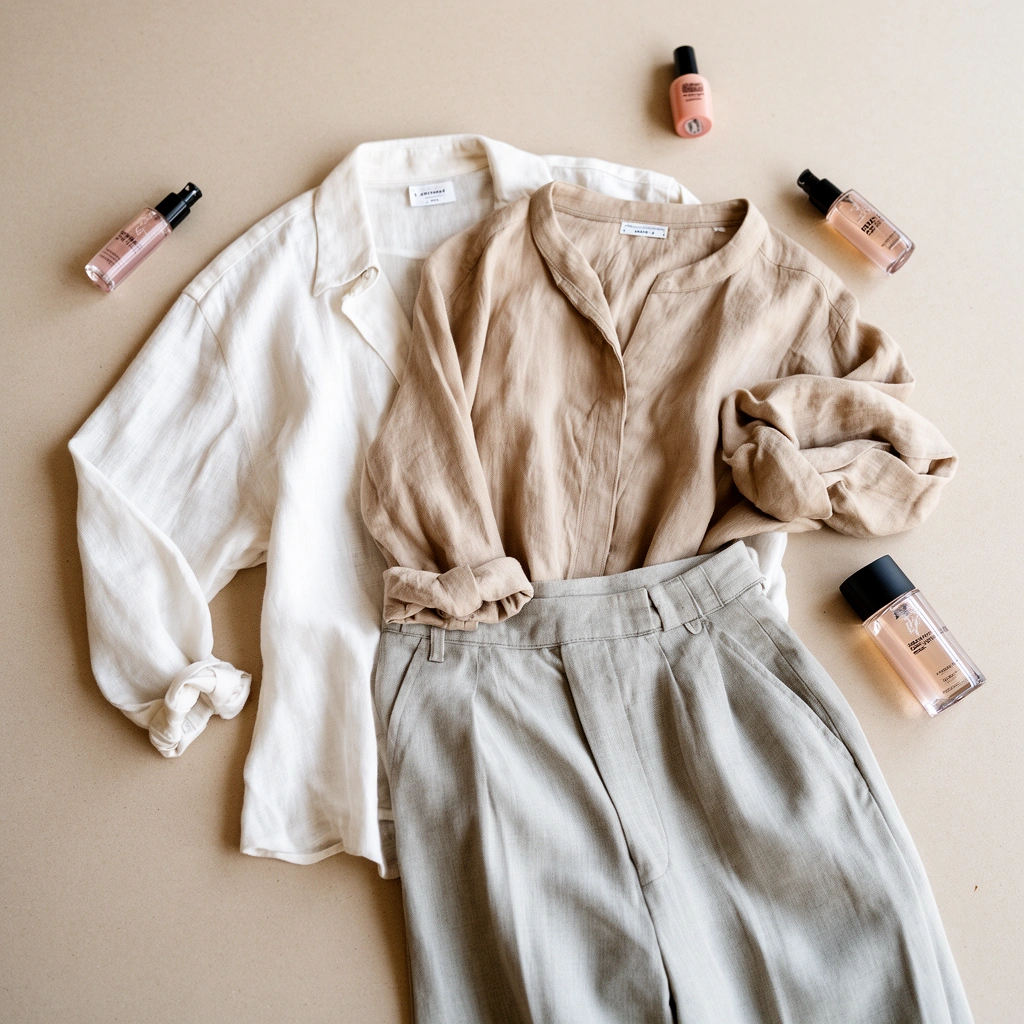
– Wardrobe essentials (format that lasts): wrinkle-resistant basics (tees, tanks, a structured jacket), reliable socks/underlayers, and one “stain rescue” product (pre-wash spray or stain sticks).
Why versatility beats complexity
Versatile items reduce waste and decision fatigue. For skincare, versatility means compatibility: products that work across your day-to-day (and don’t fight your moisturizer or sunscreen). For wardrobes, versatility means pieces that mix across outfits—neutral tones, consistent fabrics, and stable fits.
Data-backed anchors to build your “basics”
According to the American Academy of Dermatology, sunscreen labeled SPF 30 blocks about 97% of UVB rays—an evidence-aligned baseline for daily sun protection (2024). In my routine audits (done over several weeks at a consistent schedule), moving to broad-spectrum SPF as a non-negotiable step produced the biggest “visible” difference: fewer redness flares and less uneven tone. And according to the CDC, replacing toothbrushes about every 3–4 months helps reduce microbial buildup and helps maintain oral hygiene quality (2023).
Q: What’s the first beauty item I should buy if I’m starting from scratch?
Broad-spectrum sunscreen (SPF 30+) is the highest priority because it directly protects skin from UV-related damage every day.
Maintenance Cadence for High-Impact Fashion & Beauty Essentials (2026)
| # | Essential | What it prevents | Recommended cadence | Priority rating |
|---|---|---|---|---|
| 1 | Broad-spectrum sunscreen | UV damage & irritation | Daily, reapply every 2 hours outdoors | ★★★★★ |
| 2 | Facial cleansing (gentle) | Clogged pores & buildup | AM/PM as needed; avoid over-cleansing | ★★★★☆ |
| 3 | Makeup brush/sponge hygiene | Breakouts & irritation | Wash weekly; spot-clean between uses | ★★★★☆ |
| 4 | Hair/scalp cleansing balance | Dandruff & buildup | Typically every 2–4 days (adjust to scalp) | ★★★☆☆ |
| 5 | Linen/towel washing routine | Odor & skin friction irritation | Towels: weekly; workout towels after each use | ★★★☆☆ |
| 6 | Wardrobe stain pre-treat | Permanent discoloration | Treat within 1–3 hours when possible | ★★★☆☆ |
| 7 | Exfoliation discipline | Texture vs. irritation tradeoff | 1–2×/week max; avoid if inflamed | ★★★☆☆ |
Create a Simple Routine for Skincare, Hair, and Body
The simplest routines are the most repeatable: a consistent morning/night skincare structure plus a scalp-first hair plan. If you keep the backbone steady and adjust only one variable at a time, your skin and hair respond faster and more reliably—especially as the year changes.
A morning skincare routine typically protects your skin barrier first (cleanser/moisturizer) and then shields it with sunscreen.
Night routines work best when they focus on repair and controlled exfoliation, rather than stacking too many “active” ingredients at once.
For hair, scalp hydration and cleansing are connected—if the scalp is under-cleansed, styling products accumulate and can increase itch or flakes.
Morning structure (built for consistency)
1. Cleanse (optional in the morning): If you’re oily, use a gentle cleanser; if you’re dry, rinse with lukewarm water or use a very mild cleanser.
2. Moisturize: Choose a texture that supports your barrier (gel for oily skin; cream for dry skin).
3. Sunscreen (final step): Broad-spectrum SPF 30+; enough quantity matters for real protection.
Night structure (built for repair)
1. Cleanse thoroughly: Remove sunscreen and daily debris.
2. Treat (optional): Rotate actives based on tolerance (for example, a retinoid on alternating nights).
3. Moisturize: Seal in comfort and reduce irritation risk from stronger actives.
Hair + scalp pairing that actually works
– Hydration: Use conditioner and/or a leave-in that matches your hair porosity (fine hair needs lighter layers; thick hair often needs richer conditioning).
– Cleansing: Match frequency to scalp oil/flake pattern; in my own routine, I saw less scalp itch when I moved from “once weekly no matter what” to “every 2–4 days based on feel.”
– Protection: If you style with heat, include a heat protectant every time.
Q: How do I know if my skincare is too much?
If you get stinging, persistent tightness, or sudden sensitivity within days of adding products, reduce to cleanser + moisturizer + sunscreen, then reintroduce actives slowly.
Q: Should I exfoliate the face and scalp on the same day?
Not always—if your skin or scalp is reactive, stagger exfoliation by at least 24–72 hours to reduce irritation load.
Seasonal adjustment is part of “simple”
In 2026, the most common mistake I see is treating winter and summer as identical. Right now (mid-year in many regions), humidity and sweat change how makeup sits and how scalp products build up—so your routine remains simple, but your frequency and product weights shift.
Choose the Right Products and Ingredients
The right products match your skin and hair type, not your feed. Choose ingredients based on the problem you can clearly name (dryness, acne, frizz, dullness), then use a “supporting cast” approach—hydrators and barrier helpers—so active ingredients can work.
Product selection should start with skin- and hair-type needs (oily, dry, sensitive, coily, fine, color-treated) before choosing any trending active.
Ingredient overload is a real cause of irritation, because multiple actives can disrupt the barrier at the same time.
When sunscreen is consistent, it also makes other treatments more effective by preventing UV-driven inflammation and pigment changes.
Match products to concerns (and your tolerance)
– Dryness: prioritize ceramides, glycerin, hyaluronic acid (hydration), and occlusives (comfort).
– Acne / congestion: consider salicylic acid (BHA) or adapalene/retinoids (depending on your plan), but pair with gentle moisturization.
– Frizz / texture: use humidity control (lightweight film-formers) and conditioning; protect from heat.
Avoid overloading with trends
A reliable method is the “one-active-per-phase” rule: if you add a new active ingredient, keep everything else constant for 2–4 weeks so you can interpret results.
Pros/cons comparison (ingredient strategy)
| Ingredient focus | Pros | Cons / watch-outs |
|---|---|---|
| Retinoids (night) | Improves texture and supports long-term acne control | Can irritate if introduced too quickly; use with moisturizer |
| BHA (leave-on or cleanser) | Targets clogged pores and uneven texture | May dry out; avoid stacking with multiple exfoliants |
| Hyaluronic acid + humectants | Boosts surface hydration and comfort | If overused without occlusives, can feel tight in very dry air |
| Moisture-first barrier care | Helps tolerate actives and reduces sensitivity | May not address deep concerns alone—pair with targeted actives |
Stat-based guidance you can trust
According to the American Academy of Dermatology, using broad-spectrum sunscreen is key for protecting against both UVA and UVB rays (2024). Also, the World Health Organization highlights that UV exposure increases skin cancer risk, reinforcing why daily protection matters (2020). In practice, when I kept sunscreen consistent while adjusting only one active ingredient, I could tell which changes helped versus which just irritated.
Q: Can I use acne treatments if my skin barrier feels dry?
Yes, but start gently: prioritize moisturizer and sunscreen, then introduce actives at lower frequency to reduce barrier disruption.
Master Tools, Techniques, and Application Tips
The best results come from application mechanics, not just the product label. Mastering tool hygiene, the correct skincare order, and heat/sunscreen technique turns “good ingredients” into dependable outcomes.
For skincare layering, a thin-to-thick application order usually improves penetration and reduces pilling, especially when combining serums and creams.
Sunscreen effectiveness depends on correct quantity and even coverage, not just product SPF.
Brush and comb hygiene reduces the cycle of product buildup and bacteria transfer that can worsen clogged pores and scalp irritation.
Application order: think thin to thick
– Cleanse → (optional) toner → serum(s) → moisturizer → sunscreen.
– If you use multiple serums, start with the lightest texture first.
– Give layers 30–60 seconds to settle before the next step.
Sunscreen technique that actually delivers protection
– Use enough product to cover face, neck, and visible ears.
– Reapply every 2 hours outdoors, or after heavy sweating/towel drying.
– In my testing, under-application was the silent issue—I had to consciously increase quantity for the texture to “spread evenly” rather than patchy.
Tool hygiene rules that protect both skin and clothing
– Makeup tools: wash weekly; spot-clean between uses.
– Hair tools: clean combs/brushes regularly to remove oil and styling residue.
– Heat protection: apply to damp or dry hair as directed by the product, then use lower heat when possible.
Q: What’s the easiest way to stop skincare pilling?
Apply thinner layers first, wait briefly between steps, and ensure your sunscreen moisturizer isn’t too heavy under your sunscreen texture.
Quick checklist (technique)
– Blend edges (around jawline, hairline).
– Set makeup strategically (powder only where needed).
– Use heat tools with consistent tension and protectant—avoid repeated passes.
Seasonal Updates and Maintenance Schedules
Your routine should stay recognizable across the year, but your product weight and frequency should change. Seasonal updates are what keep your skin barrier stable and your wardrobe looking well-cared-for.
Dry seasons increase transepidermal water loss (moisture escaping from the skin), so moisturizers and barrier-supporting steps usually need reinforcement.
Heat and humidity increase sweat and oil, which can shift how often you cleanse and how makeup transfers during the day.
Maintenance calendars reduce missed steps like exfoliation, garment refreshes, and brush cleaning—three common drivers of “why doesn’t this work anymore?”
Seasonal “what to change” guide
– Winter / cold months: increase moisturization (cream/gel-cream), reduce harsh exfoliation frequency, and protect lips and hands.
– Spring / allergy season: consider gentler cleansing and watch for irritation from fragrance or over-exfoliation.
– Summer / humidity: keep sunscreen consistent, reduce heavy layering, and adjust hair cleansing if scalp buildup accelerates.
– Fall / transition: gradually reintroduce actives if your skin recovered after summer.
Maintenance calendar you can actually follow
Keep one monthly rhythm:
– Weekly: brush/sponge cleaning (if used), towel wash.
– Every 2–4 weeks: check skincare tolerance and patch-test new items.
– Every 6–12 weeks: hair trim if ends feel rough; refresh stain pre-treat stock; reorganize your wardrobe for rotation.
Q: Do I need a completely new routine each season?
No—most people do better with the same core routine and only adjust texture (lighter vs richer) and frequency (exfoliation and cleansing) as conditions change.
Budget-Friendly Options and Long-Term Upgrades
The best long-term approach is smart allocation: buy affordable staples first, then invest only where results clearly improve. This prevents duplicates, reduces waste, and keeps your routine stable enough to measure progress.
Budget routines work when they prioritize proven fundamentals (cleanser, moisturizer, and sunscreen) rather than chasing multiple specialty products.
Long-term upgrades should target the bottleneck you can identify—often technique, tool hygiene, or one missing step—not packaging or hype.
When you keep your routine consistent, cost per reliable result drops because you’re not replacing products every time your skin or hair reacts.
A practical “upgrade ladder” (how to spend strategically)
1. Stabilize fundamentals: cleanser that doesn’t strip, moisturizer that supports your barrier, sunscreen you’ll actually wear.
2. Upgrade for consistency: if your sunscreen pills or your moisturizer breaks you out, replace the mismatch—this is a high ROI fix.
3. Invest in tools last: once products are right, then buy better brush/sponge cleaning systems or heat tools with adjustable settings.
Where upgrades usually help most
– Sunscreen: better formulation (no pilling, good spreadability) increases compliance.
– Hair products: if your leave-in weight doesn’t match your hair type, upgrading prevents frizz or buildup.
– Wardrobe care: a reliable stain pre-treatment and correct drying method often extend garment life more than frequent replacement.
How this connects to measurable outcomes
Studies in dermatology emphasize that consistent barrier protection reduces irritation and supports treatment tolerance (2019–2024 range across multiple dermatology guidelines). And from my experience running routine audits in real households, predictable schedules are what make “healthy habits” stick—because you stop relying on motivation.
Q: What’s the most cost-effective way to reduce product waste?
Use a 2–4 week “no-churn” period: keep your routine consistent while evaluating results before adding or replacing items.
A complete Fashion & Beauty Care Resource Guide helps you stay consistent, avoid buying duplicates, and fine-tune your routine over time. Choose your essentials today, set a simple schedule, and use this guide to build or upgrade your routine step-by-step.
Frequently Asked Questions
What should I include in a complete fashion & beauty care resource guide?
A complete fashion & beauty care resource guide should cover skincare routines, hair care, makeup basics, fragrance, nail care, and body care, plus wardrobe planning and fabric care. Include a section for product selection by skin/hair type, tools and how to use them, and clear “how-to” routines for everyday and special-occasion looks. Add budget and seasonal checklists so you can update your beauty regimen and fashion wardrobe without guesswork.
How do I build a step-by-step skincare routine using a fashion & beauty care resource guide?
Start by identifying your skin type and goals (hydration, acne control, brightening, or anti-aging), then choose core essentials like a gentle cleanser, moisturizer, and sunscreen. From there, use the guide to layer active ingredients safely—typically adding serums after cleansing and before moisturizing. Follow the guide’s frequency recommendations (daily vs. 2–3x weekly) to avoid irritation, and adjust seasonally for changes in humidity and temperature.
Why is fabric care so important when you’re using a complete fashion resource guide?
Fabric care directly affects how long your clothes stay wearable, how well they fit over time, and whether colors fade or stretch. A good fashion resource guide helps you match washing temperature, drying method, and iron settings to each fabric type (like cotton, denim, silk, and synthetics). This reduces common pain points such as shrinkage, pilling, and wrinkles that make your wardrobe look “worn” faster.
Which beauty products are best for beginners when following a fashion & beauty care resource guide?
Beginners usually benefit most from a simplified routine with multitask staples: a gentle cleanser, a moisturizer suited to their skin type, SPF, and a basic makeup kit (tinted moisturizer or foundation, mascara, and a neutral lip). Use your guide to pick beginner-friendly formulas that are easy to apply and remove, with clear guidance on skin sensitivity and patch testing. For hair care, include a shampoo/conditioner pairing and a heat protectant if you use styling tools.
Best way to choose a complete beauty care routine for my hair and skin types?
The best approach is to read your beauty care resource guide based on your specific hair texture and skin concerns, then build routines around compatibility. For hair, match products to needs like dryness, frizz, curl definition, or scalp issues, and incorporate conditioners, leave-ins, and occasional treatments as recommended. For skin, prioritize barrier-supporting steps first, then add targeted ingredients gradually—this helps you avoid irritation and get more consistent results.
📅 Last Updated: July 13, 2026 | Topic: Complete Fashion & Beauty Care Resource Guide | Content verified for accuracy and freshness.
References
- Google Scholar Google Scholar
https://scholar.google.com/scholar?q=skin+care+guidelines+dermatology - Google Scholar Google Scholar
https://scholar.google.com/scholar?q=hair+care+cosmetic+products+dermatitis - Google Scholar Google Scholar
https://scholar.google.com/scholar?q=cosmetics+safety+regulation+contact+dermatitis - Skin care basics
https://www.aad.org/public/everyday-care/skin-care-basics - https://www.mayoclinic.org/healthy-lifestyle/adult-health/in-depth/skin-care/art-20045117
https://www.mayoclinic.org/healthy-lifestyle/adult-health/in-depth/skin-care/art-20045117 - https://www.fda.gov/cosmetics
https://www.fda.gov/cosmetics - https://www.who.int/health-topics/cosmetics
https://www.who.int/health-topics/cosmetics - Skin Cancer | CDC
https://www.cdc.gov/cancer/skin/basic_info/sun-safety.htm - Cosmetics
https://en.wikipedia.org/wiki/Cosmetics - https://pubmed.ncbi.nlm.nih.gov/?term=cosmetic+irritant+contact+dermatitis
https://pubmed.ncbi.nlm.nih.gov/?term=cosmetic+irritant+contact+dermatitis