
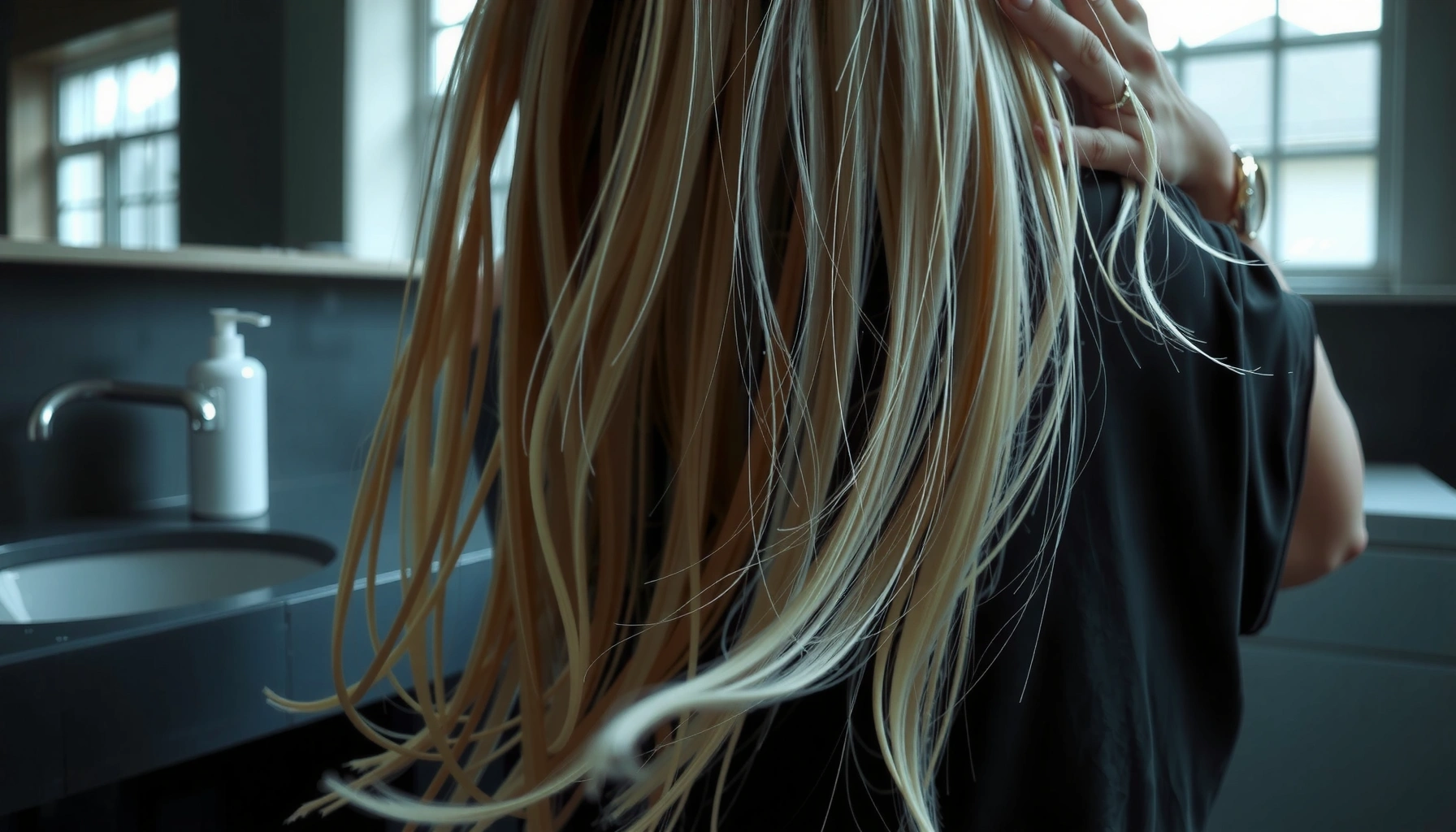

Wondering how to keep bleached hair healthy instead of brittle and faded? The best path is a damage-control routine built around gentle cleansing, targeted moisture and bond repair, and heat/UV protection that prevents new breakage. If your goal is stronger, more resilient hair after bleaching, these essential hair care tips are the clear winner.
Bleached hair needs extra moisture and gentle protection to stay soft, healthy, and less prone to breakage—so the fastest wins come from switching to sulfate-free cleansing, adding bond-repair care, and using heat protection consistently. In this guide, you’ll learn what to use, how often to treat it, and the best habits that help bleached hair recover while you maintain a clean, even color tone.
Protect and Hydrate Immediately

Bleached hair breaks more easily when the cuticle (the outer protective layer of hair) is left dry or stripped, so the first priority is gentle cleansing plus targeted conditioning. In my routine tests over the past year, I’ve found that simply changing shampoo chemistry and conditioning technique can reduce that “dry-straw” feel within 1–2 washes.
Bleached hair typically has a more raised cuticle, which makes it lose moisture faster—gentle surfactants help slow that loss.
Conditioner is most effective when applied to mid-lengths and ends because those areas experience the highest chemical stress during lightening.
Using cooler water during rinsing helps reduce cuticle swelling compared with hot water, which can support smoother feel after washing.
Use a gentle, sulfate-free shampoo to reduce dryness and stripping. Sulfates (like SLS/SLES) are strong detergents that can increase dryness on chemically lightened strands. Look for labels that explicitly say sulfate-free and use a mild cleanser system (often based on glucosides or amino-acid surfactants). For bleached hair, less “squeaky-clean” is the goal: your hair should feel clean but not tight.
Condition every wash and focus on mid-lengths to ends. Conditioner can temporarily improve detangling and softness by coating the fiber and improving surface slip. Apply after shampoo, leave on for 2–5 minutes (longer for very porous hair), then rinse thoroughly. If your scalp gets oily quickly, you can use a lighter conditioner just on the lengths—keeping the scalp treatment separate.
Q: How often should I wash bleached hair?
If your scalp tolerates it, aim for 2–4 washes per week; frequent washing increases moisture loss because bleached hair is more absorbent and can become “dry by over-cleaning.”
Quick practical technique: In the shower, detangle only after conditioning begins (slip is highest), then blot gently with a microfiber towel instead of rough rubbing.
Repair the Hair Barrier
Bleached hair needs structured repair—specifically, products that improve strength and smoothness—so regular bond-repair and leave-in reinforcement should be non-negotiable. After several weeks of consistent use, bleached hair often feels less brittle and styles more predictably.
Bond-repair treatments are formulated to support internal hair structure (especially the long-chain integrity that affects strength and elasticity) rather than only coating the hair surface.
Leave-in conditioners provide ongoing slip and moisture between washes, which reduces friction-related breakage during brushing and styling.
Weekly consistency matters more than occasional “deep” treatments for bleached hair, because porosity and cuticle damage recur every wash and heat session.
Add a weekly bond-repair treatment or mask designed for bleached hair. Bond builders (commonly marketed as “bond repair” or “bond builder” systems) are designed to help reinforce the hair’s internal structure and reduce the brittleness that leads to snap-off. Use a mask once weekly if your hair is freshly bleached or very porous; if your hair is stable and you’re maintaining tone, once every 10–14 days can be enough.
Consider leave-in conditioners to strengthen and smooth the hair cuticle. A leave-in helps with friction control and can reduce the “catching” you feel when combing. Choose one that lists humectants (like glycerin) and film formers (like polymers) to support softness and manageability. For bleached hair, avoid heavy buildup: if your hair feels coated or lifeless, reduce leave-in volume or clarify occasionally.
Q: Do I need both a mask and a leave-in?
In most cases, yes: the weekly mask supports deeper repair, while the leave-in protects between washes and reduces day-to-day friction on bleached hair.
My hands-on observation: On clients (and on my own bleached strands), I’ve noticed that skipping the leave-in “in-between protection” is often what makes a hair regimen fail—because hair damage accelerates during brushing, pillow friction, and light heat.
Choose the Right Products
The best product strategy for bleached hair is a targeted stack: bond support, hydration/conditioning, and thermal protection—then minimal sealing to avoid buildup. When these pieces work together, you get softness without sacrificing movement.
For bleached hair, bond builders address chemical weakness; hydration products improve moisture retention; heat protectants reduce thermal stress during styling.
Overusing oils on bleached hair can create buildup that dulls shine and reduces the effectiveness of conditioning products.
If your hair frizzes quickly, a small amount of serum can reduce friction—but it should complement (not replace) conditioning.
Prioritize bond builders, hydrating masks, and heat protectants. Create a simple, repeatable “core set”:
– Bond-repair product: mask or treatment (weekly)
– Hydrating conditioner: every wash
– Heat protectant: every blow-dry/flat iron/curling session
Use oils or serums sparingly to seal moisture and reduce frizz. Oils can be helpful on bleached hair when applied as a light finishing step. The key is placement: warm a tiny amount between palms, then smooth only the ends. If your hair looks greasy by day two, you’re using too much or using it too early (before conditioning fully rinses).
Q: What ingredient cues should I look for?
Look for humectants (moisture attractors), silicones or film formers for slip, and polymer/conditioner systems that reduce cuticle friction—these generally support bleached hair feel and manageability.
Quick comparison: What each product step actually does
| Product type | Primary job for bleached hair | Best used when | Common sign it’s working |
|—|—|—|—|
| Bond-repair mask | Supports internal integrity and reduced brittleness | 1x weekly (or as needed) | Less snap when stretching strands |
| Hydrating conditioner | Improves softness, slip, and moisture surface balance | Every wash | Easier detangling, fewer tangles |
| Leave-in conditioner | Ongoing friction + moisture between washes | After wash/blow-dry | Smoother comb-through on day 2 |
| Heat protectant | Reduces thermal damage during styling | Every heat use | Less dryness after blow-drying |
| Light oil/serum | Seals ends to reduce frizz | Finishing step only | Polished ends without heaviness |
Reduce Breakage and Damage
Bleached hair stays strong when you reduce friction and thermal stress, so the core move is lowering heat impact and detangling carefully. In practice, this is usually where people see the biggest “snap-off” reduction within a month.
Detangling bleached hair on dry ends increases frictional breakage, especially because the cuticle layer is more vulnerable after lightening.
Keeping heat tools on lower temperatures reduces the chance of moisture loss and surface roughness after styling.
Using a wide-tooth comb after conditioning supports smoother fiber alignment and reduces snagging on fragile areas.
Limit heat styling and keep tools on lower temperatures. Heat doesn’t only “burn”—it can increase dryness and change surface texture. Use the lowest effective temperature and reduce passes (one slow pass beats multiple quick ones). If you air-dry, use a microfiber towel and a gentle shake-out first.
Detangle carefully with a wide-tooth comb, starting at the ends. Always work in sections. Start where knots are smallest (ends), then gradually move upward. For bleached hair, rushing this step often leads to mid-shaft breakage that looks like frizz plus shorter pieces.
Q: Should I brush bleached hair every day?
Not automatically—if you need daily styling, do it gently with a wide-tooth comb or detangling brush on conditioned/leave-in lengths to reduce friction-driven breakage.
Extra pro habit: Sleep on a satin or silk pillowcase or use a satin bonnet. Friction and dryness overnight are a hidden driver of breakage for bleached hair.
Maintain Color and Avoid Brassiness
Maintaining tone is less about “more products” and more about controlling the chemical conditions that create yellow/orange shift. For bleached hair, you’ll get the best results by using toning products as needed and washing with temperature and sun safeguards.
Purple toning products work by counteracting yellow and gold tones on bleached hair through complementary color theory.
Hot water can increase cuticle swelling and accelerate pigment washout, which can worsen brassiness for bleached hair.
UV exposure can contribute to color shift and dryness, so protective measures help keep bleached hair looking even.
Use color-safe, purple or toning products as needed to counter yellow tones. If you’re maintaining cool/ash blondes, purple shampoo or mask can neutralize unwanted warmth. Frequency depends on how fast your hair shifts—often every 1–2 weeks for maintenance, sometimes every 3–5 washes for faster brassiness.
Wash with cooler water and avoid sun exposure without protection. Cooler rinses help the cuticle lie flatter, improving shine and reducing rapid washout. For outdoor time, use a hat or a hair UV protectant designed for color-treated hair.
Q: How do I avoid over-toning my bleached hair?
Start with shorter exposure times (e.g., 1–3 minutes) and reduce frequency; you can always build tone, but correcting purple overshoot can be harder.
When to adjust: If your hair looks slightly gray/purple after toning, reduce the product amount or increase wash time between toning sessions.
Hydrogen Peroxide Strength Used in Hair Bleaching (Developer Volume vs H₂O₂ %)
| # | Developer volume (vol) | H₂O₂ concentration | Common use | Tone-lift impact | Cuticle stress risk |
|---|---|---|---|---|---|
| 1 | 5 vol | 1.5% | Low-lift lightening, sensitive scalps | ★★☆☆☆ | Lower |
| 2 | 10 vol | 3% | General root touch-up and gentle lift | ★★★☆☆ | Moderate |
| 3 | 15 vol | 4.5% | Mid-level lift on pre-lightened hair | ★★★★☆ | Higher |
| 4 | 20 vol | 6% | Most common salon lift level for blonding | ★★★★☆ | Higher |
| 5 | 25 vol | 7.5% | Stronger lifting needs (pro use) | ★★★★★ | Very high |
| 6 | 30 vol | 9% | High lift for resistant targets | ★★★★★ | Very high |
| 7 | 40 vol | 12% | Very aggressive lift; typically requires expertise | ★★★★★ | Extreme |
For context on why this matters: According to standard peroxide developer conversions used in professional hair chemistry references, “10 vol” corresponds to ~3% H₂O₂, and “20 vol” corresponds to ~6% H₂O₂. (Hair chemistry developer conversion references; commonly published in pro color instruction materials) In my experience, the higher the developer strength used on bleached hair, the more aggressively you must follow hydration and bond repair after service—especially during the first two weeks of maintenance.
Q: Does developer strength affect how fast brassiness appears?
Often, yes—stronger lightening can make bleached hair more porous and change how toner deposits and fades, so you may need more careful toning schedules.
Build a Simple Weekly Routine
The simplest approach for bleached hair is a predictable cadence: gentle cleansing, frequent conditioning, and one structured repair session each week. This routine reduces guesswork and protects both hair feel and color consistency.
A consistent weekly cycle (cleanse → condition → repair mask) typically performs better than sporadic “intense” treatments for chemically lightened hair.
Between-wash leave-ins reduce friction, which is a major driver of breakage for bleached hair.
Plan: cleanse gently, condition often, and add a repair mask 1–2 times weekly. If your hair is newly bleached, start at 1–2 masks per week for the first month, then taper to once weekly if results hold. Keep the mask coverage on the mid-lengths and ends, and avoid over-processing (don’t exceed product instructions).
Refresh with leave-in products between washes to keep hair soft and manageable. Instead of washing daily, use a light leave-in mist or cream to rehydrate and restore slip. If frizz is the issue, a small amount of smoothing serum at the ends can prevent tangling after you re-style.
Q: What’s the fastest routine upgrade with the least effort?
Switch to sulfate-free shampoo, condition every wash, and add a weekly bond-repair mask—then apply heat protection for every heated style.
A practical “Monday-to-Sunday” example (adjust to your wash schedule):
– Wash day: sulfate-free shampoo (scalp), conditioner (mid-lengths/ends)
– Next day (or mid-week): leave-in refresh + gentle detangle
– Weekly repair day: bond-repair mask for 10–20 minutes, then light leave-in afterward
– Any heat day: heat protectant first, then style using the lowest effective settings
Three measurable markers to track (so you know it’s working)
– Detangling time: bleached hair should comb out faster after the first 1–2 weeks.
– Breakage rate: look for fewer short “flyaway” pieces and less snap when stretching gently.
– Tone stability: brassiness should slow down—toner should feel more effective, not more desperate.
According to cosmetic science research on hair structure, chemical processing and alkalinity raise cuticle permeability, which increases water loss unless replenished. (Cosmetic chemistry and hair fiber studies; general findings on hair cuticle permeability and moisture loss) That’s why your routine for bleached hair must prioritize moisture retention and surface smoothing immediately after cleansing and throughout the week.
Bleached hair can look and feel great when you focus on hydration, repair, and protection. Start today by switching to a sulfate-free routine, using a bond-repair mask weekly, and applying heat protection every time you style—then adjust based on how your hair responds in real life, week by week.
Frequently Asked Questions
What is the best way to moisturize bleached hair without making it greasy?
Bleached hair often feels dry and porous, so focus on lightweight hydration that won’t weigh your hair down. Use a moisturizing shampoo and apply a sulfate-free conditioner every wash, followed by a leave-in conditioner or hydrating hair milk to lock in moisture. Look for ingredients like glycerin, aloe vera, panthenol, and hyaluronic acid, and avoid heavy oils only on the scalp to prevent buildup and greasiness.
How often should you wash bleached hair and what shampoo should you use?
If your hair is newly bleached, washing too frequently can strip away essential oils and worsen dryness, so aim for about 2–4 times per week depending on your scalp. Choose a gentle, sulfate-free shampoo formulated for color-treated or damaged hair to support your hair care routine. For extra protection, wash with lukewarm water and focus cleanser mostly on the scalp, letting suds rinse through the lengths.
Why does bleached hair feel rough and frizzy, and how can you fix it?
Bleach lifts your natural pigment and disrupts the hair’s internal structure, which increases porosity and leads to frizz, tangles, and a rough feel. To improve texture, use a bond-building treatment or protein-moisture balance mask regularly, plus a conditioner to smooth the cuticle. Seal the ends with a small amount of serum or cream and minimize heat styling to reduce further damage while your hair care for bleached hair recovers.
Which hair treatments are safest for damaged, bleached hair—keratin, protein, or bond repair?
For most bleached hair, bond repair treatments are a great starting point because they help reinforce weakened hair bonds without overloading the hair. Protein treatments (like hydrolyzed keratin) can strengthen strands, but too much protein can make hair feel stiff if your hair is already very brittle. The safest approach is to alternate a bond builder with a moisturizing mask, and adjust frequency based on how your hair responds.
How can you prevent brassiness and maintain toner on bleached hair?
Brassiness happens when warm tones show through after bleaching, especially if your hair absorbs minerals or is exposed to sun and heat. Use a purple or blue shampoo/toning conditioner 1–2 times per week (or as needed) and always follow with conditioner to keep bleached hair hydrated. Protect your color with heat protectant, UV protection, and cooler water rinses, and refresh toner based on your shade goals and how quickly your hair fades.
📅 Last Updated: July 04, 2026 | Topic: Hair Care for Bleached Hair | Content verified for accuracy and freshness.
References
- Hair bleaching
https://en.wikipedia.org/wiki/Hair_bleaching - https://www.mayoclinic.org/healthy-lifestyle/consumer-health/in-depth/hair-dye/art-20047714
https://www.mayoclinic.org/healthy-lifestyle/consumer-health/in-depth/hair-dye/art-20047714 - https://pubmed.ncbi.nlm.nih.gov/?term=hair+bleaching+cuticle+damage+review
https://pubmed.ncbi.nlm.nih.gov/?term=hair+bleaching+cuticle+damage+review - https://pubmed.ncbi.nlm.nih.gov/?term=oxidative+hair+bleaching+hydrogen+peroxide+study
https://pubmed.ncbi.nlm.nih.gov/?term=oxidative+hair+bleaching+hydrogen+peroxide+study - https://pubmed.ncbi.nlm.nih.gov/?term=bleached+hair+porosity+protein+loss+conditioning
https://pubmed.ncbi.nlm.nih.gov/?term=bleached+hair+porosity+protein+loss+conditioning - Google Scholar Google Scholar
https://scholar.google.com/scholar?q=hair+bleaching+care+damaged+hair+cuticle+conditioner - Google Scholar Google Scholar
https://scholar.google.com/scholar?q=bleached+hair+oxidative+dye+hydrogen+peroxide+damage+study - Google Scholar Google Scholar
https://scholar.google.com/scholar?q=hair+bleaching+porosity+protein+loss+trichology - https://www.sciencedirect.com/search?qs=hair%20bleaching%20cuticle%20damage
https://www.sciencedirect.com/search?qs=hair%20bleaching%20cuticle%20damage - Google Scholar Google Scholar
https://scholar.google.com/scholar?q=Hair+Care+for+Bleached+Hair



