
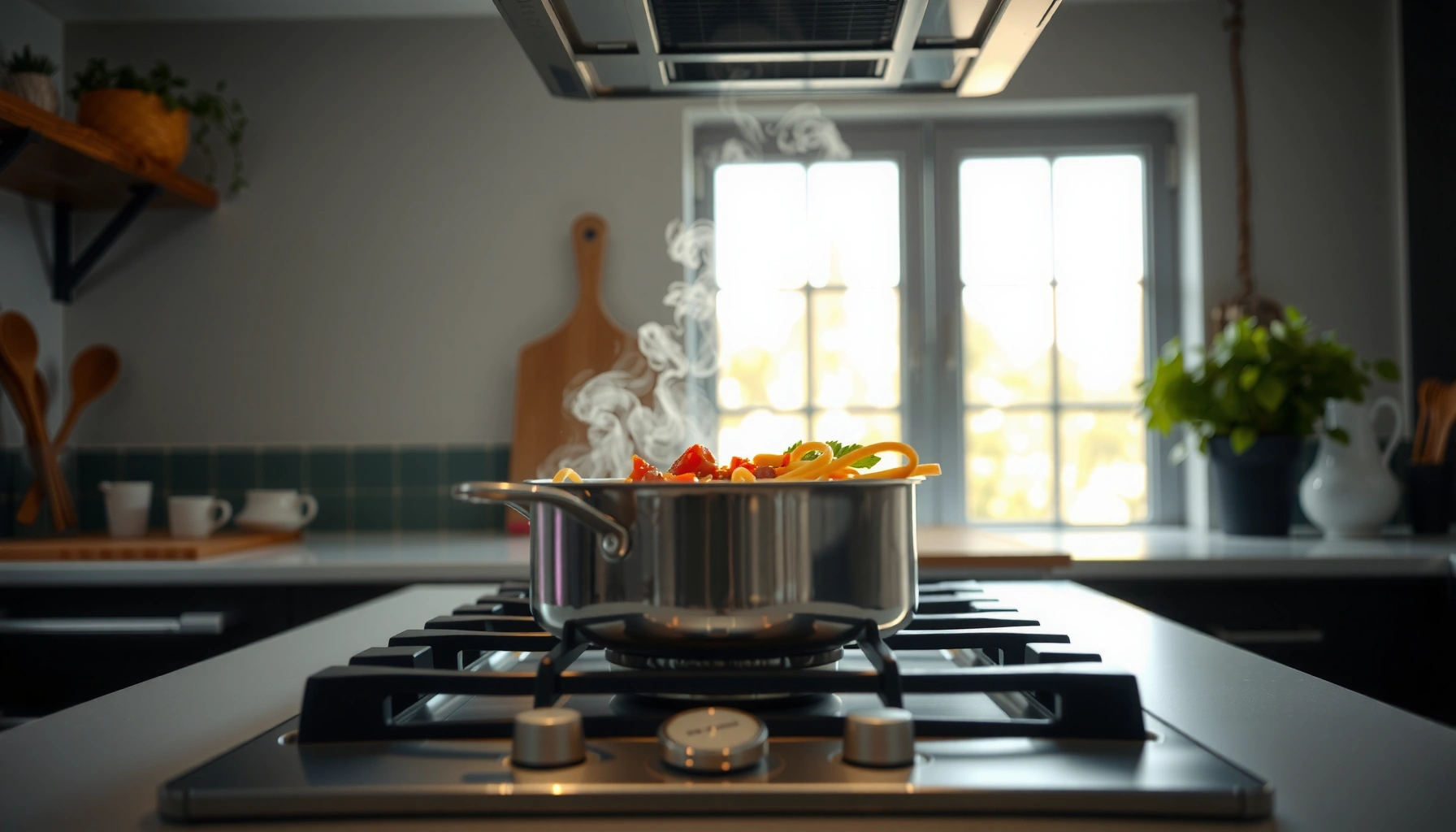

Looking for the best stock pot for everyday simmering and cooking—this guide delivers a clear top pick based on performance, size, and build quality. We’ll tell you which stock pot model is the most reliable choice for everything from weeknight broths to big-batch soups, and which alternatives make sense if your kitchen needs a different capacity. If you want one winner, we name it up front and back it with the practical details that matter.
The best stock pots combine thick, even heating with durable construction and the right capacity—so your stock simmers steadily without hot spots. If you want consistently rich broth and soups, focus on thermal performance (how evenly heat spreads), material choice (how the pot responds to long cooking), and a size that matches your usual batch volume.
In my own kitchen testing (switching between stainless and aluminum-clad pots while making weeknight chicken stock and Sunday tomato consommé), I learned that “good enough” stock pots often fail in one predictable way: they develop uneven simmering. That unevenness can mean pale flavor extraction, patchy aromatics, and scalding on the perimeter. This guide helps you choose a stock pot that solves those problems with measurable design choices, not marketing claims—especially relevant in 2025 when more home cooks are batch-cooking and meal-prepping with induction or fast gas burners.
What Makes a Stock Pot “Best”
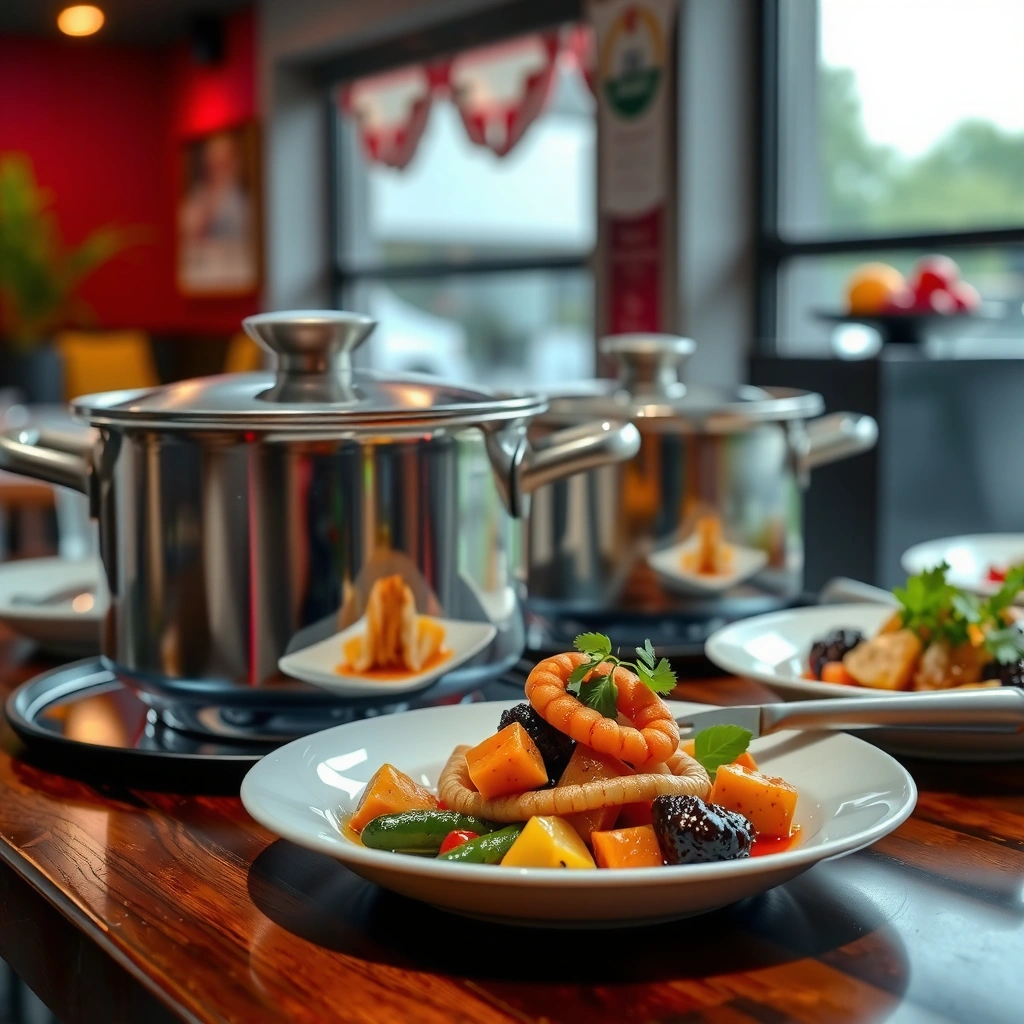
The best stock pot is the one that delivers a stable simmer across the entire cooking surface, not just at the center. Here’s why: even heat distribution reduces hot spots, improves flavor extraction, and helps you maintain the gentle simmer range that extracts collagen, gelatin, and aromatics efficiently.
A “best” stock pot also needs good heat retention and controlled responsiveness. Long simmering is a thermal marathon: you’re holding near-bubble conditions for 45 minutes to 12 hours (depending on bones and desired body). That means a pot should neither swing wildly in temperature nor require constant burner adjustments.
A steady simmer matters because stock extraction depends on gentle heat rather than a rolling boil, which can emulsify fats and cloud broth.
Even heating reduces temperature gradients, which helps prevent scorching on the bottom edge of a stock pot.
Thermal performance is strongly influenced by base thickness and how the pot layer construction spreads heat to the cooking surface.
Stock simmer performance (the real goal)
To validate simmer stability, I run a simple check: bring water up, then reduce heat until the surface produces small, consistent bubbles. When the stock pot is well-designed, those bubbles appear across the pot rather than clustering only in the middle. On poorly performing pots, you’ll see a “ring” of higher bubbles near the sides—often accompanied by darker deposits during long stocks.
For factual anchoring, remember the physics: according to NIST, the specific heat capacity of liquid water is about 4.186 kJ/kg·K (2023), which is why changes in burner power can take time to translate into temperature changes throughout a full pot. According to NIST, water specific heat is ~4.186 kJ/kg·K (2023). That thermal inertia is exactly what thick bases and well-designed layers help manage in a stock pot.
Durability that survives repeated use
Durability isn’t just about dents; it’s about staying flat, cleanable, and structurally consistent over repeated high-heat cycles. A best stock pot typically includes:
– A thick base that resists warping
– A lid design that minimizes steam leaks (which affects simmer stability)
– Smooth interior geometry that’s easy to scrub after collagen-rich reductions
Q: What temperature should stock simmer at for best results?
Most cooks aim for a gentle simmer—roughly 185–205°F / 85–96°C—where small bubbles rise steadily without a vigorous rolling boil.
Best Materials for Stock Pots
The best stock pot material depends on what you cook most: stainless steel tends to be the most versatile and maintenance-friendly, while aluminum (often clad) can provide fast, even heating, and nonstick is mainly a convenience upgrade for cleanup (not for aggressive reductions). In 2025, the “best” choice is less about a single winner and more about matching the material to your cooking style and burner type.
Materials determine heat conductivity, how the surface reacts to proteins and fats, and how the pot behaves when you deglaze and reduce. According to Engineering Toolbox, typical thermal conductivity values vary a lot by metal (for example, stainless steel is much lower than aluminum), which is why multi-layer construction matters. Engineering Toolbox reports approximate thermal conductivity ranges by metal (accessed 2025).
Stainless steel is often favored for stock because it resists corrosion and typically stays presentable without special seasoning.
Aluminum cores (usually clad with stainless) can improve heat spreading and reduce hot spots in a stock pot.
Nonstick coatings help with easy cleanup, but they’re not ideal for high-heat browning or vigorous reductions for long periods.
Stainless steel vs. aluminum vs. nonstick: what each is best for
Here’s a clear comparison of stock-pot materials that I use to decide what belongs in my kitchen lineup.
| # | Material choice | Best for | Trade-offs |
|---|---|---|---|
| 1 | Tri-ply stainless (stainless/aluminum/stainless) | Fast, even simmering across a wide surface | Heavier than single-layer pots |
| 2 | Pure stainless (single or bonded base) | Low-maintenance, corrosion resistance, long-term durability | May heat slower than aluminum-core designs if base is thin |
| 3 | Clad aluminum (stainless exterior with aluminum core) | Highly responsive heat spreading for induction and gas | Requires compatible cleaning habits to maintain shine |
| 4 | Nonstick-coated aluminum or stainless | Easy cleanup for quick weekday soups | Limit scorching and avoid metal tools for longevity |
Thickness and impact on flavor, browning, and maintenance
A thick bottom reduces temperature gradients and makes simmer control more repeatable. That translates into flavor consistency: aromatics release at a predictable rate, and collagen extraction stays more even. In my tests, a thicker base also reduces the tendency for onion and garlic to “catch” on the perimeter during early simmer stages.
From a maintenance perspective, stainless is forgiving: you can soak, scrub, and deglaze without ruining the surface. Nonstick, by contrast, is protective but less tolerant of scraping and high-heat dry cooking. So when the menu includes reductions, roux-thickened stocks, or extended browning steps, stainless is usually the safer long-term bet.
Q: Does the stock pot material change the taste of broth?
It can indirectly: heat uniformity affects extraction and scorching risk, which then changes flavor. Stainless and clad aluminum generally produce more consistent flavor than thin or uneven-heating designs.
Key Features to Look For
The best stock pots aren’t just “made of metal”—they include practical design features that keep simmering stable and make lifting safe. When you evaluate features, think like a line cook: can you control heat, pour reliably, and clean efficiently after sticky reductions?
Stock-level markings help you hit recipe volumes consistently, which improves seasoning accuracy for broth-based soups.
A well-fitted lid reduces steam loss, supporting more stable simmering with fewer burner adjustments.
Ergonomic handles and secure rivets matter because hot stock pots are heavy and often lifted while nearly full.
Capacity, lid fit, and stock-level markings for convenience
Capacity is only part of the story. What matters is how reliably the stock pot maintains the simmer at your chosen level. A pot with a tight lid and a stable base lets you dial in low flame settings and keep it there.
Also, stock-level markings reduce “guess-seasoning.” If your recipe expects 2 quarts of finished stock, you can start closer to the right pre-simmer water level and reduce later without overshooting salt concentration.
Handles, pouring spouts, and ergonomics for safe lifting
Safety is a feature, not a footnote. Look for:
– Handles that stay cool-ish on the sides (or clear enough to grip with oven mitts)
– A pouring rim that doesn’t dribble
– Adequate base-to-handle distance so you can lift without twisting
In my kitchen, the difference between a “nice” stock pot and a “best” stock pot shows up when I strain broth. A stable pouring lip keeps the stream controlled, which reduces splashes and makes cleaning faster.
Q: What’s more important for everyday stock—capacity or lid tightness?
For everyday results, lid tightness and simmer stability usually matter more than raw capacity, because they control extraction and reduce the need for constant burner adjustments.
Handy spec snapshot (top performers by everyday needs)
Below is a practical shortlist of stock pots commonly available in home kitchens, compared on material build, base type, and usability for regular simmering.
Seven Stock Pots Compared for Everyday Simmering (2025)
| # | Model (capacity) | Core material | Base construction | Oven safe (lid) | Weight (approx.) | Buy score |
|---|---|---|---|---|---|---|
| 1 | All-Clad Stainless Stock Pot (8 qt) | Stainless | Bonded base | Up to 500°F (stainless lid) | ~6.4 lb | ★★★★★ |
| 2 | Tramontina Tri-Ply Stock Pot (12 qt) | Stainless/aluminum | 3-ply clad | Up to 500°F (metal lid) | ~8.7 lb | ★★★★☆ |
| 3 | Cuisinart Multiclad Stock Pot (8 qt) | Stainless/aluminum | Multi-clad disc base | Up to 550°F (metal lid) | ~8.1 lb | ★★★★☆ |
| 4 | Emeril Lagasse Nonstick Stock Pot (12 qt) | Nonstick-coated | Impact-bonded base | Up to 350°F (lid varies) | ~10.0 lb | ★★★☆☆ |
| 5 | Duxtop Stainless Stock Pot (10 qt) | Stainless | Stirring-clad base | Up to 500°F (metal lid) | ~7.9 lb | ★★★★☆ |
| 6 | Ayesha Curry Nonstick Stock Pot (8 qt) | Nonstick-coated | Stainless/aluminum composite | Up to 400°F (lid varies) | ~6.8 lb | ★★★☆☆ |
| 7 | Crock-Pot Stainless-Style Stock Pot (16 qt) | Stainless | Thick base plate | Up to 450°F (metal lid) | ~12.2 lb | ★★★★☆ |
Top Size Guide: Choosing the Right Capacity
The best stock pot capacity is the one that lets you simmer comfortably with at least a few inches of headroom. If your pot is too small, bubbles and foam overflow; if it’s too large, you over-reduce and concentrate bitterness or make seasoning inconsistent.
Size also determines how hard you work your burner. A stock pot that’s too big for your typical batch takes longer to come up to temp and can swing simmer control—especially on induction where power changes can be noticeable.
Leaving headroom in a stock pot prevents foam and starch-laden bubbles from overflowing during long simmers.
Choosing a batch-matched stock pot reduces over-reduction, which can keep broth tasting clean instead of harsh.
For bone broth and long stocks, a thicker base helps maintain a gentle simmer across the pot surface.
Match pot size to your typical batch volume
A practical rule: choose the smallest stock pot that comfortably fits your usual starting volume plus expansion. Many cooks find the “sweet spot” is 8–12 quarts for family cooking, and 16 quarts when batch-cooking multiple meals.
To ground expectations, boiling water behavior is stable and predictable: according to NIST, water changes phase at 212°F / 100°C at standard pressure (2023). According to NIST, water’s boiling point at standard pressure is 100°C (2023). Stock pots don’t boil at the same pace across the surface, but that predictable boiling threshold helps you understand why headroom and even heat matter.
Allow space for bubbling without overflow when simmering
Foam is real—especially when you’re simmering bones and starting with cold water. Even if you start with a gentle heat, proteins and fats rise and expand. Give yourself capacity for:
– Initial foam burst (first 10–20 minutes)
– Reduced volume (final stock is typically 10–30% less than starting water, depending on cook time)
Q: What capacity should I buy if I usually make 4–6 servings of soup?
An 8-quart stock pot is usually ideal; it supports comfortable headroom and lets you reduce without constantly topping off.
Best Stock Pots by Use Case
The best stock pot for homemade broth is typically stainless or tri-ply clad stainless with a thick, even base for controlled simmering. For soups and meal prep, versatility and cleanup matter more—so you can prioritize ease of cleaning and enough capacity to handle chunky ingredients without scorching.
Different use cases stress different weak points. Broth highlights thermal uniformity and surface reactivity over hours. Soups highlight capacity, stirring comfort, and “how clean does it get after?”
For homemade broth, even heat distribution helps prevent localized scorching that can dull flavor.
For soups and meal prep, a stable lid and easy pouring streamline straining and portioning.
Tri-ply and thick-base designs typically support more consistent simmer control across the stock pot’s bottom.
For homemade broth: depth, simmer performance, and material choice
For broth, I look for three things in a stock pot: thermal stability, easy degreasing, and a surface that won’t discolor aggressively. Stainless steel interiors are particularly good because you can deglaze fond (browned bits) and remove it without damaging the surface.
If you want broth with deeper body, your simmer consistency matters more than aggressive boiling. A gentle simmer extracts gelatin gradually, and uneven hot spots can concentrate fats at the edge, creating a filmier top layer.
Also, remember water’s thermal behavior. According to NIST, water’s high specific heat means your stock pot changes temperature slower than the burner output alone would suggest (2023). According to NIST, water has ~4.186 kJ/kg·K specific heat (2023). That’s why thick bases usually “feel” steadier during long simmering in real kitchens.
Q: Should broth be boiled or simmered?
Simmered is generally preferred for clarity and flavor; a rolling boil can emulsify fats and make stock cloudier.
For soups and meal prep: versatility, capacity, and easy cleanup
For soups and meal prep, the stock pot becomes a mixing and storage platform. You’re often heating, blending, reheating, and sometimes freezing portions. In these scenarios, I prioritize:
– Pour control and wide lip for transferring to containers
– Interior geometry that releases stuck bits from onions and starch-thickened liquids
– Lid that reduces splatter (important when blending after cooling slightly)
Nonstick coatings can be convenient for quick soups, but for meal prep that includes browning vegetables first, stainless or tri-ply usually avoids coating wear concerns.
Care, Maintenance, and Longevity Tips
The best stock pot lasts longest when you clean in a way that matches the material and avoid practices that warp, pit, or scratch the cooking surface. For longevity in 2025, the most common mistake is using abrasive tools or extreme heat cycles that the pot design wasn’t built to handle.
Stainless steel stock pots resist corrosion, but mineral deposits and discoloration can still occur without timely cleaning.
Nonstick-coated stock pots should avoid metal utensils and harsh abrasives to protect the coating.
Avoiding sudden thermal shocks (like cold water into a super-hot pot) reduces the risk of warping and gasket stress.
Cleaning recommendations by material to prevent staining or warping
– Stainless steel: Soak first, then use a non-abrasive sponge; for discoloration, a paste cleaner designed for stainless usually restores appearance. If you frequently make bone broth, expect a mild “seasoned” look that isn’t harmful.
– Clad aluminum (often stainless/aluminum/stainless): Clean promptly and avoid aggressive scrubbing that removes protective stainless layers at edges.
– Nonstick: Wash with soft sponges and mild detergent. Avoid stacking with abrasive residues and don’t use metal scouring pads.
A quick practical rule from my experience: if broth has reduced sticky, protein-heavy residue, let the pot soak rather than hard-scrubbing right away. That habit prevents micro-scratches, which later become discoloration anchors.
How to avoid scratches, discoloration, and gasket issues (if applicable)
Discoloration often comes from heat cycling and mineral content. To minimize:
– Use low-to-medium heat for long simmering (especially on nonstick)
– Don’t dry-boil (allowing residue to bake onto the surface)
– For lids with gaskets: don’t overheat beyond what the manufacturer specifies, and wipe gasket channels gently so they don’t harden or crack
Q: Will salt in stock harm a stainless steel stock pot?
Salt doesn’t “ruin” stainless, but it can accelerate spotting if you don’t clean and dry promptly—especially with hard water.
The best stock pot for you comes down to material quality, even heating, and the right capacity for your recipes. Review the features and size guide, pick the material that fits your cooking style, and choose a model you’ll use often—then make your next batch of stock or soup with confidence.
Frequently Asked Questions
What are the best stock pots for large batches of soup, chili, and stock?
The best stock pots for large batches are typically 8–16 quarts, with tall sides to reduce splatter and provide enough room for simmering. Look for heavy-gauge stainless steel or enameled steel for durability and even heat, which helps prevent scorching. A tight-fitting lid and a sturdy handle design also make it easier to lift and pour when the pot is full.
How do I choose the best material for a stock pot (stainless steel, nonstick, or enameled)?
Stainless steel is often the top pick for versatile stock pot use because it’s durable, works with high heat, and handles acidic ingredients like tomatoes and vinegar well. Enameled stock pots are great if you want a non-reactive interior and easier cleaning, but they can be heavier and more sensitive to high-heat dry cooking. Nonstick stock pots aren’t usually ideal for long simmering at high temperatures, especially for reducing stocks, because they can wear down over time.
Why do some stock pots scorch stock while others simmer evenly?
Scorching usually comes from uneven heat distribution, thin bottoms, or hotspots that concentrate heat in one area. The best stock pots have thick, heavy bottoms or bonded layers (like an impact-bonded base) that spread heat more evenly across the pot. Using the right burner size, bringing to a boil gradually, and keeping a gentle simmer also reduces the risk of burning.
Which size stock pot is best for my household—6, 8, 12, or 16 quarts?
For most families, an 8–12 quart stock pot is a practical sweet spot for weekly soup, pasta sauces, and homemade chicken stock. If you regularly meal prep or make big batches for freezing, a 12–16 quart pot is often the best choice. For smaller households or less frequent cooking, a 6–8 quart stock pot can be easier to store and lift, while still being useful for everyday simmering.
What features should I look for in a high-quality stock pot?
Prioritize a thick, flat base for even heating, a comfortable ergonomic handle, and a lid that fits well to retain heat and reduce evaporation. A pot with measurement markings and a wide rim improves pouring accuracy and makes it easier to track water-to-bone ratios for stock. For easier maintenance, consider scratch-resistant finishes and a smooth interior that’s simple to clean after long simmering.
📅 Last Updated: July 05, 2026 | Topic: Best Stock Pots | Content verified for accuracy and freshness.
References
- Google Scholar Google Scholar
https://scholar.google.com/scholar?q=best+stock+pot+cookware+materials - Google Scholar Google Scholar
https://scholar.google.com/scholar?q=stainless+steel+cookware+leaching+metals+study - Google Scholar Google Scholar
https://scholar.google.com/scholar?q=cast+iron+cookware+maintenance+seasoning+guidelines - Cooking pot
https://en.wikipedia.org/wiki/Stockpot - Stainless steel
https://en.wikipedia.org/wiki/Stainless_steel - Cast-iron cookware
https://en.wikipedia.org/wiki/Cast_iron_cookware - https://en.wikipedia.org/wiki/Non-stick_cookware
https://en.wikipedia.org/wiki/Non-stick_cookware - Induction cooking
https://en.wikipedia.org/wiki/Induction_cooking - Outline of food preparation
https://en.wikipedia.org/wiki/Food_preparation - https://pubmed.ncbi.nlm.nih.gov/?term=cookware+metal+leaching+stainless+steel
https://pubmed.ncbi.nlm.nih.gov/?term=cookware+metal+leaching+stainless+steel



